
PULMONARY CONSIDERATIONS AND COMPLICATIONS IN NEUROSURGERY Anatomy Tracheobronchial
PULMONARY CONSIDERATIONS AND COMPLICATIONS IN NEUROSURGERY

Anatomy � Tracheobronchial tree �Dependent parts ○ Posterior and Superior Segments of Right and Left Lower lobes ○ Posterior Segment of Right Upper Lobe �Right main bronchus in direct alignment with trachea www. indianchestsociety. in
Anatomy � Vascular Supply �Pulmonary circulation ○ Low pressure (25/8 mm Hg) ○ Filter for micro emboli �Bronchial circulation ○ Small normal physiological shunt �Dual circulation reduces incidence of infarction
Anatomy � Innervation �Afferent ○ Myelinated A fibers provide stretch feedback ○ Unmyelinated C fibers respond to chemical stimulation (e. g. bradykinnin) �Efferent ○ Sympathetic – vasoconstriction and mucus secretion ○ Parasympathetic -- bronchoconstriction and mucus secretion
Physiology � Oxygen transfer is perfusion (Q) limited �Normal alveolar-arterial PO 2 gradient = 10 mm. Hg [150 – (Pa. CO 2 /0. 8)- Pa. O 2 ] � CO 2 transfer is Ventilation (V) dependent � V/Q mismatch results in �↓ed Pa. O 2 �↑ed Pa. CO 2 – may be corrected by hyperventilation

Physiology Ventilation Perfusion Mismatch Mucus plug Embolus • Correctable with 100% O 2 • Right to Left Shunt • Does not respond to 100% O 2

Physiology � Dead space -to -Tidal Volume (Vd/Vt) ratio = (Pa. CO 2 – PECO 2)/Pa. CO 2 = 0. 2 - 0. 3 �↑ed Vd/Vt indicates ventilator dependence �Tracheostomy reduces Vd/Vt � Oxygen delivery optimized by maintaining �Pa. O 2 90 – 100 mm. Hg �Hb >10 g/d. L
Physiology � Control of Breathing �Rhythm and Pattern Generator ○ DRG and VRG located in medulla �Pneumotaxic center ○ Pons ○ Inspiratory cut off �Chemoreceptors ○ Central (near medulla) : CSF p. H and Pa. CO 2 ○ Peripheral (Carotid and aortic bodies) : O 2 delivery �Mechanoreceptors (feedback and irritant)
Physiology � Breathing Patterns: � Central Alveolar Hypoventilation �Slow and shallow; regular �Insult to brainstem � Ataxic Respiration: �Slow and irregular �Injury to medulla/caudal pons
Physiology � BREATHING PATTERNS: �Apneustic Respiration: ○ Extended inspiration ○ Injury to pons �Central Neurogenic Hyperventilation ○ Rapid and regular ○ Injury to rostral pons /midbrain ○ Raised ICP
Physiology � BREATHING PATTERNS: �Cheyne Stokes Respiration ○ Regularly irregular ○ Cerebral /diencephalic dysfunction �Others ○ Kussmaul respiration (acidosis) ○ Central Hypoventilation due to drug over dosage
Excellence in Pulmonary Care � Maintenance of airway � Adequate alveolar ventilation � Appropriate oxygenation
AIRWAY MAINTENANCE � Intact Gag reflex does not confirm the ability of the patient to --○ Cough ○ Sigh ○ Clear secretions effectively � Head and Upper Spine injury/ Unconscious patients have risk of: �Aspiration �Atelectasis �Hypoventilation
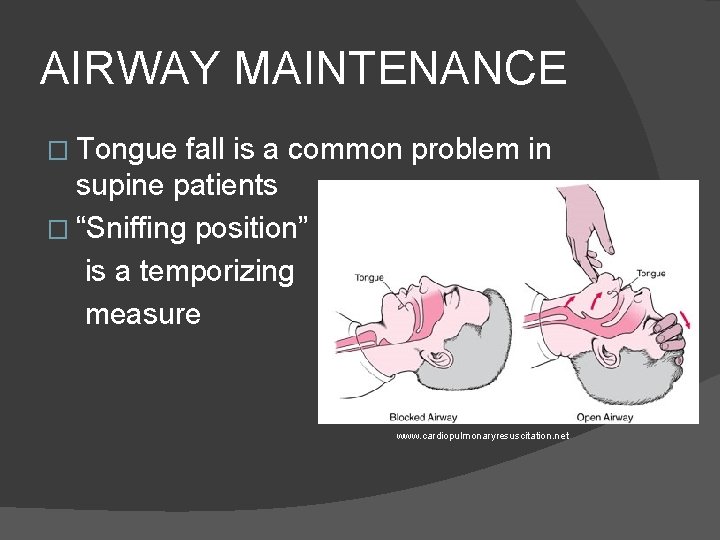
AIRWAY MAINTENANCE � Tongue fall is a common problem in supine patients � “Sniffing position” is a temporizing measure www. cardiopulmonaryresuscitation. net
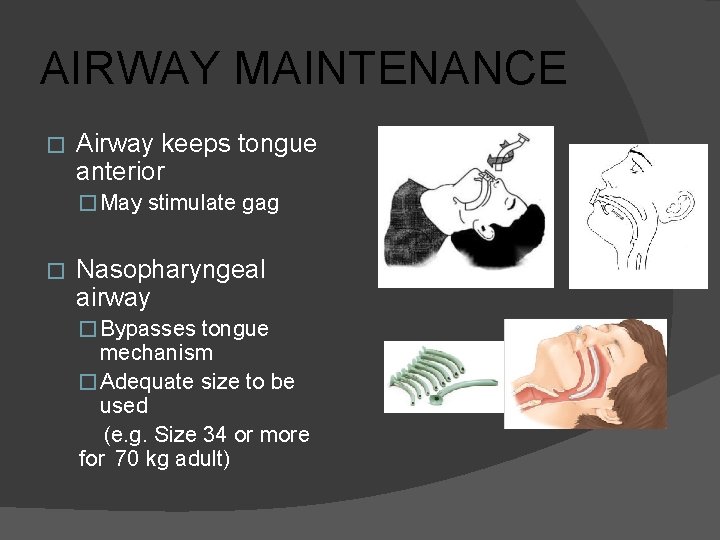
AIRWAY MAINTENANCE � Airway keeps tongue anterior � May stimulate gag � Nasopharyngeal airway � Bypasses tongue mechanism � Adequate size to be used (e. g. Size 34 or more for 70 kg adult)
AIRWAY MAINTENANCE Endotracheal Intubation INDICATIONS: � Airway protection � Risk of Aspiration Hypoxia refractory to supplemental oxygen (Pa. O 2 <55 m Hg) � Procedures (e. g. � ARDS bronchoscopy) � Acute Massive Hemoptysis � Severe pneumonia � � CNS Depression � Respiratory acidosis (Pa. CO 2 > 60 m Hg) � CNS depression � Increased work of breathing � Intentional Hyperventilation � Reduction of cerebral edema � Reduction of ICP (RR > 40 or < 6/min) * Pontoppidan H, Geffin B, Lowenstein E. Acute respiratory failure in the adult. N Engl J Med. 1972 Oct 12; 287(15): 743 -52. .
AIRWAY MAINTENANCE Endotracheal Intubation Pre intubation 100% O 2 mask ventilation for 3 - 5 mins � Size of endotracheal tube : � � ≥ 8 mm for adult male; 7. 5 mm for female � Selection of appropriate size to avoid pressure necrosis � Route of intubation � Oral ○ Emergency ○ Allows Larger tube – work of breathing reduced � Nasal ○ Cervical spine injuries ○ Contraindicated in base of skull injuries

AIRWAY MAINTENANCE Endotracheal Intubation � Distal end of tube should be 20 -22 cm from teeth. � Confirmation of tube position �Prominent breath sounds over both lung fields �Rise in Oxygen saturation �Condensation mist on inner tube lining � Cuff pressure ≤ 25 mm Hg (smaller tubes require higher cuff pressure).
AIRWAY MAINTENANCE Endotracheal Intubation Complications � Acute � Long term � Oral/nasal trauma � Tube block � Vocal cord tear � Cuff site necrosis � Tracheal perforation � Hoarseness (pneumothorax/pneu momediastinum) � Accidental intubation of right main bronchus � Tracheal stenosis ○ Left lung collapse � Tracheomalacia � Tracheal colonization (acinetobacter , pseudomonas) � Cuff leak
AIRWAY MAINTENANCE Endotracheal Intubation � Extubation �Patient Weaned off from ventilation �Purpose of intubation achieved Preferably in morning � Stop Sedation/ tube feeding � Prior chest physiotherapy; Upright position � Suctioning of endotracheal /pharyngeal secretions before deflation of balloon � O 2 by mask/nasal prong after extubation � Observation for 6 – 24 hrs �
AIRWAY MAINTENANCE Tracheostomy � Indications : 1. Prolonged translaryngeal intubation (to prevent airway damage) 2. Frequent suctioning and secretion removal (to allow easy access to the lower airway ) 3. Prolonged mechanical ventilation or oxygenation support (to provide a stable airway)

AIRWAY MAINTENANCE Tracheostomy ADVATAGES : � Improved patient comfort � Better long-term laryngeal function � Less need for sedation � Faster weaning from mechanical Ventilation � Lower work of breathing � Improved patient safety � Improved oral hygiene � Oral intake more likely � Earlier ability to speak � Lower risk of ventilatorassociated pneumonia � Lower mortality � Shorter intensive care unit and hospital stay

AIRWAY MAINTENANCE Tracheostomy : When ? � Tracheostomy to be performed in 3 -5 days in patients expected to require prolonged ventilation (~ 7 – 14 days) ○ Severe head injury ○ Brainstem dysfunction ○ Low GCS ○ Spinal cord injury at or above C 4 � Most of laryngeal damage occurs in first 3 days of translaryngeal intubation ○ Early tracheostomy promotes healing Durbin CG Jr. Tracheostomy: why, when, and how? Respir Care. 2010 Aug; 55(8): 1056 -68 Durbin CG Jr et al. Should tracheostomy be performed as early as 72 hours in patients requiring prolonged mechanical ventilation? Respir Care. 2010 Jan; 55(1): 76 -87
AIRWAY MAINTENANCE Tracheostomy � Benefits of early tracheostomy �Improved patient comfort and safety �Faster weaning - - shorter ICU/Hospital stay �Reduced incidence of VAP � Intubation continued for longer in children �Concern for growing airway �Consequences of prolonged intubation are less severe
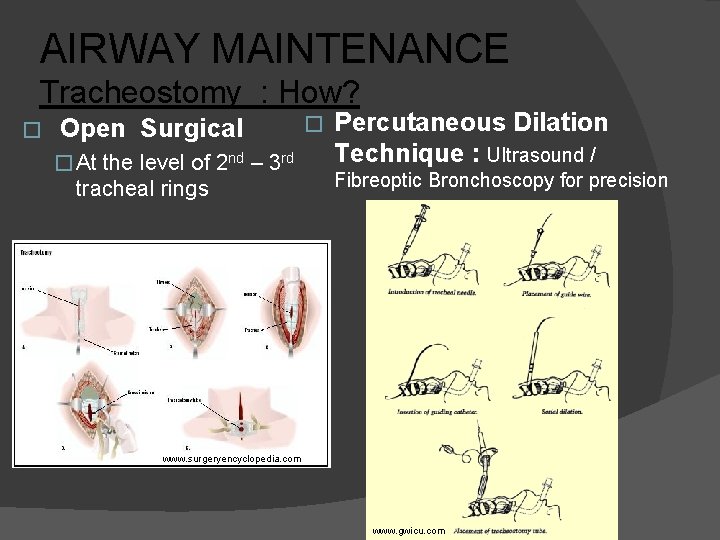
AIRWAY MAINTENANCE Tracheostomy : How? � Open Surgical � At the level of 2 nd – 3 rd tracheal rings � Percutaneous Dilation Technique : Ultrasound / Fibreoptic Bronchoscopy for precision www. surgeryencyclopedia. com www. gwicu. com
AIRWAY MAINTENANCE Tracheostomy : How? � Open Surgical � Lesser risk of false passage � Lesser problems in decannulation /obstruction � Percutaneous Dilation Technique (PDT) � Reduced procedure time � Reduced wound infection � Convenience � Better scarring � Lesser chances of major bleed Durbin CG Jr. Tracheostomy: why, when, and how? Respir Care. 2010 Aug; 55(8): 1056 -68
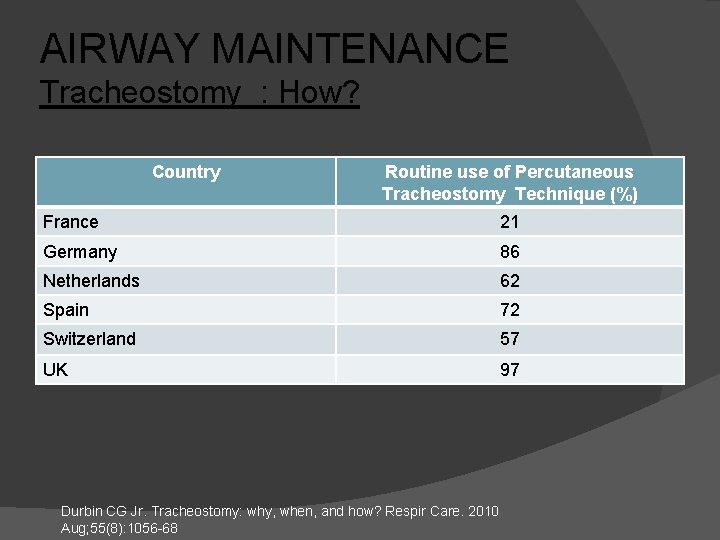
AIRWAY MAINTENANCE Tracheostomy : How? Country Routine use of Percutaneous Tracheostomy Technique (%) France 21 Germany 86 Netherlands 62 Spain 72 Switzerland 57 UK 97 Durbin CG Jr. Tracheostomy: why, when, and how? Respir Care. 2010 Aug; 55(8): 1056 -68
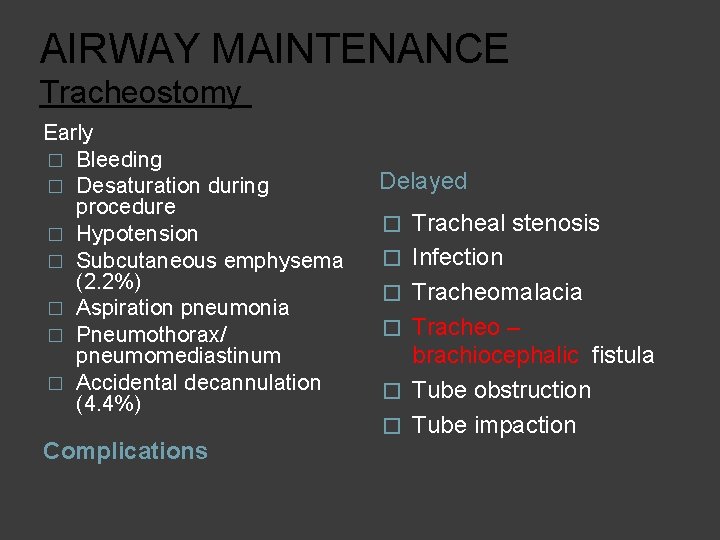
AIRWAY MAINTENANCE Tracheostomy Early � Bleeding � Desaturation during procedure � Hypotension � Subcutaneous emphysema (2. 2%) � Aspiration pneumonia � Pneumothorax/ pneumomediastinum � Accidental decannulation (4. 4%) Delayed � � � Complications Tracheal stenosis Infection Tracheomalacia Tracheo – brachiocephalic fistula Tube obstruction Tube impaction
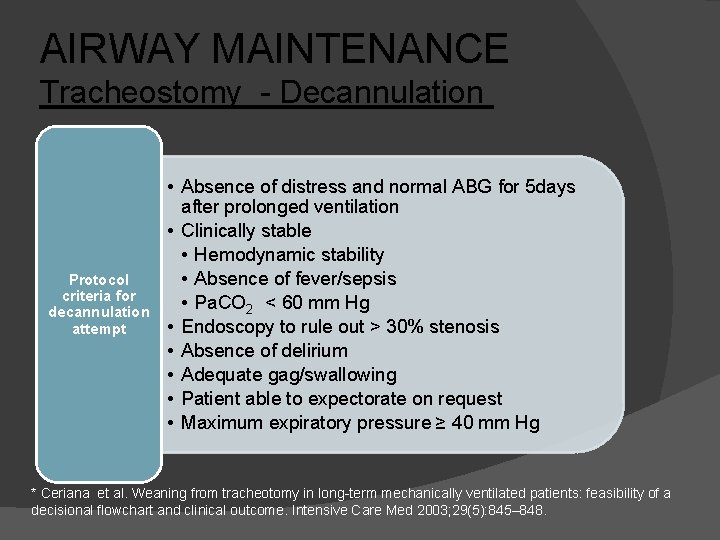
AIRWAY MAINTENANCE Tracheostomy - Decannulation Protocol criteria for decannulation attempt • Absence of distress and normal ABG for 5 days after prolonged ventilation • Clinically stable • Hemodynamic stability • Absence of fever/sepsis • Pa. CO 2 < 60 mm Hg • Endoscopy to rule out > 30% stenosis • Absence of delirium • Adequate gag/swallowing • Patient able to expectorate on request • Maximum expiratory pressure ≥ 40 mm Hg * Ceriana et al. Weaning from tracheotomy in long-term mechanically ventilated patients: feasibility of a decisional flowchart and clinical outcome. Intensive Care Med 2003; 29(5): 845– 848.
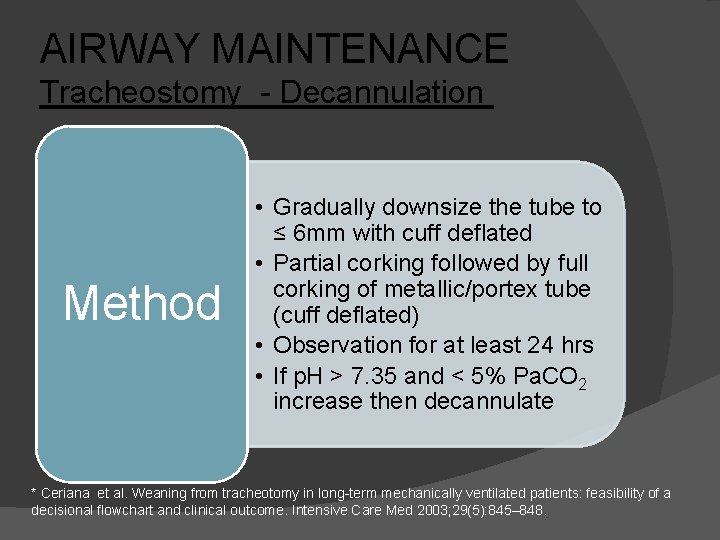
AIRWAY MAINTENANCE Tracheostomy - Decannulation Method • Gradually downsize the tube to ≤ 6 mm with cuff deflated • Partial corking followed by full corking of metallic/portex tube (cuff deflated) • Observation for at least 24 hrs • If p. H > 7. 35 and < 5% Pa. CO 2 increase then decannulate * Ceriana et al. Weaning from tracheotomy in long-term mechanically ventilated patients: feasibility of a decisional flowchart and clinical outcome. Intensive Care Med 2003; 29(5): 845– 848.
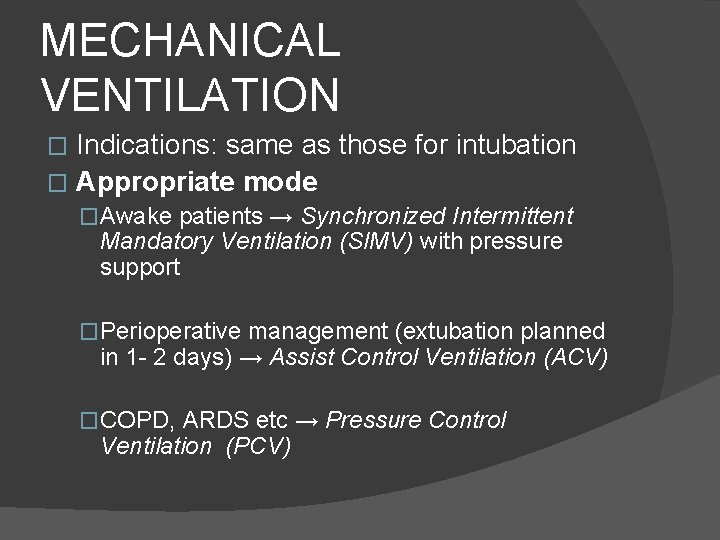
MECHANICAL VENTILATION Indications: same as those for intubation � Appropriate mode � �Awake patients → Synchronized Intermittent Mandatory Ventilation (SIMV) with pressure support �Perioperative management (extubation planned in 1 - 2 days) → Assist Control Ventilation (ACV) �COPD, ARDS etc → Pressure Control Ventilation (PCV)
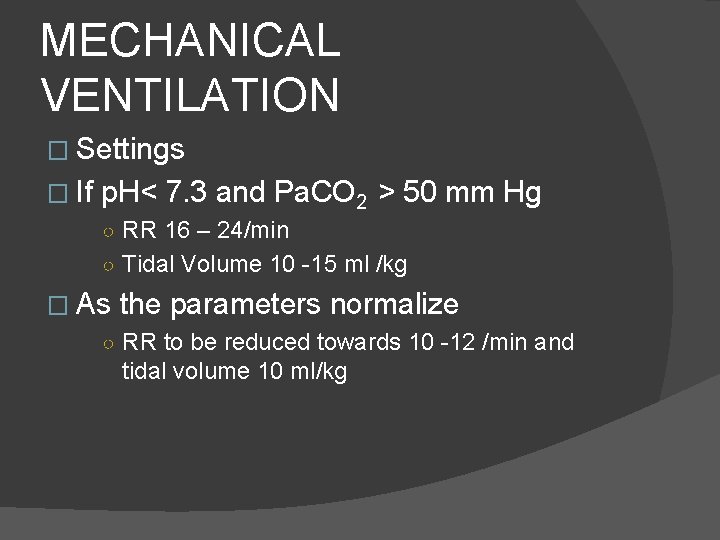
MECHANICAL VENTILATION � Settings � If p. H< 7. 3 and Pa. CO 2 > 50 mm Hg ○ RR 16 – 24/min ○ Tidal Volume 10 -15 ml /kg � As the parameters normalize ○ RR to be reduced towards 10 -12 /min and tidal volume 10 ml/kg
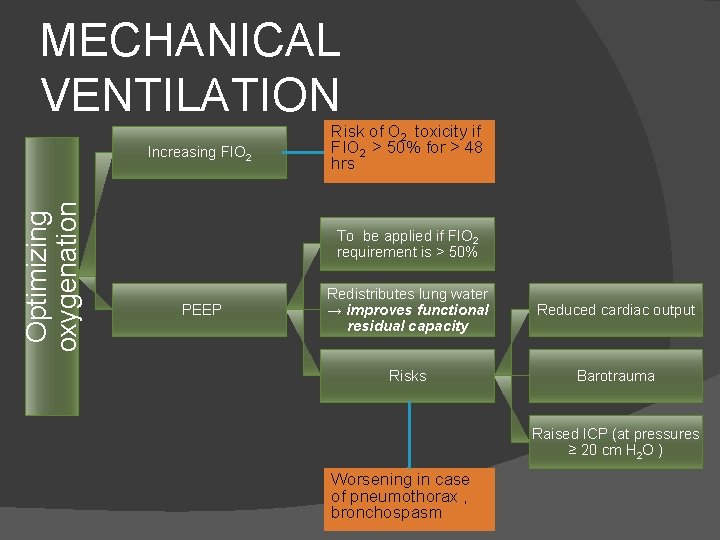
MECHANICAL VENTILATION Optimizing oxygenation Increasing FIO 2 Risk of O 2 toxicity if FIO 2 > 50% for > 48 hrs To be applied if FIO 2 requirement is > 50% PEEP Redistributes lung water → improves functional residual capacity Reduced cardiac output Risks Barotrauma Raised ICP (at pressures ≥ 20 cm H 2 O ) Worsening in case of pneumothorax , bronchospasm
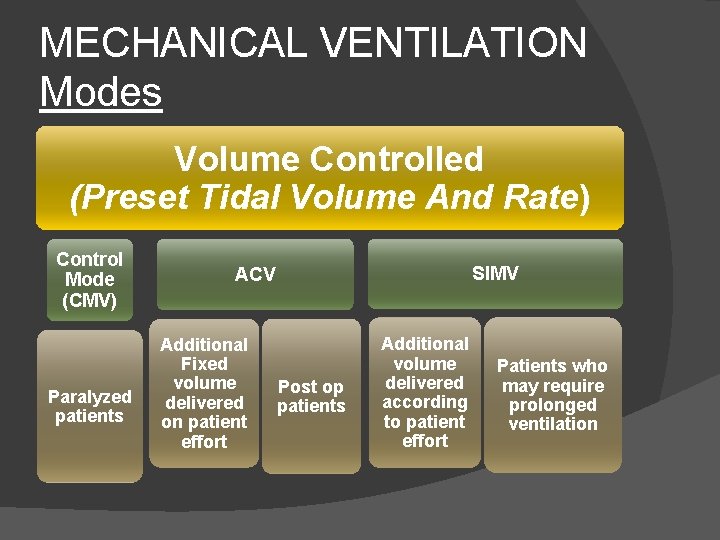
MECHANICAL VENTILATION Modes Volume Controlled (Preset Tidal Volume And Rate) Control Mode (CMV) Paralyzed patients SIMV ACV Additional Fixed volume delivered on patient effort Post op patients Additional volume delivered according to patient effort Patients who may require prolonged ventilation
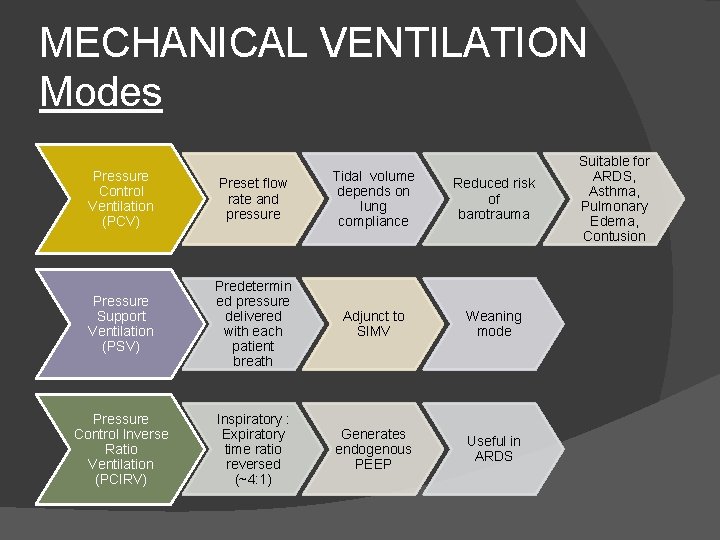
MECHANICAL VENTILATION Modes Pressure Control Ventilation (PCV) Preset flow rate and pressure Tidal volume depends on lung compliance Reduced risk of barotrauma Pressure Support Ventilation (PSV) Predetermin ed pressure delivered with each patient breath Adjunct to SIMV Weaning mode Pressure Control Inverse Ratio Ventilation (PCIRV) Inspiratory : Expiratory time ratio reversed (~4: 1) Generates endogenous PEEP Useful in ARDS Suitable for ARDS, Asthma, Pulmonary Edema, Contusion
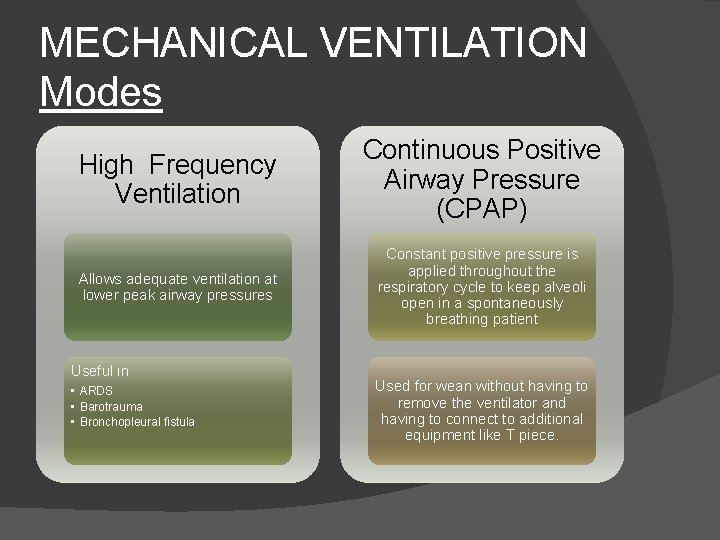
MECHANICAL VENTILATION Modes High Frequency Ventilation Continuous Positive Airway Pressure (CPAP) Allows adequate ventilation at lower peak airway pressures Constant positive pressure is applied throughout the respiratory cycle to keep alveoli open in a spontaneously breathing patient Useful in • ARDS • Barotrauma • Bronchopleural fistula Used for wean without having to remove the ventilator and having to connect to additional equipment like T piece.
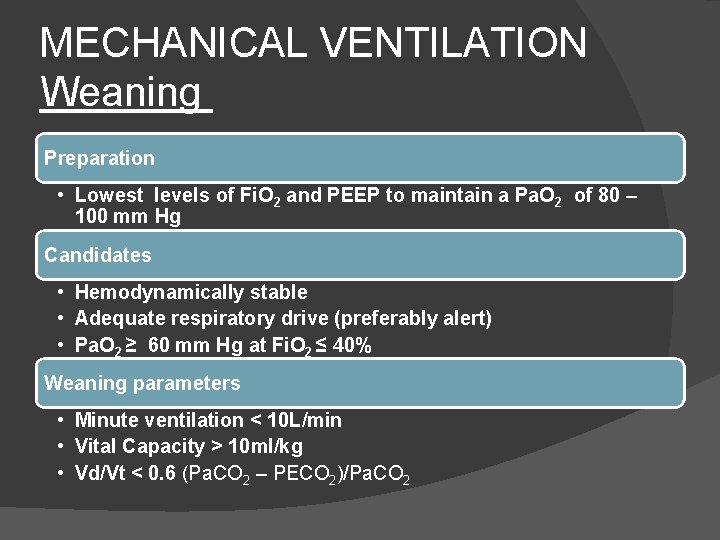
MECHANICAL VENTILATION Weaning Preparation • Lowest levels of Fi. O 2 and PEEP to maintain a Pa. O 2 of 80 – 100 mm Hg Candidates • Hemodynamically stable • Adequate respiratory drive (preferably alert) • Pa. O 2 ≥ 60 mm Hg at Fi. O 2 ≤ 40% Weaning parameters • Minute ventilation < 10 L/min • Vital Capacity > 10 ml/kg • Vd/Vt < 0. 6 (Pa. CO 2 – PECO 2)/Pa. CO 2
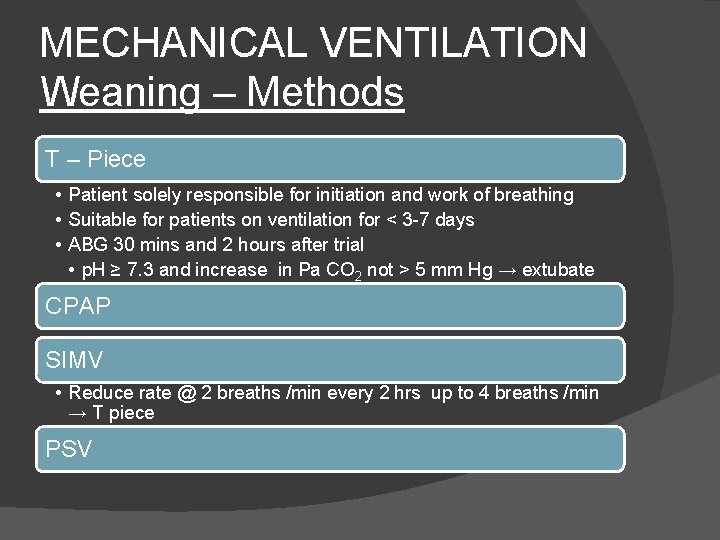
MECHANICAL VENTILATION Weaning – Methods T – Piece • Patient solely responsible for initiation and work of breathing • Suitable for patients on ventilation for < 3 -7 days • ABG 30 mins and 2 hours after trial • p. H ≥ 7. 3 and increase in Pa CO 2 not > 5 mm Hg → extubate CPAP SIMV • Reduce rate @ 2 breaths /min every 2 hrs up to 4 breaths /min → T piece PSV

COMPLICATIONS Mechanical Ventilation Technical • • Disconnection Electronic malfunction Wrong settings Bed side Ambu Bag to be ready at all times • • Hemodynamic • • Hypotension Rule out pneumothorax Responds to fluid bolus Reduce PEEP/Tidal Volume
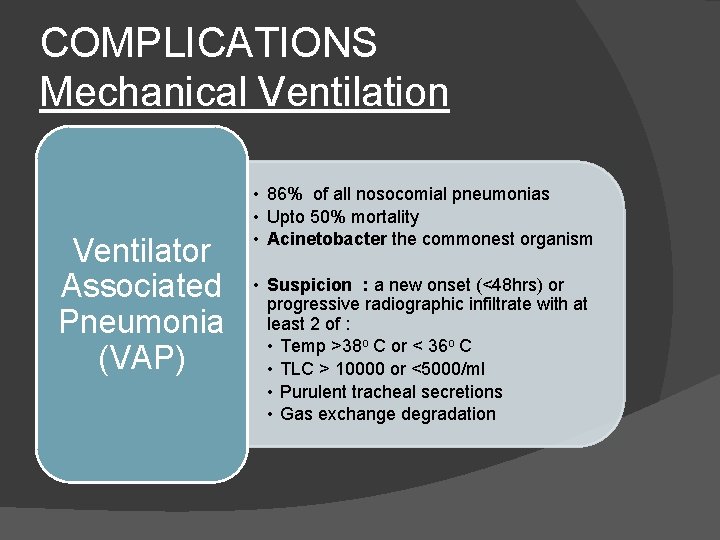
COMPLICATIONS Mechanical Ventilation Ventilator Associated Pneumonia (VAP) • 86% of all nosocomial pneumonias • Upto 50% mortality • Acinetobacter the commonest organism • Suspicion : a new onset (<48 hrs) or progressive radiographic infiltrate with at least 2 of : • Temp >38 o C or < 36 o C • TLC > 10000 or <5000/ml • Purulent tracheal secretions • Gas exchange degradation
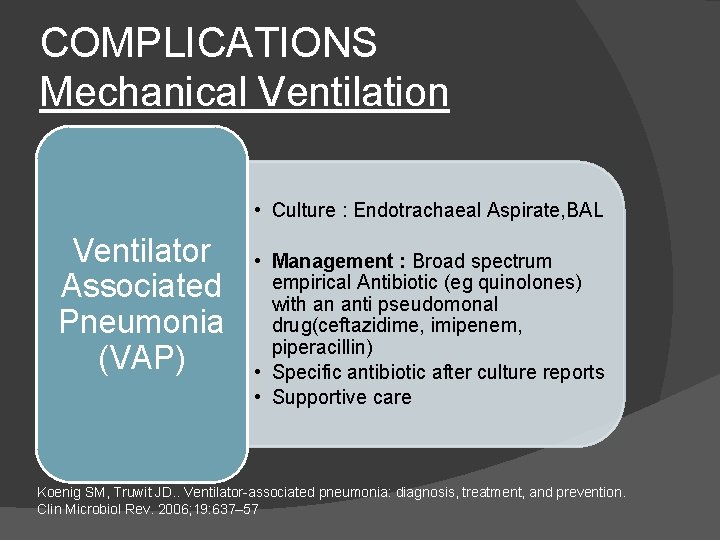
COMPLICATIONS Mechanical Ventilation • Culture : Endotrachaeal Aspirate, BAL Ventilator Associated Pneumonia (VAP) • Management : Broad spectrum empirical Antibiotic (eg quinolones) with an anti pseudomonal drug(ceftazidime, imipenem, piperacillin) • Specific antibiotic after culture reports • Supportive care Koenig SM, Truwit JD. . Ventilator-associated pneumonia: diagnosis, treatment, and prevention. Clin Microbiol Rev. 2006; 19: 637– 57
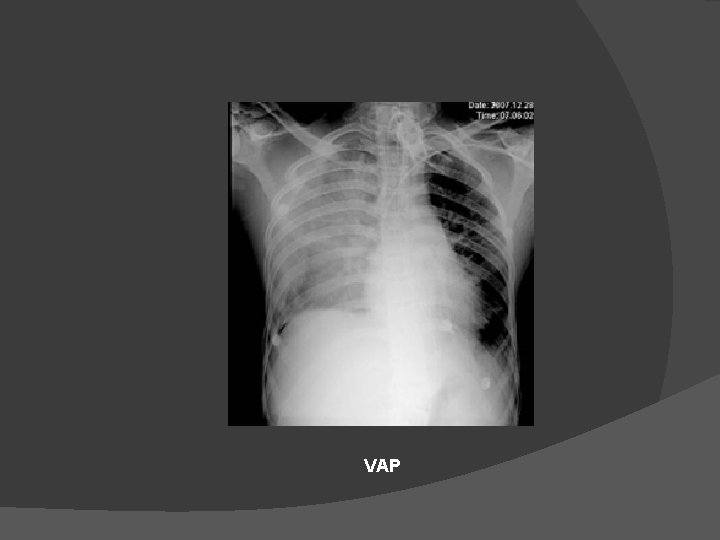
VAP
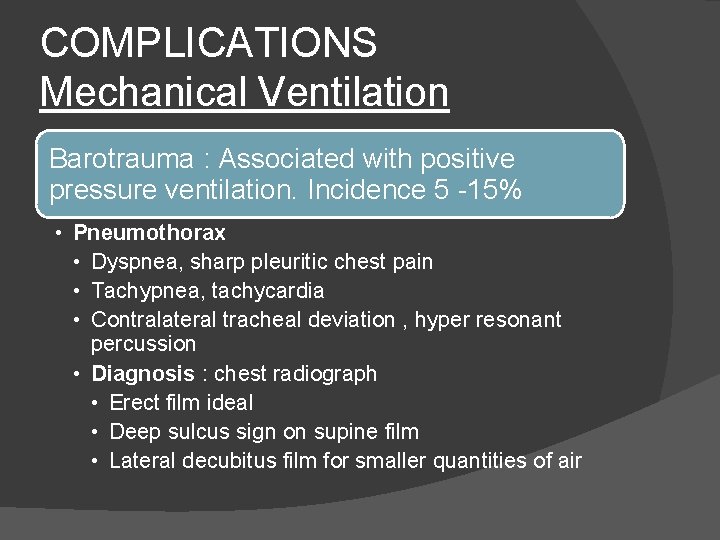
COMPLICATIONS Mechanical Ventilation Barotrauma : Associated with positive pressure ventilation. Incidence 5 -15% • Pneumothorax • Dyspnea, sharp pleuritic chest pain • Tachypnea, tachycardia • Contralateral tracheal deviation , hyper resonant percussion • Diagnosis : chest radiograph • Erect film ideal • Deep sulcus sign on supine film • Lateral decubitus film for smaller quantities of air
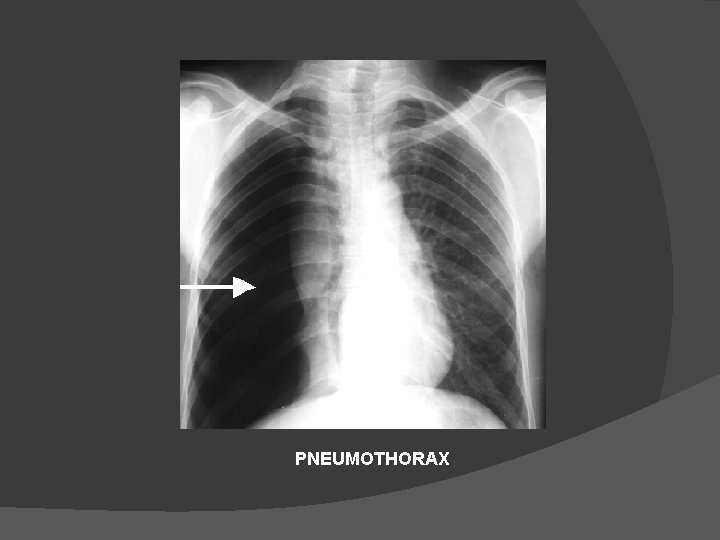
PNEUMOTHORAX
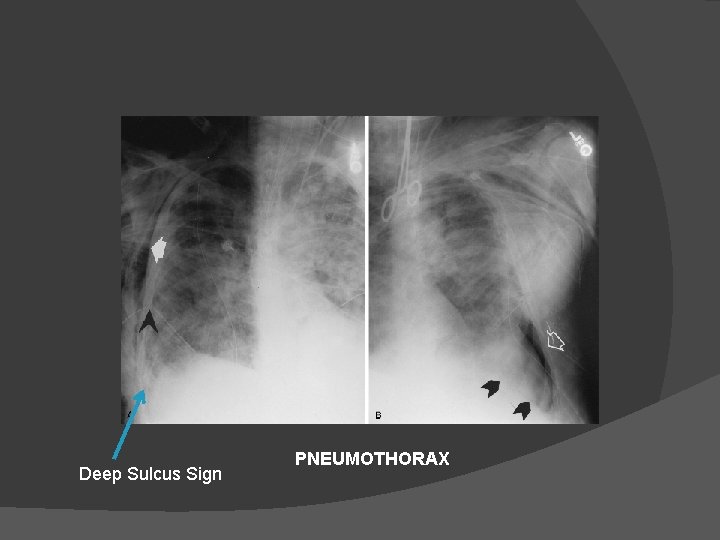
Deep Sulcus Sign PNEUMOTHORAX
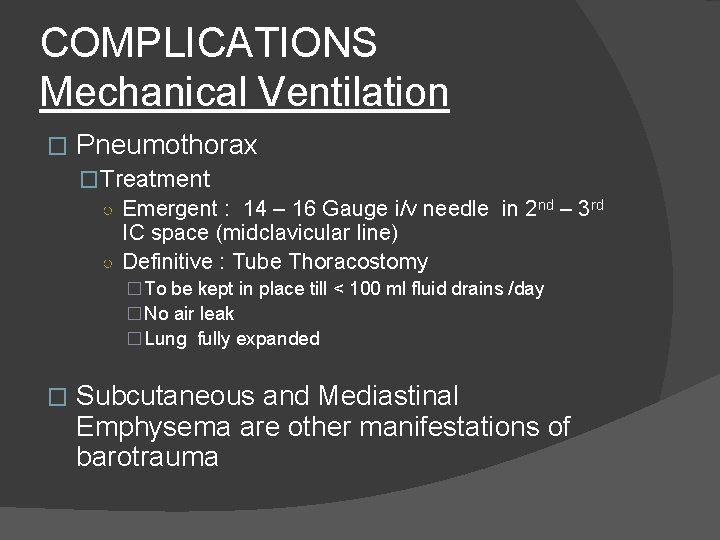
COMPLICATIONS Mechanical Ventilation � Pneumothorax �Treatment ○ Emergent : 14 – 16 Gauge i/v needle in 2 nd – 3 rd IC space (midclavicular line) ○ Definitive : Tube Thoracostomy � To be kept in place till < 100 ml fluid drains /day � No air leak � Lung fully expanded � Subcutaneous and Mediastinal Emphysema are other manifestations of barotrauma
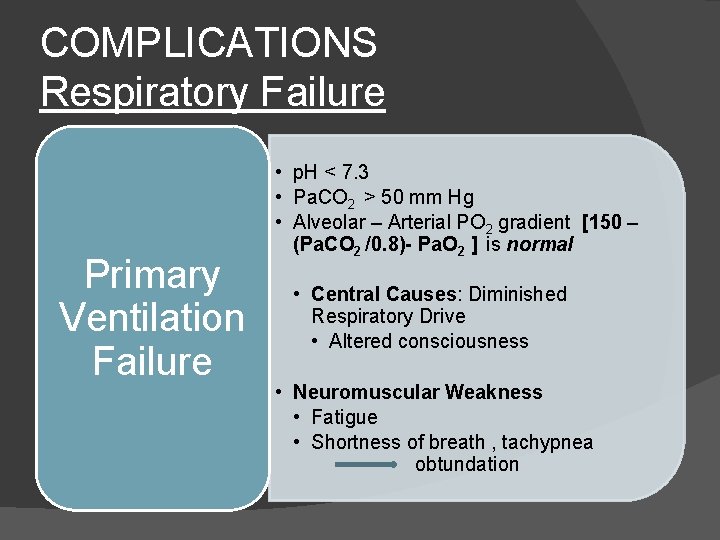
COMPLICATIONS Respiratory Failure Primary Ventilation Failure • p. H < 7. 3 • Pa. CO 2 > 50 mm Hg • Alveolar – Arterial PO 2 gradient [150 – (Pa. CO 2 /0. 8)- Pa. O 2 ] is normal • Central Causes: Diminished Respiratory Drive • Altered consciousness • Neuromuscular Weakness • Fatigue • Shortness of breath , tachypnea obtundation
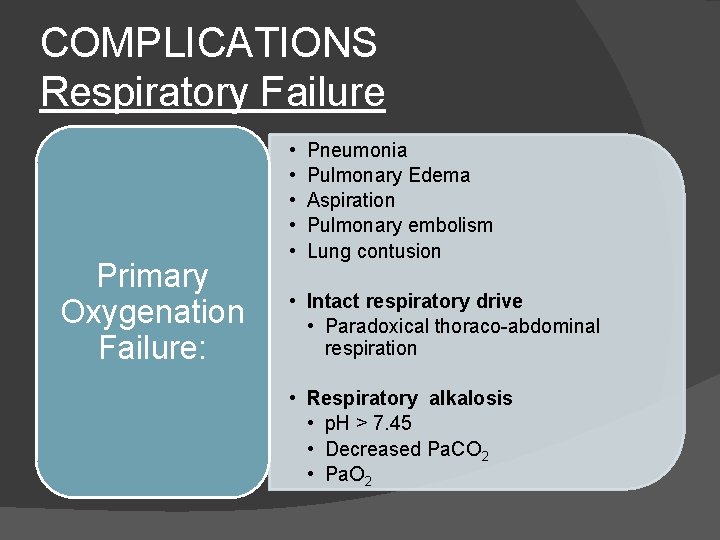
COMPLICATIONS Respiratory Failure Primary Oxygenation Failure: • • • Pneumonia Pulmonary Edema Aspiration Pulmonary embolism Lung contusion • Intact respiratory drive • Paradoxical thoraco-abdominal respiration • Respiratory alkalosis • p. H > 7. 45 • Decreased Pa. CO 2 • Pa. O 2
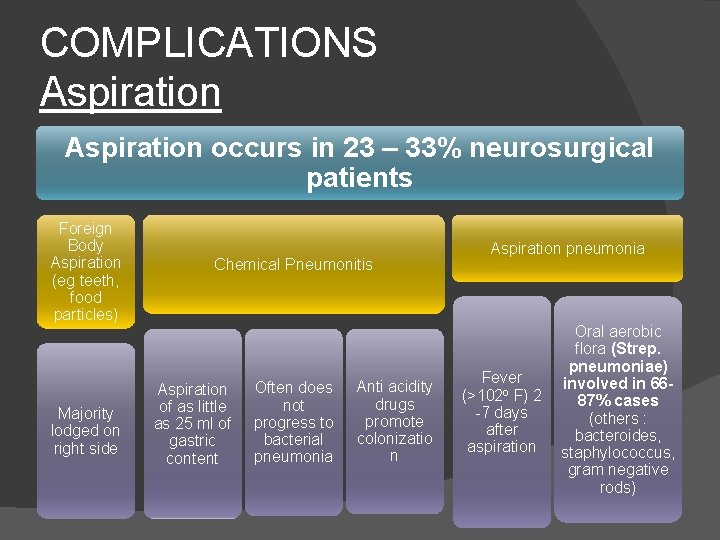
COMPLICATIONS Aspiration occurs in 23 – 33% neurosurgical patients Foreign Body Aspiration (eg teeth, food particles) Majority lodged on right side Chemical Pneumonitis Aspiration of as little as 25 ml of gastric content Often does not progress to bacterial pneumonia Anti acidity drugs promote colonizatio n Aspiration pneumonia Fever (>102 o F) 2 -7 days after aspiration Oral aerobic flora (Strep. pneumoniae) involved in 6687% cases (others : bacteroides, staphylococcus, gram negative rods)
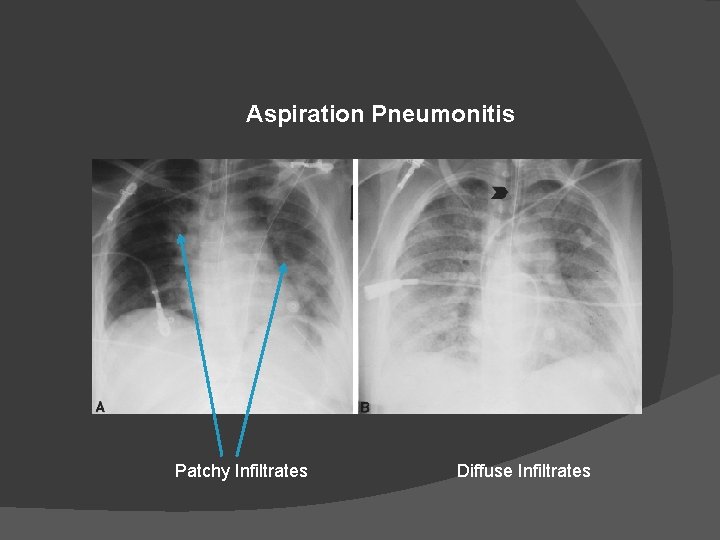
Aspiration Pneumonitis Patchy Infiltrates Diffuse Infiltrates

COMPLICATIONS Aspiration � Treatment �Bronchoscopy foreign body �Empirical antibiotics ○ Penicillin group drugs for community acquired aspiration pneumonia ○ Piperacillin + aminoglycoside for nosocomial aspiration �Change as per culture reports �Empirical corticosteroids and PEEP may not be beneficial
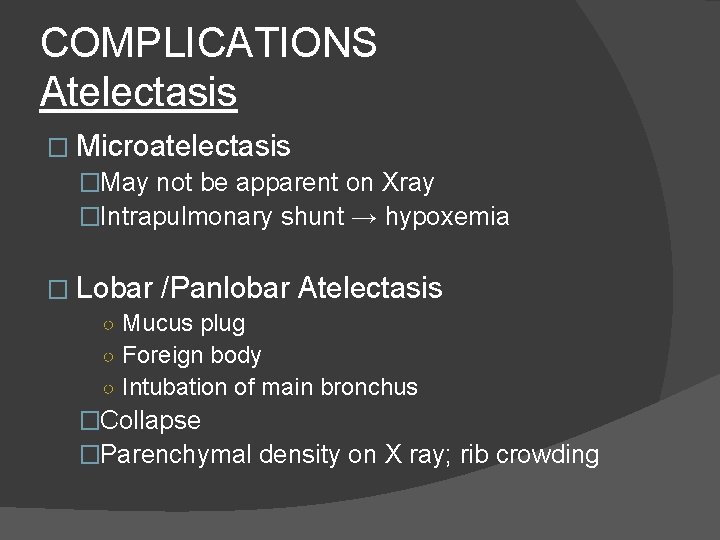
COMPLICATIONS Atelectasis � Microatelectasis �May not be apparent on Xray �Intrapulmonary shunt → hypoxemia � Lobar /Panlobar Atelectasis ○ Mucus plug ○ Foreign body ○ Intubation of main bronchus �Collapse �Parenchymal density on X ray; rib crowding
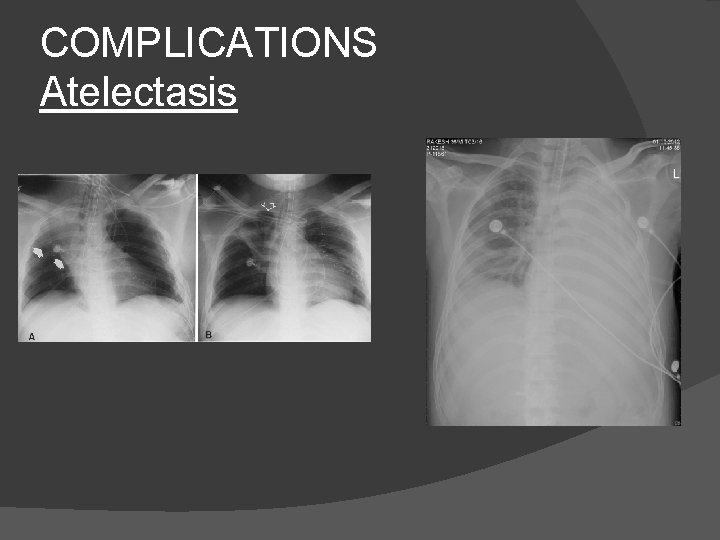
COMPLICATIONS Atelectasis
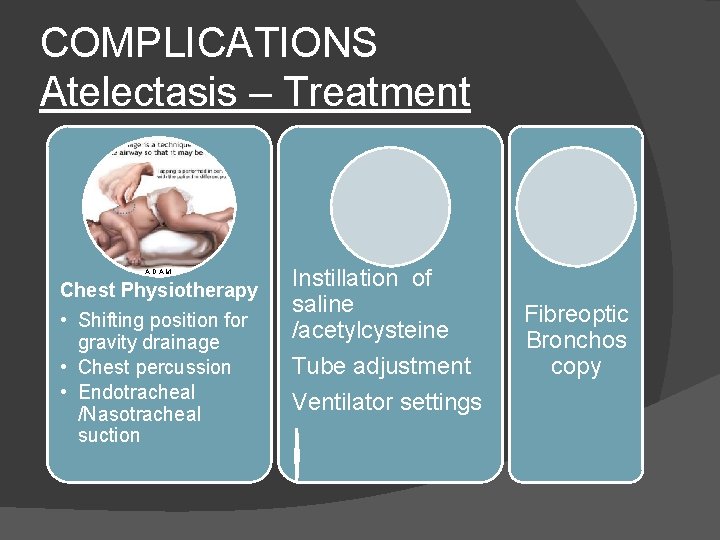
COMPLICATIONS Atelectasis – Treatment A. D. A. M. Chest Physiotherapy • Shifting position for gravity drainage • Chest percussion • Endotracheal /Nasotracheal suction Instillation of saline /acetylcysteine Tube adjustment Ventilator settings Fibreoptic Bronchos copy

COMPLICATIONS Pulmonary Edema � Clinically: �Dyspnea �Cough �Bilateral crackles �Occasionally wheeze � ABG �↓ed Pa. O 2 �Widened Alveolar- Arterial PO 2 Gradient � � Cardiogenic Non Cardiogenic
COMPLICATIONS Pulmonary Edema � Cardiogenic �Elevated Pulmonary Artery Wedge Pressure (> 18 mm Hg) �Diminished cardiac output �Jugular venous distension �Increased systemic vascular resistance � Treatment �Pre load reduction ○ Loop diuretics (i/v furosemide 20 – 80 mg 6 hrly) ○ Morphine �Inotropes �Ventilation with PEEP as needed
COMPLICATIONS Pulmonary Edema � Non-Cardiogenic � ARDS �Pulmonary artery wedge pressure < 18 mm. Hg �No jugular venous distension �Mortality 60 – 70% �Treatment ○ Oxygenation - mechanical ventilation with PEEP �Pressure Control Inverse Ratio Ventilation �High Frequency jet ventilation
COMPLICATIONS Pulmonary Edema � Non-Cardiogenic � Neurogenic Pulmonary Edema �Incidence 11 -71% �SAH, Head Injury �Mechanism : ○ Increased Sympathetic Discharge ○ Inflammatory mediators �Treatment : Supportive
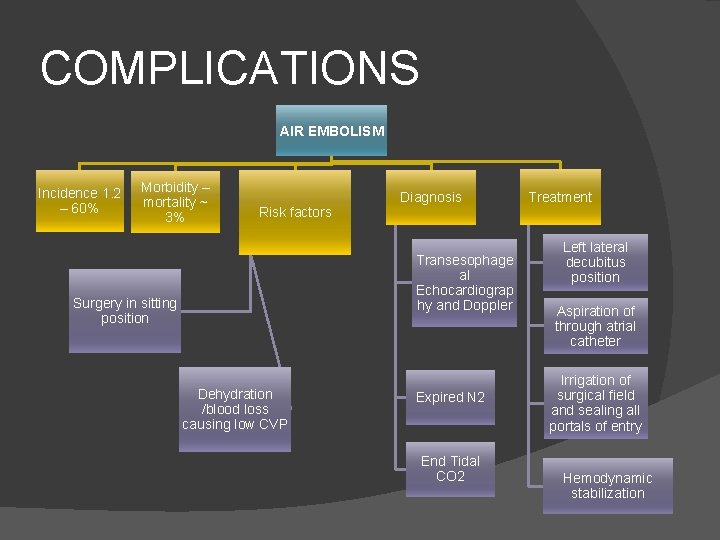
COMPLICATIONS AIR EMBOLISM Incidence 1. 2 – 60% Morbidity – mortality ~ 3% Risk factors Diagnosis Transesophage al Echocardiograp hy and Doppler Surgery in sitting position Dehydration /blood loss causing low CVP Expired N 2 End Tidal CO 2 Treatment Left lateral decubitus position Aspiration of through atrial catheter Irrigation of surgical field and sealing all portals of entry Hemodynamic stabilization
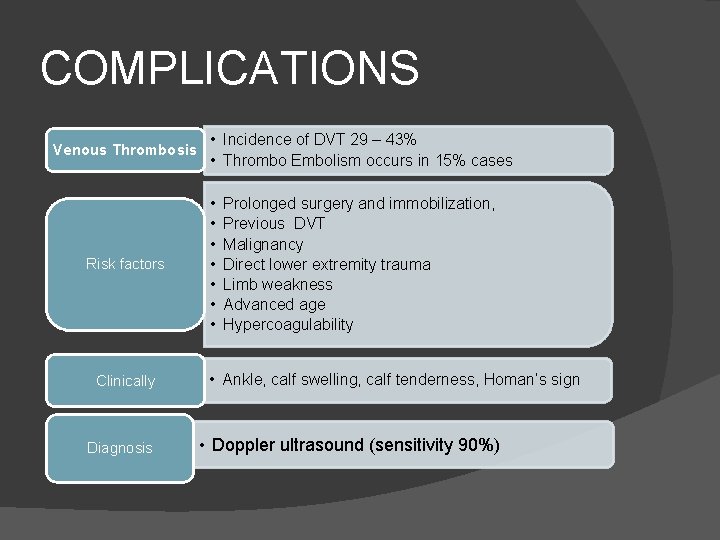
COMPLICATIONS Venous Thrombosis Risk factors Clinically Diagnosis • Incidence of DVT 29 – 43% • Thrombo Embolism occurs in 15% cases • • Prolonged surgery and immobilization, Previous DVT Malignancy Direct lower extremity trauma Limb weakness Advanced age Hypercoagulability • Ankle, calf swelling, calf tenderness, Homan’s sign • Doppler ultrasound (sensitivity 90%)
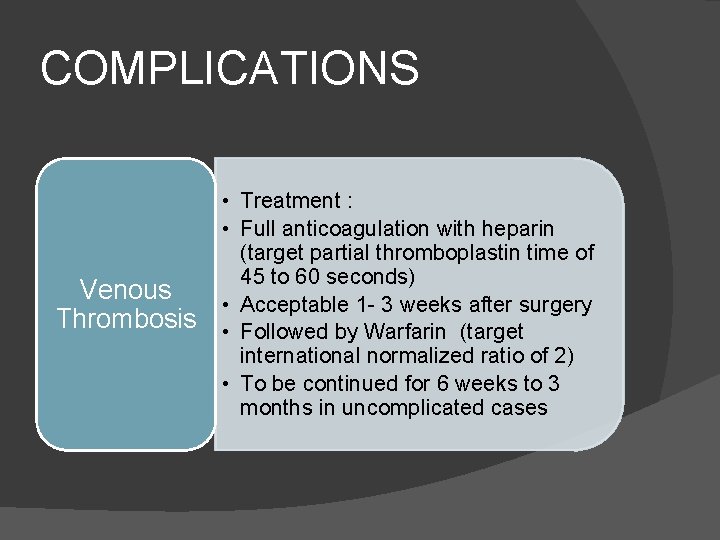
COMPLICATIONS Venous Thrombosis • Treatment : • Full anticoagulation with heparin (target partial thromboplastin time of 45 to 60 seconds) • Acceptable 1 - 3 weeks after surgery • Followed by Warfarin (target international normalized ratio of 2) • To be continued for 6 weeks to 3 months in uncomplicated cases
COMPLICATIONS Pulmonary Embolism: presentation • Tachypnea • Pleuritic chest pain • Dyspnea • Cough • Jugular venous distension • Fever • Altered sensorium Investigations • Po 2 of < 80 mm Hg (85%) • Right axis deviation on ECG • Infiltrates on Chest X-ray • Spiral CT (preferred) • Angiography (Gold Standard) • Radio nucleotide perfusion scan (sensitive)
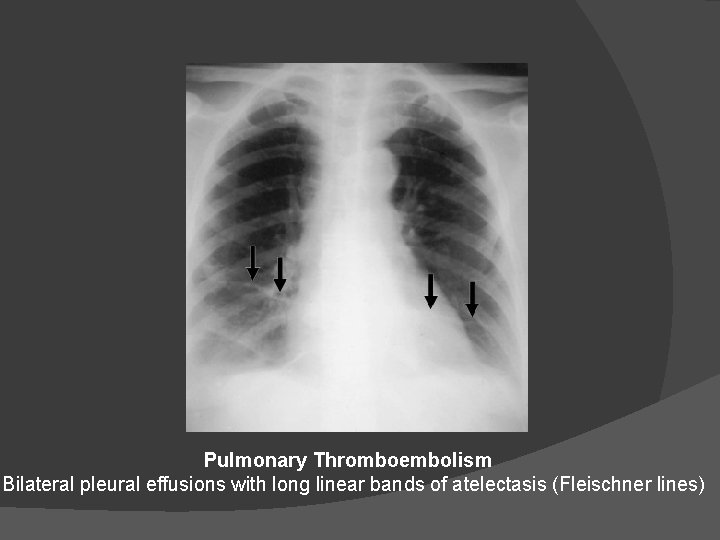
Pulmonary Thromboembolism Bilateral pleural effusions with long linear bands of atelectasis (Fleischner lines)
COMPLICATIONS Pulmonary Embolism Treatment • Ventilatory support • Vasopressors • Full anticoagulation with heparin infusion (target partial thromboplastin time of 45 to 60 seconds) despite risk of intracranial bleed. • i/v Heparin 5000 -10000 IU bolus followed by 1000 IU/hr infusion • Pulmonary embolectomy (last resort)
COMPLICATIONS Pulmonary Embolism � DVT prophylaxis �Graded Compression Stockings; Intermittent Pneumatic Compression Devices �Low dose heparin (5000 IU twice daily) �Low Molecular Weight Heparin �IVC Filter - Greenfield filter
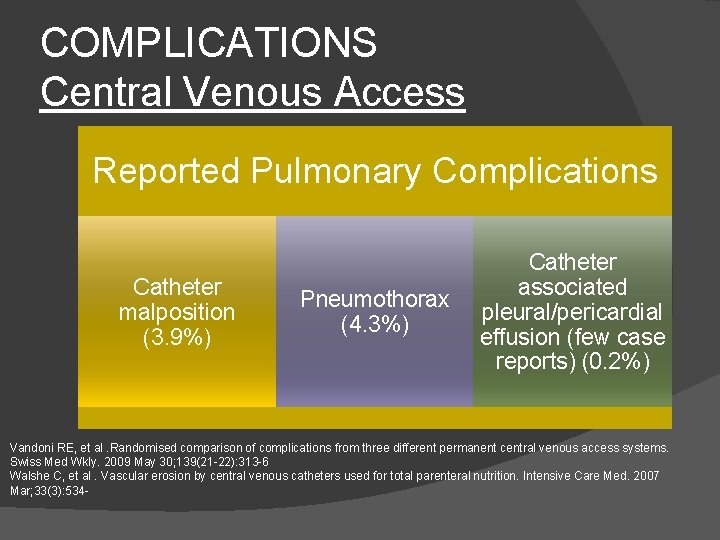
COMPLICATIONS Central Venous Access Reported Pulmonary Complications Catheter malposition (3. 9%) Pneumothorax (4. 3%) Catheter associated pleural/pericardial effusion (few case reports) (0. 2%) Vandoni RE, et al. Randomised comparison of complications from three different permanent central venous access systems. Swiss Med Wkly. 2009 May 30; 139(21 -22): 313 -6 Walshe C, et al. Vascular erosion by central venous catheters used for total parenteral nutrition. Intensive Care Med. 2007 Mar; 33(3): 534 -
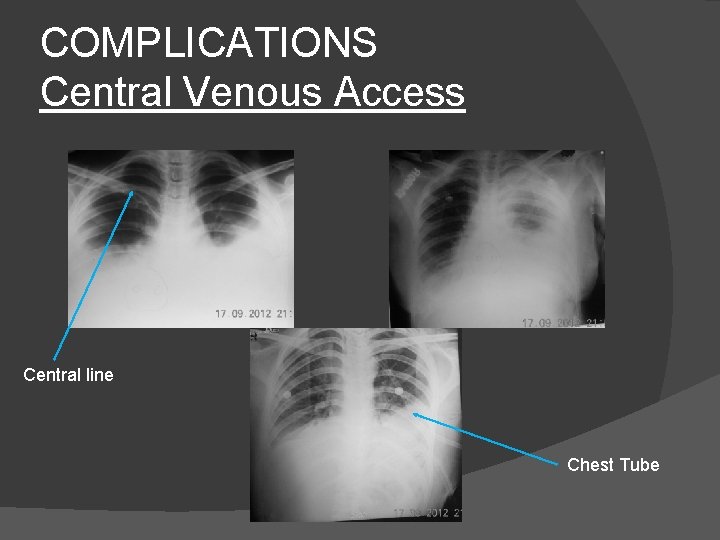
COMPLICATIONS Central Venous Access Central line Chest Tube
CONCLUSION � Pulmonary complications are one of the most common causes of morbidity and mortality in neurosurgical patients � Many conditions require strong index of suspicion for timely diagnosis and treatment � Serial Chest X rays and ABG are indispensable � Timely intervention may help avert morbidity and mortality in many cases.
- Slides: 68