
Pulmonary circulation Ventilationperfusion ratio Dr B Kalpana At
Pulmonary circulation, Ventilation-perfusion ratio Dr B. Kalpana
At the end of class students should be able to: 1. Explain the special features of pulmonary circulation 2. List the factors affecting pulmonary blood flow 3. List the importance of ventilation-perfusion ratio.
Pulmonary circulation
Functions of pulmonary circulation • • Gas exchange Serves as filter Metabolic functions Serves as blood reservoir
Special features of pulmonary circulation • Pulmonary artery and its branches-thin walls and less smooth muscles • Mean arterial pressure-15 mm. Hg • More compliant • Accommodate large amount of blood. • Pulmonary veins-more complaint • Pulmonary capillaries-does not form capillary network. • Pulmonary artery carries deoxygenated blood from heart to lungs and pulmonary veins carry oxygenated blood from lungs to heart.
Pulmonary vascular resistance is very low. • Helps in uptake of oxygen and removal of carbon-dioxide • Facilitates the diffusion of gases across respiratory membrane • Prevents pulmonary edema.

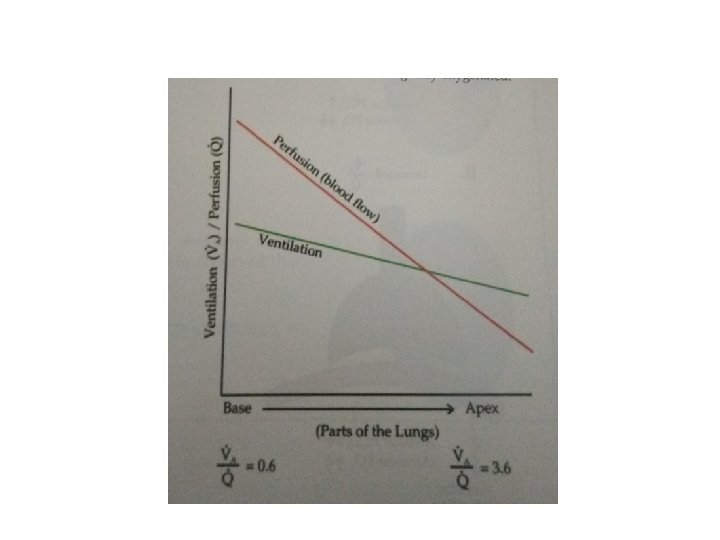
Ventilation-Perfusion ratio • • Ratio of alveolar ventilation and the amount of the blood that perfuses the alveoli Rate of alveolar ventilation (VA) – 4. 2 liters/min Rate of alveolar perfusion (Q) =5 liters The ventilation-perfusion ratio = VA/Q = 4. 2/5 = 0. 84 Important to maintain the alveolar PO 2 & PCO 2
Importance of VA/Q – important in gas exchange • At apex VA/Q is high-more ventilation relative to blood flow. • At the base VA/Q is low. • Thus some amount of blood circulates without getting fully oxygenated.
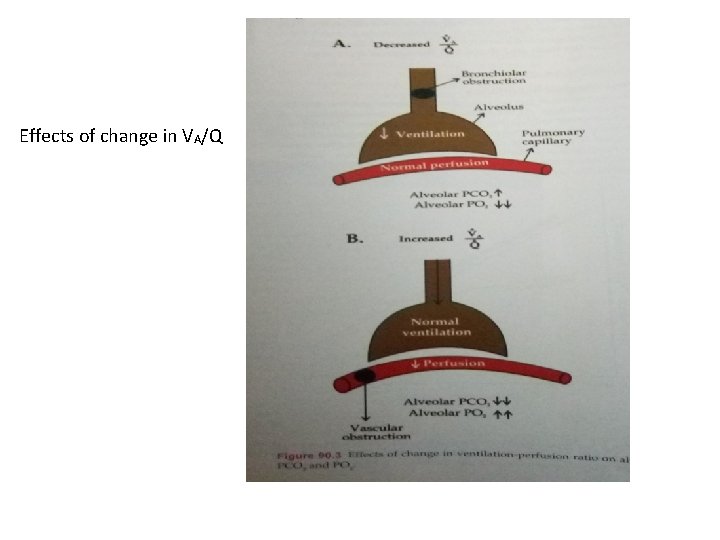
Effects of change in VA/Q
• Venous admixture-mixing of unoxygenated blood with oxygenated blood • Shunt or low VA/Q • Shunt-channel in which blood bypasses the lungs

Summary
References • Comprehensive Textbook of Medical physiology (Vol 2 first edition) G K Pal • Text book of medical physiology (Vol 2 6 th edition) A K Jain • Text book of medical physiology (Twelfth edition) GUYTON and HALL AEJ 13
- Slides: 13