
Public Speaking in Debating The Structure Tips Dos
Public Speaking in Debating The Structure, Tips, Dos and Don’ts
What is Debating? – an argument with rules – two teams present a resolution (sometimes called a proposition) or topic that they will debate – Timed arguments – One team is for the resolution (PRO or affirmative) and the other team is (AGAINST or negative) – a judge, or a panel of judges decides at the end of the debate who is the winner
Public Speaking Debate Structure – Teams will be made up of 8 people Students will be placed on their specific team and on either the pro or con side – Students will divide the following positions: – Opening – Closing – Proposing – Rebutting – Countering – Teams will have a maximum of 2 minutes per point, 1 minute per rebuttals, with 30 seconds between rebuttals – A coin toss will decide who is team 1 and who is team 2
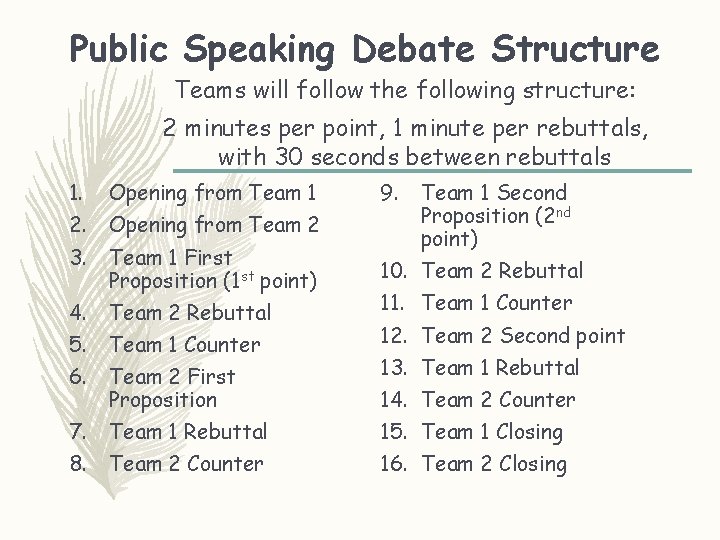
Public Speaking Debate Structure Teams will follow the following structure: 2 minutes per point, 1 minute per rebuttals, with 30 seconds between rebuttals 1. 2. 3. Opening from Team 1 4. 5. 6. Team 2 Rebuttal 7. 8. Team 1 Rebuttal 9. Team 1 Second Proposition (2 nd point) 10. 11. 12. 13. 14. 15. 16. Team 2 Rebuttal Opening from Team 2 Team 1 First Proposition (1 st point) Team 1 Counter Team 2 First Proposition Team 2 Counter Team 1 Counter Team 2 Second point Team 1 Rebuttal Team 2 Counter Team 1 Closing Team 2 Closing
Do’s and Don’ts • DON’T side track your opponents with irrelevant points, stay on topic. • DON’T attack your opponents. • DO stick to your planned, researched arguments.
• DO thoroughly research your topic and position, the best start to squashing a rebuttal is a well researched, well designed presentation. • DON’T simply state facts: • This is the path to being a dull speaker • Not stating sources or not backing up statements can lead to heavy rebuttal from your opponents
• DO use humor and / or anecdotes in your speaking: • Using examples helps illustrate your position, and uses an argument of precedence • Make sure your information is appropriate
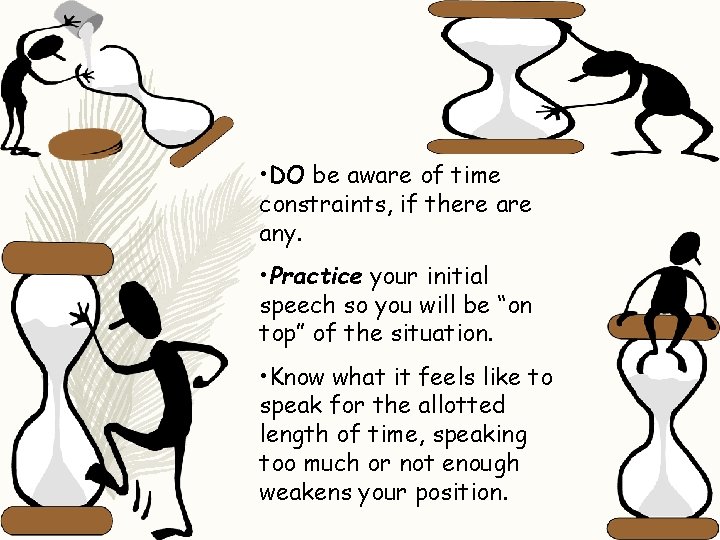
• DO be aware of time constraints, if there any. • Practice your initial speech so you will be “on top” of the situation. • Know what it feels like to speak for the allotted length of time, speaking too much or not enough weakens your position.
• DON’T try to “juggle” too many points at once. State your ideas in a logical order. • TIP: the more you practice and plan your speaking, the less nervous you will be. • DON’T use inappropriate language or gestures: • People will ignore your information if not presented in an appropriate manner.
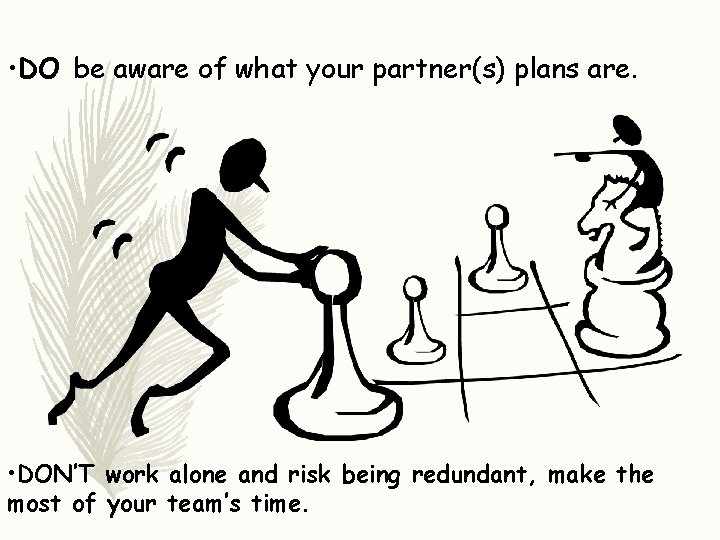
• DO be aware of what your partner(s) plans are. • DON’T work alone and risk being redundant, make the most of your team’s time.
• DO recycle information in your closing speech. • Remember: The closing Remember: speaker(s) should sum up all relevant arguments and rebuttals without introducing any new information.
TIPS – Cue cards can help a debater to stay focused, but DON’T read from them, use them as a guide. – Speak to the audience or moderator – Research both sides of the argument to prepare for the rebuttals and opposite arguments – Strategically plan your arguments. Save your best and most polished points for last

Follow these tips and suggestions, and everything will come together for a successful debate!
- Slides: 13