
Public Service Reform Program in Tanzania PSRP Medium
Public Service Reform Program in Tanzania (PSRP) Medium Term Pay Policy
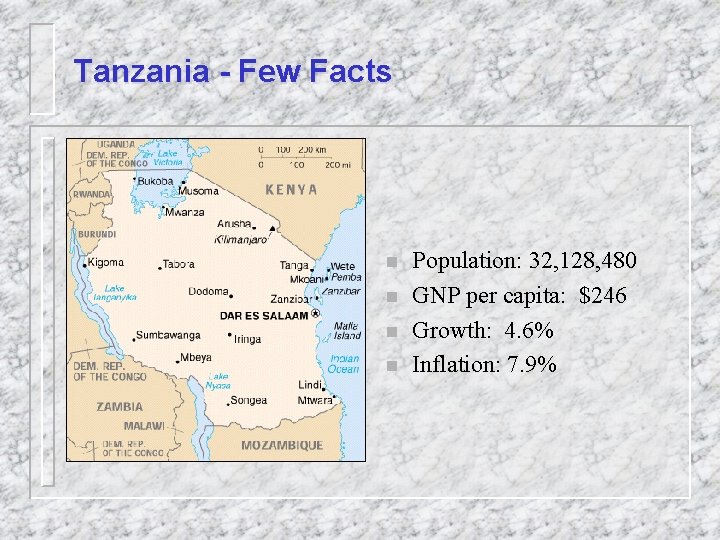
Tanzania - Few Facts n n Population: 32, 128, 480 GNP per capita: $246 Growth: 4. 6% Inflation: 7. 9%
Tanzania an interesting case for pay reform n n Classic collapse of the state Cost containment phase Serious effort at civil service reform incorporating structural reform Addressing pay issue as a key feature of its civil service reform
What was the situation in Tanzania before the civil service reform (late 80 s)? n Public expenditure framework expanded far beyond what GOT could afford Public administration overstaffed/underfunded Establishment/payroll control fell into disuse Wage bill was out of control n Civil servants demotivated: n n n – – – downward trends in real incomes political interference in appointments and pay decisions growing informality
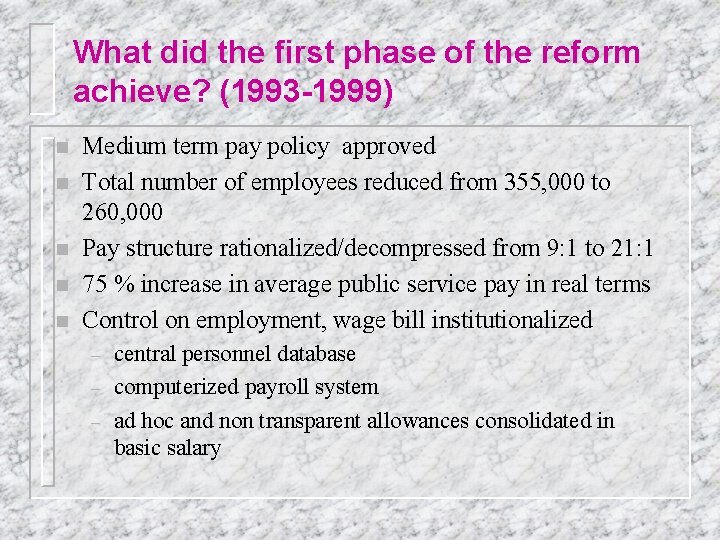
What did the first phase of the reform achieve? (1993 -1999) n n n Medium term pay policy approved Total number of employees reduced from 355, 000 to 260, 000 Pay structure rationalized/decompressed from 9: 1 to 21: 1 75 % increase in average public service pay in real terms Control on employment, wage bill institutionalized – – – central personnel database computerized payroll system ad hoc and non transparent allowances consolidated in basic salary
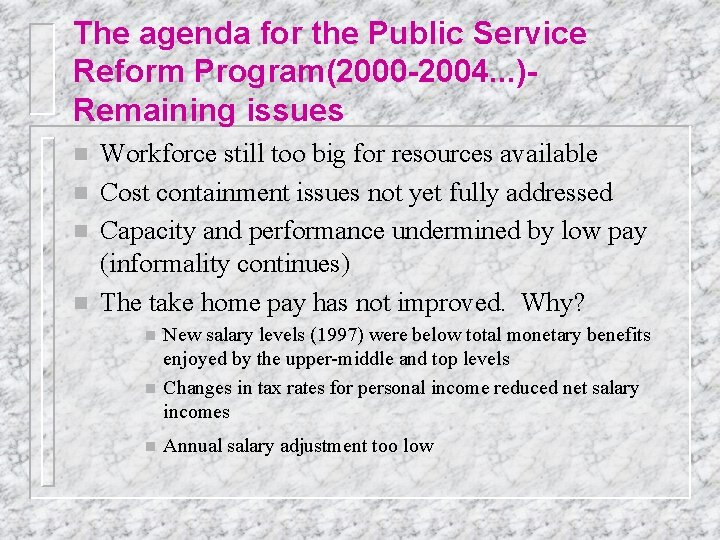
The agenda for the Public Service Reform Program(2000 -2004. . . )Remaining issues n n Workforce still too big for resources available Cost containment issues not yet fully addressed Capacity and performance undermined by low pay (informality continues) The take home pay has not improved. Why? n n n New salary levels (1997) were below total monetary benefits enjoyed by the upper-middle and top levels Changes in tax rates for personal income reduced net salary incomes Annual salary adjustment too low
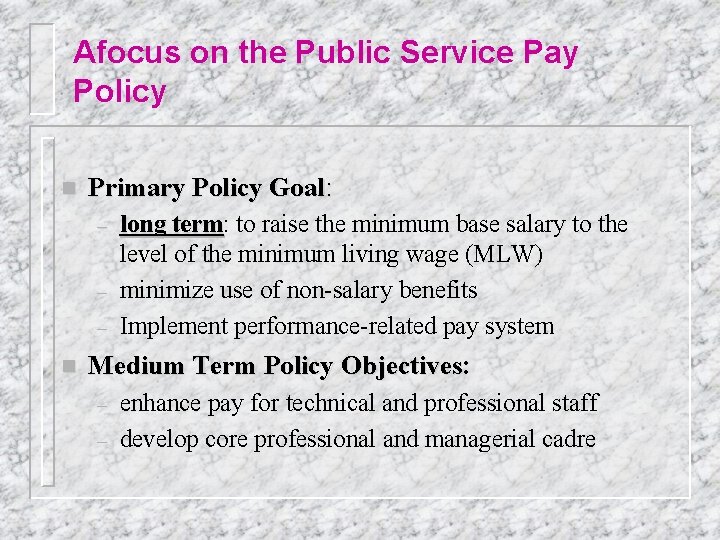
Afocus on the Public Service Pay Policy n Primary Policy Goal: – – – n long term: term to raise the minimum base salary to the level of the minimum living wage (MLW) minimize use of non-salary benefits Implement performance-related pay system Medium Term Policy Objectives: – – enhance pay for technical and professional staff develop core professional and managerial cadre
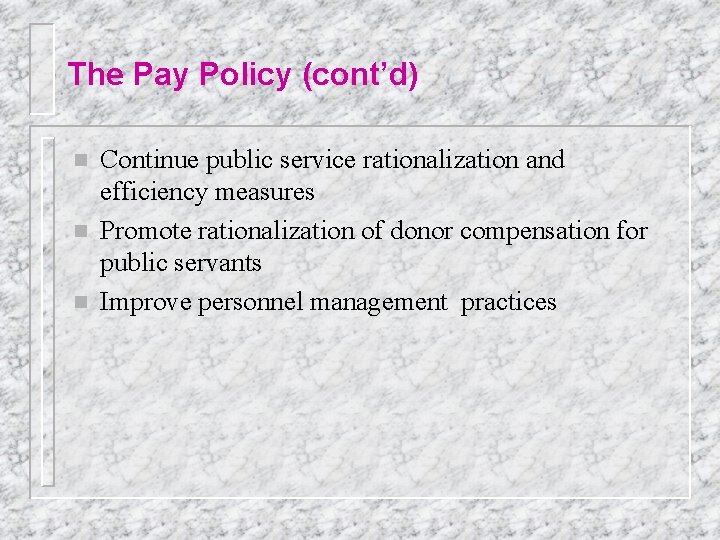
The Pay Policy (cont’d) n n n Continue public service rationalization and efficiency measures Promote rationalization of donor compensation for public servants Improve personnel management practices
What has been done so far n Pay reform implementation study: – wage-bill to GDP ratio of 4. 9% to be adopted over the medium term – linkages pay/performance based on transparent appraisal system – new grade structure (fewer bands, multiple steps) – Local authorities to be strengthened to manage resources and personnel functions – new approach to donor supplementation of salaries or “local cost compensation”
Local Cost Compensation or “donor supplementation” n n Extent of donor supplementation: $50 -100 million/FY 99 -00 Effects of donor supplementation: – – – Unsustainable Does not promote long term capacity Reported as development expenditure therefore does not reflect true cost of delivering services
How does Tanzania intend to deal with this issue? A proposal n Scheme to complement pay policy and to support an accelerated pace of salary enhancement for managerial, professional and technical personnel.
Where does that leave Tanzania? Pay reform is a slow process - need to target n Pay has improved but is still too low n How to finance local cost compensation? n – – – HIPC? MDRF? Separate fund?
- Slides: 12