
PUBLIC SERVICE MOTIVATION RESEARCH LESSONS FOR PRACTICE James
PUBLIC SERVICE MOTIVATION RESEARCH: LESSONS FOR PRACTICE James L. Perry Indiana University, Bloomington and The University of Hong Kong Geumgang University, November 7, 2016
PREVIEW �Motivation constructs: definition and measurement �Recent research activity �Public service motivation: state or trait? �Lessons from the research

WHAT IS PUBLIC SERVICE MOTIVATION? • Public Service Motivation An individual’s predisposition to respond to motives grounded primarily or uniquely in public institutions and organizations (Perry & Wise, 1990) • Altruism Motivation based on consideration of another’s needs rather than one’s own • Prosocial Motivation Desire to have a positive impact on other people, groups, and organizations
DEFINITIONS, continued The concepts converge around their emphasis on other orientation— represented by notions of selfsacrifice, altruism, and prosocial behavior
THEORECTICAL FOUNDATIONS FOR PSM • Predisposition-opportunity theory (Knoke and Wright-Isak, 1982) • Self-determination theory (Deci and Ryan, 2004) • Motivation-crowding theory (Frey and Jegen, 2001) • Institutions, public identity and selfregulation (Perry, 2000; Perry and Vandenabeele, 2008)
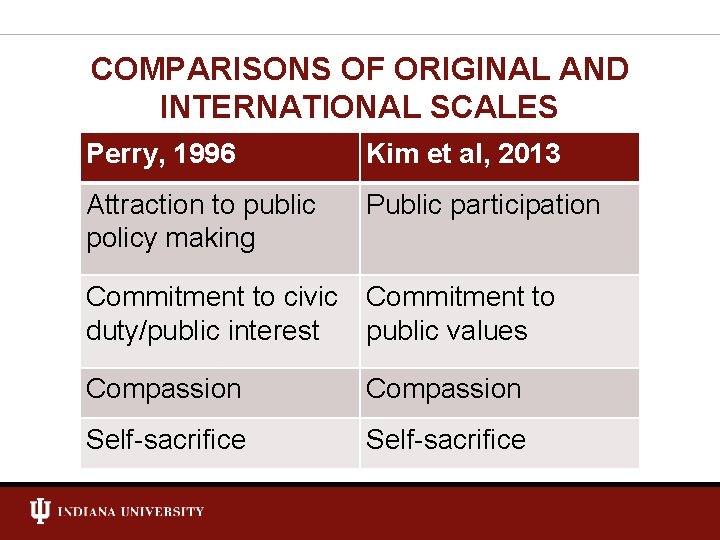
COMPARISONS OF ORIGINAL AND INTERNATIONAL SCALES Perry, 1996 Kim et al, 2013 Attraction to public policy making Public participation Commitment to civic duty/public interest Commitment to public values Compassion Self-sacrifice
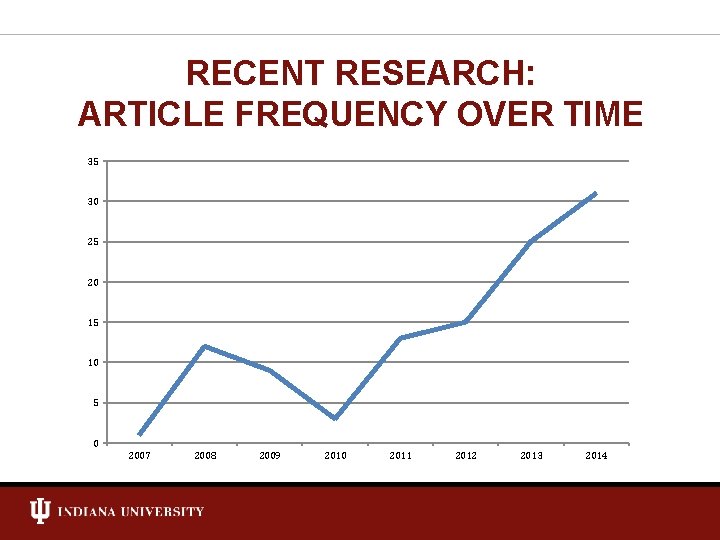
RECENT RESEARCH: ARTICLE FREQUENCY OVER TIME 35 30 25 20 15 10 5 0 2007 2008 2009 2010 2011 2012 2013 2014
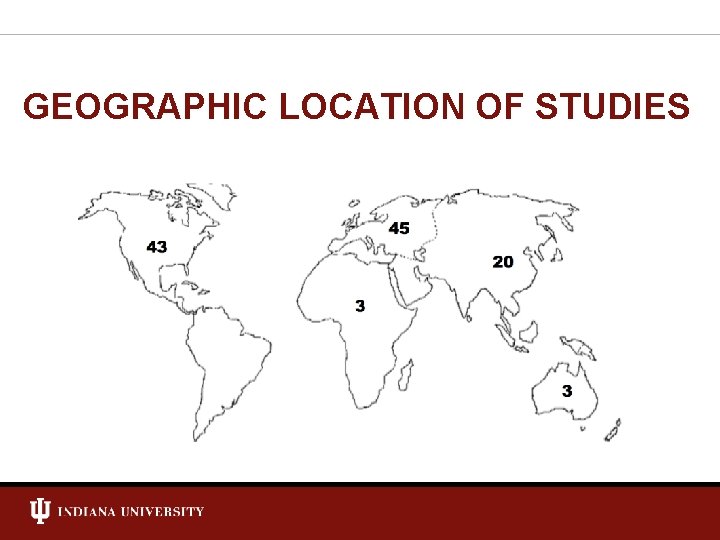
GEOGRAPHIC LOCATION OF STUDIES
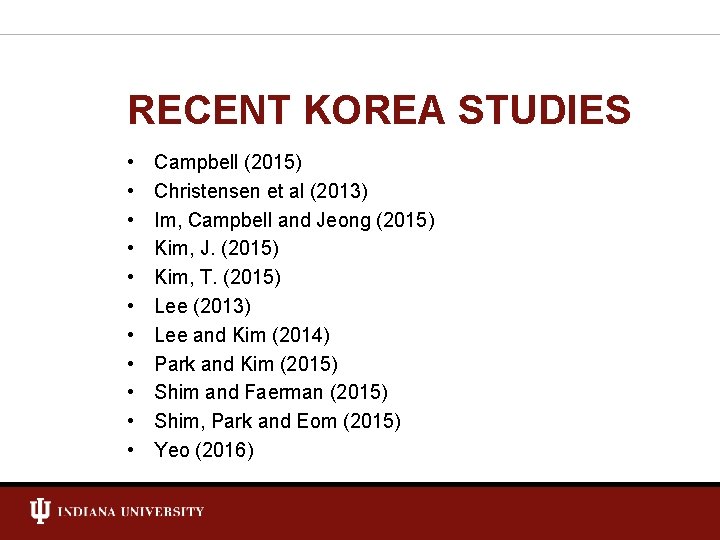
RECENT KOREA STUDIES • • • Campbell (2015) Christensen et al (2013) Im, Campbell and Jeong (2015) Kim, J. (2015) Kim, T. (2015) Lee (2013) Lee and Kim (2014) Park and Kim (2015) Shim and Faerman (2015) Shim, Park and Eom (2015) Yeo (2016)
PUBLIC SERVICE MOTIVATION: STATE or TRAIT? Is public service motivation a changeable individual attribute? • Trait, a stable individual difference, or • State, something experienced in the short run that fluctuates over time
PUBLIC SERVICE MOTIVATION: STATE vs TRAIT What light do the research results reviewed here shed on the state—trait question? • Public service motivation is relatively stable over time • It can, however, change over time • PSM can also be “triggered” by stimuli or events
FIVE LESSONS 1. Give priority to selecting for high public service motivation 2. Create a supportive work environment that models and reinforces public service motivation 3. Leverage relationships between employees and service beneficiaries 4. Provide opportunities for newcomers to learn public service values 5. Develop leaders who communicate and model public service values
LESSON 1: GIVE PRIORITY TO SELECTING FOR HIGH PUBLIC SERVICE MOTIVATION 1. Project organizational images to attract high public service motivation staff. 2. Take steps to screen in candidates with high public service motivation. 3. Take steps to screen out candidates with motivations likely to crowd out intrinsic or prosocial orientations.
LESSON 2: CREATE A SUPPORTIVE WORK ENVIRONMENT 1. Organizations that intentionally nurture public service motivation develop stronger ties between organization and employee values and goals. 2. Purging practices that crowd out public service motivation complements nurturing it.
LESSON 3: LEVERAGE RELATIONSHIPS BETWEEN EMPLOYEES AND SERVICE BENEFICIARIES 1. Design work for direct contacts between employees and beneficiaries. 2. When the importance of the public work is salient for employees but direct contacts are constrained, use self-persuasion or other types of self-administered interventions to connect employees to beneficiaries.
LESSON 4: PROVIDE OPPORTUNITIES FOR NEWCOMEERS TO LEARN PUBLIC SERVICE VALUES 1. On-boarding and orientation 2. Mentoring
LESSON 5: DEVELOP LEADERS WHO COMMUNICATE AND MODEL PUBLIC SERVICE VALUES 1. Articulating mission and vision 2. Value-based leadership
CONCLUSION • Two Inferences from Recent Research • Uncertainties about traditional motivational assumptions • PSM can be powerful • Coherent Management Strategies Using PSM Can be Designed • Better Attraction, Retention, and Performance are Likely Results
- Slides: 18