
PUBLIC SECTOR ACCOUNTABILITY Being Accountable and Holding Accountable
PUBLIC SECTOR ACCOUNTABILITY: Being Accountable and Holding Accountable
Learning Objectives 2 By the end of the topic participants will be able to: Define accountability, Explain the characteristics of the supply and demand sides of accountability, Explain the tools of holding and being accountable
3 Linking Integrity and Accountability I = a (ACE) - C Enabling stakeholders to Accountability: check that we do what we say we do.
What is Accountability? 4 Accountability refers to the process of holding actors responsible for their actions which focuses on ‘answerability’ Two different forms of accountability � Soft: usually formal processes in which actions are held up to specific standards � Hard: more rigorous minimum standard, including sanctions and/or remedies for wrongdoing (Fox 2007).
Video Case 5 Willing DEO can make difference (Gyan Mani Nepal) �What factors made him think and act differently to others? �What he did to make others accountable?
Accountability Tools (Few) 6 Public Hearing Participatory Planning Social Audit Civic Education Public expenditure tracking system, etc.
7 Accountability: Demand & Supply, and Horizontal & Vertical
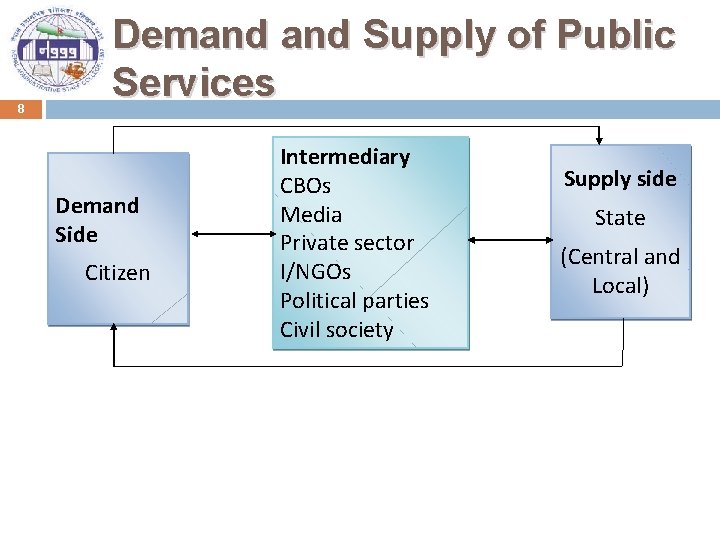
8 Demand Supply of Public Services Demand Side Citizen Intermediary CBOs Media Private sector I/NGOs Political parties Civil society Supply side State (Central and Local)
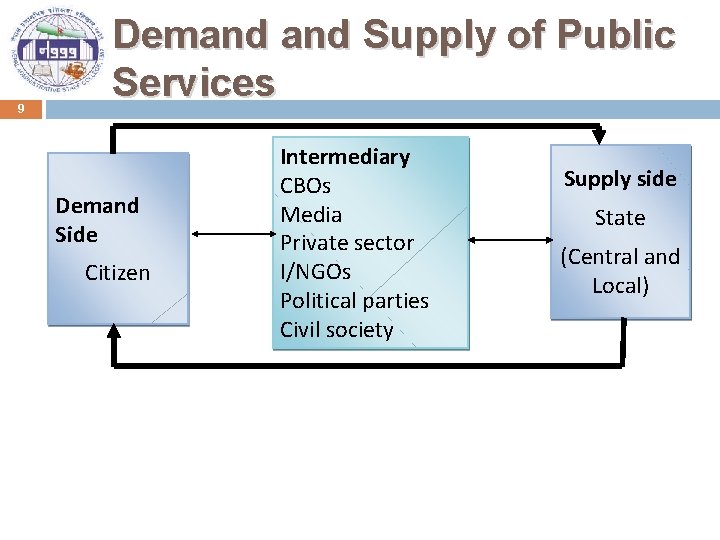
9 Demand Supply of Public Services Demand Side Citizen Intermediary CBOs Media Private sector I/NGOs Political parties Civil society Supply side State (Central and Local)
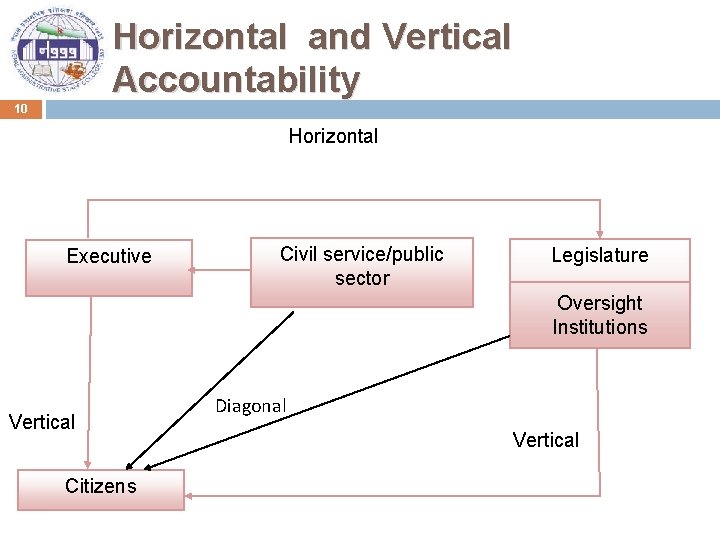
Horizontal and Vertical Accountability 10 Horizontal Executive Civil service/public sector Legislature Oversight Institutions Vertical Citizens Diagonal Vertical
Social Contract 11 There is always agreement (may not be written) between the state and society (people) for mutual protection and welfare �Eg. People agree to pay tax in return of public services from the state
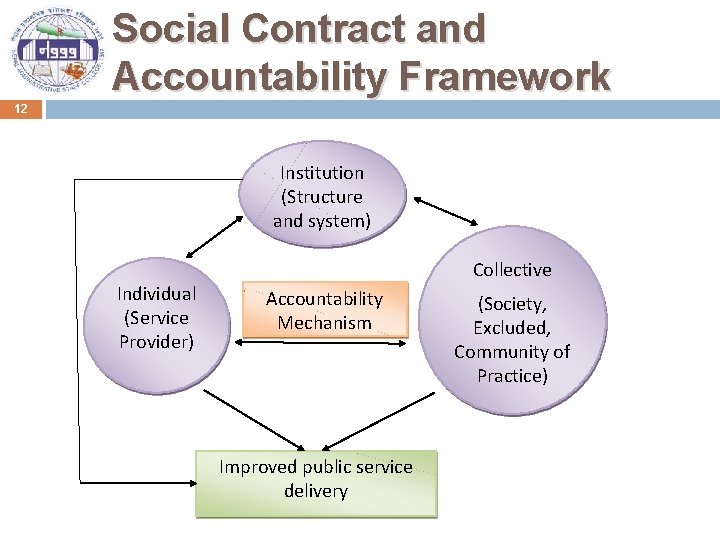
Social Contract and Accountability Framework 12 Institution (Structure and system) Individual (Service Provider) Collective Accountability Mechanism Improved public service delivery (Society, Excluded, Community of Practice)
Bridging the Gaps 13 How do we bridge the gap between demand supply? � Accountability mechanisms and tools constructive engagement between actors � Build civil service capacity � Revisit and restructure institutional arranges that hinder effective and efficient service delivery � Empower and promote awareness among people for creating demands
What Makes Public Institutions Accountable? 14 Be Accountable Rules & regulations of the state Standardization of services Self realization to the ‘social contract’ Capacity building of public institutions Transparent work culture Capacity building of oversight agencies Hold Accountable Making citizens aware to service standard Access to information Empowering citizens Civic engagement and citizen oversight Regular feedback Citizen’s voice and accountability mechanism

15 Thank You
- Slides: 15