
Public Policy US Government Definition A course of
Public Policy US Government
Definition: �“A course of action adopted and pursued by a government” �Any rule, plan or actions pertaining to issues of domestic national importance.
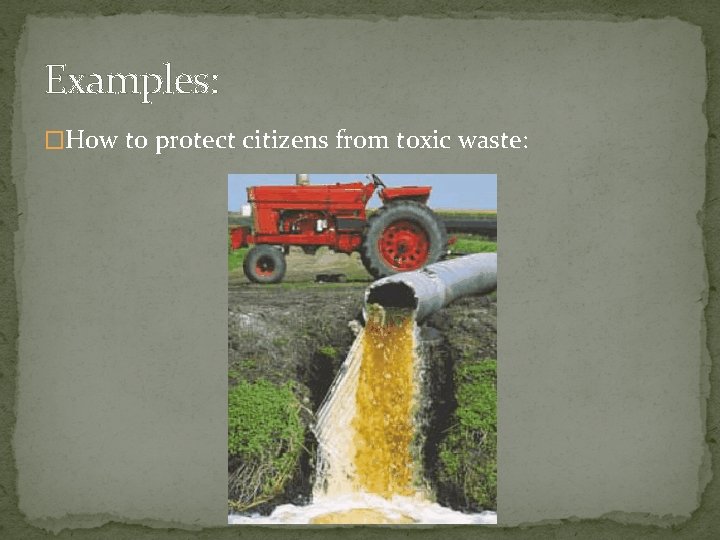
Examples: �How to protect citizens from toxic waste:
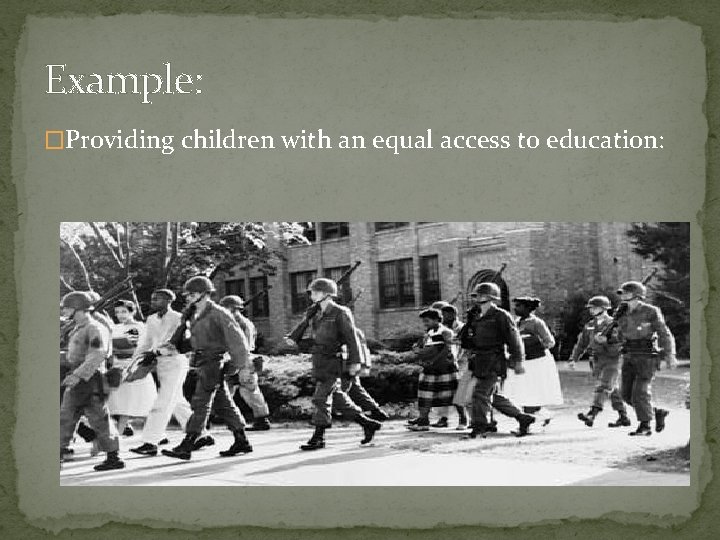
Example: �Providing children with an equal access to education:

Incrementalism �Changes in American domestic policy occurs slowly. �Interest groups will fight against policy and lawmakers are reluctant to change things too quickly. �Political Scientists call this phenomenon “incrementalism” because policy gets tweaked slightly over time rather than dramatically changed most of the time.
5 Steps �In order to be made official, public policy legislation goes through 5 steps: 1. The National Agenda 2. Formulation 3. Adoption 4. Implementation 5. Evaluation
Step 1 -National Agenda �When something becomes a concern for a significant amount of people. �Becomes the list of things that the public wants the govt. to address. This happens for many reasons: � Larger Trend: rise in crime in the 90’s -> need for more law enforcement. � Major Event: Sept 11 th -> better homeland security. � Interest groups: Raise public awareness issue (tobacco) � Speeches: President -> health care
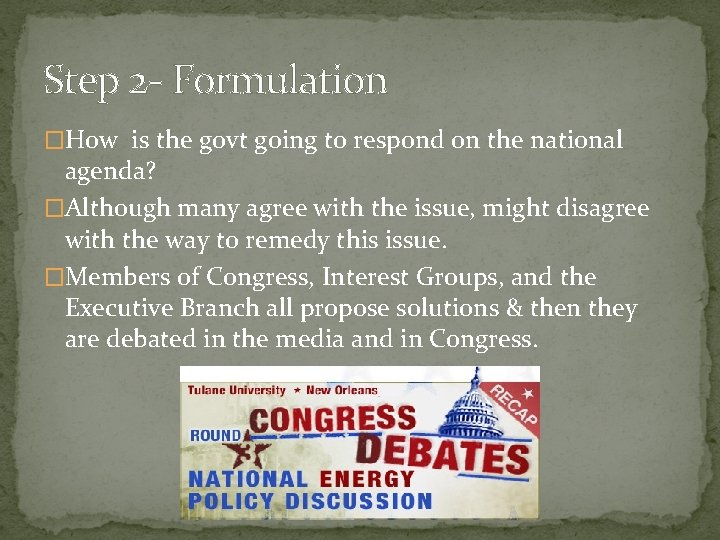
Step 2 - Formulation �How is the govt going to respond on the national agenda? �Although many agree with the issue, might disagree with the way to remedy this issue. �Members of Congress, Interest Groups, and the Executive Branch all propose solutions & then they are debated in the media and in Congress.
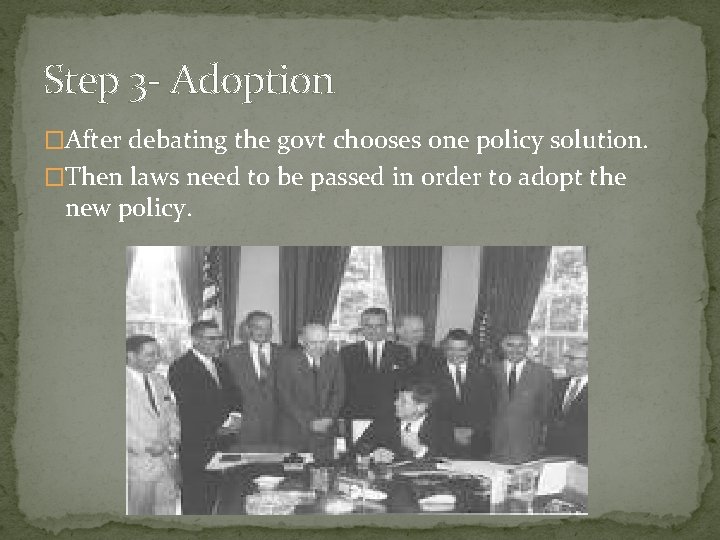
Step 3 - Adoption �After debating the govt chooses one policy solution. �Then laws need to be passed in order to adopt the new policy.
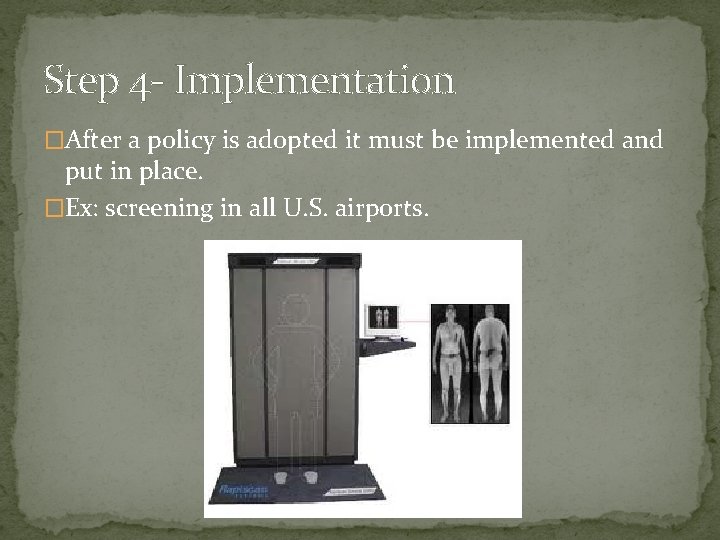
Step 4 - Implementation �After a policy is adopted it must be implemented and put in place. �Ex: screening in all U. S. airports.
Step 5 - Evaluation �People begin to judge and evaluate a policy once it is put in effect. �Feedback comes from people it serves, bureaucrats, media.
List of some public policies �Death Penalty �Gun Control �Taxes �Education �Global Warming �Health Insurance �Welfare �Defense spending
- Slides: 12