
Public Policy Analyst Mr Teitter PS 98 M
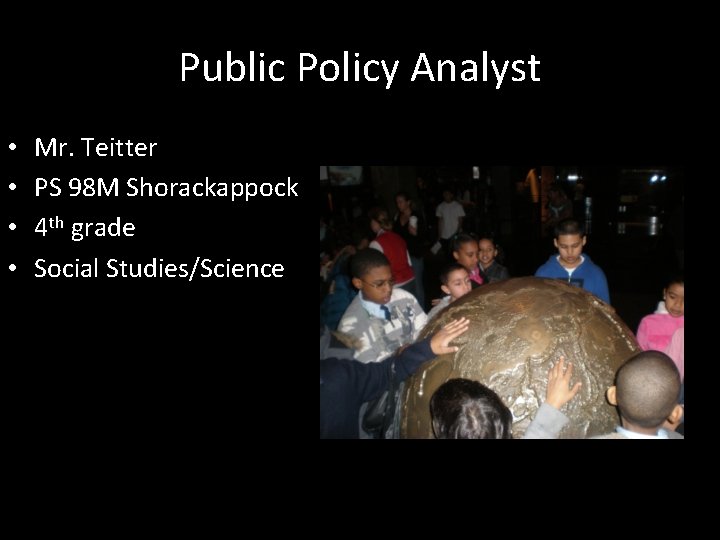
Public Policy Analyst • • Mr. Teitter PS 98 M Shorackappock 4 th grade Social Studies/Science
Steps of the PPA • • • Define the problem Gather evidence Identify causes Evaluate a policy Develop solutions Select best solution
• • • Define the problem Gather evidence Identify causes Evaluate a policy Develop solutions Select best solution
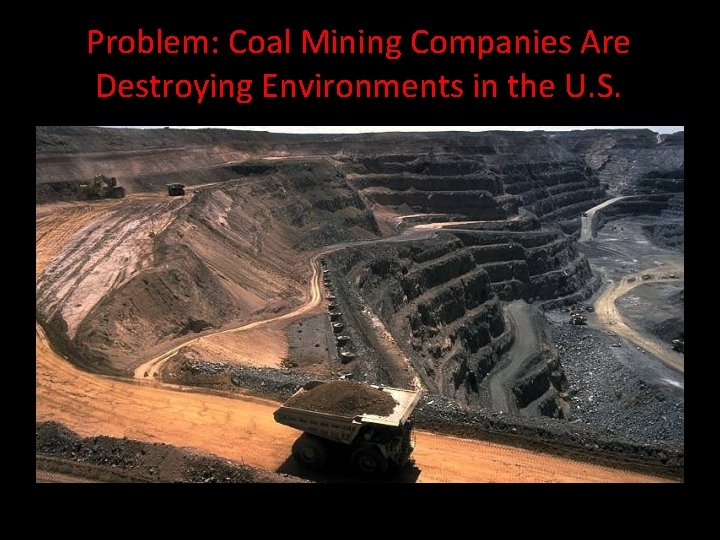
Problem: Coal Mining Companies Are Destroying Environments in the U. S.
Steps of the PPA • • • Define the problem Gather evidence Identify causes Evaluate a policy Develop solutions Select best solution
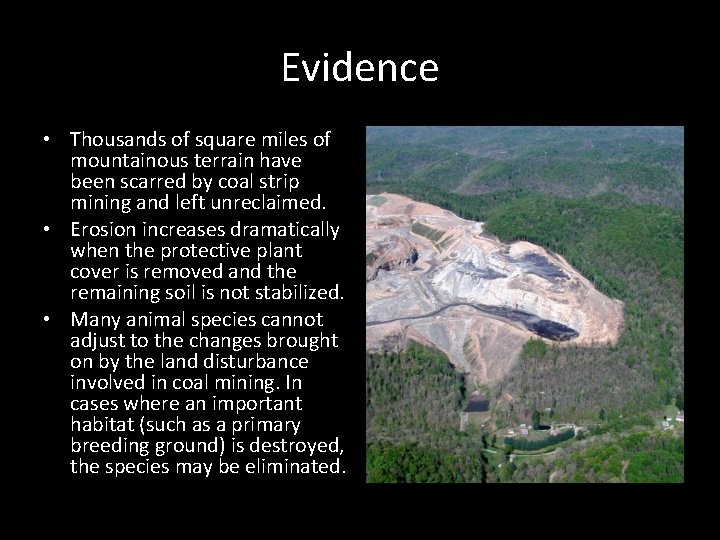
Evidence • Thousands of square miles of mountainous terrain have been scarred by coal strip mining and left unreclaimed. • Erosion increases dramatically when the protective plant cover is removed and the remaining soil is not stabilized. • Many animal species cannot adjust to the changes brought on by the land disturbance involved in coal mining. In cases where an important habitat (such as a primary breeding ground) is destroyed, the species may be eliminated.
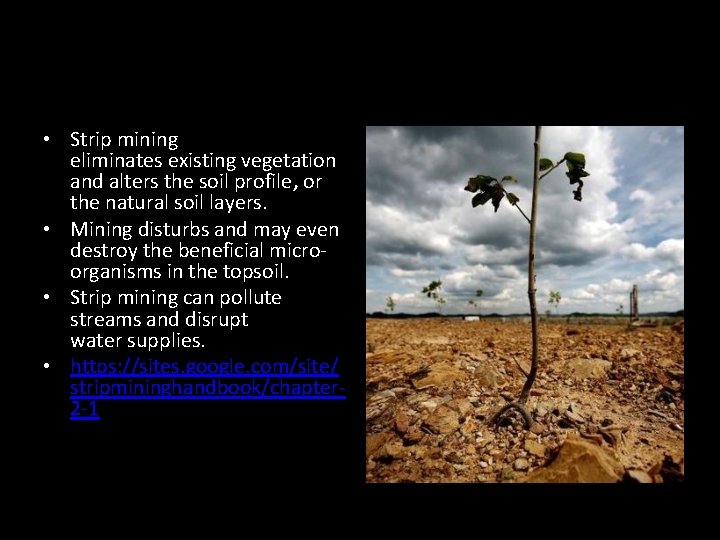
• Strip mining eliminates existing vegetation and alters the soil profile, or the natural soil layers. • Mining disturbs and may even destroy the beneficial microorganisms in the topsoil. • Strip mining can pollute streams and disrupt water supplies. • https: //sites. google. com/site/ stripmininghandbook/chapter 2 -1
• • • Define the problem Gather evidence Identify causes Evaluate a policy Develop solutions Select best solution
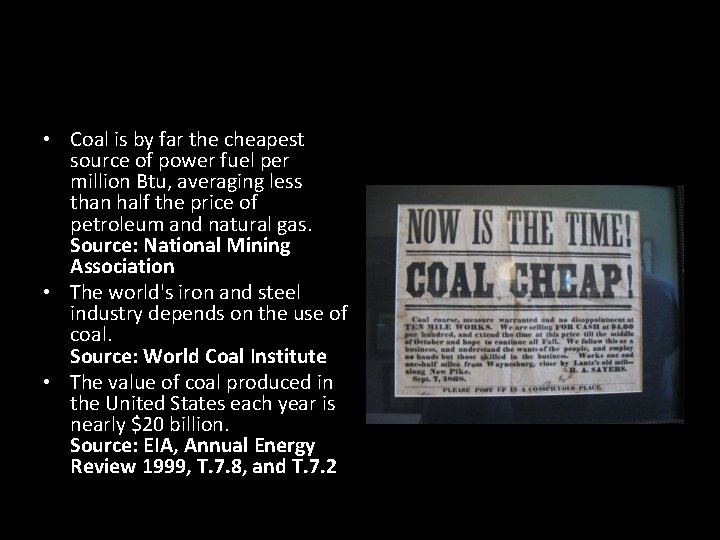
• Coal is by far the cheapest source of power fuel per million Btu, averaging less than half the price of petroleum and natural gas. Source: National Mining Association • The world's iron and steel industry depends on the use of coal. Source: World Coal Institute • The value of coal produced in the United States each year is nearly $20 billion. Source: EIA, Annual Energy Review 1999, T. 7. 8, and T. 7. 2
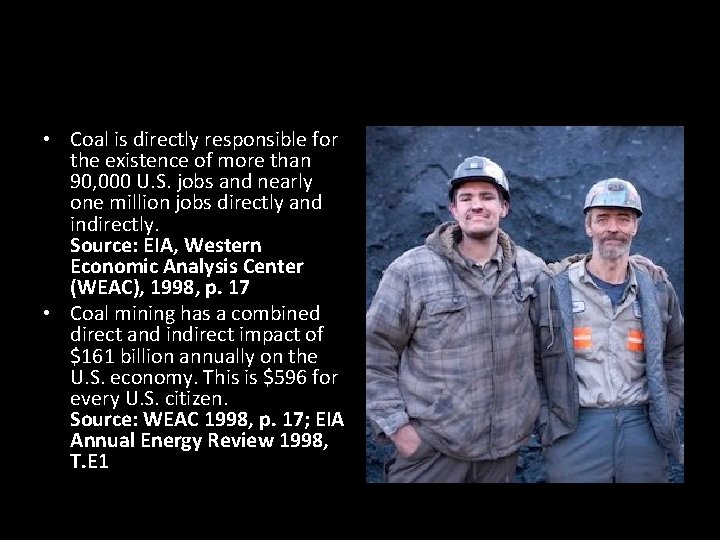
• Coal is directly responsible for the existence of more than 90, 000 U. S. jobs and nearly one million jobs directly and indirectly. Source: EIA, Western Economic Analysis Center (WEAC), 1998, p. 17 • Coal mining has a combined direct and indirect impact of $161 billion annually on the U. S. economy. This is $596 for every U. S. citizen. Source: WEAC 1998, p. 17; EIA Annual Energy Review 1998, T. E 1
• The federal government receives more than $11 billion annually in taxes and fees from the coal industry. Source: WEAC 1998, p. 1 • State and local governments receive nearly $9 billion each year in revenues. Source: WEAC 1998, p. 1 • Developing countries' demand for coal will double through 2020, according to the Energy Information Administration (EIA). Source: EIA, International Energy Outlook 2000, p. 171
Tonight’s Homework • • • Define the problem Gather evidence Identify causes Evaluate a policy Develop solutions Select best solution • Either at home or at the library, research current policy that regulates coal mining. • Evaluate the advantages and disadvantages. • Decide whether the current policy needs to be replaced, strengthened, or improved.
- Slides: 12