
Public Limited Companies PLCs Public Limited Companies are
Public Limited Companies (PLCs) Public Limited Companies are the biggest type of private businesses in the UK. They have the following features: Shares are sold on the London Stock Exchange Shareholders have LIMITED LIABILITY Shareholders vote for a board of directors, who run the business The company must have the words “public limited company” or the letters “PLC” in it’s name Accounts must be published, and made available to anyone who wants to see them Marks & Examples include: Vodafone Spencer PLC Group PLC © Business Studies Online: Slide 1
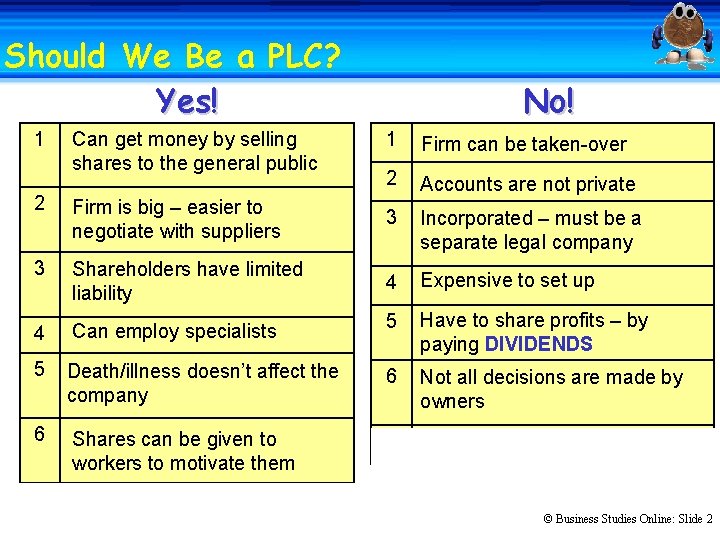
Should We Be a PLC? Yes! 1 Can get money by selling shares to the general public No! 1 Firm can be taken-over 2 Accounts are not private 2 Firm is big – easier to negotiate with suppliers 3 Incorporated – must be a separate legal company 3 Shareholders have limited liability 4 Expensive to set up 4 Can employ specialists 5 Have to share profits – by paying DIVIDENDS 5 Death/illness doesn’t affect the company 6 Not all decisions are made by owners 6 Shares can be given to workers to motivate them 7 © Business Studies Online: Slide 2
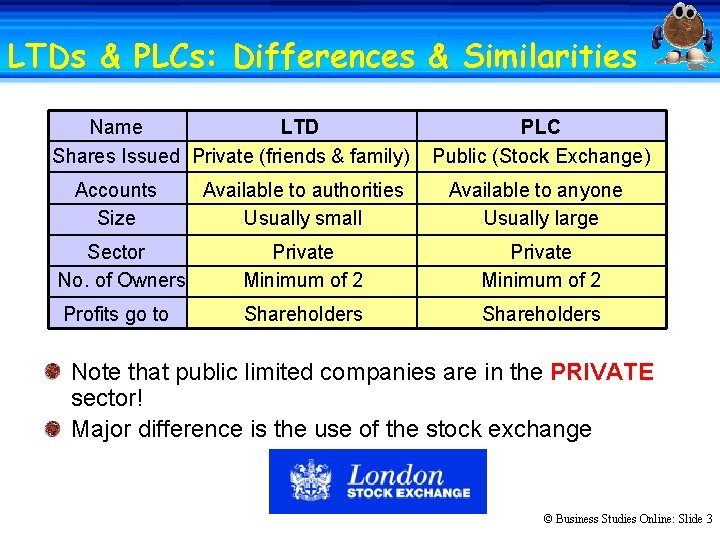
LTDs & PLCs: Differences & Similarities Name LTD Shares Issued Private (friends & family) PLC Public (Stock Exchange) Accounts Size Available to authorities Usually small Available to anyone Usually large Sector No. of Owners Private Minimum of 2 Profits go to Shareholders Note that public limited companies are in the PRIVATE sector! Major difference is the use of the stock exchange © Business Studies Online: Slide 3
- Slides: 3