
PUBLIC HEALTH PROGRAMMES PHARMACOVIGILANCE Shanthi Pal Quality Assurance
PUBLIC HEALTH PROGRAMMES & PHARMACOVIGILANCE Shanthi Pal Quality Assurance and Safety: Medicines Essential Medicines and Pharmaceutical Policies World Health Organization
n n Why the use of drugs in Public Health Programmes (PHP) could carry some risk of harm Proposals regarding synergy between PHP and Pharmacovigilance (PV) WHO GUIDELINE « PHARMACOVIGILANCE AND PUBLIC HEALTH PROGRAMMES »
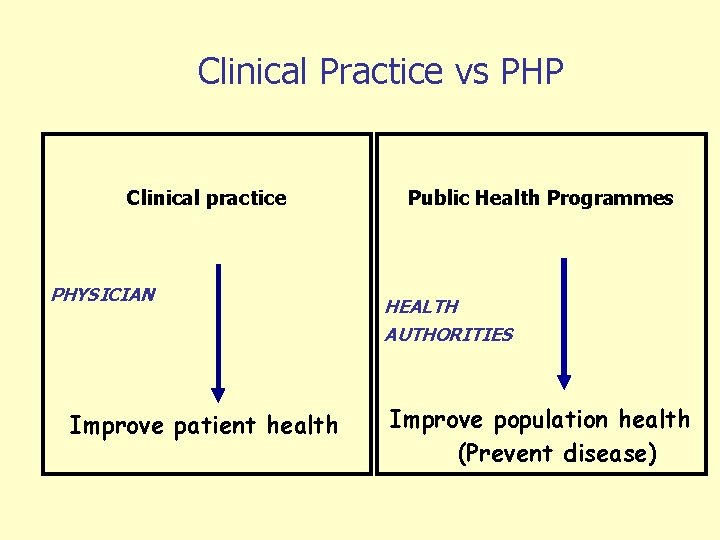
Clinical Practice vs PHP Clinical practice PHYSICIAN Improve patient health Public Health Programmes HEALTH AUTHORITIES Improve population health (Prevent disease)
Public Health or community health Science and art of preventing disease, prolonging life and promoting health and efficiency through organized community efforts.
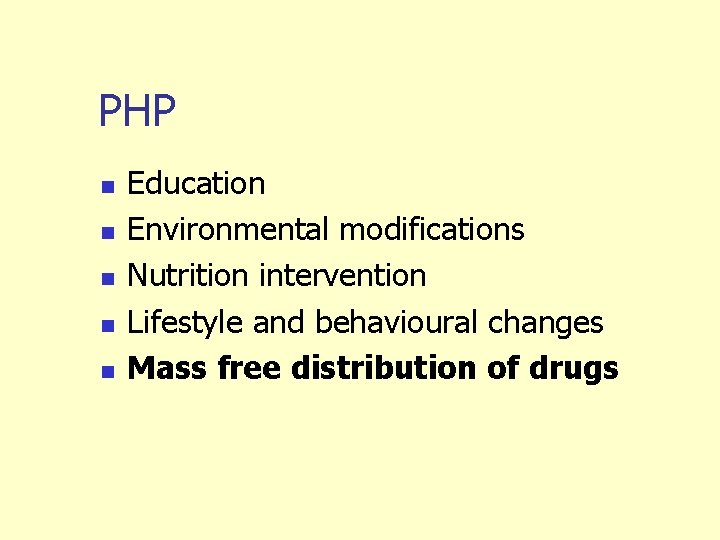
PHP n n n Education Environmental modifications Nutrition intervention Lifestyle and behavioural changes Mass free distribution of drugs
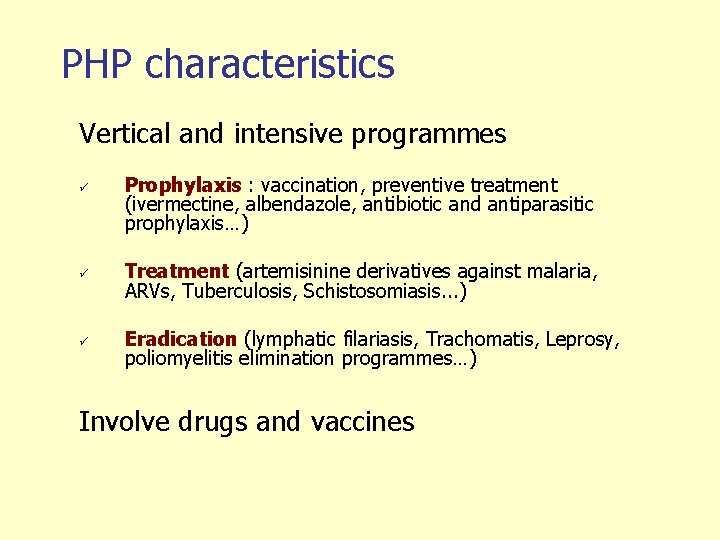
PHP characteristics Vertical and intensive programmes ü Prophylaxis : vaccination, preventive treatment (ivermectine, albendazole, antibiotic and antiparasitic prophylaxis…) ü Treatment (artemisinine derivatives against malaria, ARVs, Tuberculosis, Schistosomiasis. . . ) ü Eradication (lymphatic filariasis, Trachomatis, Leprosy, poliomyelitis elimination programmes…) Involve drugs and vaccines
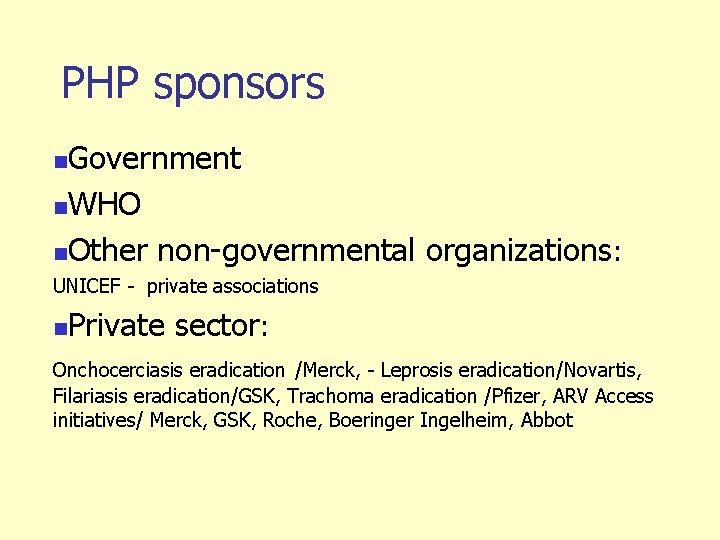
PHP sponsors Government n. WHO n. Other non-governmental organizations: n UNICEF - private associations n Private sector: Onchocerciasis eradication /Merck, - Leprosis eradication/Novartis, Filariasis eradication/GSK, Trachoma eradication /Pfizer, ARV Access initiatives/ Merck, GSK, Roche, Boeringer Ingelheim, Abbot
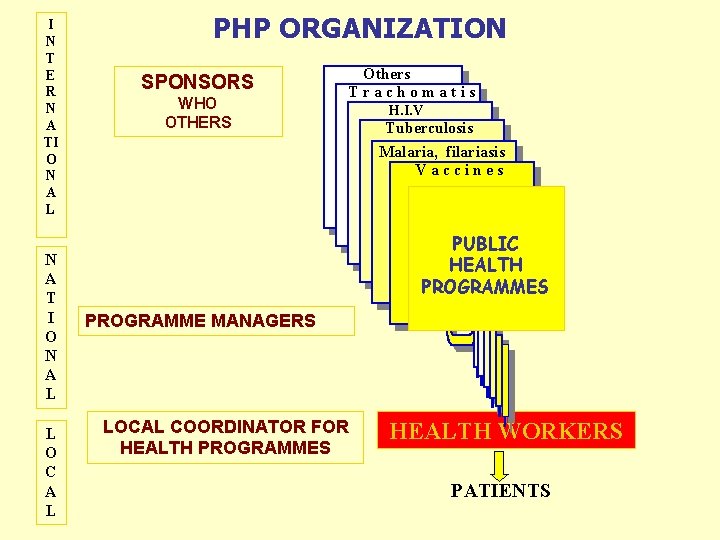
I N T E R N A TI O N A L N A T I O N A L L O C A L PHP ORGANIZATION SPONSORS WHO OTHERS Others Trachomatis H. I. V LEVE Tuberculosis Malaria, filariasis L Vaccines PROGRAMME MANAGERS LOCAL COORDINATOR FOR HEALTH PROGRAMMES M A L PUBLIC A HEALTH R PROGRAMMES I A HEALTH WORKERS PATIENTS
PHP monitoring ü ü Incidence and prevalence of the disease Morbidity and mortality rates Number of patients treated Number of drug units delivered What about the risk / effectiveness of drugs used?
PHP guidelines (WHO, National) No mention of: n ADRs n Pharmacovigilance n Reports
1 - DISEASES ü ü Tropical diseases Not well diagnosed (Exposed not always suffering from the disease) Comorbid conditions Insufficient follow-up
2. POPULATION ü ü ü Low living standards (Malnutrition) Cultural specificities (Traditional medicines) Unlabelled and off-label indications (pregnant or breast feeding women, small children, elderly people) ü Food habits

3. DRUGS ü ü ü Distribution of huge amounts of drugs Poor quality standards or counterfeits New drugs with little clinical experience Orphan drugs, donated drugs Improperly stored, delivered and used Lack of established manufacturers
4. HEALTH CARE SYSTEM ü ü ü Under developed public health system Under developed drug regulatory system No pharmacovigilance programme Unqualified health workers Poor medical services Financial shortages
Need to monitor PHPs… To detect, evaluate and prevent ADRs related to: ü ü ü Harm Acceptance and tolerance Misuse Dependence Effect on pregnancy and children Therapeutic failures (resistance, quality defects, counterfeits)
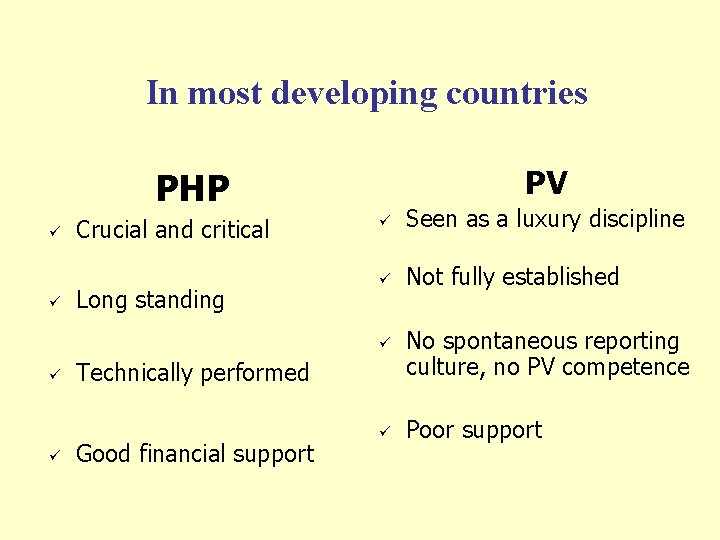
In most developing countries PV PHP ü ü Crucial and critical Long standing ü Seen as a luxury discipline ü Not fully established ü ü ü Technically performed Good financial support ü No spontaneous reporting culture, no PV competence Poor support
In those countries PHPs could provide: ü Opportunity to implement PV activities ü Offer a cohort of patients under controlled conditions to be monitored for safety over a period of time PV will ü Detect , evaluate, and prevent adverse events ü Promote rational use of drugs in mass treatment programmes ü Evaluate the impact of the programmes ü Improve acceptability of the programme
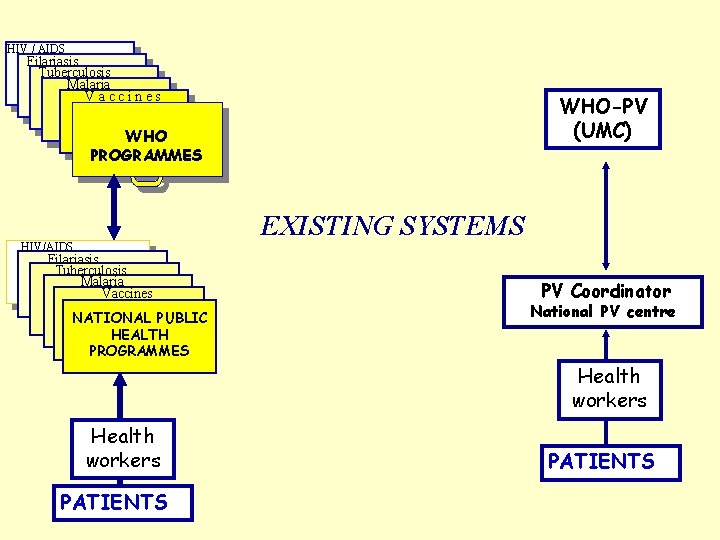
HIV / AIDS Filariasis Tuberculosis Malaria Vaccines WHO-PV (UMC) WHO PROGRAMMES EXISTING SYSTEMS HIV/AIDS Filariasis Tuberculosis Malaria Vaccines NATIONAL PUBLIC HEALTH PROGRAMMES PV Coordinator National PV centre Health workers PATIENTS
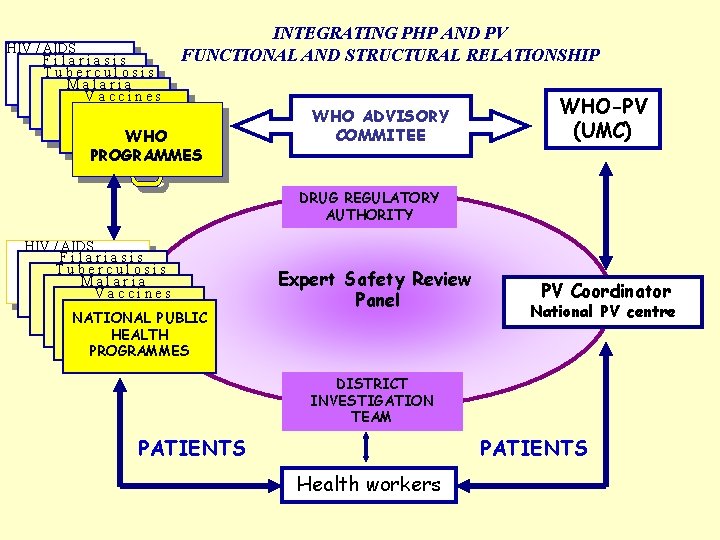
HIV / AIDS Filariasis Tuberculosis Malaria Vaccines INTEGRATING PHP AND PV FUNCTIONAL AND STRUCTURAL RELATIONSHIP WHO PROGRAMMES WHO ADVISORY COMMITEE WHO-PV (UMC) DRUG REGULATORY AUTHORITY HIV / AIDS Filariasis Tuberculosis Malaria Vaccines NATIONAL PUBLIC HEALTH PROGRAMMES Expert Safety Review Panel PV Coordinator National PV centre DISTRICT INVESTIGATION TEAM PATIENTS Health workers
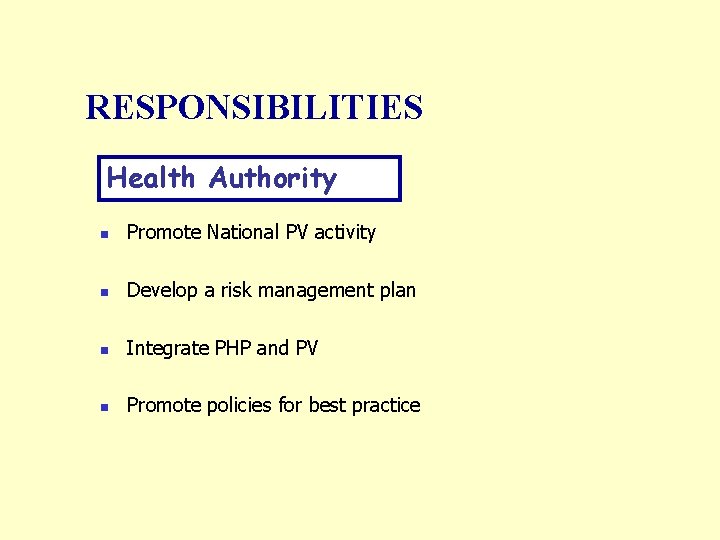
RESPONSIBILITIES Health Authority n Promote National PV activity n Develop a risk management plan n Integrate PHP and PV n Promote policies for best practice
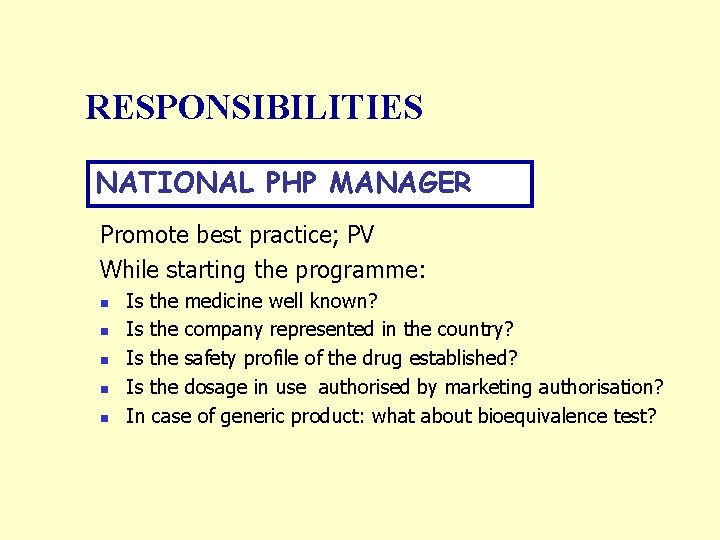
RESPONSIBILITIES NATIONAL PHP MANAGER Promote best practice; PV While starting the programme: n n n Is the medicine well known? Is the company represented in the country? Is the safety profile of the drug established? Is the dosage in use authorised by marketing authorisation? In case of generic product: what about bioequivalence test?
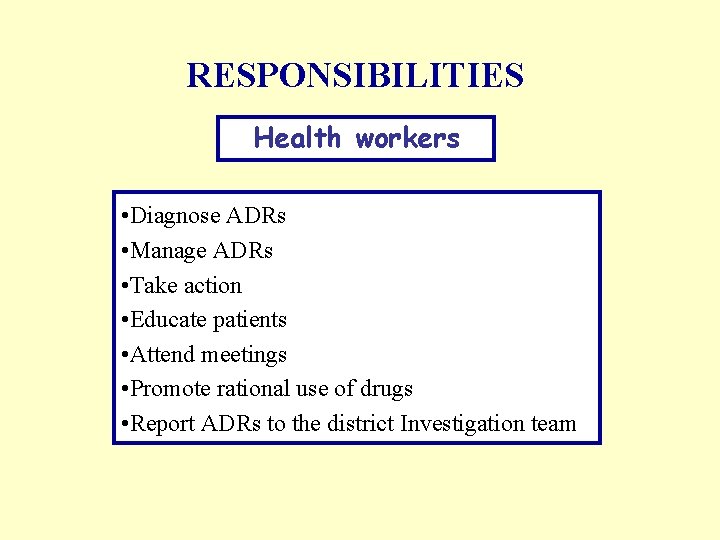
RESPONSIBILITIES Health workers • Diagnose ADRs • Manage ADRs • Take action • Educate patients • Attend meetings • Promote rational use of drugs • Report ADRs to the district Investigation team
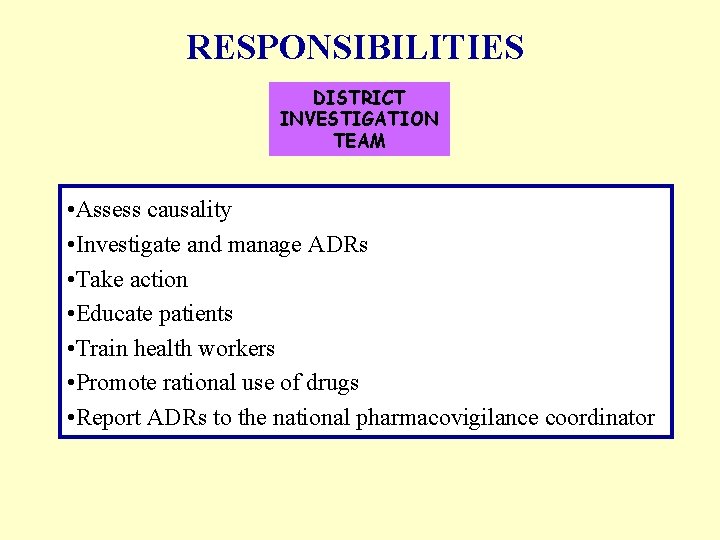
RESPONSIBILITIES DISTRICT INVESTIGATION TEAM • Assess causality • Investigate and manage ADRs • Take action • Educate patients • Train health workers • Promote rational use of drugs • Report ADRs to the national pharmacovigilance coordinator
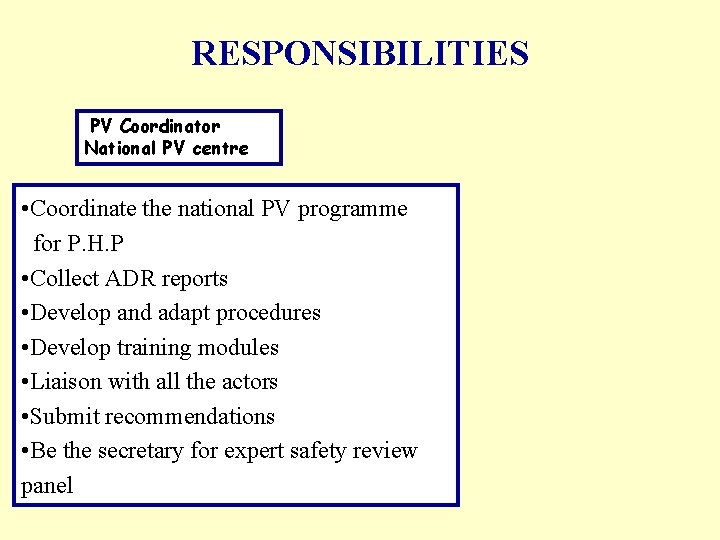
RESPONSIBILITIES PV Coordinator National PV centre • Coordinate the national PV programme for P. H. P • Collect ADR reports • Develop and adapt procedures • Develop training modules • Liaison with all the actors • Submit recommendations • Be the secretary for expert safety review panel
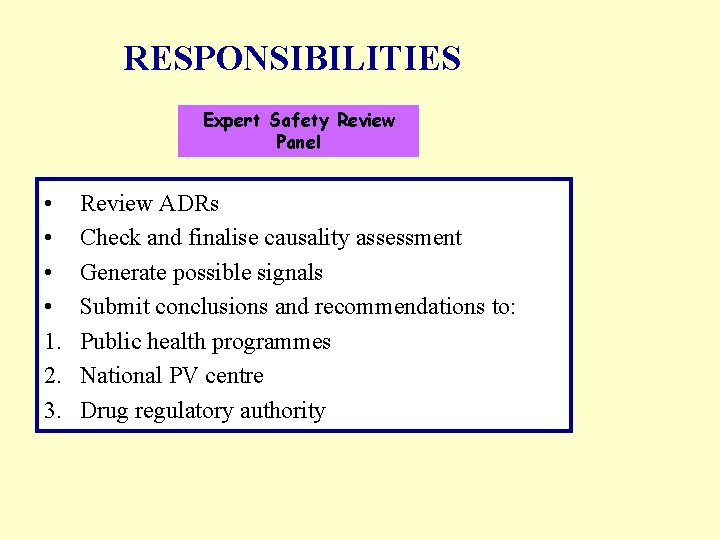
RESPONSIBILITIES Expert Safety Review Panel • • 1. 2. 3. Review ADRs Check and finalise causality assessment Generate possible signals Submit conclusions and recommendations to: Public health programmes National PV centre Drug regulatory authority
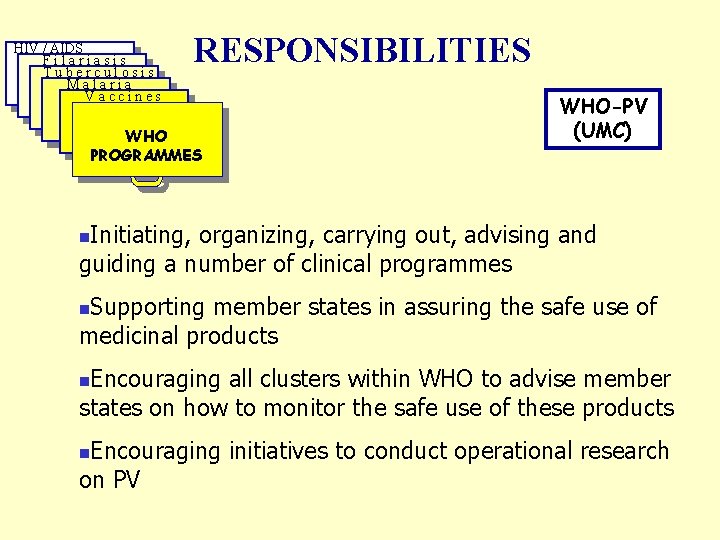
HIV / AIDS Filariasis Tuberculosis Malaria Vaccines RESPONSIBILITIES WHO PROGRAMMES WHO-PV (UMC) Initiating, organizing, carrying out, advising and guiding a number of clinical programmes n Supporting member states in assuring the safe use of medicinal products n Encouraging all clusters within WHO to advise member states on how to monitor the safe use of these products n Encouraging initiatives to conduct operational research on PV n
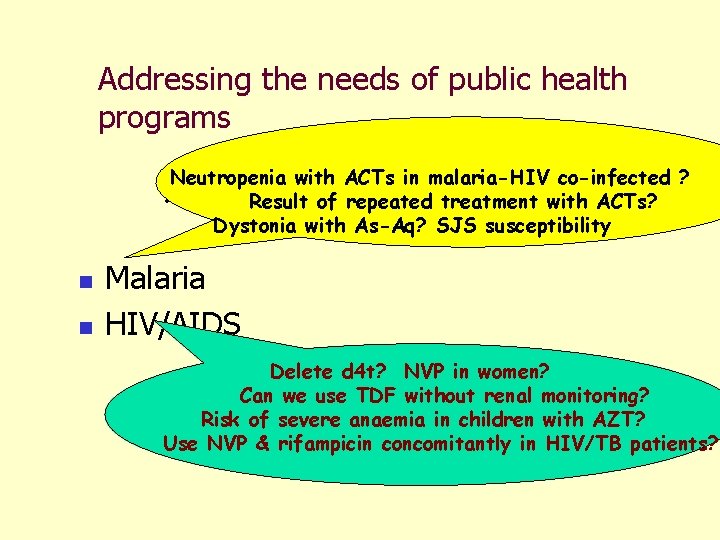
Addressing the needs of public health programs Neutropenia with ACTs in malaria-HIV co-infected ? • Result of repeated treatment with ACTs? Dystonia with As-Aq? SJS susceptibility n n Malaria HIV/AIDS Delete d 4 t? NVP in women? Can we use TDF without renal monitoring? Risk of severe anaemia in children with AZT? Use NVP & rifampicin concomitantly in HIV/TB patients?
CONCLUSION n n n The success of PHP is largely dependent on the participation of society and the acceptance that drugs are safe PV should be an integral part of every PHP PV is essential to promote the rational and safe use of medicines and the acceptability of mass treatment programmes.
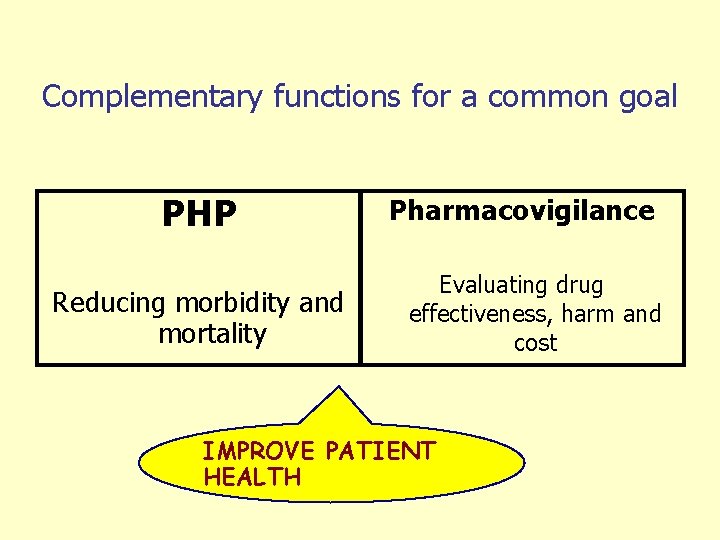
Complementary functions for a common goal PHP Reducing morbidity and mortality Pharmacovigilance Evaluating drug effectiveness, harm and cost IMPROVE PATIENT HEALTH
- Slides: 29