
Public Health Module Venue Date Unit Public Health
Public Health Module Venue Date Unit: Public Health Aspects of Coronary Heart Disease © 2010

WB 6 Introduction to public health 2 LTPHN/KK/AD © 2010

WB 6 What is health? 3 WHO Definition ‘a state of complete physical, mental and social well-being and not merely the absence of disease or infirmity’ Antonovosky: Salutogenic model ‘sense of coherence’ Seedhouse and Duncan: Achievement of potential Empirical Lack of health LTPHN/KK/AD © 2010

WB 7 What is public health? ‘the science and art of preventing disease, prolonging life and promoting health through the organized efforts of society’ C. E. A. Winslow, 1920 4 LTPHN/KK/AD © 2010
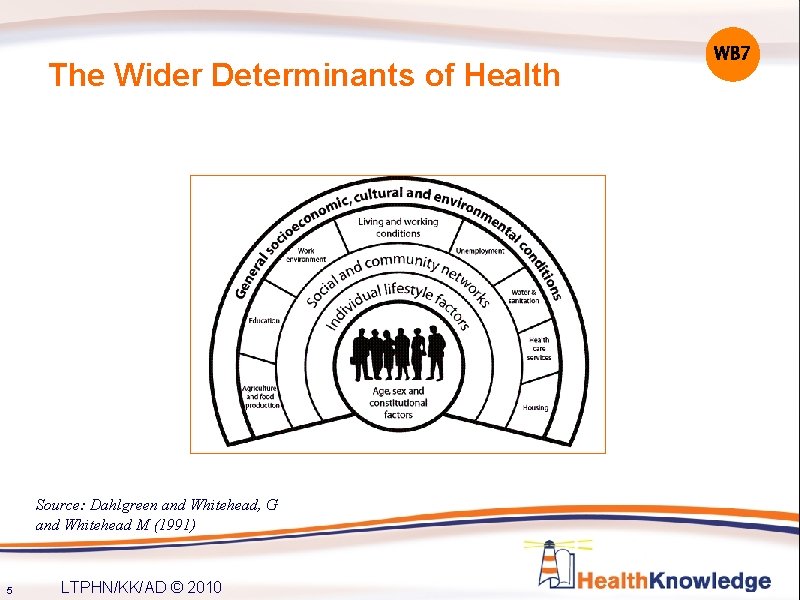
The Wider Determinants of Health Source: Dahlgreen and Whitehead, G and Whitehead M (1991) 5 LTPHN/KK/AD © 2010 WB 7

The Challenge for Public Health 6 LTPHN/KK/AD © 2010 WB 7
WB 8 Statistical description of nation’s health Census data Health Inequalities data Infant Mortality Rates 7 LTPHN/KK/AD © 2010
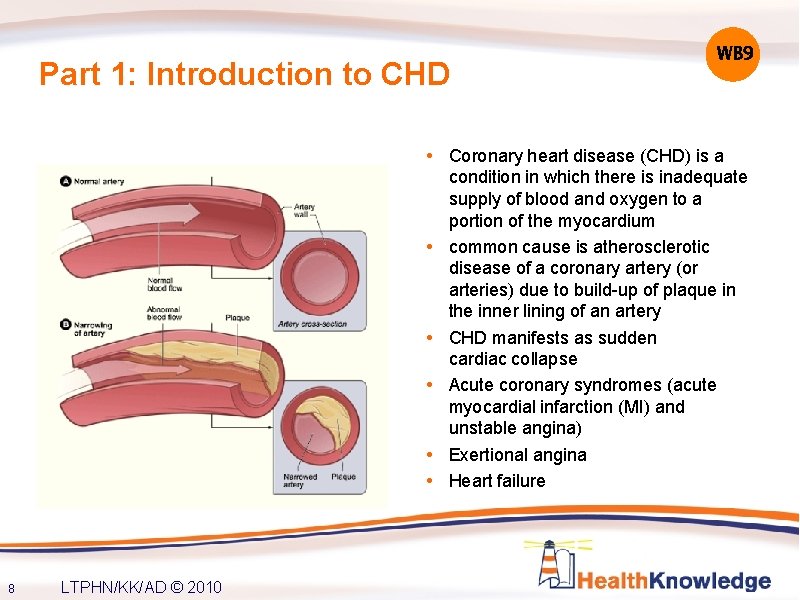
Part 1: Introduction to CHD WB 9 • Coronary heart disease (CHD) is a • • • 8 LTPHN/KK/AD © 2010 condition in which there is inadequate supply of blood and oxygen to a portion of the myocardium common cause is atherosclerotic disease of a coronary artery (or arteries) due to build-up of plaque in the inner lining of an artery CHD manifests as sudden cardiac collapse Acute coronary syndromes (acute myocardial infarction (MI) and unstable angina) Exertional angina Heart failure
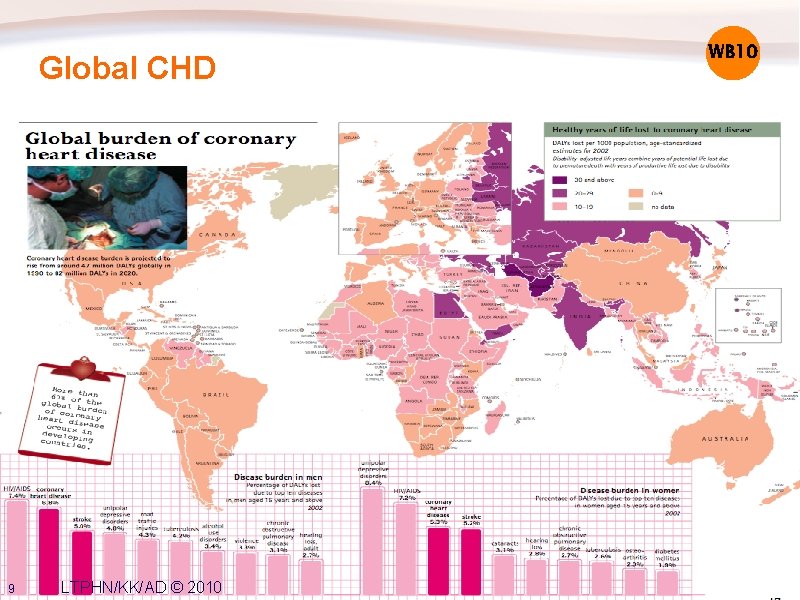
Global CHD 9 LTPHN/KK/AD © 2010 WB 10
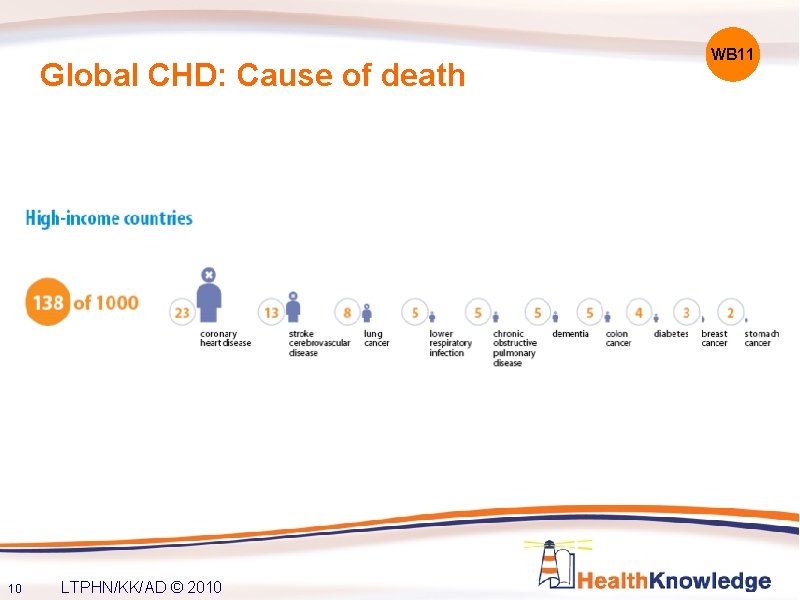
Global CHD: Cause of death 10 LTPHN/KK/AD © 2010 WB 11
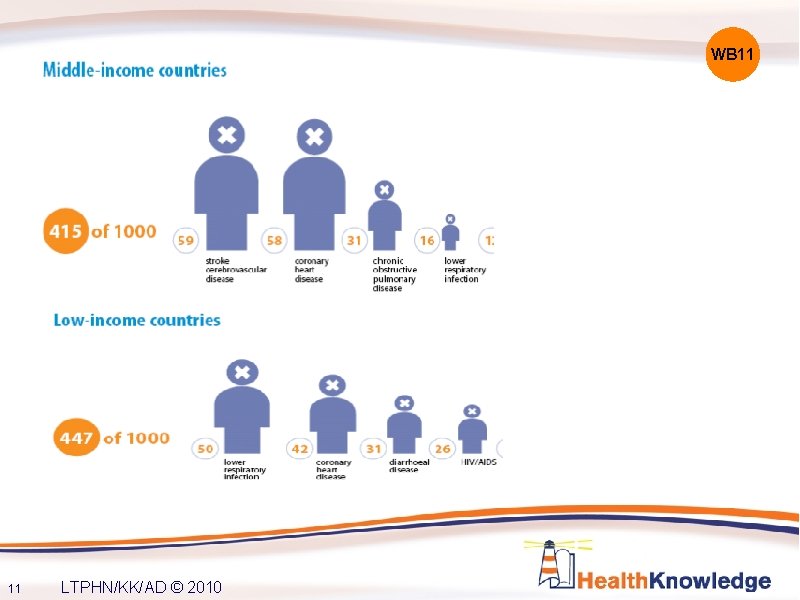
WB 11 11 LTPHN/KK/AD © 2010
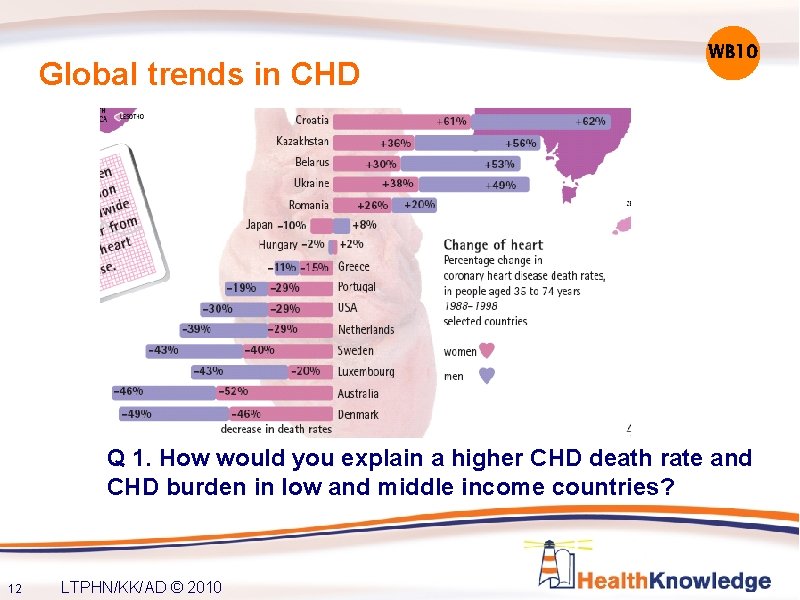
Global trends in CHD WB 10 Q 1. How would you explain a higher CHD death rate and CHD burden in low and middle income countries? 12 LTPHN/KK/AD © 2010
Global trends in CHD • • 13 CHD is the most common single cause of death in UK (both men and women) UK has one of the highest death rates from CHD in the world A decline in CHD mortality since the 1970 s • 45% of this reduction from improvement in treatment • 55% from reduction in risk factors (stopping smoking and control of hypertension) Large regional, socio-economic and ethnic differences in CHD morbidity and mortality • Low socio-economic groups, South Asian population and Northern regions of the UK have been shown to have greater risk of CHD LTPHN/KK/AD © 2010
WB 12 Q 2: What effect will adverse trends in risk behaviours have on CHD mortality rates? 14 LTPHN/KK/AD © 2010

WB 13 Impact of CHD • • • Individual Premature death (death before 75 years) Disability Loss of independence Loss of earnings Health related quality of life • Summary measure 15 LTPHN/KK/AD © 2010
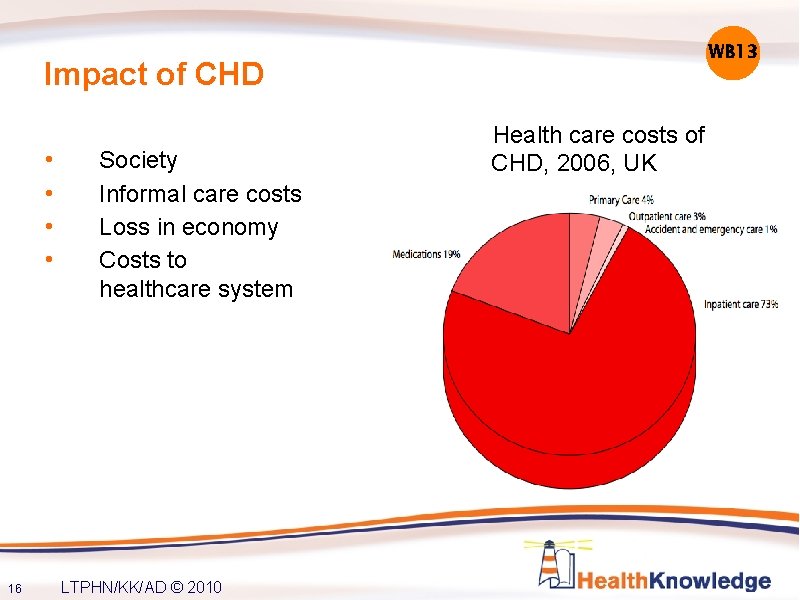
WB 13 Impact of CHD • • 16 Society Informal care costs Loss in economy Costs to healthcare system LTPHN/KK/AD © 2010 Health care costs of CHD, 2006, UK
CHD and Public Health Q 3. Why is CHD a major public health concern 17 LTPHN/KK/AD © 2010 WB 15
WB 15 Part 2: Risk factors for CHD Fixed factors: • Increasing age • Male sex • Familial (including race, genetics) Modifiable risk factors • Tobacco smoke • High blood cholesterol • Obesity • High blood pressure • Diabetes mellitus • Psychosocial wellbeing • Physical inactivity and • • 18 LTPHN/KK/AD © 2010 overweight Alcohol Daily consumption of fruit and vegetables
WB 17 Data sources for risk factors • Population based surveys Health survey for England Welsh Health Survey Scottish Health Survey • Representative • Rely upon individuals correctly recalling and reporting information about their lifestyles Q 4. What are the strengths and limitations of using health surveys? 19 LTPHN/KK/AD © 2010
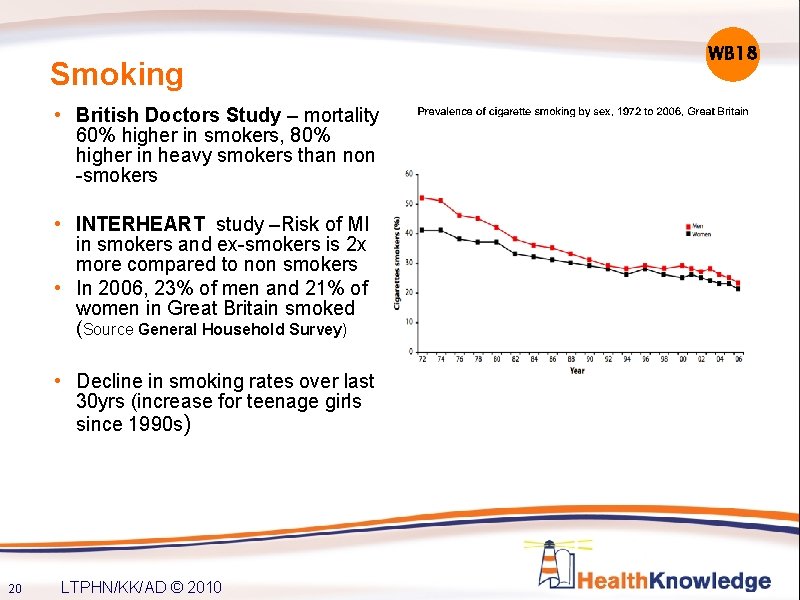
Smoking • British Doctors Study – mortality 60% higher in smokers, 80% higher in heavy smokers than non -smokers • INTERHEART study –Risk of MI in smokers and ex-smokers is 2 x more compared to non smokers • In 2006, 23% of men and 21% of women in Great Britain smoked (Source General Household Survey) • Decline in smoking rates over last 30 yrs (increase for teenage girls since 1990 s) 20 LTPHN/KK/AD © 2010 WB 18
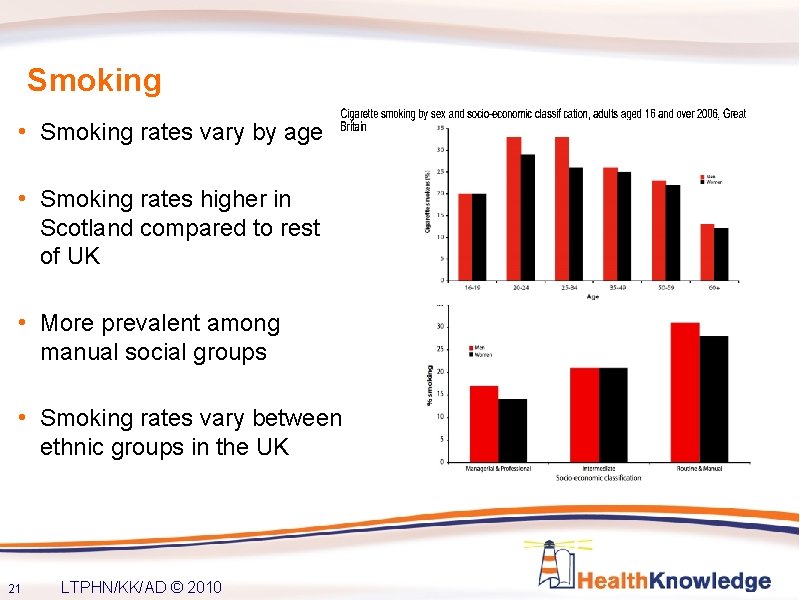
Smoking • Smoking rates vary by age • Smoking rates higher in Scotland compared to rest of UK • More prevalent among manual social groups • Smoking rates vary between ethnic groups in the UK 21 LTPHN/KK/AD © 2010
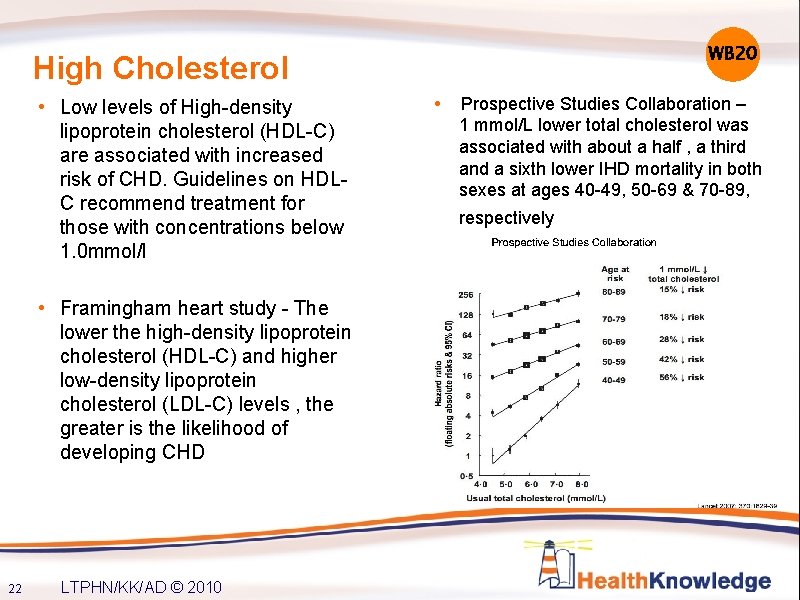
WB 20 High Cholesterol • Low levels of High-density lipoprotein cholesterol (HDL-C) are associated with increased risk of CHD. Guidelines on HDLC recommend treatment for those with concentrations below 1. 0 mmol/l • Framingham heart study - The lower the high-density lipoprotein cholesterol (HDL-C) and higher low-density lipoprotein cholesterol (LDL-C) levels , the greater is the likelihood of developing CHD 22 LTPHN/KK/AD © 2010 • Prospective Studies Collaboration – 1 mmol/L lower total cholesterol was associated with about a half , a third and a sixth lower IHD mortality in both sexes at ages 40 -49, 50 -69 & 70 -89, respectively
WB 22 High Cholesterol • Total blood cholesterol levels in the UK are around average for Europe but high by international standards, particularly in women • In England the prevalence of raised total cholesterol is decreasing for men and women • Rates of low HDL-cholesterol are much higher in men than women – over five times higher overall • The Whitehall II study- low HDL- cholesterol levels vary with income; those with higher incomes are less likely to have levels of HDL-cholesterol below 1. 0 mmol/l 23 LTPHN/KK/AD © 2010
Overweight and Obesity WB 23 The WHO Report 2002 • ~ over 7% of all disease burden in developed countries caused by raised body mass index (BMI) • ~a third of CHD and ischaemic stroke and almost 60% of hypertensive disease in developed countries was due to overweight INTERHEART • ~63% of heart attacks in Western Europe due to abdominal obesity • abdominal obesity doubles the risk of a heart attack compared to those without In England in 2006 (joint health surveys): • 43% of men and 32% of women were overweight (a BMI of 25 -30 kg/m 2) • 24% of men and 24% of women were obese (a BMI of more than 30 kg/m 2) • 32% of men and 41% of women had central obesity 24 LTPHN/KK/AD © 2010
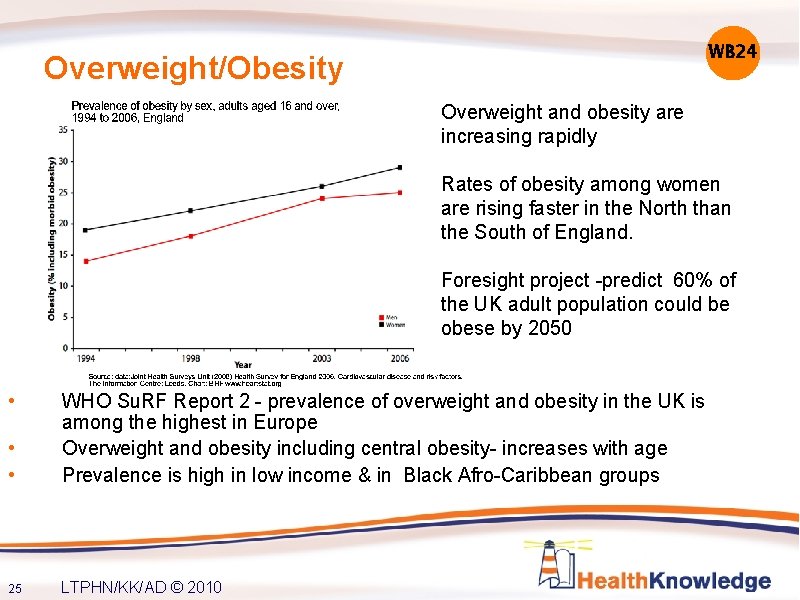
WB 24 Overweight/Obesity Overweight and obesity are increasing rapidly Rates of obesity among women are rising faster in the North than the South of England. Foresight project -predict 60% of the UK adult population could be obese by 2050 • • • WHO Su. RF Report 2 - prevalence of overweight and obesity in the UK is among the highest in Europe Overweight and obesity including central obesity- increases with age Prevalence is high in low income & in Black Afro-Caribbean groups 25 LTPHN/KK/AD © 2010
20 -27 Q 5 a: Is there a UK policy to reduce smoking? Q 5 b: Is there a UK policy to improve cholesterol? Q 5 c: Is there a UK policy to reduce obesity? 26 LTPHN/KK/AD © 2010
Hypertension • Risk of CHD is directly related to both systolic • • • 27 and diastolic blood pressure levels. Definition: Systolic blood pressure greater than or equal to 140 mm. Hg, and / or diastolic blood pressure greater than or equal to 90 mm. Hg Recommendations for BP no greater than 130 mm. Hg / 80 mm. Hg for diabetes or chronic renal failure Threshold for drug treatment : Sustained levels of systolic blood pressure greater than or equal to 160 mm. Hg, and / or diastolic blood pressure greater than or equal to 100 mm. Hg Prevalence of hypertension increases with age In UK more prevalent amongst Black. Caribbean group LTPHN/KK/AD © 2010 WB 28 Evidence: PSC: • Each 20 mm. Hg increase in usual systolic blood pressure, or 10 mm. Hg increase in usual diastolic blood pressure, doubles the risk of death from CHD The World Health Report 2002: • ~11% of all disease burden in developed countries is caused by raised blood pressure • over 50% of CHD is due to systolic blood pressure levels in excess of theoretical minimum (115 mm. Hg) INTERHEART study: • Around 22% of heart attacks in Western Europe and 25% of heart attacks in Central and Eastern Europe were due to a history of high blood pressure
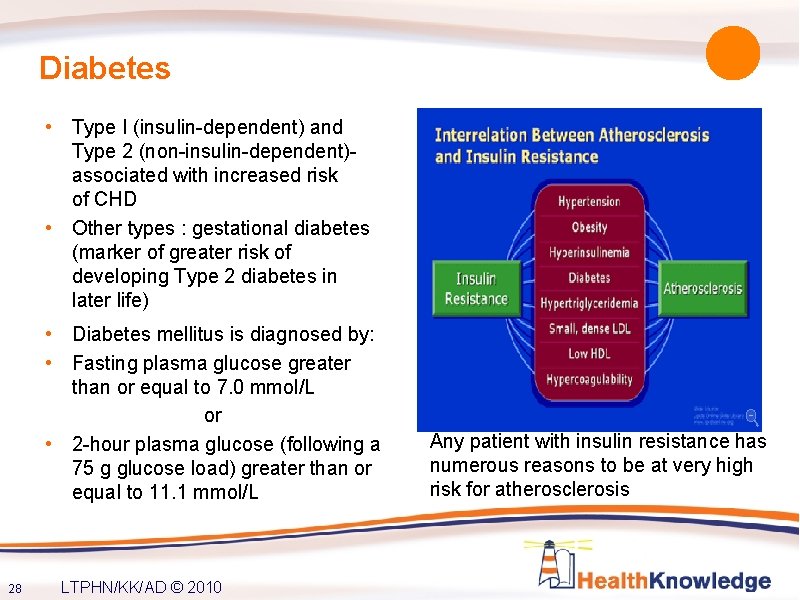
Diabetes • Type I (insulin-dependent) and Type 2 (non-insulin-dependent)- associated with increased risk of CHD • Other types : gestational diabetes (marker of greater risk of developing Type 2 diabetes in later life) • Diabetes mellitus is diagnosed by: • Fasting plasma glucose greater than or equal to 7. 0 mmol/L or • 2 -hour plasma glucose (following a 75 g glucose load) greater than or equal to 11. 1 mmol/L 28 LTPHN/KK/AD © 2010 Any patient with insulin resistance has numerous reasons to be at very high risk for atherosclerosis
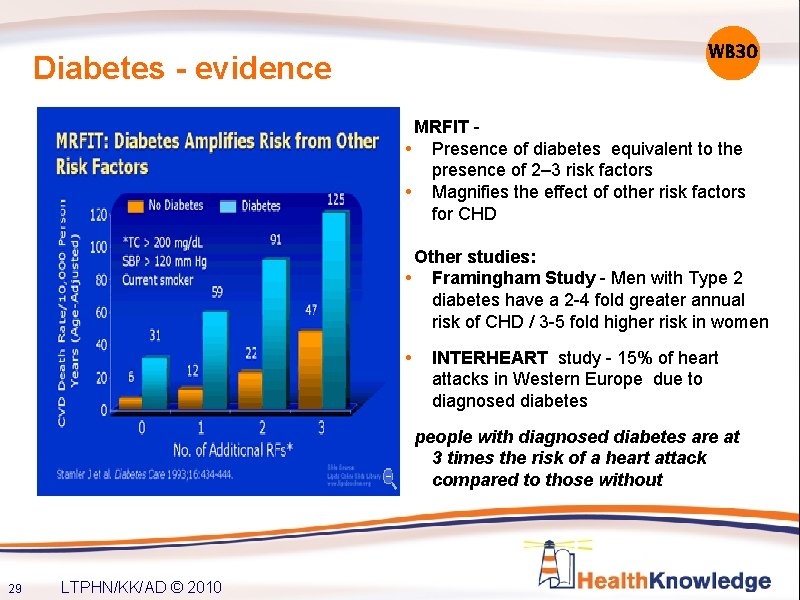
WB 30 Diabetes - evidence MRFIT - • Presence of diabetes equivalent to the presence of 2– 3 risk factors • Magnifies the effect of other risk factors for CHD Other studies: • Framingham Study - Men with Type 2 diabetes have a 2 -4 fold greater annual risk of CHD / 3 -5 fold higher risk in women • INTERHEART study - 15% of heart attacks in Western Europe due to diagnosed diabetes people with diagnosed diabetes are at 3 times the risk of a heart attack compared to those without 29 LTPHN/KK/AD © 2010
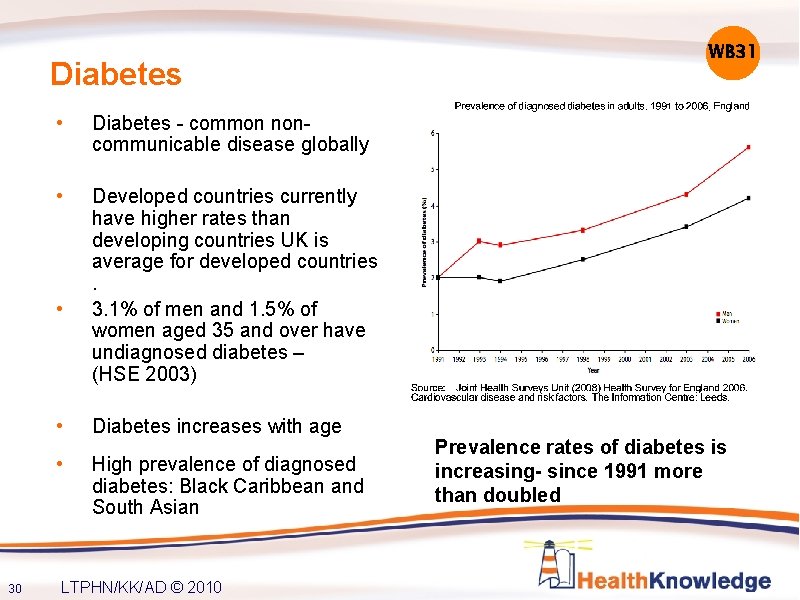
Diabetes • Diabetes - common noncommunicable disease globally • Developed countries currently have higher rates than developing countries UK is average for developed countries . 3. 1% of men and 1. 5% of women aged 35 and over have undiagnosed diabetes – (HSE 2003) • • Diabetes increases with age • High prevalence of diagnosed diabetes: Black Caribbean and South Asian 30 LTPHN/KK/AD © 2010 WB 31 Prevalence rates of diabetes is increasing- since 1991 more than doubled
Psychosocial well-being WB 32 Four different types of psychosocial factor have been found to be most consistently associated with an increased risk of CHD: • • work stress lack of social support depression (including anxiety) personality (particularly hostility) Among South Asians, the distribution of psychosocial factors found to be consistent with ethnic differences in coronary rates. South Asians report high GHQ 12 scores. 31 LTPHN/KK/AD © 2010
WB 32 Q 7. How do you think psychosocial well-being can effect CHD risk? 32 LTPHN/KK/AD © 2010
Physical inactivity WB 33 • People who are physically active have a lower risk of CHD maximum benefit with regular and aerobic activity • WHO 2002 Report > 20% of CHD in developed countries was due to physical inactivity • Evidence from observational studies: • Regular physical activity reduces risk of CHD associated with overweight or obesity • Active obese individuals have lower morbidity and mortality than normal weight individuals • Physical activity levels are low in the UK & below the EU average. • ~ one third of English adults are inactive (participate in less than one occasion of 30 minutes activity a week) 33 LTPHN/KK/AD © 2010

WB 35 Q 8. What factors are likely to influence levels of activities from an individual and wider society perspective? 34 LTPHN/KK/AD © 2010
Alcohol WB 36 • High levels of intake – particularly in ‘binges’ – the risk of CHD is increased Moderate alcohol consumption reduces the risk of CVD • WHO Report 2002 - 2% of CHD developed countries is due to alcohol • From late 1950 s alcohol consumption increasing steadily, more than doubling • Government advises between 2 -3 units a day for women and 3 -4 for men • 40% of men and 33% of women consume more than recommended amount in England 2006 • The prevalence of binge drinking was highest in the 16 to 24 years age group • Adults from each minority ethnic group were less likely to drink alcohol than the general population - except for the Irish who drink beyond recommended levels 35 LTPHN/KK/AD © 2010
Early Life course WB 39 • Evidence is fairly consistent that childhood socioeconomic position (often measured as parents’ occupation or education) is also inversely associated with CHD • Cumulative exposure to socioeconomic disadvantage across the life course may be inversely associated with CHD; the mechanisms are not fully clear 36 LTPHN/KK/AD © 2010
WB 40 Exercise I: What are the key patterns in CHD risk factors by age, sex, ethnicity, deprivation and region? Why is it important to understand differences in risk factors between groups? What do trends in the levels of alcohol, smoking and obesity suggest for future levels of CHD? 37 LTPHN/KK/AD © 2010
Part 3: Prevention WB 41 • CHD is a preventable disease. About half of the decline in CHD mortality is due to lifestyle changes and half due to better treatment and care • Two approaches for the practical management of risk factors (Rose, 1989) • Population approach • High risk approach 38 LTPHN/KK/AD © 2010
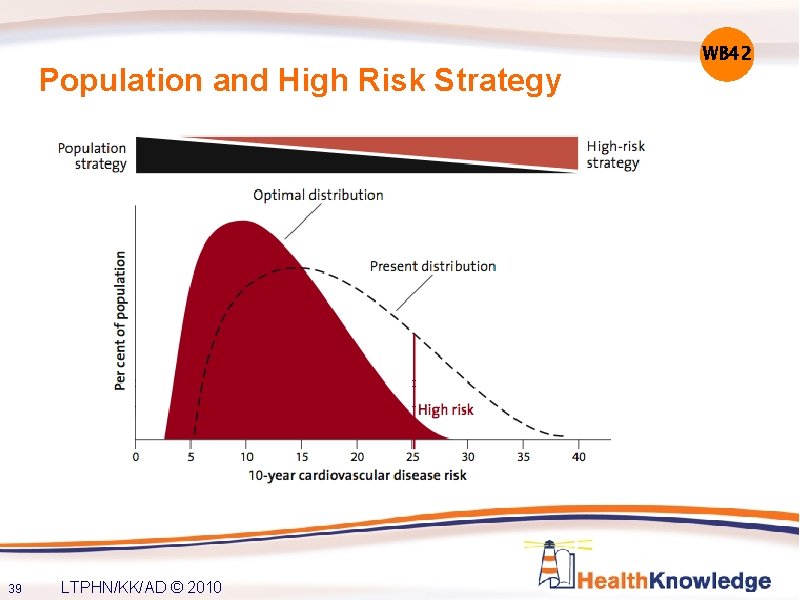
Population and High Risk Strategy 39 LTPHN/KK/AD © 2010 WB 42

WB 42 Q 12. What are the ethical considerations in a population based approach? 40 LTPHN/KK/AD © 2010
Efficacy and effectiveness 41 WB 42 • Efficacy: The extent to which a specific intervention produces a beneficial result under ideal conditions. Ideally, the calculation of efficacy is based on the results of a randomised controlled trial. i. e. Whether a treatment can work under ideal (e. g. RCT) circumstances (compared with effectiveness which is examined in routine circumstances) • Effectiveness: A measure of the extent to which a specific intervention when used in the field in routine circumstances, does what it is intended to do for a specified population. This is a measure of the extent to which a health care intervention fulfils its objectives. e. g. The degree to which a treatment or programme works in an everyday service setting rather than a research environment LTPHN/KK/AD © 2010
WB 43 Q 13. Why might the efficacy and effectiveness for an intervention differ? 42 LTPHN/KK/AD © 2010
Levels of prevention WB 44 • Primary prevention : Prevents the disease from occurring in those at risk. An example of primary prevention of CHD would be to provide smoking cessation advise to an individual with no history of CHD • Secondary prevention: Aims to identity high risk individuals in a population and prevent disease progression i. e. from angina to MI or death. An example would be the provision of lipid lowering medications to those with a history of CHD • Tertiary prevention: Aims to prevent the recurrence of a MI. An example would be revascularisation after a MI for severe cases of CHD 43 LTPHN/KK/AD © 2010
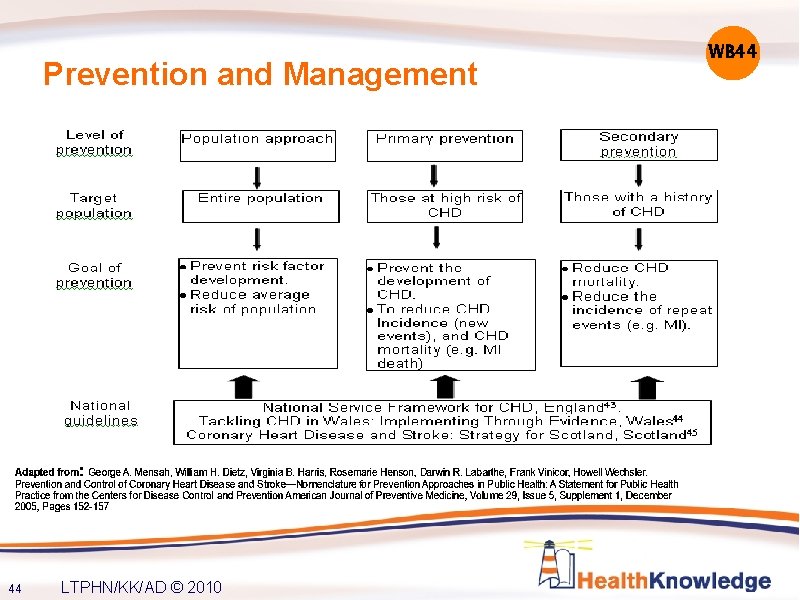
Prevention and Management 44 LTPHN/KK/AD © 2010 WB 44
Population wide approach WB 45 A population wide approach may include • Integrated national policies • health promotion campaigns (e. g. Change 4 life see http: //www. nhs. uk/Change 4 life) or • disease prevention interventions (e. g. legislation to reduce the level of salt in processed food) • Health promotion can be defined as the process of enabling people to increase control over their health and its determinants, and thereby improve their health (WHO 2005) The overall objective should be to make it easy for the population to make healthy choices related to diet, physical activity and avoidance of tobacco. 45 LTPHN/KK/AD © 2010

WB 45 46 LTPHN/KK/AD © 2010
WB 46 Q 14. Discuss the rationale for preventative interventions targeted at: a) high risk groups b) the whole population 47 LTPHN/KK/AD © 2010

Effective Health Promotion Policies WB 45 Promote healthy eating: Agricultural subsidies for fruits and vegetables Food pricing and availability Labelling of food School health education Promote physical activity Public transport Pedestrian- and cyclist friendly road planning Reduce smoking Tobacco control measures (prohibition of advertising /ban in public spaces) Smoking cessation services Prevention of sudden death by CHD Availability of automatic external defibrilliators in public places – stations, shopping centres, airport 48 LTPHN/KK/AD © 2010
Primary Prevention WB 45 • Primary prevention involves high risk approach • No national policy for cardiovascular screening of the healthy population in primary care • High risk patients are being detected through new patient checks and opportunistic screening • Essential that the high-risk approach is complemented by population-wide public health strategies • Public health approaches can effectively slow down the development of atherosclerosis and reduce incidence of CVD • Population-wide strategies will also support lifestyle modification in those at high risk 49 LTPHN/KK/AD © 2010
Risk Prediction tools WB 47 Joint British Societies charts assess the ten-year risk of CVD in three age categories and recommend that CVD prevention in clinical practice should focus equally on: • people with established atherosclerotic CVD • people with diabetes • apparently healthy individuals at high risk (CVD risk of > =20% over 10 years) of developing symptomatic atherosclerotic disease Inappropriate in certain patients such as: • smoking status which should reflect lifetime risk and not just current use • premature menopause Risk estimates have not been validated in ethnic minorities. 50 LTPHN/KK/AD © 2010
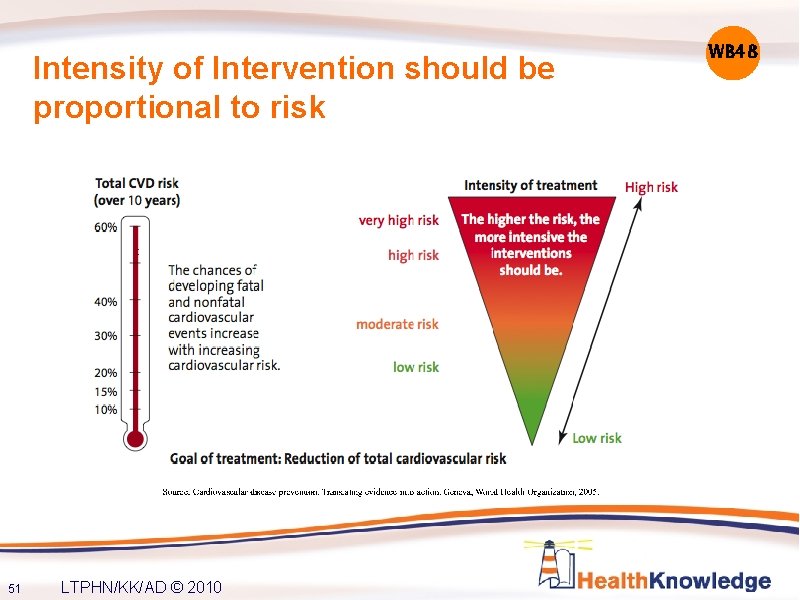
Intensity of Intervention should be proportional to risk 51 LTPHN/KK/AD © 2010 WB 48

NHS Health Checks See http: //www. nhs. uk/Planners/NHSHealth. Check/Pages/NHSHealth. Check. aspx 52 LTPHN/KK/AD © 2010 WB 48
Effective policies – Primary Prevention WB 48 Promote physical activity Encouraged to take at least 30 minutes of moderate physical activity (e. g. brisk walking) a day Smoking status Nonsmokers should be encouraged not to start smoking Smokers encouraged to quit smoking and other forms of tobacco be advised to stop Risk >20% nicotine replacement and /or nortriptyline or amfebutamone (bupropion) to motivated smokers who fail to quit with counselling Overweight and obesity Encouraged to reduce total fat and saturated fat, salt intake Increased range of fruits and vegetables as well as whole grains and pulses Increase physical activity 53 LTPHN/KK/AD © 2010
Effective policies – Primary Prevention • Alcohol - Reduce alcohol intake to recommended levels • Hypertension - Threshold for treatment: 160/100 mm Hg, or less if target organ damage and specific lifestyle advice • Serum cholesterol - All individuals with total cholesterol at or above 8 mmol/l (320 mg/dl), should be advised to follow a lipid lowering diet and given a statin to lower the risk of cardiovascular disease • Diabetes/plasma glucose - Individuals with persistent fasting blood glucose >6 mmol/l despite diet control should be given metformin • Risk is 30% or more - Antiplatelet : low dose aspirin recommended 54 LTPHN/KK/AD © 2010 WB 48
Secondary prevention • Risk charts not necessary to make treatment decisions in WB 49 people with established cardiovascular disease - as these patients are at very high risk of developing recurrent cardiovascular events • Intensive life style advice (as in primary prevention) should be given simultaneously with drug treatment • Following an MI drugs recommended to reduce further attacks and mortality: • • • 55 Ace inhibitors (to lower high BP) Beta blocker (to lower high BP) Antiplatelets (reduce clotting) statin (to reduce cholesterol) antihypertensive (to lower high BP) anti glycaemic (to manage high blood glucose)
Tertiary Prevention WB 50 CABG Should be considered as an adjunct to optimal medical treatment including aspirin, lipid lowering treatment, ACE inhibitors and beta-blockers) in those patients at moderate and high risk who are considered likely to have left main stem or triple vessel disease. PTCA Should be considered for relief of anginal symptoms in patients with refractory angina who are already receiving optimal medical treatment. 56 LTPHN/KK/AD © 2010
WB 52 Exercise 2: Using the evidence provided in the workbook, work out a 10 point action plan to reduce the risk of CHD in your local area 57 LTPHN/KK/AD © 2010
Summary WB 53 • Coronary Heart Disease is a major public health issue. It is responsible for much of the global burden of disease and is the UK’s biggest killer • It has substantial impact of the health and well-being of patients • Costs include the individual patient, family and other carers, NHS and the wider economy • Much of CHD mortality and morbidity is preventable • All health professionals have opportunities to support and promote effective preventive interventions • Tackling the determinants and risk factors for CHD will also impact on other major diseases, such as stroke and type 2 diabetes 58 LTPHN/KK/AD © 2010
Part 4: Statistics on CHD Statistics on: Morbidity – incidence, prevalence, trends Mortality 59 LTPHN/KK/AD © 2010
Morbidity is state of being diseased Two key measures of morbidity: Incidence is an estimate of risk of developing disease and useful for looking at causes or determinants of disease • e. g. the incidence of new cases of CHD in a population Prevalence indicates amount of illness requiring care and is useful in health service planning • e. g. the proportion of the population with a history of CHD Sources of morbidity data include: • Hospitals • Primary care • Self reported surveys • Health Survey for England the General Household Survey suggest morbidity, particularly in older age groups, appears to be rising 60 LTPHN/KK/AD © 2010
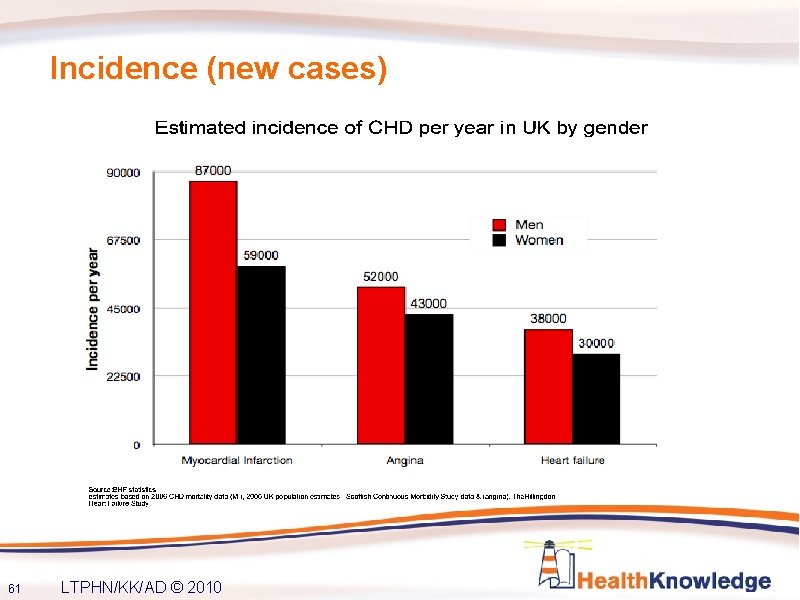
Incidence (new cases) 61 LTPHN/KK/AD © 2010
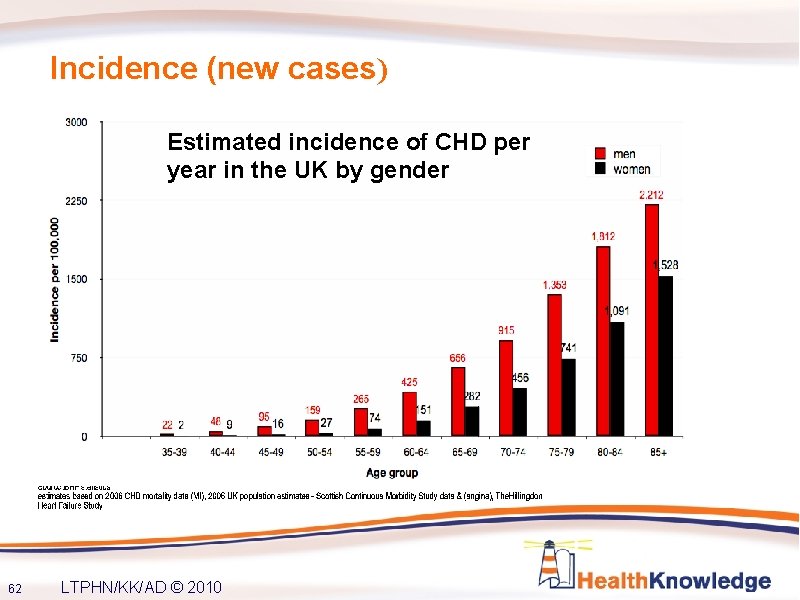
Incidence (new cases) Estimated incidence of CHD per year in the UK by gender 62 LTPHN/KK/AD © 2010
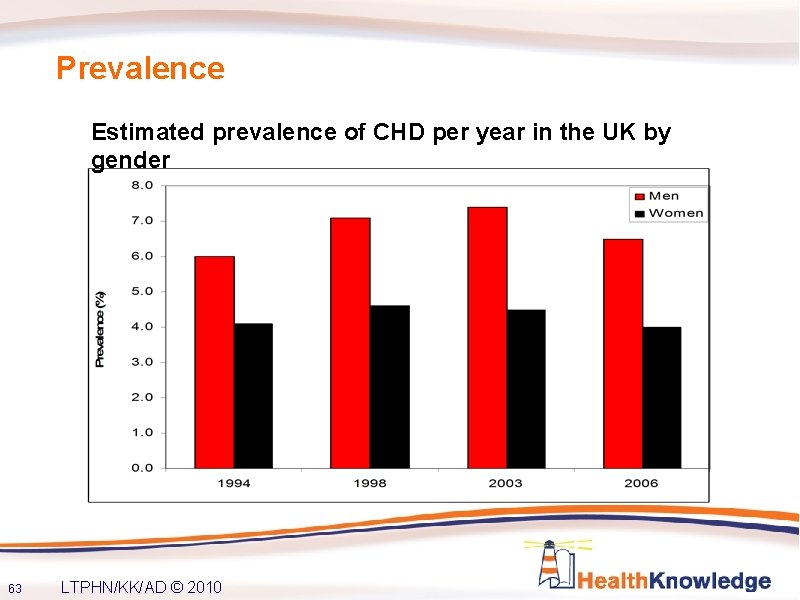
Prevalence Estimated prevalence of CHD per year in the UK by gender 63 LTPHN/KK/AD © 2010

Q 17. What is the weakness of using self reported diagnosis to determine prevalence? 64 LTPHN/KK/AD © 2010
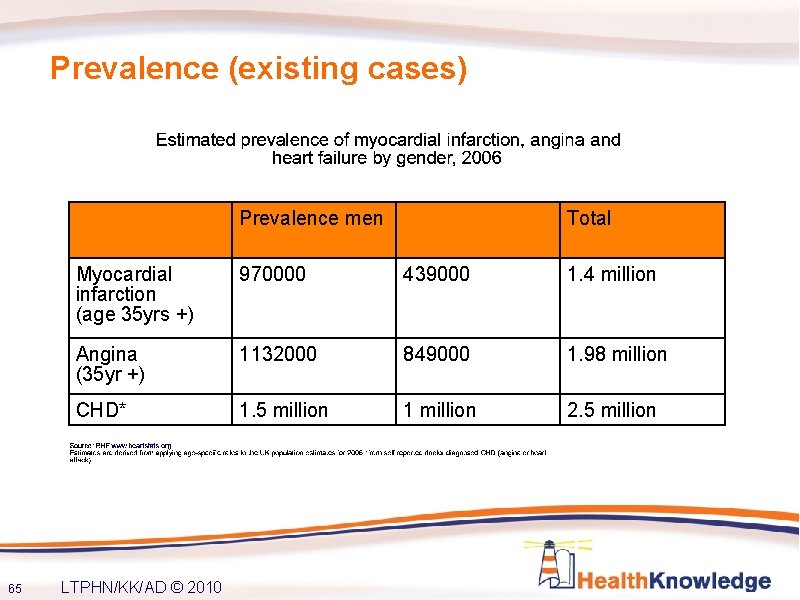
Prevalence (existing cases) Prevalence men 65 Total Myocardial infarction (age 35 yrs +) 970000 439000 1. 4 million Angina (35 yr +) 1132000 849000 1. 98 million CHD* 1. 5 million 1 million 2. 5 million LTPHN/KK/AD © 2010
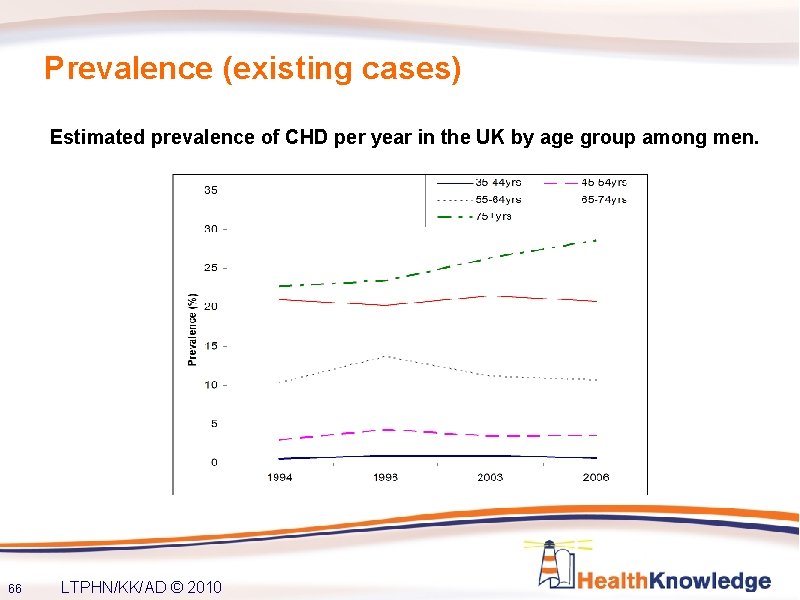
Prevalence (existing cases) Estimated prevalence of CHD per year in the UK by age group among men. 66 LTPHN/KK/AD © 2010
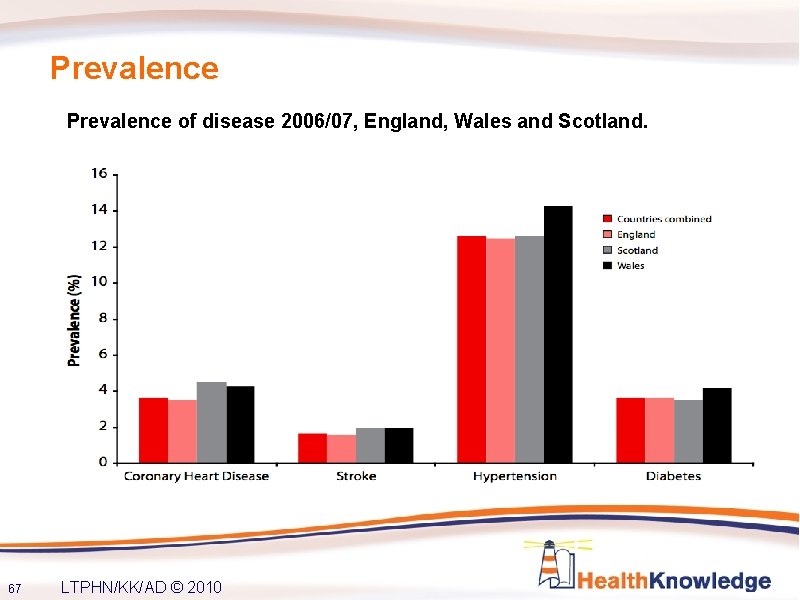
Prevalence of disease 2006/07, England, Wales and Scotland. 67 LTPHN/KK/AD © 2010
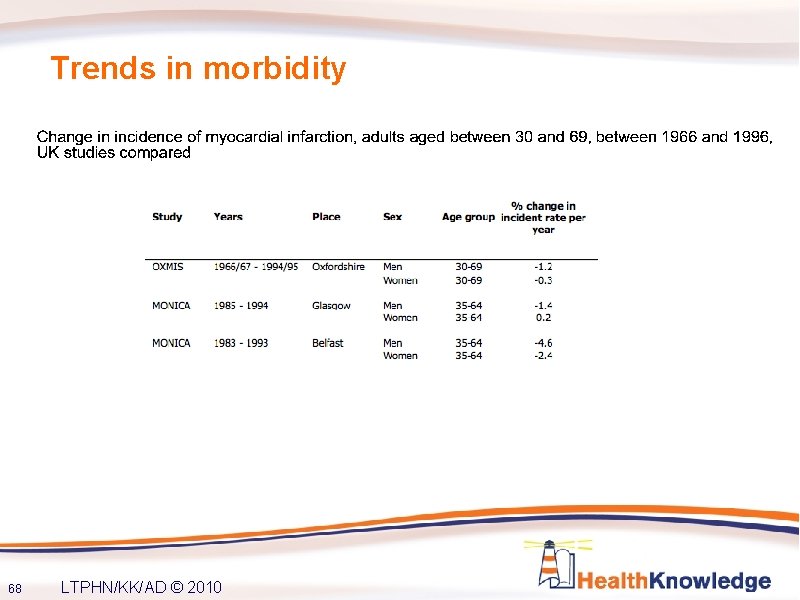
Trends in morbidity 68 LTPHN/KK/AD © 2010
Q 18. Comment on the regional and gender differences in incidence trends in the table above. Q 19. What drives trends in incidence? 69 LTPHN/KK/AD © 2010
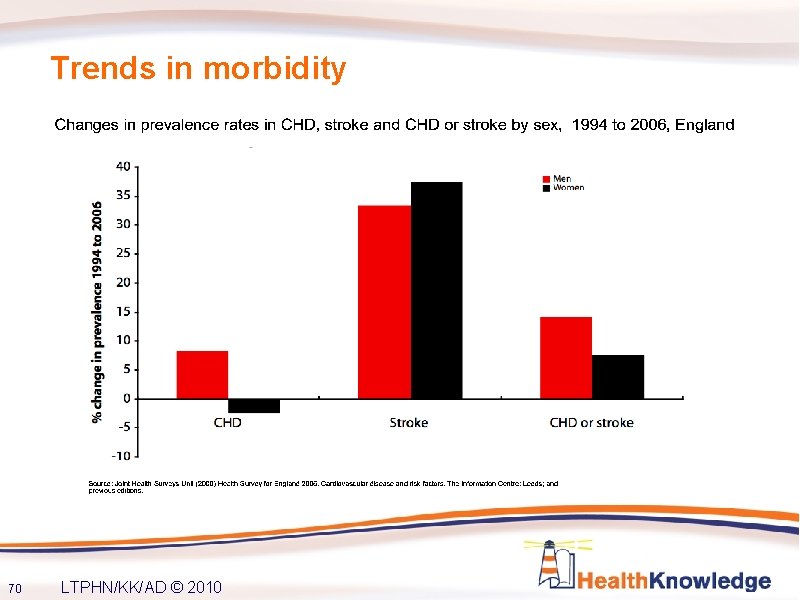
Trends in morbidity 70 LTPHN/KK/AD © 2010
Q 20. By looking at the source of prevalence do you think this may be a true reflection? Q 21. What effect do you think upward trends in the prevalence of obesity will have on the incidence and prevalence of CHD? Q 22. What is the public health importance of increasing prevalence? 71 LTPHN/KK/AD © 2010
Morbidity - inequalities • The WHO MONICA project - incidence rates in the two UK populations included in the study, Belfast and Glasgow, were among the highest in the world, particularly in women • The incidence rate of CHD is higher in men and increases with age • Incidence of MI in women increases significantly after menopause • Prevalence of all CHD: • Higher in the North of England in Wales • Higher in lower socio-economic groups • High in South Asian men 72 LTPHN/KK/AD © 2010
Mortality 73 • • Mortality is the number of deaths in a population in a given period • Specific mortality estimates calculate the number of deaths in a population by subgroup (expressed as per 1, 000 population) such as age or sex specific mortality • allows comparisons of subgroups and to identify those most at risk • Standardised mortality ratios • This allows direct comparison of mortality experience between two populations by taking into account the different age structures • Data source: Death certificates Crude mortality which is expressed as the number of deaths per 1, 000 population at risk of dying during a period • easy to calculate • difficult to compare across studies as differences may reflect the age structure of the population LTPHN/KK/AD © 2010
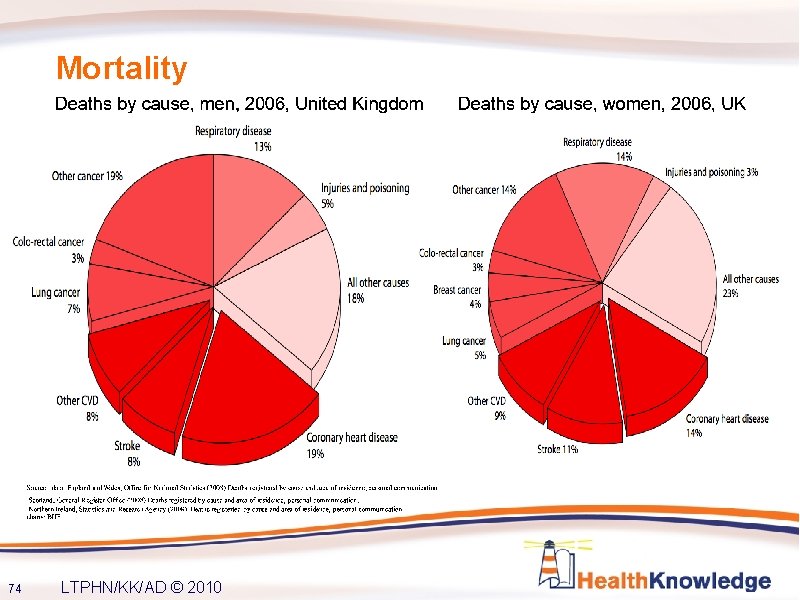
Mortality 74 LTPHN/KK/AD © 2010
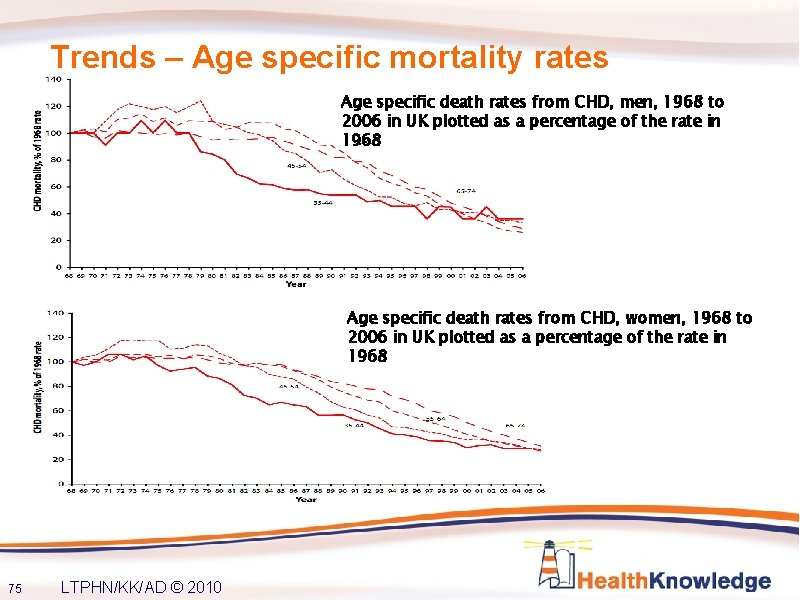
Trends – Age specific mortality rates Age specific death rates from CHD, men, 1968 to 2006 in UK plotted as a percentage of the rate in 1968 Age specific death rates from CHD, women, 1968 to 2006 in UK plotted as a percentage of the rate in 1968 75 LTPHN/KK/AD © 2010
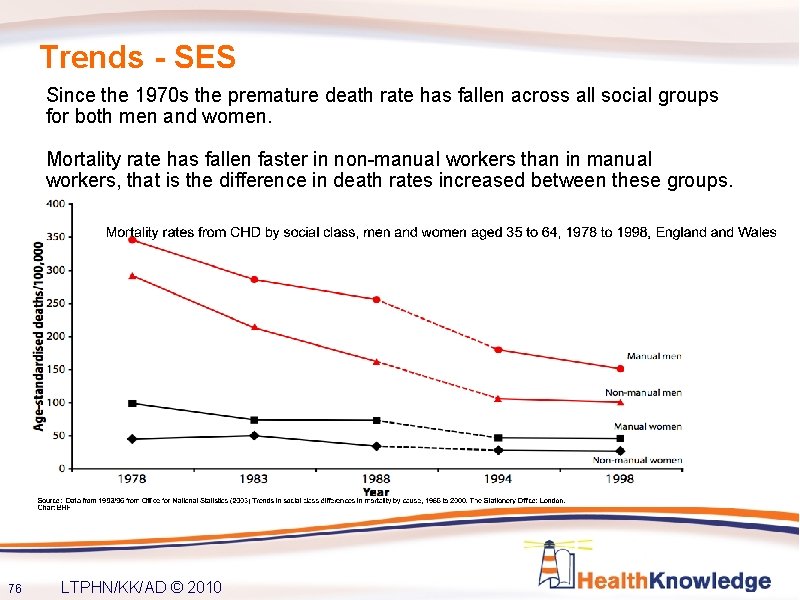
Trends - SES Since the 1970 s the premature death rate has fallen across all social groups for both men and women. Mortality rate has fallen faster in non-manual workers than in manual workers, that is the difference in death rates increased between these groups. 76 LTPHN/KK/AD © 2010

Q 23. What could be possible explanations for the positive relationship between deaths from circulatory diseases and levels of deprivation? Q 24. How could these differences be addressed? 77 LTPHN/KK/AD © 2010
Mortality trends • Decline in CHD mortality in men and women since late 1970 s • But CHD mortality in the UK is still amongst the highest in Western Europe • In recent years slower decline in younger age groups • May reflect attitudes to risk behaviour change among younger populations – young people continuing to smoke, drink heavily and higher prevalence of obesity 78 LTPHN/KK/AD © 2010
Mortality - inequalities Death rates are higher: • Scotland than the South of England • Manual workers than in non-manual workers • Ethnic groups- South Asia • During winter period- excess winter mortality 79 LTPHN/KK/AD © 2010
Q 25. Discuss possible reasons for inequality in CHD mortality among South Asians 80 LTPHN/KK/AD © 2010
Q 26. What could be possible explanations for different rates of decline in CHD mortality in different developed countries? 81 LTPHN/KK/AD © 2010
- Slides: 81