
Public Health IT Unit 4 Public Health Enabled
Public Health IT Unit 4: Public Health Enabled Electronic Health Records, Decision Support, and Their Role in the Meaningful Use of Health Care Technology Lecture b This material (Comp 13_Unit 4 b) was developed by Columbia University, funded by the Department of Health and Human Services, Office of the National Coordinator for Health Information Technology under Award Number 1 U 24 OC 000003. This material was updated by Columbia University under Award Number 90 WT 0004. This work is licensed under the Creative Commons Attribution-Non. Commercial-Share. Alike 4. 0 International License. To view a copy of this license, visit http: //creativecommons. org/licenses/by-nc-sa/4. 0/.
EHRs, Decision Support, and Meaningful Use of HIT Learning Objectives • Objective 1: Discuss the New York City Department of Health and Mental Hygiene partnership with a commercial EHR vendor and how it created a public health – enabled EHR • Objective 2: Describe the EHR "meaningful use" movement and how it could transform existing clinical / public health practices 2
EHRs, Decision Support, and Meaningful Use of HIT Learning Objectives (Cont’d – 1) • Objective 3: Demonstrate knowledge of public health – oriented clinical decision support including an integrated strategy using multiple tools such as alerts, order sets, smart forms, and quality reporting • Objective 4: Describe the strategies, features, and systems needed for public health agencies to define and build the necessary connections to EHRs as identified by the “meaningful use” legislation • Objective 5: Identify the essential features of four primary public health IT functions including syndromic surveillance, bidirectional immunization registries, public health alerts, ad – hoc reporting, etc. 3
Eight key features of ECW • Measure reports – Side – by – side provider comparisons of performance on quality measures • Enhanced registry – Identifies patients by structured data (e. g. , diagnoses, drugs, labs, demographics) • Automatic visual alerts – Highlights abnormal vitals • Clinical decision support service (CDSS) – Automatically displays preventive service alerts that are suppressed when addressed 4
Eight key features of ECW (Cont’d – 1) • Quick orders – One – click ordering of recommended preventive services • Comprehensive order sets – Displays best practice recommendations (e. g. , for meds, labs, patient education • CIR and school health – Sends information to City Immunization Registry and generates school health forms • Medication history – With patient consent, displays a medication history of all prescriptions filled by the patients • *Note: Screenshots on following slides may be from an earlier version of e. Clinical. Works 5
The following storyline… • Illustrates these public health – enabled EHR functions in action • Jane Doe, a 48 year – old woman is cared for by her family practitioner, Dr. Sam Willis 6
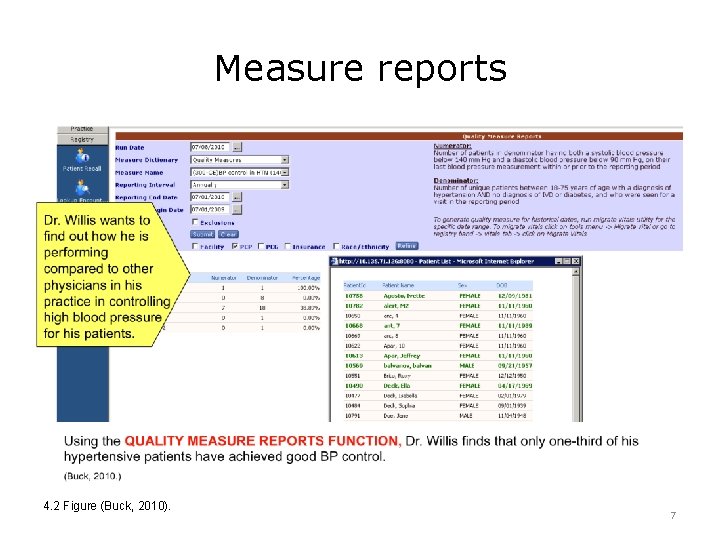
Measure reports 4. 2 Figure (Buck, 2010). 7
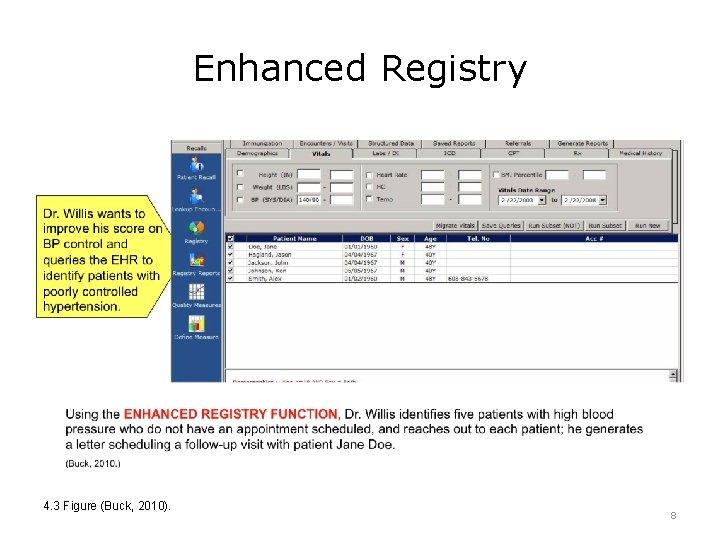
Enhanced Registry 4. 3 Figure (Buck, 2010). 8
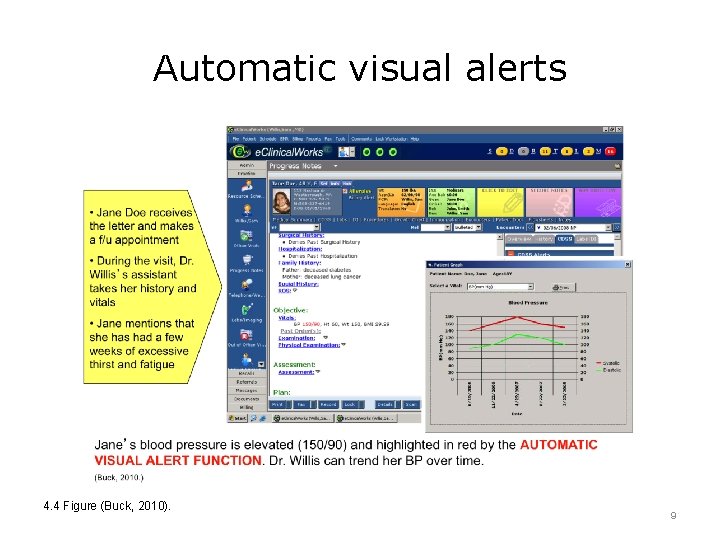
Automatic visual alerts 4. 4 Figure (Buck, 2010). 9
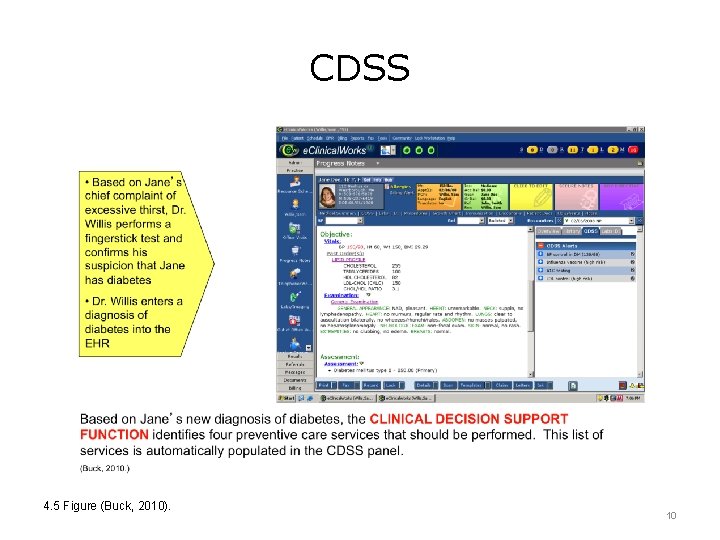
CDSS 4. 5 Figure (Buck, 2010). 10
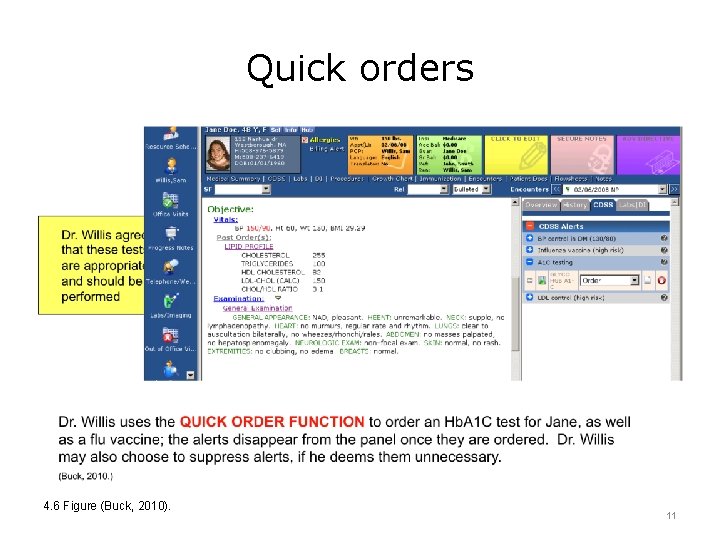
Quick orders 4. 6 Figure (Buck, 2010). 11
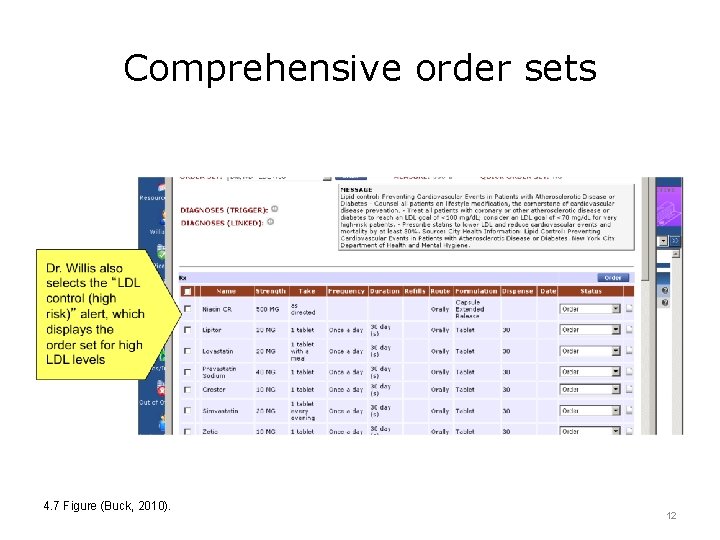
Comprehensive order sets 4. 7 Figure (Buck, 2010). 12
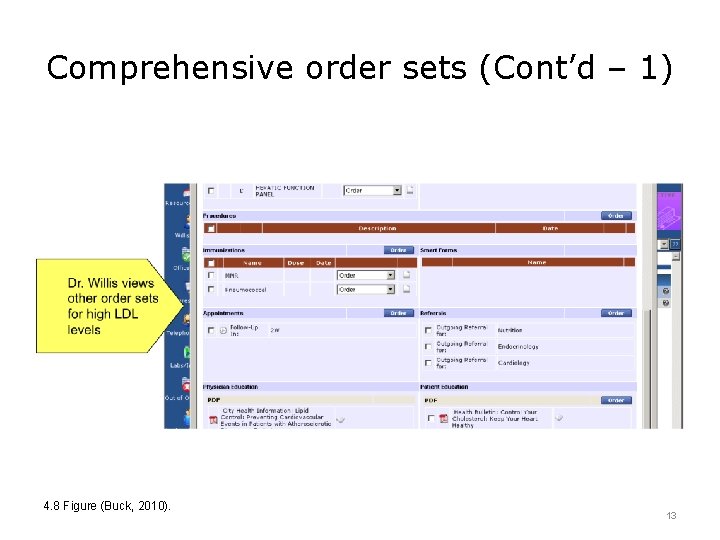
Comprehensive order sets (Cont’d – 1) 4. 8 Figure (Buck, 2010). 13
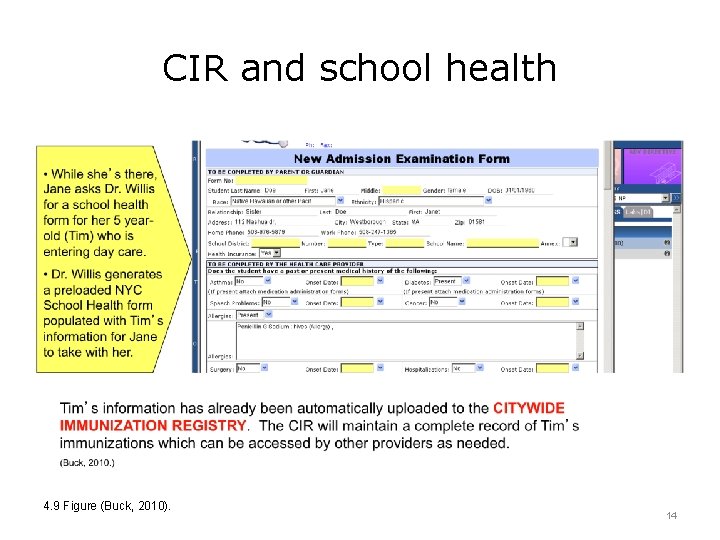
CIR and school health 4. 9 Figure (Buck, 2010). 14
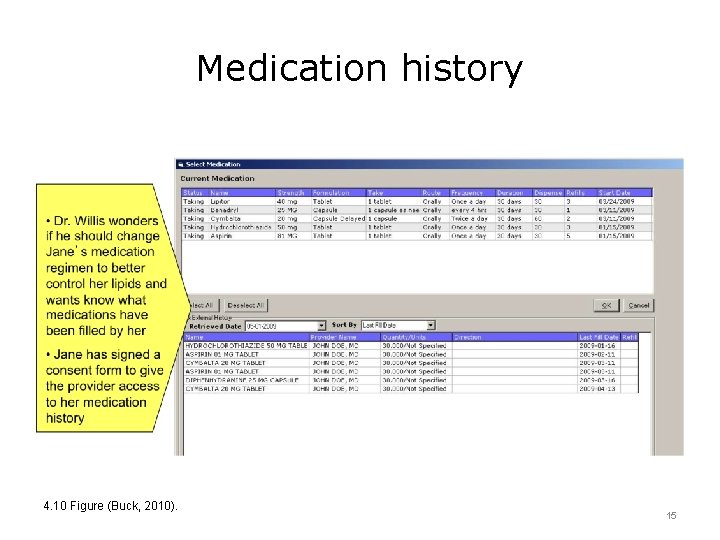
Medication history 4. 10 Figure (Buck, 2010). 15
Public health Meaningful Use functions • Syndromic surveillance • Immunization registries • Public health alerts and ad – hoc reporting 16
Syndromic surveillance system • The syndromic surveillance system was designed and built in September / October 2008 by PCIP and deployed in November 2008 • Sydromic definitions for Influenza – Like Illness (ILI), fever, and gastrointestinal illness are encoded using My. SQL database queries • Executed in a nightly batch job, with results reported securely through Secure File Transfer Protocol (SFTP) to PCIP 17
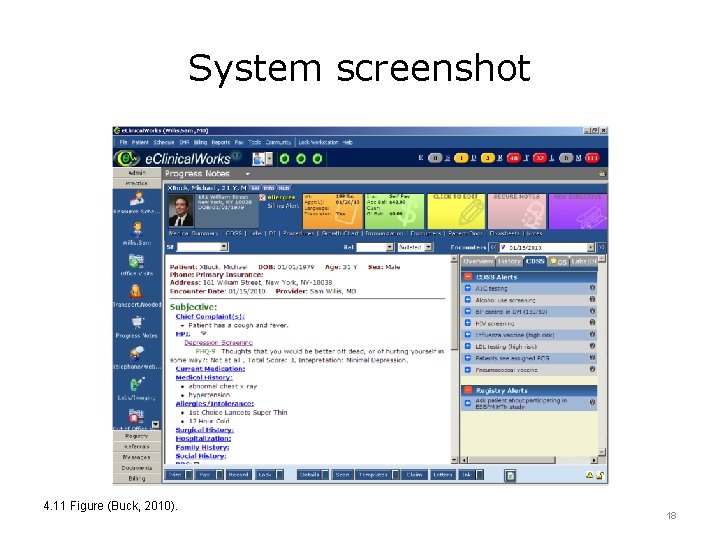
System screenshot 4. 11 Figure (Buck, 2010). 18
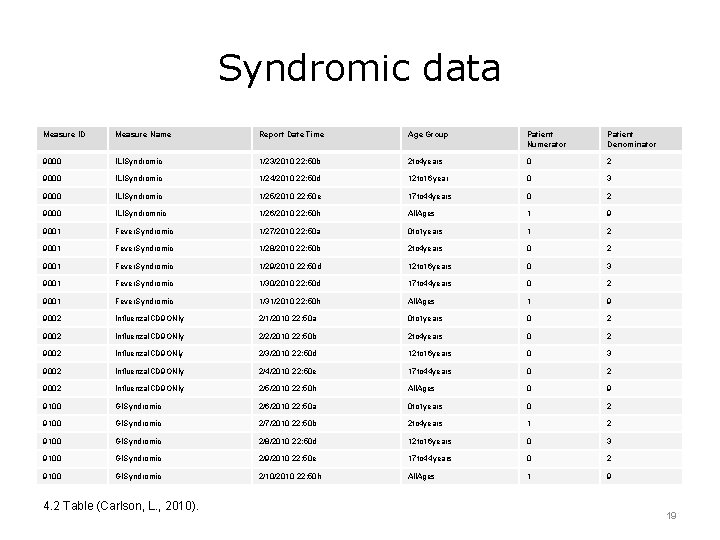
Syndromic data Measure ID Measure Name Report Date Time Age Group Patient Numerator Patient Denominator 9000 ILISyndromic 1/23/2010 22: 50 b 2 to 4 years 0 2 9000 ILISyndromic 1/24/2010 22: 50 d 12 to 16 year 0 3 9000 ILISyndromic 1/25/2010 22: 50 e 17 to 44 years 0 2 9000 ILISyndromnic 1/26/2010 22: 50 h All. Ages 1 9 9001 Fever. Syndromic 1/27/2010 22: 50 a 0 to 1 years 1 2 9001 Fever. Syndromic 1/28/2010 22: 50 b 2 to 4 years 0 2 9001 Fever. Syndromic 1/29/2010 22: 50 d 12 to 16 years 0 3 9001 Fever. Syndromic 1/30/2010 22: 50 d 17 to 44 years 0 2 9001 Fever. Syndromic 1/31/2010 22: 50 h All. Ages 1 9 9002 Influenza. ICD 9 ONIy 2/1/2010 22: 50 a 0 to 1 years 0 2 9002 Influenza. ICD 9 ONIy 2/2/2010 22: 50 b 2 to 4 years 0 2 9002 Influenza. ICD 9 ONly 2/3/2010 22: 50 d 12 to 16 years 0 3 9002 Influenza. ICD 9 ONIy 2/4/2010 22: 50 e 17 to 44 years 0 2 9002 Influenza. ICD 9 ONIy 2/5/2010 22: 50 h All. Ages 0 9 9100 GISyndromic 2/6/2010 22: 50 a 0 to 1 years 0 2 9100 GISyndromic 2/7/2010 22: 50 b 2 to 4 years 1 2 9100 GISyndromic 2/8/2010 22: 50 d 12 to 16 years 0 3 9100 GISyndromic 2/9/2010 22: 50 e 17 to 44 years 0 2 9100 GISyndromic 2/10/2010 22: 50 h All. Ages 1 9 4. 2 Table (Carlson, L. , 2010). 19
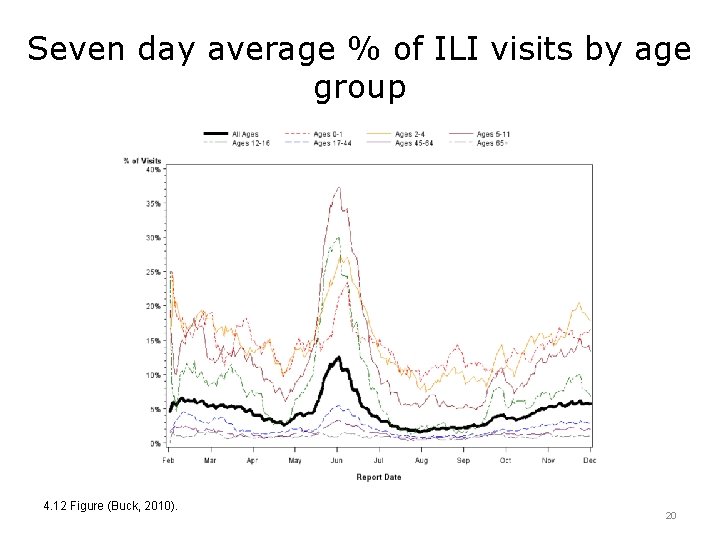
Seven day average % of ILI visits by age group 4. 12 Figure (Buck, 2010). 20
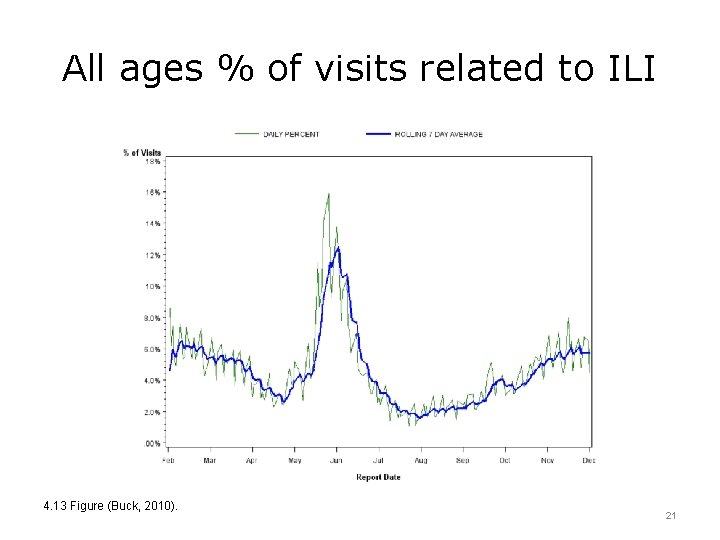
All ages % of visits related to ILI 4. 13 Figure (Buck, 2010). 21
Unit 4: EHRs, Decision Support, and Meaningful Use of HIT, Summary – Lecture b • This lecture has shown that a combination of measure reports, registry tool, visual alerts, clinical decision support, order sets, CIR, and medication history all enable a clinical provider to practice good preventative follow – up care in line with public health priorities. It has also shown how EHR data could be used to detect the H 1 N 1 flu outbreak in New York City 22
EHRs, Decision Support, and Meaningful Use of HIT References – Lecture b References: Amirfar S, Taverna J, Anane S, Singer J. Developing Public Health Clinical Decision Support Systems (CDSS) for the Outpatient Community in New York City: Our Experience. BMC Public Health. (Accepted for publication) Plagianos M, Buck MD, et al. Syndromic Surveillance during Pandemic (H 1 N 1) 2009 Outbreak. Emerging Infectious Diseases. 2011 Sept; 17(9). 1724 -6. Charts, Tables, Figures: 4. 2 Table: Buck, M. (2010). Syndromic data. New York Department of Health and Mental Hygiene, Primary Care Information Center. 4. 2 – 4. 11 Figures: Buck, M. (2010). Example images of eclinicalworks: personal desktop. New York Department of Health and Mental Hygiene, Primary Care Information Center. 4. 12: Buck, M. (2010). 7 Day average percent of ILI visits by age group. New York Department of Health and Mental Hygiene, Primary Care Information Center. 4. 13: Buck, M. (2010). All ages percent of visits related to ILI. New York Department of Health and Mental Hygiene, Primary Care Information Center. 23
Unit 4: EHRs, Decision Support, and Meaningful Use of HIT, Lecture b This material (Comp 13 Unit 4 b) was developed by Columbia University, funded by the Department of Health and Human Services, Office of the National Coordinator for Health Information Technology under Award Number IU 24 OC 000013. This material was updated in 2016 by Columbia University under Award Number 90 WT 0005. 24
- Slides: 24