
Public Health Improvements in the 19 th C

Public Health Improvements in the 19 th C
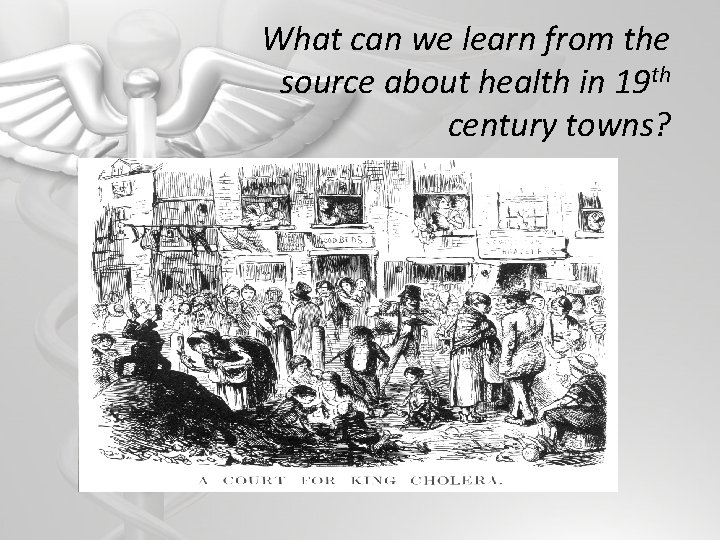
What can we learn from the source about health in 19 th century towns?
Recap from last lesson w Why towns grew rapidly w Laissez faire. w What effect this had on living conditions. w Cholera w The cure for cholera is found.
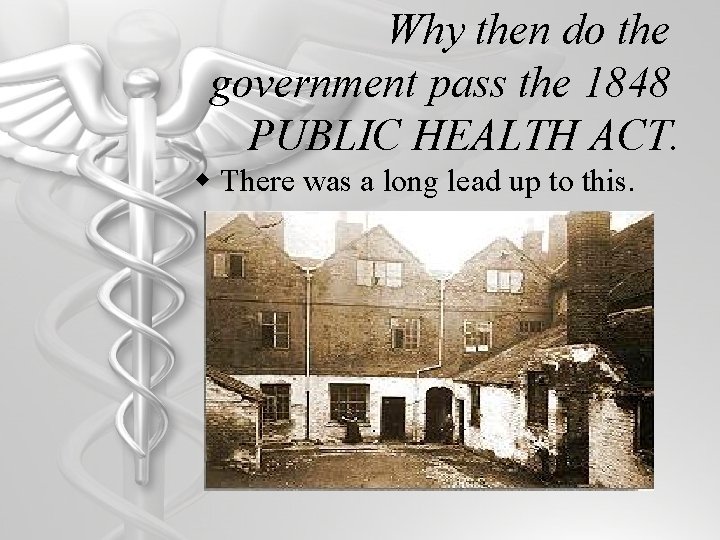
Why then do the government pass the 1848 PUBLIC HEALTH ACT. w There was a long lead up to this.
Timeline. w 1834: poor law Amendment Act: medical officers were appointed to workhouses which provided medical care for the really poor. w 1842…. . Chadwick’s report.
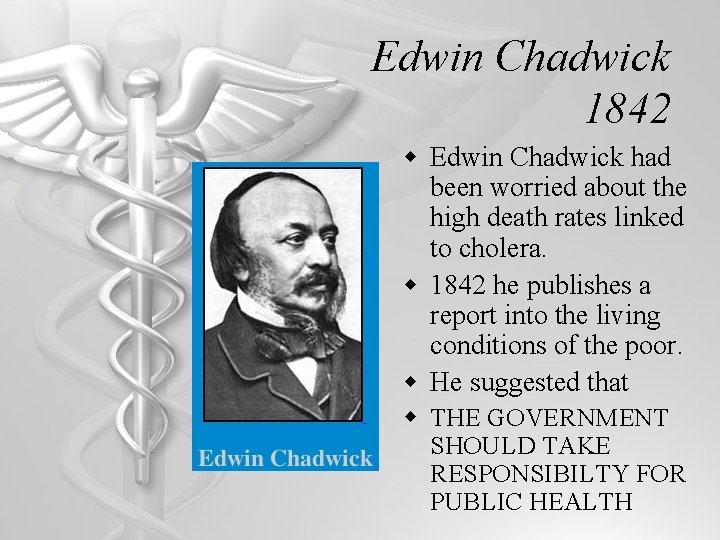
Edwin Chadwick 1842 w Edwin Chadwick had been worried about the high death rates linked to cholera. w 1842 he publishes a report into the living conditions of the poor. w He suggested that w THE GOVERNMENT SHOULD TAKE RESPONSIBILTY FOR PUBLIC HEALTH
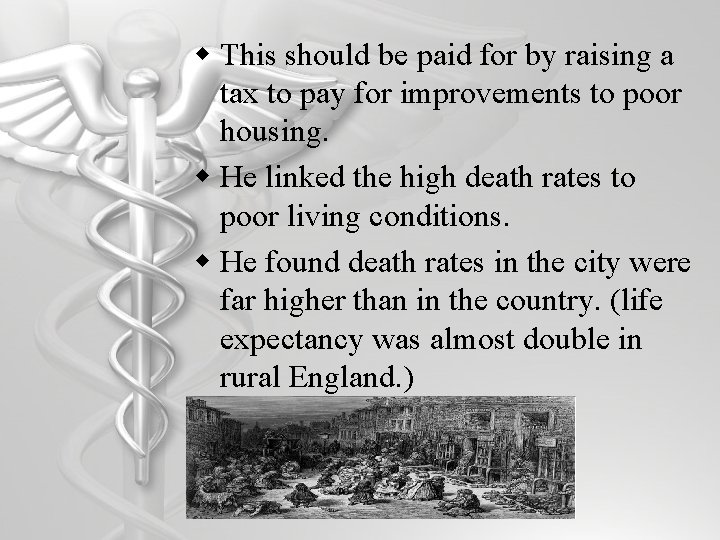
w This should be paid for by raising a tax to pay for improvements to poor housing. w He linked the high death rates to poor living conditions. w He found death rates in the city were far higher than in the country. (life expectancy was almost double in rural England. )
REACTION! w Government initially do not listen to the recommendations of the report. w But Cholera forces their hand. w 1846: Government conduct their own report………. This RESULTS in the 1848 PUBLIC Health Act.
What was it: w The Act proposed some PERMISSIVE CHANGES. w A central board of health was established. w Local councils were now to assume responsibility for drainage, water supplies and the removal of “nuisances” and paving etc. w Non Corporate towns should set up Boards of health. w Improvements were to be financed by rates. w Local BOARDS of HEALTH HAD TO BE SET UP IN LOCATIONS WHERE CHOLERA KILLED MORE THAN 23 PER 1000 DEATHS!
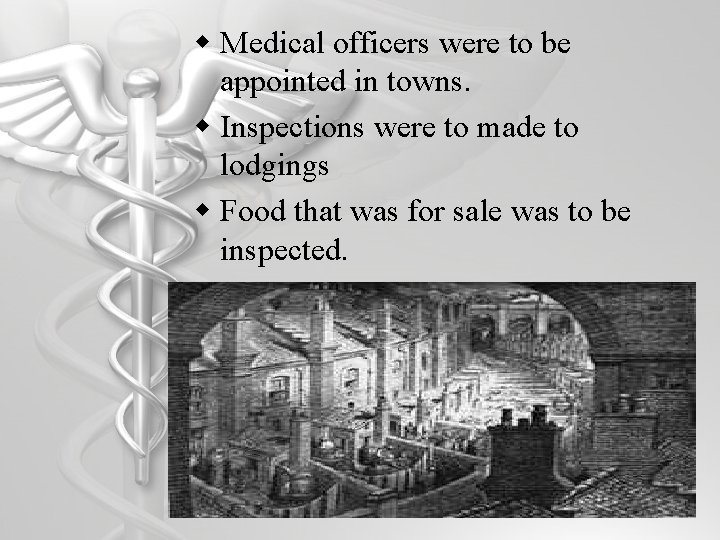
w Medical officers were to be appointed in towns. w Inspections were to made to lodgings w Food that was for sale was to be inspected.
Timeline w 1853: Vaccinations were now made COMPULSORY. . BUT NO ONE WAS GIVEN THE POWER TO ENFORCE IT! w 1855: Nuisance removal act: This made overcrowding houses illegal! w THE GREAT STINK!!!!! This brings it all home to the rich! w 1864: Factory act: This make unhealthy factory conditions illegal. w 1866: SANITARY ACT: This made local authorities responsible for sewers , water and street cleaning. w 1868 ACT: This encouraged the improvement of slums or their demolition. w 1871: vaccination act: this forced the previous law to be obeyed.
WEAKNESSES. w Responsibility was STILL OPTIONAL. The Board often met resistance to their orders. w London, Scotland, and Ireland were all excluded from the ACT. w There were too many boards and there were too many organizations that did not communicate. w The central board had NO money. w The issue of Public health was STILL NOT A MINISTERIAL responsibility.
THE 1875 PUBLIC HEALTH ACT. w COMPULSARY! UNLIKE 1848! w Again this is forced by cholera! w This was passed at the same time as THE ARTISAN DWELLING ACT. w This made house owners responsible for keeping their properties in good order. It also allowed the local authorities to purchase and demolish anything that was not improved. .
Town Improvers. Philanthropists. Not all landlords were greedy and money grabbing Many were religious.
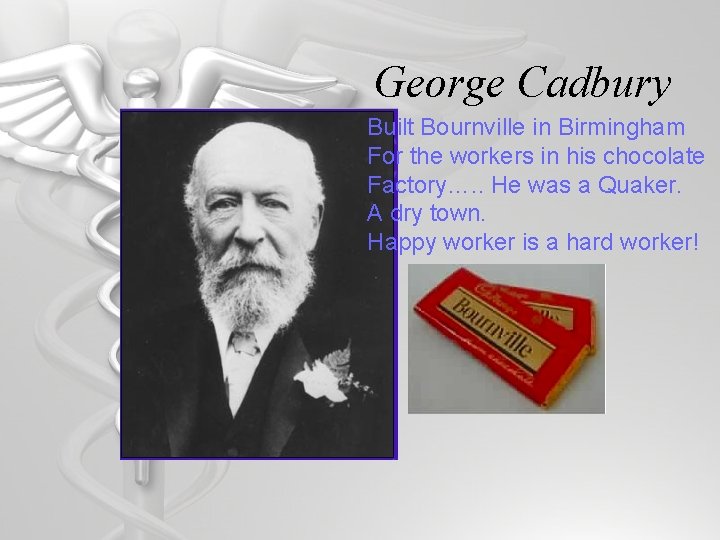
George Cadbury Built Bournville in Birmingham For the workers in his chocolate Factory…. . He was a Quaker. A dry town. Happy worker is a hard worker!
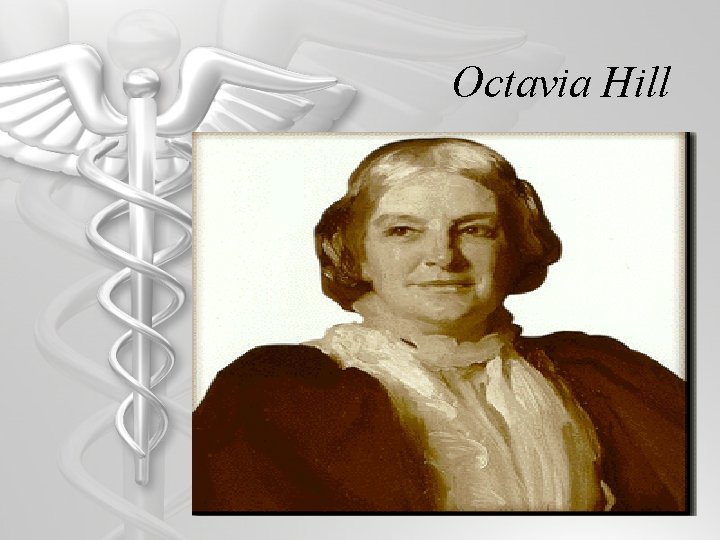
Octavia Hill
Unusual for her time as she had a lot of money. Built good houses for dock workers in the East End of London.
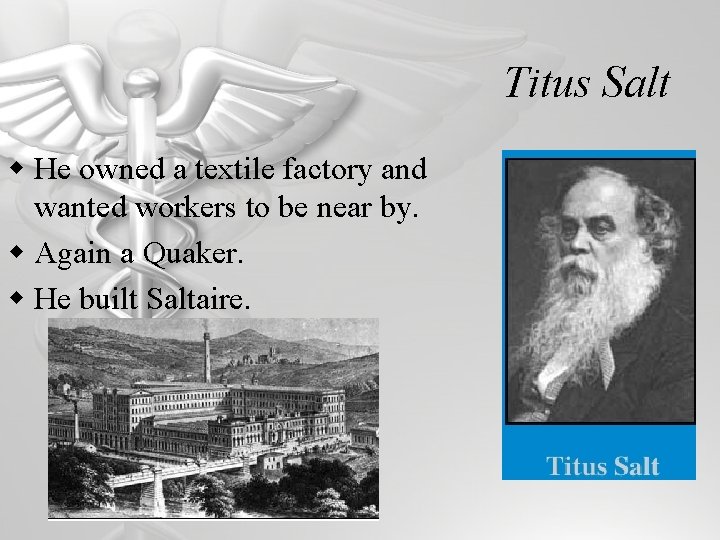
Titus Salt w He owned a textile factory and wanted workers to be near by. w Again a Quaker. w He built Saltaire.
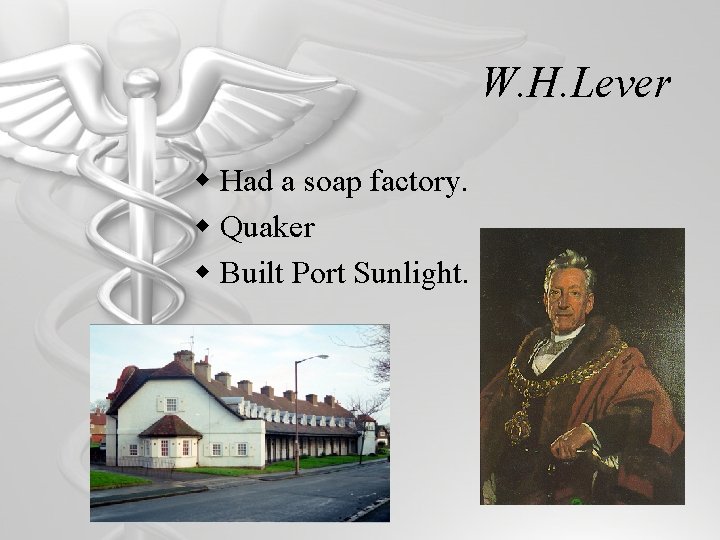
W. H. Lever w Had a soap factory. w Quaker w Built Port Sunlight.
- Slides: 21