
Public Health Entomology Certificate MODULE 3 BITING INSECTS
Public Health Entomology Certificate MODULE 3 BITING INSECTS
Biting Insects PAGES 159 -180 OF IPM FOR THE URBAN PROFESSIONAL CHAPTER’S 11, 12, 13, 14, MEDICAL ENTOMOLOGY FOR STUDENTS
PHE and Biting Pests Some of the most important public health pests bite or sting Modules 2 & 3 cover the basics but looking up each insect in a second reference is helpful Module 2 is Stinging Insects ◦ Stings occur through a stinger or through barbed hairs associated with a venom sac Module 3 is Biting Insects ◦ A bite occurs from the actions of mouthparts PHE should know the difference between a biting and a sting and use the terms correct
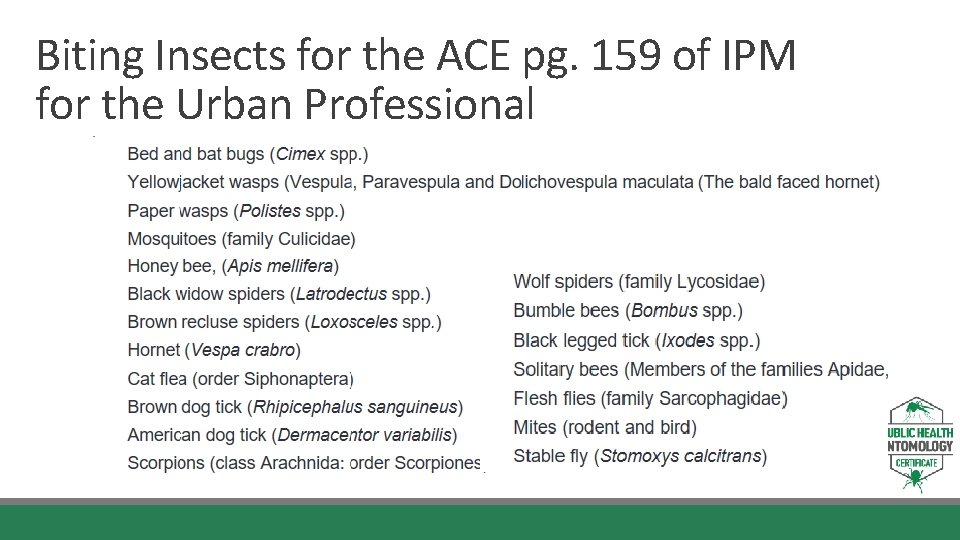
Biting Insects for the ACE pg. 159 of IPM for the Urban Professional
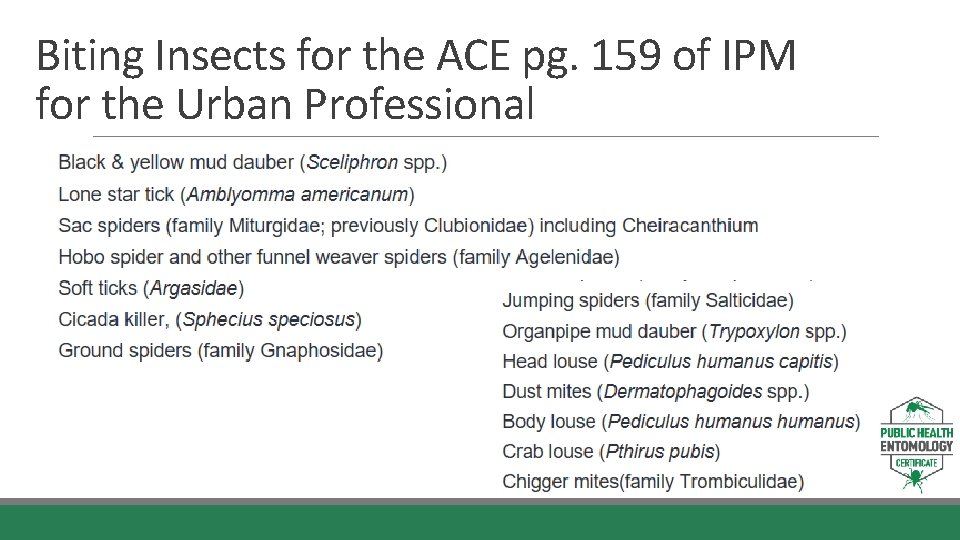
Biting Insects for the ACE pg. 159 of IPM for the Urban Professional
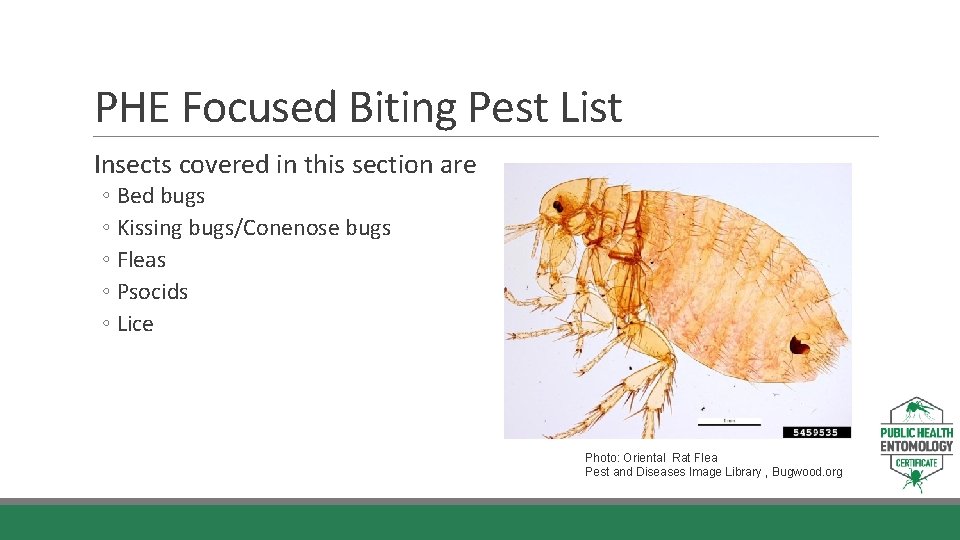
PHE Focused Biting Pest List Insects covered in this section are ◦ Bed bugs ◦ Kissing bugs/Conenose bugs ◦ Fleas ◦ Psocids ◦ Lice Photo: Oriental Rat Flea Pest and Diseases Image Library , Bugwood. org
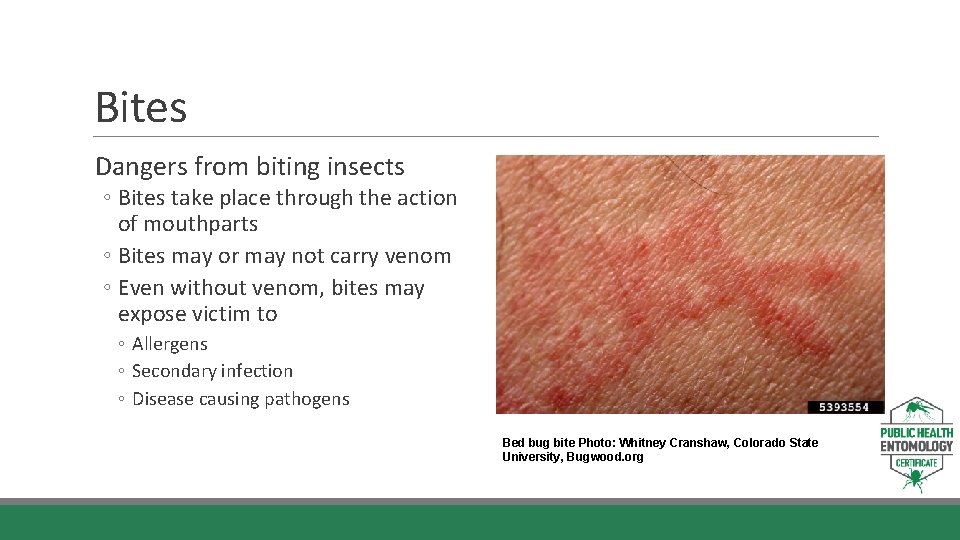
Bites Dangers from biting insects ◦ Bites take place through the action of mouthparts ◦ Bites may or may not carry venom ◦ Even without venom, bites may expose victim to ◦ Allergens ◦ Secondary infection ◦ Disease causing pathogens Bed bug bite Photo: Whitney Cranshaw, Colorado State University, Bugwood. org

Insect ID
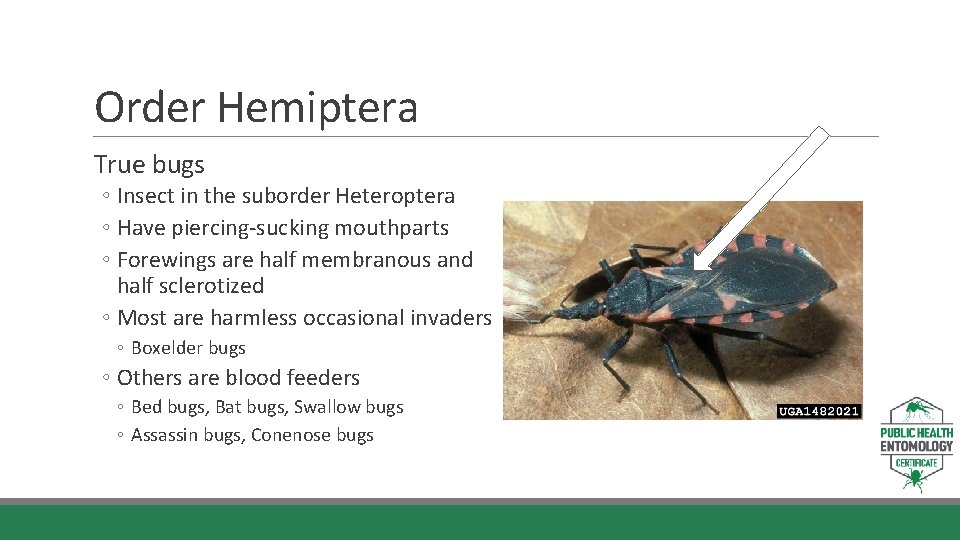
Order Hemiptera True bugs ◦ Insect in the suborder Heteroptera ◦ Have piercing-sucking mouthparts ◦ Forewings are half membranous and half sclerotized ◦ Most are harmless occasional invaders ◦ Boxelder bugs ◦ Others are blood feeders ◦ Bed bugs, Bat bugs, Swallow bugs ◦ Assassin bugs, Conenose bugs
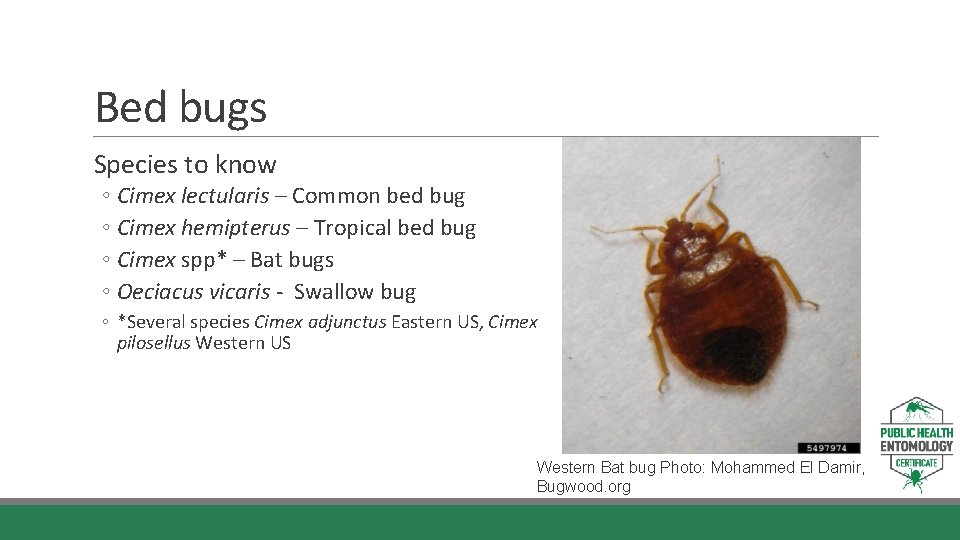
Bed bugs Species to know ◦ Cimex lectularis – Common bed bug ◦ Cimex hemipterus – Tropical bed bug ◦ Cimex spp* – Bat bugs ◦ Oeciacus vicaris - Swallow bug ◦ *Several species Cimex adjunctus Eastern US, Cimex pilosellus Western US Western Bat bug Photo: Mohammed El Damir, Bugwood. org
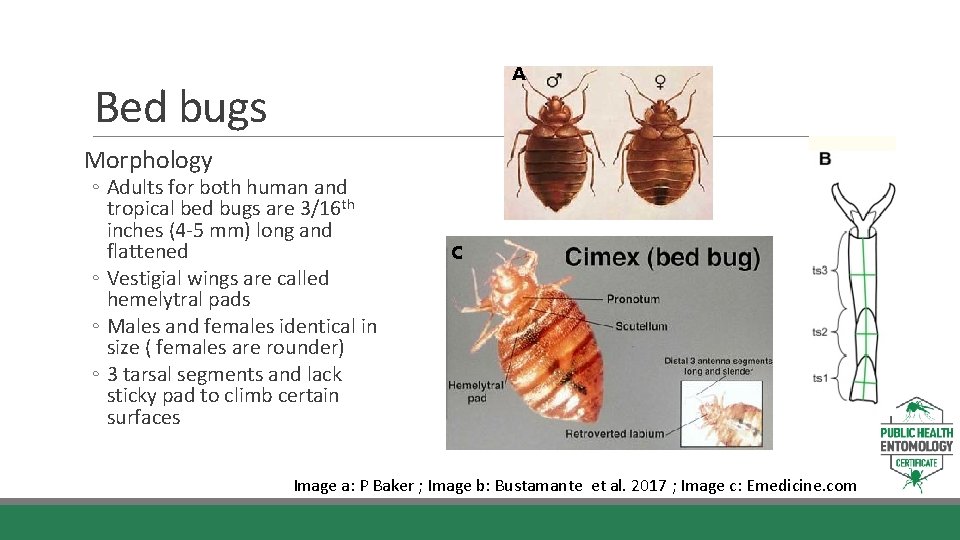
A Bed bugs Morphology ◦ Adults for both human and tropical bed bugs are 3/16 th inches (4 -5 mm) long and flattened ◦ Vestigial wings are called hemelytral pads ◦ Males and females identical in size ( females are rounder) ◦ 3 tarsal segments and lack sticky pad to climb certain surfaces C Image a: P Baker ; Image b: Bustamante et al. 2017 ; Image c: Emedicine. com
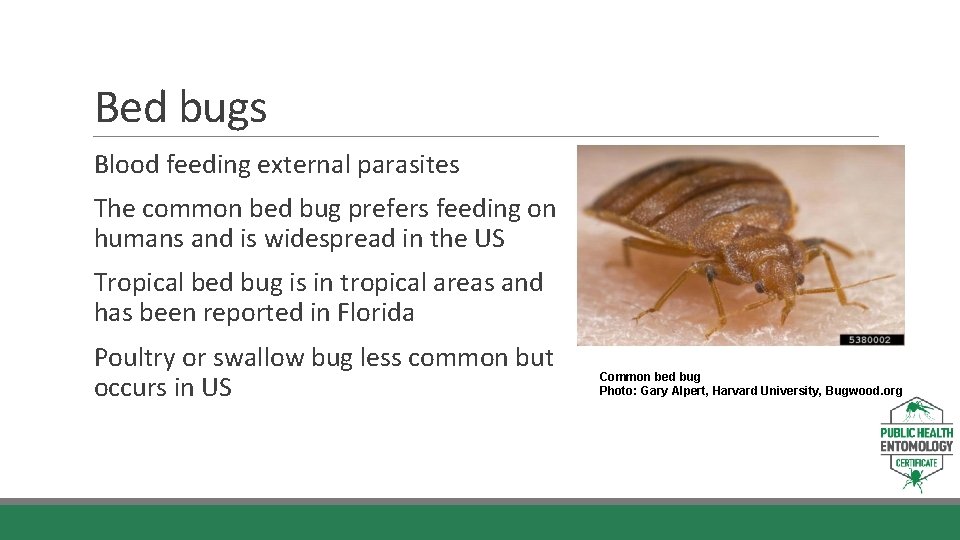
Bed bugs Blood feeding external parasites The common bed bug prefers feeding on humans and is widespread in the US Tropical bed bug is in tropical areas and has been reported in Florida Poultry or swallow bug less common but occurs in US Common bed bug Photo: Gary Alpert, Harvard University, Bugwood. org
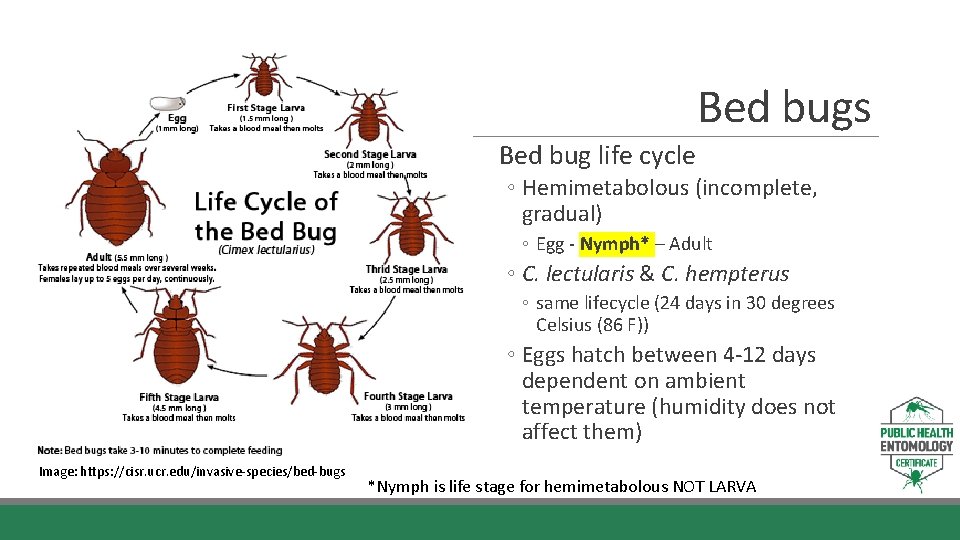
Bed bugs Bed bug life cycle ◦ Hemimetabolous (incomplete, gradual) ◦ Egg - Nymph* – Adult ◦ C. lectularis & C. hempterus ◦ same lifecycle (24 days in 30 degrees Celsius (86 F)) ◦ Eggs hatch between 4 -12 days dependent on ambient temperature (humidity does not affect them) Image: https: //cisr. ucr. edu/invasive-species/bed-bugs *Nymph is life stage for hemimetabolous NOT LARVA
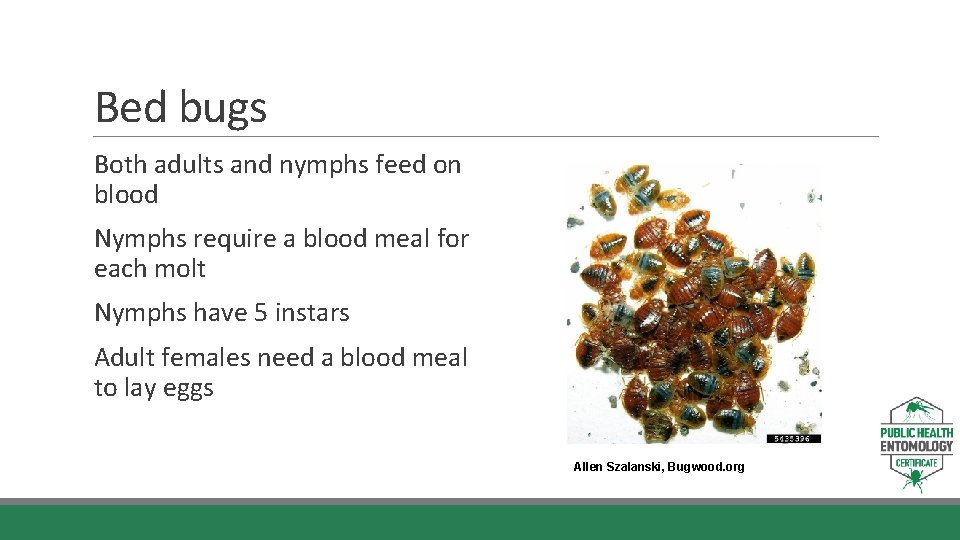
Bed bugs Both adults and nymphs feed on blood Nymphs require a blood meal for each molt Nymphs have 5 instars Adult females need a blood meal to lay eggs Allen Szalanski, Bugwood. org
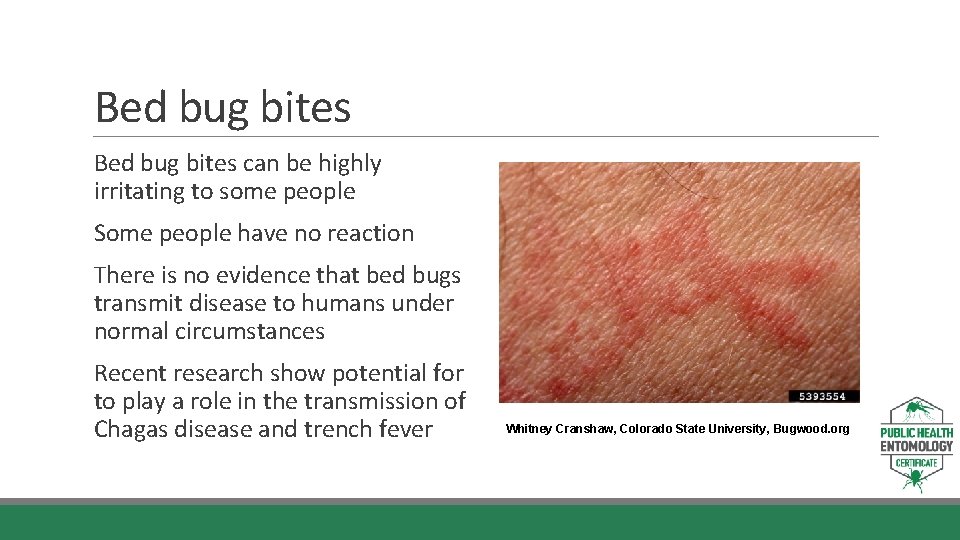
Bed bug bites can be highly irritating to some people Some people have no reaction There is no evidence that bed bugs transmit disease to humans under normal circumstances Recent research show potential for to play a role in the transmission of Chagas disease and trench fever Whitney Cranshaw, Colorado State University, Bugwood. org
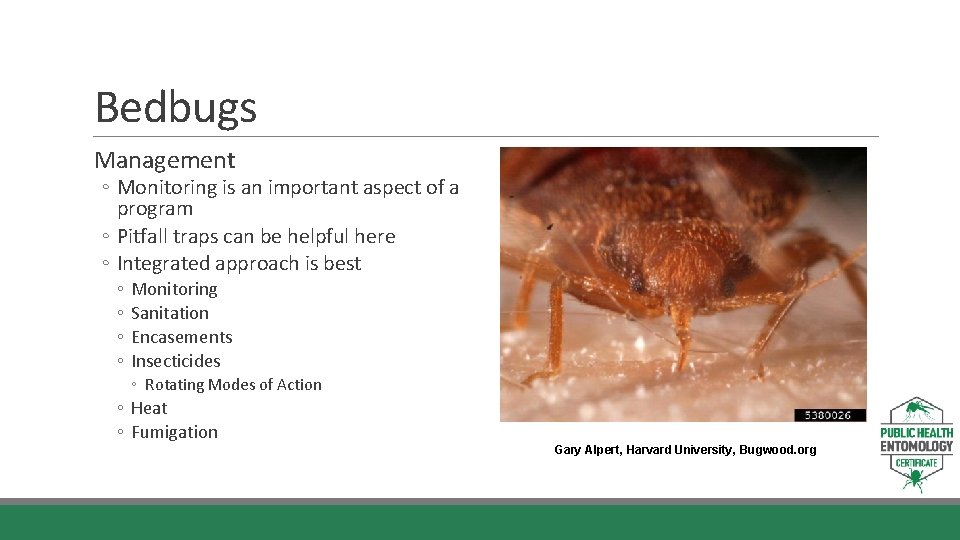
Bedbugs Management ◦ Monitoring is an important aspect of a program ◦ Pitfall traps can be helpful here ◦ Integrated approach is best ◦ ◦ Monitoring Sanitation Encasements Insecticides ◦ Rotating Modes of Action ◦ Heat ◦ Fumigation Gary Alpert, Harvard University, Bugwood. org
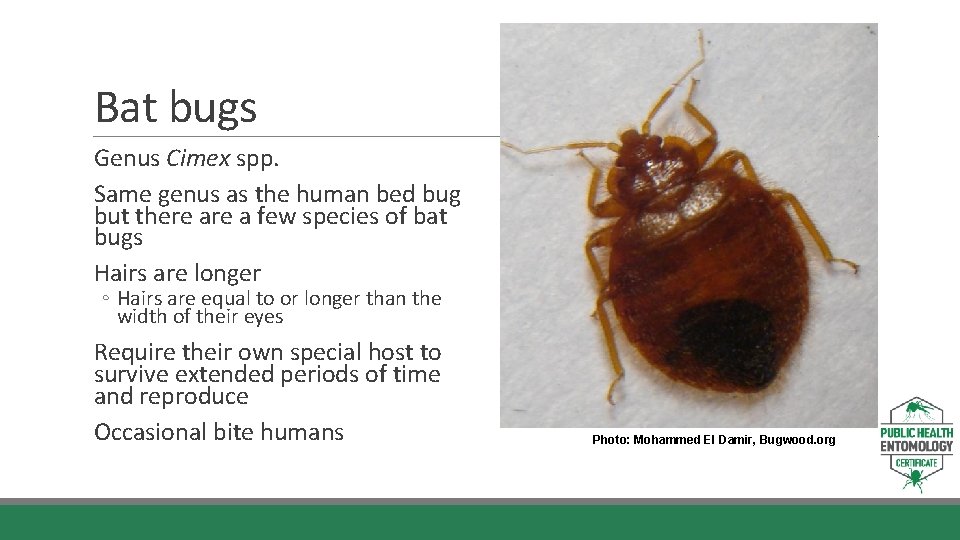
Bat bugs Genus Cimex spp. Same genus as the human bed bug but there a few species of bat bugs Hairs are longer ◦ Hairs are equal to or longer than the width of their eyes Require their own special host to survive extended periods of time and reproduce Occasional bite humans Photo: Mohammed El Damir, Bugwood. org
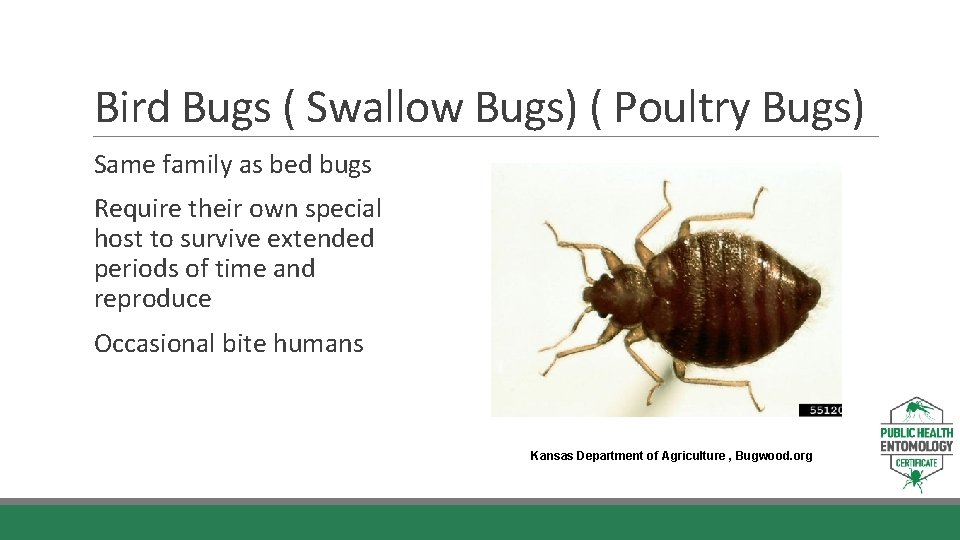
Bird Bugs ( Swallow Bugs) ( Poultry Bugs) Same family as bed bugs Require their own special host to survive extended periods of time and reproduce Occasional bite humans Kansas Department of Agriculture , Bugwood. org
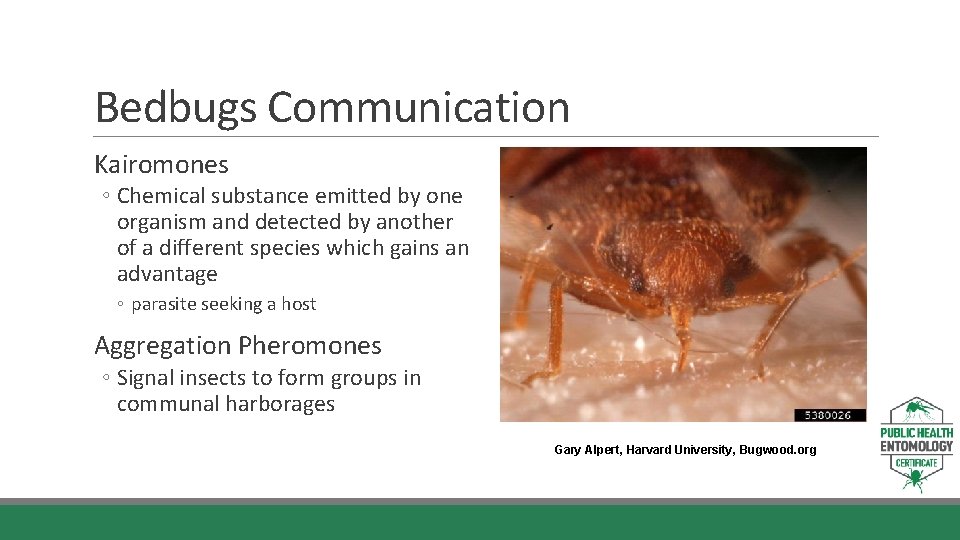
Bedbugs Communication Kairomones ◦ Chemical substance emitted by one organism and detected by another of a different species which gains an advantage ◦ parasite seeking a host Aggregation Pheromones ◦ Signal insects to form groups in communal harborages Gary Alpert, Harvard University, Bugwood. org
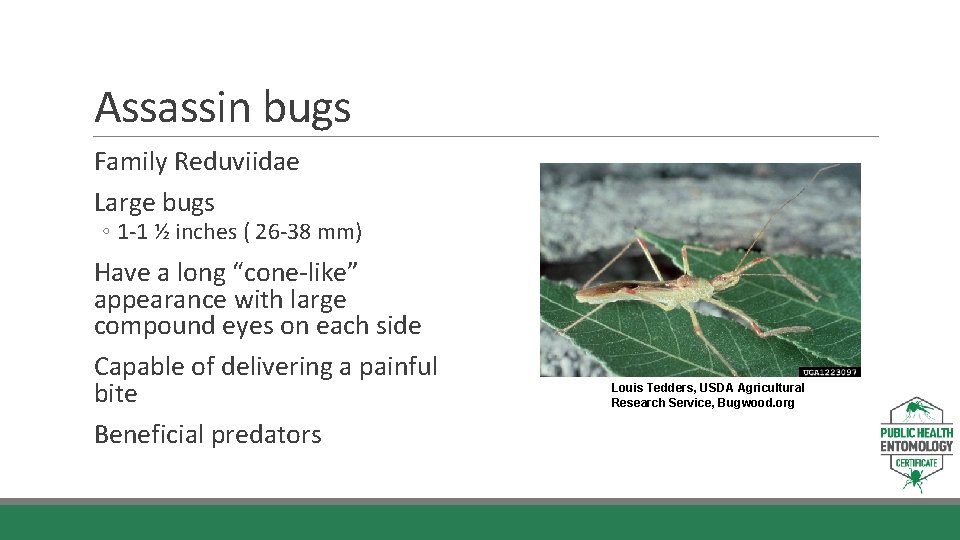
Assassin bugs Family Reduviidae Large bugs ◦ 1 -1 ½ inches ( 26 -38 mm) Have a long “cone-like” appearance with large compound eyes on each side Capable of delivering a painful bite Beneficial predators Louis Tedders, USDA Agricultural Research Service, Bugwood. org
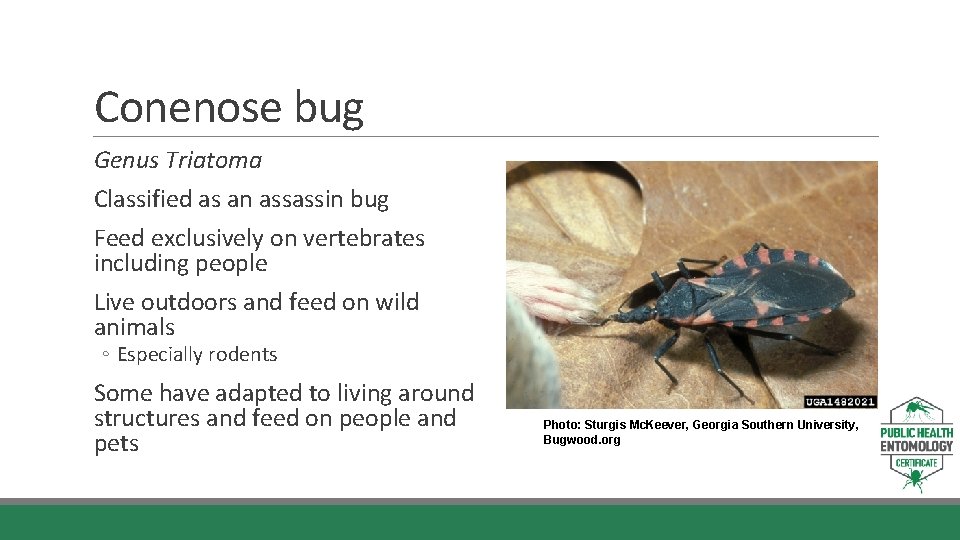
Conenose bug Genus Triatoma Classified as an assassin bug Feed exclusively on vertebrates including people Live outdoors and feed on wild animals ◦ Especially rodents Some have adapted to living around structures and feed on people and pets Photo: Sturgis Mc. Keever, Georgia Southern University, Bugwood. org
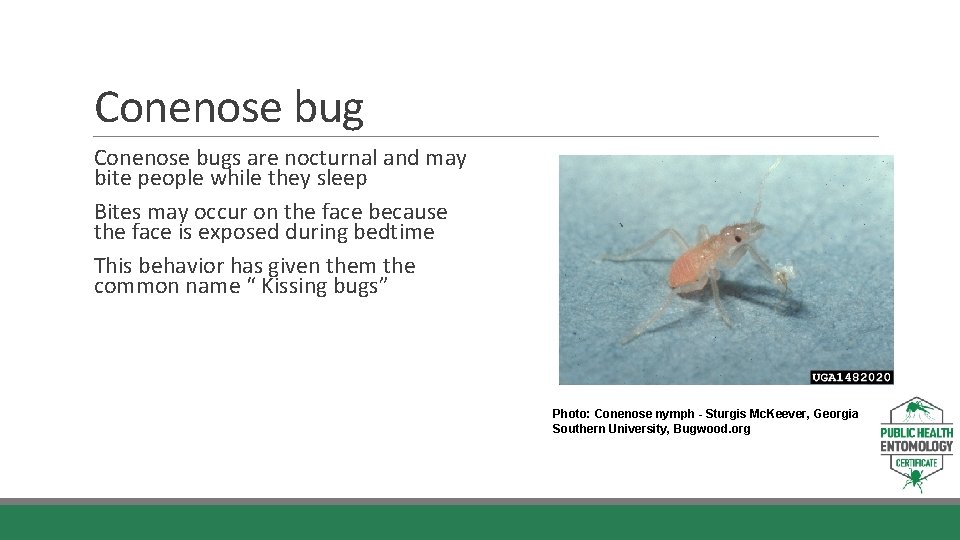
Conenose bugs are nocturnal and may bite people while they sleep Bites may occur on the face because the face is exposed during bedtime This behavior has given them the common name “ Kissing bugs” Photo: Conenose nymph - Sturgis Mc. Keever, Georgia Southern University, Bugwood. org
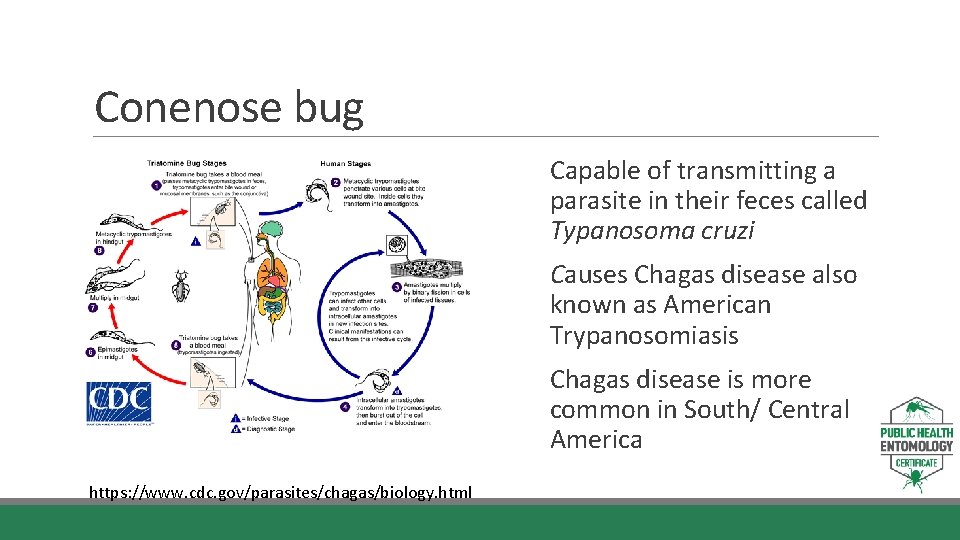
Conenose bug Capable of transmitting a parasite in their feces called Typanosoma cruzi Causes Chagas disease also known as American Trypanosomiasis Chagas disease is more common in South/ Central America https: //www. cdc. gov/parasites/chagas/biology. html
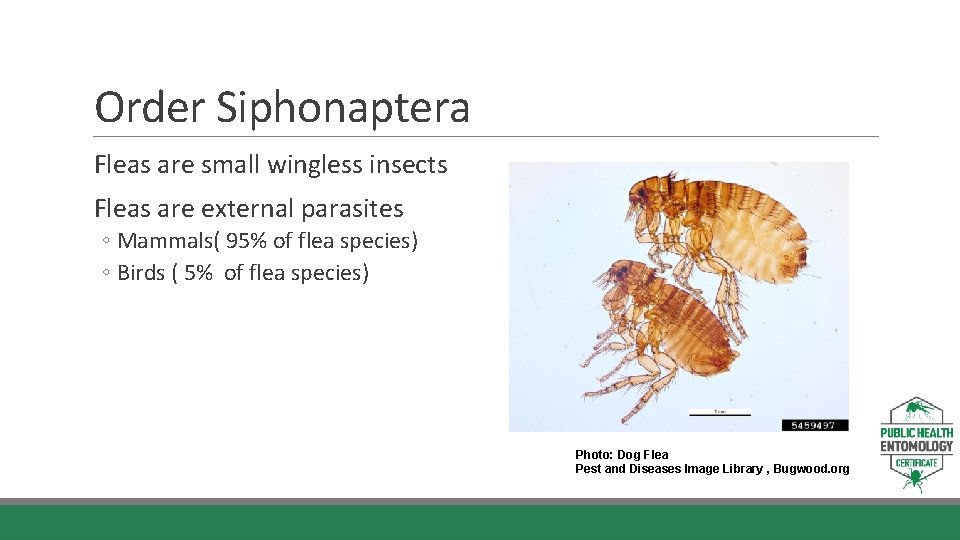
Order Siphonaptera Fleas are small wingless insects Fleas are external parasites ◦ Mammals( 95% of flea species) ◦ Birds ( 5% of flea species) Photo: Dog Flea Pest and Diseases Image Library , Bugwood. org
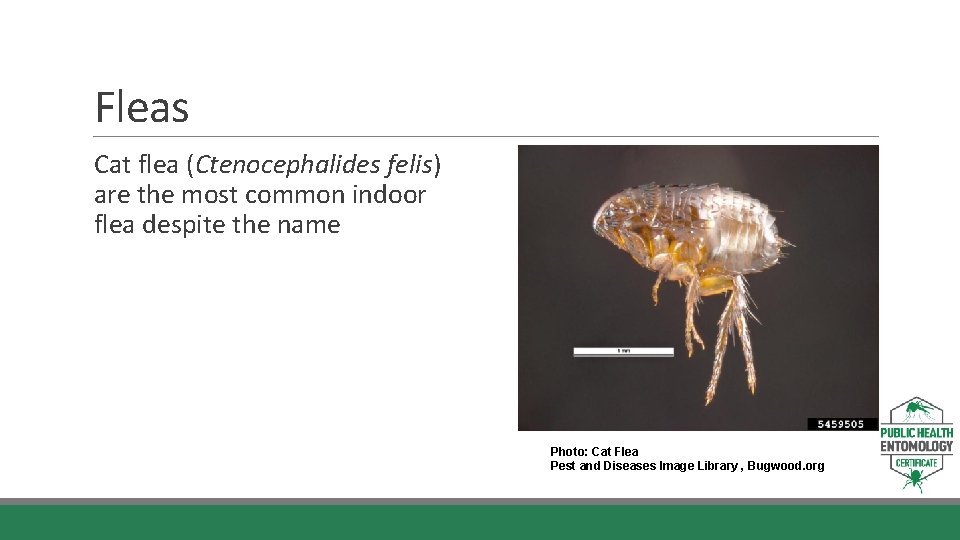
Fleas Cat flea (Ctenocephalides felis) are the most common indoor flea despite the name Photo: Cat Flea Pest and Diseases Image Library , Bugwood. org
Other Fleas species Human Flea (Pulex irritans): ◦ cosmopolitan in occurrence, farms, pig pens Northern Rat Flea (Nosopsyllus fasciatus): ◦ widespread over Europe and North America. ◦ can also transmit Murine Typhus Oriental Rat Flea: Xenopsylla cheopsis Sticktight Flea (Echidnophaga gallinacea): petmd. com ◦ widespread in warmer countries, including Australia. Usually associated with poultry
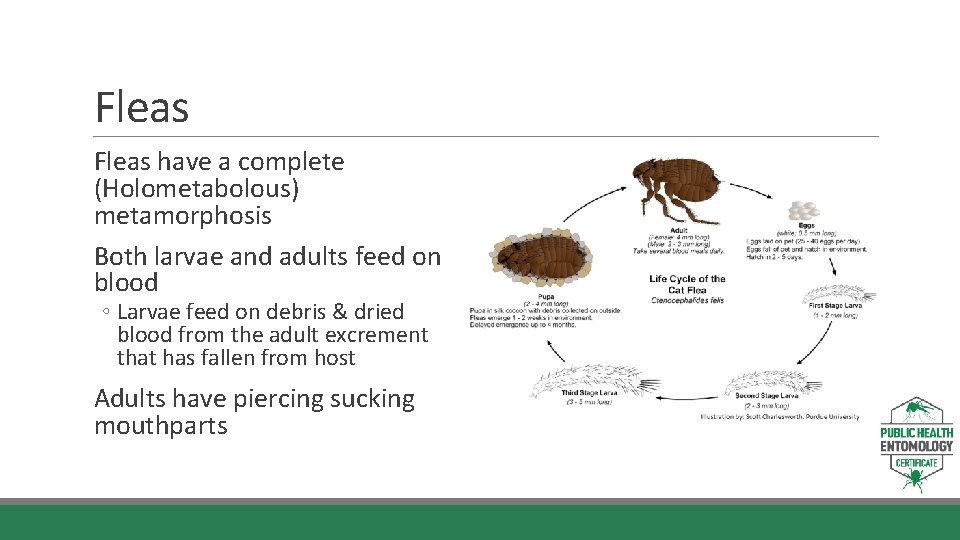
Fleas have a complete (Holometabolous) metamorphosis Both larvae and adults feed on blood ◦ Larvae feed on debris & dried blood from the adult excrement that has fallen from host Adults have piercing sucking mouthparts
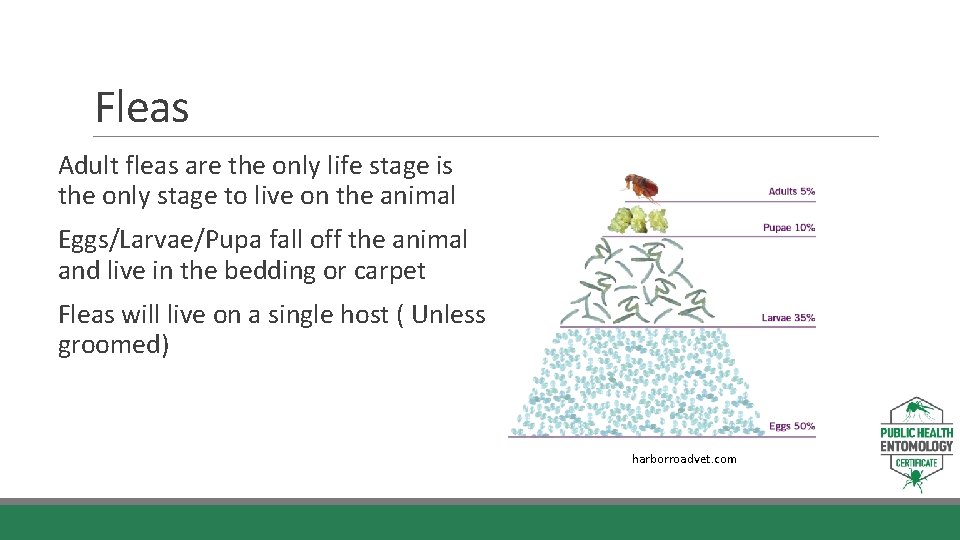
Fleas Adult fleas are the only life stage is the only stage to live on the animal Eggs/Larvae/Pupa fall off the animal and live in the bedding or carpet Fleas will live on a single host ( Unless groomed) harborroadvet. com
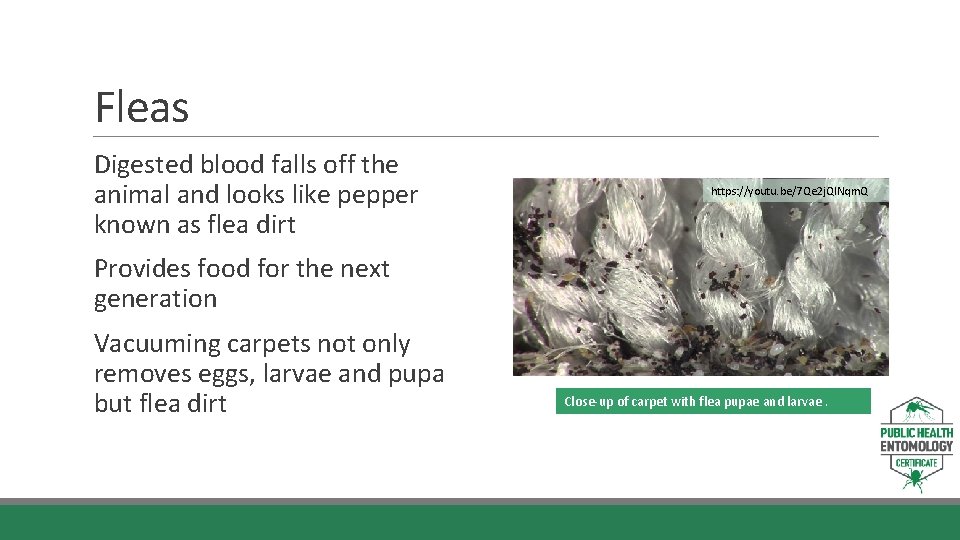
Fleas Digested blood falls off the animal and looks like pepper known as flea dirt https: //youtu. be/7 Qe 2 j. QINqm. Q Provides food for the next generation Vacuuming carpets not only removes eggs, larvae and pupa but flea dirt Close-up of carpet with flea pupae and larvae.
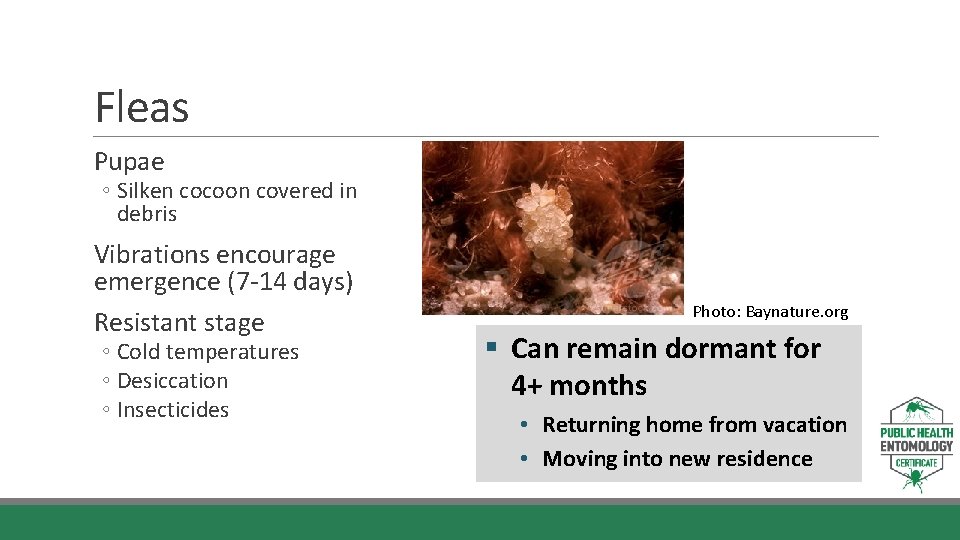
Fleas Pupae ◦ Silken cocoon covered in debris Vibrations encourage emergence (7 -14 days) Resistant stage ◦ Cold temperatures ◦ Desiccation ◦ Insecticides Photo: Baynature. org § Can remain dormant for 4+ months • Returning home from vacation • Moving into new residence
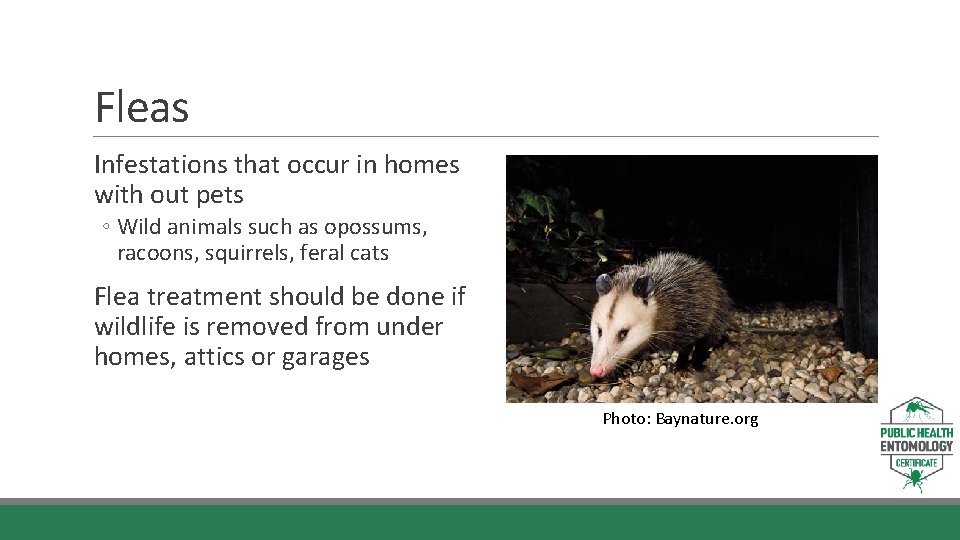
Fleas Infestations that occur in homes with out pets ◦ Wild animals such as opossums, racoons, squirrels, feral cats Flea treatment should be done if wildlife is removed from under homes, attics or garages Photo: Baynature. org
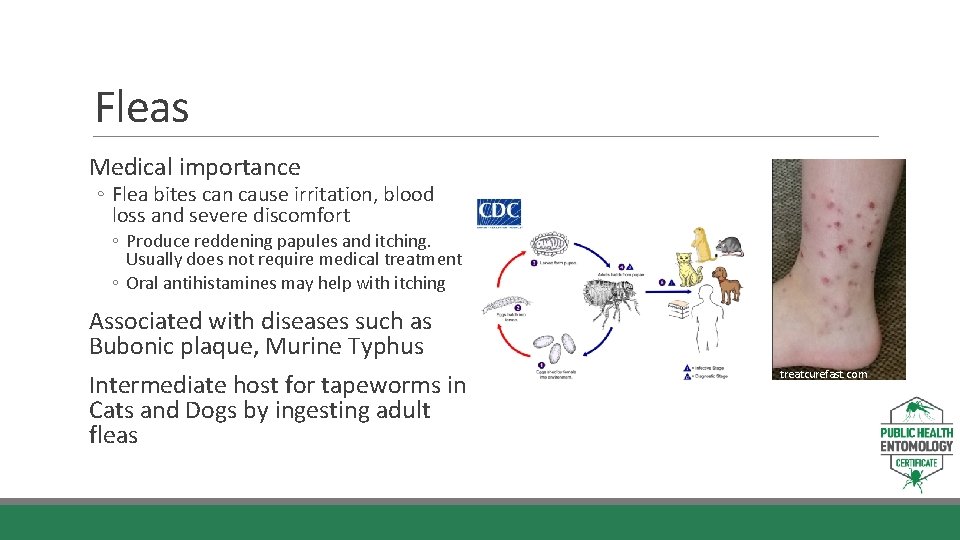
Fleas Medical importance ◦ Flea bites can cause irritation, blood loss and severe discomfort ◦ Produce reddening papules and itching. Usually does not require medical treatment ◦ Oral antihistamines may help with itching Associated with diseases such as Bubonic plaque, Murine Typhus Intermediate host for tapeworms in Cats and Dogs by ingesting adult fleas treatcurefast. com
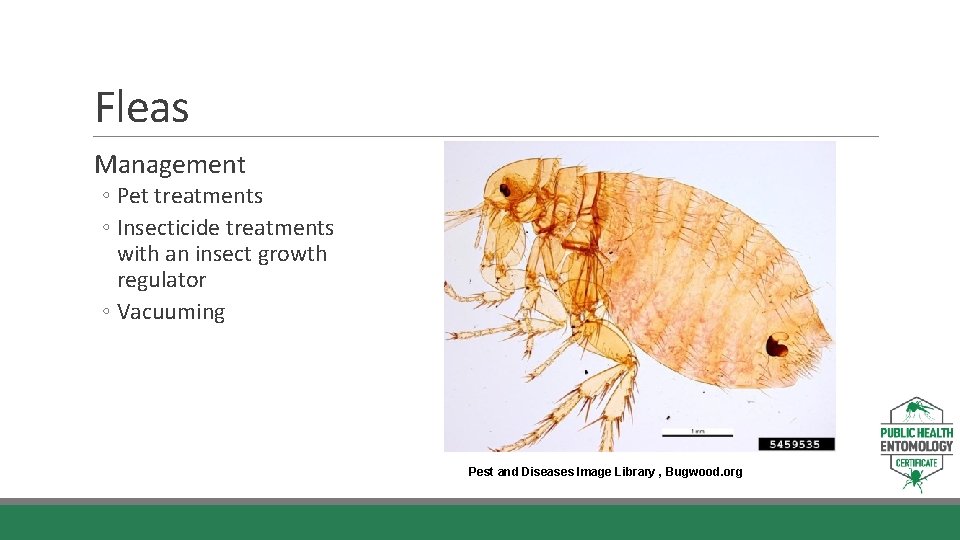
Fleas Management ◦ Pet treatments ◦ Insecticide treatments with an insect growth regulator ◦ Vacuuming Pest and Diseases Image Library , Bugwood. org
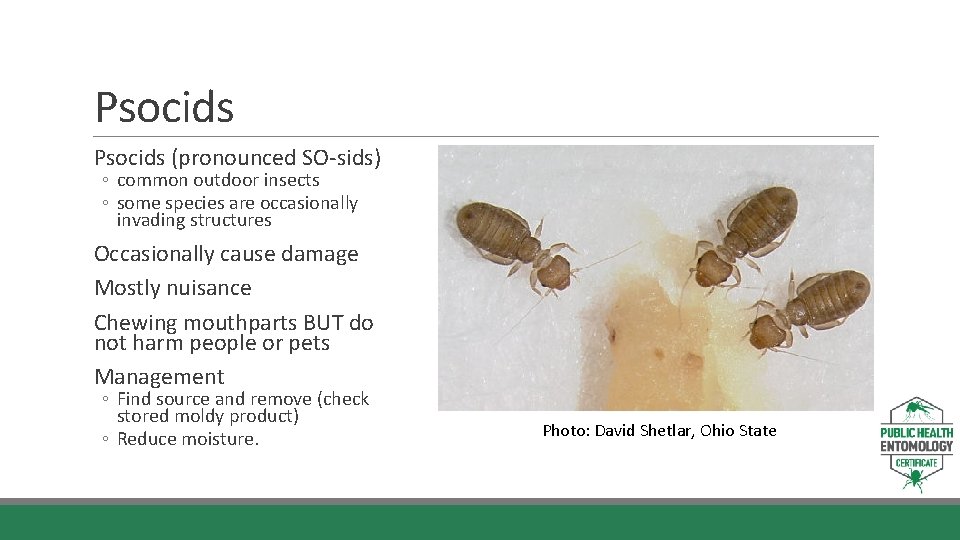
Psocids (pronounced SO-sids) ◦ common outdoor insects ◦ some species are occasionally invading structures Occasionally cause damage Mostly nuisance Chewing mouthparts BUT do not harm people or pets Management ◦ Find source and remove (check stored moldy product) ◦ Reduce moisture. Photo: David Shetlar, Ohio State
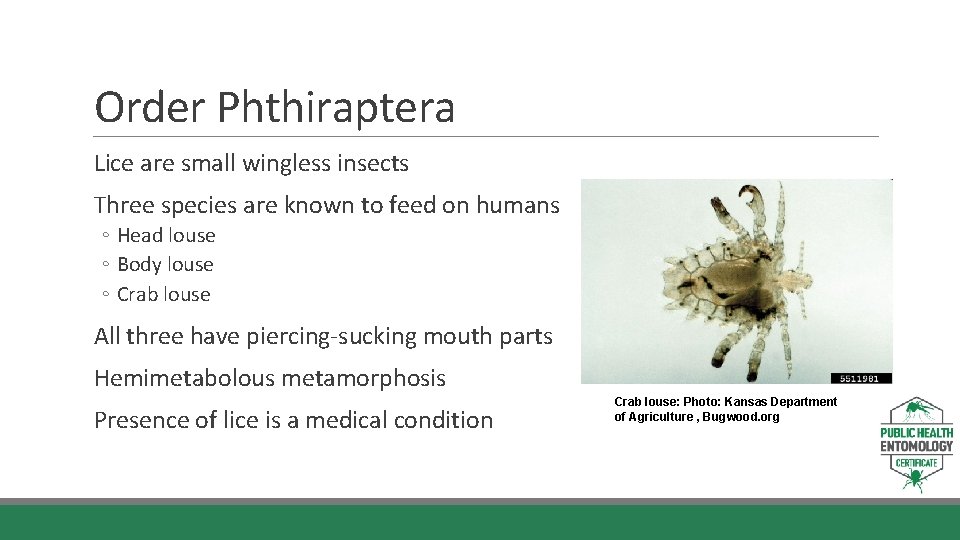
Order Phthiraptera Lice are small wingless insects Three species are known to feed on humans ◦ Head louse ◦ Body louse ◦ Crab louse All three have piercing-sucking mouth parts Hemimetabolous metamorphosis Presence of lice is a medical condition Crab louse: Photo: Kansas Department of Agriculture , Bugwood. org
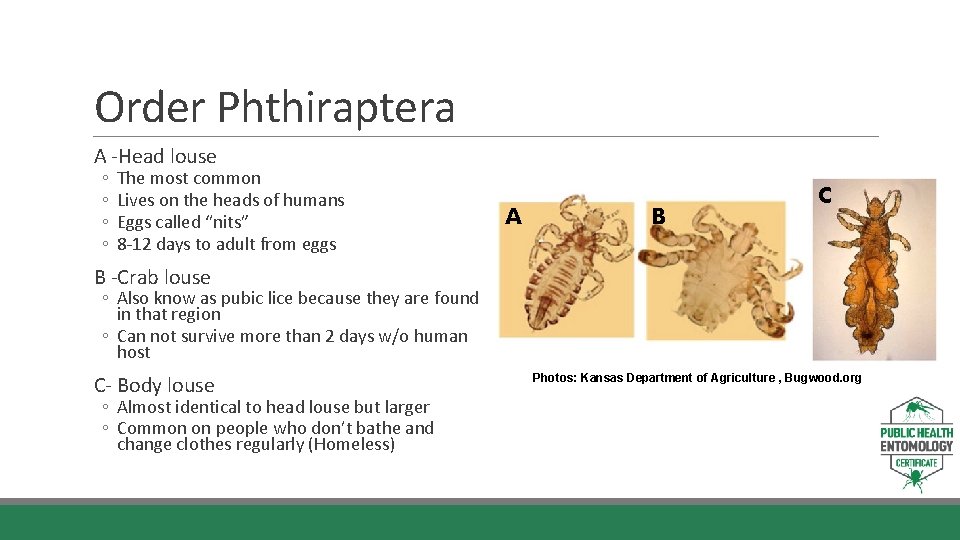
Order Phthiraptera A -Head louse ◦ ◦ The most common Lives on the heads of humans Eggs called “nits” 8 -12 days to adult from eggs A B C B -Crab louse ◦ Also know as pubic lice because they are found in that region ◦ Can not survive more than 2 days w/o human host C- Body louse ◦ Almost identical to head louse but larger ◦ Common on people who don’t bathe and change clothes regularly (Homeless) Photos: Kansas Department of Agriculture , Bugwood. org
Further Study Information https: //extension. umn. edu/product-and-houseplant-pests/psocids Chapter’s 11, 12, 13, 14, Medical entomology for students
- Slides: 37