
Public Distribution System in India Naresh Bodkhe Faculty

Public Distribution System in India Naresh Bodkhe Faculty Gokhale Institute of Politics and Economics, Pune.
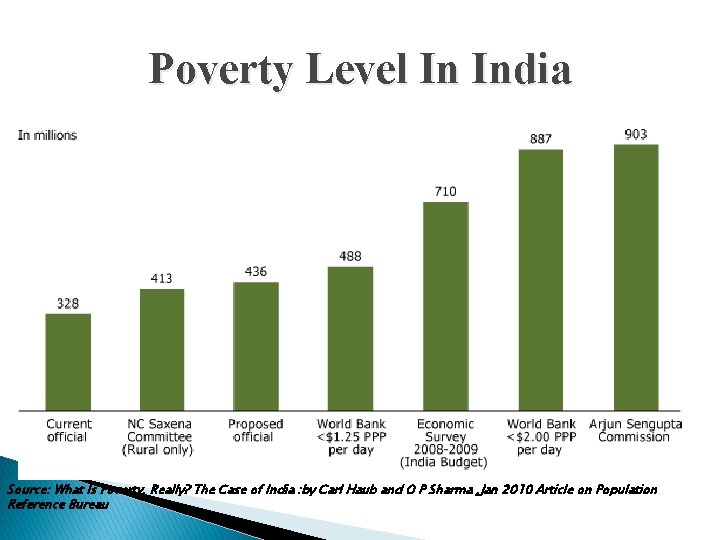
Poverty Level In India Source: What Is Poverty, Really? The Case of India : by Carl Haub and O P Sharma , Jan 2010 Article on Population Reference Bureau
Public Distribution System � Started in 1960 s it was for everyone till 1992 when it was tried for tribal blocks of far and difficult areas to improve the reach and in 1997 it was made targeted to poor people � State Government responsibility to identify poor and ensure that they get the benefit � When started it aimed for 6 crore (60 million) people with 72 lakh tones of grains 3
Public Distribution System in India PDS evolved - major instrument of the Government’s economic policy for ensuring availability of food grains at affordable prices. It is an important strategy for poverty eradication and is intended to serve as a safety net for the poor nutritionally at risk. PDS with a network of large number of Fair Price Shops (FPS) is perhaps the largest distribution network of its type in the world. 4
Public Distribution System PDS means distribution of essential commodities to a large number of people through a network of FPS on a recurring basis. The commodities are as follows : � Wheat � Rice � Sugar � Kerosene 5
Public Distribution System in India � PDS is operated under the joint responsibility of the Central and the State Governments. � The Central Government responsibility for procurement, storage, transportation and bulk allocation of foodgrains, � The State Governments responsibility ◦ For distributing the same to the consumers through the network of Fair Price Shops (FPSs). ◦ The operational responsibilities including allocation within the State, identification of families below poverty line, issue of ration cards, supervision and monitoring the functioning of FPSs. 6
Public Distribution System ANTYODAYA ANNA YOJANA (AAY) � In order to make TPDS more focused and targeted towards this category of population, the “Antyodaya Anna Yojana” (AAY) was launched in December, 2000 for one crore poorest of the poor families (increased in by 2009 2. 5 crore people) � Providing them food grains at a highly subsidized rate of Rs. 2/ per kg. for wheat and Rs. 3/ per kg for rice. 7
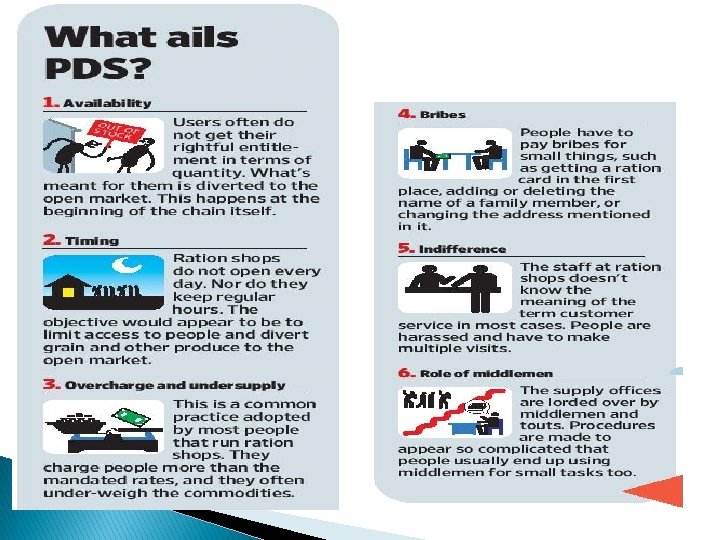
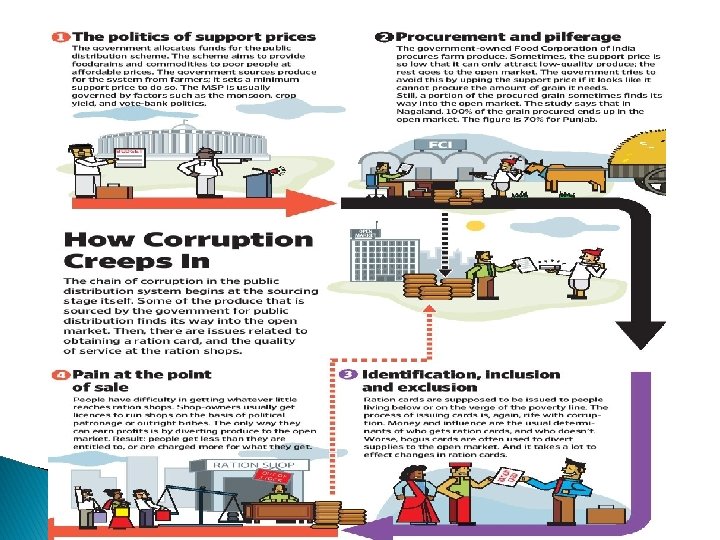
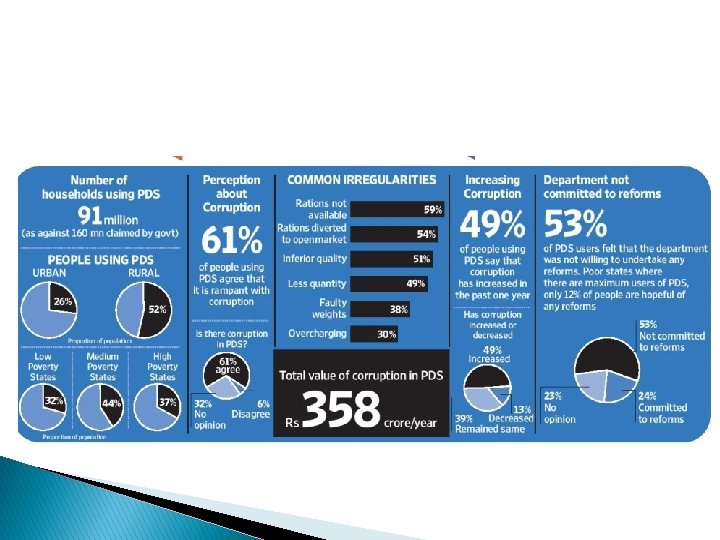
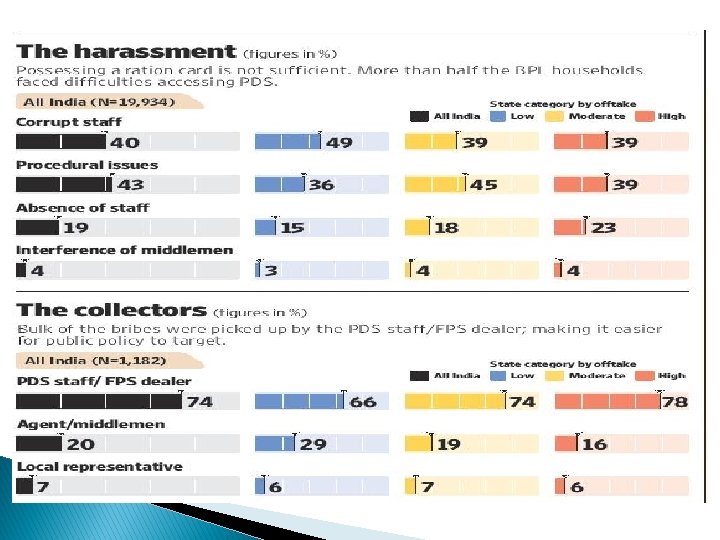
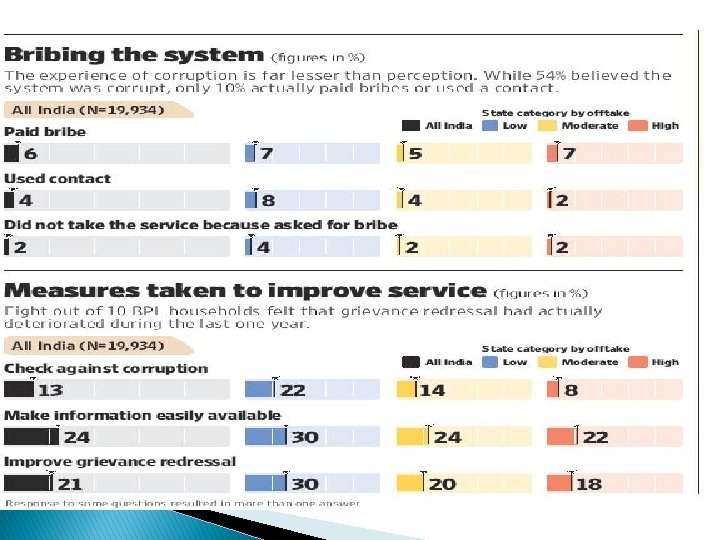
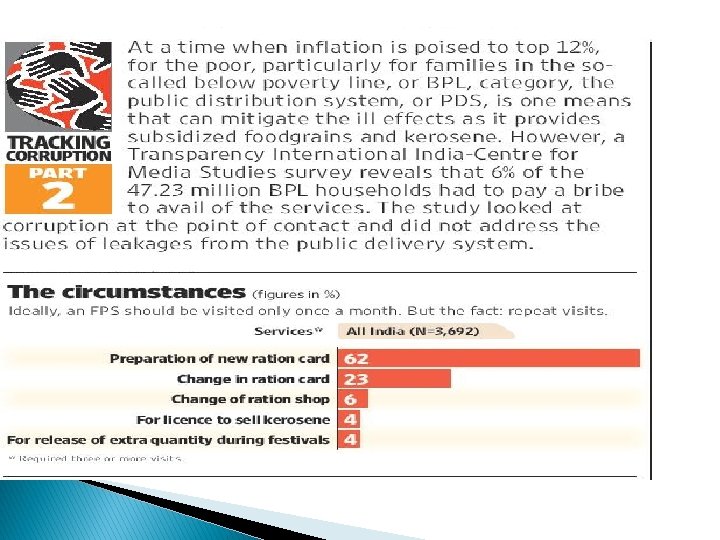
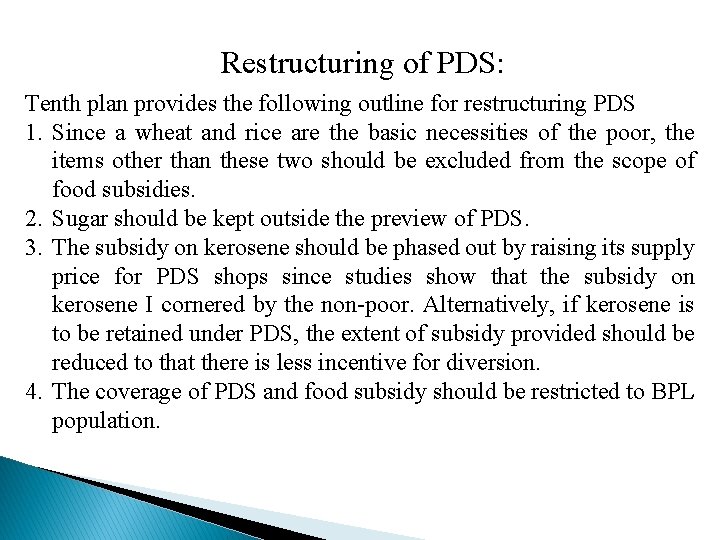
Restructuring of PDS: Tenth plan provides the following outline for restructuring PDS 1. Since a wheat and rice are the basic necessities of the poor, the items other than these two should be excluded from the scope of food subsidies. 2. Sugar should be kept outside the preview of PDS. 3. The subsidy on kerosene should be phased out by raising its supply price for PDS shops since studies show that the subsidy on kerosene I cornered by the non-poor. Alternatively, if kerosene is to be retained under PDS, the extent of subsidy provided should be reduced to that there is less incentive for diversion. 4. The coverage of PDS and food subsidy should be restricted to BPL population.
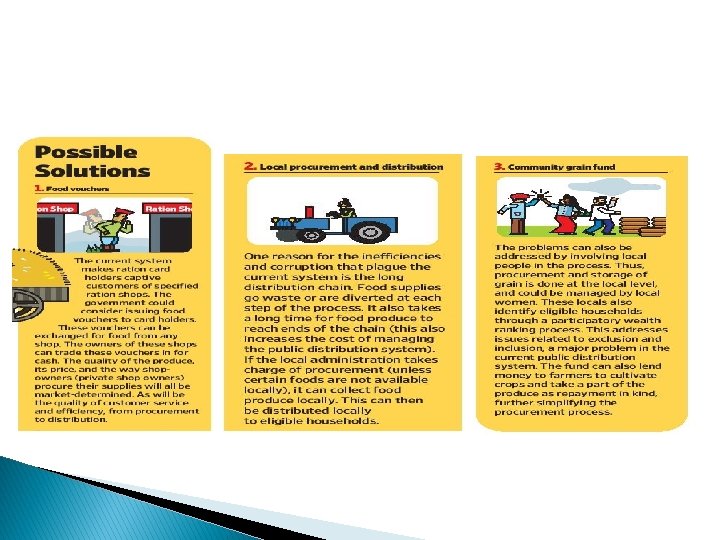
1. To reduce malpractices, food stamps should be issued to female members of the family who can designated as heads of households for the purpose. Under the system of food stamps, the state government should issue a subsidy entitlement card(SEC) instead of ration cards. 2. Food card system could be a superior alternative to the prevalent Fair Price Shop(FPS) system and perhaps even a food stamp system. 3. A food coupon scheme was introduced in Andhra Pradesh in 1998 -99 for distribution of rice and kerosene through PDS. This system has resulted in saving about 20, 000 tomes of rice, 71 lakh liters of kerosene every month. The AP experiment may be replicated with suitable adaptation in other states as well.

Thank you
- Slides: 19