
Public confidence in vaccines and CHIM studies Emilie
Public confidence in vaccines and CHIM studies Emilie Karafillakis The Vaccine Confidence Project. TM London School of Hygiene & Tropical Medicine HIC-Vac Annual Meeting 19 November 2019
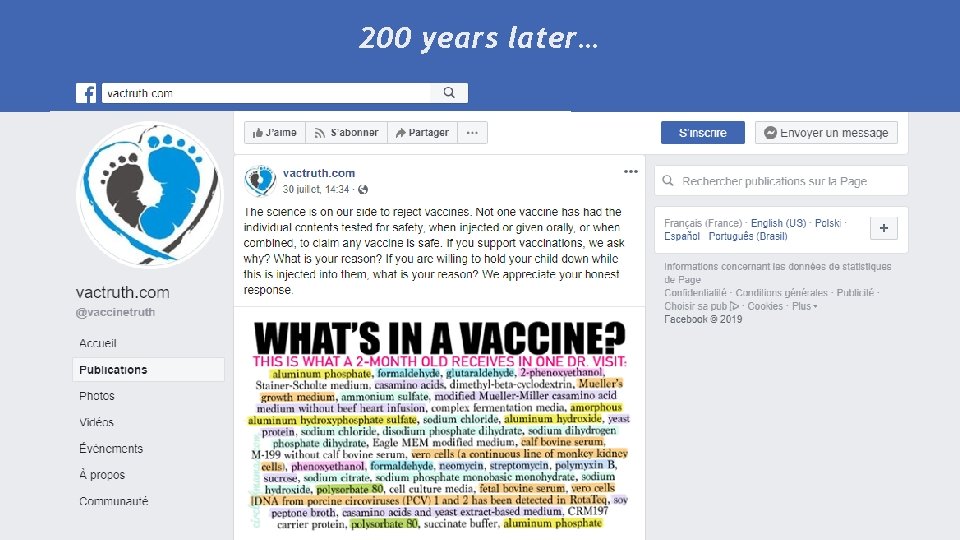
200 years later… 4
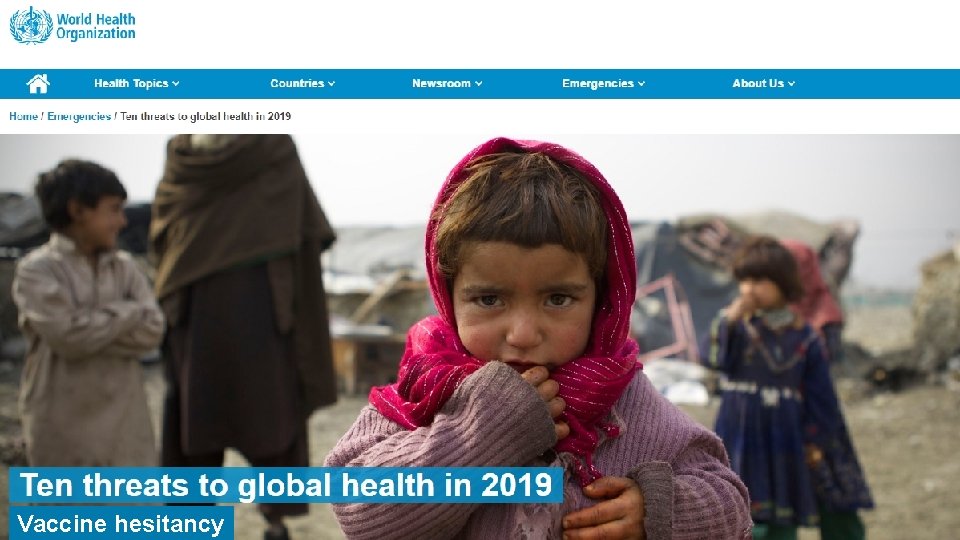
Vaccine hesitancy 5
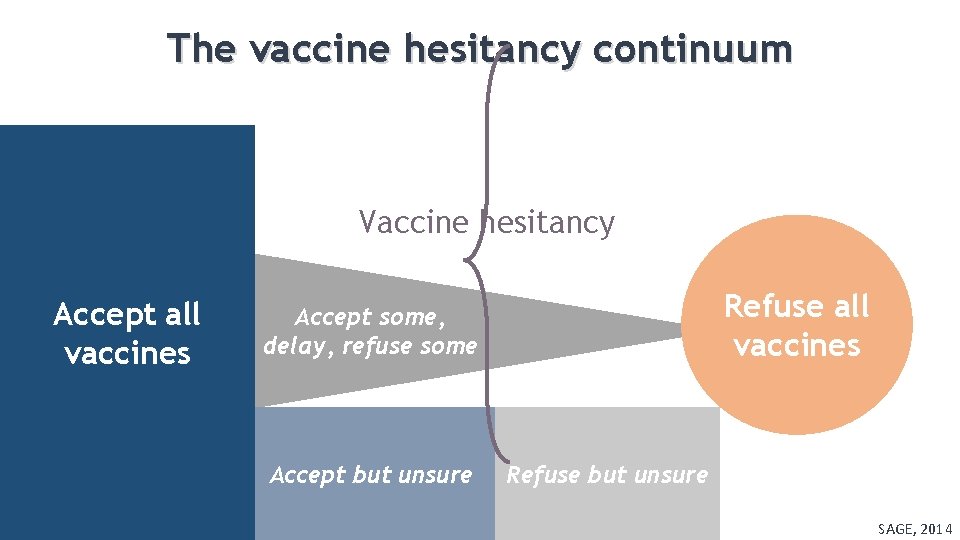
The vaccine hesitancy continuum Vaccine hesitancy Accept all vaccines Refuse all vaccines Accept some, delay, refuse some Accept but unsure Refuse but unsure SAGE, 2014
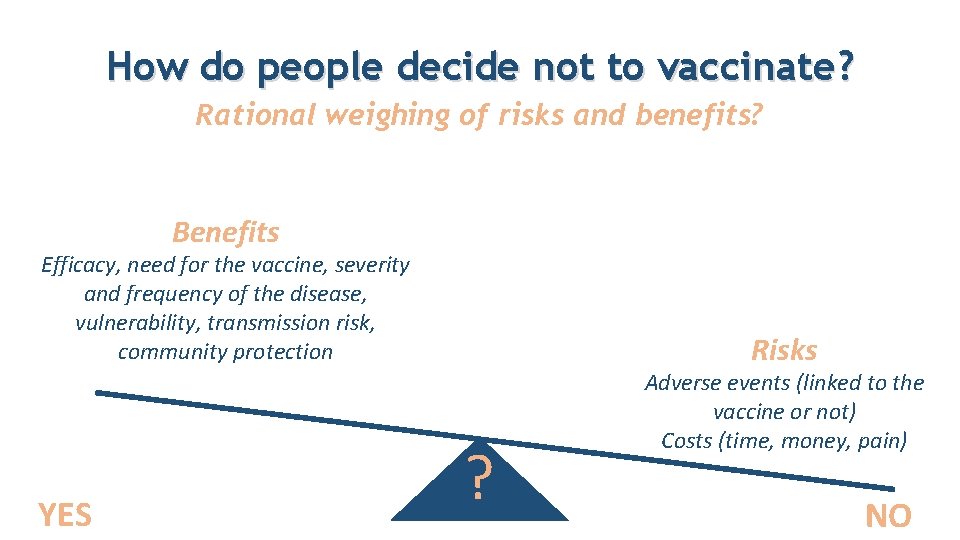
How do people decide not to vaccinate? Rational weighing of risks and benefits? Benefits Efficacy, need for the vaccine, severity and frequency of the disease, vulnerability, transmission risk, community protection YES Risks ? Adverse events (linked to the vaccine or not) Costs (time, money, pain) NO
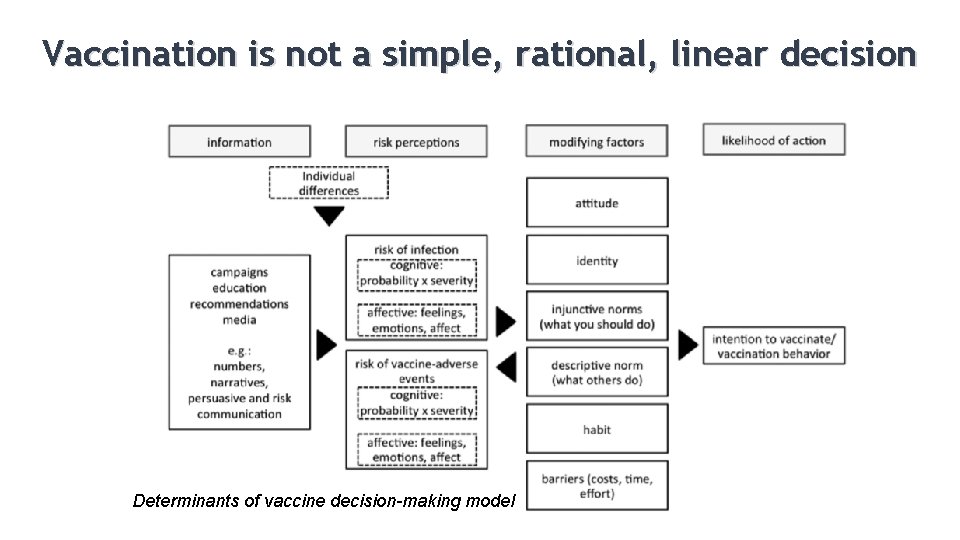
Vaccination is not a simple, rational, linear decision Determinants of vaccine decision-making model
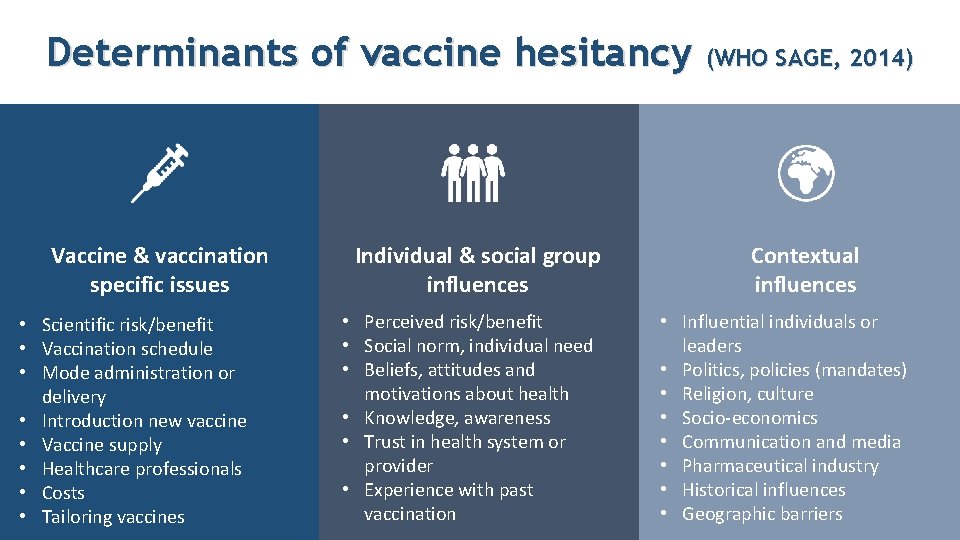
Determinants of vaccine hesitancy (WHO SAGE, 2014) Vaccine & vaccination specific issues • Scientific risk/benefit • Vaccination schedule • Mode administration or delivery • Introduction new vaccine • Vaccine supply • Healthcare professionals • Costs • Tailoring vaccines Individual & social group influences • Perceived risk/benefit • Social norm, individual need • Beliefs, attitudes and motivations about health • Knowledge, awareness • Trust in health system or provider • Experience with past vaccination Contextual influences • Influential individuals or leaders • Politics, policies (mandates) • Religion, culture • Socio-economics • Communication and media • Pharmaceutical industry • Historical influences • Geographic barriers
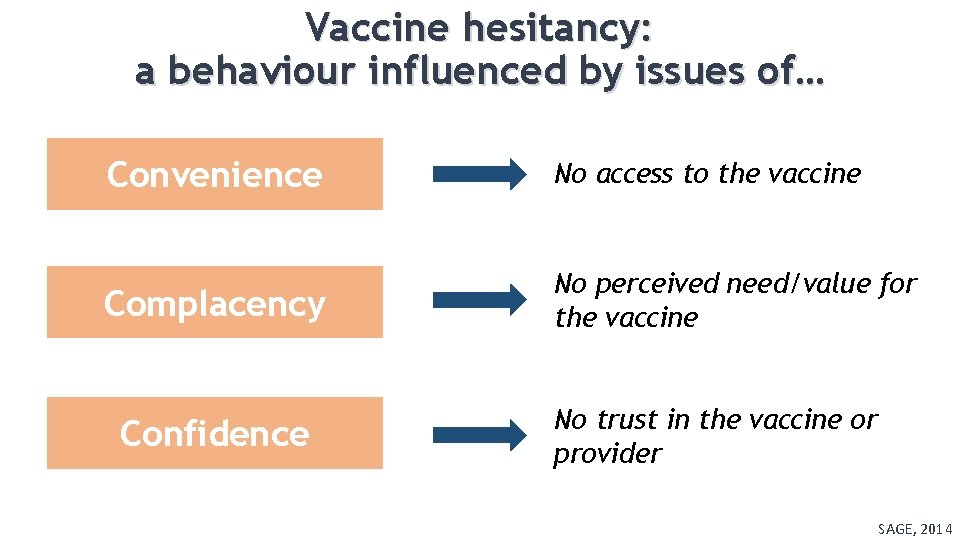
Vaccine hesitancy: a behaviour influenced by issues of… Convenience No access to the vaccine Complacency No perceived need/value for the vaccine Confidence No trust in the vaccine or provider SAGE, 2014
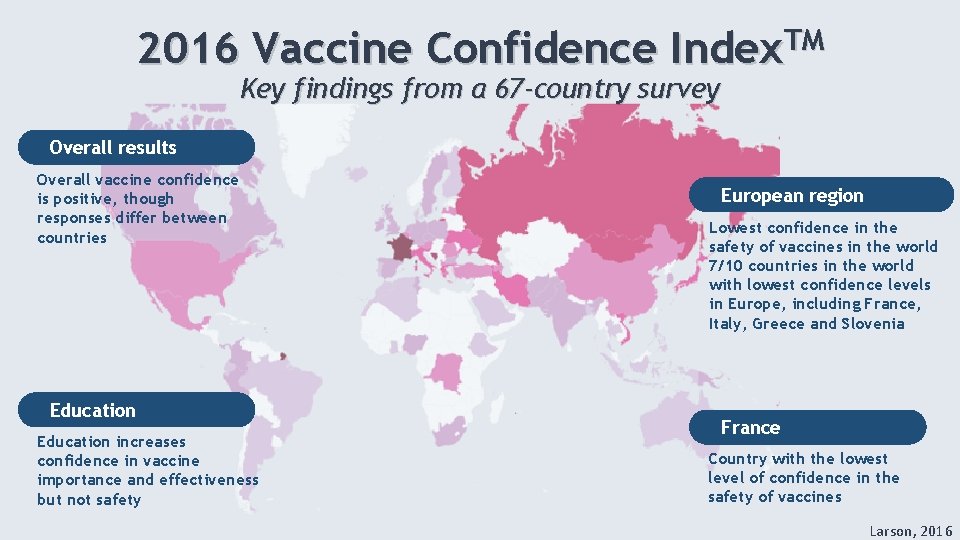
2016 Vaccine Confidence Index. TM Key findings from a 67 -country survey Overall results Overall vaccine confidence is positive, though responses differ between countries Education increases confidence in vaccine importance and effectiveness but not safety European region Lowest confidence in the safety of vaccines in the world 7/10 countries in the world with lowest confidence levels in Europe, including France, Italy, Greece and Slovenia France Country with the lowest level of confidence in the safety of vaccines Larson, 2016
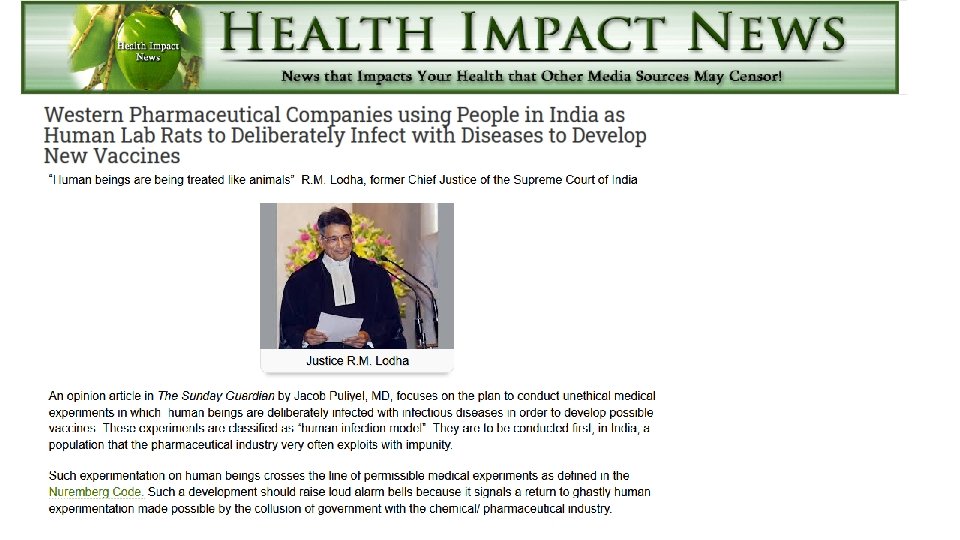
Vaccine hesitancy and vaccine trials Fertile ground for rumours Trials can raise concerns and rumours about safety, uncertainty, participants seen as guinea pigs… These can have negative effects on trials and public trust and attract media attention Monitoring Keep a finger on the pulse: be prepared to respond if needed Moving upstream To improve trust in vaccination: engage and communicate as early as trials start. Avoid “walls” between scientists and communication teams
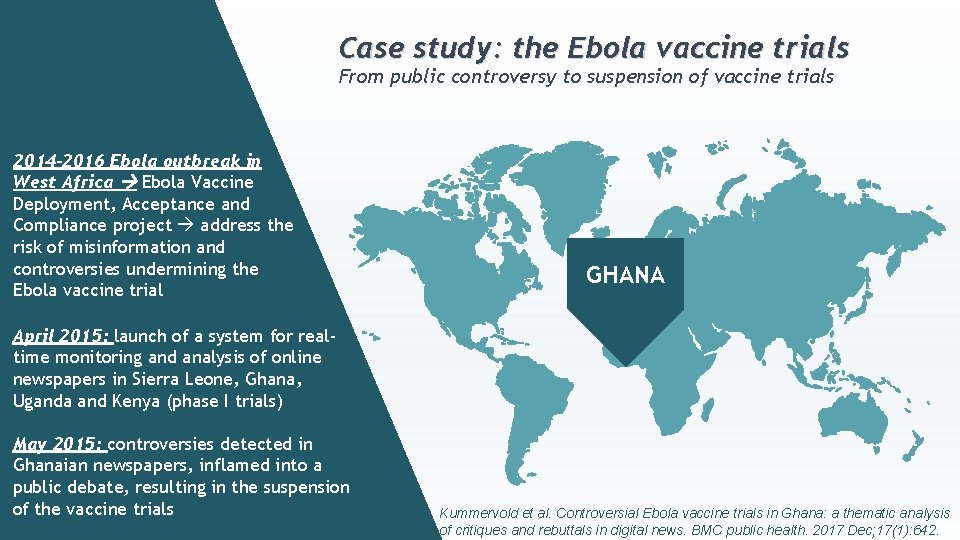
Case study: the Ebola vaccine trials From public controversy to suspension of vaccine trials 2014 -2016 Ebola outbreak in West Africa Ebola Vaccine Deployment, Acceptance and Compliance project address the risk of misinformation and controversies undermining the Ebola vaccine trial GHANA April 2015: launch of a system for realtime monitoring and analysis of online newspapers in Sierra Leone, Ghana, Uganda and Kenya (phase I trials) May 2015: controversies detected in Ghanaian newspapers, inflamed into a public debate, resulting in the suspension of the vaccine trials Kummervold et al. Controversial Ebola vaccine trials in Ghana: a thematic analysis of critiques and rebuttals in digital news. BMC public health. 2017 Dec; 17(1): 642.
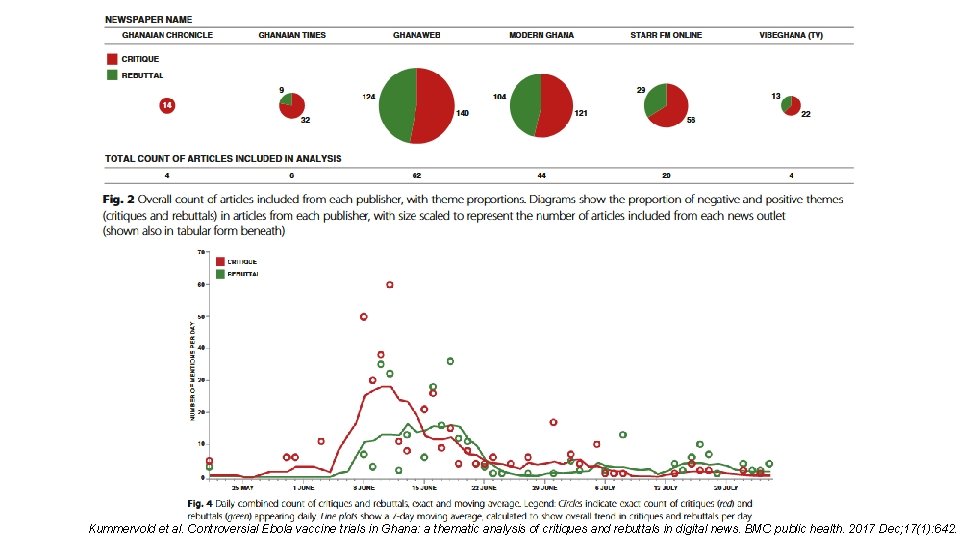
Kummervold et al. Controversial Ebola vaccine trials in Ghana: a thematic analysis of critiques and rebuttals in digital news. BMC public health. 2017 Dec; 17(1): 642.
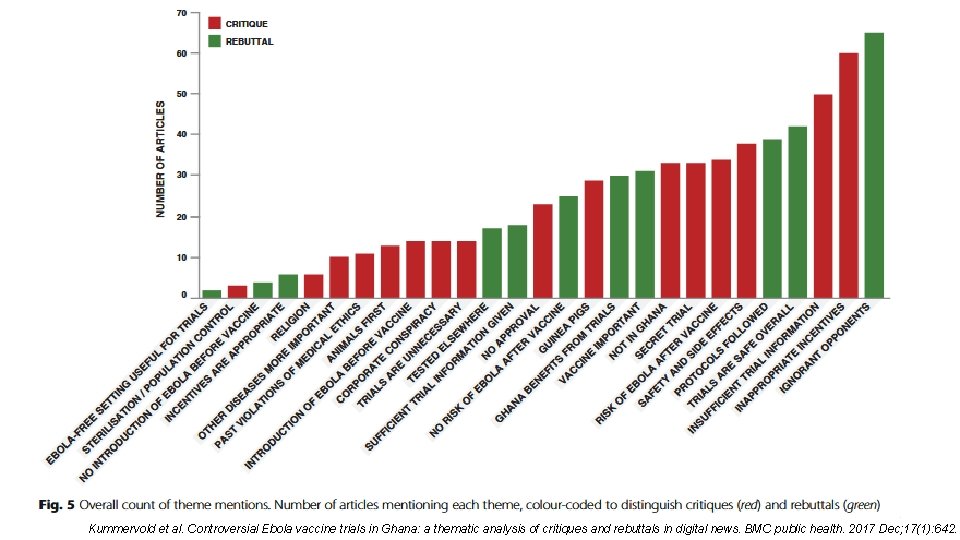
Kummervold et al. Controversial Ebola vaccine trials in Ghana: a thematic analysis of critiques and rebuttals in digital news. BMC public health. 2017 Dec; 17(1): 642.
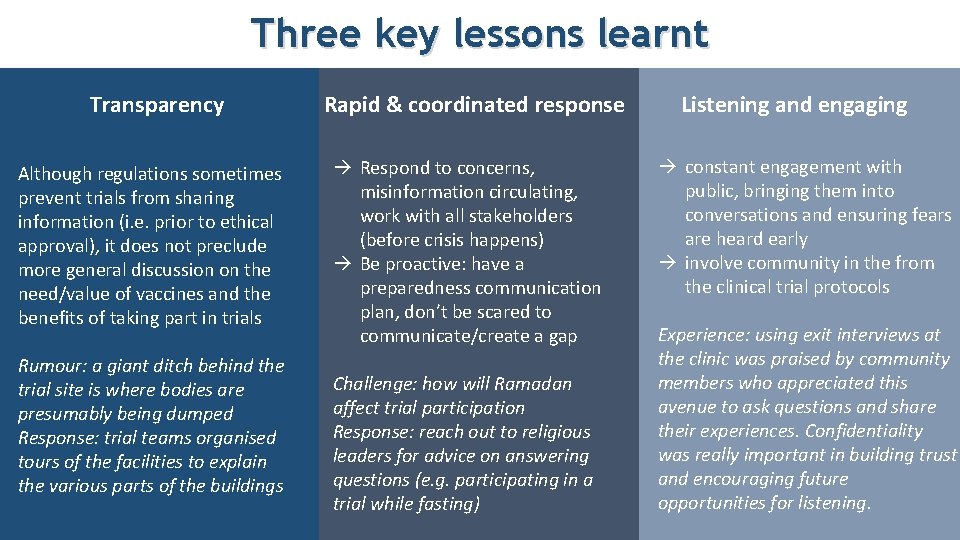
Three key lessons learnt Transparency Although regulations sometimes prevent trials from sharing information (i. e. prior to ethical approval), it does not preclude more general discussion on the need/value of vaccines and the benefits of taking part in trials Rumour: a giant ditch behind the trial site is where bodies are presumably being dumped Response: trial teams organised tours of the facilities to explain the various parts of the buildings Rapid & coordinated response Respond to concerns, misinformation circulating, work with all stakeholders (before crisis happens) Be proactive: have a preparedness communication plan, don’t be scared to communicate/create a gap Challenge: how will Ramadan affect trial participation Response: reach out to religious leaders for advice on answering questions (e. g. participating in a trial while fasting) Listening and engaging constant engagement with public, bringing them into conversations and ensuring fears are heard early involve community in the from the clinical trial protocols Experience: using exit interviews at the clinic was praised by community members who appreciated this avenue to ask questions and share their experiences. Confidentiality was really important in building trust and encouraging future opportunities for listening.
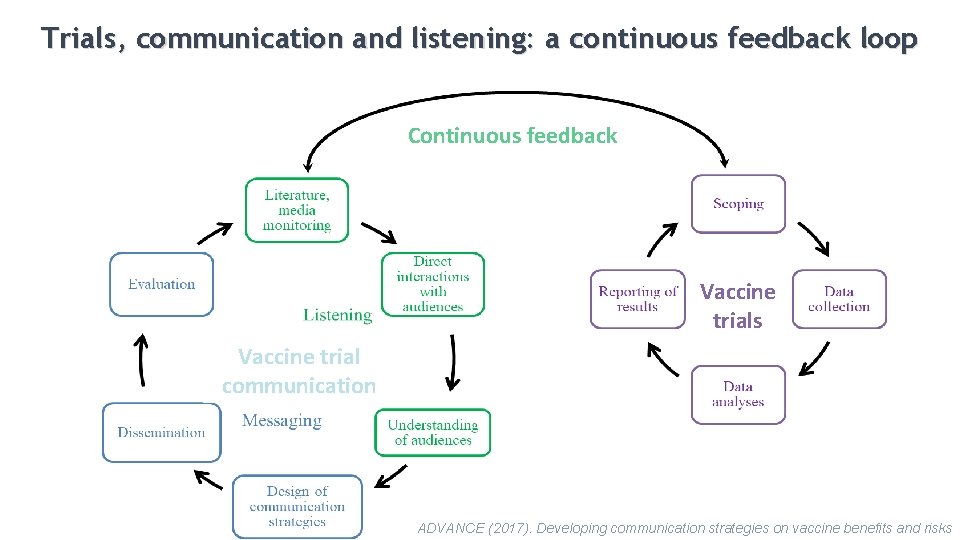
Trials, communication and listening: a continuous feedback loop Continuous feedback Vaccine trials Vaccine trial communication ADVANCE (2017). Developing communication strategies on vaccine benefits and risks
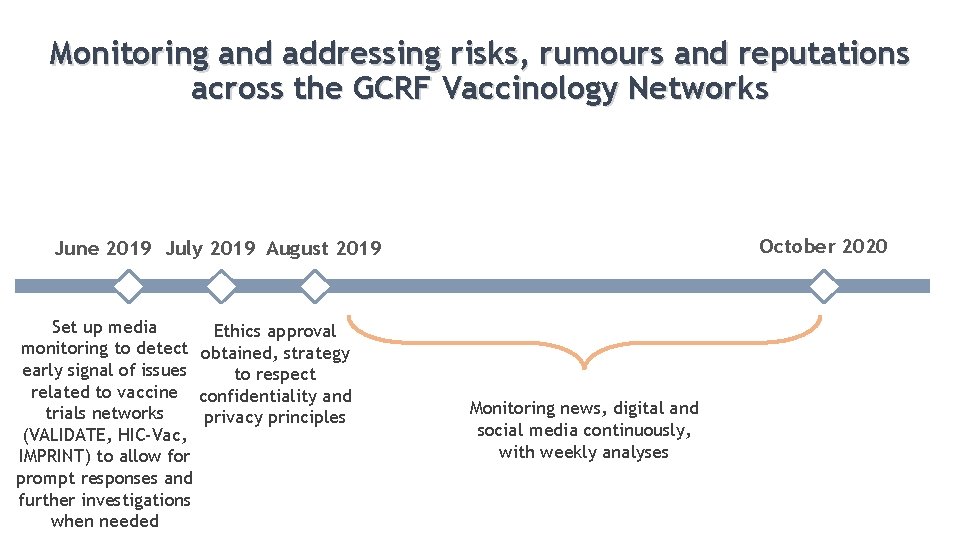
Monitoring and addressing risks, rumours and reputations across the GCRF Vaccinology Networks October 2020 June 2019 July 2019 August 2019 Set up media Ethics approval monitoring to detect obtained, strategy early signal of issues to respect related to vaccine confidentiality and trials networks privacy principles (VALIDATE, HIC-Vac, IMPRINT) to allow for prompt responses and further investigations when needed Monitoring news, digital and social media continuously, with weekly analyses
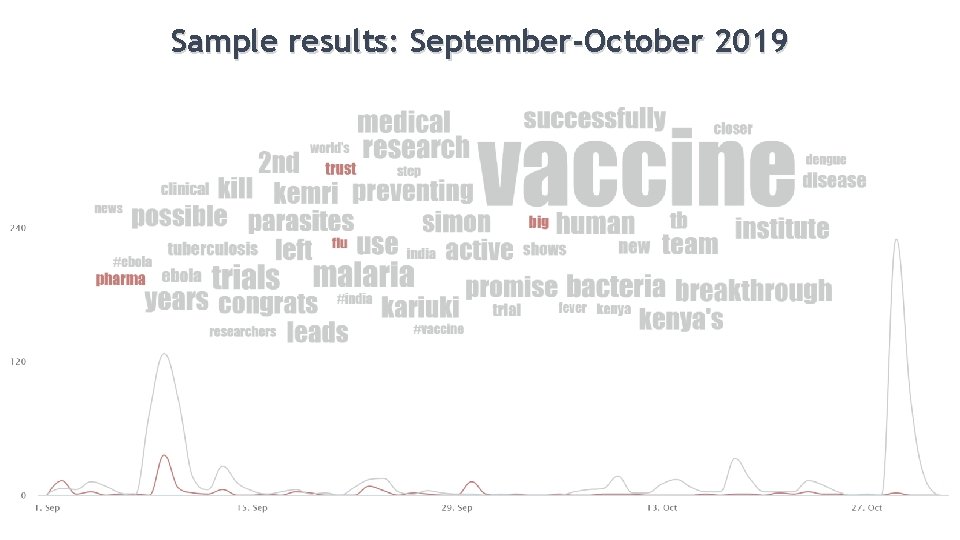
Sample results: September-October 2019
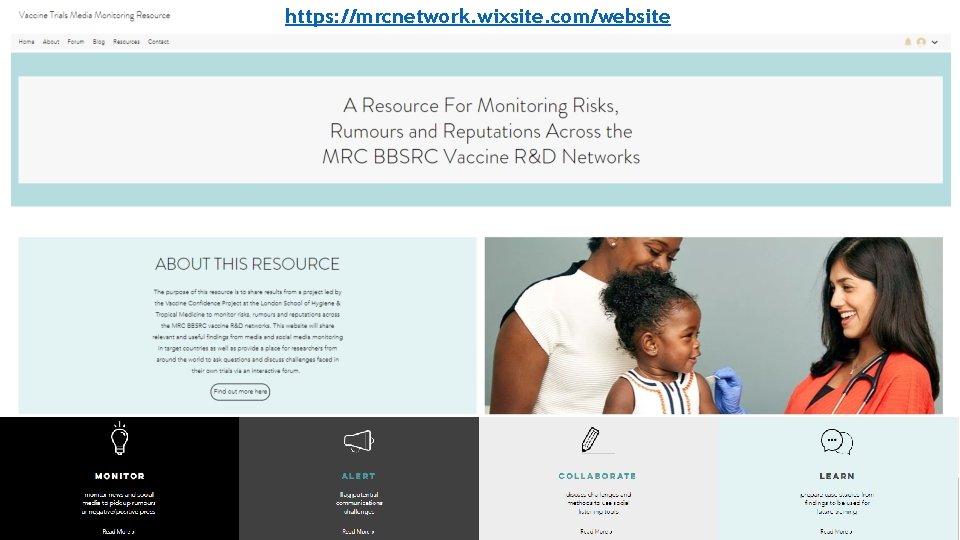
https: //mrcnetwork. wixsite. com/website
- Slides: 22