
Public Comment Draft of the World Languages Curriculum
Public Comment Draft of the World Languages Curriculum Framework Overview of the Proposed Framework Andy Mc. Donie, Office of Language Acquisition
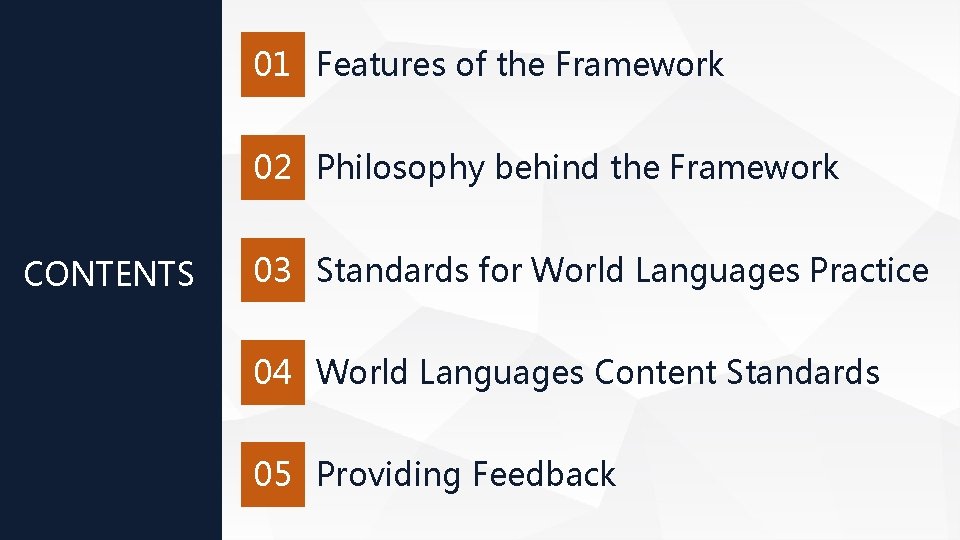
01 Features of the Framework 02 Philosophy behind the Framework CONTENTS 03 Standards for World Languages Practice 04 World Languages Content Standards 05 Providing Feedback
Before we begin • Please have the following resources open (see chat): o Framework Draft o Agenda (from email) • Please mute your microphone • Additional Q&A session this Thursday at 3: 30. Massachusetts Department of Elementary and Secondary Education
1 Features
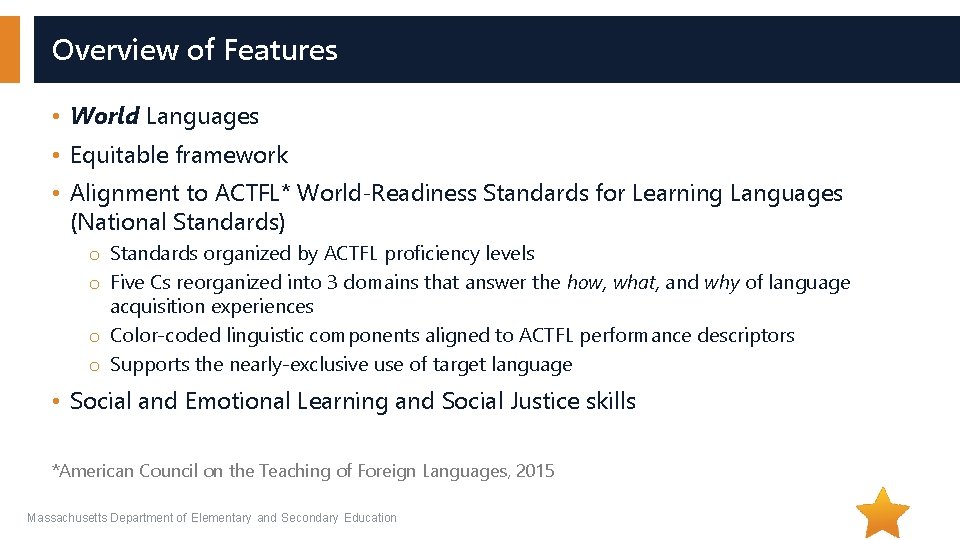
Overview of Features • World Languages • Equitable framework • Alignment to ACTFL* World-Readiness Standards for Learning Languages (National Standards) o Standards organized by ACTFL proficiency levels o Five Cs reorganized into 3 domains that answer the how, what, and why of language acquisition experiences o Color-coded linguistic components aligned to ACTFL performance descriptors o Supports the nearly-exclusive use of target language • Social and Emotional Learning and Social Justice skills *American Council on the Teaching of Foreign Languages, 2015 Massachusetts Department of Elementary and Secondary Education

Equity Massachusetts Department of Elementary and Secondary Education
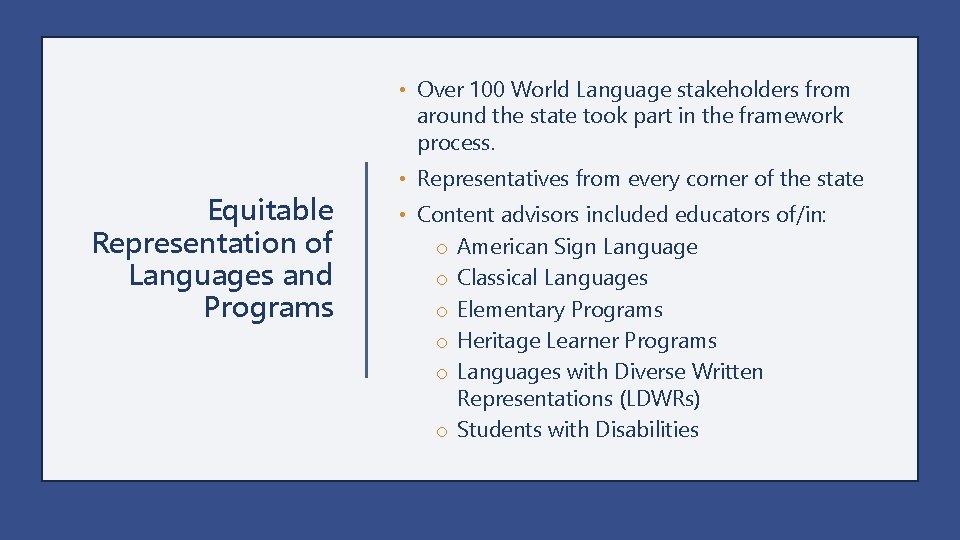
• Over 100 World Language stakeholders from around the state took part in the framework process. Equitable Representation of Languages and Programs Massachusetts Department of Elementary and Secondary Education • Representatives from every corner of the state • Content advisors included educators of/in: o American Sign Language o Classical Languages o Elementary Programs o Heritage Learner Programs o Languages with Diverse Written Representations (LDWRs) o Students with Disabilities
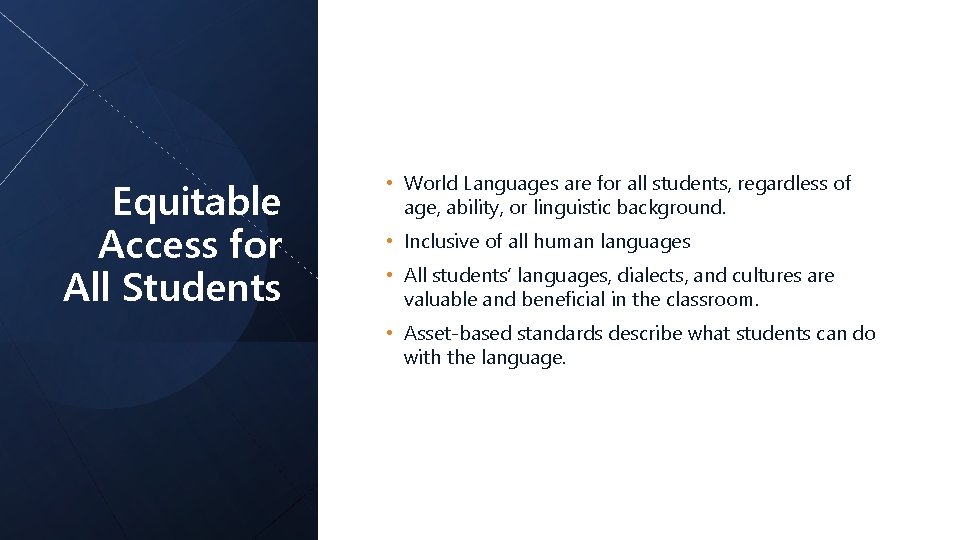
Equitable Access for All Students • World Languages are for all students, regardless of age, ability, or linguistic background. • Inclusive of all human languages • All students’ languages, dialects, and cultures are valuable and beneficial in the classroom. • Asset-based standards describe what students can do with the language. Massachusetts Department of Elementary and Secondary Education
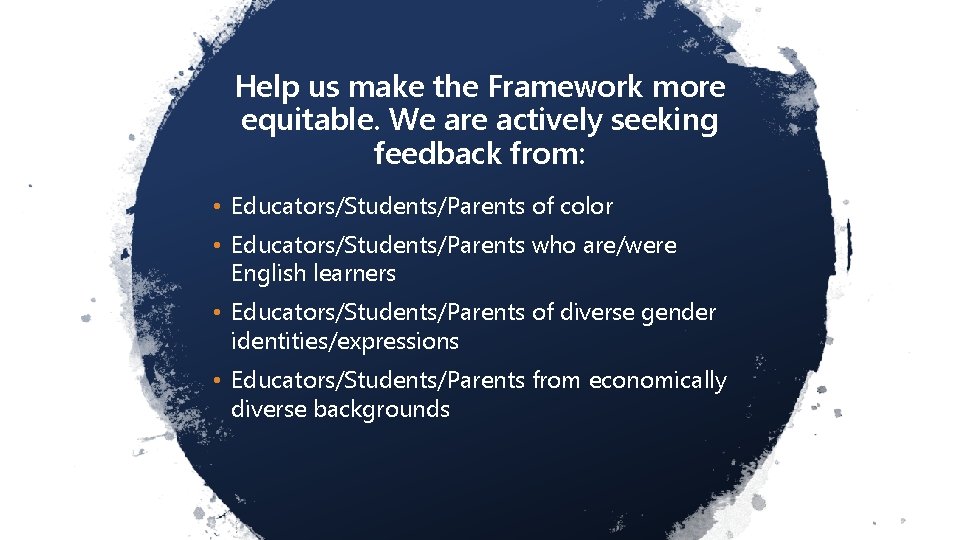
Help us make the Framework more equitable. We are actively seeking feedback from: • Educators/Students/Parents of color • Educators/Students/Parents who are/were English learners • Educators/Students/Parents of diverse gender identities/expressions • Educators/Students/Parents from economically diverse backgrounds Massachusetts Department of Elementary and Secondary Education
ACTFL Alignment Massachusetts Department of Elementary and Secondary Education
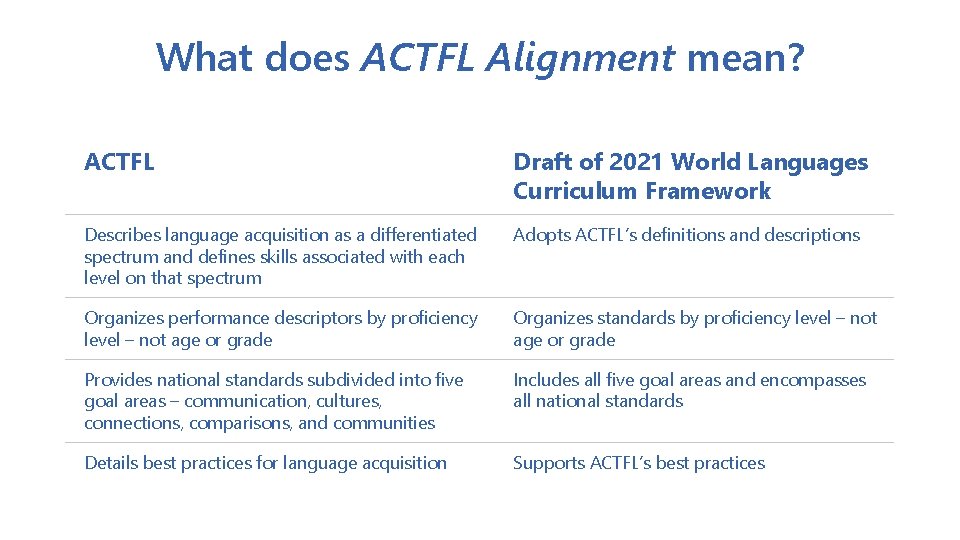
What does ACTFL Alignment mean? ACTFL Draft of 2021 World Languages Curriculum Framework Describes language acquisition as a differentiated spectrum and defines skills associated with each level on that spectrum Adopts ACTFL’s definitions and descriptions Organizes performance descriptors by proficiency level – not age or grade Organizes standards by proficiency level – not age or grade Provides national standards subdivided into five goal areas – communication, cultures, connections, comparisons, and communities Includes all five goal areas and encompasses all national standards Details best practices for language acquisition Supports ACTFL’s best practices Massachusetts Department of Elementary and Secondary Education

ACTFL Proficiency Pyramid Massachusetts Department of Elementary and Secondary Education
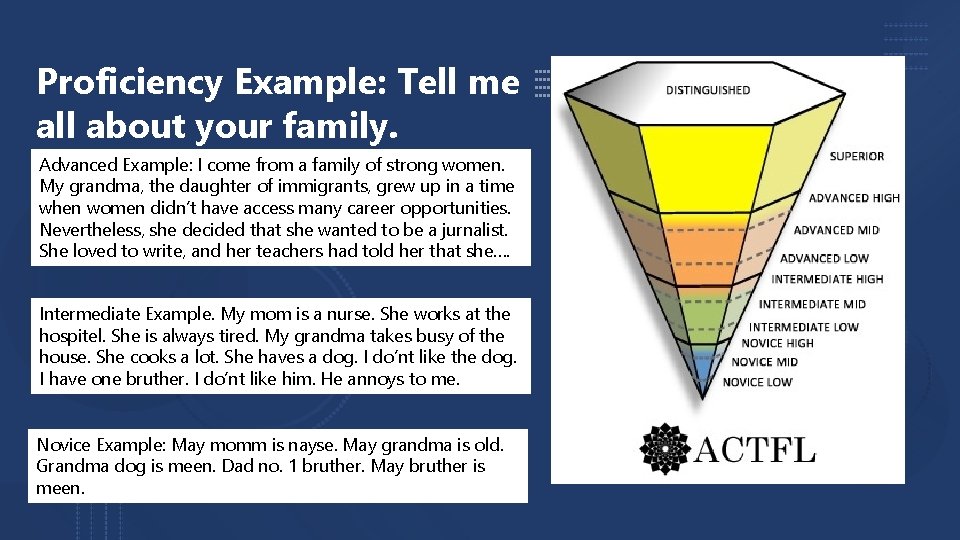
Proficiency Example: Tell me all about your family. Advanced Example: I come from a family of strong women. My grandma, the daughter of immigrants, grew up in a time when women didn’t have access many career opportunities. Nevertheless, she decided that she wanted to be a jurnalist. She loved to write, and her teachers had told her that she…. Intermediate Example. My mom is a nurse. She works at the hospitel. She is always tired. My grandma takes busy of the house. She cooks a lot. She haves a dog. I do’nt like the dog. I have one bruther. I do’nt like him. He annoys to me. Novice Example: May momm is nayse. May grandma is old. Grandma dog is meen. Dad no. 1 bruther. May bruther is meen. Massachusetts Department of Elementary and Secondary Education
Social Emotional Learning Social Justice Skills Massachusetts Department of Elementary and Secondary Education • Explicitly included in Practices – skills students should demonstrate regardless of level (not assessed) • Implicitly included in Content Standards – skills students should demonstrate at certain levels (assessed)
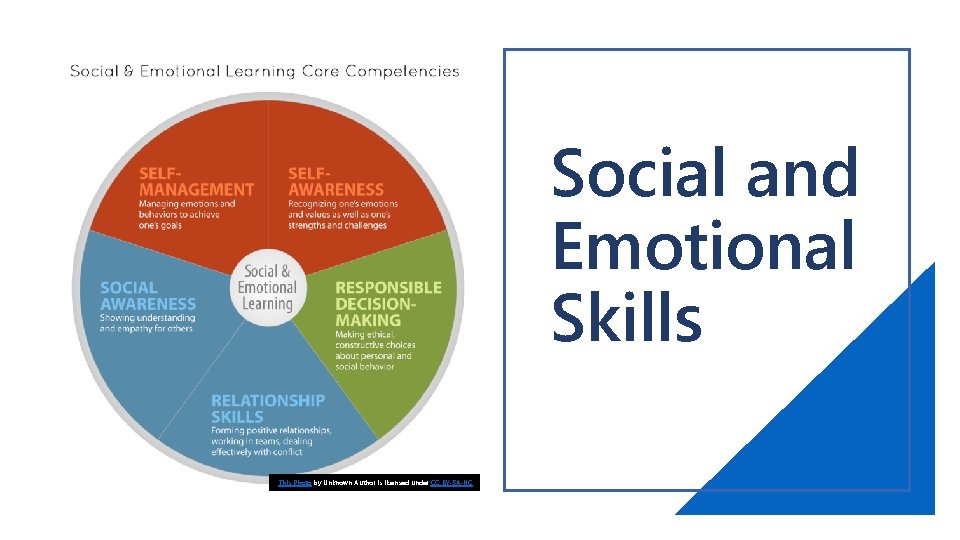
Social and Emotional Skills This Photo by Unknown Author is licensed under CC BY-SA-NC Massachusetts Department of Elementary and Secondary Education
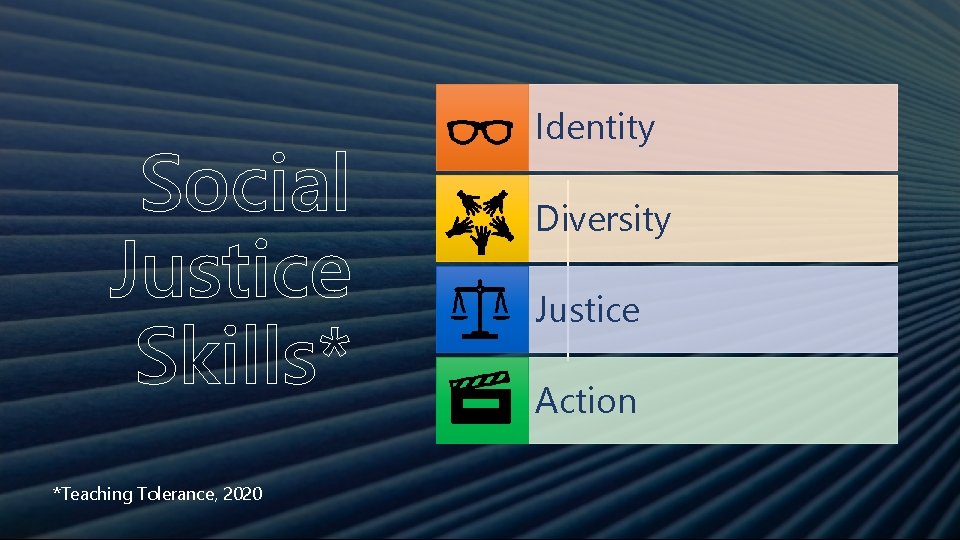
Social Justice Skills* *Teaching Tolerance, 2020 Massachusetts Department of Elementary and Secondary Education Identity Diversity Justice Action
2 Philosophy of the Framework
Vision Statement All Massachusetts students should acquire linguistic and cultural proficiency in at least one language in addition to English. Proficiency in one or more world languages will empower all students to use languages other than English to tell their own stories, understand the stories of others, and engage with their communities. Massachusetts Department of Elementary and Secondary Education
Guiding Principles (1/3) 1. Effective World Language education invites, includes, supports, and benefits all students. 2. Effective World Language education advances social justice by affirming the dignity of all students, languages, and cultures. 3. Effective World Language education enables students to become linguistically and culturally proficient in languages other than English. 4. Effective World Language education is communicative in nature and supports meaningful, authentic, and affirming interactions in the target language. Massachusetts Department of Elementary and Secondary Education
Guiding Principles (2/3) 5. Effective World Language education is measurable in terms of proficiency across interpretive, interpersonal, presentational, and intercultural modes. 6. Effective World Language education fosters risk-taking and mistakemaking toward growth in linguistic and cultural proficiency. 7. Effective World Language programs deliver meaningful, relevant, and cross-disciplinary content to motivate students to acquire the language and build proficiency. Massachusetts Department of Elementary and Secondary Education
Guiding Principles (3/3) 8. Effective World Language programs differentiate content and instruction, so that they are accessible, rigorous, and appropriate for all students. 9. Effective World Language programs connect students to their peers in the classroom, their community, and speakers/signers of the target language throughout the world. 10. Effective World Language education promotes social and emotional growth. Massachusetts Department of Elementary and Secondary Education
3 Standards for World Languages Practice
Standards for World Languages Practice Skills students should demonstrate in all courses regardless of proficiency level Massachusetts Department of Elementary and Secondary Education 23
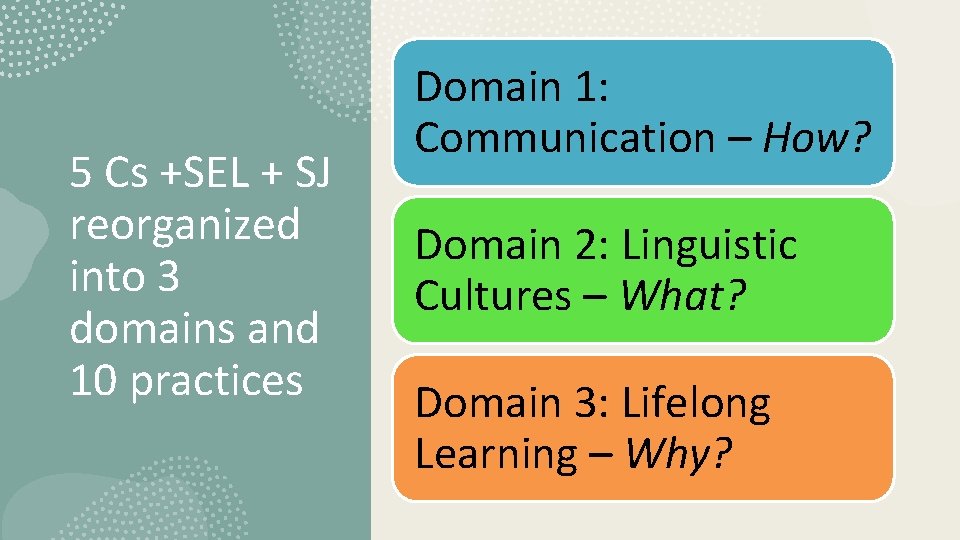
5 Cs +SEL + SJ reorganized into 3 domains and 10 practices Domain 1: Communication – How? Domain 2: Linguistic Cultures – What? Domain 3: Lifelong Learning – Why?
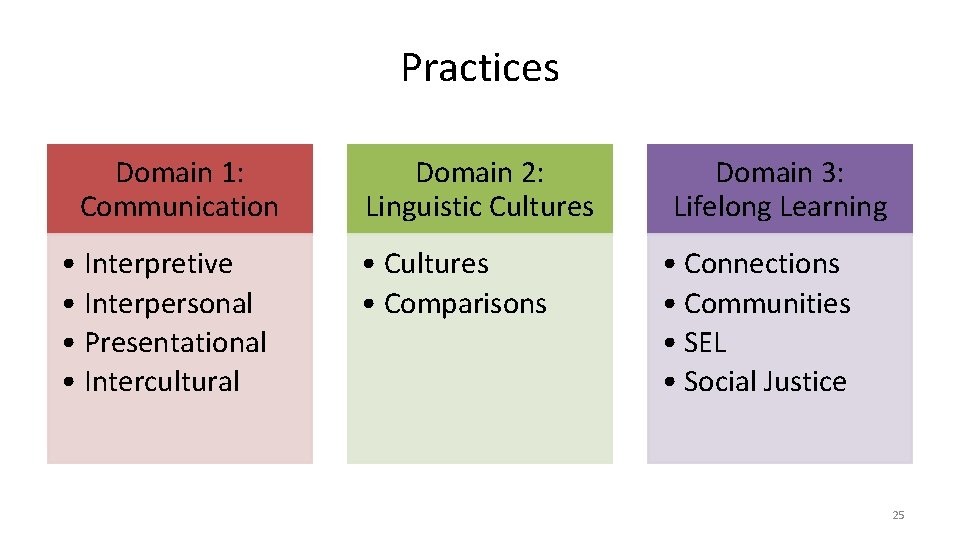
Practices Domain 1: Communication • Interpretive • Interpersonal • Presentational • Intercultural Domain 2: Linguistic Cultures • Cultures • Comparisons Domain 3: Lifelong Learning • Connections • Communities • SEL • Social Justice 25
4 World Languages Content Standards
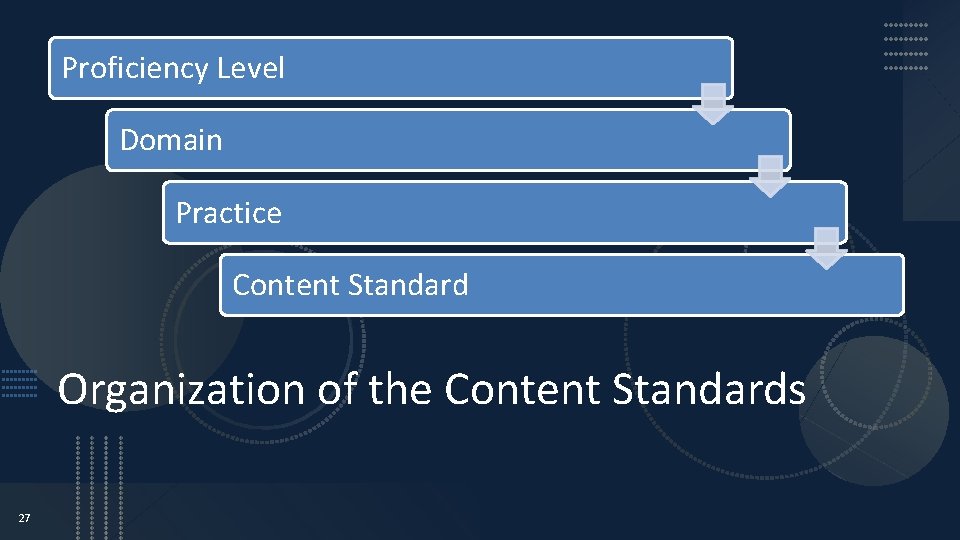
Proficiency Level Domain Practice Content Standard Organization of the Content Standards 27
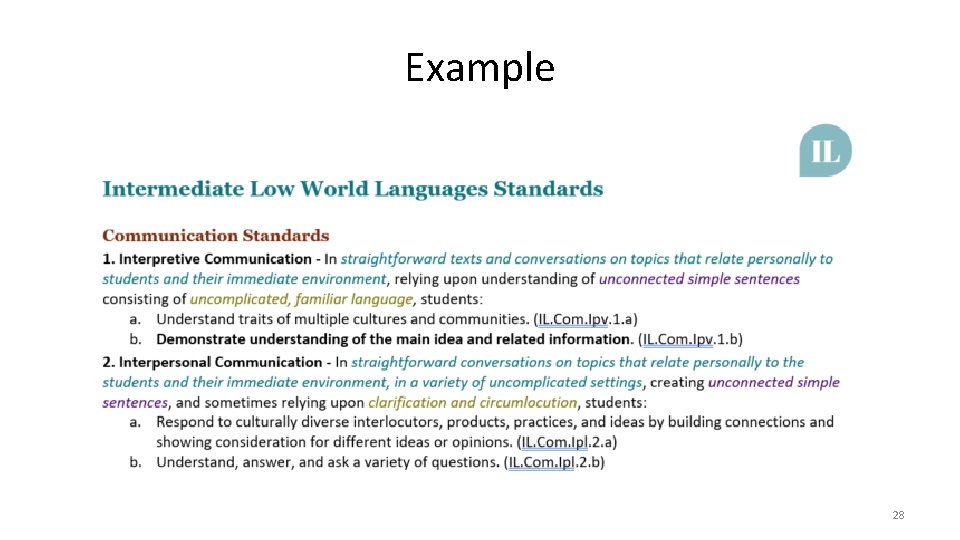
Example 28
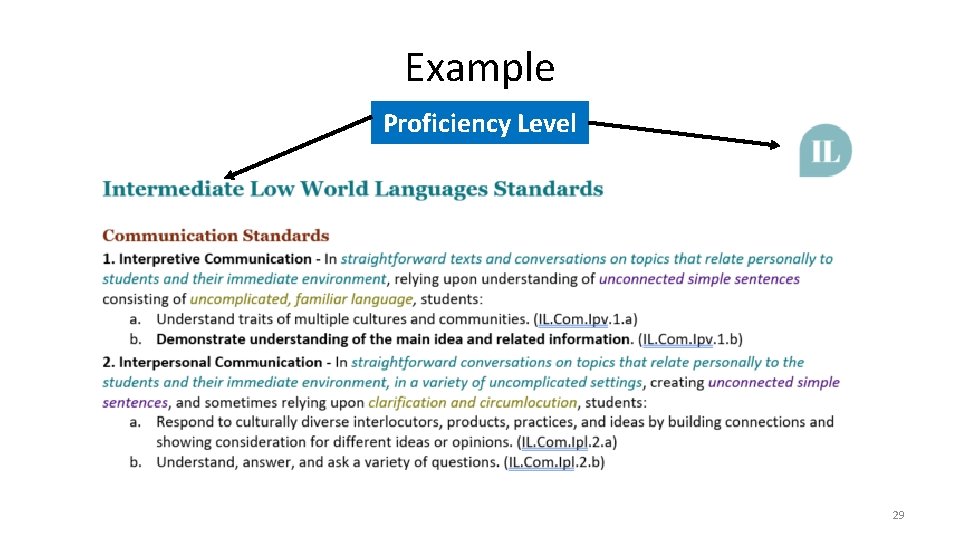
Example Proficiency Level 29
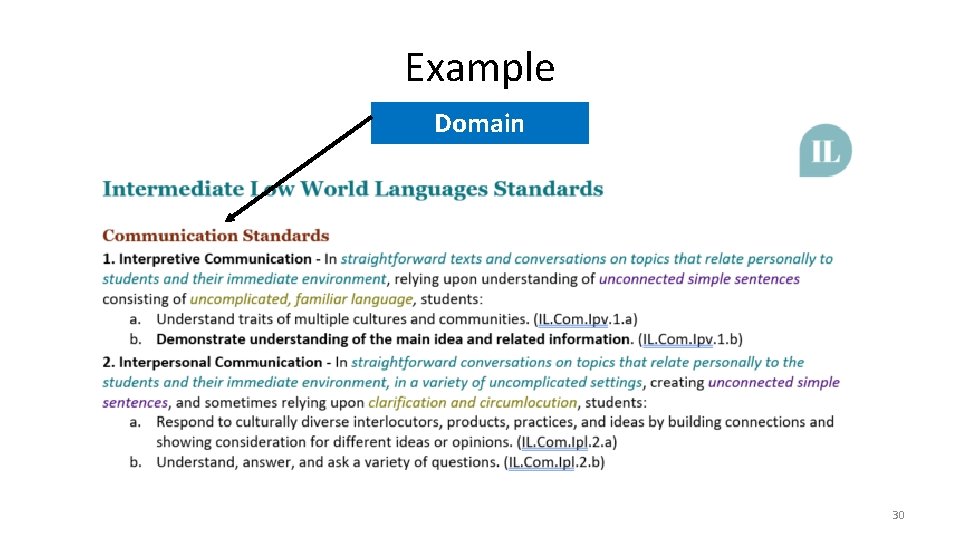
Example Domain 30
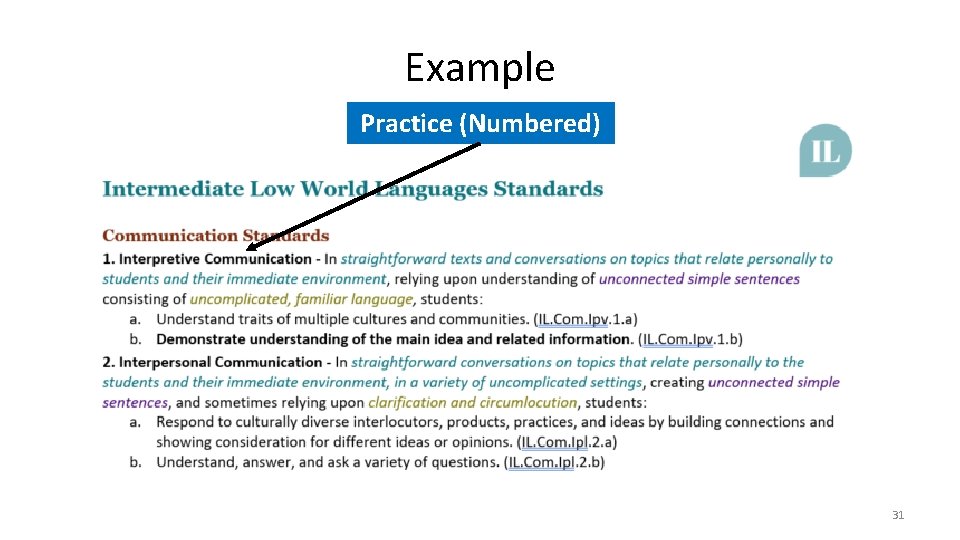
Example Practice (Numbered) 31
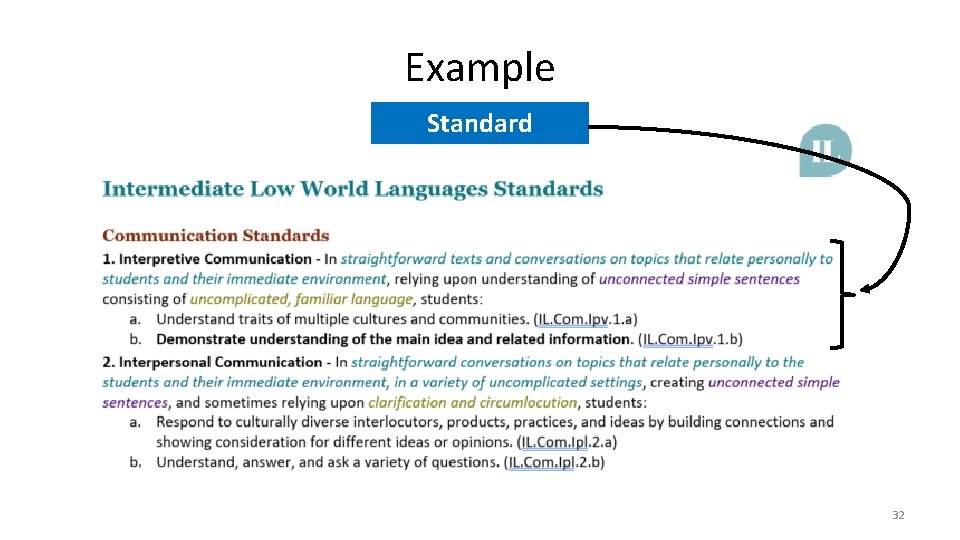
Example Standard 32
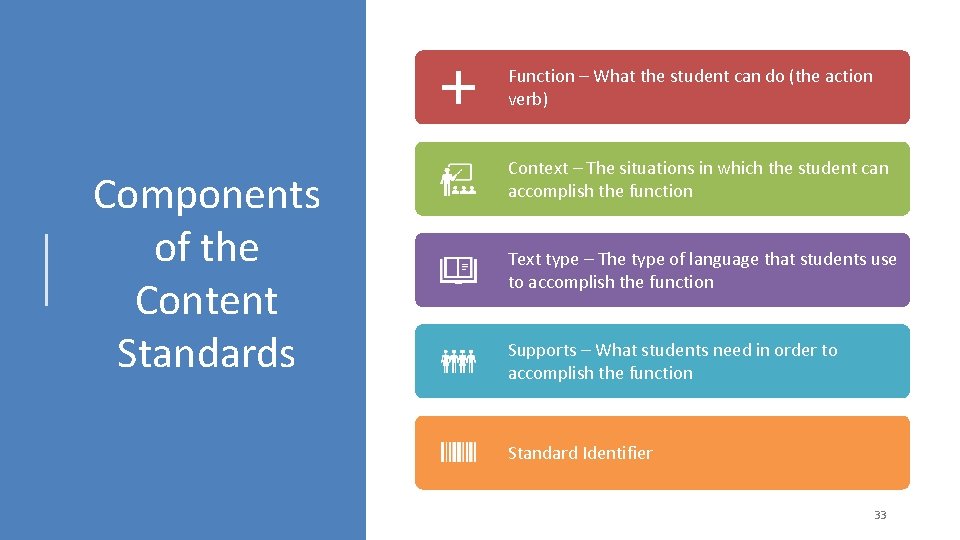
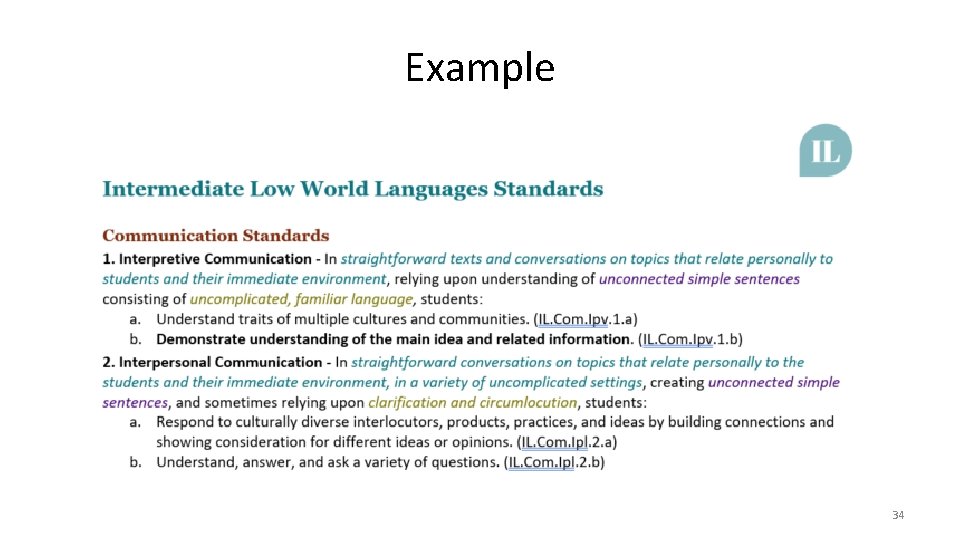
Function – What the student can do (the action verb) Components of the Content Standards Context – The situations in which the student can accomplish the function Text type – The type of language that students use to accomplish the function Supports – What students need in order to accomplish the function Standard Identifier 33
Example 34
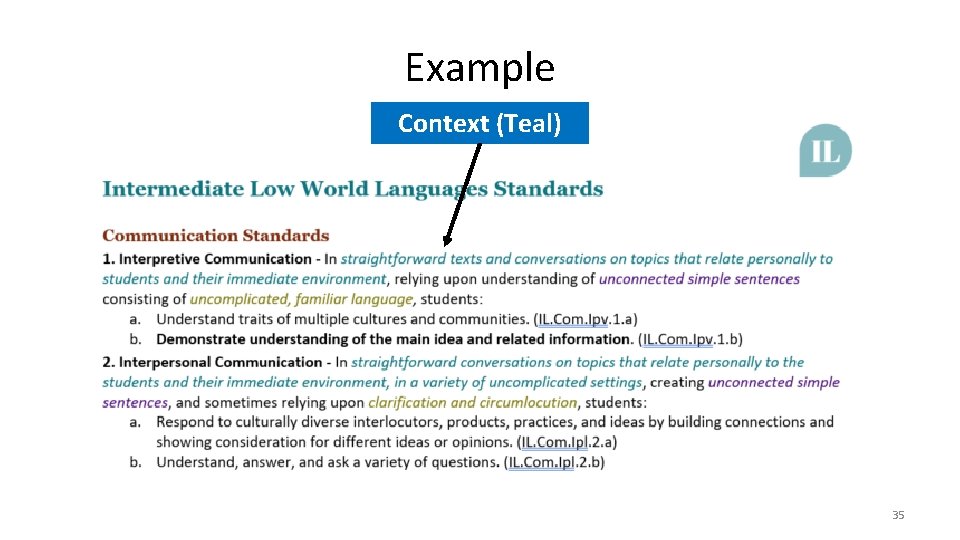
Example Context (Teal) 35
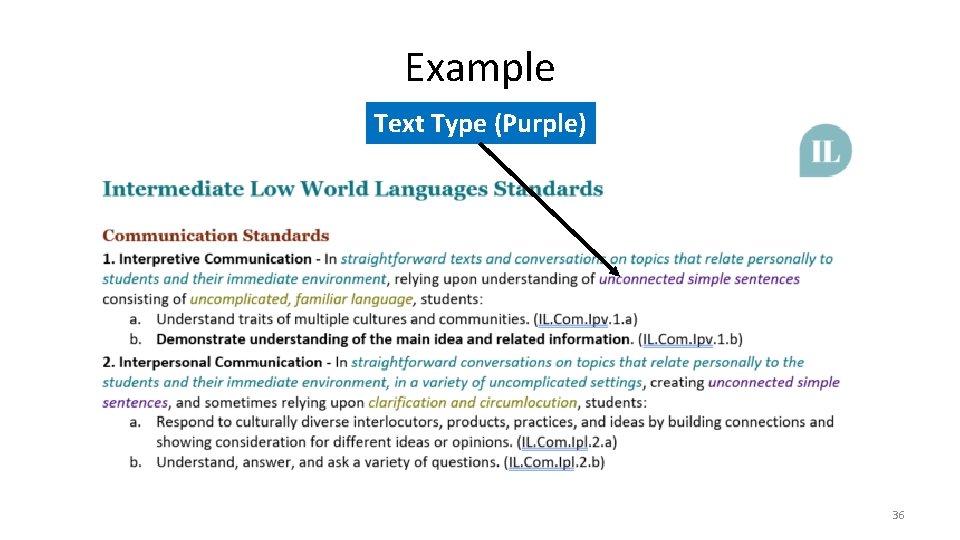
Example Text Type (Purple) 36
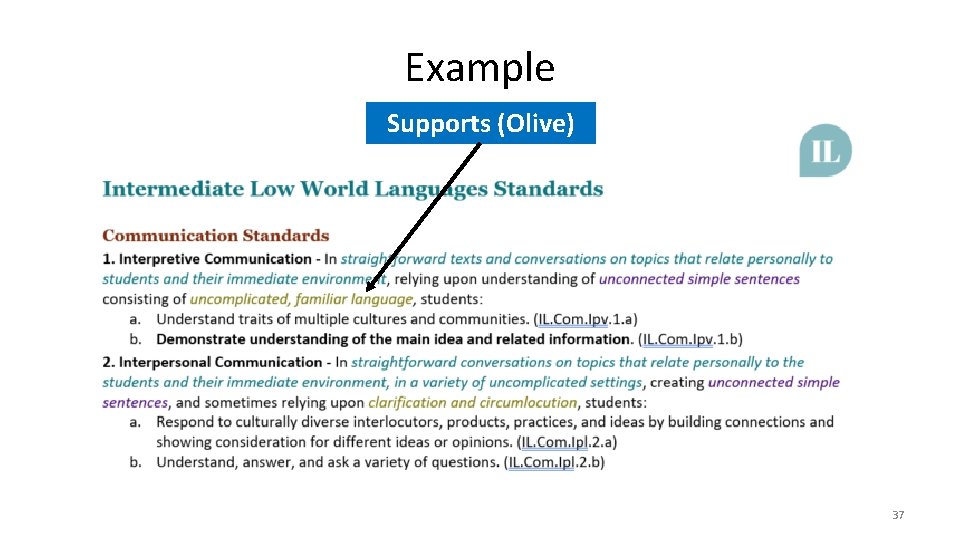
Example Supports (Olive) 37
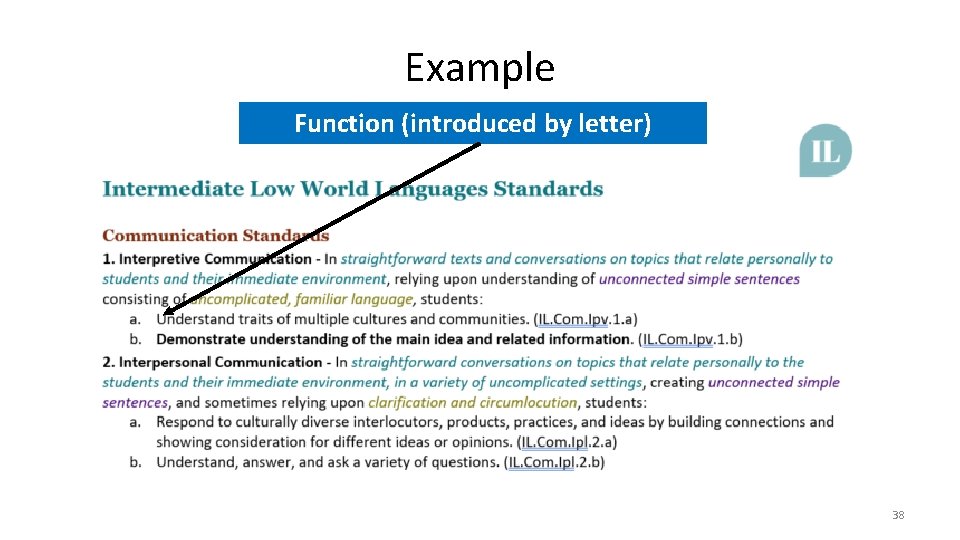
Example Function (introduced by letter) 38
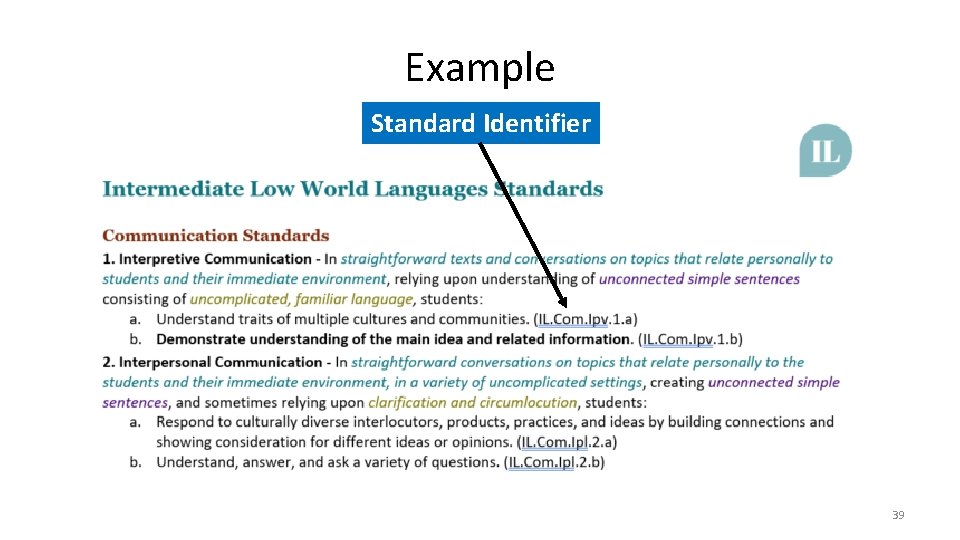
Example Standard Identifier 39
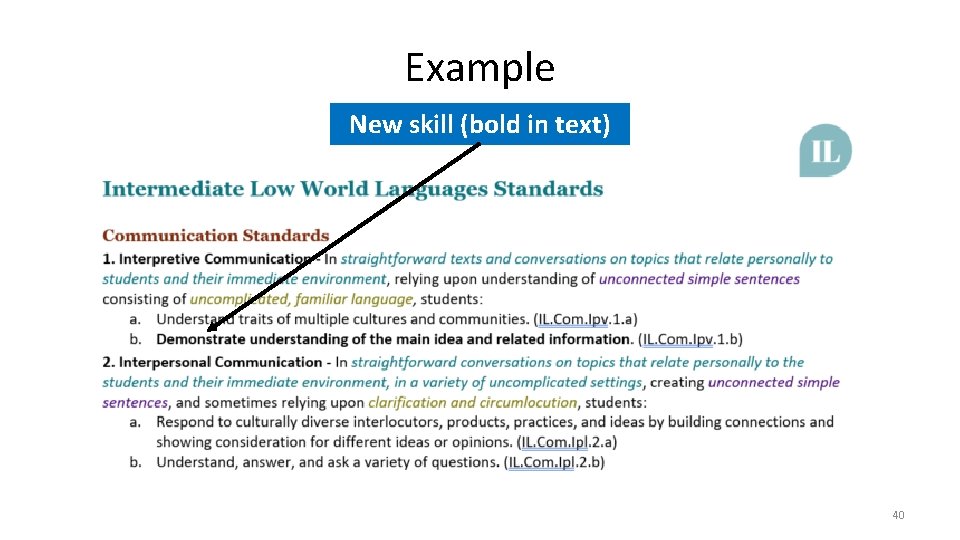
Example New skill (bold in text) 40
The Content Standards 41
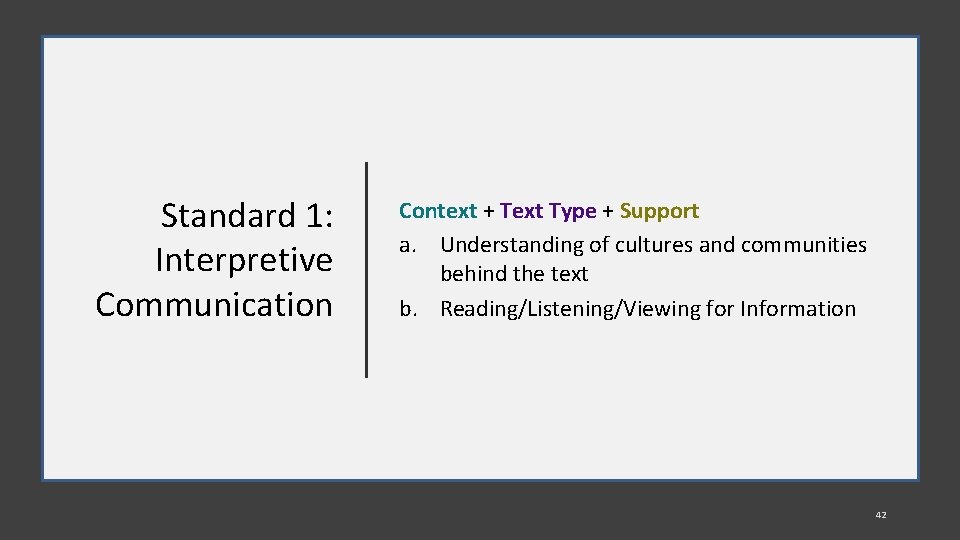
Standard 1: Interpretive Communication Context + Text Type + Support a. Understanding of cultures and communities behind the text b. Reading/Listening/Viewing for Information 42
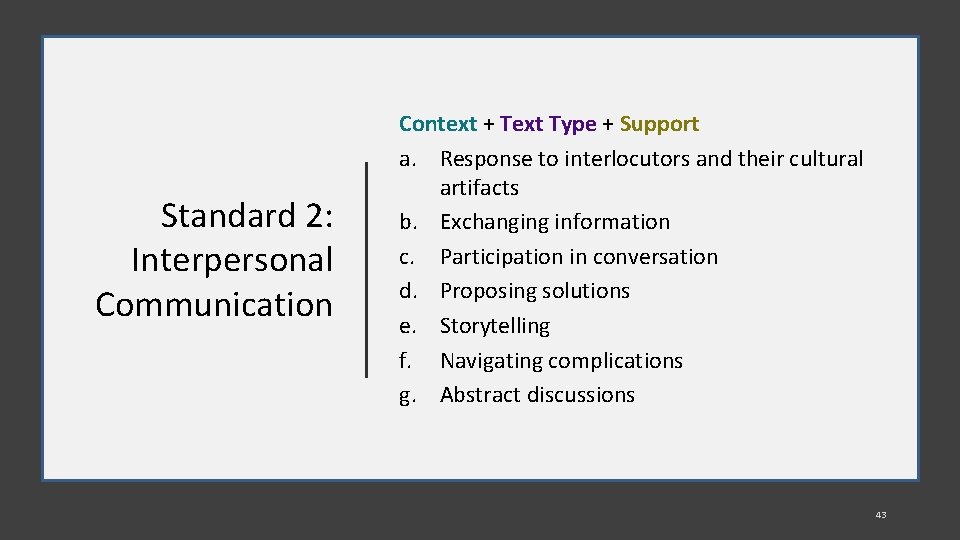
Standard 2: Interpersonal Communication Context + Text Type + Support a. Response to interlocutors and their cultural artifacts b. Exchanging information c. Participation in conversation d. Proposing solutions e. Storytelling f. Navigating complications g. Abstract discussions 43
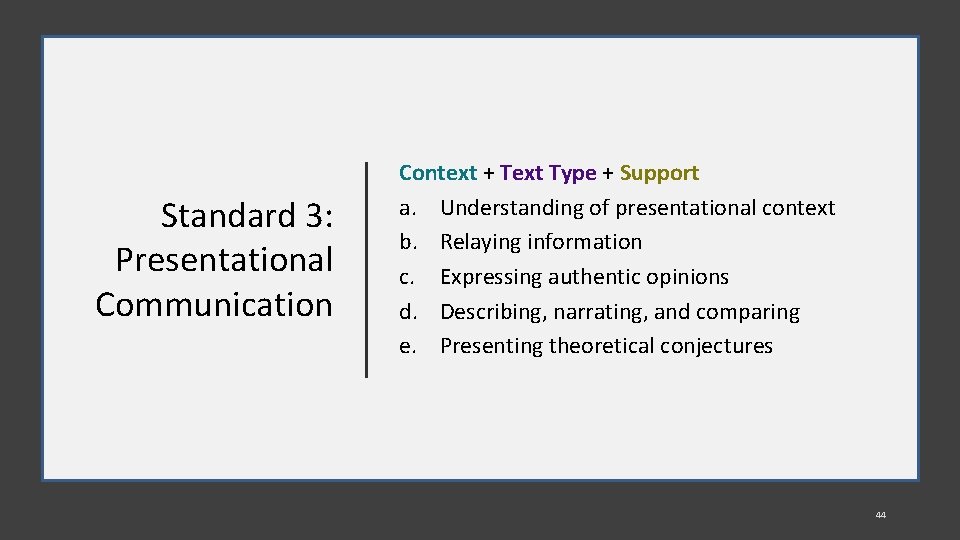
Standard 3: Presentational Communication Context + Text Type + Support a. Understanding of presentational context b. Relaying information c. Expressing authentic opinions d. Describing, narrating, and comparing e. Presenting theoretical conjectures 44
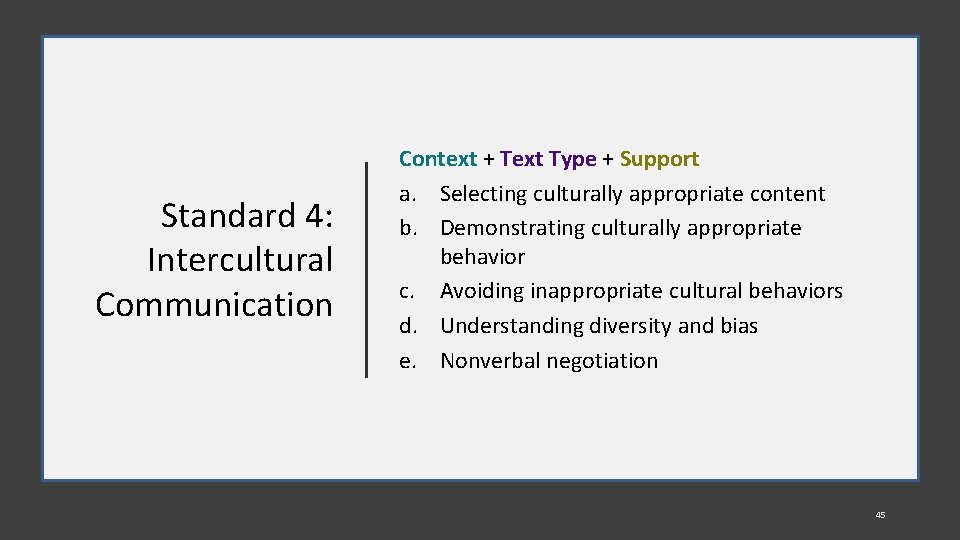
Standard 4: Intercultural Communication Context + Text Type + Support a. Selecting culturally appropriate content b. Demonstrating culturally appropriate behavior c. Avoiding inappropriate cultural behaviors d. Understanding diversity and bias e. Nonverbal negotiation 45
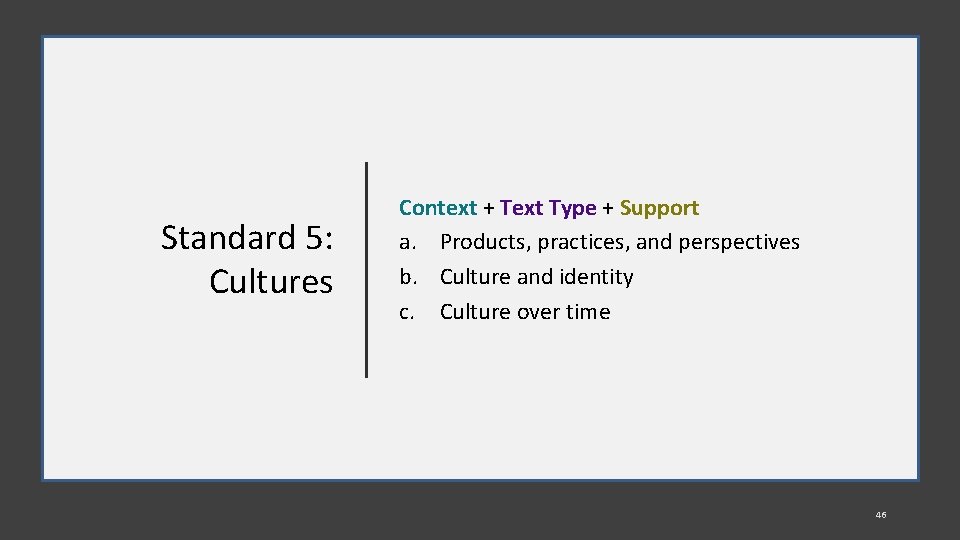
Standard 5: Cultures Context + Text Type + Support a. Products, practices, and perspectives b. Culture and identity c. Culture over time 46
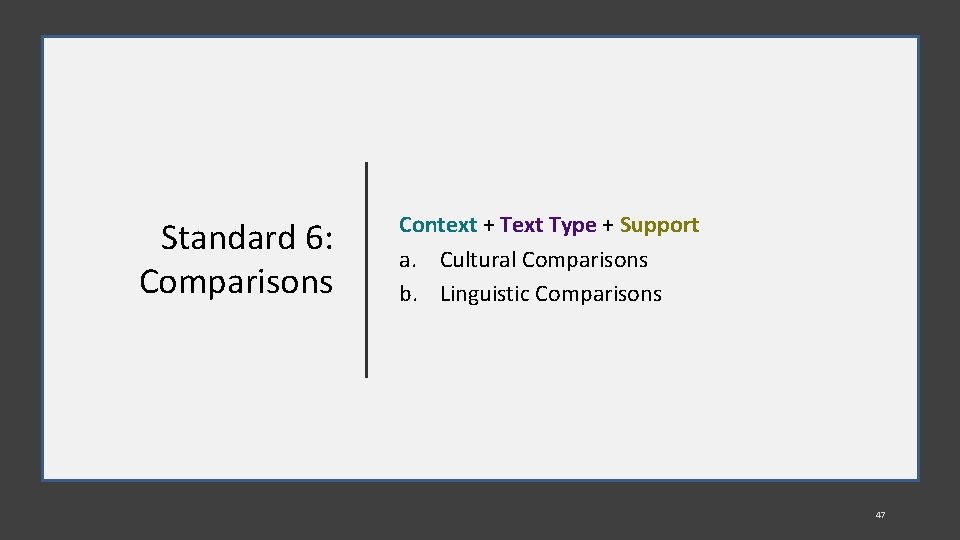
Standard 6: Comparisons Context + Text Type + Support a. Cultural Comparisons b. Linguistic Comparisons 47
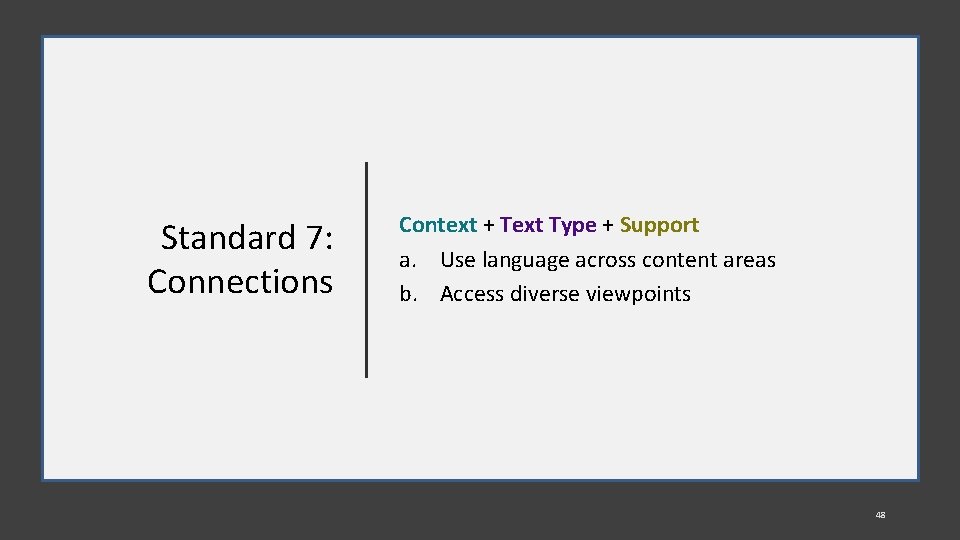
Standard 7: Connections Context + Text Type + Support a. Use language across content areas b. Access diverse viewpoints 48
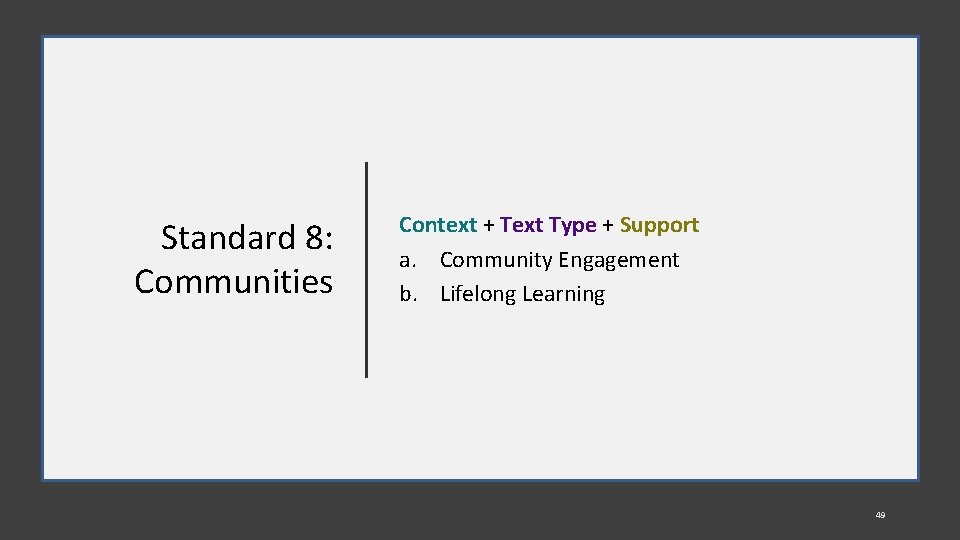
Standard 8: Communities Context + Text Type + Support a. Community Engagement b. Lifelong Learning 49
Questions
5 Feedback
Public Comment • This draft has been approved by the Massachusetts Board of Elementary and Secondary for the public to analyze and provide feedback. It is not an adopted framework. • To provide feedback, please choose one of the following options below: o Fill out our survey at https: //survey. alchemer. com/s 3/5838463/Public-Comment-World. Languages-Framework-2021 o Email Andy Mc. Donie at d. andrew. mcdonie@mass. gov Massachusetts Department of Elementary and Secondary Education
THANK YOU Andy Mc. Donie, World Languages Support Specialist, OLA 781. 338. 3541 www. doe. mass. edu d. andrew. mcdonie@mass. gov 75 Pleasant Street, Malden, MA 02148
- Slides: 53