
PUBERTY Learning objectives We are learning about the
PUBERTY Learning objectives We are learning about the physical and emotional changes that occur in young people during puberty and the impact this can have. Learning outcomes By the end of the lesson you will be able to… • Describe the physical and emotional changes that occur during puberty • Identify ways of managing the changes that occur during puberty • Explain where to seek advice and support about the changes that occur during puberty KEY VOCABULARY Puberty, hormones, desire, emotional, angry, insecurity, pain, acne, body conscious, pituitary gland, prefrontal cortex
PUBERTY What is puberty and when does this happen to a person?
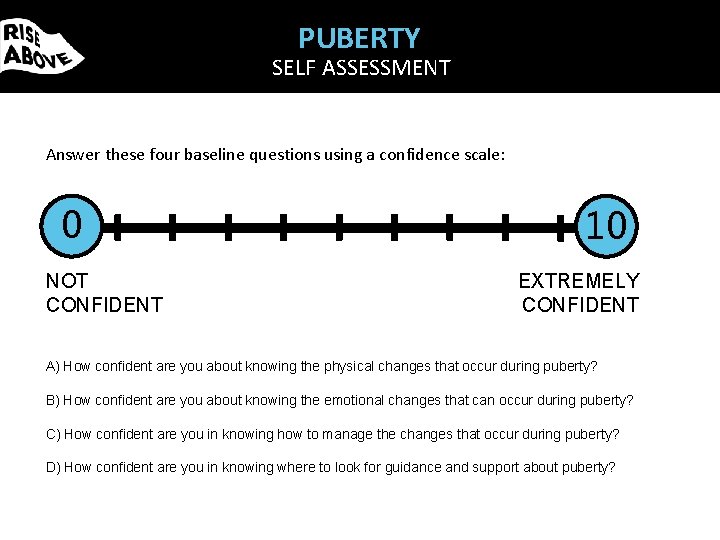
PUBERTY SELF ASSESSMENT Answer these four baseline questions using a confidence scale: 0 NOT CONFIDENT 10 EXTREMELY CONFIDENT A) How confident are you about knowing the physical changes that occur during puberty? B) How confident are you about knowing the emotional changes that can occur during puberty? C) How confident are you in knowing how to manage the changes that occur during puberty? D) How confident are you in knowing where to look for guidance and support about puberty?
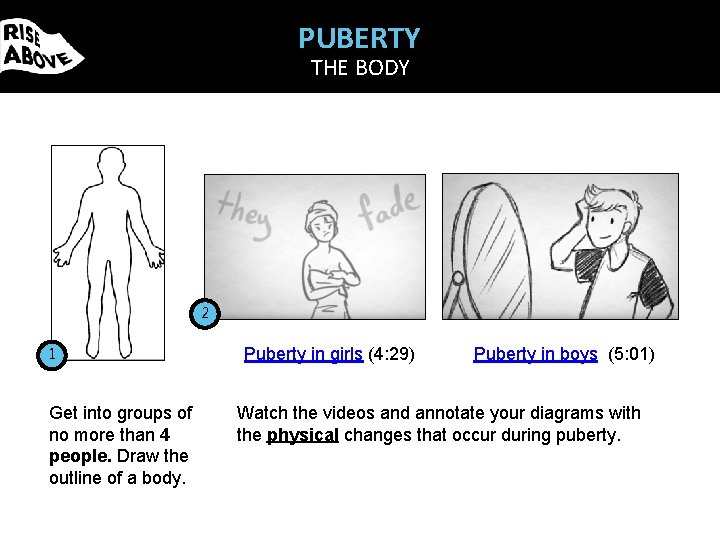
PUBERTY THE BODY 2 1 Get into groups of no more than 4 people. Draw the outline of a body. Puberty in girls (4: 29) Puberty in boys (5: 01) Watch the videos and annotate your diagrams with the physical changes that occur during puberty.
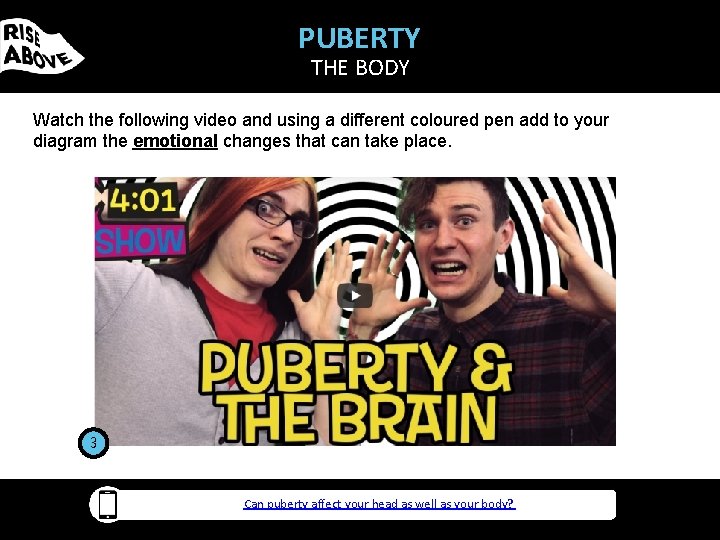
PUBERTY THE BODY Watch the following video and using a different coloured pen add to your diagram the emotional changes that can take place. 3 Can puberty affect your head as well as your body?
PUBERTY THE BODY Discuss the following questions: ALL FURTHER CHALLENGE • What are the similarities and differences in physical and emotional changes that occur in males and females? • What are challenges that young people face with changing through puberty? • How can young people support each other during puberty? • What could be challenging about feelings of attraction or arousal during puberty? • What are the challenges of boys and girls developing at slightly different times? • Young people can start to be more aware of their bodies and what other people think during puberty, what could be the impact of this? • Are there any challenges associated with puberty that would differ depending on someone’s sexual orientation or gender identity?
PUBERTY CAN YOU HELP? 1 Watch this video Kick the PJ talks about growing up
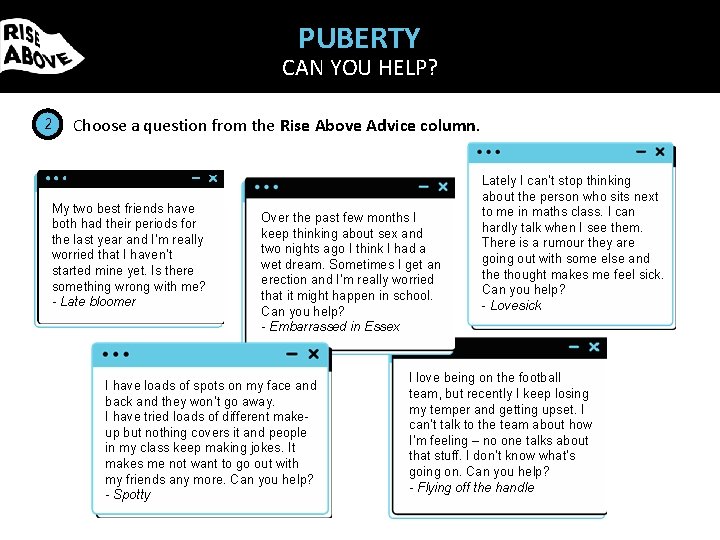
PUBERTY CAN YOU HELP? 2 Choose a question from the Rise Above Advice column. My two best friends have both had their periods for the last year and I’m really worried that I haven’t started mine yet. Is there something wrong with me? - Late bloomer Over the past few months I keep thinking about sex and two nights ago I think I had a wet dream. Sometimes I get an erection and I’m really worried that it might happen in school. Can you help? - Embarrassed in Essex I have loads of spots on my face and back and they won’t go away. I have tried loads of different makeup but nothing covers it and people in my class keep making jokes. It makes me not want to go out with my friends any more. Can you help? - Spotty 4 Lately I can’t stop thinking about the person who sits next to me in maths class. I can hardly talk when I see them. There is a rumour they are going out with some else and the thought makes me feel sick. Can you help? - Lovesick I love being on the football team, but recently I keep losing my temper and getting upset. I can’t talk to the team about how I’m feeling – no one talks about that stuff. I don’t know what’s going on. Can you help? - Flying off the handle
PUBERTY CAN YOU HELP? 3 Use the Rise Above website to gather ideas to help write a reply from the Rise Above response team. The response to the young person is to be published in a ‘concerns page’ for a local teen magazine. SUCCESS CRITERIA Identify the challenges faced by the young person Promote a healthy body image Present a range of possible solutions Advise on where to get support
PLENARY TOP TIP Choose one area that you have covered during the lesson Draft a top tip of no more than 15 words to offer advice, support or guidance in that area. If you, or anyone you know needs support in this area, speak to a trusted adult, a teacher, tutor or head of year. You can also get support from the Brook website https: //www. brook. org. uk/
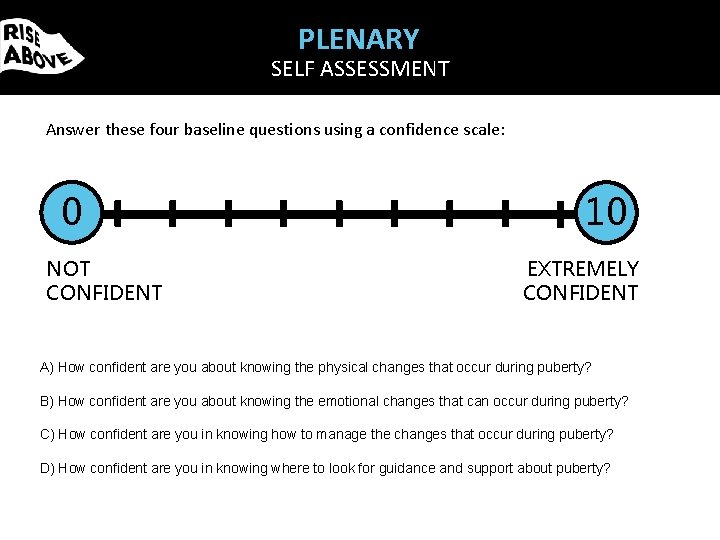
PLENARY TOP TIP SELF ASSESSMENT Answer these four baseline questions using a confidence scale: 0 0 = not NOT confident CONFIDENT 10 10= extremely EXTREMELY confident CONFIDENT A) How confident are you about knowing the physical changes that occur during puberty? B) How confident are you about knowing the emotional changes that can occur during puberty? C) How confident are you in knowing how to manage the changes that occur during puberty? D) How confident are you in knowing where to look for guidance and support about puberty?
- Slides: 11