
Puberty and Growth Whats normal Dr Jackie Buck
Puberty and Growth What’s normal ? Dr Jackie Buck, Consultant Paediatrician
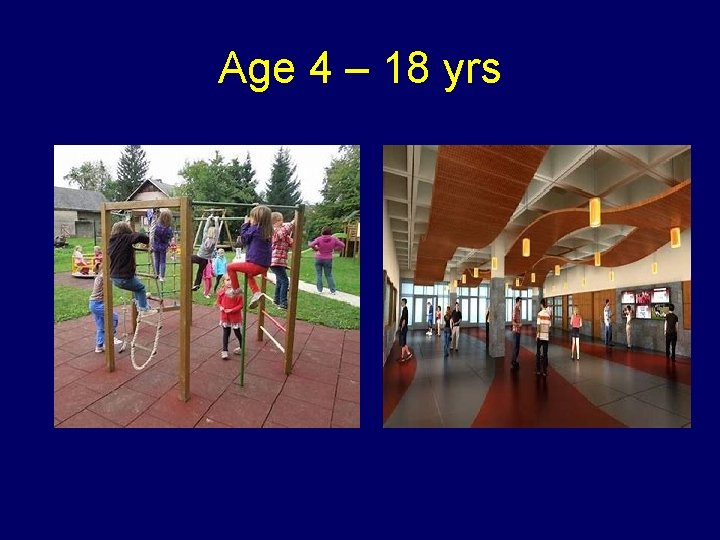
Age 4 – 18 yrs
What’s normal ? • • • Variation Phases of growth Puberty Obesity Underweight
Growth unique to childhood • Gaussian distribution height and weight throughout childhood • By definition half above and half above the middle values • Only one chance to grow • Only one puberty……
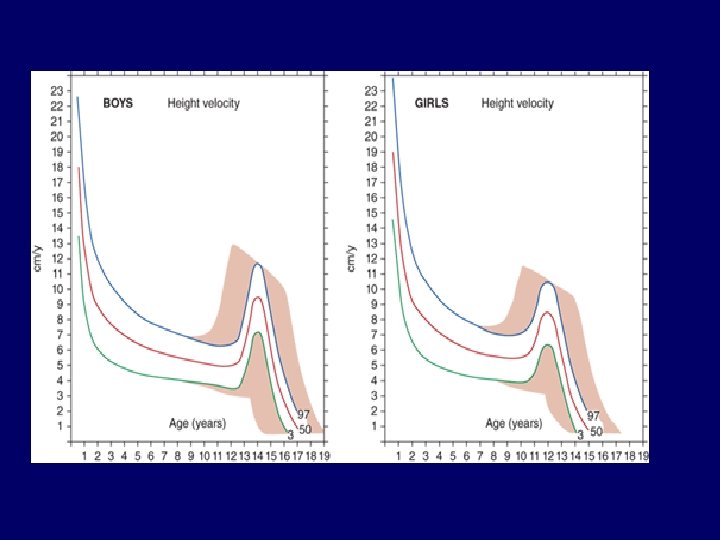
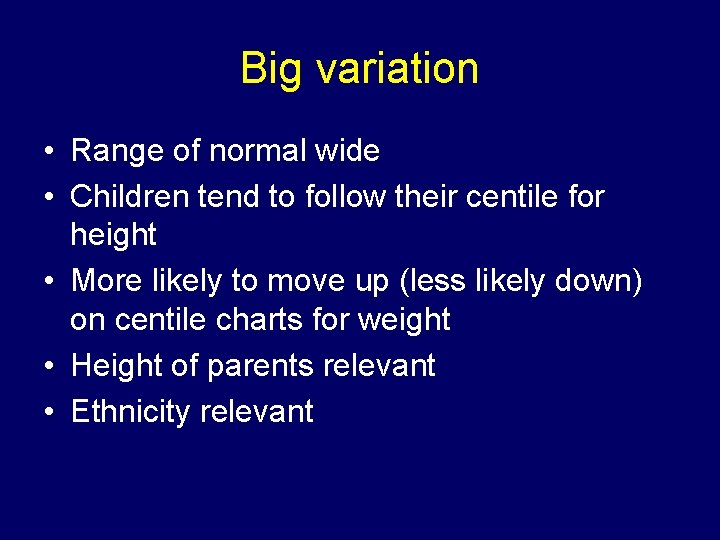
Patterns of growth • Fast growth in infancy • Steady in early childhood • Growth spurt girls average 12, and boys average 14 • Growth stops when epiphyses fuse
Big variation • Range of normal wide • Children tend to follow their centile for height • More likely to move up (less likely down) on centile charts for weight • Height of parents relevant • Ethnicity relevant

Sports highlight size issues
Height issues • Smaller children may need adaptations in school • May be treated differently • Taller children self conscious • Obesity associated with tall stature

Puberty issues • • • Body odour Acne Secondary sexual changes Onset periods (menarche) Emotional lability
Weight issues • Obesity a/w practical aspects in school • Can be a/w obstructive sleep apnoea, poor concentration, school performance • Later risk type 2 diabetes, increased risk certain cancers • Psychological issues
Weight issues • Underweight • Hunger • Obsessive and intrusive thoughts with anorexia • Cold, drive to exercise • Inability to concentrate • Mood
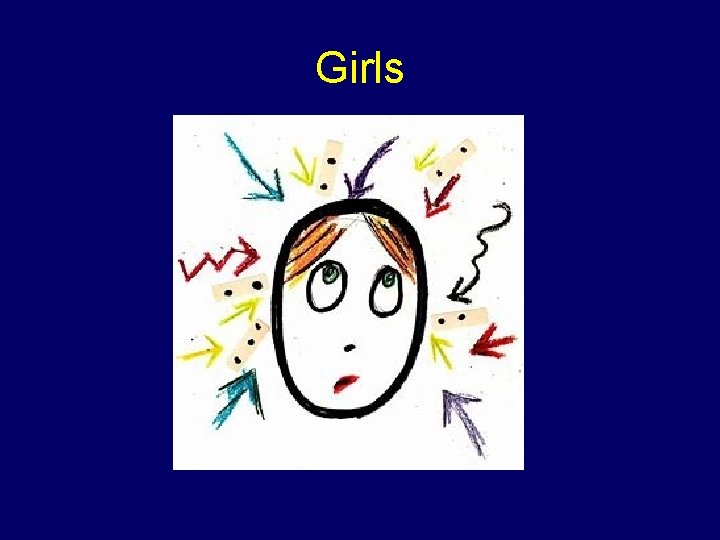
Girls
Puberty in girls • Starts average 9. 8 – 10. 8 yrs Europe • Breast buds, changes in secondary sexual characteristics • Steady progress – in a sequence • onset periods is in later puberty • Average onset periods 12 - 13 yrs • Interval from starting puberty to menarche approx. 2 - 4 yrs
What’s abnormal in girls ? • Starting puberty < age 8 yrs - Could be Precocious Puberty • Periods starting < age 9 yrs – could be missed precocious puberty, OR other causes • NO onset puberty by 13 yrs

Caveats • BUT difficult to distinguish breast tissue vs adiposity (and not expected of teachers !) • 5% girls may have some breast tissue under 8 yrs (not all abnormal) • Some 6 or 7 yr old girls experience physiological increase in androgens ( body odour, pubic or axillary hair)
Rebecca (fictional) • • 7 yr old girl Breast buds, growing quickly Tearful, moody “Attitude”
Rebecca • • Mum “ behaving like a teenager” Tests supported early onset puberty Mostly Idiopathic Doctors exclude other causes • Treated with hormone suppression • Mum “I’ve got my little girl back”
Bianca • Age 9 yrs • Referred by GP, started her periods • Fully mature
Bianca • Started with changes age 7 yrs • Tall for her age • Options for treatment limited • Likely be short at final height
Further info • 1/ 10 girls start periods in year 6 • May have started puberty 2 - 3 yrs earlier
Late primary school – High school • “Period problems” v common • First 2 yrs after onset cycle varies markedly, can be v irregular, some cycles prolonged • Can lead to school absence, anaemia • May occasioannly be due to blood clotting problem
Period problems • • • Dysmennorhoea Irregular cycle – very common Ability to cope with hygiene needs Analgesia Medications Hormonal preparations • School absenteeism
“Period poverty” • Unable to purchase products • Insuffucient products • Embarrassed • One study teenage girls missing 1 – 3 days /term
Girls • Late onset puberty • No signs by age 14 yrs, or no periods by 16 yrs • Or “pubertal arrest” • Can be medical causes • NB eating disorders

Boys
Boys • Start puberty average 11. 5 yrs • Changes in genitalia • Gradual change in axillary and pubic hair, very variable when voice breaks • Growth spurt late in puberty
What’s abnormal • Starting puberty < 9 yrs in a boy. This is RARE and quite high chance of a problem • Parents may notice changes in genitalia, axillary, pubic hair, spots • (NB Boys can get physiological body odour, some body hair) • No signs puberty by age 14 yrs – late onset
Late onset puberty in boys • • Not that unusual Mostly idiopathic Boy in year 10 who looks like a year 7 Approx 2 -3% boys not in puberty by 14 yrs, boys who start age 12 – 13 yrs may still feel self conscious
Josh (fictional) • 13 ½ yrs old boy • Stopped playing football • Withdrawn
Josh “ just gone off football” Not going out with mates In room OE Facial features immature, no signs puberty For delayed puberty can give treatment to boost progress
Delayed puberty • Boys > girls • Mostly Idiopathic • Doctors exclude other causes • Eating disorders less common, can still feature • Monitor, treat if necessary • Reassure

Weight
Obesity • • “An illness of our time” Public health issue Implications at school V Rarely medical cause
Obesity • Up to 15% children between 10 -17 yrs obese • Obesity v rarely associated with underlying endocrine cause • Behavioural interventions may offer short term benefit, but often not sustained
Obesity • Carers may over estimate quantities of food needed at any age • May not recognise child is overweight or obese • variable motivation to engage in whole family approach • Completion rates 33 - 89% in programmes
Obesity • Teenage obesity v high chance progression into adult life • Two parents affected markedly increases the probability obesity in adulthood
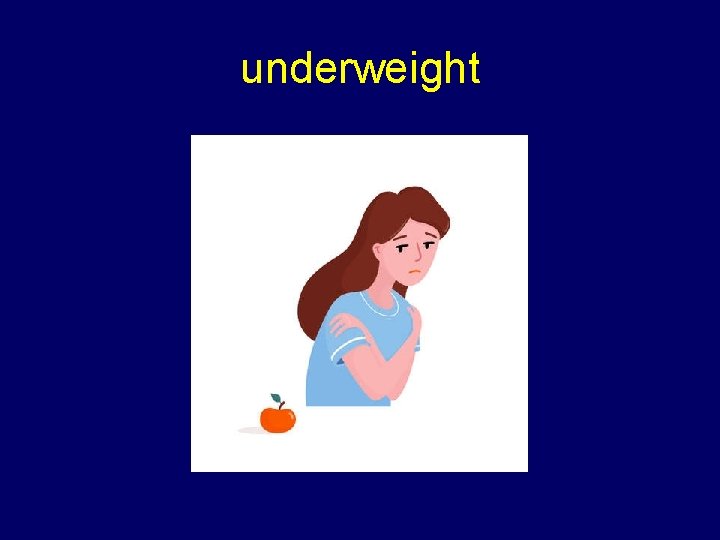
underweight
Underweight • Eating disorders • Anorexia, Bulima, Eating disorders otherwise classified • Medical conditions may be underlying cause
Summary • • Normal growth and puberty What is too early What is too late Impact on life at home and at school Periods Some medical treatments may help Obesity and underweight
- Slides: 40