
Pub Talk and the Kings English 46 Contents
Pub Talk and the King's English 孙嘉杰 46
Contents A Brief History of the English Language II. History of England III. The Author IV. Structural Analysis I.
u A Brief History of the English Language • 1. Indo-European and Germanic Influences • 2. Old English (500 -1100 AD) • 3. The Norman Conquest and Middle English (1100 -1500) • 4. Early-Modern English (1500 -1800) • 5. Late-Modern English (1800 -Present) • 6. American English
History of England • The period of feudalism started around 1066 and lasted to the 15 th century. It was a period of struggle for power between kings and powerful nobles, a period of frequent wars, bloodshed & suffering. But it was also a period in which the development of the wool trade and the early decline of feudalism prepared the way for England’s rise as a world power.

History of England • The tudor period (1485 -1603) was a turning point in English history. England became one of the leading powers. The two famous rulers of the House of Tudor were Henry VIII. and Elizabeth I. . The Elizabethan age produced the world’s greatest playwright William Shakespeare.
History of England • Elizabeth I. (1533 -1603): Queen of England Ireland, the daughter of Henry VIII and Anne Boleyn, She turned England into a major force in maritime, warfare and trade. She was succeeded by James VI of Scotland. • Elizabethan: a person who lived during the reign of Elizabeth I. , "William Shakespeare was an Elizabethan"
History of England • The Elizabethan era in 16 th-century England was a prolific (productive)period for English literature. Edmund Spenser (The Faerie Queen), Christopher Marlowe (Doctor Faustus) , Sir Walter Raleigh (Discovery of Guiana), and William Shakespeare were only a few of the many writers who created their great works during the reign of Elizabeth I.
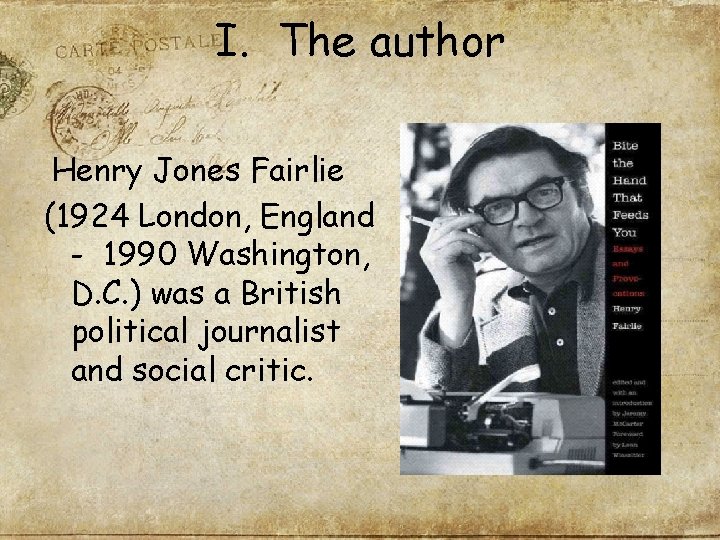
I. The author Henry Jones Fairlie (1924 London, England - 1990 Washington, D. C. ) was a British political journalist and social critic.
• Best known for coining the term "the Establishment", (权威人士的统称;当权 派)an analysis of how "all the right people" came to run Britain largely through social connections, he spent 36 years as a prominent freelance writer on both sides of the Atlantic, appearing in The Spectator(《 旁观者》,英国周刊), The New Republic, The Washington Post, The New Yorker, and many other papers and magazines.
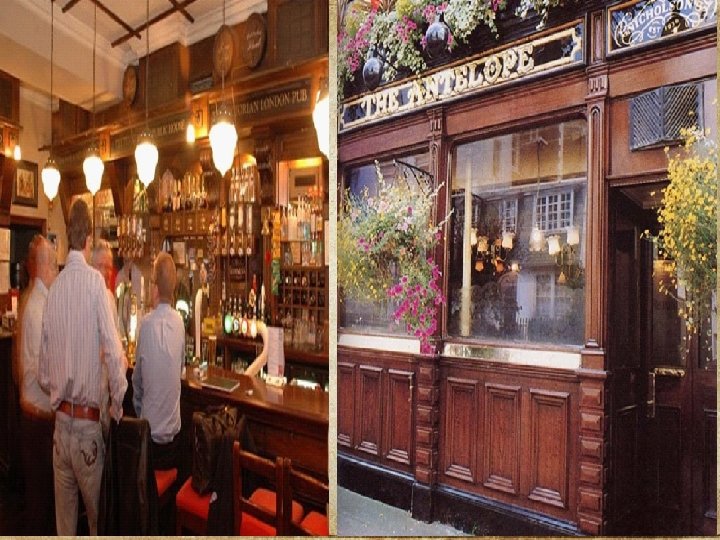
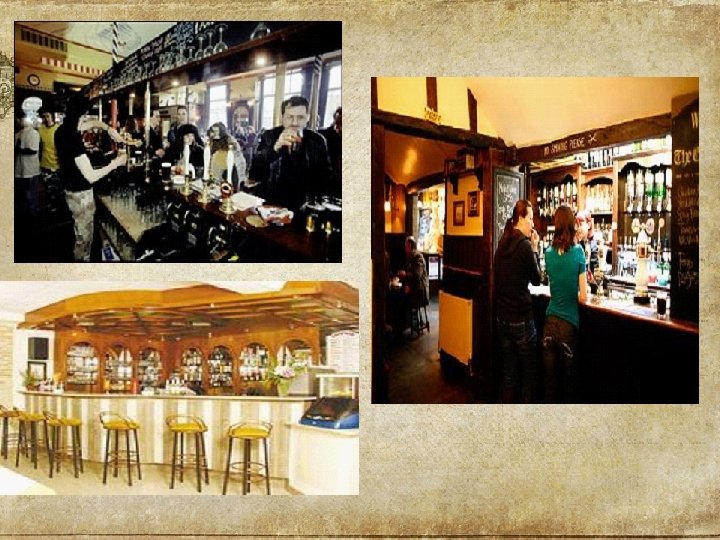
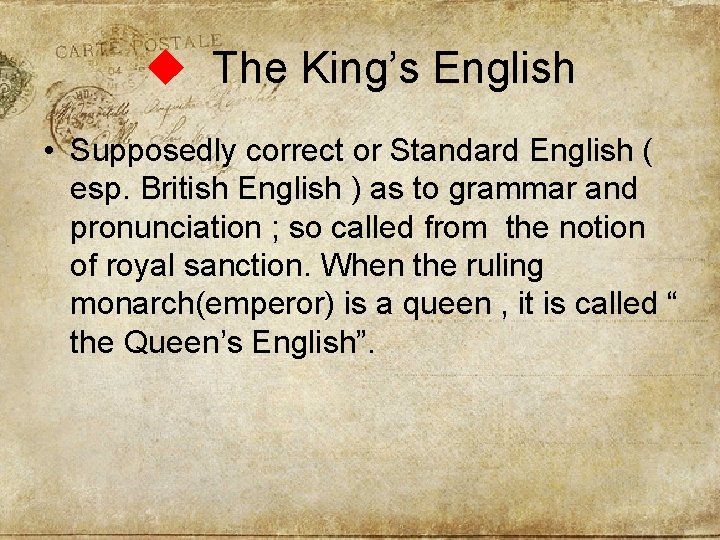
u English Pub • Pub is the short form for public house. For those who want to sample a central part of British life and culture , pub is the best place to go. • Pub culture is designed to promote sociability. • Pubs are places where people meet friends and enjoy themselves.
u The King’s English • Supposedly correct or Standard English ( esp. British English ) as to grammar and pronunciation ; so called from the notion of royal sanction. When the ruling monarch(emperor) is a queen , it is called “ the Queen’s English”.
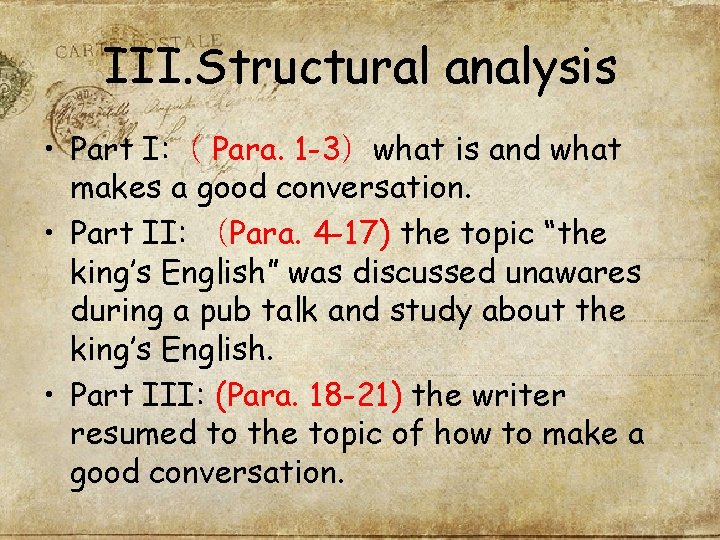
III. Structural analysis • Part I: ( Para. 1 -3)what is and what makes a good conversation. • Part II: (Para. 4 -17) the topic “the king’s English” was discussed unawares during a pub talk and study about the king’s English. • Part III: (Para. 18 -21) the writer resumed to the topic of how to make a good conversation.
Para. 10 孙嘉杰 46 2015. 10. 23
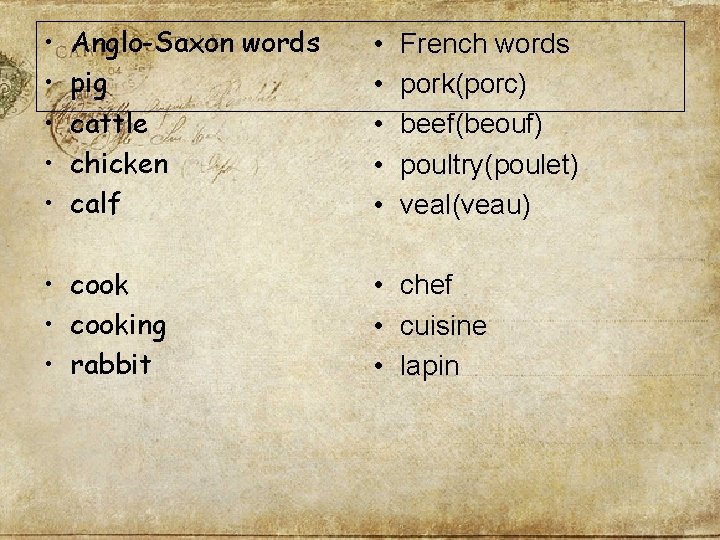
• • • Anglo-Saxon words pig cattle chicken calf • cooking • rabbit • • • French words pork(porc) beef(beouf) poultry(poulet) veal(veau) • chef • cuisine • lapin
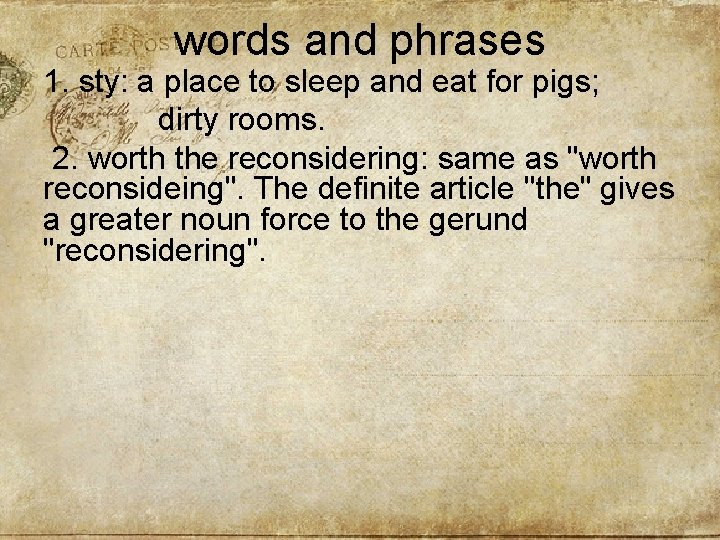
words and phrases 1. sty: a place to sleep and eat for pigs; dirty rooms. 2. worth the reconsidering: same as "worth reconsideing". The definite article ''the" gives a greater noun force to the gerund "reconsidering".
3. snobbery: (1). the attitude of someone who belongs to or admires the higher social class of society, and despises people of a lower social class. (2). the attitude of sb, who believes that his own special tastes, interests and abilities are superior to those of other people. 势力 Snobbery is the attitude of a snob.
• out of snobbery --(in order) because they want to show their superior taste in matter of food. • In English restaurants, esp. , in high-class restaurants, the names of the dishes on the menus are quite often in French. This is done out of snobbery because in the Western countries people consider French food to be the best.
• But even if they wrote their menus in English, they would have to use many words, such as pork, beef, veal, poultry derive from French and which were first introduced into England by the Norman rulers.
out of • • • out of bread 失业 out of time adv. 不合时宜,不合拍 out of the race 没有成功的可能 out of the question adv. 不可能 out of question adv. 毫无疑问 out of blue adv. 突然地
• 3. rift • (1). a crack, narrow opening made by breaking. • Eg: The sun appeared through a rift in the cloud. • (2). division 关系不和, 裂痕 • I'm afraid there's been a rift between us.
paraphrase • Someone took one of. . . the reconsidering. • Let's take a look at the words used by someone as examples, they are worth our reconsidering.
• They are cattle in the fields, but we sit down to beef (boeuf). • These animals are called cattle when they are alive and at the table to eat, we call their meat beef. The word “beef” comes from the French word “boeuf”
• What all this. . . Norman conquest. • After the Norman Conquest, the Norman Kings and noble used French and tried to impose this language on the conquered English who persisted in using their own language. This resulted in a widening of the class gap in the culture of England.
Thank you.
- Slides: 26