
PTT 444 ENGINEERS IN SOCIETY NILAI UNITNUMBER OF
PTT 444 ENGINEERS IN SOCIETY • NILAI UNIT/NUMBER OF UNIT: 3 • JENIS KURSUS/COURSE TYPE: TERAS/CORE • DATE: INTRODUCTION: COURSE CONTENT • Knowledge Sincerity Excellence

COURSE CONTENT
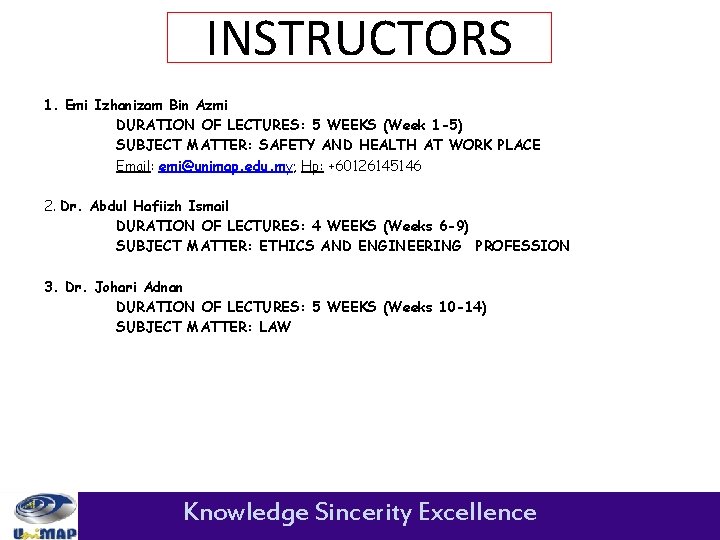
INSTRUCTORS 1. Emi Izhanizam Bin Azmi DURATION OF LECTURES: 5 WEEKS (Week 1 -5) SUBJECT MATTER: SAFETY AND HEALTH AT WORK PLACE Email: emi@unimap. edu. my; Hp: +60126145146 2. Dr. Abdul Hafiizh Ismail DURATION OF LECTURES: 4 WEEKS (Weeks 6 -9) SUBJECT MATTER: ETHICS AND ENGINEERING PROFESSION 3. Dr. Johari Adnan DURATION OF LECTURES: 5 WEEKS (Weeks 10 -14) SUBJECT MATTER: LAW Knowledge Sincerity Excellence
SYNOPSIS Sinopsis kursus/ Course synopsis: This course aims to explain the main concepts in engineering ethics, risk management and occupational safety and health as well as to expose the students to basic of law in the engineering context. The materials will be of introductory nature to enable engineers to appreciate factors that have to be taken into account in decision-making. At the end of the course, students will be able to identify and discuss issues and challenges faced by engineers relating to engineering ethics, risk management and to understand the legal requirements related to engineering field. Knowledge Sincerity Excellence
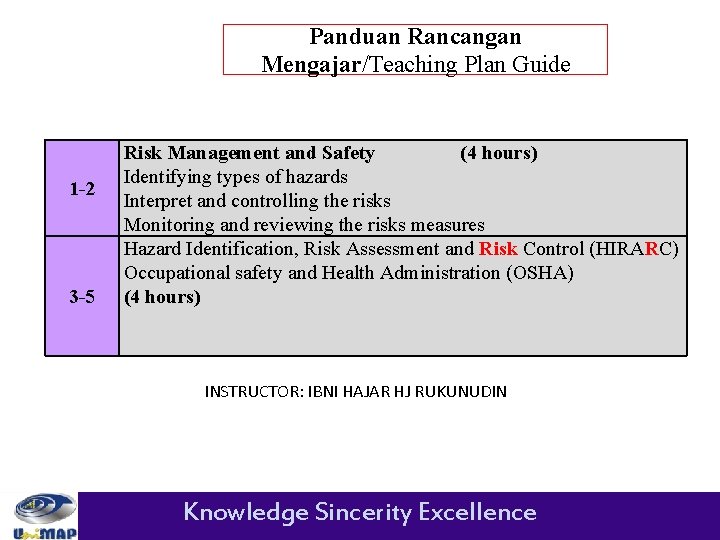
Panduan Rancangan Mengajar/Teaching Plan Guide 1 -2 3 -5 Risk Management and Safety (4 hours) Identifying types of hazards Interpret and controlling the risks Monitoring and reviewing the risks measures Hazard Identification, Risk Assessment and Risk Control (HIRARC) Occupational safety and Health Administration (OSHA) (4 hours) INSTRUCTOR: IBNI HAJAR HJ RUKUNUDIN Knowledge Sincerity Excellence
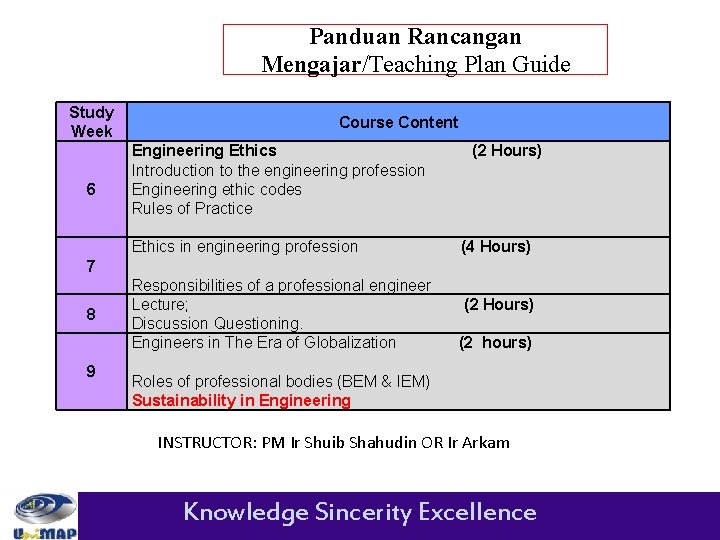
Panduan Rancangan Mengajar/Teaching Plan Guide Study Week 6 Course Content Engineering Ethics Introduction to the engineering profession Engineering ethic codes Rules of Practice Ethics in engineering profession (2 Hours) (4 Hours) 7 8 9 Responsibilities of a professional engineer Lecture; (2 Hours) Discussion Questioning. Engineers in The Era of Globalization (2 hours) Roles of professional bodies (BEM & IEM) Sustainability in Engineering INSTRUCTOR: PM Ir Shuib Shahudin OR Ir Arkam Knowledge Sincerity Excellence
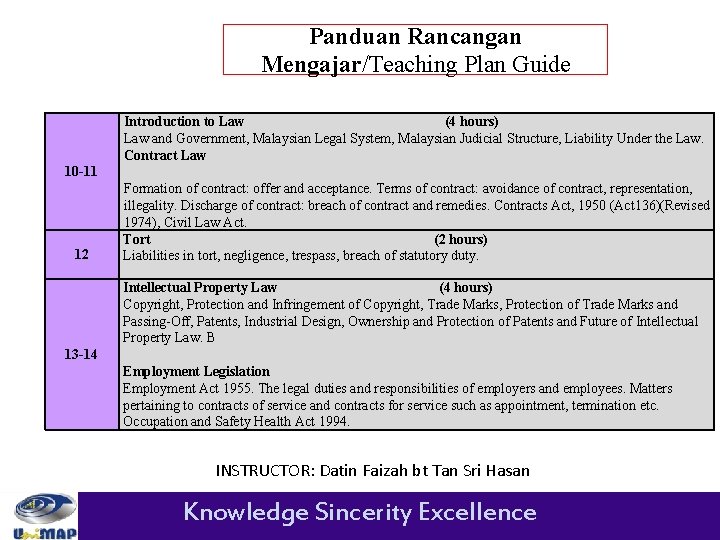
Panduan Rancangan Mengajar/Teaching Plan Guide Introduction to Law (4 hours) Law and Government, Malaysian Legal System, Malaysian Judicial Structure, Liability Under the Law. Contract Law 10 -11 12 13 -14 Formation of contract: offer and acceptance. Terms of contract: avoidance of contract, representation, illegality. Discharge of contract: breach of contract and remedies. Contracts Act, 1950 (Act 136)(Revised 1974), Civil Law Act. Tort (2 hours) Liabilities in tort, negligence, trespass, breach of statutory duty. Intellectual Property Law (4 hours) Copyright, Protection and Infringement of Copyright, Trade Marks, Protection of Trade Marks and Passing-Off, Patents, Industrial Design, Ownership and Protection of Patents and Future of Intellectual Property Law. B Employment Legislation Employment Act 1955. The legal duties and responsibilities of employers and employees. Matters pertaining to contracts of service and contracts for service such as appointment, termination etc. Occupation and Safety Health Act 1994. INSTRUCTOR: Datin Faizah bt Tan Sri Hasan Knowledge Sincerity Excellence
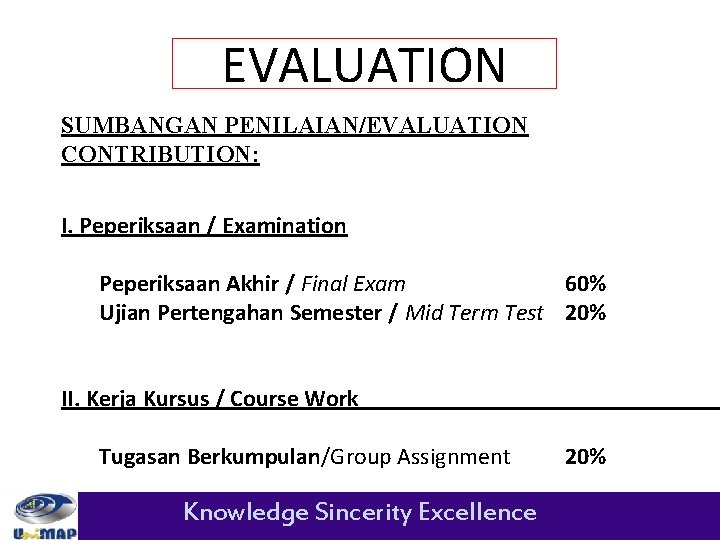
EVALUATION SUMBANGAN PENILAIAN/EVALUATION CONTRIBUTION: I. Peperiksaan / Examination Peperiksaan Akhir / Final Exam 60% Ujian Pertengahan Semester / Mid Term Test 20% II. Kerja Kursus / Course Work Tugasan Berkumpulan/Group Assignment Knowledge Sincerity Excellence 20%
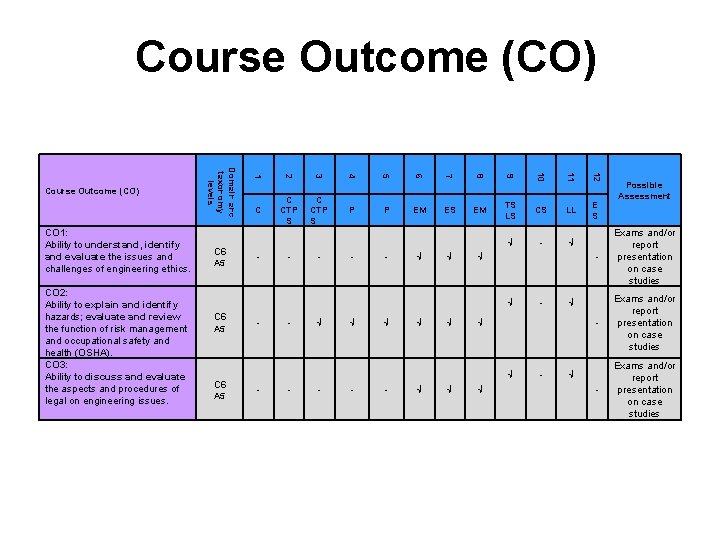
Course Outcome (CO) √ 12 √ 11 - EM 10 - ES TS LS CS LL E S √ - √ 9 - EM 8 - P 7 - P 6 C CTP S 5 C C CTP S 4 3 A 5 2 CO 2: Ability to explain and identify hazards; evaluate and review the function of risk management and occupational safety and health (OSHA). CO 3: Ability to discuss and evaluate the aspects and procedures of legal on engineering issues. C 6 1 CO 1: Ability to understand, identify and evaluate the issues and challenges of engineering ethics. Domain and taxonomy levels Course Outcome (CO) √ √ C 6 A 5 - - √ √ √ - - Exams and/or report presentation on case studies √ √ √ - - Possible Assessment √
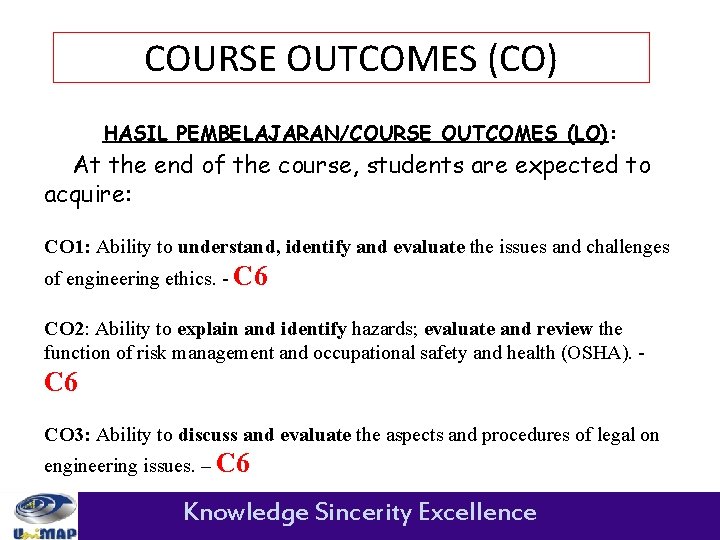
COURSE OUTCOMES (CO) HASIL PEMBELAJARAN/COURSE OUTCOMES (LO): At the end of the course, students are expected to acquire: CO 1: Ability to understand, identify and evaluate the issues and challenges of engineering ethics. - C 6 CO 2: Ability to explain and identify hazards; evaluate and review the function of risk management and occupational safety and health (OSHA). - C 6 CO 3: Ability to discuss and evaluate the aspects and procedures of legal on engineering issues. – C 6 Knowledge Sincerity Excellence
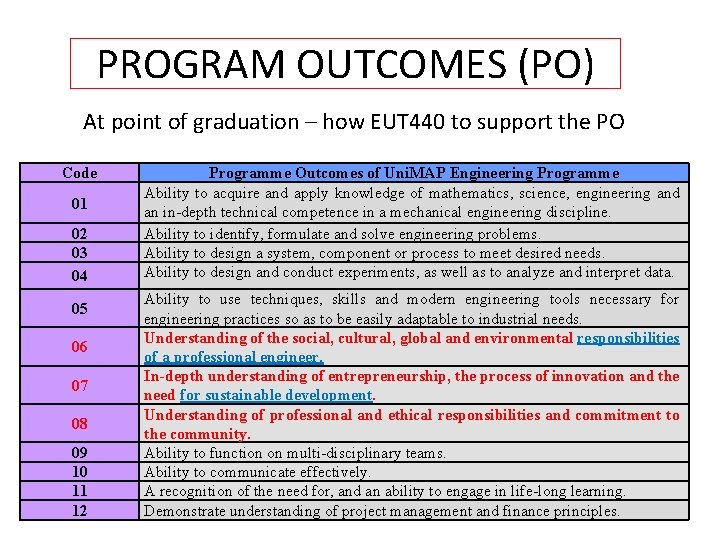
PROGRAM OUTCOMES (PO) At point of graduation – how EUT 440 to support the PO Code 01 02 03 04 05 06 07 08 09 10 11 12 Programme Outcomes of Uni. MAP Engineering Programme Ability to acquire and apply knowledge of mathematics, science, engineering and an in-depth technical competence in a mechanical engineering discipline. Ability to identify, formulate and solve engineering problems. Ability to design a system, component or process to meet desired needs. Ability to design and conduct experiments, as well as to analyze and interpret data. Ability to use techniques, skills and modern engineering tools necessary for engineering practices so as to be easily adaptable to industrial needs. Understanding of the social, cultural, global and environmental responsibilities of a professional engineer. In-depth understanding of entrepreneurship, the process of innovation and the need for sustainable development. Understanding of professional and ethical responsibilities and commitment to the community. Ability to function on multi-disciplinary teams. Ability to communicate effectively. A recognition of the need for, and an ability to engage in life-long learning. Demonstrate understanding of project management and finance principles.
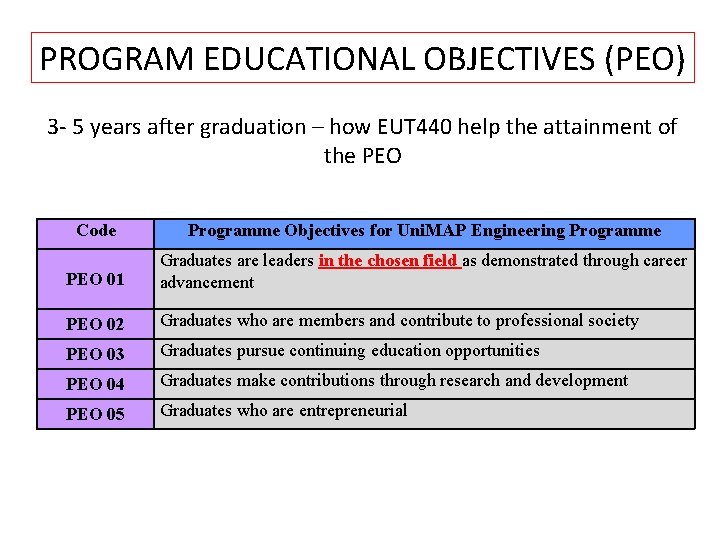
PROGRAM EDUCATIONAL OBJECTIVES (PEO) 3 - 5 years after graduation – how EUT 440 help the attainment of the PEO Code Programme Objectives for Uni. MAP Engineering Programme PEO 01 Graduates are leaders in the chosen field as demonstrated through career advancement PEO 02 Graduates who are members and contribute to professional society PEO 03 Graduates pursue continuing education opportunities PEO 04 Graduates make contributions through research and development PEO 05 Graduates who are entrepreneurial
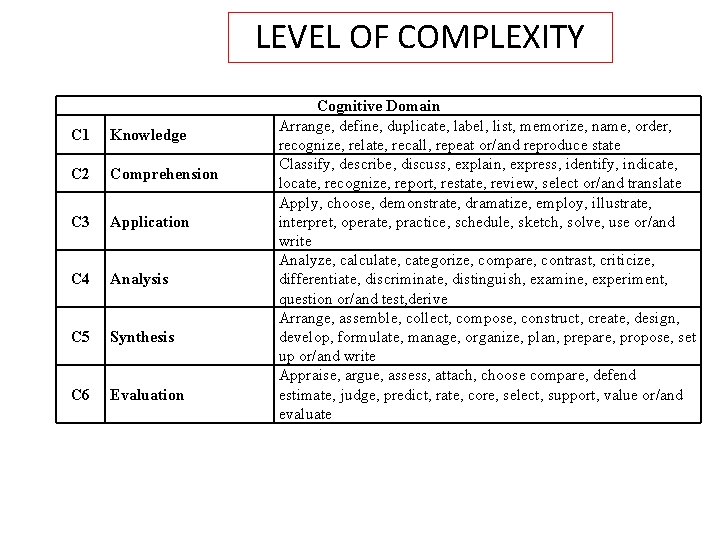
LEVEL OF COMPLEXITY C 1 Knowledge C 2 Comprehension C 3 Application C 4 Analysis C 5 Synthesis C 6 Evaluation Cognitive Domain Arrange, define, duplicate, label, list, memorize, name, order, recognize, relate, recall, repeat or/and reproduce state Classify, describe, discuss, explain, express, identify, indicate, locate, recognize, report, restate, review, select or/and translate Apply, choose, demonstrate, dramatize, employ, illustrate, interpret, operate, practice, schedule, sketch, solve, use or/and write Analyze, calculate, categorize, compare, contrast, criticize, differentiate, discriminate, distinguish, examine, experiment, question or/and test, derive Arrange, assemble, collect, compose, construct, create, design, develop, formulate, manage, organize, plan, prepare, propose, set up or/and write Appraise, argue, assess, attach, choose compare, defend estimate, judge, predict, rate, core, select, support, value or/and evaluate
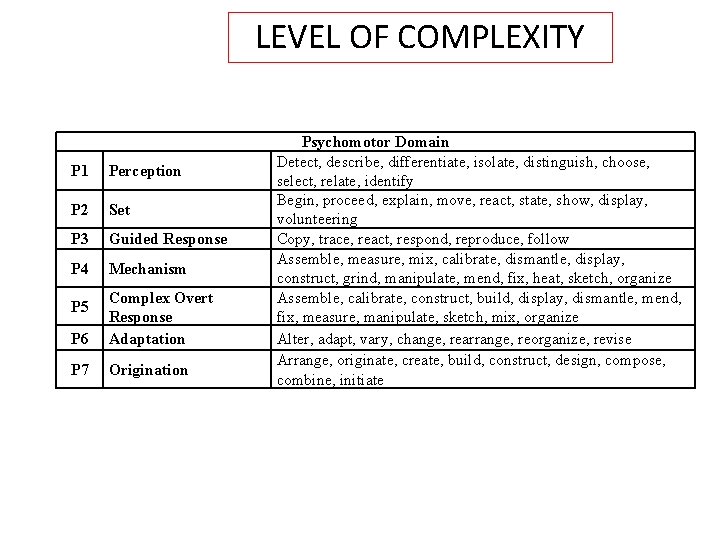
LEVEL OF COMPLEXITY P 1 Perception P 2 Set P 3 Guided Response P 4 Mechanism P 6 Complex Overt Response Adaptation P 7 Origination P 5 Psychomotor Domain Detect, describe, differentiate, isolate, distinguish, choose, select, relate, identify Begin, proceed, explain, move, react, state, show, display, volunteering Copy, trace, react, respond, reproduce, follow Assemble, measure, mix, calibrate, dismantle, display, construct, grind, manipulate, mend, fix, heat, sketch, organize Assemble, calibrate, construct, build, display, dismantle, mend, fix, measure, manipulate, sketch, mix, organize Alter, adapt, vary, change, rearrange, reorganize, revise Arrange, originate, create, build, construct, design, compose, combine, initiate
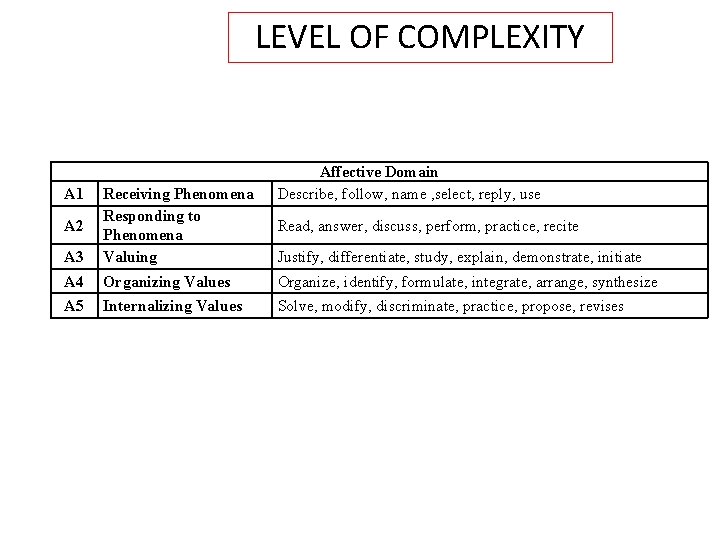
LEVEL OF COMPLEXITY A 1 Affective Domain Describe, follow, name , select, reply, use A 3 Receiving Phenomena Responding to Phenomena Valuing A 4 Organizing Values Organize, identify, formulate, integrate, arrange, synthesize A 5 Internalizing Values Solve, modify, discriminate, practice, propose, revises A 2 Read, answer, discuss, perform, practice, recite Justify, differentiate, study, explain, demonstrate, initiate
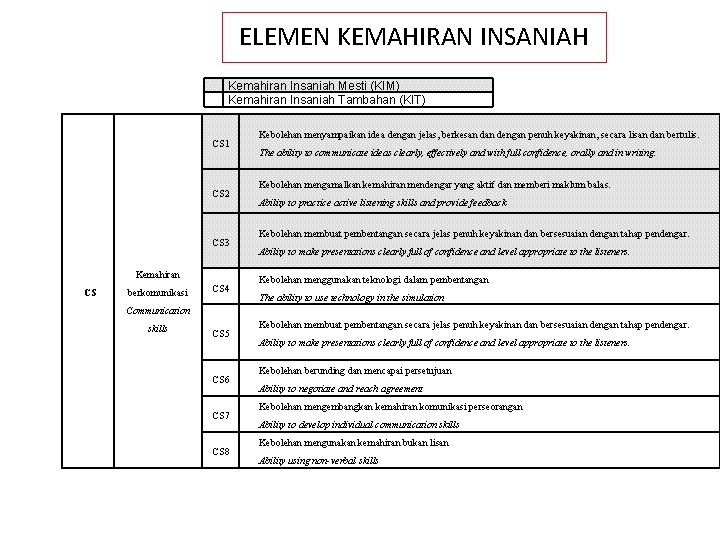
ELEMEN KEMAHIRAN INSANIAH Kemahiran Insaniah Mesti (KIM) Kemahiran Insaniah Tambahan (KIT) CS 1 CS 2 CS 3 Kemahiran CS berkomunikasi CS 4 Kebolehan menyampaikan idea dengan jelas, berkesan dengan penuh keyakinan, secara lisan dan bertulis. The ability to communicate ideas clearly, effectively and with full confidence, orally and in writing. Kebolehan mengamalkan kemahiran mendengar yang aktif dan memberi maklum balas. Ability to practice active listening skills and provide feedback Kebolehan membuat pembentangan secara jelas penuh keyakinan dan bersesuaian dengan tahap pendengar. Ability to make presentations clearly full of confidence and level appropriate to the listeners. Kebolehan menggunakan teknologi dalam pembentangan The ability to use technology in the simulation Communication skills CS 5 CS 6 CS 7 CS 8 Kebolehan membuat pembentangan secara jelas penuh keyakinan dan bersesuaian dengan tahap pendengar. Ability to make presentations clearly full of confidence and level appropriate to the listeners. Kebolehan berunding dan mencapai persetujuan Ability to negotiate and reach agreement Kebolehan mengembangkan kemahiran komunikasi perseorangan Ability to develop individual communication skills Kebolehan mengunakan kemahiran bukan lisan Ability using non-verbal skills
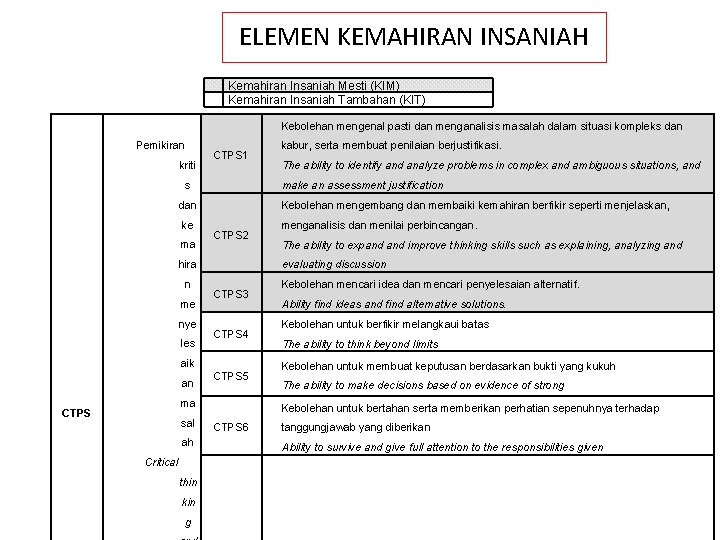
ELEMEN KEMAHIRAN INSANIAH Kemahiran Insaniah Mesti (KIM) Kemahiran Insaniah Tambahan (KIT) Kebolehan mengenal pasti dan menganalisis masalah dalam situasi kompleks dan Pemikiran kriti CTPS 1 s ma Kebolehan mengembang dan membaiki kemahiran berfikir seperti menjelaskan, CTPS 2 hira n me nye les CTPS 3 CTPS 4 CTPS 5 ma CTPS sal ah Critical thin kin g menganalisis dan menilai perbincangan. The ability to expand improve thinking skills such as explaining, analyzing and evaluating discussion aik an The ability to identify and analyze problems in complex and ambiguous situations, and make an assessment justification dan ke kabur, serta membuat penilaian berjustifikasi. Kebolehan mencari idea dan mencari penyelesaian alternatif. Ability find ideas and find alternative solutions. Kebolehan untuk berfikir melangkaui batas The ability to think beyond limits Kebolehan untuk membuat keputusan berdasarkan bukti yang kukuh The ability to make decisions based on evidence of strong Kebolehan untuk bertahan serta memberikan perhatian sepenuhnya terhadap CTPS 6 tanggungjawab yang diberikan Ability to survive and give full attention to the responsibilities given
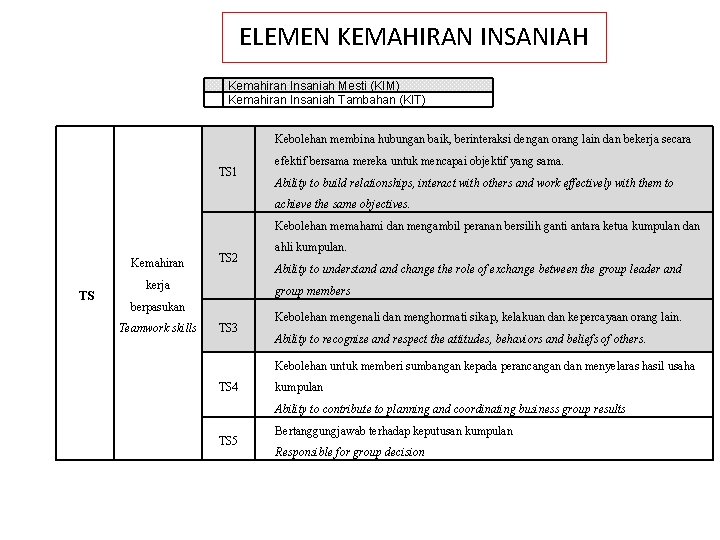
ELEMEN KEMAHIRAN INSANIAH Kemahiran Insaniah Mesti (KIM) Kemahiran Insaniah Tambahan (KIT) Kebolehan membina hubungan baik, berinteraksi dengan orang lain dan bekerja secara TS 1 efektif bersama mereka untuk mencapai objektif yang sama. Ability to build relationships, interact with others and work effectively with them to achieve the same objectives. Kebolehan memahami dan mengambil peranan bersilih ganti antara ketua kumpulan dan Kemahiran TS TS 2 kerja Ability to understand change the role of exchange between the group leader and group members berpasukan Teamwork skills ahli kumpulan. TS 3 Kebolehan mengenali dan menghormati sikap, kelakuan dan kepercayaan orang lain. Ability to recognize and respect the attitudes, behaviors and beliefs of others. Kebolehan untuk memberi sumbangan kepada perancangan dan menyelaras hasil usaha TS 4 kumpulan Ability to contribute to planning and coordinating business group results TS 5 Bertanggungjawab terhadap keputusan kumpulan Responsible for group decision
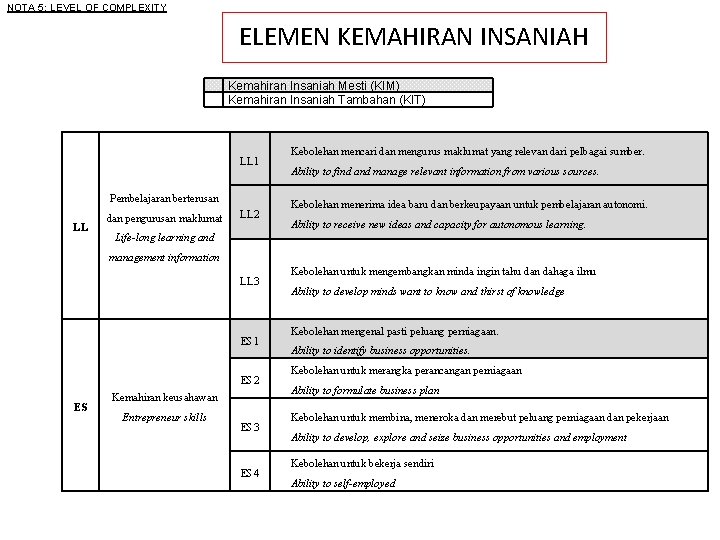
NOTA 5: LEVEL OF COMPLEXITY ELEMEN KEMAHIRAN INSANIAH Kemahiran Insaniah Mesti (KIM) Kemahiran Insaniah Tambahan (KIT) LL 1 Pembelajaran berterusan LL dan pengurusan maklumat LL 2 Kebolehan mencari dan mengurus maklumat yang relevan dari pelbagai sumber. Ability to find and manage relevant information from various sources. Kebolehan menerima idea baru dan berkeupayaan untuk pembelajaran autonomi. Ability to receive new ideas and capacity for autonomous learning. Life-long learning and management information LL 3 ES 1 ES 2 ES Kemahiran keusahawan Entrepreneur skills ES 3 ES 4 Kebolehan untuk mengembangkan minda ingin tahu dan dahaga ilmu Ability to develop minds want to know and thirst of knowledge Kebolehan mengenal pasti peluang perniagaan. Ability to identify business opportunities. Kebolehan untuk merangka perancangan perniagaan Ability to formulate business plan Kebolehan untuk membina, meneroka dan merebut peluang perniagaan dan pekerjaan Ability to develop, explore and seize business opportunities and employment Kebolehan untuk bekerja sendiri Ability to self-employed
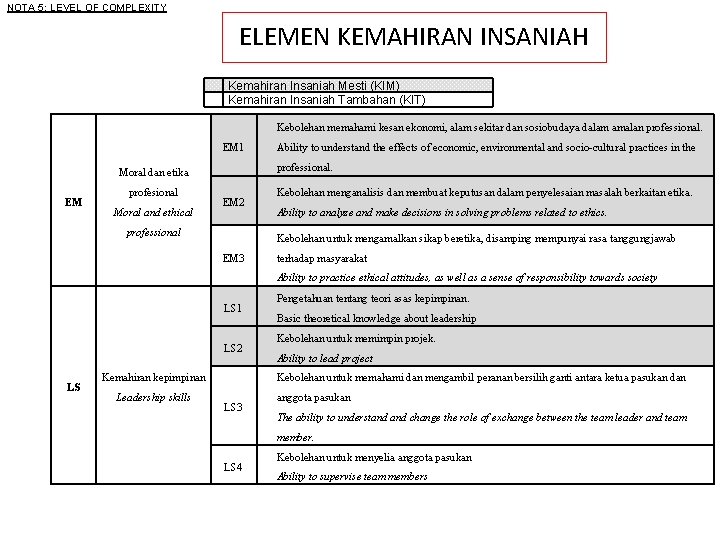
NOTA 5: LEVEL OF COMPLEXITY ELEMEN KEMAHIRAN INSANIAH Kemahiran Insaniah Mesti (KIM) Kemahiran Insaniah Tambahan (KIT) Kebolehan memahami kesan ekonomi, alam sekitar dan sosiobudaya dalam amalan professional. EM 1 professional. Moral dan etika EM profesional Moral and ethical Ability to understand the effects of economic, environmental and socio-cultural practices in the EM 2 professional Kebolehan menganalisis dan membuat keputusan dalam penyelesaian masalah berkaitan etika. Ability to analyze and make decisions in solving problems related to ethics. Kebolehan untuk mengamalkan sikap beretika, disamping mempunyai rasa tanggungjawab EM 3 terhadap masyarakat Ability to practice ethical attitudes, as well as a sense of responsibility towards society LS 1 LS 2 LS Kemahiran kepimpinan Leadership skills Pengetahuan tentang teori asas kepimpinan. Basic theoretical knowledge about leadership Kebolehan untuk memimpin projek. Ability to lead project Kebolehan untuk memahami dan mengambil peranan bersilih ganti antara ketua pasukan dan LS 3 anggota pasukan The ability to understand change the role of exchange between the team leader and team member. LS 4 Kebolehan untuk menyelia anggota pasukan Ability to supervise team members
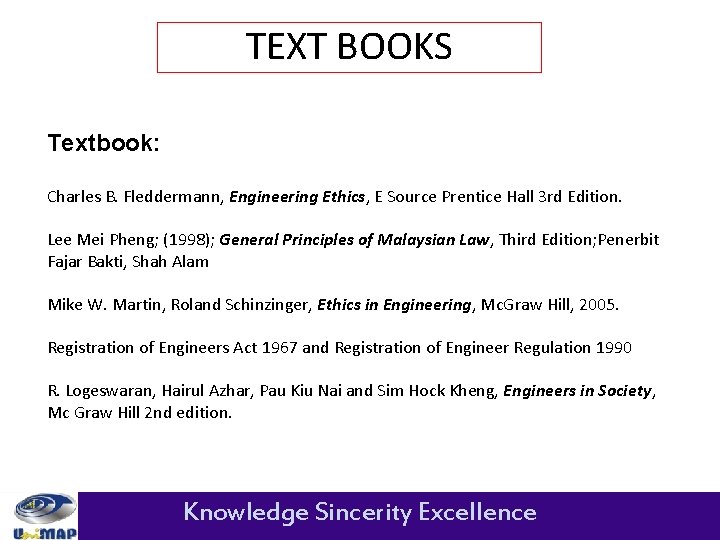
TEXT BOOKS Textbook: Charles B. Fleddermann, Engineering Ethics, E Source Prentice Hall 3 rd Edition. Lee Mei Pheng; (1998); General Principles of Malaysian Law, Third Edition; Penerbit Fajar Bakti, Shah Alam Mike W. Martin, Roland Schinzinger, Ethics in Engineering, Mc. Graw Hill, 2005. Registration of Engineers Act 1967 and Registration of Engineer Regulation 1990 R. Logeswaran, Hairul Azhar, Pau Kiu Nai and Sim Hock Kheng, Engineers in Society, Mc Graw Hill 2 nd edition. Knowledge Sincerity Excellence
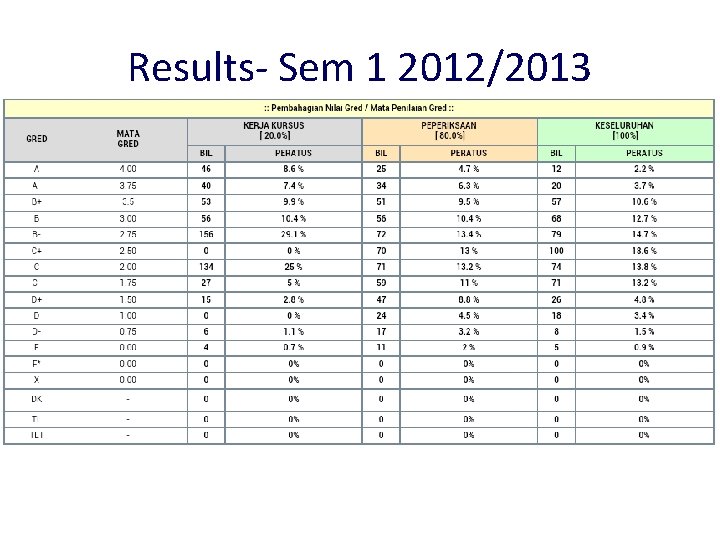
Results- Sem 1 2012/2013
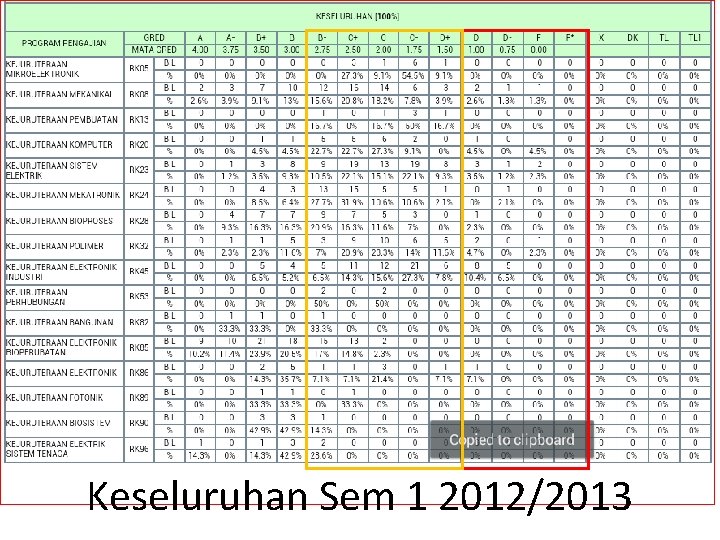
Keseluruhan Sem 1 2012/2013
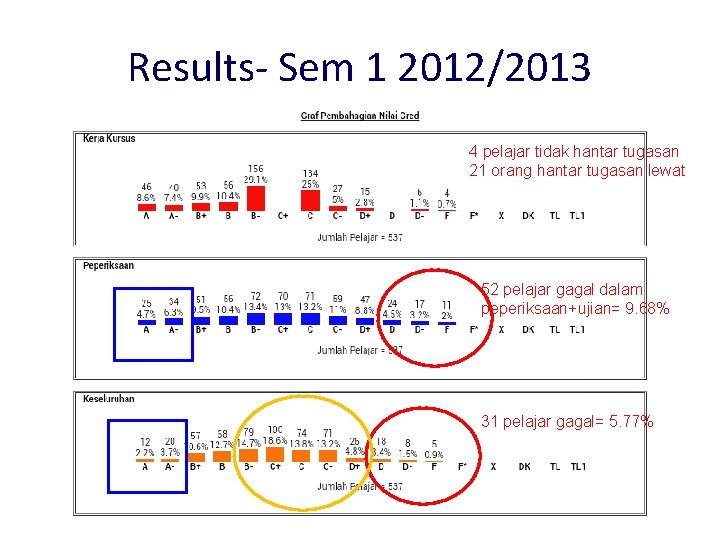
Results- Sem 1 2012/2013 4 pelajar tidak hantar tugasan 21 orang hantar tugasan lewat 52 pelajar gagal dalam peperiksaan+ujian= 9. 68% 31 pelajar gagal= 5. 77%
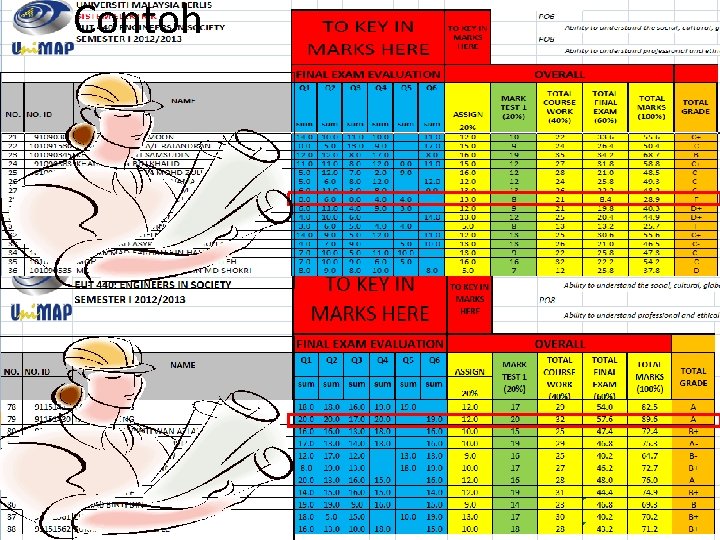
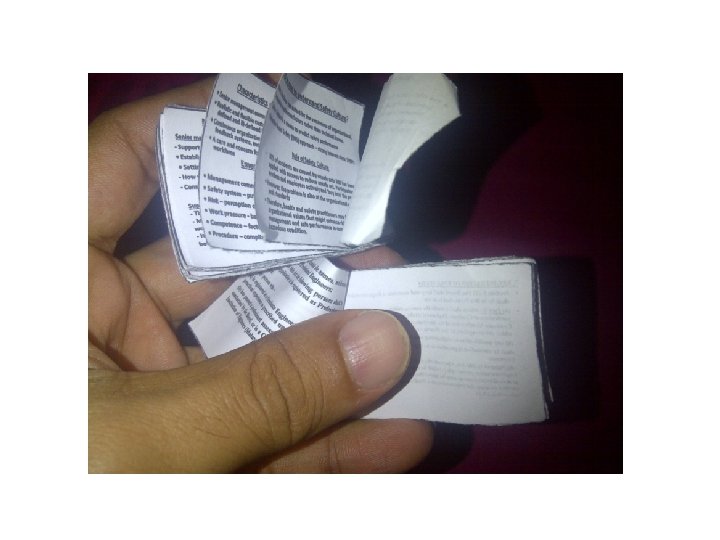
Contoh

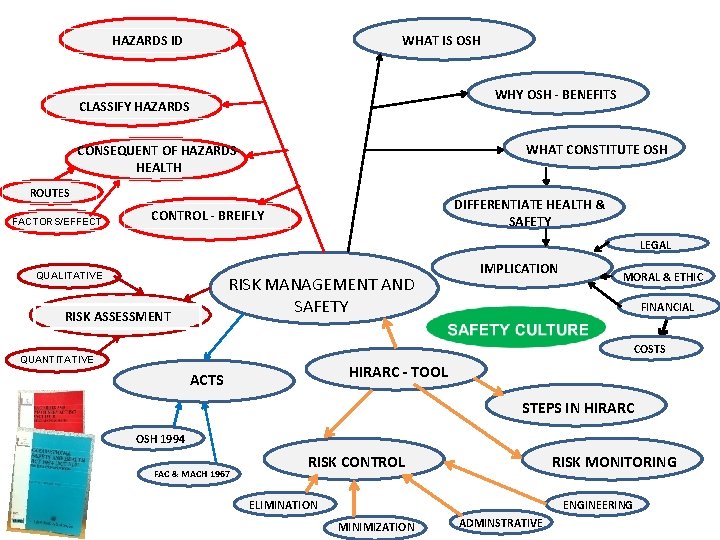
HAZARDS ID WHAT IS OSH WHY OSH - BENEFITS CLASSIFY HAZARDS WHAT CONSTITUTE OSH CONSEQUENT OF HAZARDSHEALTH ROUTES FACTORS/EFFECT DIFFERENTIATE HEALTH & SAFETY CONTROL - BREIFLY LEGAL QUALITATIVE RISK MANAGEMENT AND SAFETY RISK ASSESSMENT IMPLICATION MORAL & ETHIC FINANCIAL COSTS QUANTITATIVE HIRARC - TOOL ACTS STEPS IN HIRARC OSH 1994 FAC & MACH 1967 RISK CONTROL RISK MONITORING ELIMINATION ENGINEERING MINIMIZATION ADMINSTRATIVE
THANK YOU • Knowledge Sincerity Excellence
- Slides: 29