
PTT 371 Analysis and Instrumentation for Food Technology
- Slides: 23
PTT 371 Analysis and Instrumentation for Food Technology MOISTURE ANALYSIS SRIYANA ABDULLAH Department of Chemical Engineering Technology
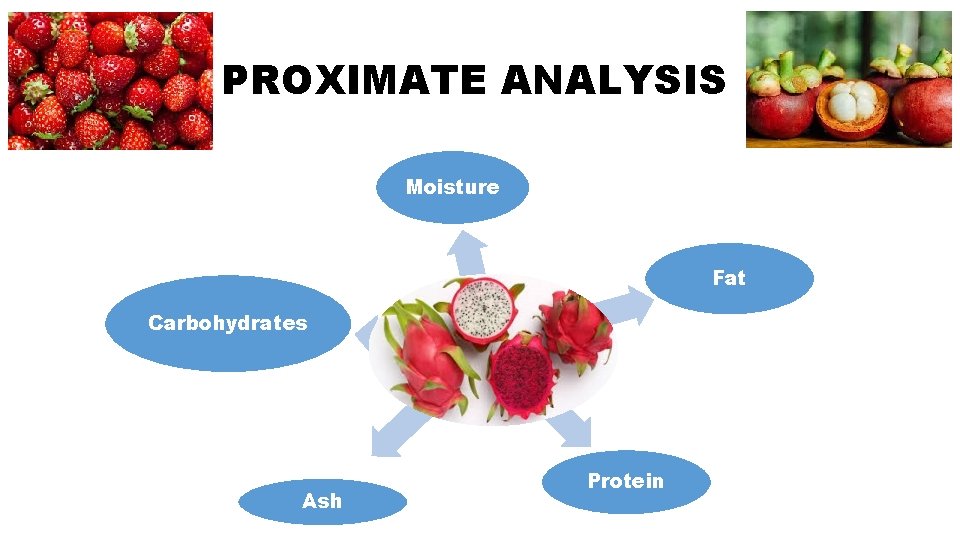
PROXIMATE ANALYSIS Moisture Fat Carbohydrates Ash Protein
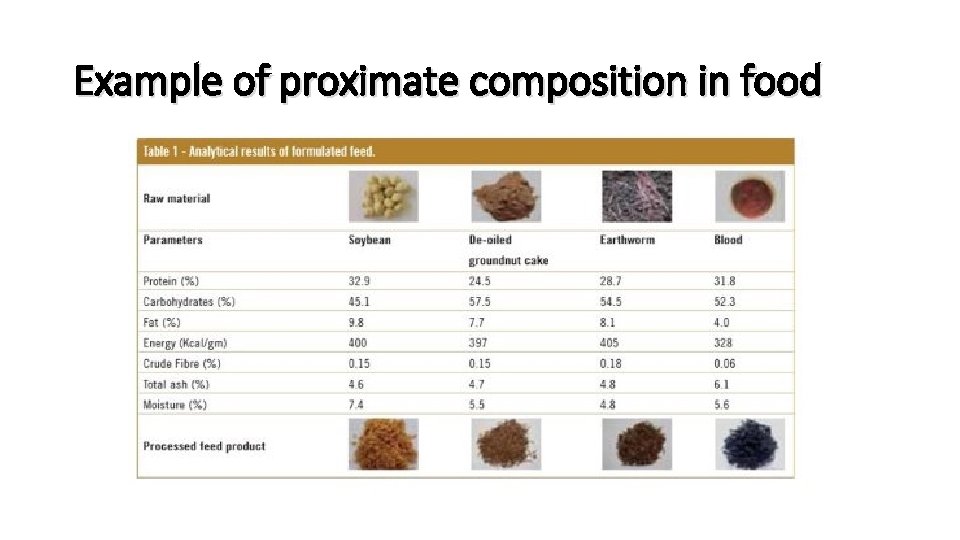
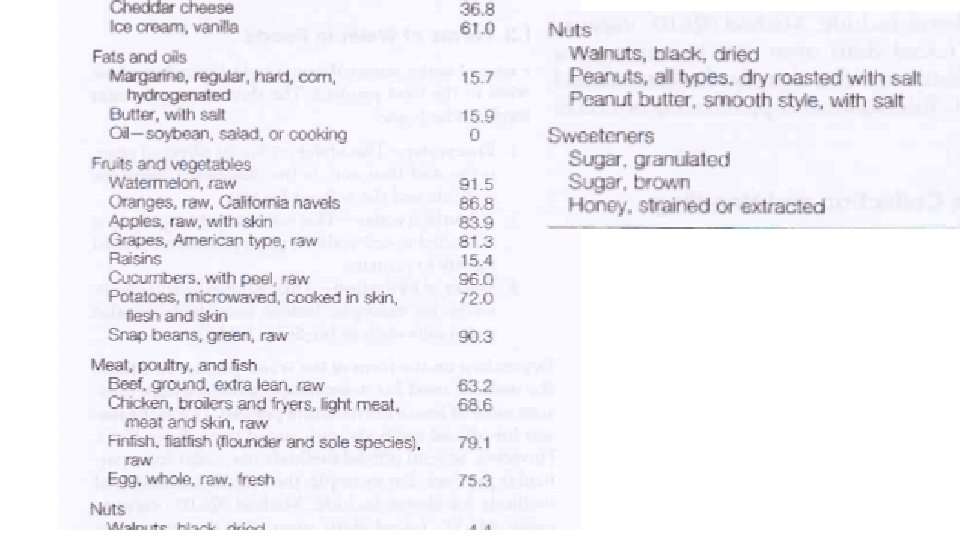
Example of proximate composition in food
MOISTURE • Topic outline: • Introduction • Methods to determine • Oven drying • Distillation • Chemical method-Karl Fischer titration • Physical methods • Comparison of methods Reference #2
INTRODUCTION • Why it is important to analyze moisture? • A quality factor for preservation purpose and stability effect of food. • dehydrated fruits and vegetables, potatoes, dried milks, powdered eggs, spices and herbs • Accurate moisture in jams and jellies prevents sugar crystallization • Reduced moisture for convenience of packaging and shipping. • Concentrated milks and fruit juices, dehydrated products, liquid cane sugar, liquid corn sweetener. • As compositional standards i. e Standard of Identity • Cheddar cheese must be < 39% moisture and enriched flour must be <15% moisture • Moisture is expressed in wet basis or dry basis
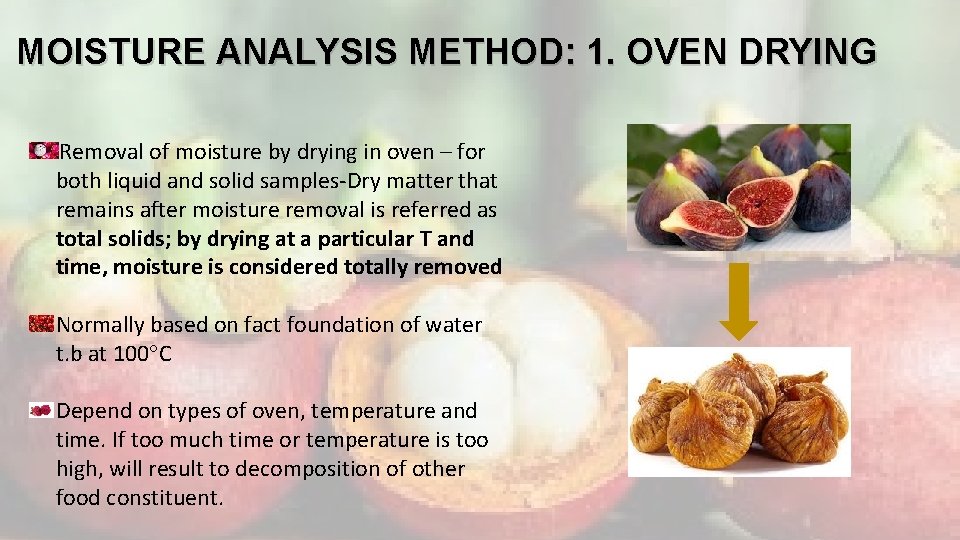
MOISTURE ANALYSIS METHOD: 1. OVEN DRYING Removal of moisture by drying in oven – for both liquid and solid samples-Dry matter that remains after moisture removal is referred as total solids; by drying at a particular T and time, moisture is considered totally removed Normally based on fact foundation of water t. b at 100 C Depend on types of oven, temperature and time. If too much time or temperature is too high, will result to decomposition of other food constituent.
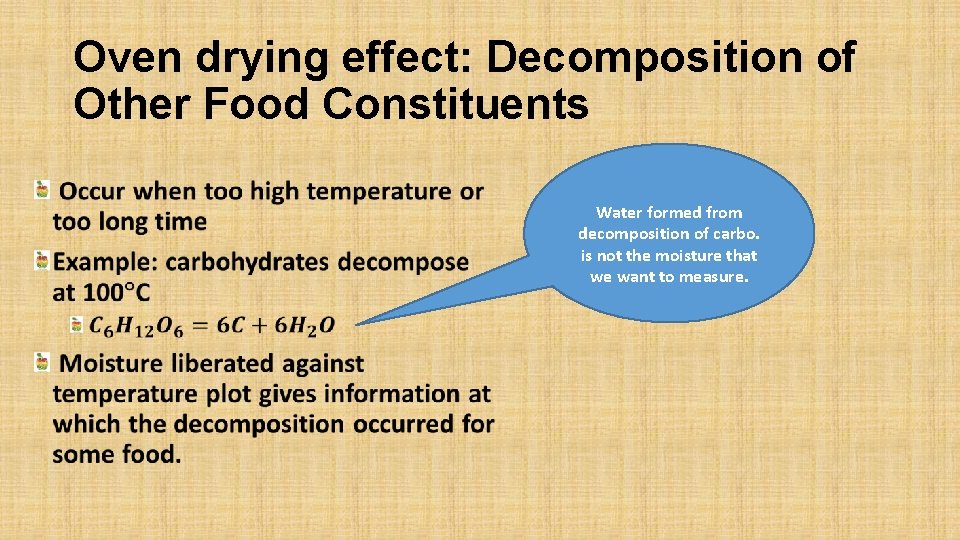
Oven drying effect: Decomposition of Other Food Constituents • Water formed from decomposition of carbo. is not the moisture that we want to measure.
Oven drying method: Temperature Control • The target is to avoid variation of temperature in drying equipment • Let consider these three types of oven: • Convection oven: has greatest T variation because slowly hot air circulation without the aid of a fan, further obstruction comes from drying pan placed in the oven, 10 C temperature differential across the ovens is normal. • Forced draft oven: has least temperature differential usually < 1 C, air is circulated by a fan that forces the air movement, air is well distributed horizontally which minimized obstruction by the pan. • Vacuum oven: has wider temperature spread across it. It has glass cover in which is becoming heat sink. Has same direction of air inlet and discharge. This could minimize cold spots and exhaust moisture in the interior air.
Oven drying method: Types of Pan • The AOAC International moisture pan is about 5. 5 cm in diameter with an insert cover – The reusable pans • Pan covers function to control loss of sample during drying, however metal pans need to slip one side to allow moisture evaporates. Pan types: • Disposable pan: glass fiber disc and filter paper disc. • See Figure 6. 2 (Nielson, S. )
Oven drying method: Handling and Preparation of Pans • Handling and preparation of pans before use: only tongs is allow to handle any pans- even fingerprints have weight • Pan must be oven treated before use • Disposable aluminum pans must be vacuum oven dried for 3 hr before use or 15 hr in forced draft oven at 100 C. Balance accuracy used is 0. 0001 g, thus handling and preparation of pans are rather important. • Store the dried pan in functioning desiccator.
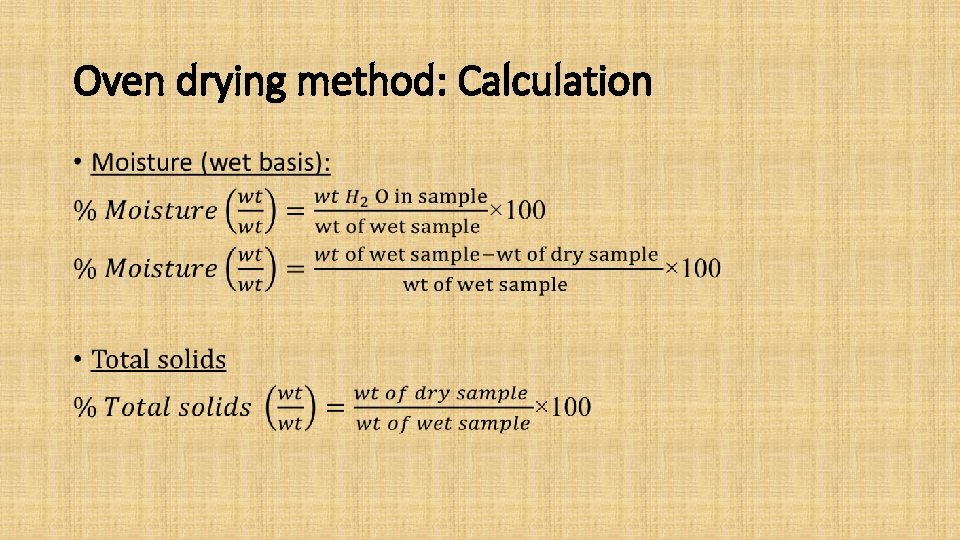
Oven drying method: Calculation •
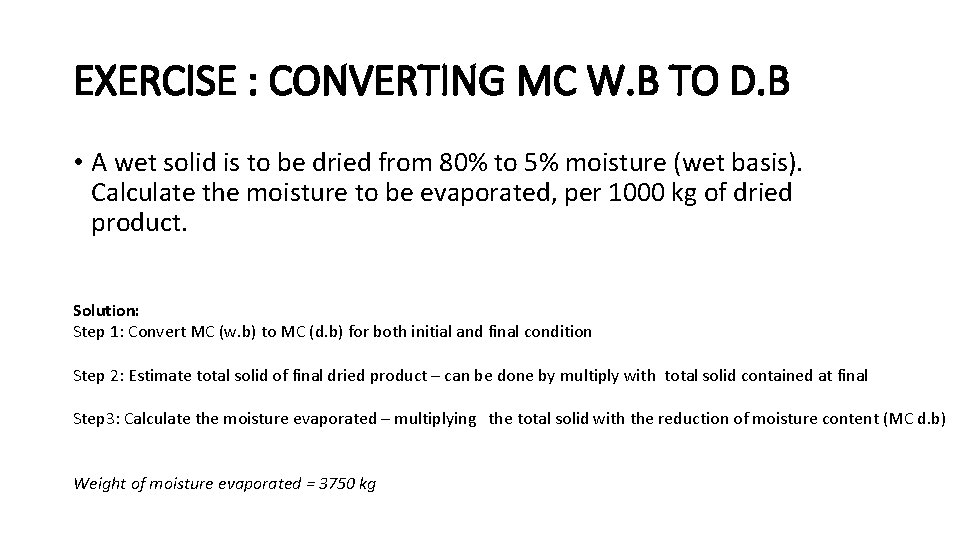
EXERCISE : CONVERTING MC W. B TO D. B • A wet solid is to be dried from 80% to 5% moisture (wet basis). Calculate the moisture to be evaporated, per 1000 kg of dried product. Solution: Step 1: Convert MC (w. b) to MC (d. b) for both initial and final condition Step 2: Estimate total solid of final dried product – can be done by multiply with total solid contained at final Step 3: Calculate the moisture evaporated – multiplying the total solid with the reduction of moisture content (MC d. b) Weight of moisture evaporated = 3750 kg
Drying equipment Your reading topics • Forced draft oven • Vacuum oven • Microwave analyzer • Infrared drying Instrumentation principles, limitation of use, type of suitable samples
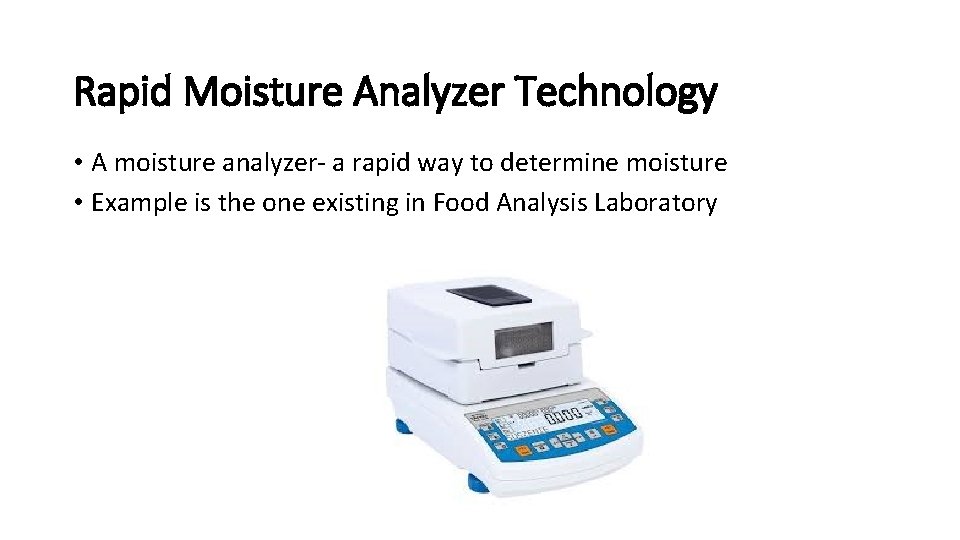
Rapid Moisture Analyzer Technology • A moisture analyzer- a rapid way to determine moisture • Example is the one existing in Food Analysis Laboratory
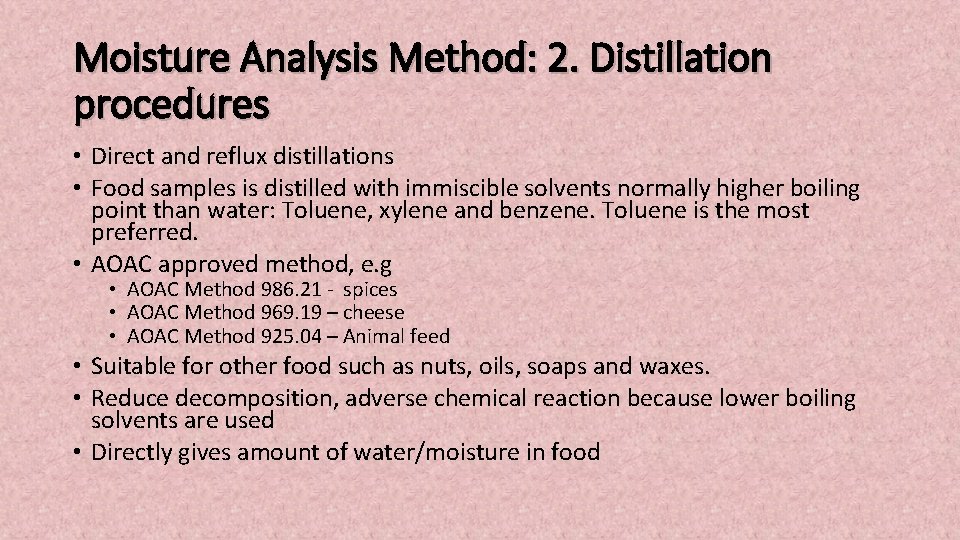
Moisture Analysis Method: 2. Distillation procedures • Direct and reflux distillations • Food samples is distilled with immiscible solvents normally higher boiling point than water: Toluene, xylene and benzene. Toluene is the most preferred. • AOAC approved method, e. g • AOAC Method 986. 21 - spices • AOAC Method 969. 19 – cheese • AOAC Method 925. 04 – Animal feed • Suitable for other food such as nuts, oils, soaps and waxes. • Reduce decomposition, adverse chemical reaction because lower boiling solvents are used • Directly gives amount of water/moisture in food
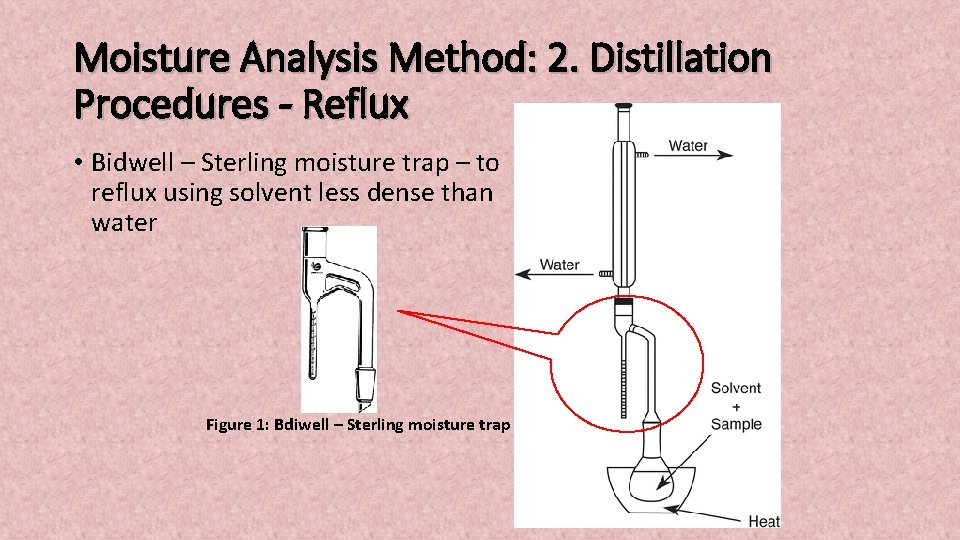
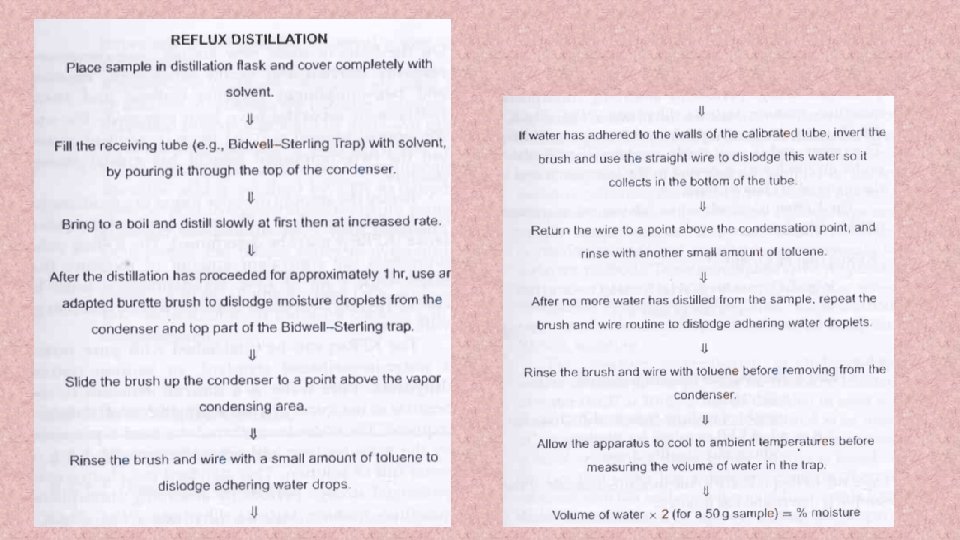
Moisture Analysis Method: 2. Distillation Procedures - Reflux • Bidwell – Sterling moisture trap – to reflux using solvent less dense than water Figure 1: Bdiwell – Sterling moisture trap
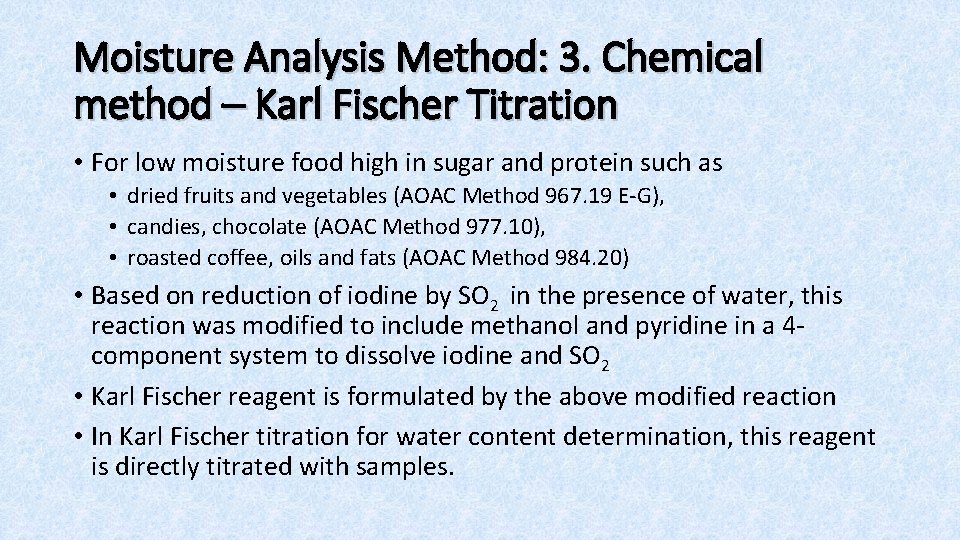
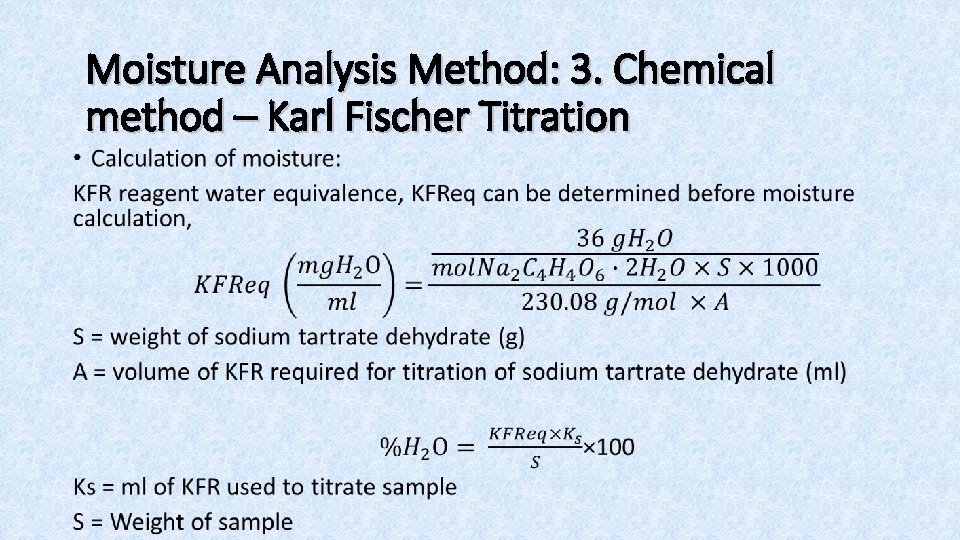
Moisture Analysis Method: 3. Chemical method – Karl Fischer Titration • For low moisture food high in sugar and protein such as • dried fruits and vegetables (AOAC Method 967. 19 E-G), • candies, chocolate (AOAC Method 977. 10), • roasted coffee, oils and fats (AOAC Method 984. 20) • Based on reduction of iodine by SO 2 in the presence of water, this reaction was modified to include methanol and pyridine in a 4 component system to dissolve iodine and SO 2 • Karl Fischer reagent is formulated by the above modified reaction • In Karl Fischer titration for water content determination, this reagent is directly titrated with samples.
Moisture Analysis Method: 3. Chemical method – Karl Fischer Titration •
Moisture Analysis Method: 4. Physical method ELECTRICAL METHODS • 1. Dielectric Method • Based on measurement of the change in capacitance or resistance to an electric current. • Useful for process control application • Suitable for food material moisture content not more than 30 – 35% only (e. g cereal grain) • 2. Conductivity Method • Function based on conductivity of an electric current increases with the percentage of moisture in a sample • In term of resistant measurement • Performed at constant temperature and takes 1 min analysis time
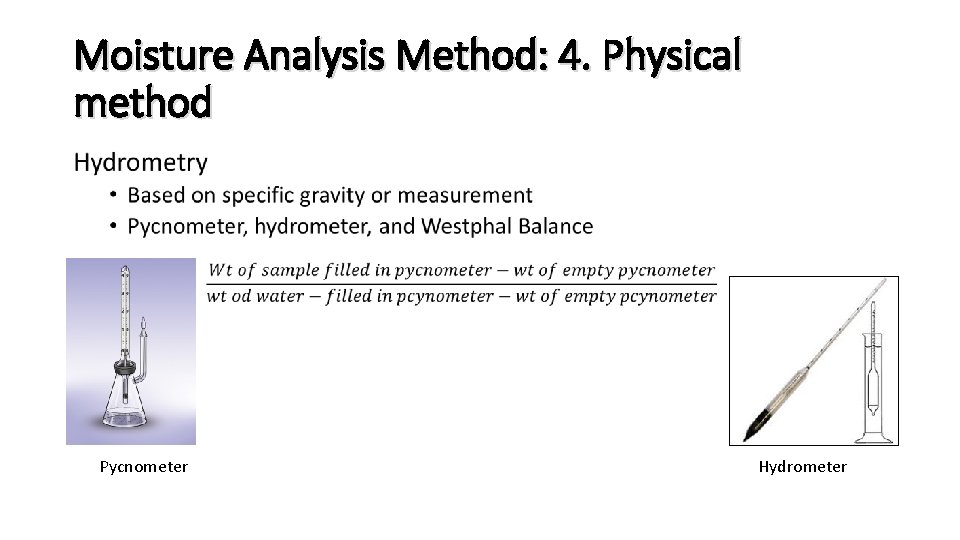
Moisture Analysis Method: 4. Physical method • Pycnometer Hydrometer
Moisture Analysis Method: 4. Physical method - Refractometry • This equipment is designed to provide result of refractive index (RI) • It equipped with scales calibrated to read the percentage of solids, percentage of sugars etc. • All chemical compounds have RI values • The measurement is qualitatively identify of unknown compound by comparing its RI with literature values. • RI varies with concentration of the compound, temperature and wavelength of light