
PTSD USE Jing Fang for PTSD Oklahoma Tornado




- Slides: 70
創傷後壓力症候群(PTSD) USE Jing Fang for PTSD
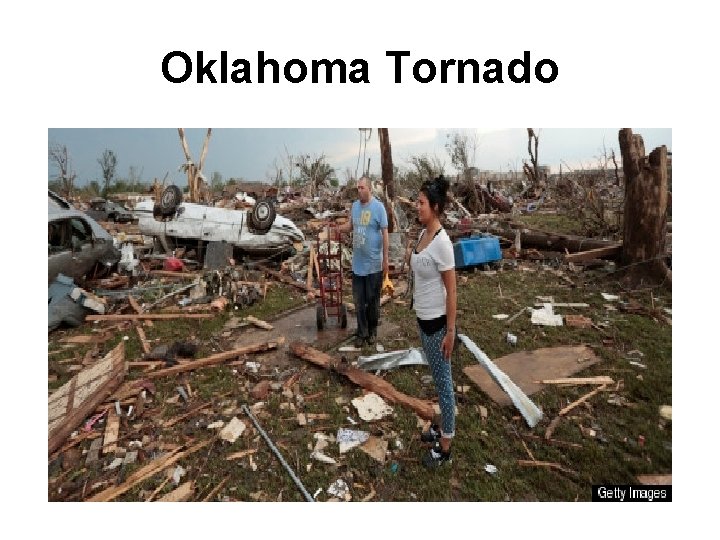
Oklahoma Tornado
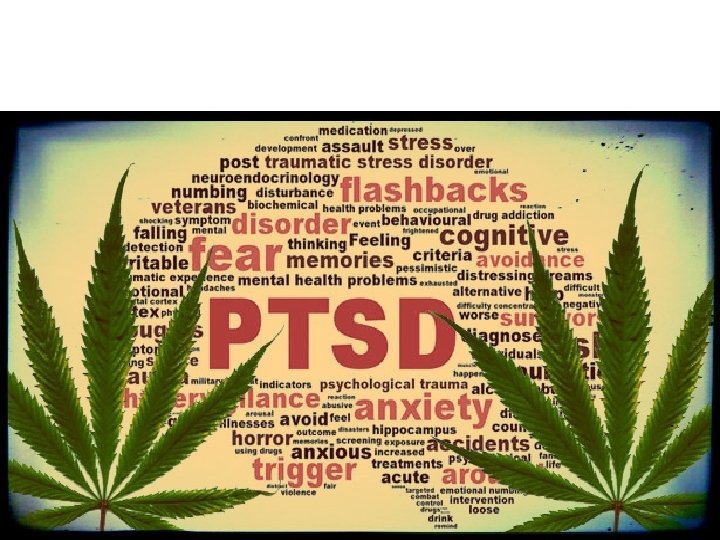
PTSD • What is Post-traumatic Stress Disorder • When in danger, it’s natural to feel afraid. This fear triggers many split-second changes in the body to prepare to defend against the danger or to avoid it.
• This “fight-or-flight” response is a healthy reaction meant to protect a person from harm. But in post-traumatic stress disorder (PTSD), this reaction is changed or damaged. People who have PTSD may feel stressed or frightened even when they’re no longer in danger.
• PTSD develops after a terrifying ordeal that involved physical harm or the threat of physical harm. The person who develops PTSD may have been the one who was harmed, the harm may have happened to a loved one, or the person may have witnessed a harmful event that happened to loved ones or strangers.
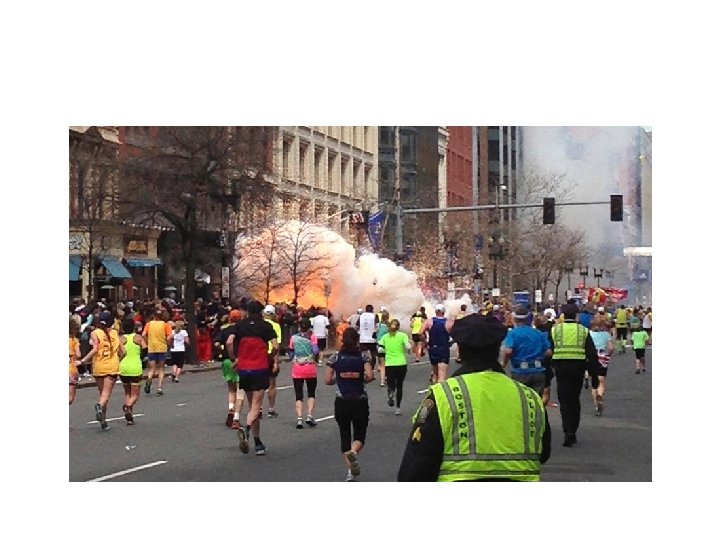
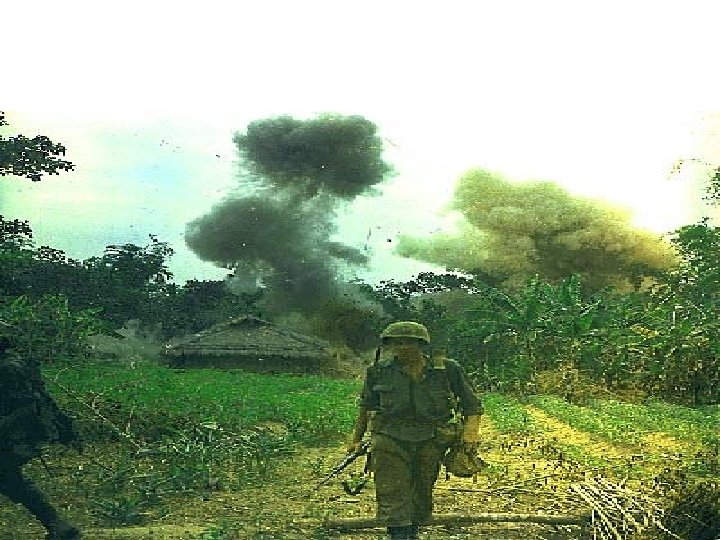
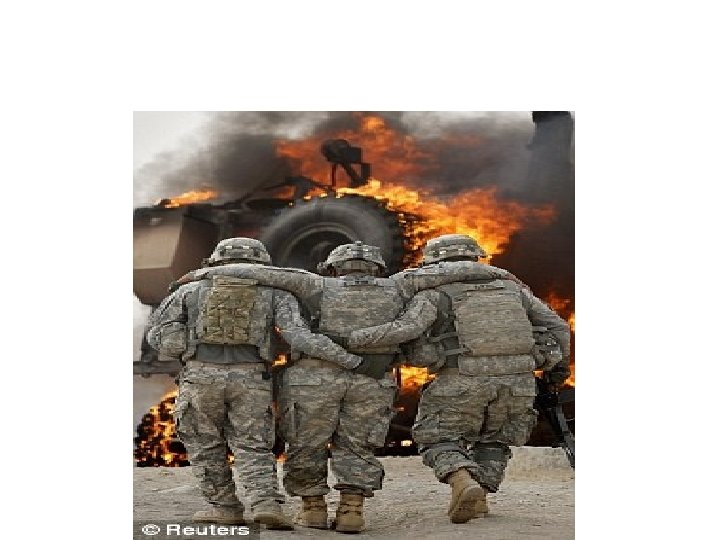
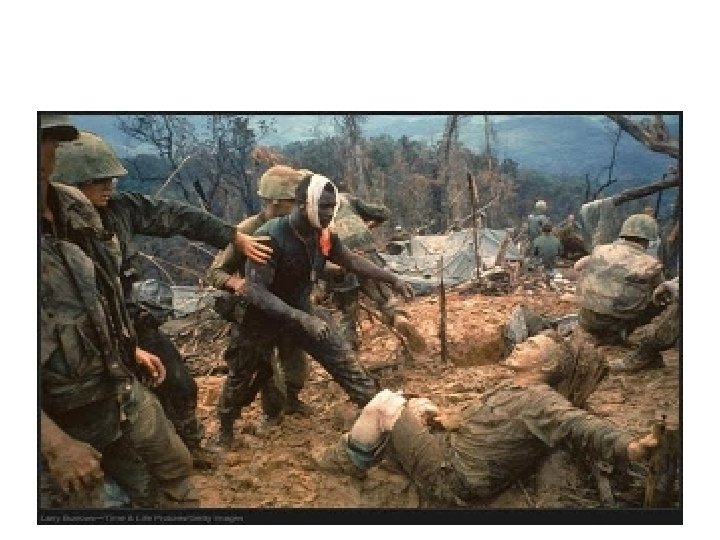
• PTSD was first brought to public attention in relation to war veterans, but it can result from a variety of traumatic incidents, such as mugging, rape, torture, being kidnapped or held captive, child abuse, car accidents, train wrecks, plane crashes, bombings, or natural disasters such as floods or earthquakes.
Signs & Symptoms • PTSD can cause many symptoms. These symptoms can be grouped into three categories:
1. Re-experiencing symptoms • Flashbacks—reliving the trauma over and over, including physical symptoms like a racing heart or sweating • Bad dreams • Frightening thoughts.
• Re-experiencing symptoms may cause problems in a person’s everyday routine. They can start from the person’s own thoughts and feelings. Words, objects, or situations that are reminders of the event can also trigger re-experiencing.
2. Avoidance symptoms • Staying away from places, events, or objects that are reminders of the experience • Feeling emotionally numb • Feeling strong guilt, depression, or worry • Losing interest in activities that were enjoyable in the past • Having trouble remembering the dangerous event.
• Things that remind a person of the traumatic event can trigger avoidance symptoms. These symptoms may cause a person to change his or her personal routine. For example, after a bad car accident, a person who usually drives may avoid driving or riding in a car.
3. Hyperarousal symptoms • Being easily startled • Feeling tense or “on edge” • Having difficulty sleeping, and/or having angry outbursts.
• Hyperarousal symptoms are usually constant, instead of being triggered by things that remind one of the traumatic event. They can make the person feel stressed angry. These symptoms may make it hard to do daily tasks, such as sleeping, eating, or concentrating.
• It’s natural to have some of these symptoms after a dangerous event. Sometimes people have very serious symptoms that go away after a few weeks.
• This is called acute stress disorder, or ASD. When the symptoms last more than a few weeks and become an ongoing problem, they might be PTSD. Some people with PTSD don’t show any symptoms for weeks or months.
Do children react differently than adults? • Children and teens can have extreme reactions to trauma, but their symptoms may not be the same as adults. In very young children, these symptoms can include:
• Bedwetting, when they’d learned how to use the toilet before • Forgetting how or being unable to talk • Acting out the scary event during playtime • Being unusually clingy with a parent or other adult.
• Older children and teens usually show symptoms more like those seen in adults. They may also develop disruptive, disrespectful, or destructive behaviors.
• Older children and teens may feel guilty for not preventing injury or deaths. They may also have thoughts of revenge. For more information, see the NIMH booklets on helping children cope with violence and disasters. (from Post-Traumatic Stress Disorder (PTSD) )
Diagnosis • Not every traumatized person develops full -blown or even minor PTSD. Symptoms usually begin within 3 months of the incident but occasionally emerge years afterward.
• They must last more than a month to be considered PTSD. The course of the illness varies. Some people recover within 6 months, while others have symptoms that last much longer. In some people, the condition becomes chronic.
• A doctor who has experience helping people with mental illnesses, such as a psychiatrist or psychologist, can diagnose PTSD. The diagnosis is made after the doctor talks with the person who has symptoms of PTSD.
• To be diagnosed with PTSD, a person must have all of the following for at least 1 month: • At least one re-experiencing symptom • At least three avoidance symptoms • At least two hyperarousal symptoms
• Symptoms that make it hard to go about daily life, go to school or work, be with friends, and take care of important tasks. • PTSD is often accompanied by depression, substance abuse, or one or more of the other anxiety disorders.
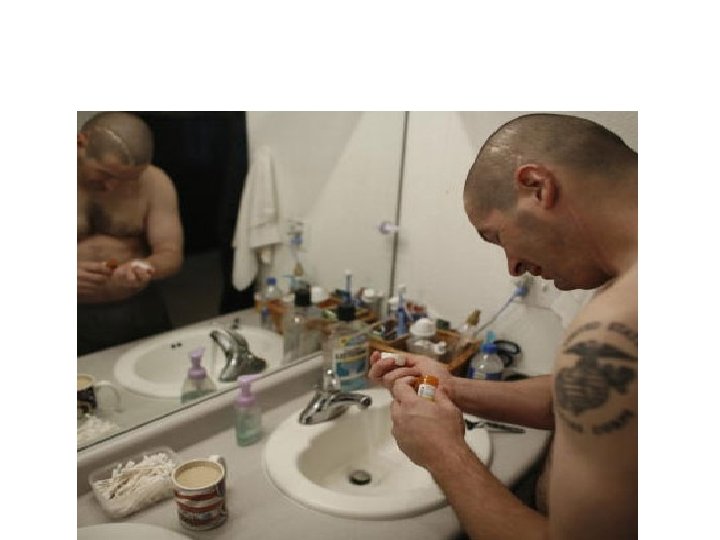
Treatments • The main treatments for people with PTSD are psychotherapy (“talk” therapy), medications, or both. Everyone is different, so a treatment that works for one person may not work for another.
• It is important for anyone with PTSD to be treated by a mental health care provider who is experienced with PTSD. Some people with PTSD need to try different treatments to find what works for their symptoms.
• If someone with PTSD is going through an ongoing trauma, such as being in an abusive relationship, both of the problems need to be treated. Other ongoing problems can include panic disorder, depression, substance abuse, and feeling suicidal.
TCM for PTSD • Chinese Diseases • The main Chinese diseases that relate to PTSD are Racing of the Heart, Fright and Fear, Vexation and agitation, and Anxiety.
Treatment Based on Pattern Identification • 1. Liver qi Stagnation • 2. Heart Qi and Blood Deficiency with Spleen qi Deficiency • 3. Liver and Heart Blood Deficiency. • 4. Heart Blood Deficiency and Liver Qi Stagnation. • 5. Liver qi Stagnation with Phlegm.
• 1. Liver Qi Stagnation
• Alternating fever and chills, dry throat, bitter taste in the mouth, dizziness, irritability, sensation of fullness in the chest and hypochondria, heartburn, nausea and vomiting, being downcast with no desire to eat, a thin , white tongue coating, and a wiry pulse.
• Action • Harmonizes and releases lesser yangwarp disorders.
• Acupuncture points: • LV 3, LI 4, UB 18, UB 15, ST 36, YT, Shenmen.
• Xiao Chai Hu Tang
• 2. Heart Qi and Blood Deficiency and Spleen Qi Deficiency
• This pattern is primarily caused by heart qi xu which in turn leads the blood to move more quickly in an attempt to nourish the body. This increased flow leads to an increased heartbeat, and shortness of breath.
• When the heart lacks blood, the shen is not nourished and becomes uprooted. Similarly, if the qi of the chest is depleted, qi does not flow freely, which leads to obstruction of the chest and a feeling of chest oppression.
• Symptoms: • Sudden fear, tension, dread, restlessness, shortness of breath, rapid heart beat, chest oppression, insomnia, profuse dreams, a dark pale tongue, and a thin, weak, and perhaps irregular pulse.
• Treatment principles: • Tonify the qi, nourish the heart, quicken the blood and unblock the qi in the vessels.
• Acupoints: • LI 4 and LVR 3 to course qi and remove obstruction; PC 6 to open the chest and calm the shen; ST 36 to tonify the qi; UB 17 to benefit the blood; HT 7 to nourish the heart; GB 20 to descend qi.
• Zhi Gan Cao Tang
• 3. Liver and Heart Blood Deficiency
• Symptoms: Palpitations, fearful throbbing, profuse dreaming, insomnia, amnesia, dizziness, tremors of the hands and feet, irritating sensation of the eyes, pale complexion, a pale tongue, and a weak pulse. Treatment principles: Nourish the blood, calm the shen.
• Treatment principles: • Nourish the blood, calm the shen.
• Acupoints: • UB 17 to nourish the blood; HT 7 and UB 15 to nourish the heart and calm the shen; KD 3 to nourish the kidneys; UB 20 to tonify the spleen and promote blood production.
• Suan Zao Ren Tang,
• 4. Heart Blood Deficiency and Liver Qi Stagnation.
• Disorientation, frequent attacks of melancholy and crying, spells, inability to control oneself, restless sleep and frequent bouts of yawning. In severe cases, the behavior and speech become abnormal.
• Actions: • Nourishes the Heart, calms the spirit, harmonizes the middle Jiao and relaxes hypertonicity
• Acupuncture Points: • Ht 7 Li 4 LV 3 Sp 6 YT, Shenmen, Ki 1 Sj 5
• Gan Mai Da Zao Tang
• 5. Liver qi Stagnation with Phlegm.
• A feeling of something caught in the throat that can neither be swallowed nor ejected, a stifling sensation in the chest and hypochondria, a moist or greasy, white tongue coating, and a wiry, slow or wiry, slippery.
• Actions: • Promotes the movement of qi , dissipates clumps, directs rebellius qi downward, and transforms phlegm
• Acupuncture points: • St 40, Ren 17 , LI 4, LV 3, ST 36, UB 18 UB 20
• Ban Xia Hou Po Tang
References • NIMH · Post-Traumatic Stress Disorder (PTSD) • The Diagnosis and Treatment of Post. Traumatic Stress Disorder According to Chinese Medicine. Submitted by admin on Thu, 05/29/2008