
PTP A Simple yet Powerful Way to Synchronize
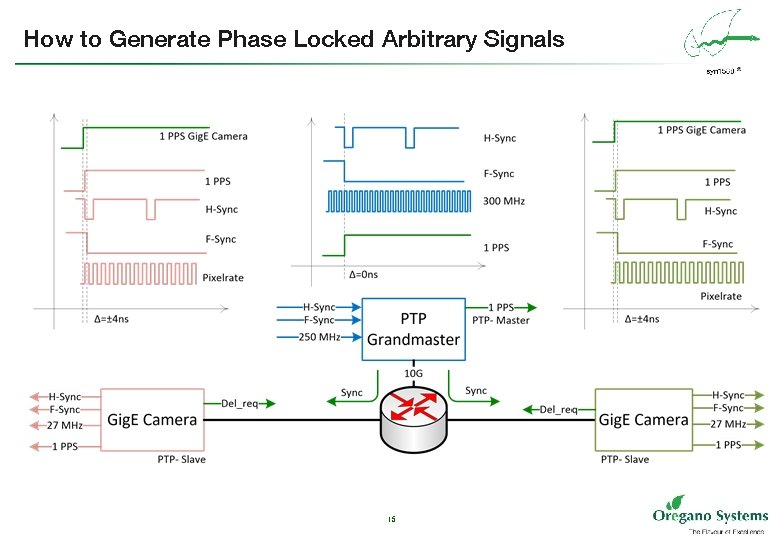
![How to Generate Phase Locked Arbitrary Signals Period [k. Hz] 15 4. 4 79.](https://slidetodoc.com/presentation_image_h/8b61917d4e051f9537d426e518274473/image-14.jpg "How to Generate Phase Locked Arbitrary Signals Period [k. Hz] 15 4. 4 79.")
- Slides: 28
PTP – A Simple yet Powerful Way to Synchronize Ethernet-Based Cameras Nikolaus Kerö, Oregano Systems Erich Maurer, Oregano Systems Tobias Müller, Oregano Systems
Introduction e Common notion of time is crucial for almost all applications e Ethernet has become the only viable communication medium a Performance is highly customizable a Bandwidth, fault tolerance, latency, costs, availability, …. e One single communication medium both for and time a R. I. P. Legacy time transfer and sync systems e Ethernet is asynchronous a Time transfer has to be packet based e PTP – Precision Time Protocol 2
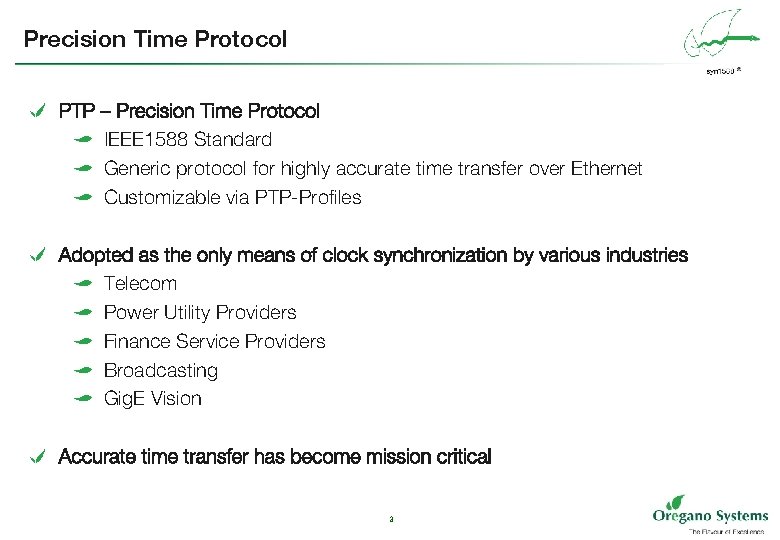
Precision Time Protocol e PTP – Precision Time Protocol a IEEE 1588 Standard a Generic protocol for highly accurate time transfer over Ethernet a Customizable via PTP-Profiles e Adopted as the only means of clock synchronization by various industries a Telecom a Power Utility Providers a Finance Service Providers a Broadcasting a Gig. E Vision e Accurate time transfer has become mission critical 3
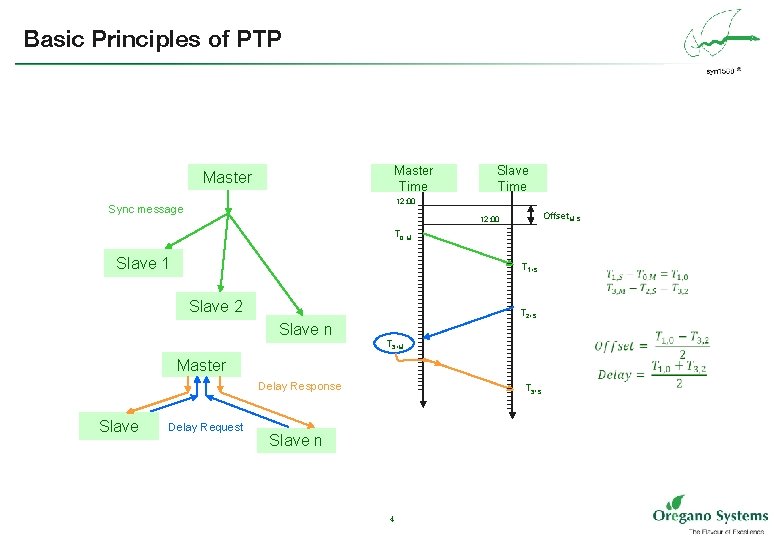
Basic Principles of PTP Master Time Master Slave Time 12: 00 Sync message Offset. M, S 12: 00 T 0, M Slave 1 T 1, S Slave 2 T 2, S Slave n T 3, M Master Delay Response Slave Delay Request T 3, S Slave n 4
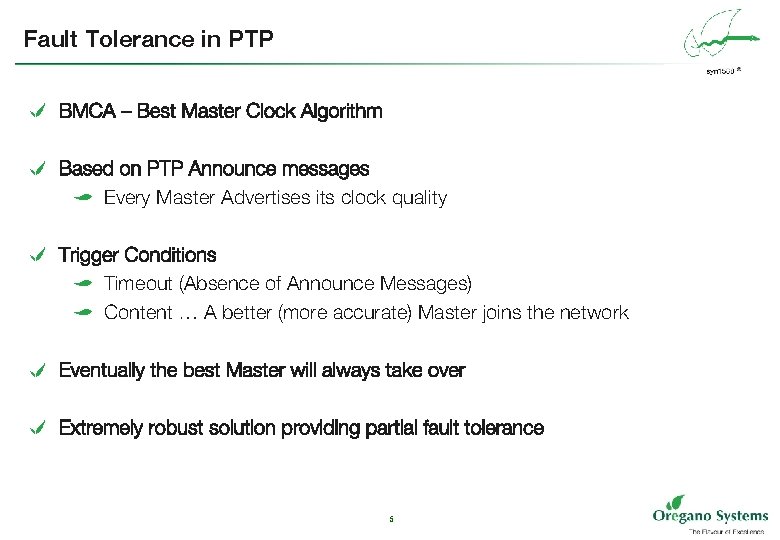
Fault Tolerance in PTP e BMCA – Best Master Clock Algorithm e Based on PTP Announce messages a Every Master Advertises its clock quality e Trigger Conditions a Timeout (Absence of Announce Messages) a Content … A better (more accurate) Master joins the network e Eventually the best Master will always take over e Extremely robust solution providing partial fault tolerance 5
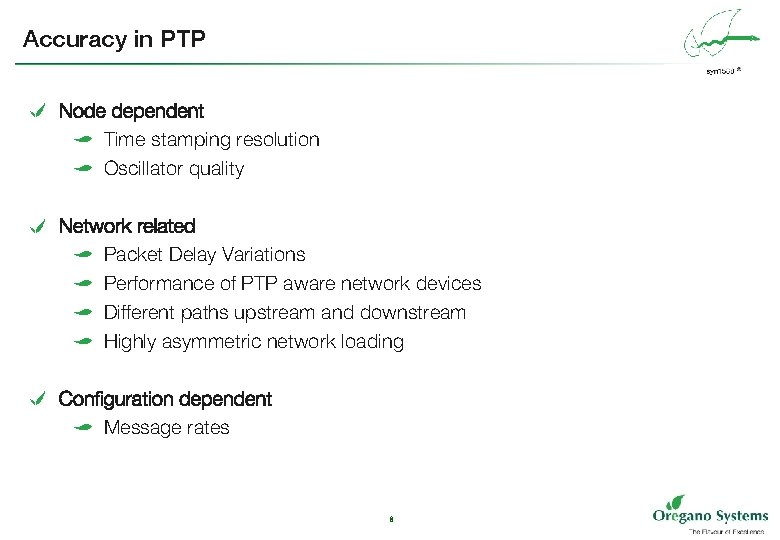
Accuracy in PTP e Node dependent a Time stamping resolution a Oscillator quality e Network related a Packet Delay Variations a Performance of PTP aware network devices a Different paths upstream and downstream a Highly asymmetric network loading e Configuration dependent a Message rates 6
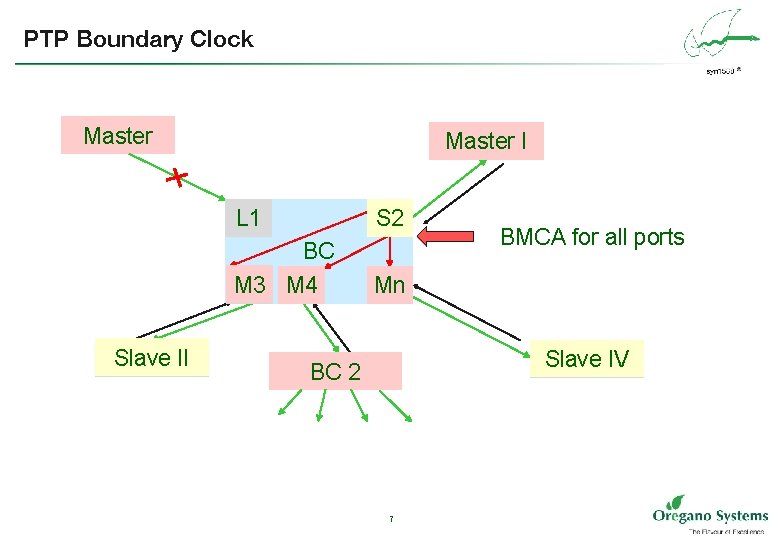
PTP Boundary Clock Master Slave II Listen II Master I Slave I Listen I L 1 S 2 M 2 L 2 BC M 3 L 3 M 4 L 4 Mn Ln BMCA for all ports Slave IV Listen IV Slave III BC 2 Listen III 7
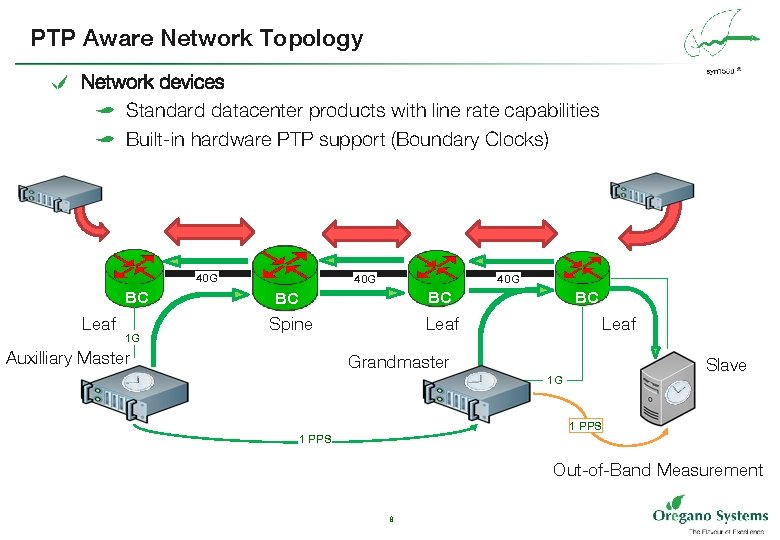
PTP Aware Network Topology e Network devices a Standard datacenter products with line rate capabilities a Built-in hardware PTP support (Boundary Clocks) 40 G BC Leaf 1 G 40 G BC BC Spine Leaf Auxilliary Master BC Leaf Grandmaster Slave 1 G 1 PPS Out-of-Band Measurement 8
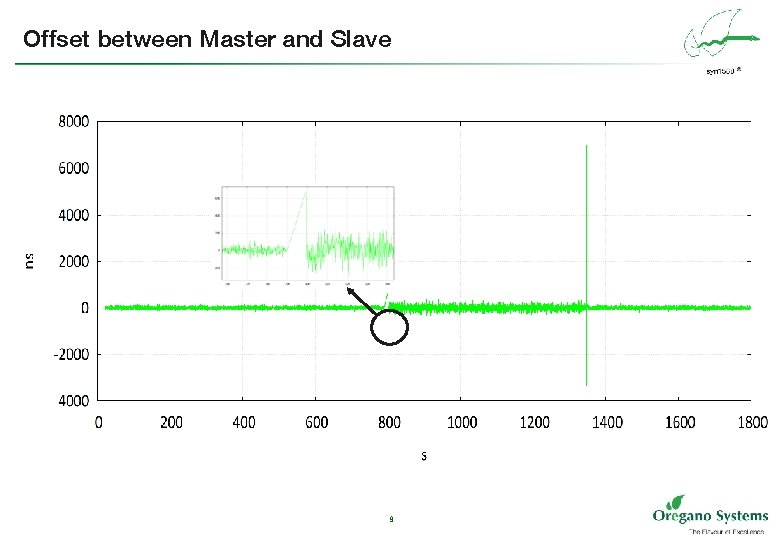
Offset between Master and Slave 9
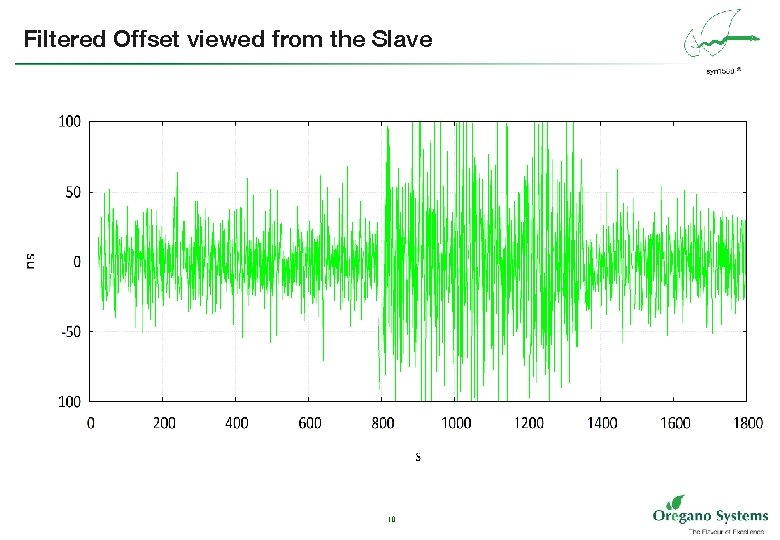
Filtered Offset viewed from the Slave 10
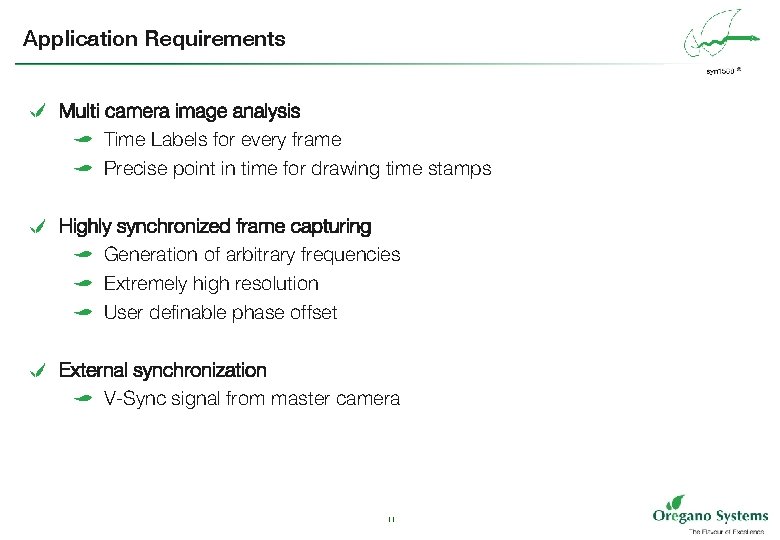
Application Requirements e Multi camera image analysis a Time Labels for every frame a Precise point in time for drawing time stamps e Highly synchronized frame capturing a Generation of arbitrary frequencies a Extremely high resolution a User definable phase offset e External synchronization a V-Sync signal from master camera 11
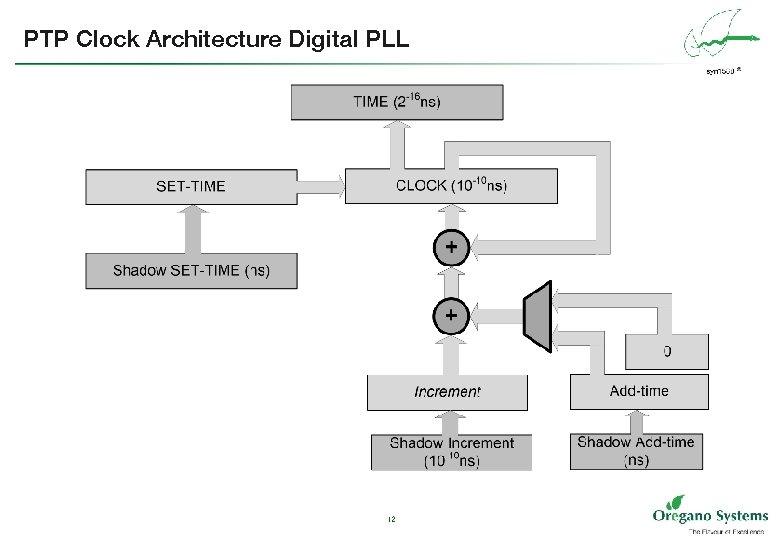
PTP Clock Architecture Digital PLL 12
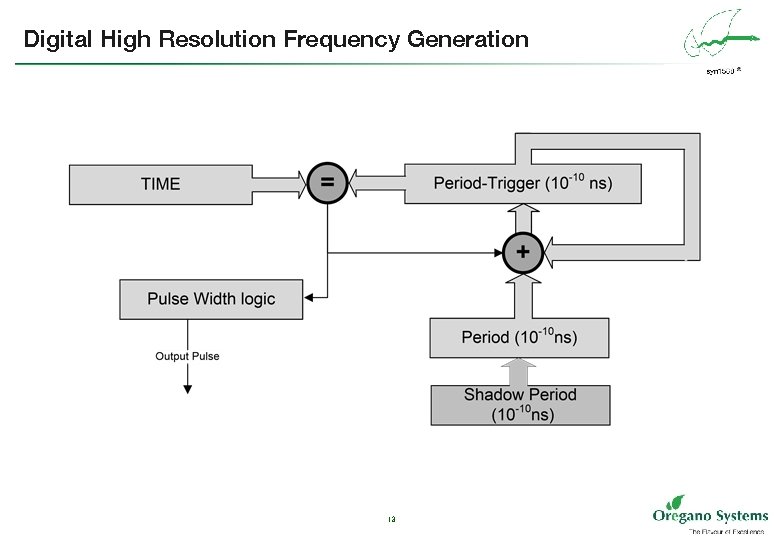
Digital High Resolution Frequency Generation 13
How to Generate Phase Locked Arbitrary Signals Period [k. Hz] 15 4. 4 79. 5 0. 9 39. 8 610 305 14 Seconds 17. 0 Resolution=2 e-48 ns 1 ns Error after 2. 2 Resolution=2 e-32 ns 1 ns Error after 70 Resolution=2 e-16 ns 1 ns Error after 30 Hours 131 Years
How to Generate Phase Locked Arbitrary Signals 15
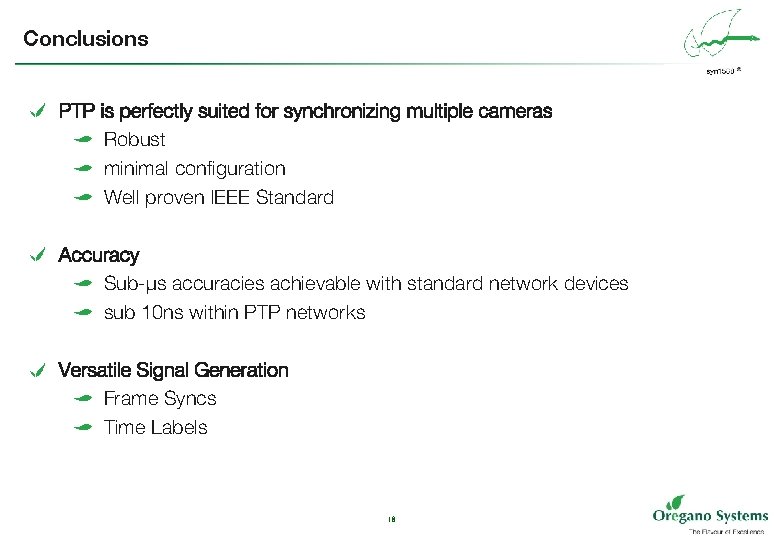
Conclusions e PTP is perfectly suited for synchronizing multiple cameras a Robust a minimal configuration a Well proven IEEE Standard e Accuracy a Sub-µs accuracies achievable with standard network devices a sub 10 ns within PTP networks e Versatile Signal Generation a Frame Syncs a Time Labels 16
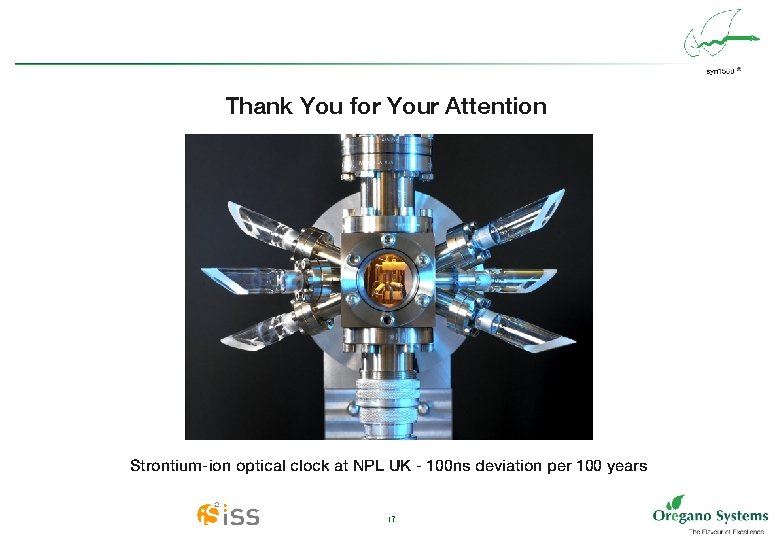
Thank You for Your Attention Strontium-ion optical clock at NPL UK - 100 ns deviation per 100 years 17
Backup Slides 18
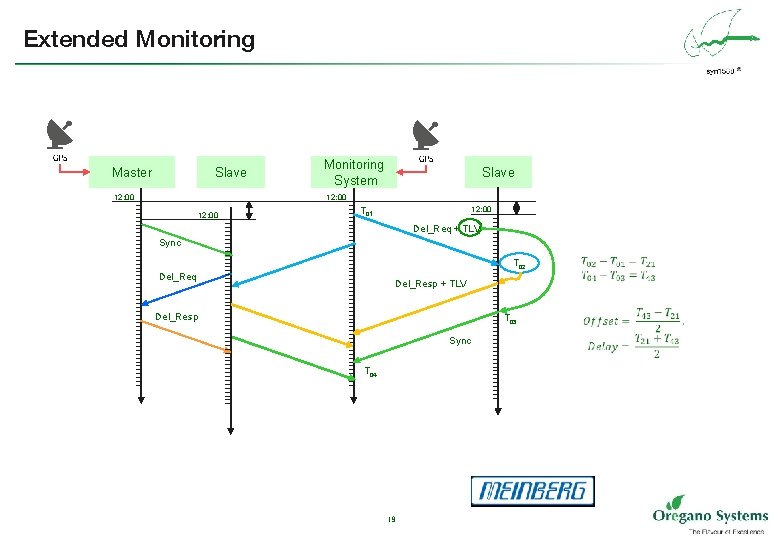
Extended Monitoring Master Slave 12: 00 Monitoring System Slave 12: 00 T 01 Del_Req + TLV Sync T 02 Del_Req Del_Resp + TLV Del_Resp T 03 Sync T 04 19
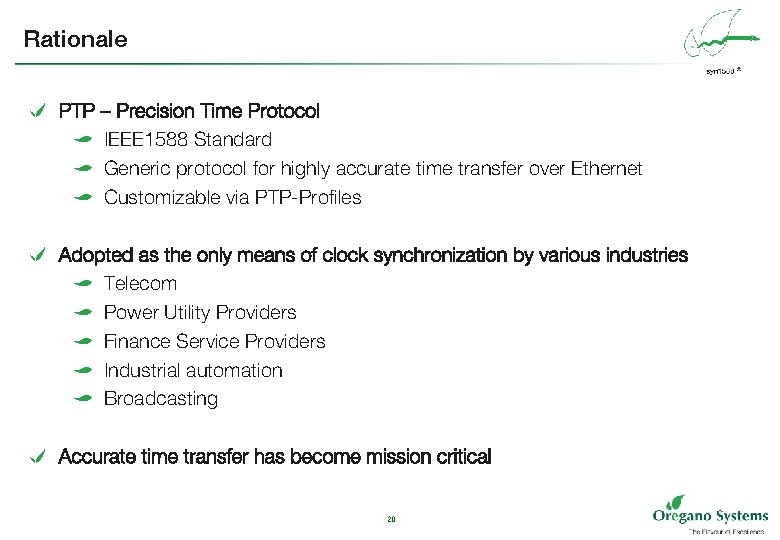
Rationale e PTP – Precision Time Protocol a IEEE 1588 Standard a Generic protocol for highly accurate time transfer over Ethernet a Customizable via PTP-Profiles e Adopted as the only means of clock synchronization by various industries a Telecom a Power Utility Providers a Finance Service Providers a Industrial automation a Broadcasting e Accurate time transfer has become mission critical 20
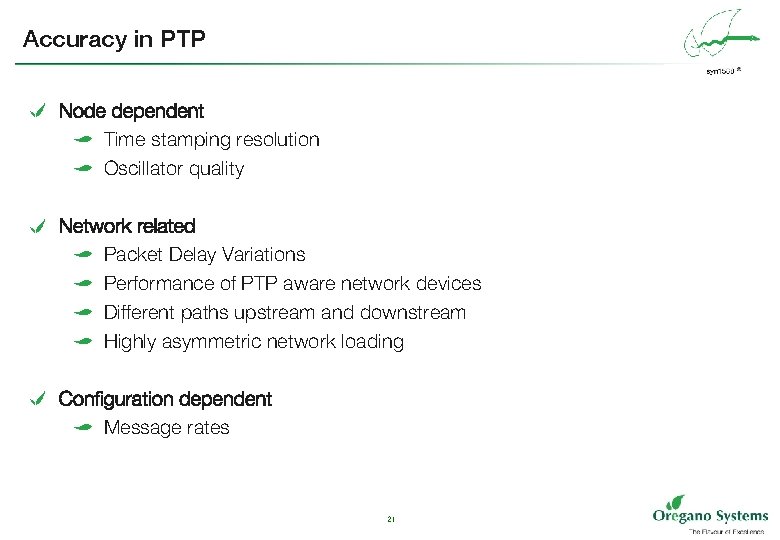
Accuracy in PTP e Node dependent a Time stamping resolution a Oscillator quality e Network related a Packet Delay Variations a Performance of PTP aware network devices a Different paths upstream and downstream a Highly asymmetric network loading e Configuration dependent a Message rates 21
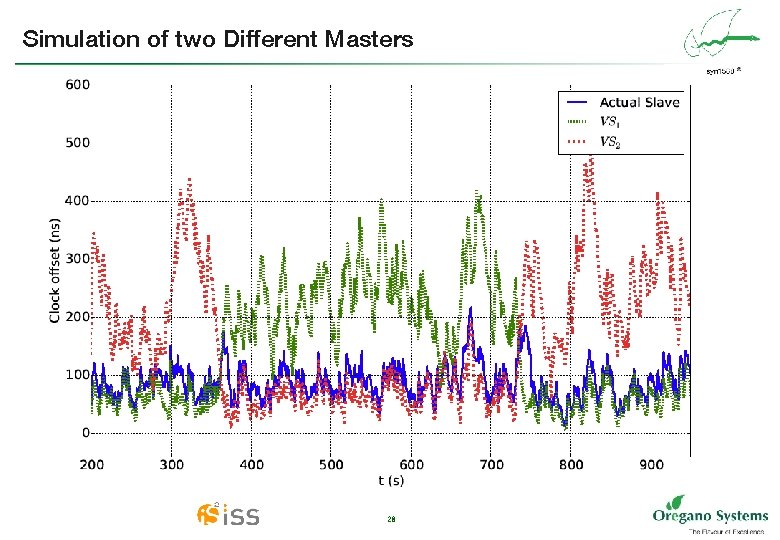
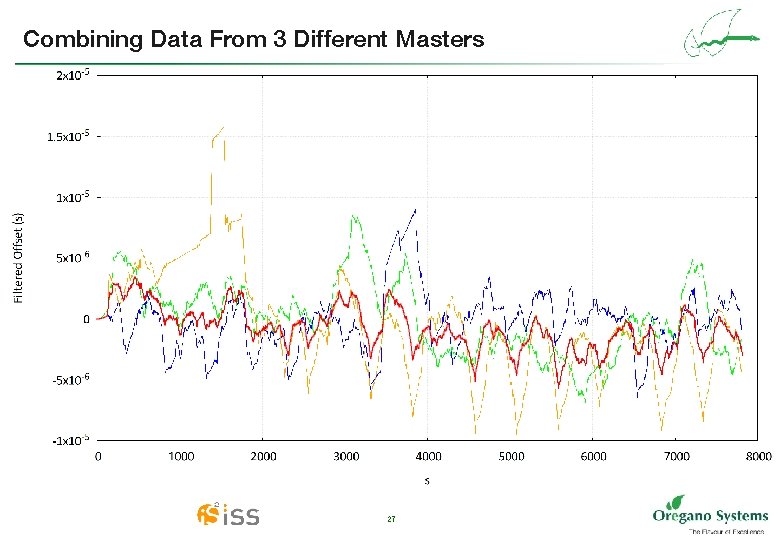
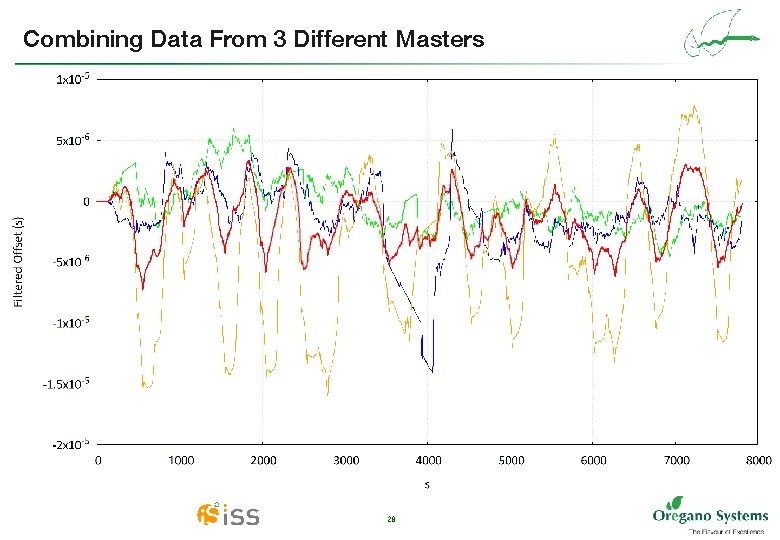
Extended Data Processing e Even extended filtering can mitigate PDV effects significantly a Dynamic outlier detection a Servo optimization a Lucky Packet Algorithm e However a Sudden PDV changes/increases may affect accuracy permanently e Use data of more than 1 Master 22
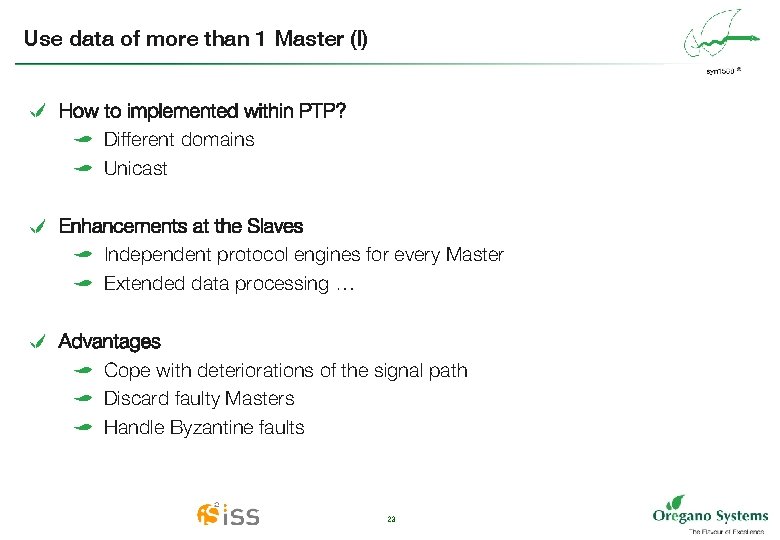
Use data of more than 1 Master (I) e How to implemented within PTP? a Different domains a Unicast e Enhancements at the Slaves a Independent protocol engines for every Master a Extended data processing … e Advantages a Cope with deteriorations of the signal path a Discard faulty Masters a Handle Byzantine faults 23
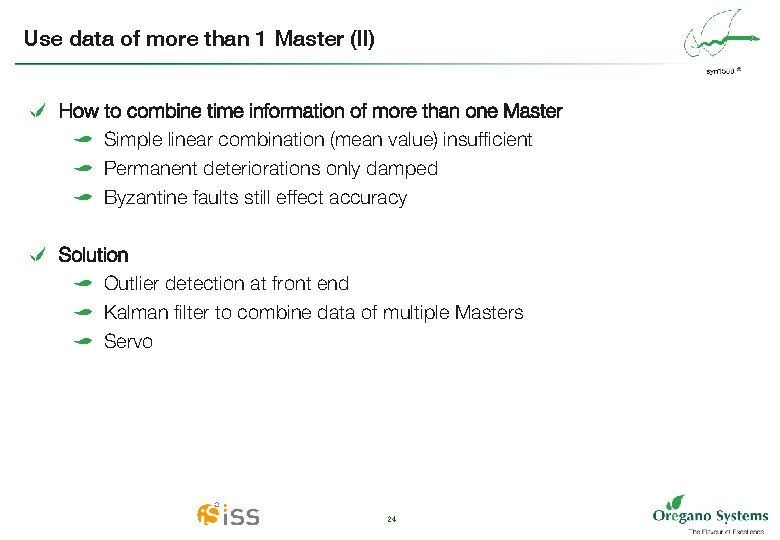
Use data of more than 1 Master (II) e How to combine time information of more than one Master a Simple linear combination (mean value) insufficient a Permanent deteriorations only damped a Byzantine faults still effect accuracy e Solution a Outlier detection at front end a Kalman filter to combine data of multiple Masters a Servo 24
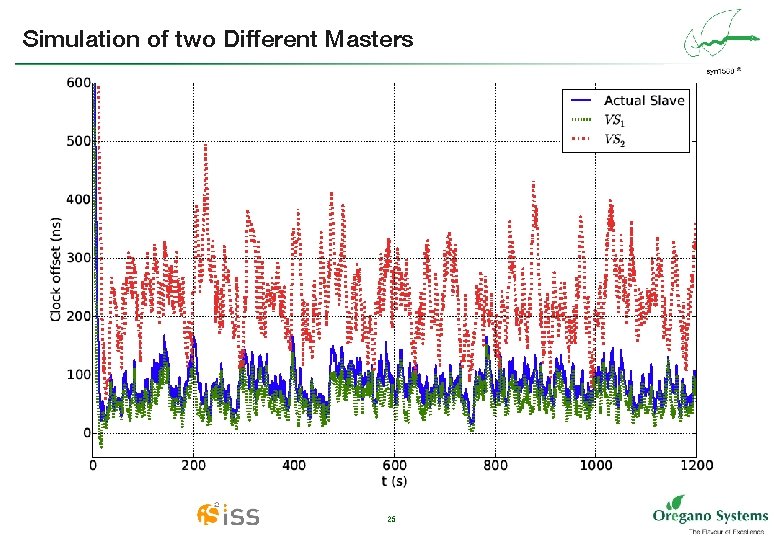
Simulation of two Different Masters 25
Simulation of two Different Masters 26
Combining Data From 3 Different Masters 27
Combining Data From 3 Different Masters 28