
PTMC in Elderly A challenging case with complications

- Slides: 29
PTMC in Elderly: A challenging case with complications Dr. Md. Toufiqur Rahman MBBS, FCPS, MD, FACC, FESC, FRCP, FSCAI, FAPSIC, FAPSC, FAHA, FCCP Associate Professor of Cardiology National Institute of Cardiovascular Diseases Sher-e-Bangla Nagar, Dhaka-1207
Background • In developing countries, including Bangladesh, rheumatic heart disease remains a major health concern, and is associated with increased morbidity and mortality. • Percutaneous transseptal mitral commissurotomy (PTMC) is the treatment of choice for selected patients with symptomatic rheumatic mitral stenosis (MS). • Though the Inoue balloon is the most commonly used device for performing PTMC, Chinese balloon which is as effective, but a cheaper alternative is used frequently. • The reuse of sterilised balloon is widely practised, particularly in developing countries to bring down the cost of the procedure. • The safety of the resterilized hardware for PTMC is reported.
Background • The reused balloons may deform and are prone to rupture • The rupture of the balloon during PTMC is a rare complication and is reported with Inoue balloon. • We report a case of chinese balloon rupture during PTMC due to tear in the inner layer. • This case report is an eye-opener and is the reminder of the lesion that preparation of the balloon should be meticulous.
Case History • Mr. DH 55 yrs old from Jessore presented with shortness of breath for last 5 years , now increasing in severity. • Her present Echocardography showed : Mitral stenosis (Severe) with grade-1 MR MVA: 0. 6 cm 2 , PPG-26 mm Hg. Wilkins Echo Score 6 with no tip calcification. EF-68% Patient was admitted for CAG followed by PTMC.
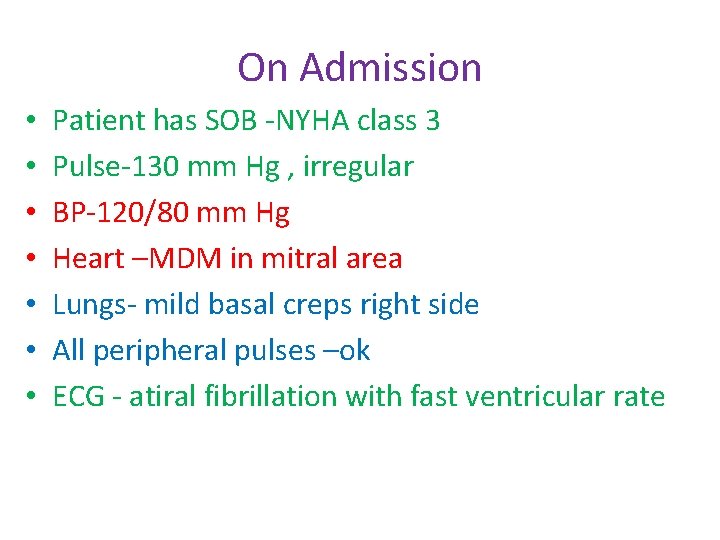
On Admission • • Patient has SOB -NYHA class 3 Pulse-130 mm Hg , irregular BP-120/80 mm Hg Heart –MDM in mitral area Lungs- mild basal creps right side All peripheral pulses –ok ECG - atiral fibrillation with fast ventricular rate
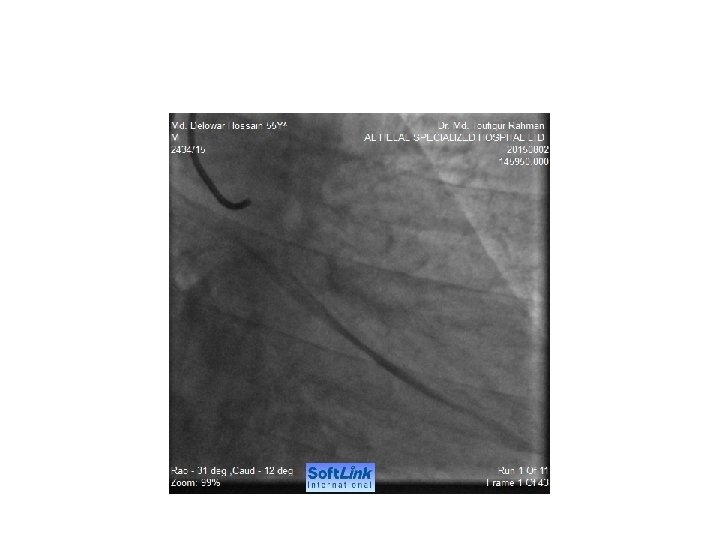
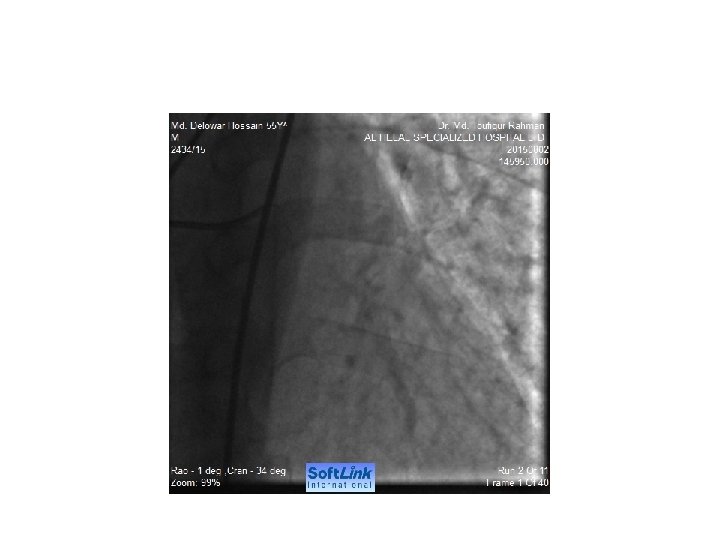
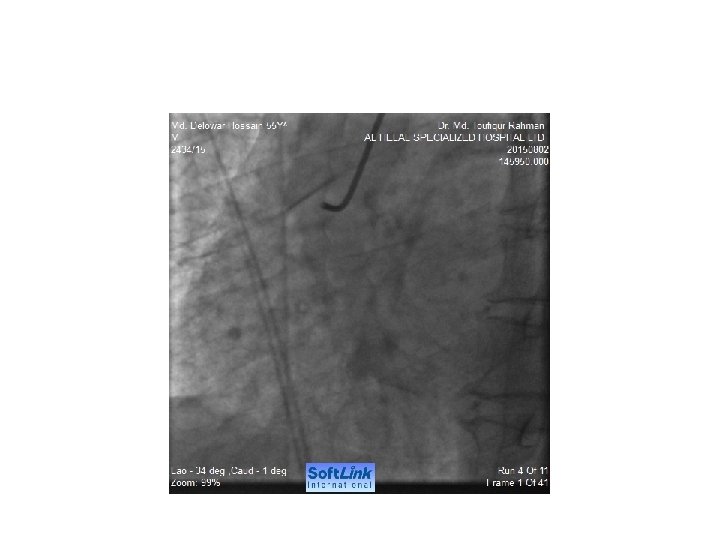
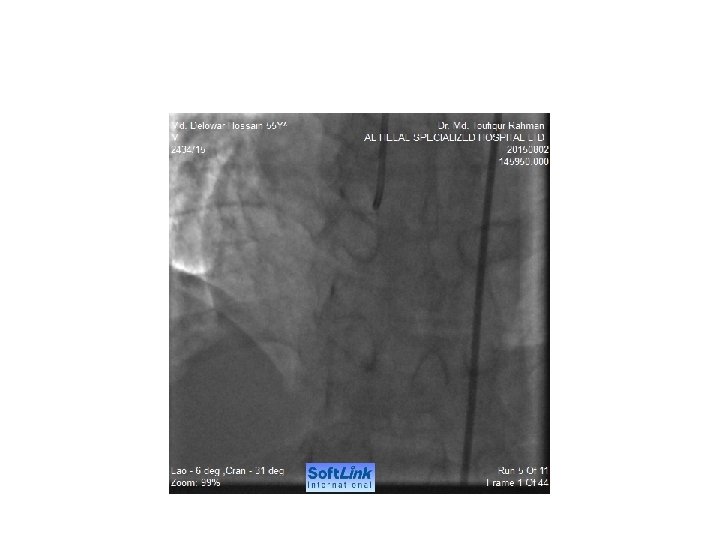
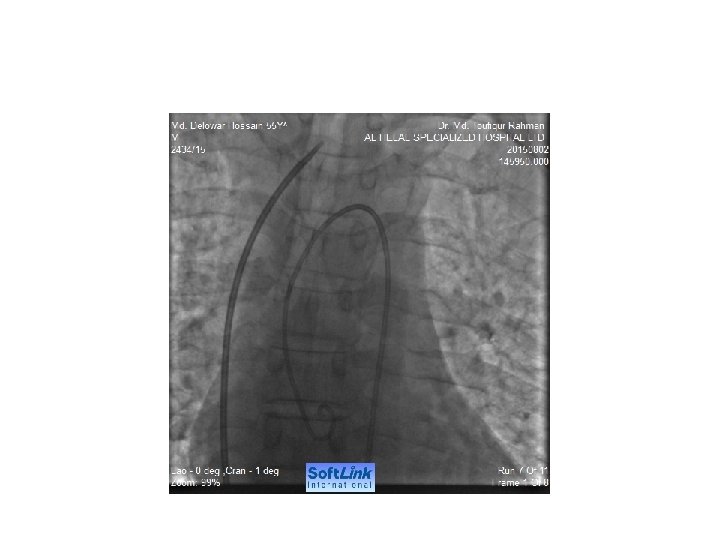
Cath Lab Procedure • Informed written consent taken • CAG done at first as patient was 55 years old. • Pig tail in root of aorta through rt femoral arterial approach.
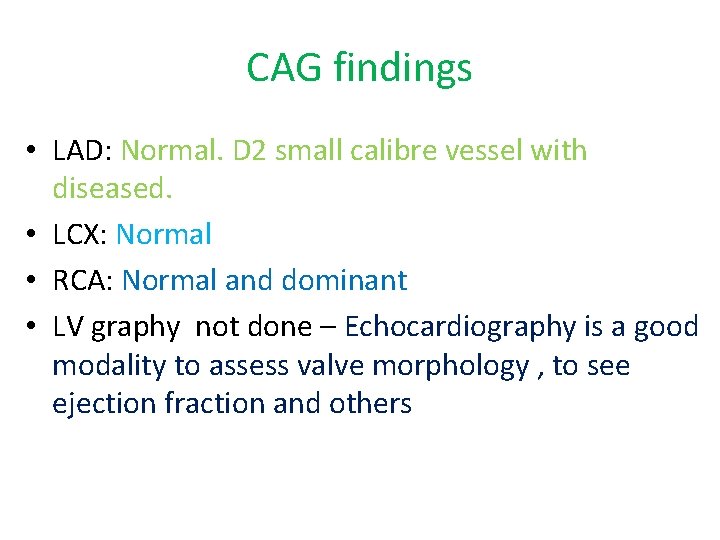
CAG findings • LAD: Normal. D 2 small calibre vessel with diseased. • LCX: Normal • RCA: Normal and dominant • LV graphy not done – Echocardiography is a good modality to assess valve morphology , to see ejection fraction and others
During PTMC • LA pressure – 48 mm • Aorta pressure-110 mm Hg
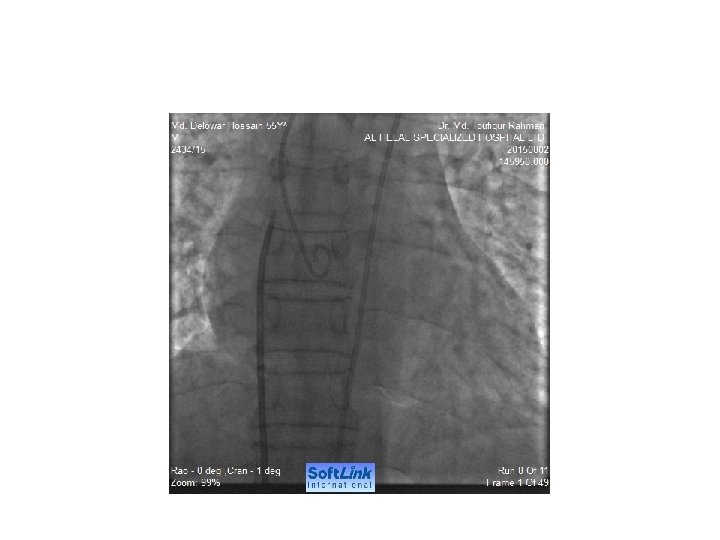
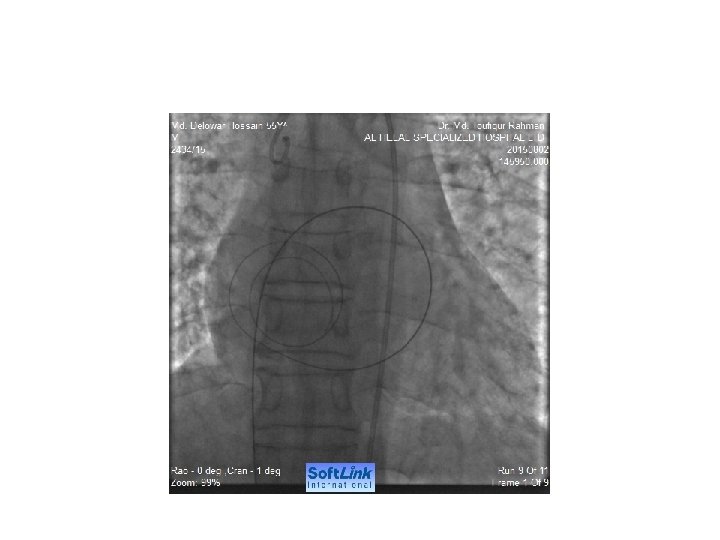
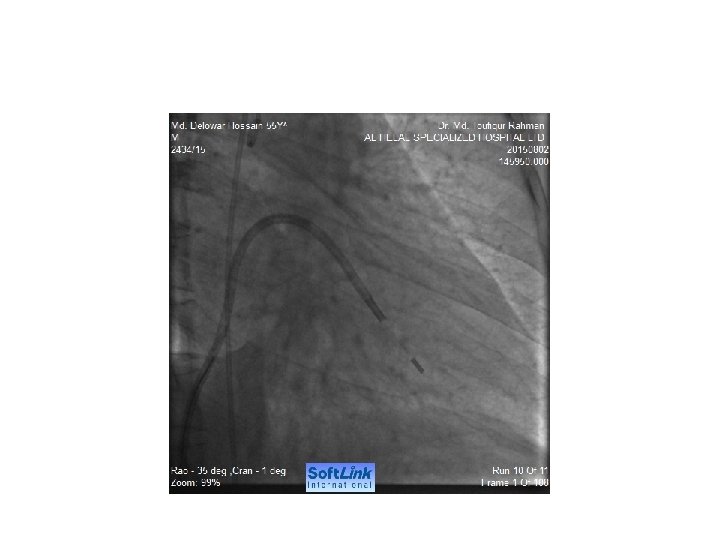
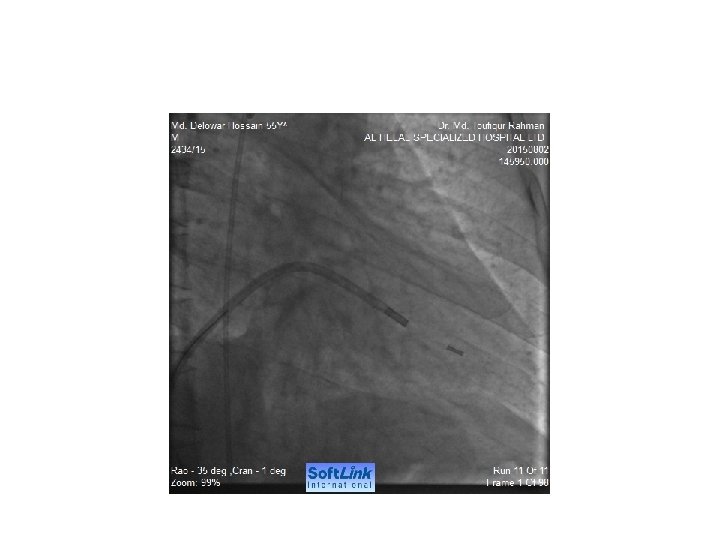
During PTMC • PTMC through Right femoral approach. • Use of Mullens sheath, septal puncture and Inoue balloon approach to LV from LA through mitral valve done smoothly and sucessfully. • 0. 025 inch coiled guidewire was inserted into the left atrium (LA). • A prechecked, sterelised 26 mm PTMC balloon catheter was inserted over the wire in the LA and was crossed across the MV using a J-shaped stylet.
During PTMC • The balloon was inflated with the 1 : 4 diluted contrast-saline mixtures at 26 mm volume. • The distal segment of the balloon inflated first followed by the proximal segment. • But during inflation of balloon to its optimal size, suddenly there was out pouching of distal portion of balloon happened, Immediately ballon deflation done and balloon drawn out.
Condition of the patient at this moment The PTMC was completed successfully using another balloon. Fortunately, there were no complications like air embolism, cardiac perforation despite tear in the layers of balloon.
After PTMC Catheter report • LA pressure-14 mm Hg • Aorta Pressure-115 mm Hg Echo report after 48 hours of procedure , before discharge • MVA-1. 5 cm 2, PPG-10 mm, MR-grade 1 • EF-68%
PTMC Balloon rupture Discussion • PTMC, first introduced by Inoue et al. (1984), is the first line of treatment for selected patients of rheumatic MS. • PTMC has proven efficacy and safety, but the cost of the catheter is a limitation especially in developing countries like Bangladesh • . Owing to lower cost and similar proven safety and efficacy, the Chinese balloon is increasingly being used as the preferred choice over Inoue balloon.
PTMC Balloon rupture Discussion • Both the Chinese and Inoue balloon catheters are made from polyvinyl chloride with a balloon attached to the distal end. • The trilayered balloon has a nylon micromesh layer sandwiched between the two latex layers. Unlike the Chinese balloon, the Inoue balloon has an additional vent in the balloon lumen and two small holes on the outer latex layer. • The vent is to remove the air during the preparation. • The holes are intended to prevent deflation failure. • The blood can enter the space between the latex layers and can get embedded in the mesh layer, which is difficult to be cleaned during resterilisation. This may be one of the factors contributing to the rupture of the Inoue balloon.
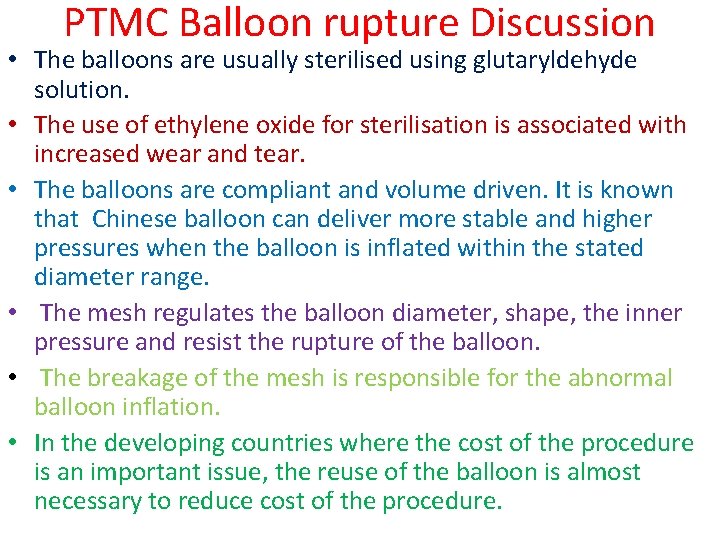
PTMC Balloon rupture Discussion • The balloons are usually sterilised using glutaryldehyde solution. • The use of ethylene oxide for sterilisation is associated with increased wear and tear. • The balloons are compliant and volume driven. It is known that Chinese balloon can deliver more stable and higher pressures when the balloon is inflated within the stated diameter range. • The mesh regulates the balloon diameter, shape, the inner pressure and resist the rupture of the balloon. • The breakage of the mesh is responsible for the abnormal balloon inflation. • In the developing countries where the cost of the procedure is an important issue, the reuse of the balloon is almost necessary to reduce cost of the procedure.
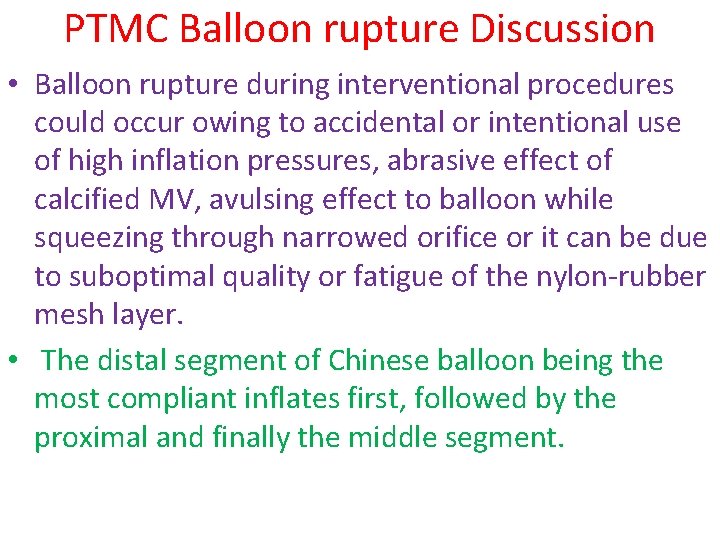
PTMC Balloon rupture Discussion • Balloon rupture during interventional procedures could occur owing to accidental or intentional use of high inflation pressures, abrasive effect of calcified MV, avulsing effect to balloon while squeezing through narrowed orifice or it can be due to suboptimal quality or fatigue of the nylon-rubber mesh layer. • The distal segment of Chinese balloon being the most compliant inflates first, followed by the proximal and finally the middle segment.
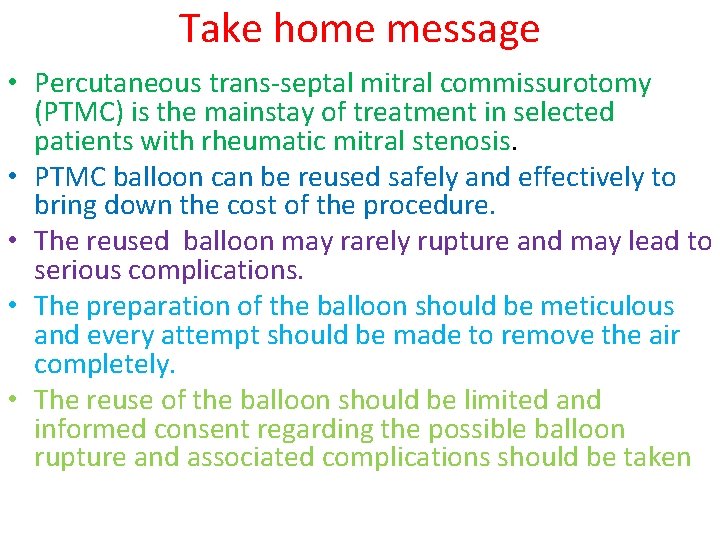
Take home message • Percutaneous trans-septal mitral commissurotomy (PTMC) is the mainstay of treatment in selected patients with rheumatic mitral stenosis. • PTMC balloon can be reused safely and effectively to bring down the cost of the procedure. • The reused balloon may rarely rupture and may lead to serious complications. • The preparation of the balloon should be meticulous and every attempt should be made to remove the air completely. • The reuse of the balloon should be limited and informed consent regarding the possible balloon rupture and associated complications should be taken
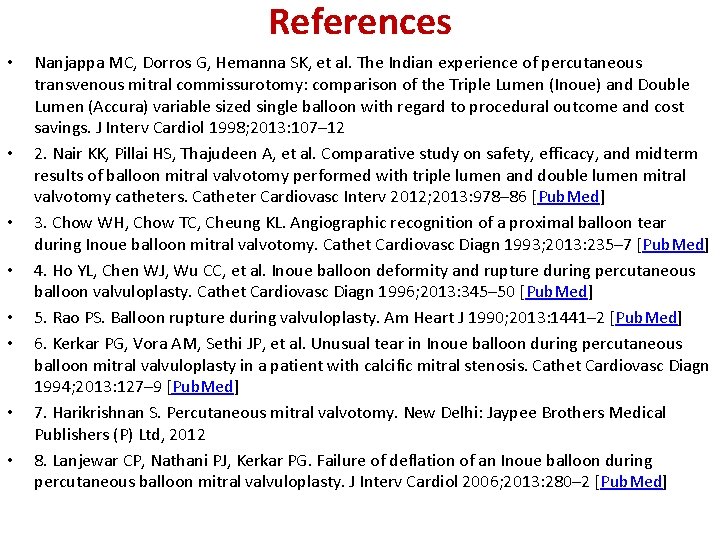
References • • Nanjappa MC, Dorros G, Hemanna SK, et al. The Indian experience of percutaneous transvenous mitral commissurotomy: comparison of the Triple Lumen (Inoue) and Double Lumen (Accura) variable sized single balloon with regard to procedural outcome and cost savings. J Interv Cardiol 1998; 2013: 107– 12 2. Nair KK, Pillai HS, Thajudeen A, et al. Comparative study on safety, efficacy, and midterm results of balloon mitral valvotomy performed with triple lumen and double lumen mitral valvotomy catheters. Catheter Cardiovasc Interv 2012; 2013: 978– 86 [Pub. Med] 3. Chow WH, Chow TC, Cheung KL. Angiographic recognition of a proximal balloon tear during Inoue balloon mitral valvotomy. Cathet Cardiovasc Diagn 1993; 2013: 235– 7 [Pub. Med] 4. Ho YL, Chen WJ, Wu CC, et al. Inoue balloon deformity and rupture during percutaneous balloon valvuloplasty. Cathet Cardiovasc Diagn 1996; 2013: 345– 50 [Pub. Med] 5. Rao PS. Balloon rupture during valvuloplasty. Am Heart J 1990; 2013: 1441– 2 [Pub. Med] 6. Kerkar PG, Vora AM, Sethi JP, et al. Unusual tear in Inoue balloon during percutaneous balloon mitral valvuloplasty in a patient with calcific mitral stenosis. Cathet Cardiovasc Diagn 1994; 2013: 127– 9 [Pub. Med] 7. Harikrishnan S. Percutaneous mitral valvotomy. New Delhi: Jaypee Brothers Medical Publishers (P) Ltd, 2012 8. Lanjewar CP, Nathani PJ, Kerkar PG. Failure of deflation of an Inoue balloon during percutaneous balloon mitral valvuloplasty. J Interv Cardiol 2006; 2013: 280– 2 [Pub. Med]