
Pteridophyta Archeopteris Archaeopteris An extinct genus Considered to
- Slides: 17
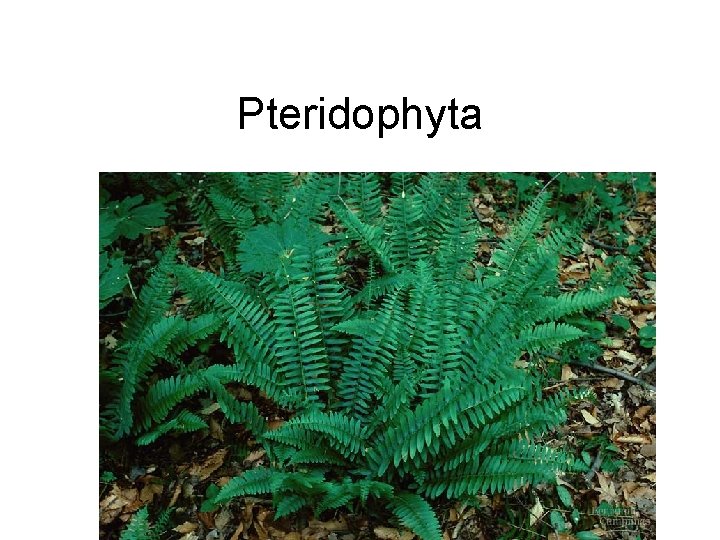
Pteridophyta
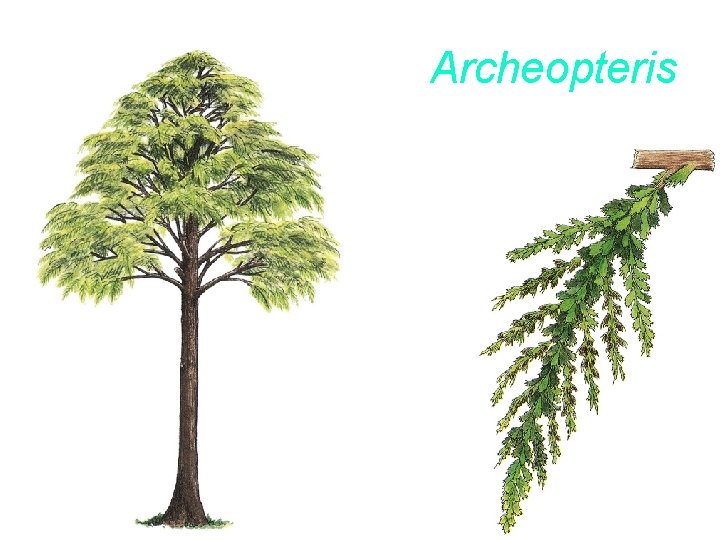
Archeopteris
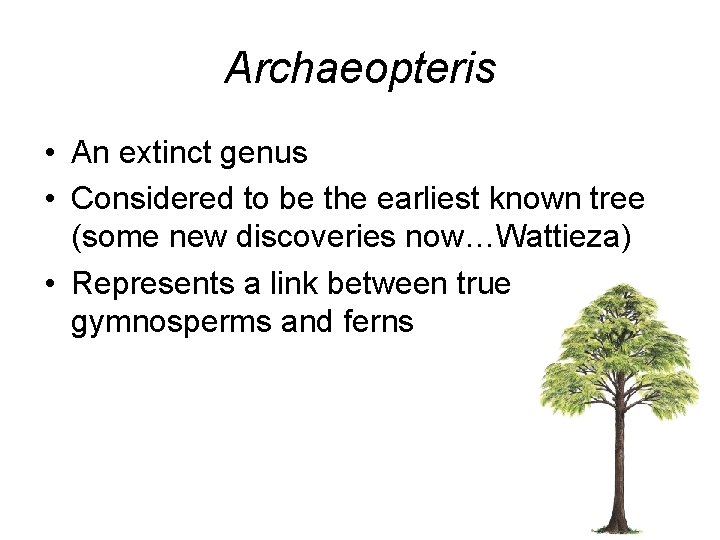
Archaeopteris • An extinct genus • Considered to be the earliest known tree (some new discoveries now…Wattieza) • Represents a link between true gymnosperms and ferns
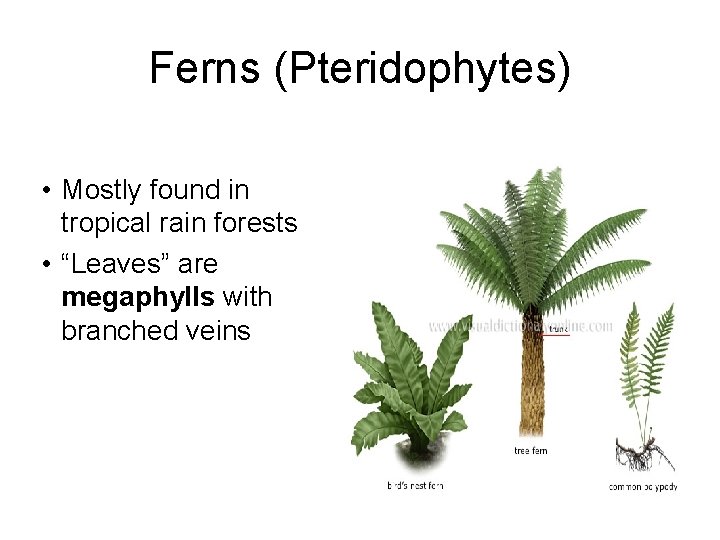
Ferns (Pteridophytes) • Mostly found in tropical rain forests • “Leaves” are megaphylls with branched veins
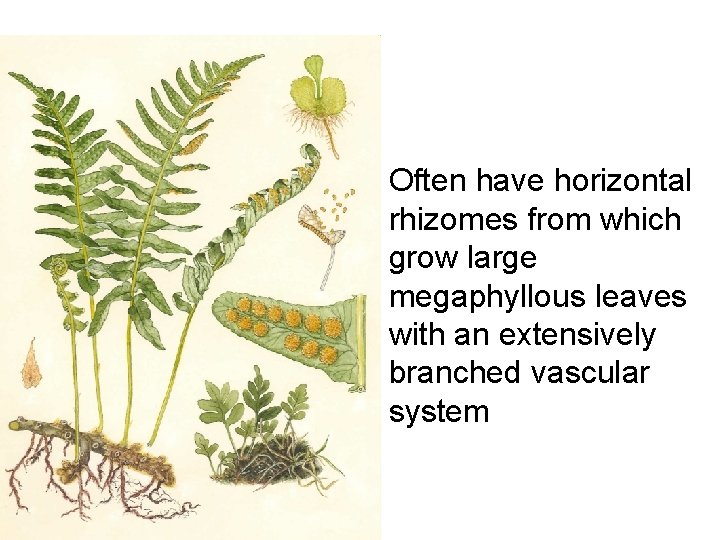
• Often have horizontal rhizomes from which grow large megaphyllous leaves with an extensively branched vascular system
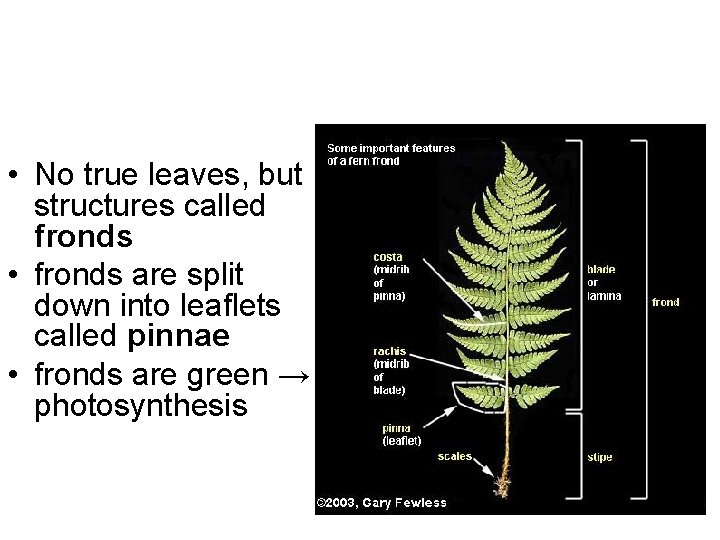
• No true leaves, but structures called fronds • fronds are split down into leaflets called pinnae • fronds are green → photosynthesis
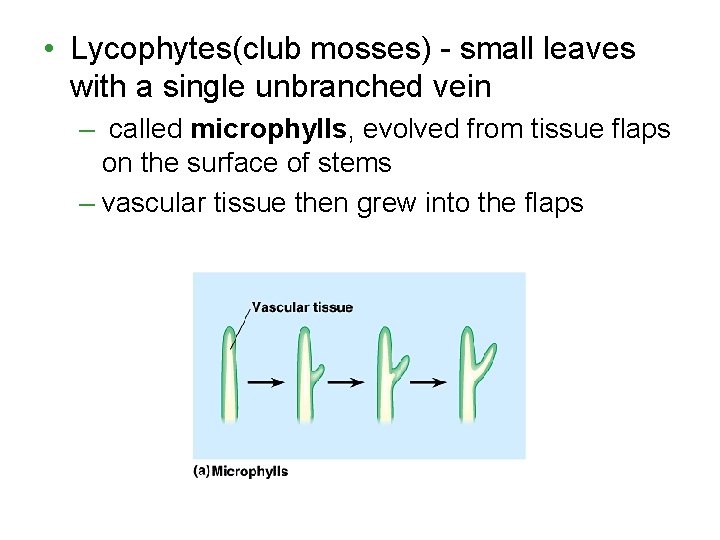
• Lycophytes(club mosses) - small leaves with a single unbranched vein – called microphylls, evolved from tissue flaps on the surface of stems – vascular tissue then grew into the flaps
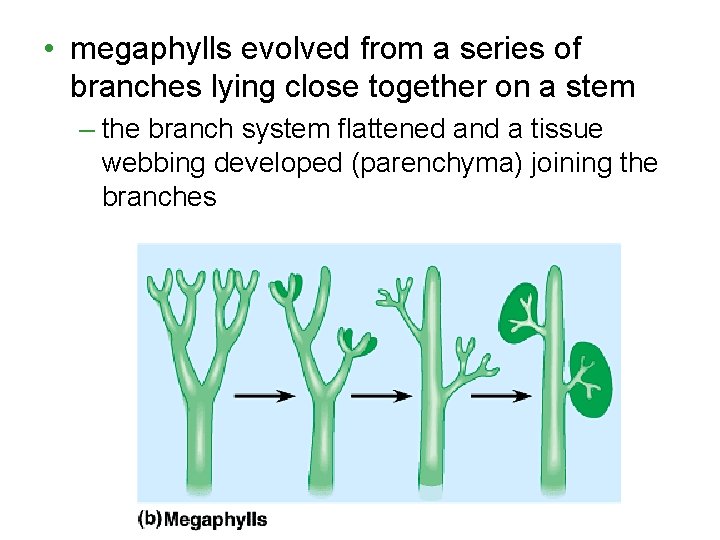
• megaphylls evolved from a series of branches lying close together on a stem – the branch system flattened and a tissue webbing developed (parenchyma) joining the branches
• In contrast, the leaves of other vascular plants, megaphylls, are much larger and have highly-branched vascular system. – A branched vascular system can deliver water and minerals to the expanded leaf. – It can export larger quantities of sugars from the leaf. – This supports more photosynthetic activity. Copyright © 2002 Pearson Education, Inc. , publishing as Benjamin Cummings
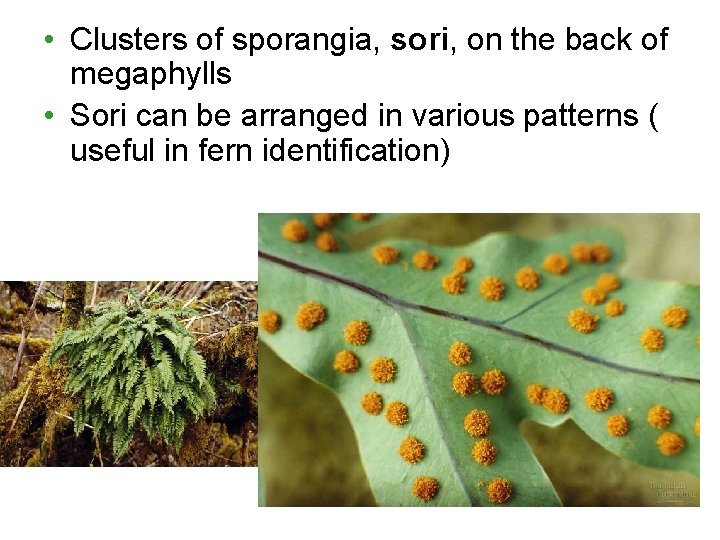
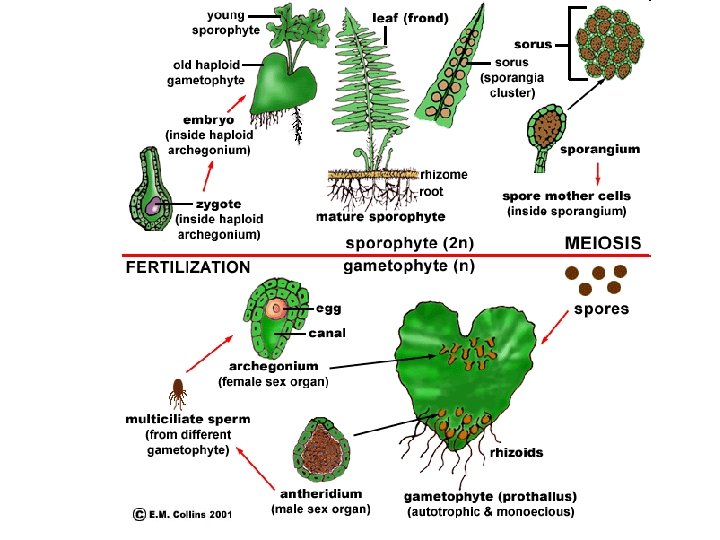
• Clusters of sporangia, sori, on the back of megaphylls • Sori can be arranged in various patterns ( useful in fern identification)
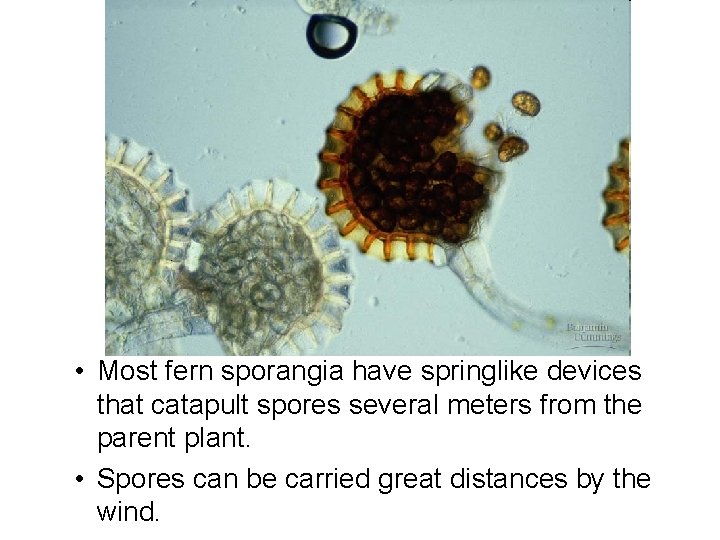
• Most fern sporangia have springlike devices that catapult spores several meters from the parent plant. • Spores can be carried great distances by the wind.
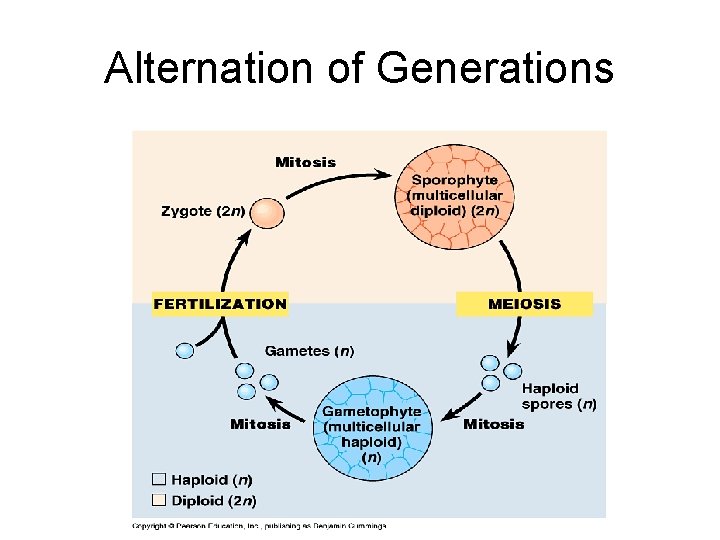
Reproduction • Reproduce by spores in an alternating generations. • The fern itself is the sporophyte produces asexual spores.
Alternation of Generations
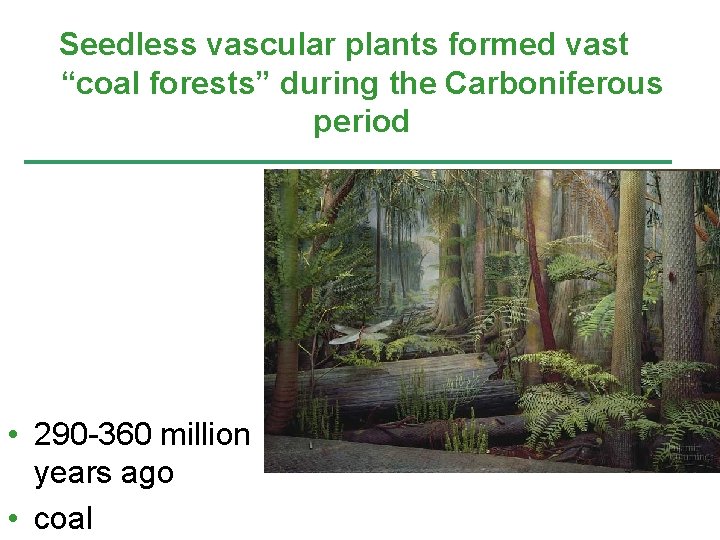
Seedless vascular plants formed vast “coal forests” during the Carboniferous period • 290 -360 million years ago • coal
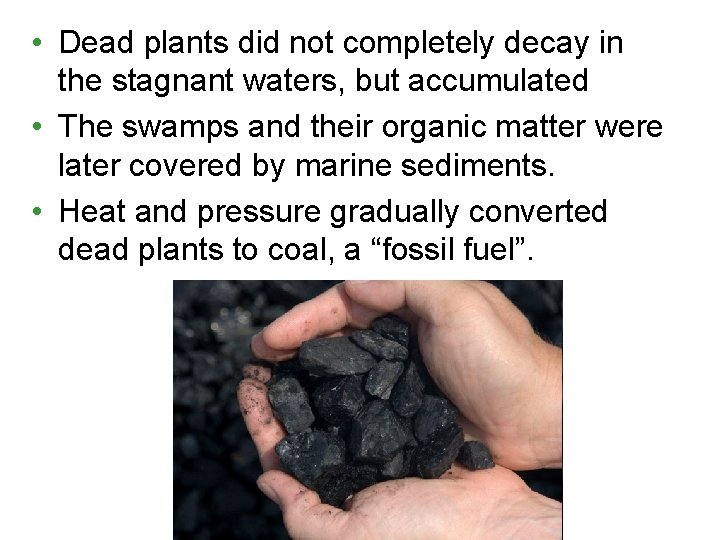
• Dead plants did not completely decay in the stagnant waters, but accumulated • The swamps and their organic matter were later covered by marine sediments. • Heat and pressure gradually converted dead plants to coal, a “fossil fuel”.
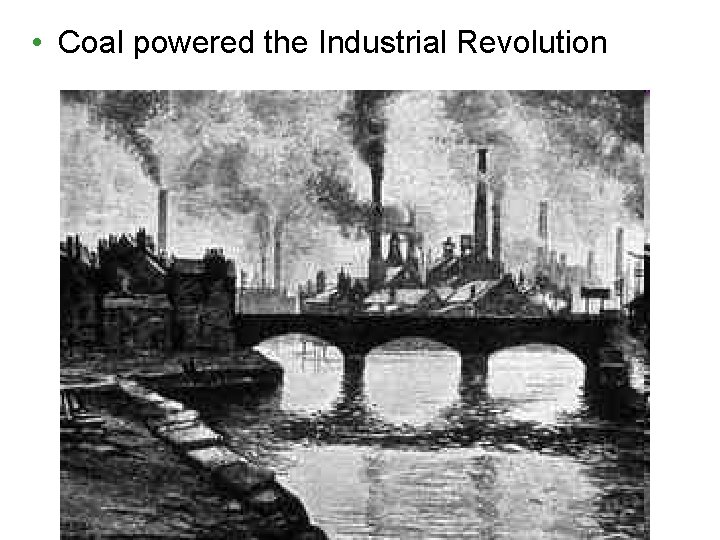
• Coal powered the Industrial Revolution