
Psychosocial factors in the workplace From prevention to




- Slides: 52
Psychosocial factors in the workplace From prevention to amplition Wilmar Schaufeli KU Leuven, Belgium & Utrecht University, The Netherlands
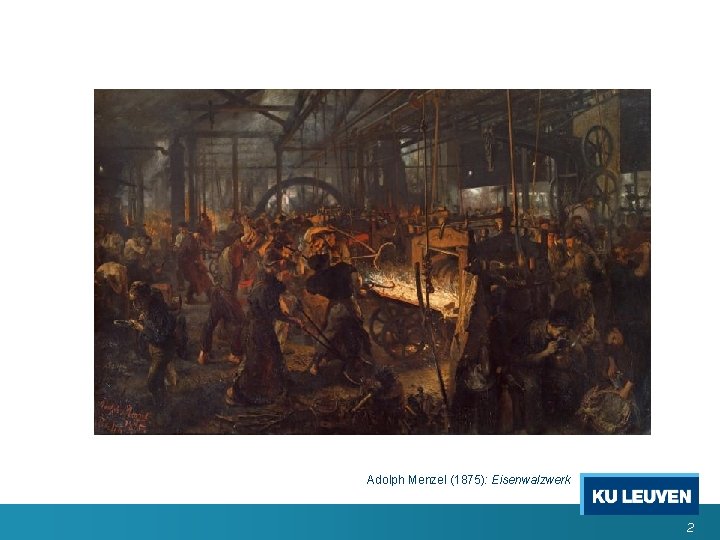
Adolph Menzel (1875): Eisenwalzwerk 2
Google Campus Dublin (2018)
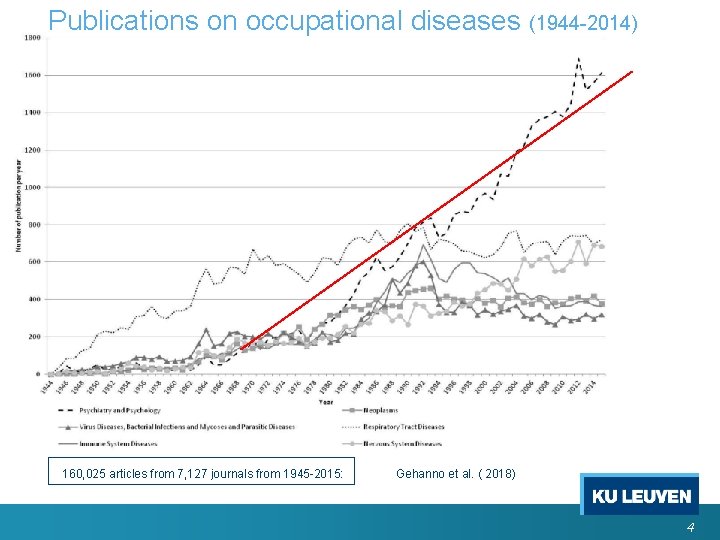
Publications on occupational diseases (1944 -2014) 160, 025 articles from 7, 127 journals from 1945 -2015: Gehanno et al. ( 2018) 4
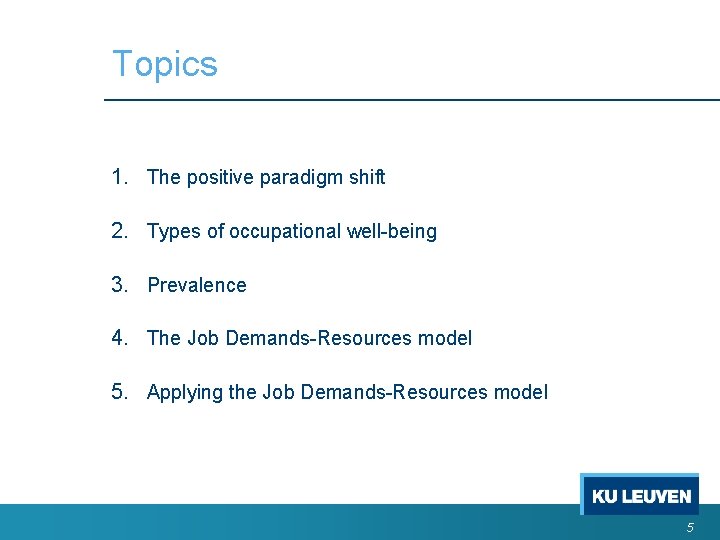
Topics 1. The positive paradigm shift 2. Types of occupational well-being 3. Prevalence 4. The Job Demands-Resources model 5. Applying the Job Demands-Resources model 5
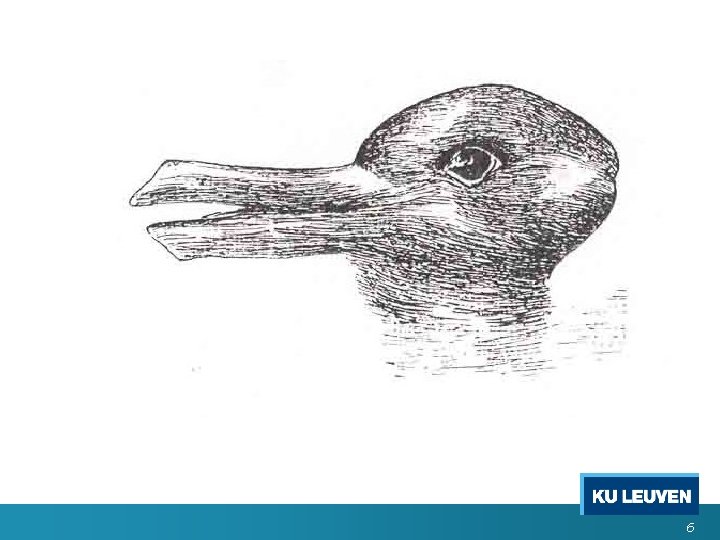
6
7
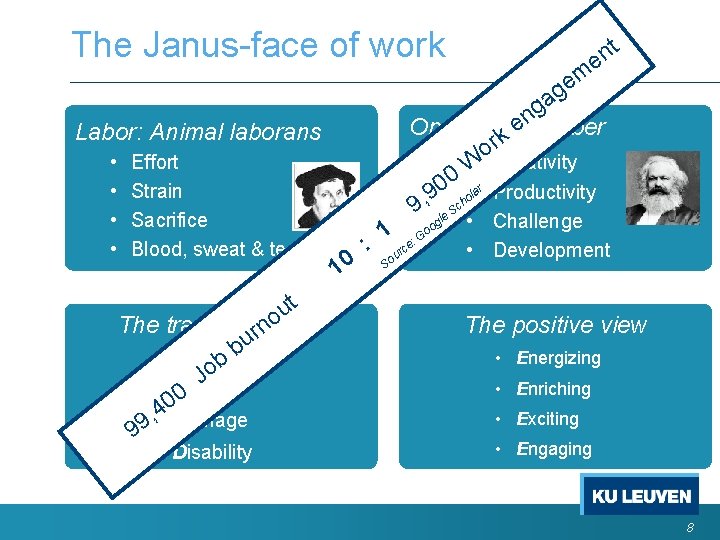
The Janus-face of work Labor: Animal laborans • • Effort Strain Sacrifice Blood, sweat & tears t u oview The traditional n r u b • Disease b o J • Disorder 0 0 • , 4 Damage 9 9 • Disability 10 : 1 So t n e m e g a g n faber e Opus: Homo rk o • W Creativity 0 r 0 9 ch • ola Productivity , 9 le S : ce ur o Go g • Challenge • Development The positive view • Energizing • Enriching • Exciting • Engaging 8
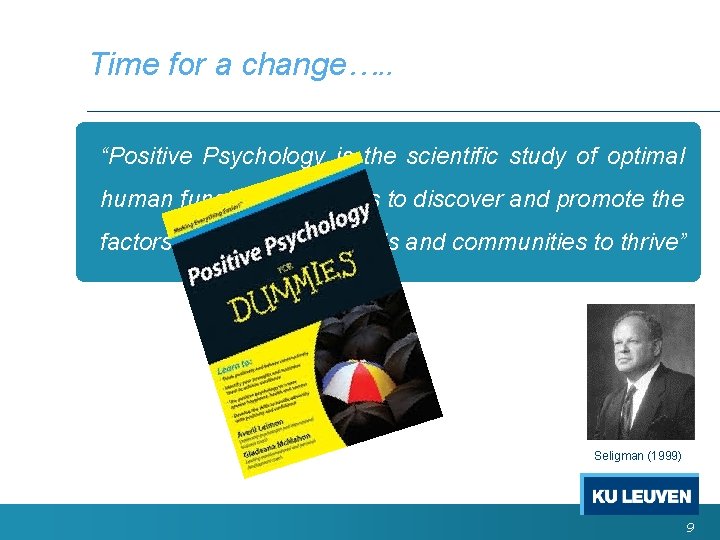
Time for a change…. . “Positive Psychology is the scientific study of optimal human functioning. It aims to discover and promote the factors that allow individuals and communities to thrive” Seligman (1999) 9
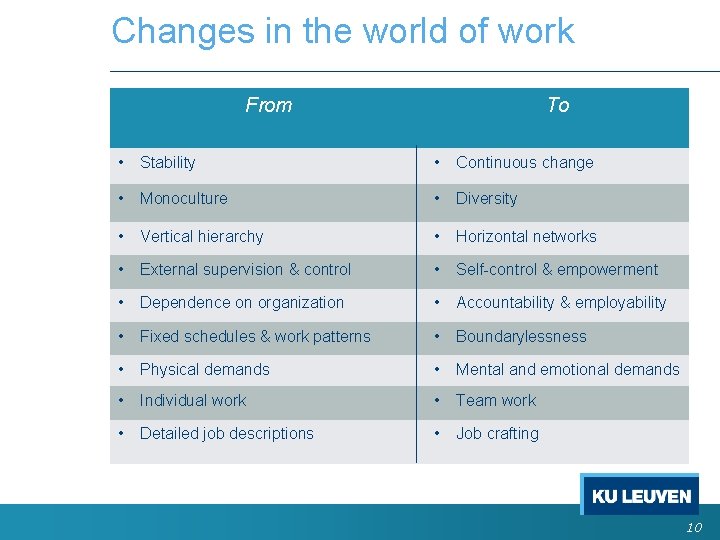
Changes in the world of work From To • Stability • Continuous change • Monoculture • Diversity • Vertical hierarchy • Horizontal networks • External supervision & control • Self-control & empowerment • Dependence on organization • Accountability & employability • Fixed schedules & work patterns • Boundarylessness • Physical demands • Mental and emotional demands • Individual work • Team work • Detailed job descriptions • Job crafting 10
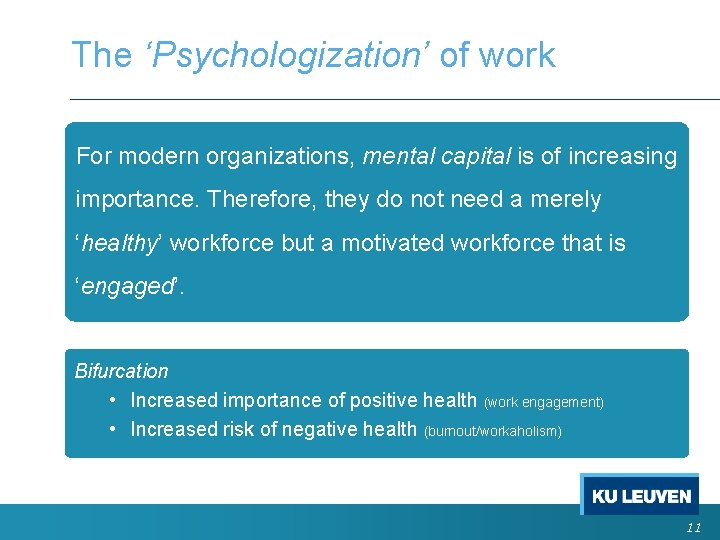
The ‘Psychologization’ of work For modern organizations, mental capital is of increasing importance. Therefore, they do not need a merely ‘healthy’ workforce but a motivated workforce that is ‘engaged’. Bifurcation • Increased importance of positive health (work engagement) • Increased risk of negative health (burnout/workaholism) 11
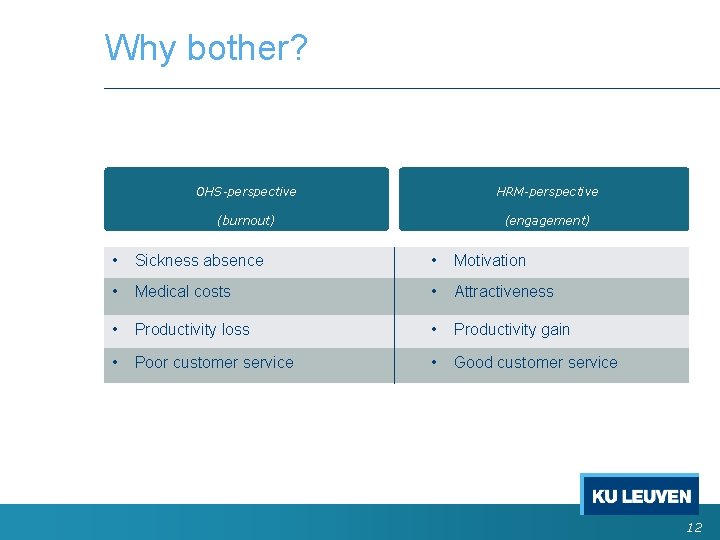
Why bother? OHS-perspective HRM-perspective (burnout) (engagement) • Sickness absence • Motivation • Medical costs • Attractiveness • Productivity loss • Productivity gain • Poor customer service • Good customer service 12
Types of occupational well-being 13
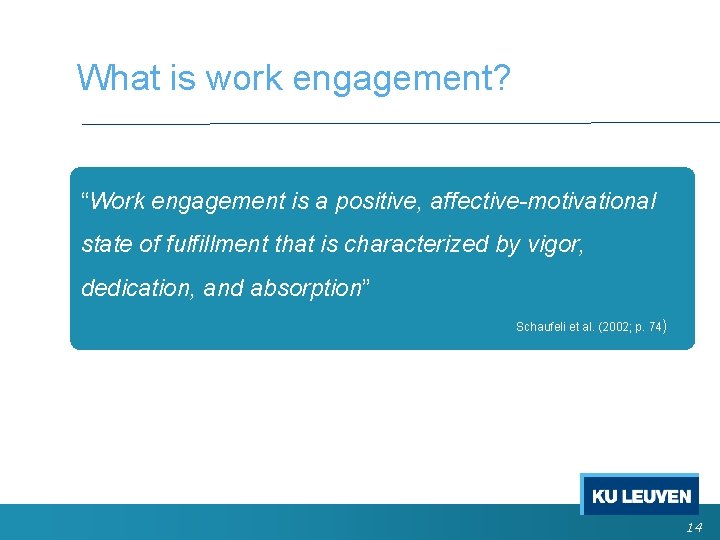
What is work engagement? “Work engagement is a positive, affective-motivational state of fulfillment that is characterized by vigor, dedication, and absorption” Schaufeli et al. (2002; p. 74) 14
Rapping flight attendent 15
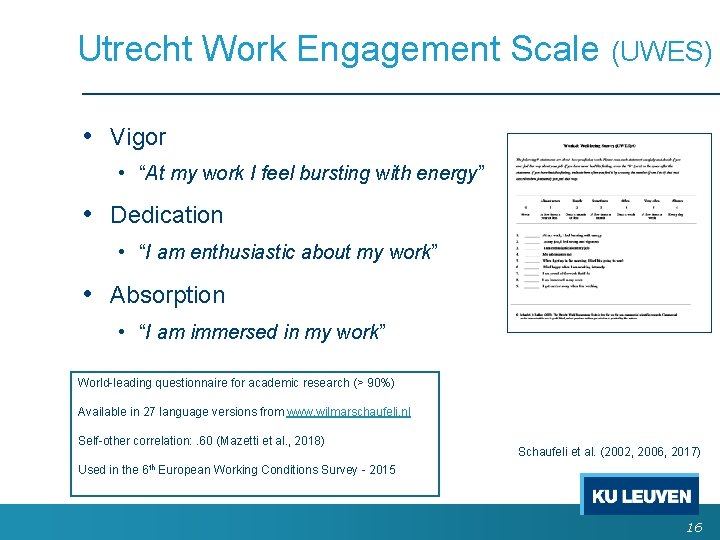
Utrecht Work Engagement Scale (UWES) • Vigor • “At my work I feel bursting with energy” • Dedication • “I am enthusiastic about my work” • Absorption • “I am immersed in my work” World-leading questionnaire for academic research (> 90%) Available in 27 language versions from www. wilmarschaufeli. nl Self-other correlation: . 60 (Mazetti et al. , 2018) Schaufeli et al. (2002, 2006, 2017) Used in the 6 th European Working Conditions Survey - 2015 16
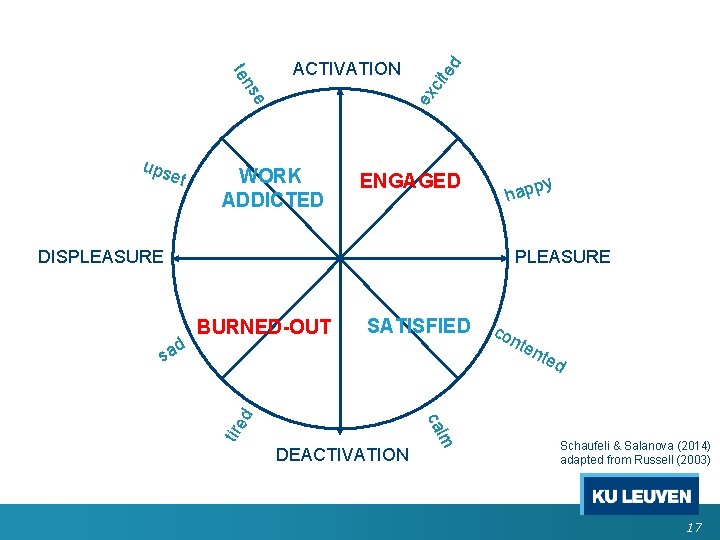
ups et ed cit ex se ten ACTIVATION WORK ADDICTED ENGAGED py hap DISPLEASURE SATISFIED co nte d DEACTIVATION m cal d BURNED-OUT tire d sa PLEASURE Schaufeli & Salanova (2014) adapted from Russell (2003) 17
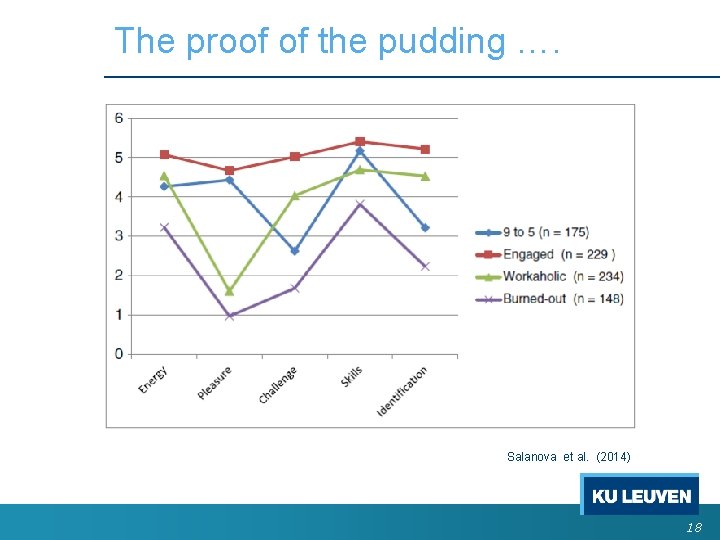
The proof of the pudding …. Putting the typology to the test Salanova et al. (2014) 18
Prevalences in Europe 19
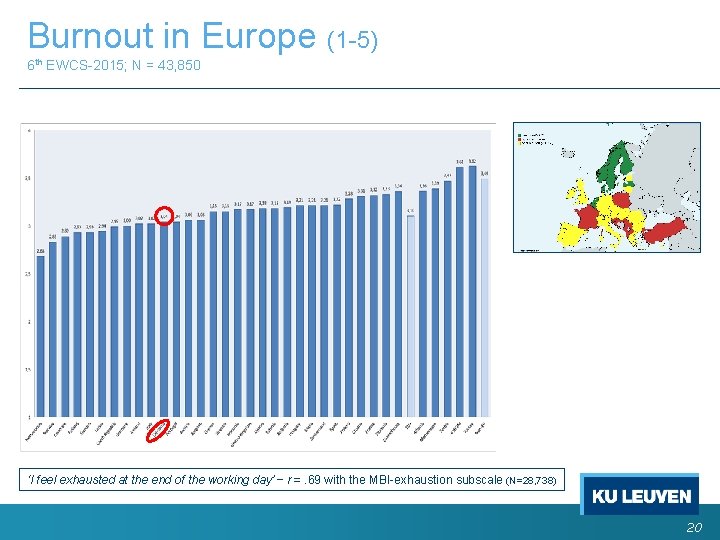
Burnout in Europe (1 -5) 6 th EWCS-2015; N = 43, 850 ‘I feel exhausted at the end of the working day’ – r =. 69 with the MBI-exhaustion subscale (N=28, 738) 20
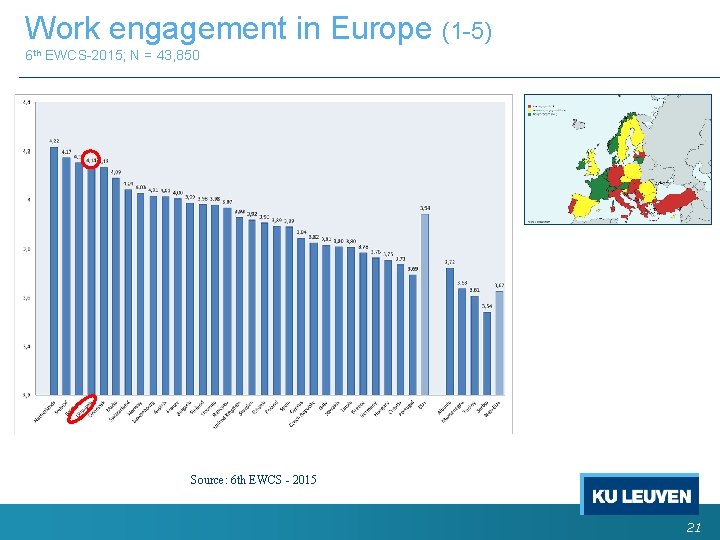
Work engagement in Europe (1 -5) 6 th EWCS-2015; N = 43, 850 Source: 6 th EWCS - 2015 21
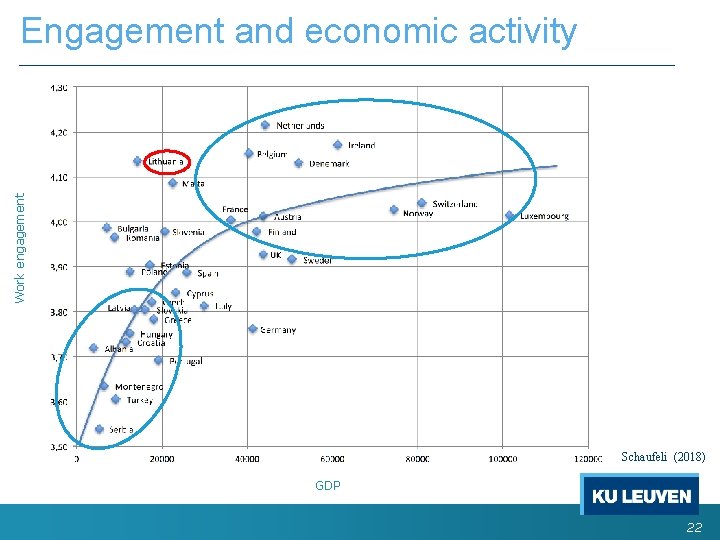
Work engagement Engagement and economic activity Schaufeli (2018) GDP 22
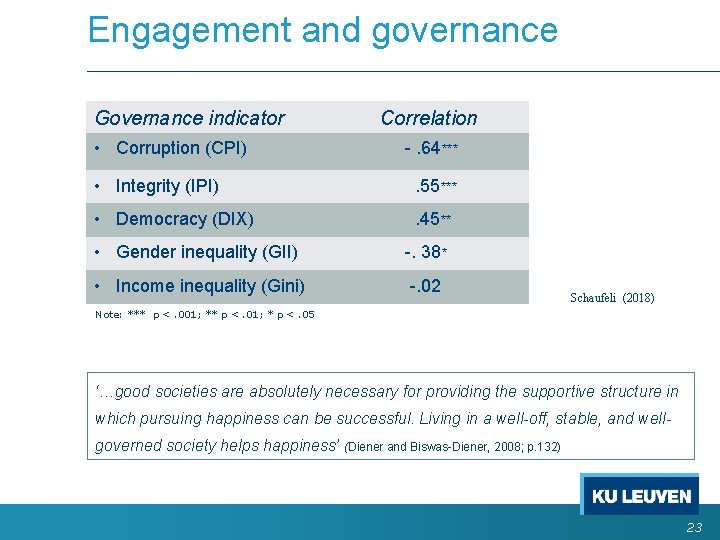
Engagement and governance Governance indicator • Corruption (CPI) Correlation -. 64*** • Integrity (IPI) . 55*** • Democracy (DIX) . 45** • Gender inequality (GII) -. 38* • Income inequality (Gini) -. 02 Schaufeli (2018) Note: *** p <. 001; ** p <. 01; * p <. 05 ‘…good societies are absolutely necessary for providing the supportive structure in which pursuing happiness can be successful. Living in a well-off, stable, and wellgoverned society helps happiness’ (Diener and Biswas-Diener, 2008; p. 132) 23
The Job Demands Resources model 24
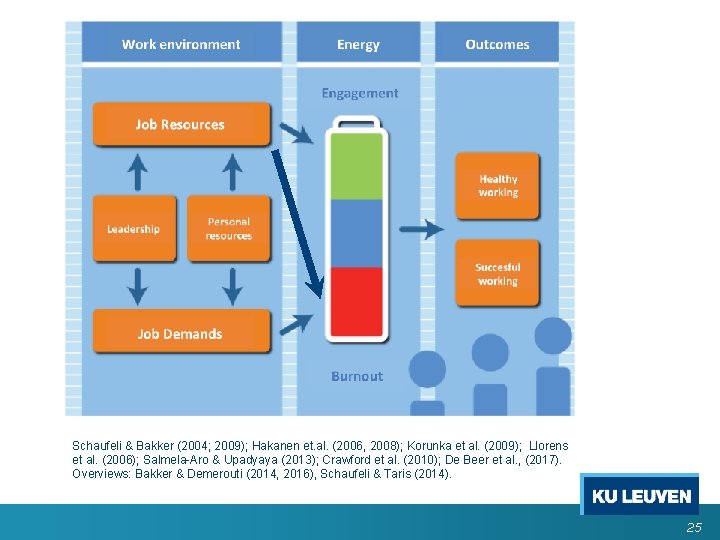
Schaufeli & Bakker (2004; 2009); Hakanen et. al. (2006, 2008); Korunka et al. (2009); Llorens et al. (2006); Salmela-Aro & Upadyaya (2013); Crawford et al. (2010); De Beer et al. , (2017). Overviews: Bakker & Demerouti (2014, 2016), Schaufeli & Taris (2014). 25
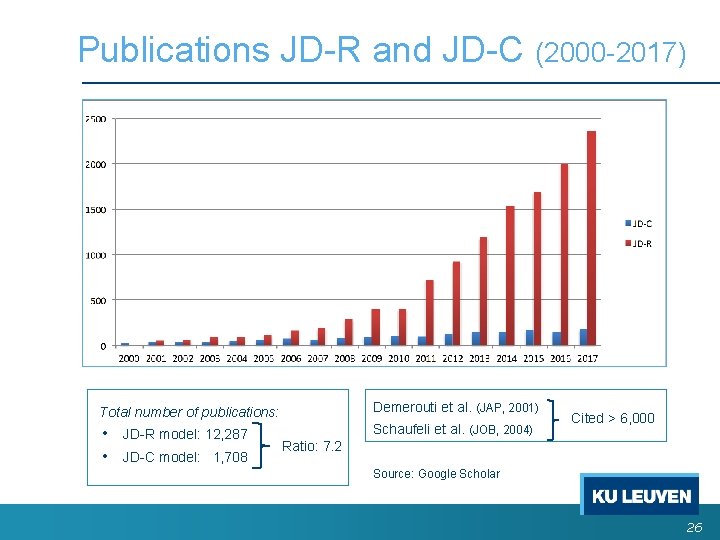
Publications JD-R and JD-C (2000 -2017) Total number of publications: Demerouti et al. (JAP, 2001) • • Schaufeli et al. (JOB, 2004) JD-R model: 12, 287 JD-C model: 1, 708 Cited > 6, 000 Ratio: 7. 2 Source: Google Scholar 26
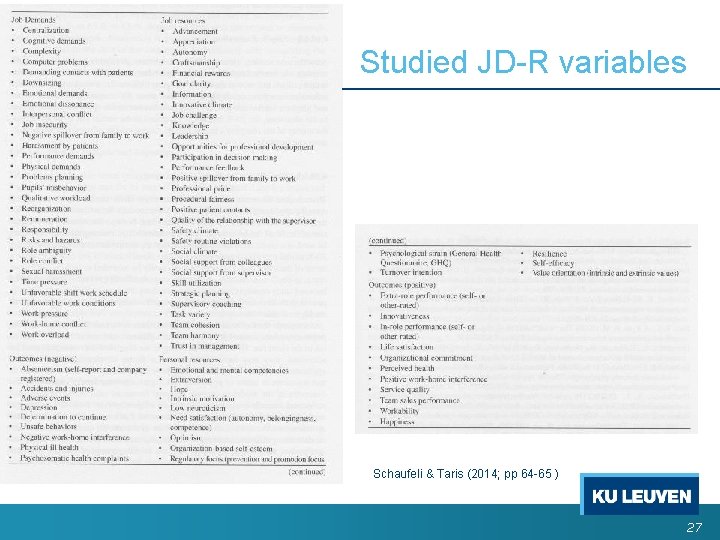
Studied JD-R variables Schaufeli & Taris (2014; pp 64 -65 ) 27
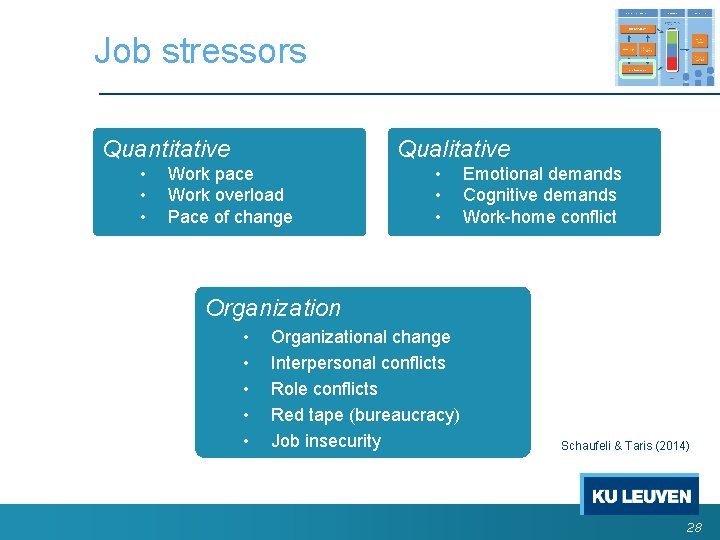
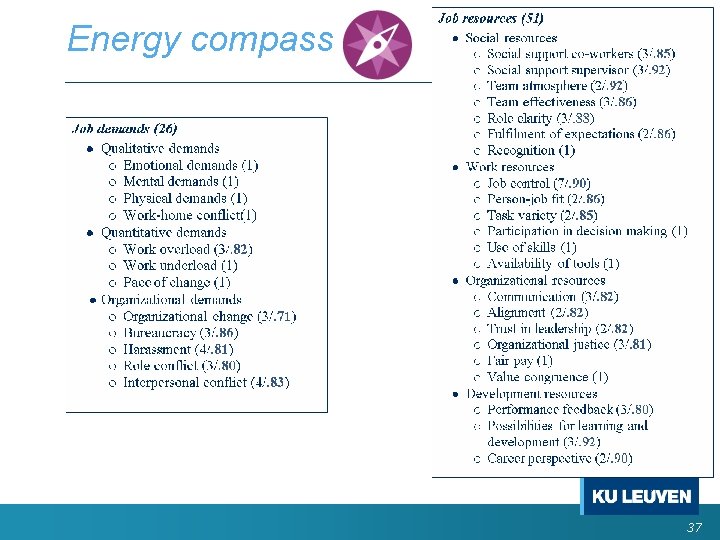
Job stressors Quantitative • • • Qualitative Work pace Work overload Pace of change • • • Emotional demands Cognitive demands Work-home conflict Organization • • • Organizational change Interpersonal conflicts Role conflicts Red tape (bureaucracy) Job insecurity Schaufeli & Taris (2014) 28
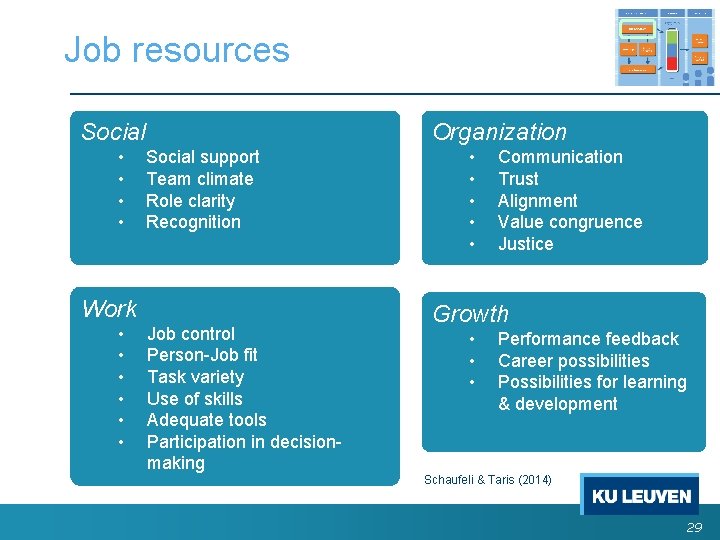
Job resources Social • • Organization Social support Team climate Role clarity Recognition Work • • • Job control Person-Job fit Task variety Use of skills Adequate tools Participation in decisionmaking • • • Communication Trust Alignment Value congruence Justice Growth • • • Performance feedback Career possibilities Possibilities for learning & development Schaufeli & Taris (2014) 29
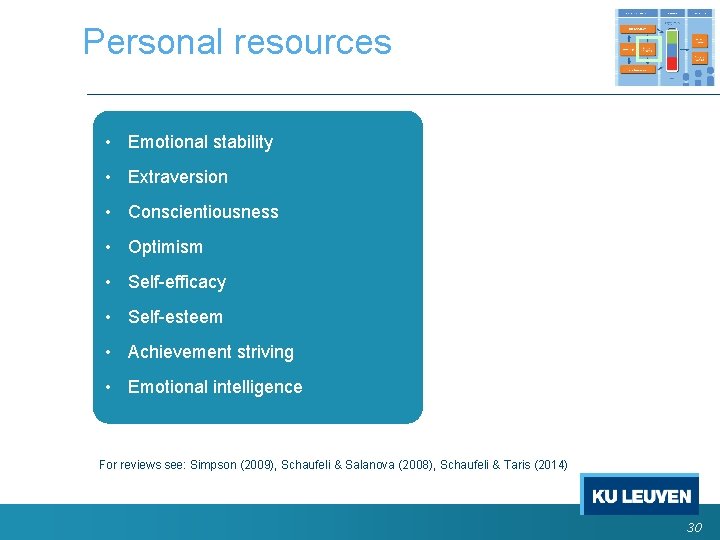
Personal resources • Emotional stability • Extraversion • Conscientiousness • Optimism • Self-efficacy • Self-esteem • Achievement striving • Emotional intelligence For reviews see: Simpson (2009), Schaufeli & Salanova (2008), Schaufeli & Taris (2014) 30
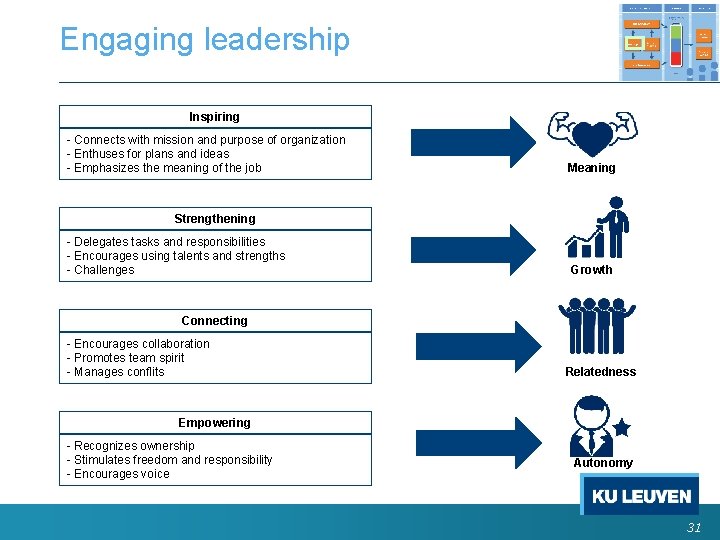
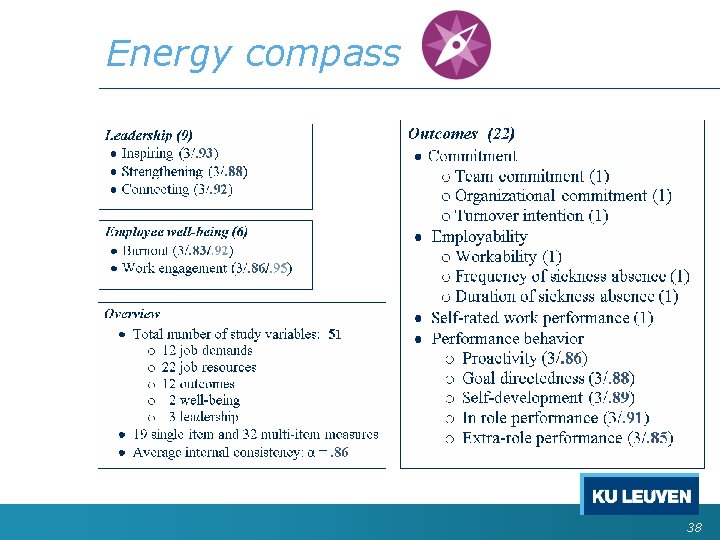
Engaging leadership Inspiring - Connects with mission and purpose of organization - Enthuses for plans and ideas - Emphasizes the meaning of the job Meaning Strengthening - Delegates tasks and responsibilities - Encourages using talents and strengths - Challenges Growth Connecting - Encourages collaboration - Promotes team spirit - Manages conflits Relatedness Empowering - Recognizes ownership - Stimulates freedom and responsibility - Encourages voice Autonomy 31
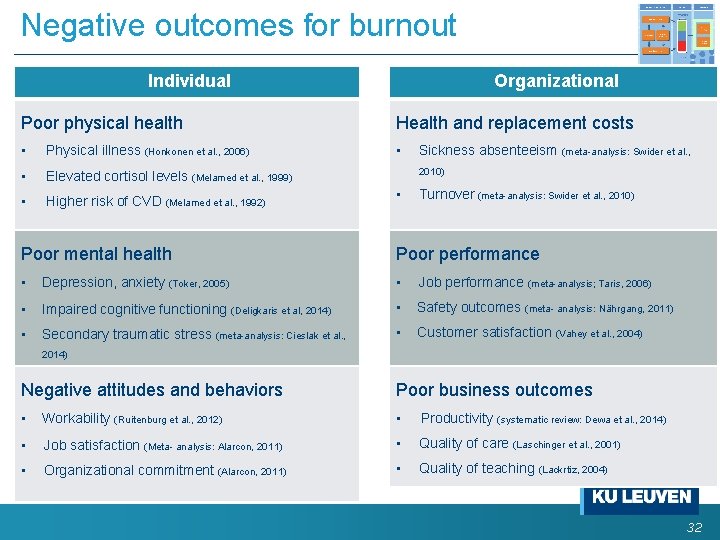
Negative outcomes for burnout Individual Organizational Poor physical health Health and replacement costs • Physical illness (Honkonen et al. , 2006) • • Elevated cortisol levels (Melamed et al. , 1999) • Higher risk of CVD (Melamed et al. , 1992) Sickness absenteeism (meta-analysis: Swider et al. , 2010) • Turnover (meta-analysis: Swider et al. , 2010) Poor mental health Poor performance • Depression, anxiety (Toker, 2005) • Job performance (meta-analysis; Taris, 2006) • Impaired cognitive functioning (Deligkaris et al, 2014) • Safety outcomes (meta- analysis: Nährgang, 2011) • Secondary traumatic stress (meta-analysis: Cieslak et al. , • Customer satisfaction (Vahey et al. , 2004) 2014) Negative attitudes and behaviors Poor business outcomes • Workability (Ruitenburg et al. , 2012) • Productivity (systematic review: Dewa et al. , 2014) • Job satisfaction (Meta- analysis: Alarcon, 2011) • Quality of care (Laschinger et al. , 2001) • Organizational commitment (Alarcon, 2011) • Quality of teaching (Lackrtiz, 2004) 32
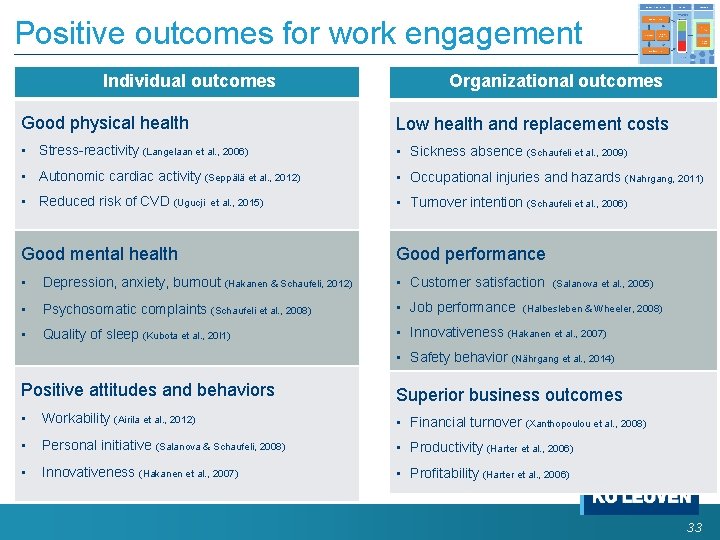
Positive outcomes for work engagement Individual outcomes Organizational outcomes Good physical health Low health and replacement costs • Stress-reactivity (Langelaan et al. , 2006) • Sickness absence (Schaufeli et al. , 2009) • Autonomic cardiac activity (Seppälä et al. , 2012) • Occupational injuries and hazards (Nahrgang, 2011) • Reduced risk of CVD (Ugucji • Turnover intention (Schaufeli et al. , 2006) et al. , 2015) Good mental health Good performance • Depression, anxiety, burnout (Hakanen & Schaufeli, 2012) • Customer satisfaction • Psychosomatic complaints (Schaufeli et al. , 2008) • Job performance • Quality of sleep (Kubota et al. , 20 l 1) • Innovativeness (Hakanen et al. , 2007) (Salanova et al. , 2005) (Halbesleben & Wheeler, 2008) • Safety behavior (Nährgang et al. , 2014) Positive attitudes and behaviors Superior business outcomes • Workability (Airila et al. , 2012) • Financial turnover (Xanthopoulou et al. , 2008) • Personal initiative (Salanova & Schaufeli, 2008) • Productivity (Harter et al. , 2006) • Innovativeness (Hakanen et al. , 2007) • Profitability (Harter et al. , 2006) 33
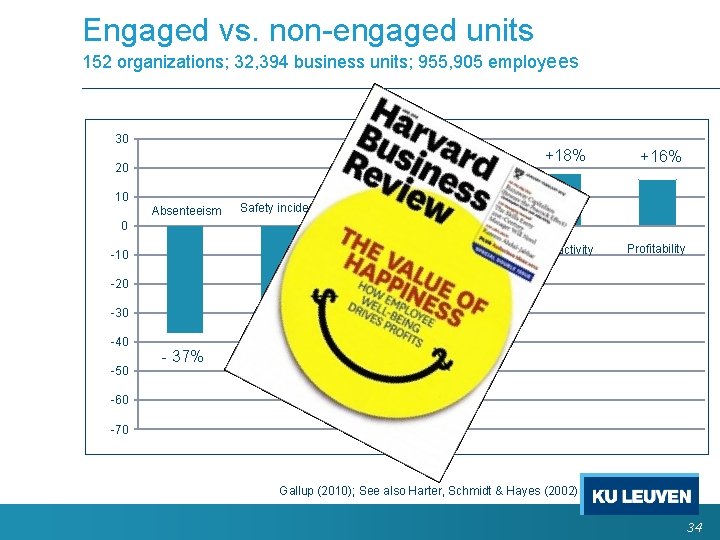
Engaged vs. non-engaged units 152 organizations; 32, 394 business units; 955, 905 employees 30 +12% 20 10 Absenteeism +18% +16% Safety incidents Quality (defects) 0 Customer satisfaction -10 Productivity Profitability -20 -30 -40 -50 -60 -70 - 37% - 49% - 60% Gallup (2010); See also Harter, Schmidt & Hayes (2002) 34
Practical use of the JD-R model • Assessment • Interventions • Outlook 35
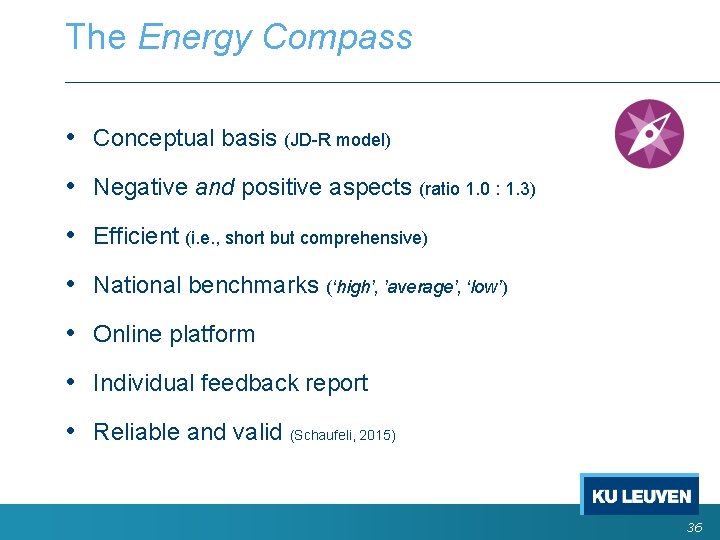
The Energy Compass • Conceptual basis (JD-R model) • Negative and positive aspects (ratio 1. 0 : 1. 3) • Efficient (i. e. , short but comprehensive) • National benchmarks (‘high’, ’average’, ‘low’) • Online platform • Individual feedback report • Reliable and valid (Schaufeli, 2015) 36
Energy compass Page 37 37
Energy compass Page 38 38
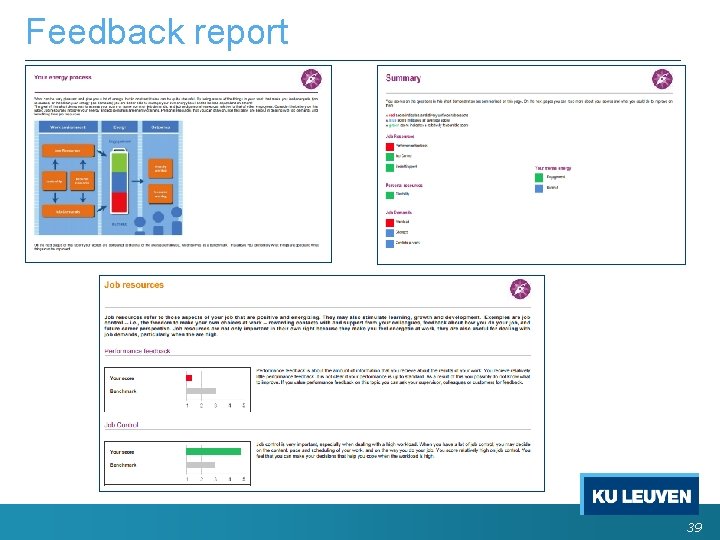
Feedback report 39
The JD-R model • Interventions 40
Treatment Prevention ‘Amplition’ 41
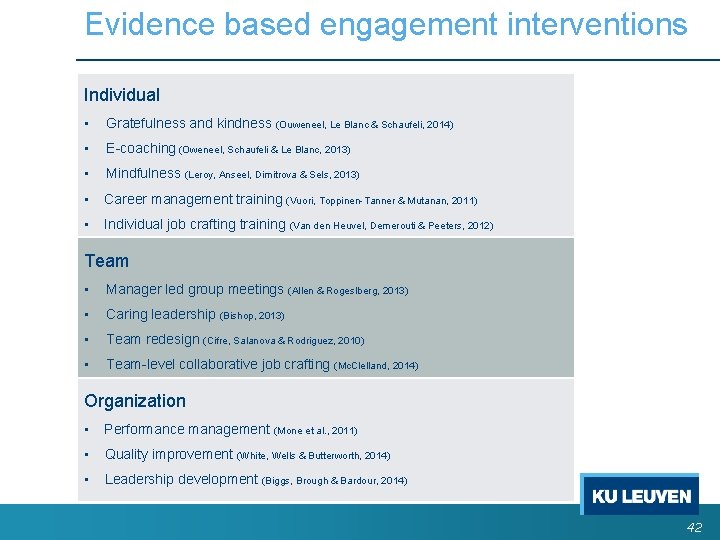
Evidence based engagement interventions Individual • Gratefulness and kindness (Ouweneel, Le Blanc & Schaufeli, 2014) • E-coaching (Oweneel, Schaufeli & Le Blanc, 2013) • Mindfulness (Leroy, Anseel, Dimitrova & Sels, 2013) • Career management training (Vuori, Toppinen-Tanner & Mutanan, 2011) • Individual job crafting training (Van den Heuvel, Demerouti & Peeters, 2012) Team • Manager led group meetings (Allen & Rogeslberg, 2013) • Caring leadership (Bishop, 2013) • Team redesign (Cifre, Salanova & Rodriguez, 2010) • Team-level collaborative job crafting (Mc. Clelland, 2014) Organization • Performance management (Mone et al. , 2011) • Quality improvement (White, Wells & Butterworth, 2014) • Leadership development (Biggs, Brough & Bardour, 2014) 42
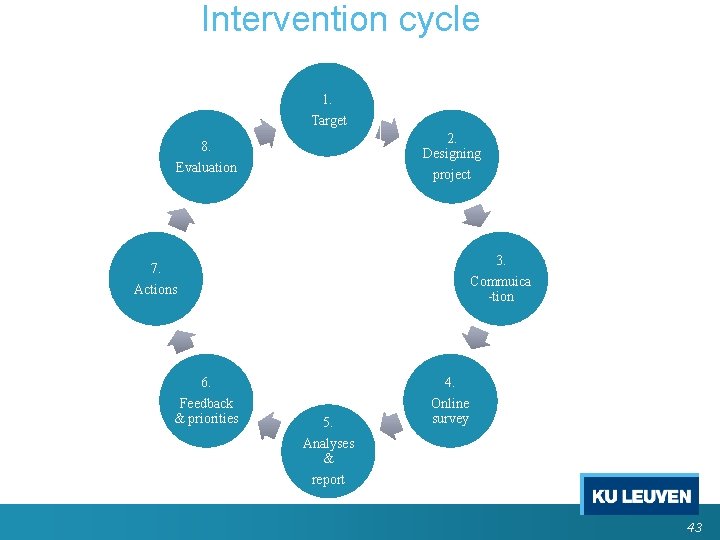
Intervention cycle 1. Target 2. Designing project 8. Evaluation 3. Commuica -tion 7. Actions 6. Feedback & priorities 5. 4. Online survey Analyses & report 43
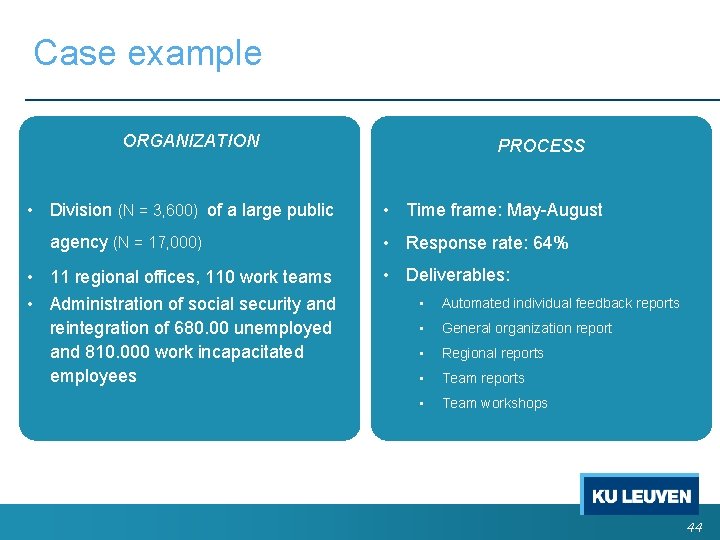
Case example ORGANIZATION • Division (N = 3, 600) of a large public agency (N = 17, 000) • 11 regional offices, 110 work teams • Administration of social security and reintegration of 680. 00 unemployed and 810. 000 work incapacitated employees PROCESS • Time frame: May-August • Response rate: 64% • Deliverables: • Automated individual feedback reports • General organization report • Regional reports • Team workshops 44
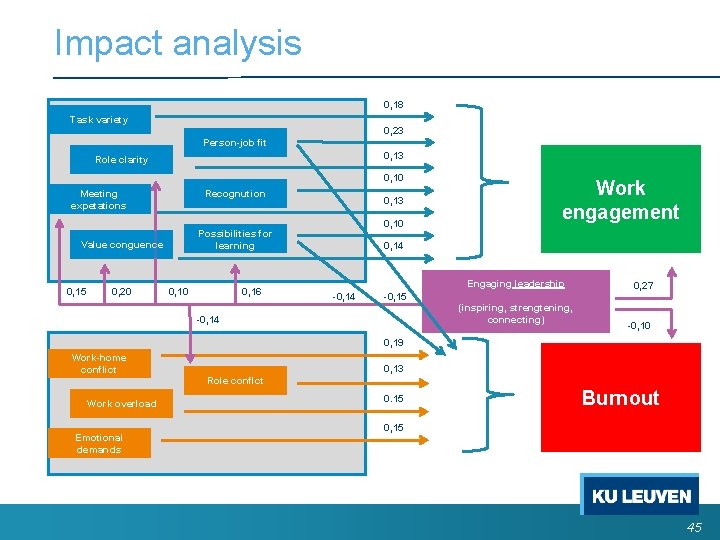
Impact analysis 0, 18 Task variety 0, 23 Person-job fit 0, 13 Role clarity 0, 10 Meeting expetations Recognution 0, 20 0, 10 Possibilities for learning Value conguence 0, 15 0, 13 0, 16 0, 10 Work engagement 0, 14 Engaging leadership -0, 14 -0, 15 -0, 14 (inspiring, strengtening, connecting) 0, 27 -0, 10 0, 19 Work-home conflict Work overload Emotional demands 0, 13 Role conflct 0. 15 Burnout 0, 15 45
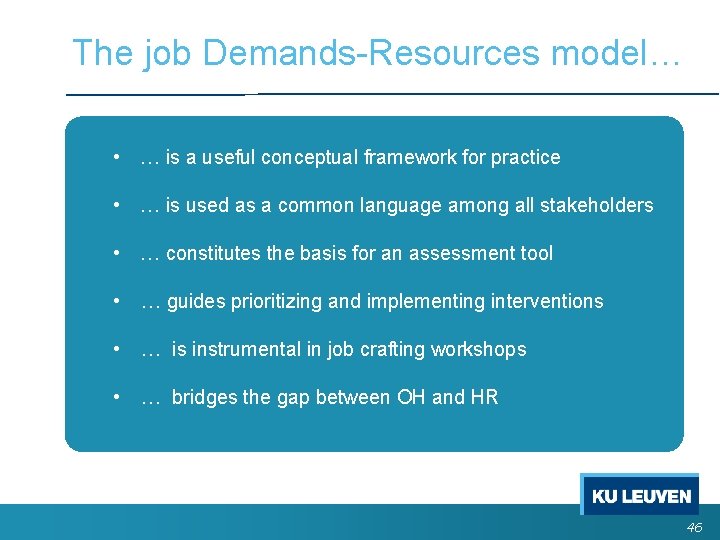
The job Demands-Resources model… • … is a useful conceptual framework for practice • … is used as a common language among all stakeholders • … constitutes the basis for an assessment tool • … guides prioritizing and implementing interventions • … is instrumental in job crafting workshops • … bridges the gap between OH and HR 46
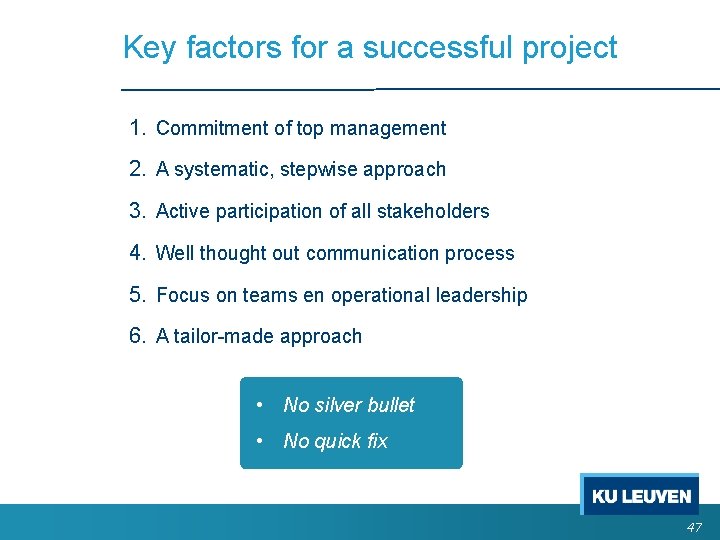
Key factors for a successful project 1. Commitment of top management 2. A systematic, stepwise approach 3. Active participation of all stakeholders 4. Well thought out communication process 5. Focus on teams en operational leadership 6. A tailor-made approach • No silver bullet • No quick fix 47
The JD-R model • Outlook 48
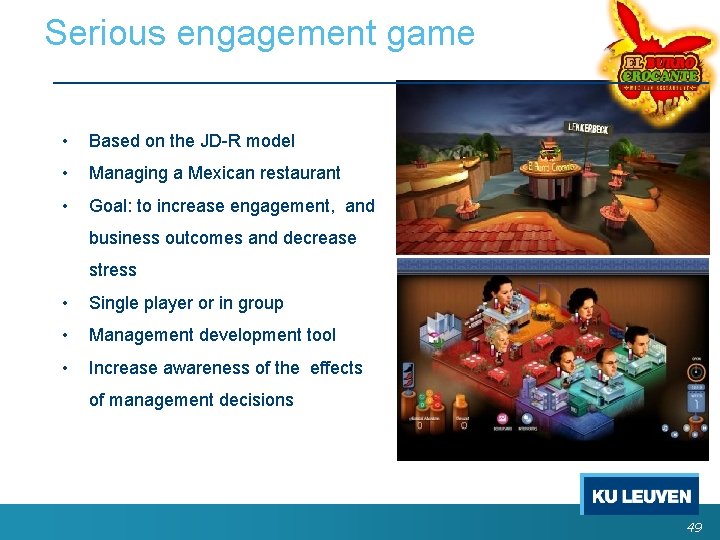
Serious engagement game • Based on the JD-R model • Managing a Mexican restaurant • Goal: to increase engagement, and business outcomes and decrease stress • Single player or in group • Management development tool • Increase awareness of the effects of management decisions 49
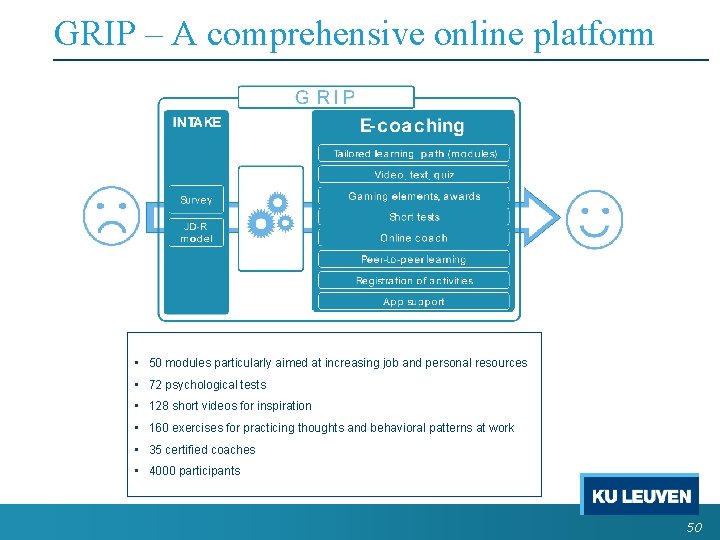
GRIP – A comprehensive online platform • 50 modules particularly aimed at increasing job and personal resources • 72 psychological tests • 128 short videos for inspiration • 160 exercises for practicing thoughts and behavioral patterns at work • 35 certified coaches • 4000 participants 50
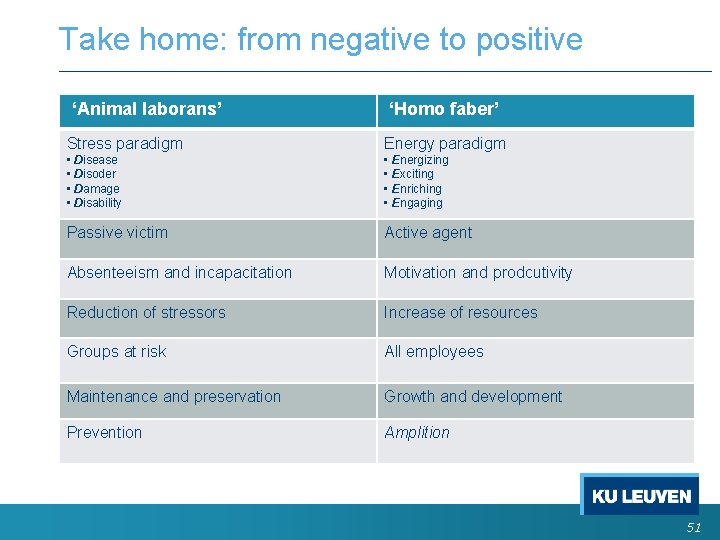
Take home: from negative to positive ‘Animal laborans’ ‘Homo faber’ Stress paradigm Energy paradigm • Disease • Disoder • Damage • Disability • Energizing • Exciting • Enriching • Engaging Passive victim . Active agent Absenteeism and incapacitation Motivation and prodcutivity Reduction of stressors Increase of resources Groups at risk All employees Maintenance and preservation Growth and development Prevention Amplition 51
Thank you very much for your attention Labai ačiū už Jūsų dėmesį More information Academic: www. wilmarschaufeli. nl Consultancy: www. 3 ihc. nl GRIP: www. gripworks. eu 52