
PsychoOncology and Palliative Care APM Resident Education Curriculum

- Slides: 53
Psycho-Oncology and Palliative Care APM Resident Education Curriculum Revised 2019: Dustin De. Moss, DO, Assistant Professor, Univ. North Texas HSC Anthony Nguyen, DO, John Peter Smith/Univ. North Texas HSC Revised 2013: Ryan Kimmel, MD, Assistant Professor, Univ. of Washington Revised 2011: Kristen Brooks, MD, Assistant Professor, UCSF Original version: Bradford D. Bobrin, MD, Medical Director, ACT Program, Division Chief, Psychiatry Consult Service, The Reading Hospital and Medical Center, Reading, PA Version of March 15, 2019 ACADEMY OF CONSULTATION-LIAISON PSYCHIATRY Psychiatrists Providing Collaborative Care Bridging Physical and Mental Health
Learning Objectives § Review potential psychiatric comorbidities in the palliative care and psych-oncologic patient population § Become familiar with diagnostic challenges and modalities commonly used in palliative care and in psycho-oncology § Review current evidence based treatment guidelines for those with psychiatric diagnoses in the palliative care and psycho-oncologic patient population § Appropriately identify and screen individuals with risk of substance use disorders Academy of Consultation-Liaison Psychiatry 2
Palliative Care and Psychosomatics § Hospice began in France in 1840 s § Involves all stages of life-threatening illness § Includes psychological, social, spiritual, and cultural issues § World Health Organization defines palliative care as: – An approach that improves the quality of life of patients and their families facing the problem associated with life-threatening illness through the prevention and relief of suffering. James L Levenson, M. D. , 2005. Academy of Consultation-Liaison Psychiatry 3
Palliative Care and Psychosomatics § Palliative care: – Affirms life and regards dying as a normal process – Neither hastens nor postpones death – Provides relief from pain and other symptoms – Integrates the psychological and spiritual – Offers support system to help patient live as actively as possible – Helps family cope – Utilizes a multidisciplinary approach to address the needs of the patient and their families – Is applicable early in the course of illness in conjecture with otherapies that are intended to prolong life. James L Levenson, M. D. , 2005. Academy of Consultation-Liaison Psychiatry 4
Psychiatry and Palliative Care Working Together Towards a Common Goal § Palliative care’s goal is to relieve symptoms and suffering and improve the quality of life for the patient and their families. § Palliative informs psychiatry – Assessment and treatment of pain – Bereavement – Anticipatory loss § Psychiatry informs palliative care – Assessment of psychiatric illness and mental status changes – Evaluation of capacity – Psychiatric treatment – Insight into personality structure and communication issues – Conflict resolution § Patient physician relationship – Recognize the formation of an attachment as a consequence of working towards a common goal JLSpeiss, 2002; Tan et al. , 2005, Fairman 2013 Academy of Consultation-Liaison Psychiatry 5
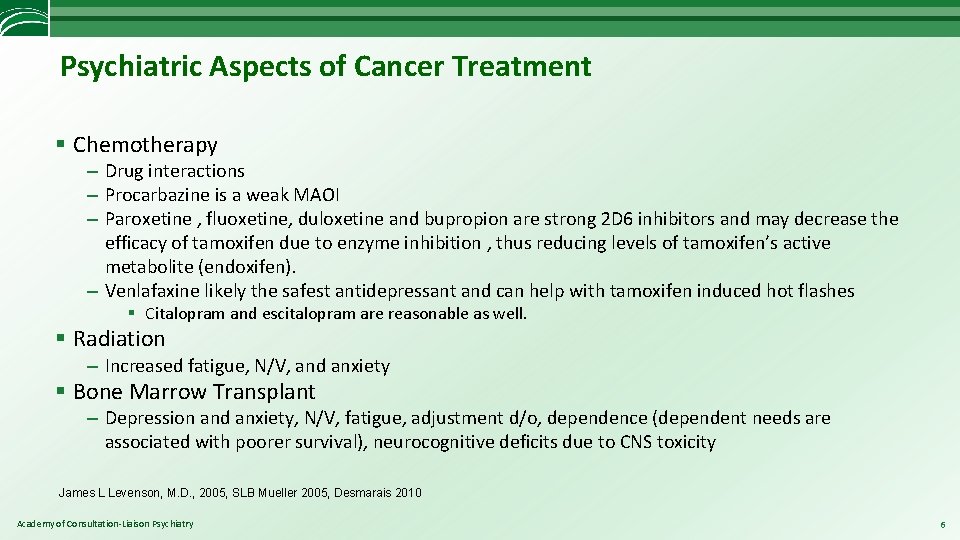
Psychiatric Aspects of Cancer Treatment § Chemotherapy – Drug interactions – Procarbazine is a weak MAOI – Paroxetine , fluoxetine, duloxetine and bupropion are strong 2 D 6 inhibitors and may decrease the efficacy of tamoxifen due to enzyme inhibition , thus reducing levels of tamoxifen’s active metabolite (endoxifen). – Venlafaxine likely the safest antidepressant and can help with tamoxifen induced hot flashes § Citalopram and escitalopram are reasonable as well. § Radiation – Increased fatigue, N/V, and anxiety § Bone Marrow Transplant – Depression and anxiety, N/V, fatigue, adjustment d/o, dependence (dependent needs are associated with poorer survival), neurocognitive deficits due to CNS toxicity James L Levenson, M. D. , 2005, SLB Mueller 2005, Desmarais 2010 Academy of Consultation-Liaison Psychiatry 6
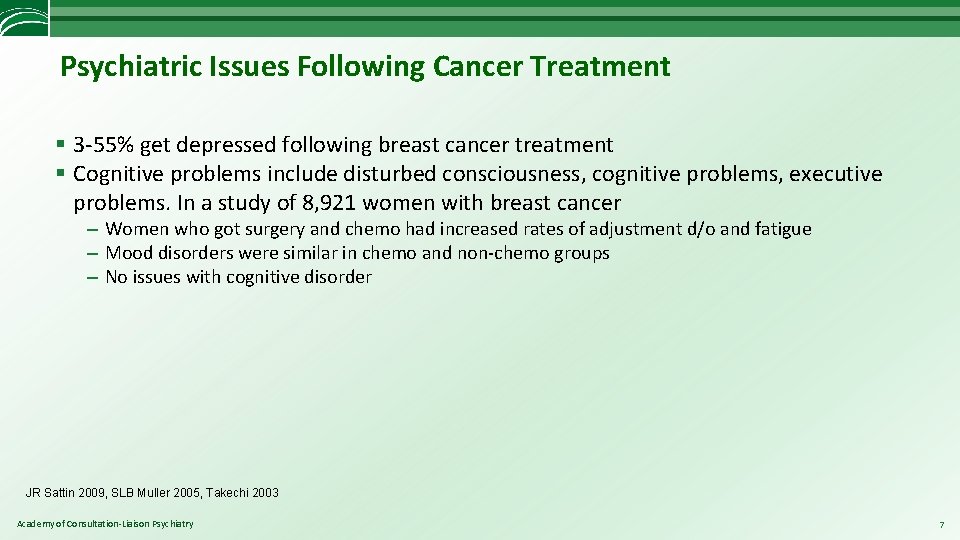
Psychiatric Issues Following Cancer Treatment § 3 -55% get depressed following breast cancer treatment § Cognitive problems include disturbed consciousness, cognitive problems, executive problems. In a study of 8, 921 women with breast cancer – Women who got surgery and chemo had increased rates of adjustment d/o and fatigue – Mood disorders were similar in chemo and non-chemo groups – No issues with cognitive disorder JR Sattin 2009, SLB Muller 2005, Takechi 2003 Academy of Consultation-Liaison Psychiatry 7
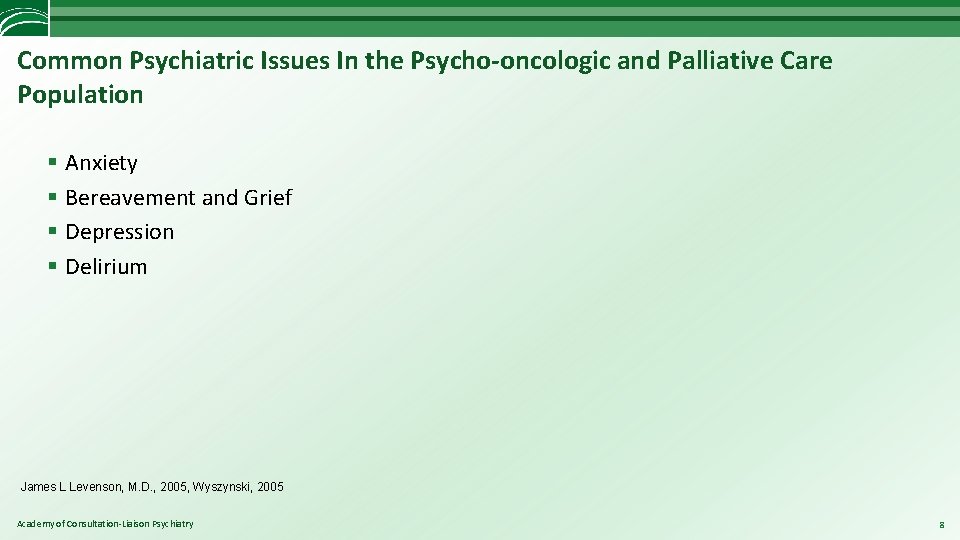
Common Psychiatric Issues In the Psycho-oncologic and Palliative Care Population § Anxiety § Bereavement and Grief § Depression § Delirium James L Levenson, M. D. , 2005, Wyszynski, 2005 Academy of Consultation-Liaison Psychiatry 8
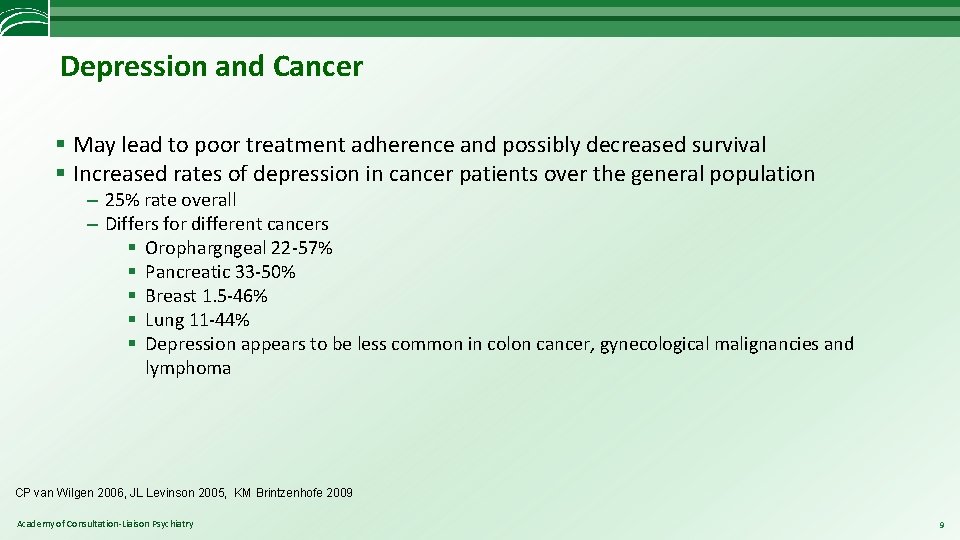
Depression and Cancer § May lead to poor treatment adherence and possibly decreased survival § Increased rates of depression in cancer patients over the general population – 25% rate overall – Differs for different cancers § Orophargngeal 22 -57% § Pancreatic 33 -50% § Breast 1. 5 -46% § Lung 11 -44% § Depression appears to be less common in colon cancer, gynecological malignancies and lymphoma CP van Wilgen 2006, JL Levinson 2005, KM Brintzenhofe 2009 Academy of Consultation-Liaison Psychiatry 9
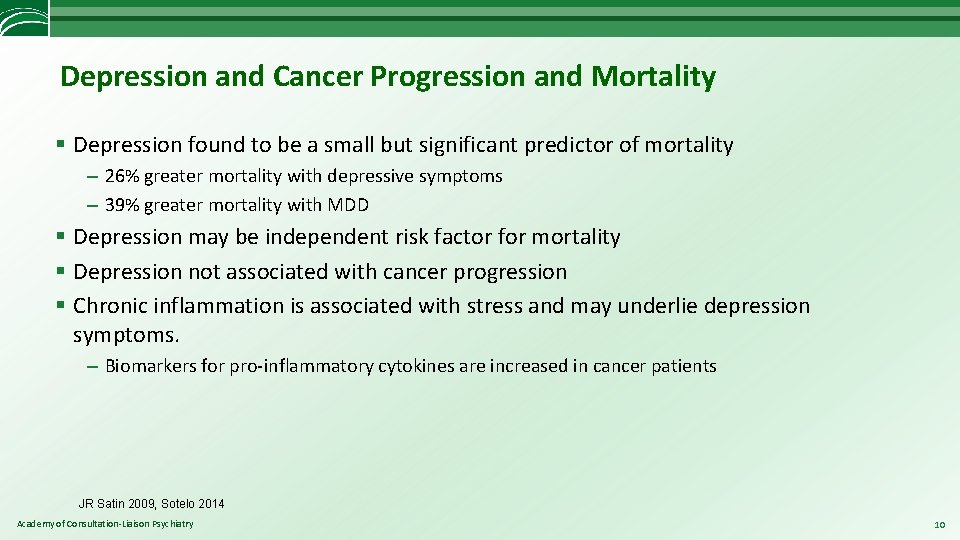
Depression and Cancer Progression and Mortality § Depression found to be a small but significant predictor of mortality – 26% greater mortality with depressive symptoms – 39% greater mortality with MDD § Depression may be independent risk factor for mortality § Depression not associated with cancer progression § Chronic inflammation is associated with stress and may underlie depression symptoms. – Biomarkers for pro-inflammatory cytokines are increased in cancer patients JR Satin 2009, Sotelo 2014 Academy of Consultation-Liaison Psychiatry 10
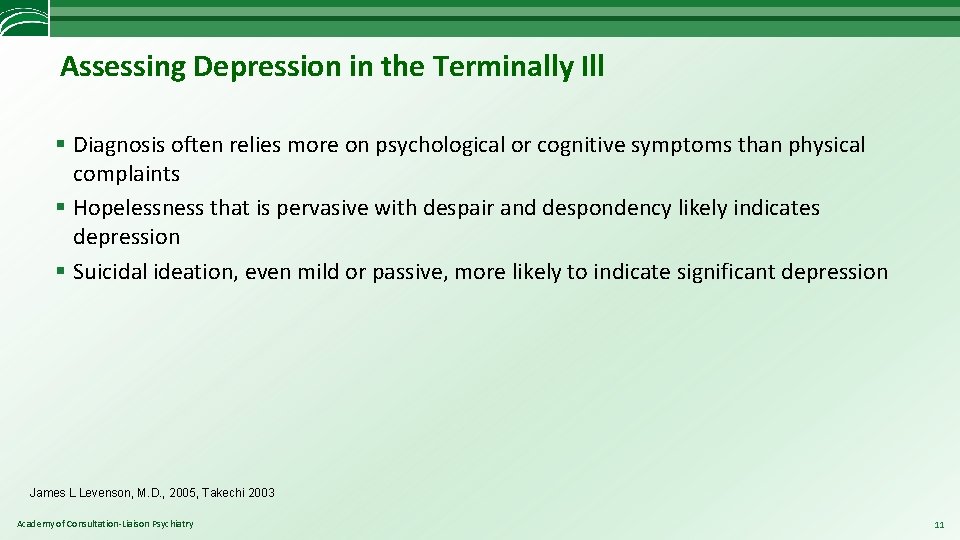
Assessing Depression in the Terminally Ill § Diagnosis often relies more on psychological or cognitive symptoms than physical complaints § Hopelessness that is pervasive with despair and despondency likely indicates depression § Suicidal ideation, even mild or passive, more likely to indicate significant depression James L Levenson, M. D. , 2005, Takechi 2003 Academy of Consultation-Liaison Psychiatry 11
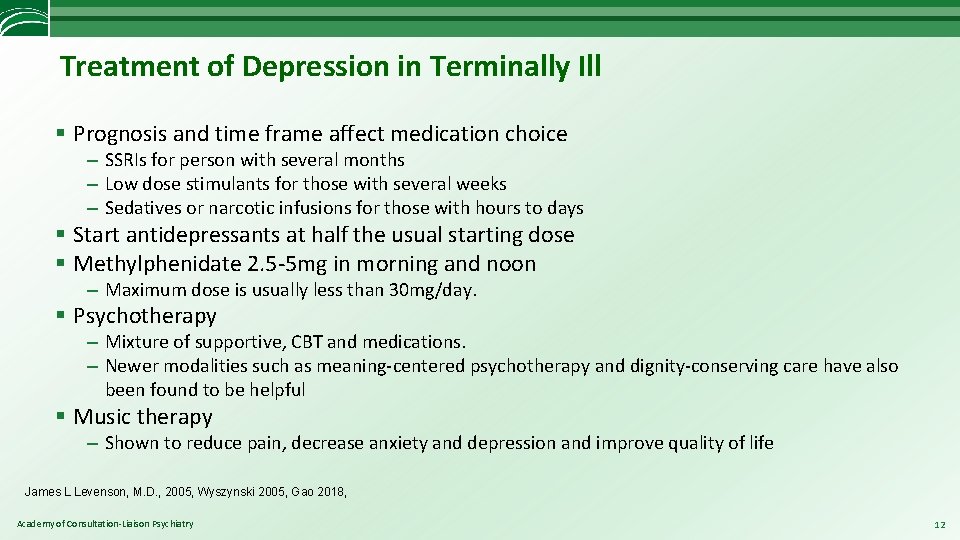
Treatment of Depression in Terminally Ill § Prognosis and time frame affect medication choice – SSRIs for person with several months – Low dose stimulants for those with several weeks – Sedatives or narcotic infusions for those with hours to days § Start antidepressants at half the usual starting dose § Methylphenidate 2. 5 -5 mg in morning and noon – Maximum dose is usually less than 30 mg/day. § Psychotherapy – Mixture of supportive, CBT and medications. – Newer modalities such as meaning-centered psychotherapy and dignity-conserving care have also been found to be helpful § Music therapy – Shown to reduce pain, decrease anxiety and depression and improve quality of life James L Levenson, M. D. , 2005, Wyszynski 2005, Gao 2018, Academy of Consultation-Liaison Psychiatry 12
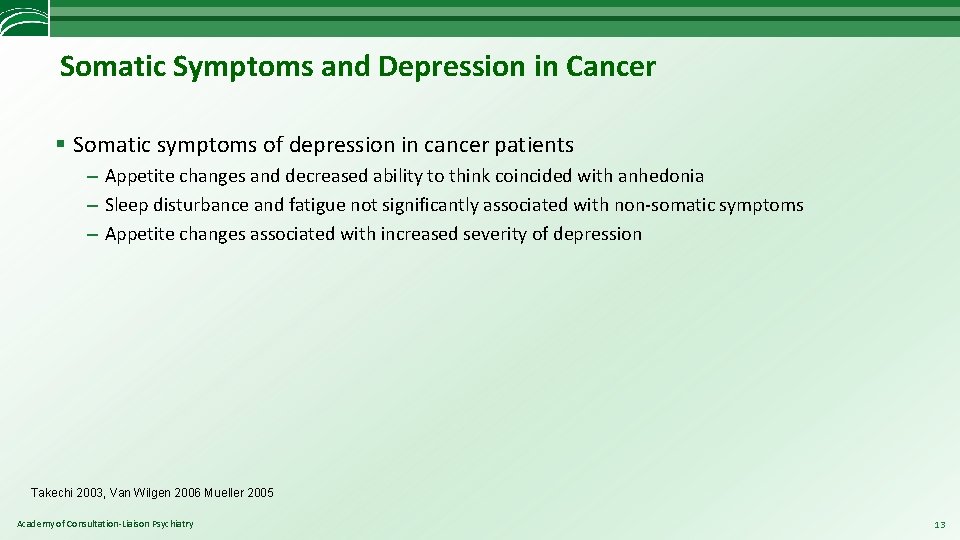
Somatic Symptoms and Depression in Cancer § Somatic symptoms of depression in cancer patients – Appetite changes and decreased ability to think coincided with anhedonia – Sleep disturbance and fatigue not significantly associated with non-somatic symptoms – Appetite changes associated with increased severity of depression Takechi 2003, Van Wilgen 2006 Mueller 2005 Academy of Consultation-Liaison Psychiatry 13
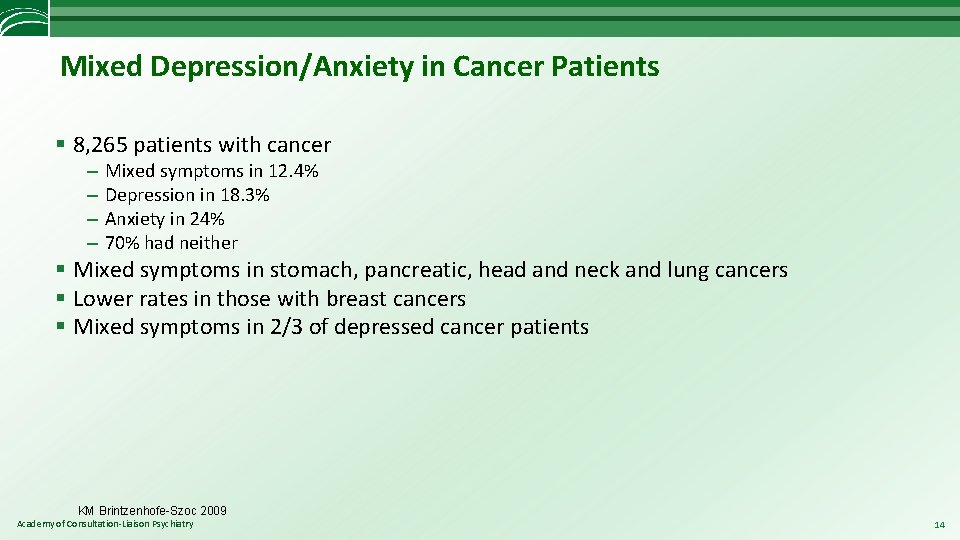
Mixed Depression/Anxiety in Cancer Patients § 8, 265 patients with cancer – – Mixed symptoms in 12. 4% Depression in 18. 3% Anxiety in 24% 70% had neither § Mixed symptoms in stomach, pancreatic, head and neck and lung cancers § Lower rates in those with breast cancers § Mixed symptoms in 2/3 of depressed cancer patients KM Brintzenhofe-Szoc 2009 Academy of Consultation-Liaison Psychiatry 14
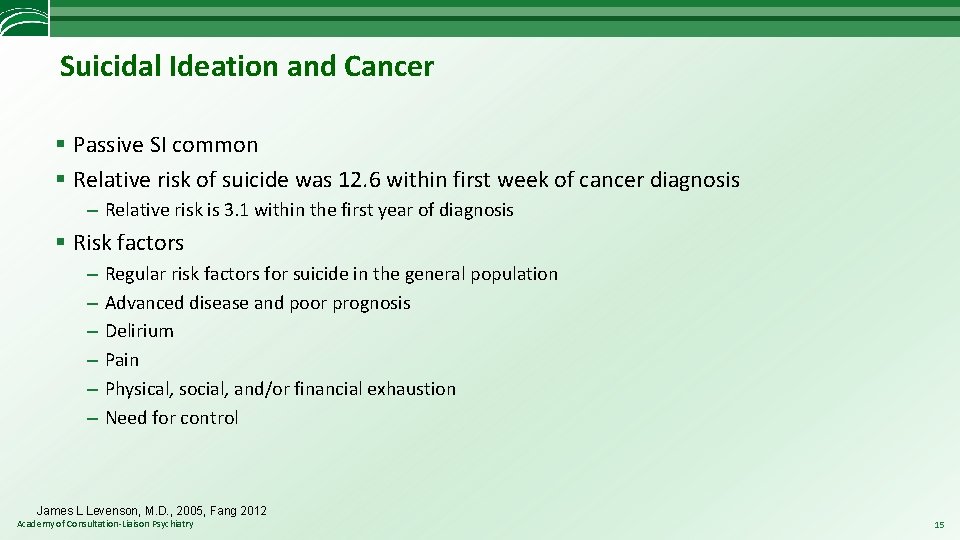
Suicidal Ideation and Cancer § Passive SI common § Relative risk of suicide was 12. 6 within first week of cancer diagnosis – Relative risk is 3. 1 within the first year of diagnosis § Risk factors – – – Regular risk factors for suicide in the general population Advanced disease and poor prognosis Delirium Pain Physical, social, and/or financial exhaustion Need for control James L Levenson, M. D. , 2005, Fang 2012 Academy of Consultation-Liaison Psychiatry 15
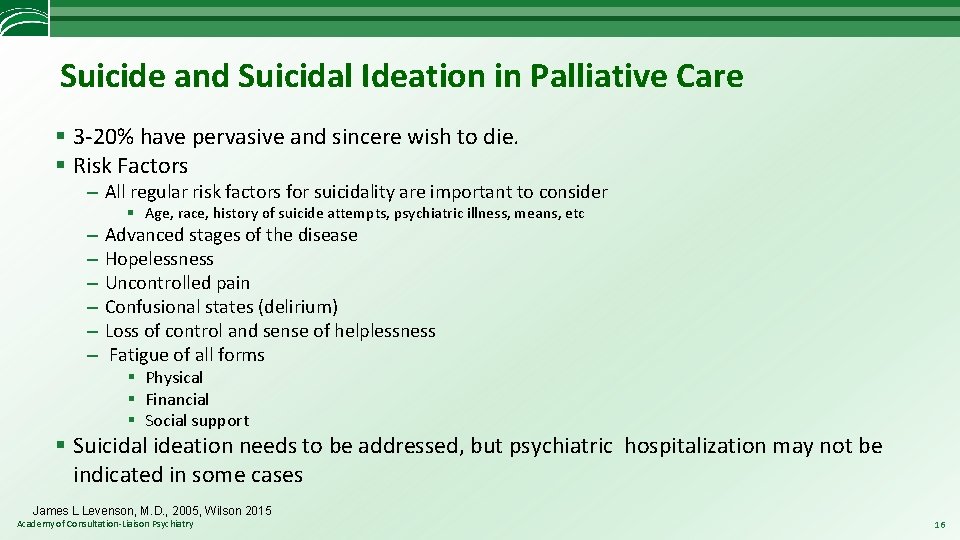
Suicide and Suicidal Ideation in Palliative Care § 3 -20% have pervasive and sincere wish to die. § Risk Factors – All regular risk factors for suicidality are important to consider § Age, race, history of suicide attempts, psychiatric illness, means, etc – – – Advanced stages of the disease Hopelessness Uncontrolled pain Confusional states (delirium) Loss of control and sense of helplessness Fatigue of all forms § Physical § Financial § Social support § Suicidal ideation needs to be addressed, but psychiatric hospitalization may not be indicated in some cases James L Levenson, M. D. , 2005, Wilson 2015 Academy of Consultation-Liaison Psychiatry 16
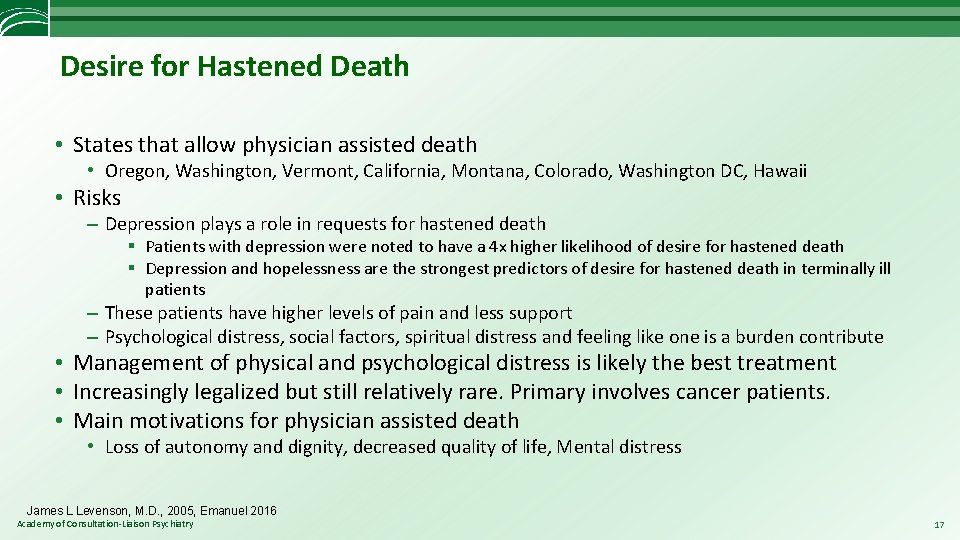
Desire for Hastened Death • States that allow physician assisted death • Oregon, Washington, Vermont, California, Montana, Colorado, Washington DC, Hawaii • Risks – Depression plays a role in requests for hastened death § Patients with depression were noted to have a 4 x higher likelihood of desire for hastened death § Depression and hopelessness are the strongest predictors of desire for hastened death in terminally ill patients – These patients have higher levels of pain and less support – Psychological distress, social factors, spiritual distress and feeling like one is a burden contribute • Management of physical and psychological distress is likely the best treatment • Increasingly legalized but still relatively rare. Primary involves cancer patients. • Main motivations for physician assisted death • Loss of autonomy and dignity, decreased quality of life, Mental distress James L Levenson, M. D. , 2005, Emanuel 2016 Academy of Consultation-Liaison Psychiatry 17
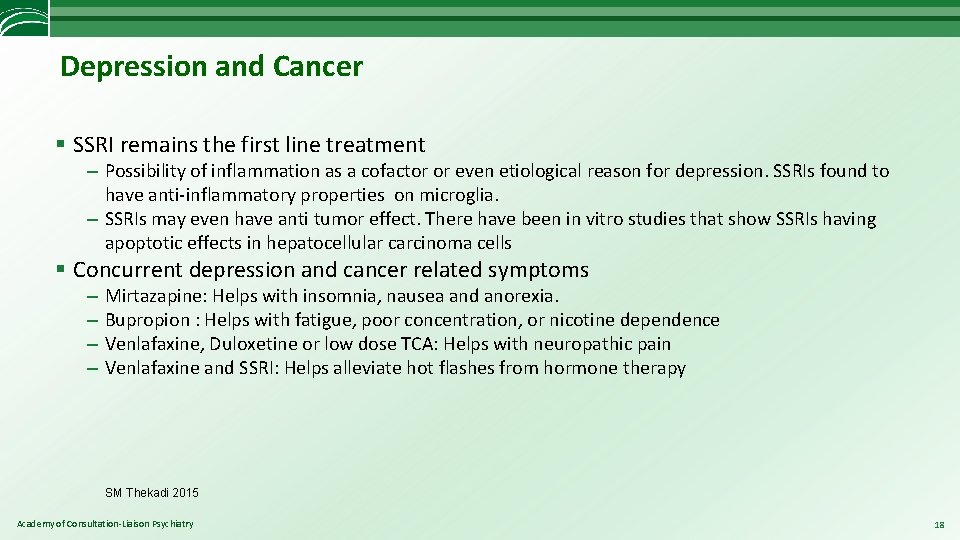
Depression and Cancer § SSRI remains the first line treatment – Possibility of inflammation as a cofactor or even etiological reason for depression. SSRIs found to have anti-inflammatory properties on microglia. – SSRIs may even have anti tumor effect. There have been in vitro studies that show SSRIs having apoptotic effects in hepatocellular carcinoma cells § Concurrent depression and cancer related symptoms – – Mirtazapine: Helps with insomnia, nausea and anorexia. Bupropion : Helps with fatigue, poor concentration, or nicotine dependence Venlafaxine, Duloxetine or low dose TCA: Helps with neuropathic pain Venlafaxine and SSRI: Helps alleviate hot flashes from hormone therapy SM Thekadi 2015 Academy of Consultation-Liaison Psychiatry 18
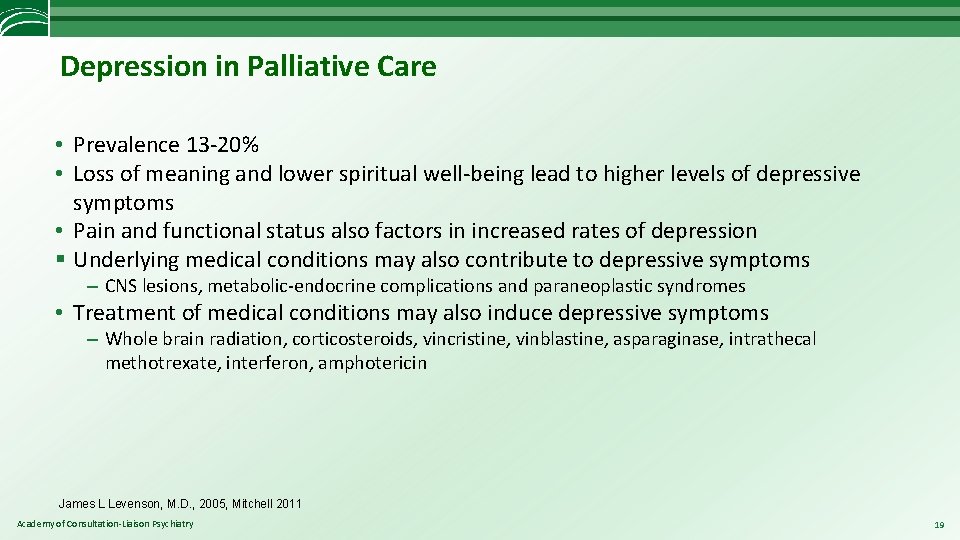
Depression in Palliative Care • Prevalence 13 -20% • Loss of meaning and lower spiritual well-being lead to higher levels of depressive symptoms • Pain and functional status also factors in increased rates of depression § Underlying medical conditions may also contribute to depressive symptoms – CNS lesions, metabolic-endocrine complications and paraneoplastic syndromes • Treatment of medical conditions may also induce depressive symptoms – Whole brain radiation, corticosteroids, vincristine, vinblastine, asparaginase, intrathecal methotrexate, interferon, amphotericin James L Levenson, M. D. , 2005, Mitchell 2011 Academy of Consultation-Liaison Psychiatry 19
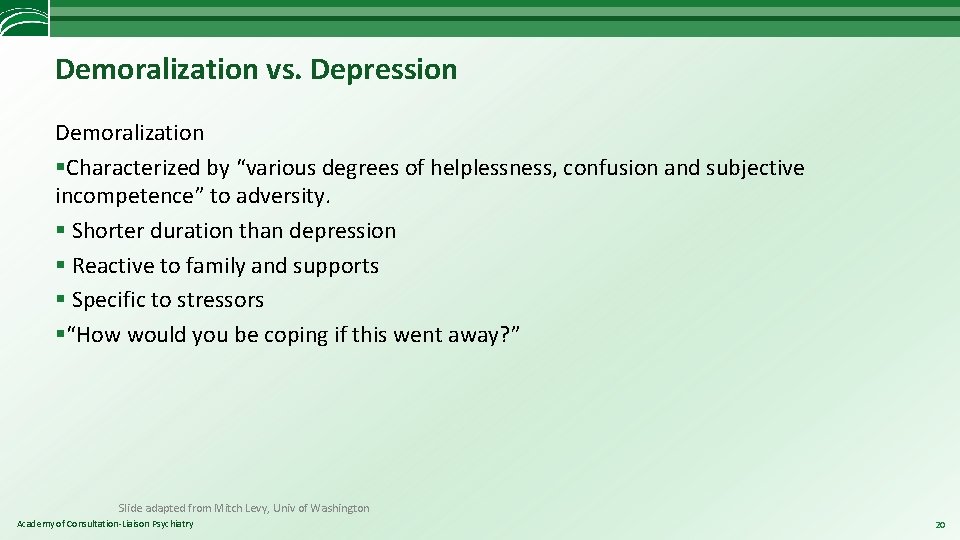
Demoralization vs. Depression Demoralization §Characterized by “various degrees of helplessness, confusion and subjective incompetence” to adversity. § Shorter duration than depression § Reactive to family and supports § Specific to stressors §“How would you be coping if this went away? ” Slide adapted from Mitch Levy, Univ of Washington Academy of Consultation-Liaison Psychiatry 20
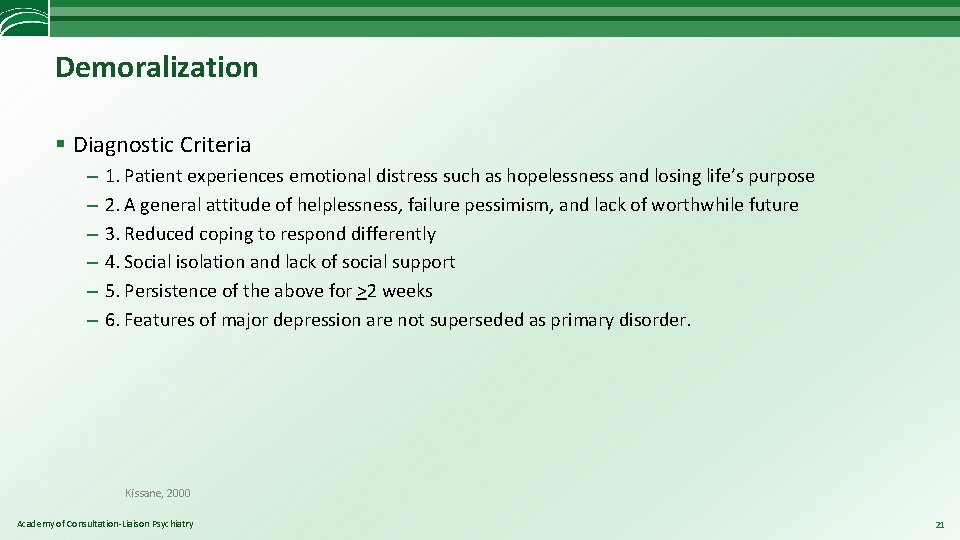
Demoralization § Diagnostic Criteria – – – 1. Patient experiences emotional distress such as hopelessness and losing life’s purpose 2. A general attitude of helplessness, failure pessimism, and lack of worthwhile future 3. Reduced coping to respond differently 4. Social isolation and lack of social support 5. Persistence of the above for >2 weeks 6. Features of major depression are not superseded as primary disorder. Kissane, 2000 Academy of Consultation-Liaison Psychiatry 21
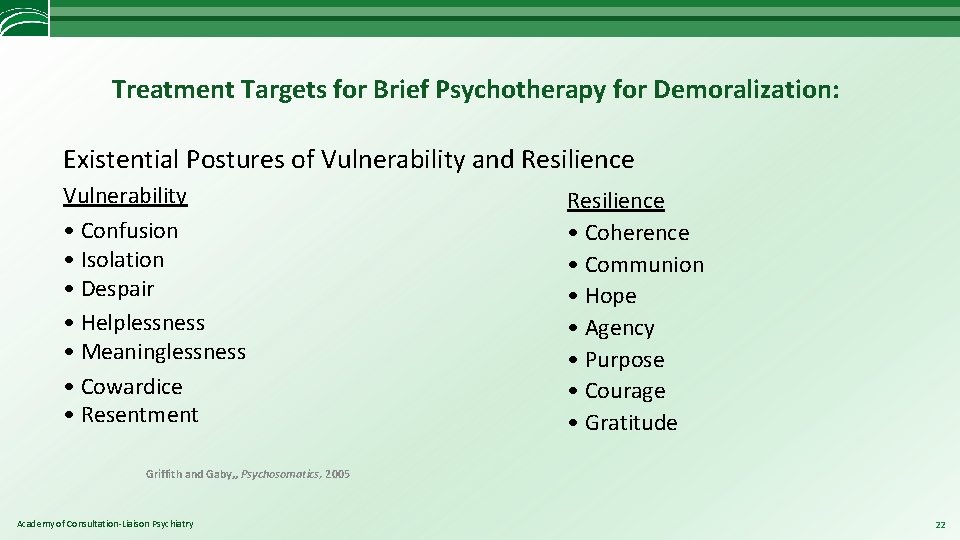
Treatment Targets for Brief Psychotherapy for Demoralization: Existential Postures of Vulnerability and Resilience Vulnerability • Confusion • Isolation • Despair • Helplessness • Meaninglessness • Cowardice • Resentment Resilience • Coherence • Communion • Hope • Agency • Purpose • Courage • Gratitude Griffith and Gaby, , Psychosomatics, 2005 Academy of Consultation-Liaison Psychiatry 22
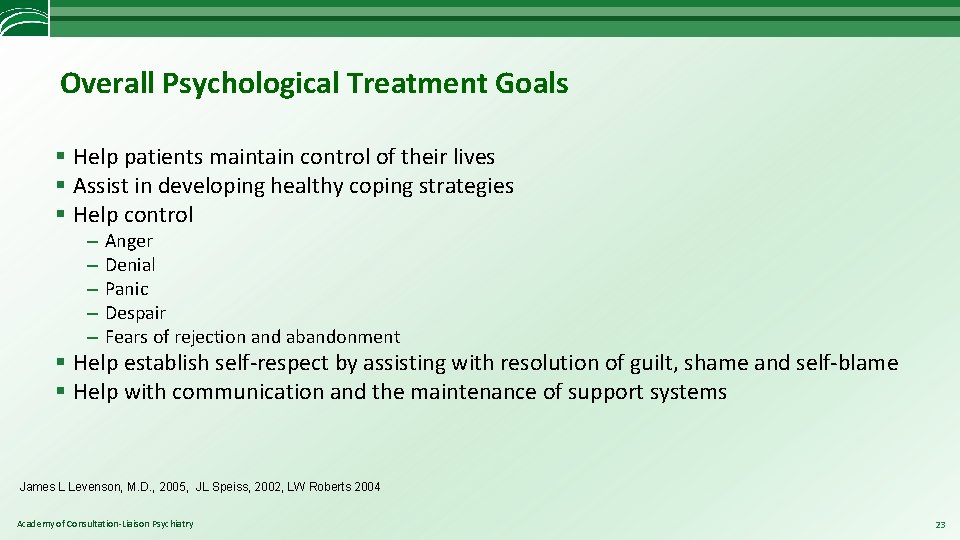
Overall Psychological Treatment Goals § Help patients maintain control of their lives § Assist in developing healthy coping strategies § Help control – – – Anger Denial Panic Despair Fears of rejection and abandonment § Help establish self-respect by assisting with resolution of guilt, shame and self-blame § Help with communication and the maintenance of support systems James L Levenson, M. D. , 2005, JL Speiss, 2002, LW Roberts 2004 Academy of Consultation-Liaison Psychiatry 23
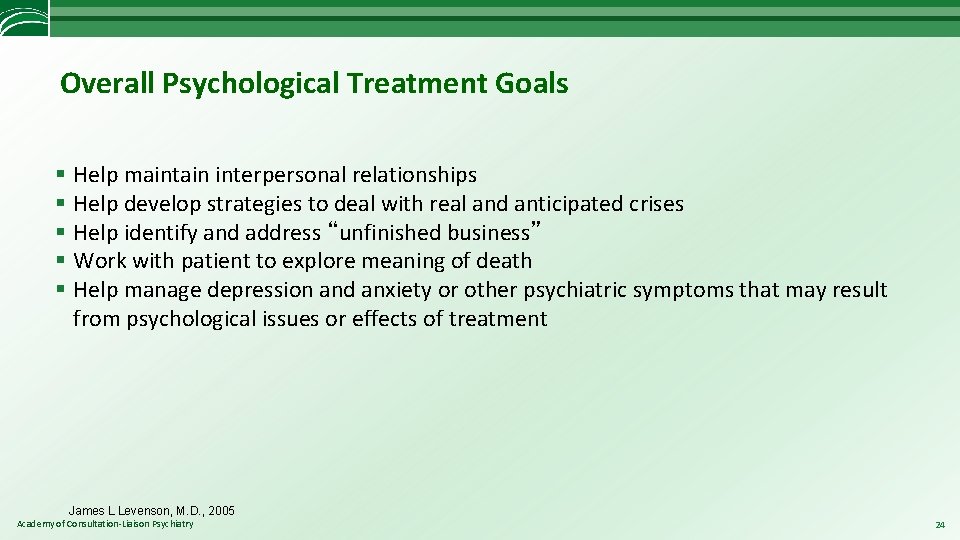
Overall Psychological Treatment Goals § Help maintain interpersonal relationships § Help develop strategies to deal with real and anticipated crises § Help identify and address “unfinished business” § Work with patient to explore meaning of death § Help manage depression and anxiety or other psychiatric symptoms that may result from psychological issues or effects of treatment James L Levenson, M. D. , 2005 Academy of Consultation-Liaison Psychiatry 24
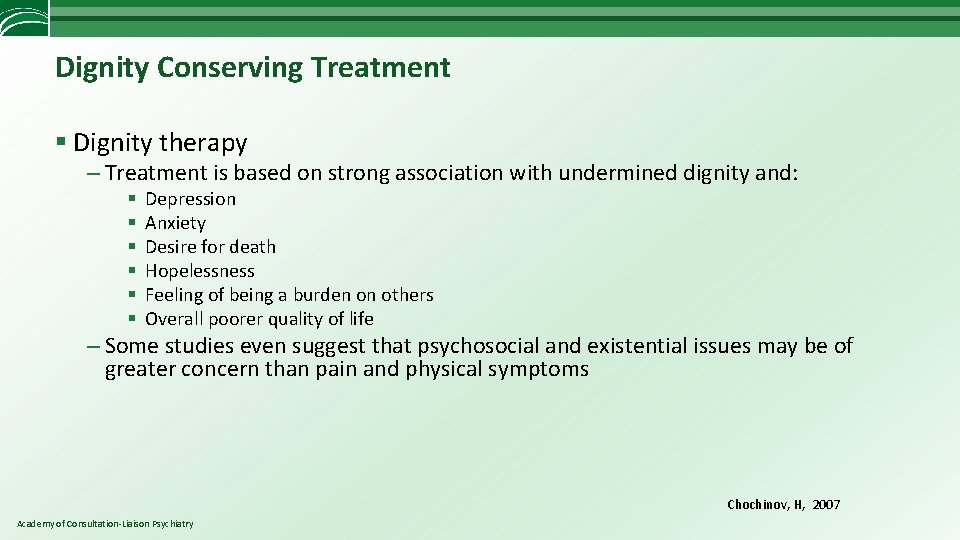
Dignity Conserving Treatment § Dignity therapy – Treatment is based on strong association with undermined dignity and: § § § Depression Anxiety Desire for death Hopelessness Feeling of being a burden on others Overall poorer quality of life – Some studies even suggest that psychosocial and existential issues may be of greater concern than pain and physical symptoms Chochinov, H, 2007 Academy of Consultation-Liaison Psychiatry
Dignity Conserving Treatment § Dignity therapy – Primary themes of dignity: § Generativity § Life has stood for something § Continuity of self § Maintain one’s essence is intact § Role preservation § Being able to maintain a sense of identification with roles previously held § Maintenance of pride § Ability to sustain positive self-regard Chochinov, H, 2007 Academy of Consultation-Liaison Psychiatry
Dignity Conserving Treatment § Dignity therapy – Primary themes of dignity (cont. ): § Hopefulness § Ability to find and maintain a sense of meaning or purpose § Aftermath concerns § Worries or fears concerning the burden death will impose on others § Care tenor § Attitude and manner with which others interact with the patient either promotes or diminishes dignity – Many of these are also essential to a patient maintaining a sense of control and integrity in any setting Chochinov, H, 2007 Academy of Consultation-Liaison Psychiatry
Dignity Conserving Treatment § Dignity therapy (provider): – Treatment of the provider consists of an A, B, C, D approach to teaching interactions – The hope is to allow care givers, institutions, and families a way to better interact with patients to achieve the desired effect – Our thoughts about an interaction with a patient shape the interaction itself § Engagement Model Chochinov, H, 2007; Bennington-Davis, M, 2005 Academy of Consultation-Liaison Psychiatry
Dignity Conserving Treatment § Dignity therapy (provider): – A—Attitudes § How would I feel in this situation? § What leads me to think that way? § Am I aware of how I might be affecting the patient? Chochinov, H, 2007 Academy of Consultation-Liaison Psychiatry
Dignity Conserving Treatment § Dignity therapy (provider): – B—Behaviors § § Treat contact with patients as you would any important intervention Always ask permission to do something Act in a professional and respectful way at all times Examples § Knock on the patient’s door § Use the patient’s proper name and title unless given permission to do otherwise Chochinov, H, 2007 Academy of Consultation-Liaison Psychiatry
Dignity Conserving Treatment § Dignity therapy (provider): – C—Compassion § Very difficult to “train” § Medical Humanities in school § Considering the personal stories – D—Dialogue § “What should I now about you as a person to help me take the best care of you that I can? ” § “Who else (or what) will be affected by what’s happening? ” Chochinov, H, 2007 Academy of Consultation-Liaison Psychiatry
Promoting Resilience • Assess for prior strengths and life challenges. –What have you overcome previously like this? –What has helped in the past? –How do you cope with adversity? • Engage the family and members of the treatment team. Slide adapted from Mitch Levy, Univ of Washington Academy of Consultation-Liaison Psychiatry 32
Anxiety in Palliative Care § Ranges from 6. 8 -13. 2% and is most often comorbid with depression § Prevalence increases with advanced disease and decline in physical status § Includes fears of clinical course, treatment outcomes, death, social stigma, and/or physical symptoms (such as dyspnea or pain) § Women, more physical impairment and younger patients with advanced cancer were more likely to develop anxiety disorders § A trusting physician-patient relationship is critical to minimize patient shame, humiliation, and power imbalance James L Levenson, M. D. , 2005, Wyszynski, 2005, LW Roberts 2004, Spencer 2010, Mitchell 2011 Academy of Consultation-Liaison Psychiatry 33
Causes of Anxiety in Palliative Care § Preexisting anxiety disorder § Anxiety symptoms can be caused by various untreated medical complications – Hypoxia – Pain – Medication side effects – Substance withdrawal – Pulmonary embolism (PE) – Electrolyte imbalance, – Dehydration § Fear of isolation and separation of death James L Levenson, M. D. , 2005, Wyszynski 2005 Academy of Consultation-Liaison Psychiatry 34
Anxiety Treatment in Palliative Care § Benzodiazepines – Multiple routes of administration (PO, IV, IM or PR) § Neuroleptics may be safest when there is a concern of respiratory depression – Multiple routes of administration (PO, IV, or IM) § Supportive psychotherapy, guided imagery, and hypnosis § SSRIs of limited value in patient when life expectancy is only a few days to weeks § There is lack of evidence for effectiveness of drug therapy in this patient population James L Levenson, M. D. , 2005, Salt 2017 Academy of Consultation-Liaison Psychiatry 35
Anxiety and Cancer § Common at start of treatment, recurrence, progression or at follow-up visits § 30% of patients had clinical anxiety after diagnosis of cancer – 3 -10% PTSD in patients with breast cancer § Multiple potential medical etiologies of anxiety symptoms – Nausea – Akathisia – PE – Pain MH Antoni 2006, JL Levenson 2005, Cardoso 2015 Academy of Consultation-Liaison Psychiatry 36
Anxiety and Cancer § Treatment – SSRI remains the primary approach to generalized anxiety and prevention of panic attacks – Short term use of Benzodiazepines are well tolerated, safe and effective drugs for anxiety. § Anterograde amnestic properties help to lessen the negative impact of cancer treatment experiences. § Short acting BZD may be used for procedure related anxiety, anticipatory anxiety, or specific phobias – Non-BZD drugs reduce risk of abuse or dependence § Gabapentin, beta blockers, Buspirone and Hydroxyzine found to be helpful for anxiety. SM Thekadi 2015 Academy of Consultation-Liaison Psychiatry 37
Mania in Cancer § Recurrence of pre-existing illness § Steroids § Infection § Diencephalic tumors JL Levinson, 2005 Academy of Consultation-Liaison Psychiatry 38
Mood Stabilizers § Help with impulsivity, irritability and temper dysregulation. § Also treat neuropathic pain, hot flashes and seizure prophylaxis § Lithium: rarely started in the cancer context – Risk of dehydration, electrolyte abnormalities, renal dysfunction, and drug interactions. § Valproic acid and Carbamazepine: helpful for mood stabilization. Carry risks of hematological suppression and hepatotoxicity SM Thekadi 2015 Academy of Consultation-Liaison Psychiatry 39
Mood Stabilizers § Gabapentin or Pregabalin: – Helps manage hot flashes, neuropathic pain and postherpetic neurolgia – Has anxiolytic and sedative effects – No Cyp 450 interaction. Cleared renally. § Oxcarbazepine: Recent open label study showed it may be helpful in prevention of oxaliplatin-induced neuropathy. SM Thekadi 2015 Academy of Consultation-Liaison Psychiatry 40
Psychosis and cancer § Primary psychosis § Delirium § Psychosis due to medical condition § Medication induced psychosis SM Thekadi 2015 Academy of Consultation-Liaison Psychiatry 41
Antipsychotics § Side effects of select antipsychotics can help target symptoms common to cancer patients. Symptoms include anxiety, nausea, hiccups, loss of appetite, and insomnia. – Haloperidol continues to be gold standard for delirium § New RTC shows that lorazepam + haloperidol provides superior control to agitated delirium in advanced cancer patients § Aripiprazole may uniquely be activating for hypoactive delirium – Recent meta-analysis showed a 50% reduction in postoperative delirium for elderly patient given prophylactic antipsychotics SM Thekadi 2015 Academy of Consultation-Liaison Psychiatry 42
Antipsychotics § Antipsychotics may be preferred to BZD for acute anxiety. Less risk of AMS and respiratory depression. § Low dose quetiapine or olanzapine may be used for insomnia when sedative hypnotics are deemed too risky. § Haloperidol and chlorpromazine may be used for intractable hiccups § Haloperidol and olanzapine may help with nausea § Olanzapine is efficacious for chemo induced nausea and vomiting § Olanzapine and quetiapine helpful for weight loss and anorexia. SM Thekadi 2015 Academy of Consultation-Liaison Psychiatry 43
Bereavement and Grief § Bereavement: Situation in which someone who is close dies § Grief : Natural response to bereavement – Feelings: Some may experience shock, sadness, anger, anxiety, disbelief, panic, numbness, . – Physical: Insomnia, fatigue, loss of appetite, nausea and pain. – Behaviors: Substance use, less attention to self care, impulsive or harmful behaviors § Stages of Grief: – Denial, Anger, Bargaining, Depression, Acceptance. Academy of Consultation-Liaison Psychiatry 44
Bereavement and Grief § Anticipatory Grief – Draws family closer § Acute Grief – Numbness Distress Disorganization Reorganization Recovery and progression § Complicated Grief – Complicated by depression, anxiety, and substance use § Chronic Grief – Social withdrawal and isolation along with a fantasy of reunion may lead to suicidal ideation § Traumatic Grief – Often complicated by the inability to communicate “good-bye” James L Levenson, M. D. , 2005, LW Roberts 2004 Academy of Consultation-Liaison Psychiatry 45
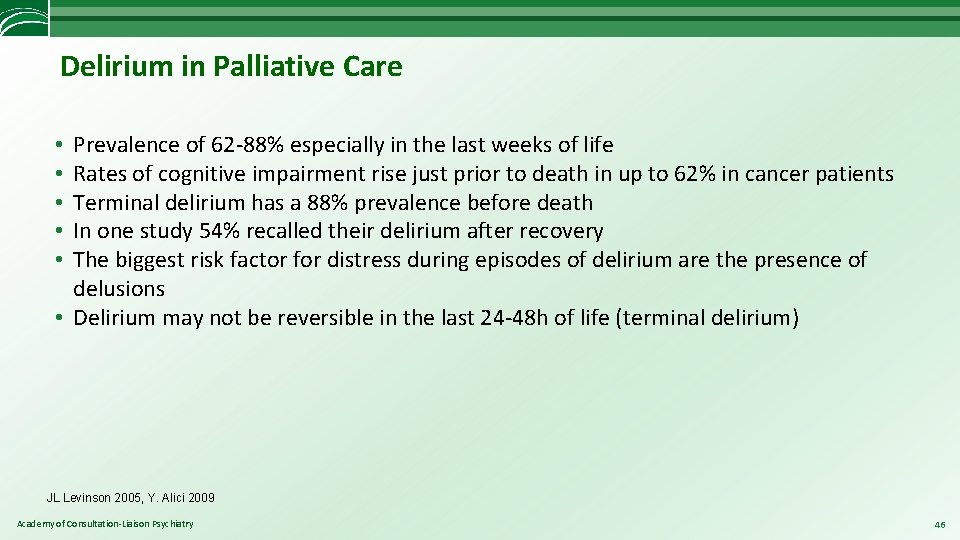
Delirium in Palliative Care Prevalence of 62 -88% especially in the last weeks of life Rates of cognitive impairment rise just prior to death in up to 62% in cancer patients Terminal delirium has a 88% prevalence before death In one study 54% recalled their delirium after recovery The biggest risk factor for distress during episodes of delirium are the presence of delusions • Delirium may not be reversible in the last 24 -48 h of life (terminal delirium) • • • JL Levinson 2005, Y. Alici 2009 Academy of Consultation-Liaison Psychiatry 46
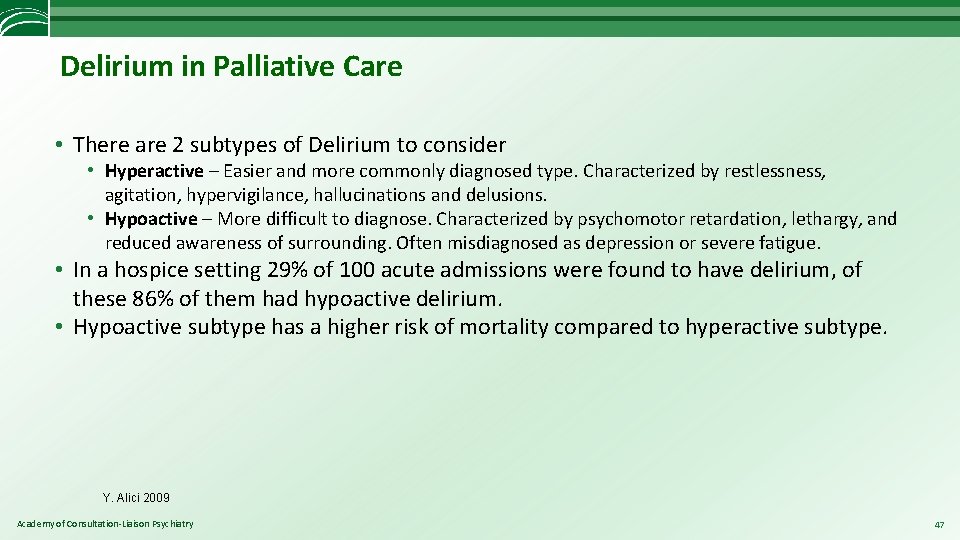
Delirium in Palliative Care • There are 2 subtypes of Delirium to consider • Hyperactive – Easier and more commonly diagnosed type. Characterized by restlessness, agitation, hypervigilance, hallucinations and delusions. • Hypoactive – More difficult to diagnose. Characterized by psychomotor retardation, lethargy, and reduced awareness of surrounding. Often misdiagnosed as depression or severe fatigue. • In a hospice setting 29% of 100 acute admissions were found to have delirium, of these 86% of them had hypoactive delirium. • Hypoactive subtype has a higher risk of mortality compared to hyperactive subtype. Y. Alici 2009 Academy of Consultation-Liaison Psychiatry 47
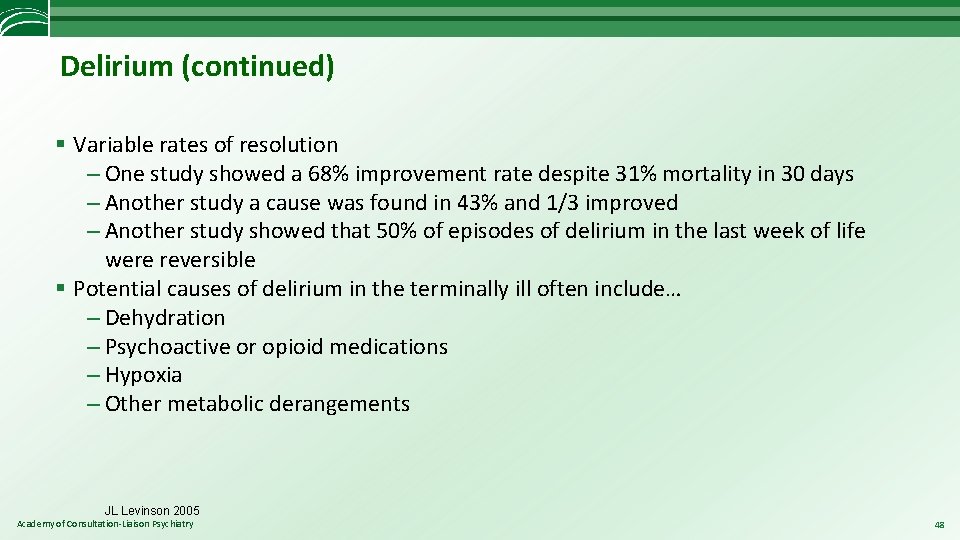
Delirium (continued) § Variable rates of resolution – One study showed a 68% improvement rate despite 31% mortality in 30 days – Another study a cause was found in 43% and 1/3 improved – Another study showed that 50% of episodes of delirium in the last week of life were reversible § Potential causes of delirium in the terminally ill often include… – Dehydration – Psychoactive or opioid medications – Hypoxia – Other metabolic derangements JL Levinson 2005 Academy of Consultation-Liaison Psychiatry 48
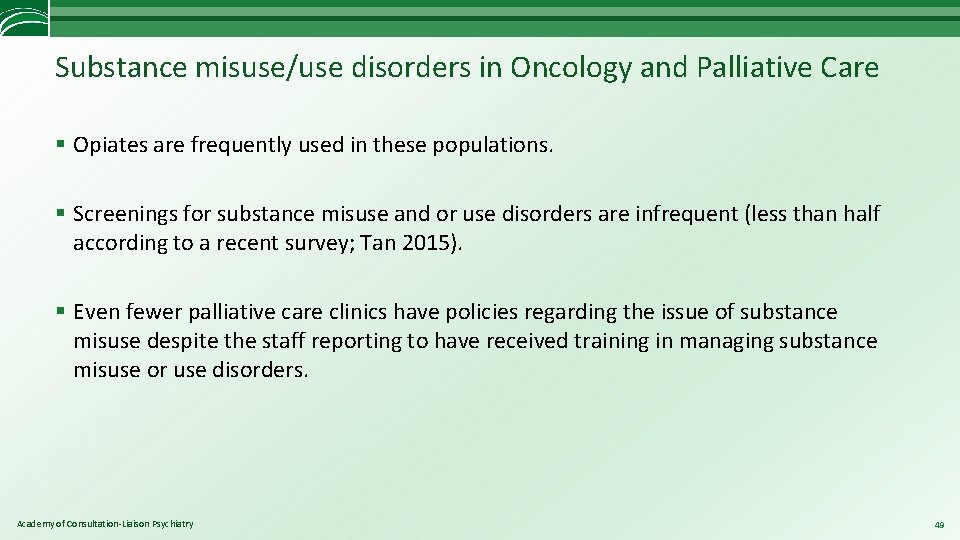
Substance misuse/use disorders in Oncology and Palliative Care § Opiates are frequently used in these populations. § Screenings for substance misuse and or use disorders are infrequent (less than half according to a recent survey; Tan 2015). § Even fewer palliative care clinics have policies regarding the issue of substance misuse despite the staff reporting to have received training in managing substance misuse or use disorders. Academy of Consultation-Liaison Psychiatry 49
Substance misuse/use disorders in Oncology and Palliative Care § Passik and Portenoy 1998 have developed guidelines for the management of patients with aberrant drug taking in terminal and oncologic patients. § Primary goals in these guidelines are harm reduction and patient compliance § Some of their recommendations include – – Consideration of a written contract between the team and patient Inclusion of spot urine toxicology screens to assess compliance Set expectations regarding attendance at the clinic Management of medication supplies Academy of Consultation-Liaison Psychiatry 50
References 1) 2) 3) 4) 5) 6) 7) 8) ill 9) Y. Alici & W. Breitbart, Delirium in Palliative Care, Primary Psychiatry. 2009, 16: 42 -48 M. H. Antoni, et. , al. , Reduction of Cancer Specific Thought Intrusions and Anxiety Symptoms with a Stress Management Intervention Among Women Undergoing Treatment for Breast Cancer, Am J Psychiatry, 2006, 163(10): 1791 -97. KM Brintzenhofe-Szoc, et. al. , Mixed Anxiety/Depression Symptoms in a Large Cancer Cohort: Prevalence by Cancer Type, Psychosomatics, 2009, 50(4): 383 -391 Cardoso, G. , Graca, J. , Klut, C. , Trancas, B. , & Papoila, A. (2015). Depression and anxiety symptoms following cancer diagnosis: A cross-sectional study. Psychology, Health & Medicine, 21(5), 562 -570. Desmarais, J. E. , & Looper, K. J. (2010). Managing menopausal symptoms and depression in tamoxifen users: Implications of drug and medicinal interactions. Maturitas, 67(4), 296 -308. Emanuel, E. J. , Onwuteaka-Philipsen, B. D. , Urwin, J. W. , & Cohen, J. (2016). Attitudes and Practices of Euthanasia and Physician-Assisted Suicide in the United States, Canada, and Europe. Jama, 316(1), 79. Fang, F. , Fall, K. , Mittleman, M. A. , Sparén, P. , Ye, W. , Adami, H. , & Valdimarsdóttir, U. (2012). Suicide and Cardiovascular Death after a Cancer Diagnosis. New England Journal of Medicine, 366(14), 1310 -1318. Gao, Y. , Wei, Y. , Yang, W. , Jiang, L. , Li, X. , Ding, J. , & Ding, G. (2018). The effectiveness of music therapy for terminally patients: A meta-analysis and systematic review. Journal of Pain and Symptom Management. JL Griffith and L Gaby, Brief Psychotherapy at the Bedside: Countering Demoralization From Medical Illness, Psychosomatics, 2005, 46: 109 -116 Academy of Consultation-Liaison Psychiatry 51
References 10) Hui, D. , Frisbee-Hume, S. , Wilson, A. , Dibaj, S. S. , Nguyen, T. , Cruz, M. D. , . . . Bruera, E. (2017). Effect of Lorazepam With Haloperidol vs Haloperidol Alone on Agitated Delirium in Patients With Advanced Cancer Receiving Palliative Care. Jama, 318(11), 1047 11) James L Levenson, M. D. , The APA Publishing Textbook of Psychosomatic Medicine, APA Press, Washington DC, 2005 12) Kissane, DW. Psychospiritual and existential distress. The challenge for palliative care. Aust Fam Physician 2000. 29(11): 1022 -1025 13) Mitchell, A. J. , Chan, M. , Bhatti, H. , Halton, M. , Grassi, L. , Johansen, C. , & Meader, N. (2011). Prevalence of depression, anxiety, and adjustment disorder in oncological, haematological, and palliative-care settings: A meta-analysis of 94 interview-based studies. The Lancet Oncology, 12(2), 160 -174. 14) S. L. B Muller, et. , al. , Psychiatric Sequele Following Breast Cancer Chemotherapy: A Pilot Study Using Claims Data, Psychosomatics, 2005, 46(6): 517 -522. 15) LW Roberts and AR Dyer, Caring for People at the End of Life in, Concise Guide to Ethics in Mental Health Care, APA Publishing, Washington DC, 2004: 185 -95 16) Salt, S. , Mulvaney, C. A. , & Preston, N. J. (2017). Drug therapy for symptoms associated with anxiety in adult palliative care patients. Cochrane Database of Systematic Reviews. 17) J. R. Satin et. , al. , Depression as a Predictor of Disease Progression and Mortality in Cancer Patients, Cancer 2009. 18) Sotelo, J. L. , Musselman, D. , & Nemeroff, C. (2014). The biology of depression in cancer and the relationship between depression and cancer progression. International Review of Psychiatry, 26(1), 16 -30. Academy of Consultation-Liaison Psychiatry 52
References 19) 20) 21) 22) 23) 24) 25) 26) 27) 28) 29) Spencer, R. , Nilsson, M. , Wright, A. , Pirl, W. and Prigerson, H. (2010), Anxiety disorders in advanced cancer patients. Cancer, 116: 1810 -1819. JL Spiess, Palliative Care: Something Else We Can Do For Our Patients, Psychiatric Services, 2002, 53(12): 1525 -29 N. Straker, Psychodynamic Psychotherapy for Cancer Patients, Journal of Psychotherapy Practice and Research, 1998, 71 -9. Takechi, et. , Al. , : Somatic Symptoms for Diagnosing Major Depressive Disorder in Cancer Patients, Psychosomatics, 2003, 44(3): 244 -48 Tan et al. Interpersonal processes in palliative care: an attachment perspective on the patient-clinician relationship. Palliative Medicine 2005, 19: 143 -150 Thekdi SM, Trinidad A, Roth A. Psychopharmacology in cancer. Curr Psychiatry Rep. 2015; 17(1): 529. CP van Wilgen, et. , al. , Measuring Somatic Symptoms with the CES-D to Assess Depression in Cancer Patients After Treatment: Comparison Among Patients with Oral/Oropharyngeal, Gynecological, Colorectal and Breast Cancer, Psychosomatics, 2006, 47(6): 465 -470. Wilson, K. G. , Dalgleish, T. L. , Chochinov, H. M. , Chary, S. , Gagnon, P. R. , Macmillan, K. , Fainsinger, R. L. (2014). Mental disorders and the desire for death in patients receiving palliative care for cancer. BMJ Supportive & Palliative Care, 6(2), 170 -177. Antoinette Wyszynski and Bernard Wyszynski, Manual of Psychiatric Care for the Medically Ill, APA Press, Washington, DC, 2005. Fairman, Nathan; Irwin, Scott. Palliative Care Psychiatry: Update on an Emerging Dimension of Psychiatric Practice. Current Psychiatry Rep. 2013 15: 374 Passik S, Portenoy R. Substance abuse issues in palliative care. In: Berger A, et al, eds. Principles and Practices of Supportive Oncology. Philadelphia: Lippincott-Raven Publishers; 1998. Academy of Consultation-Liaison Psychiatry 53