
Psychology R M Tolles Stress Unit Overview Theories






- Slides: 106
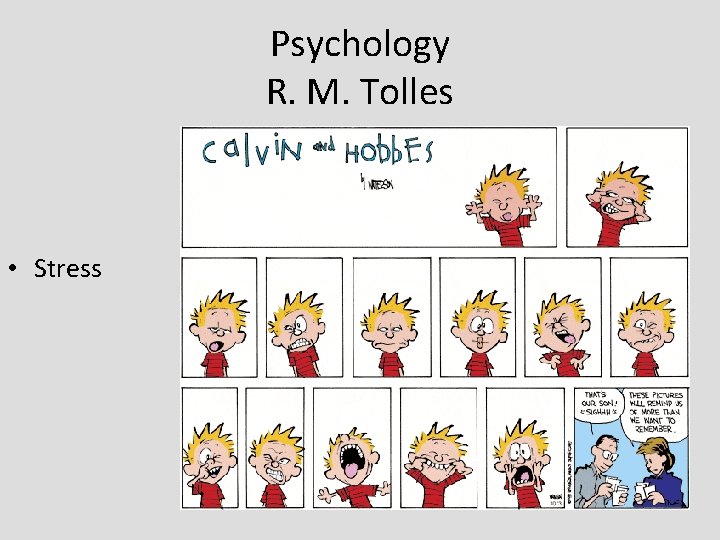
Psychology R. M. Tolles • Stress
Unit Overview • • • Theories of Emotion Embodied Emotion Expressed Emotion Experienced Emotion Stress and Health Click on the any of the above hyperlinks to go to that section in the presentation.
Theories of Emotion
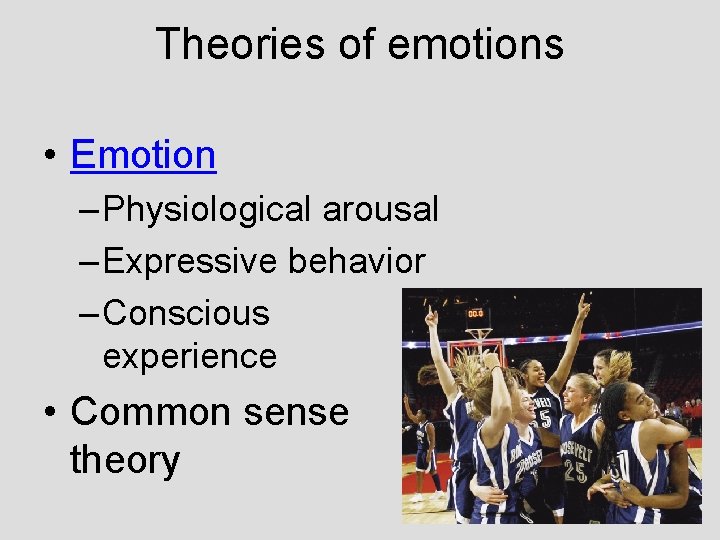
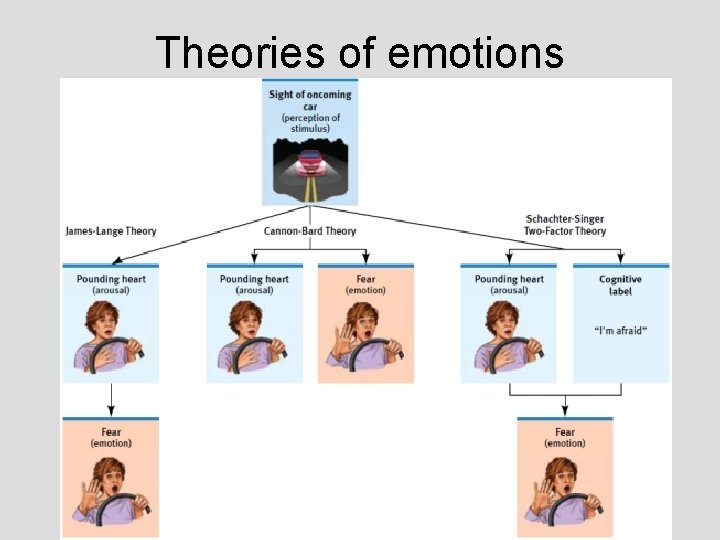
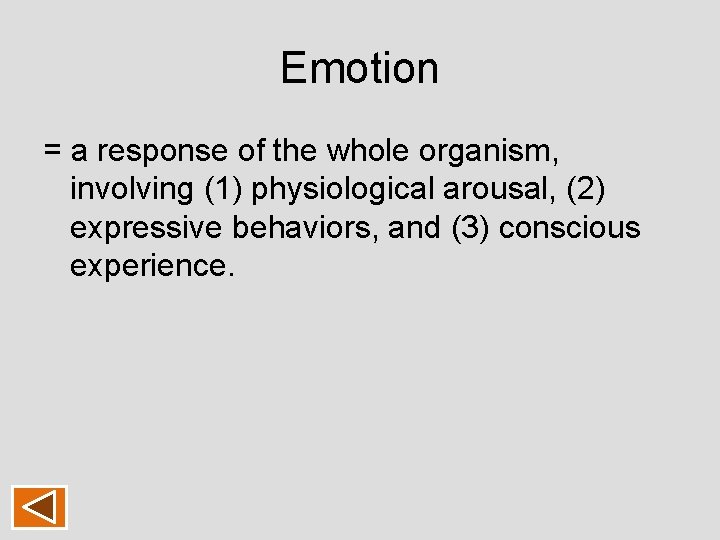
Theories of emotions • Emotion – Physiological arousal – Expressive behavior – Conscious experience • Common sense theory
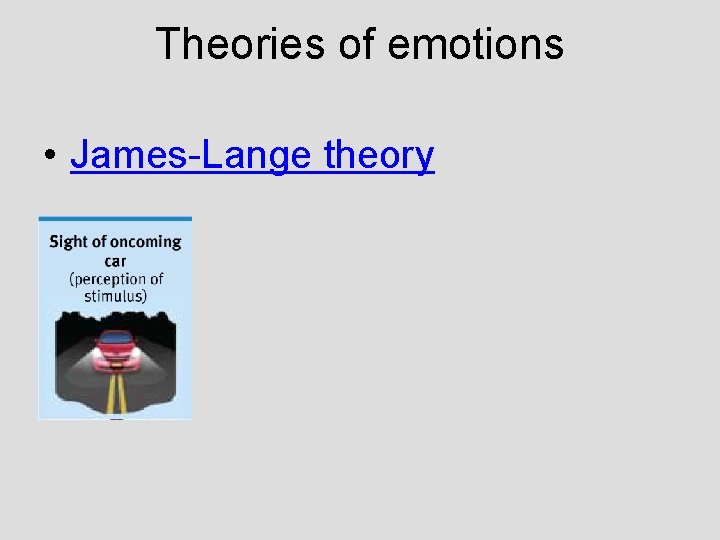
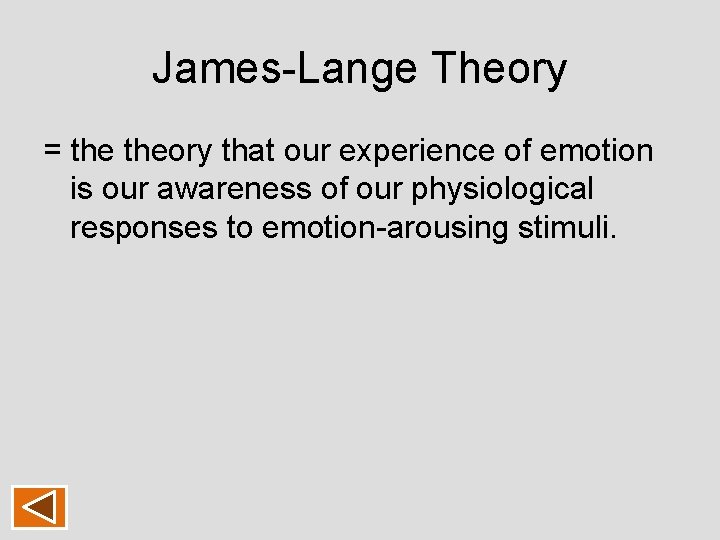
Theories of emotions • James-Lange theory
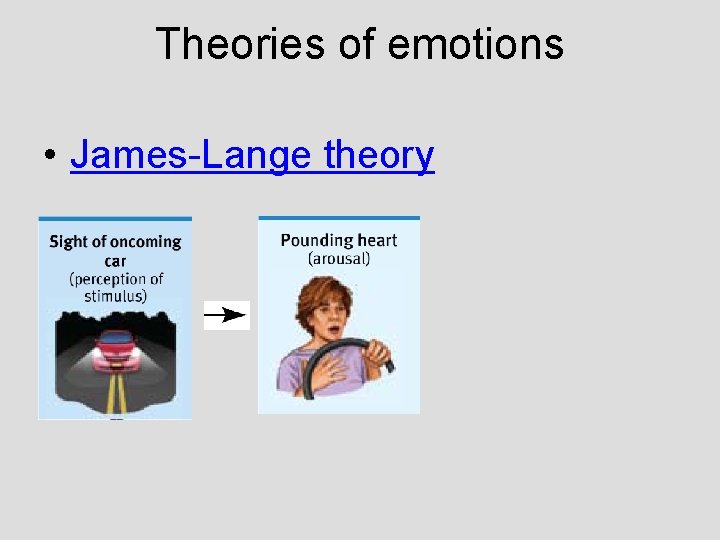
Theories of emotions • James-Lange theory
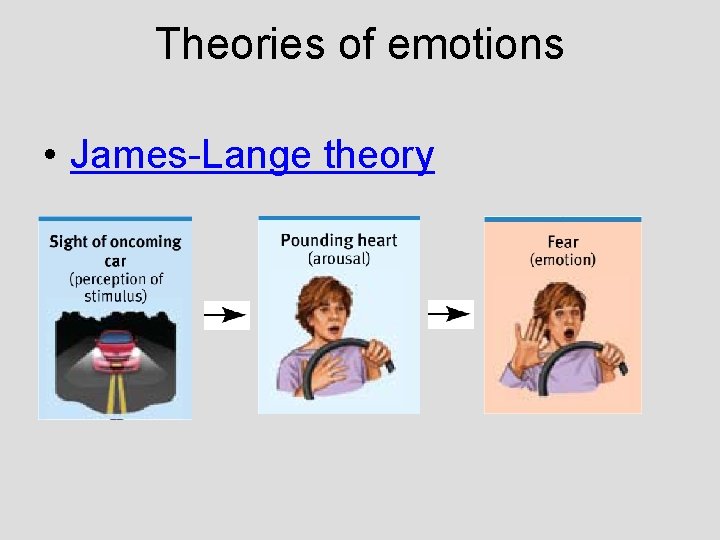
Theories of emotions • James-Lange theory
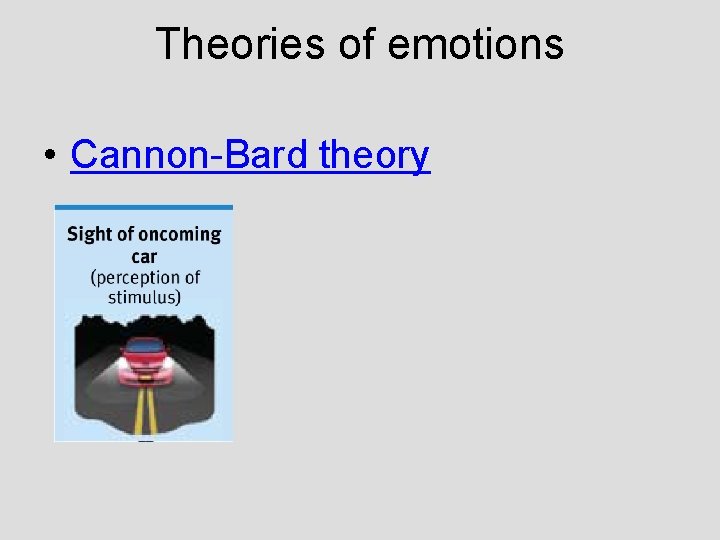
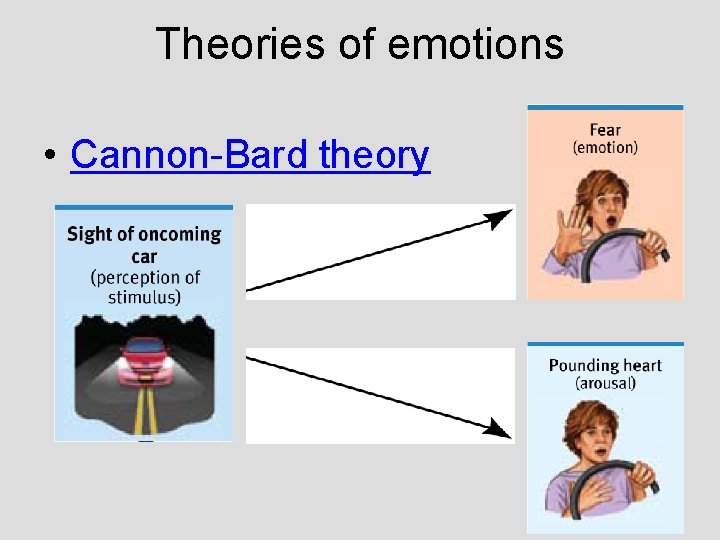
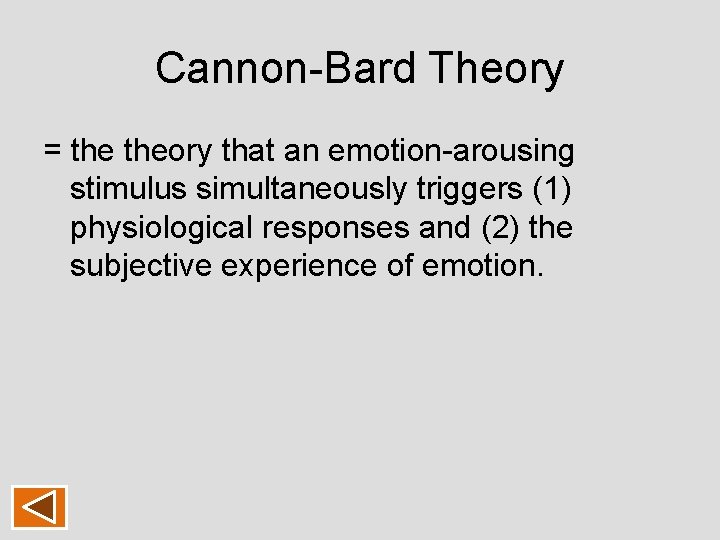
Theories of emotions • Cannon-Bard theory
Theories of emotions • Cannon-Bard theory
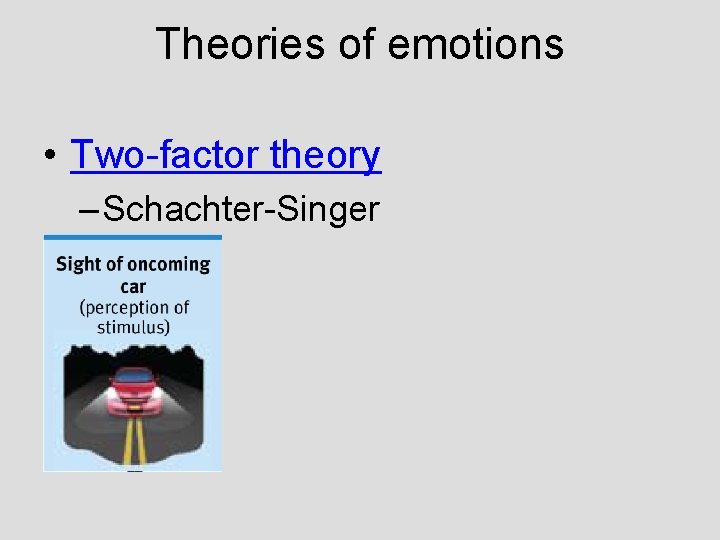
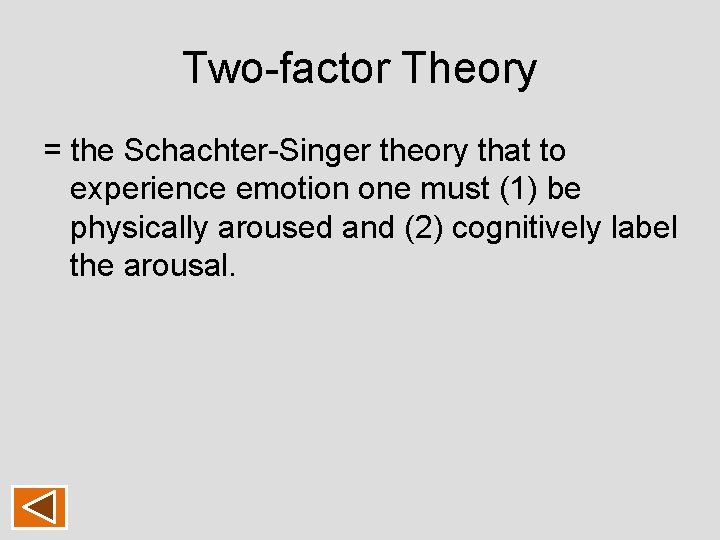
Theories of emotions • Two-factor theory – Schachter-Singer
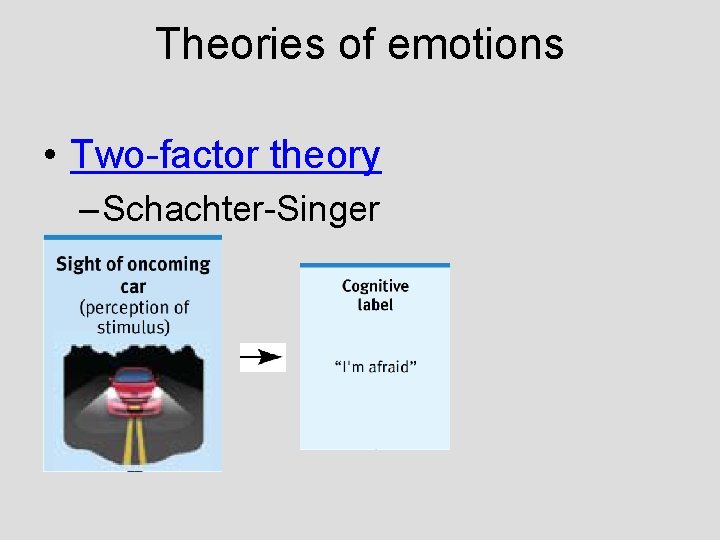
Theories of emotions • Two-factor theory – Schachter-Singer
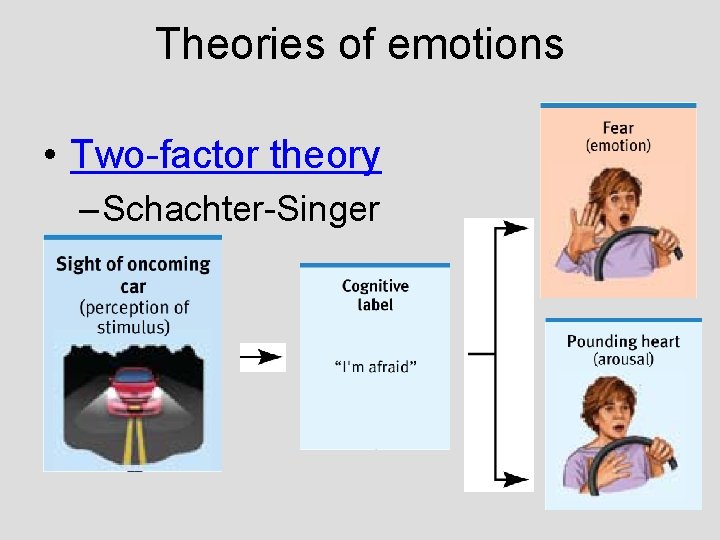
Theories of emotions • Two-factor theory – Schachter-Singer
Theories of emotions
Embodied Emotion
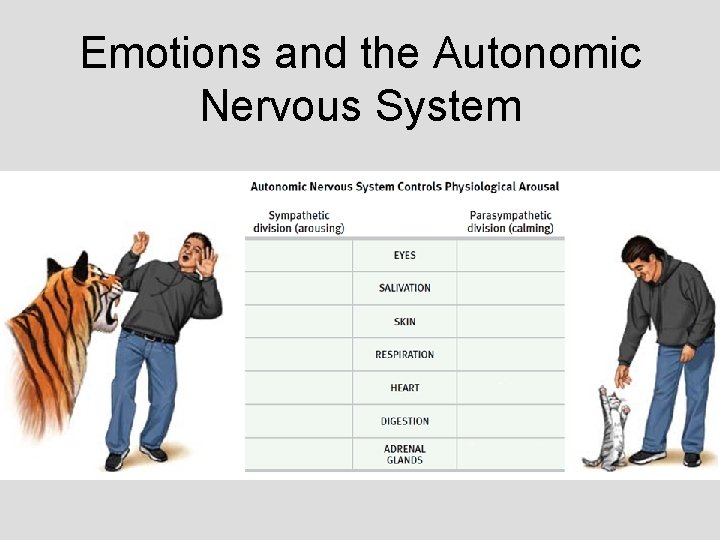
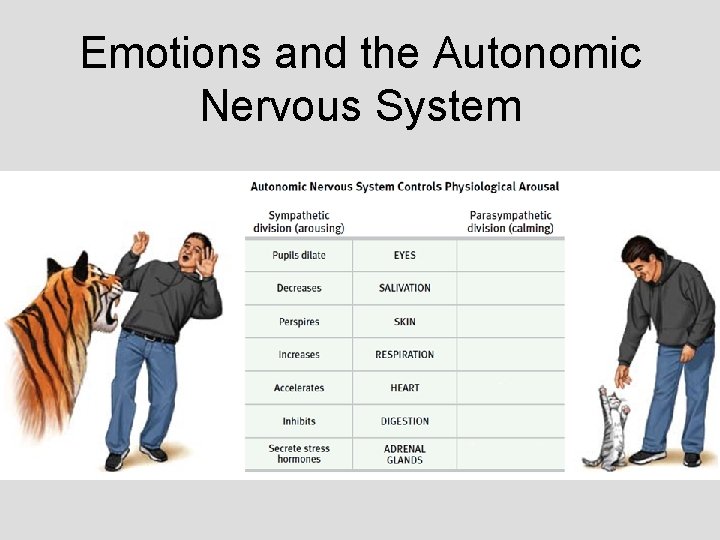
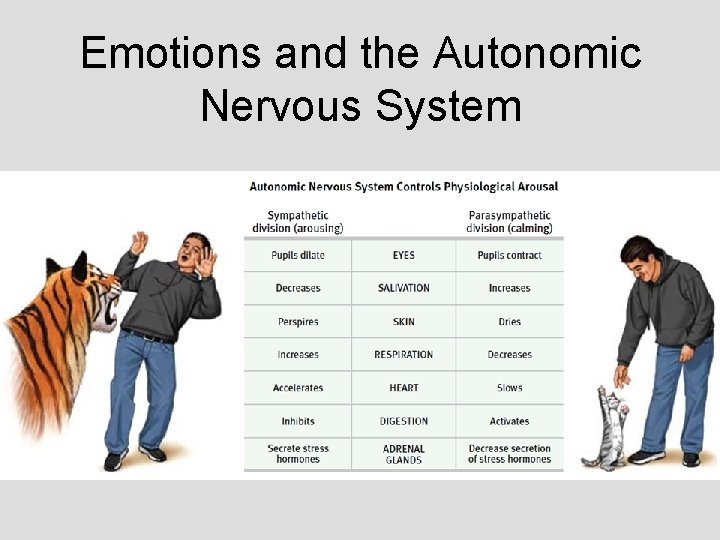
Emotions and the Autonomic Nervous System • Autonomic nervous system – Sympathetic nervous system • arousing – Parasympathetic nervous system • Calming – Moderate arousal is ideal
Emotions and the Autonomic Nervous System
Emotions and the Autonomic Nervous System
Emotions and the Autonomic Nervous System
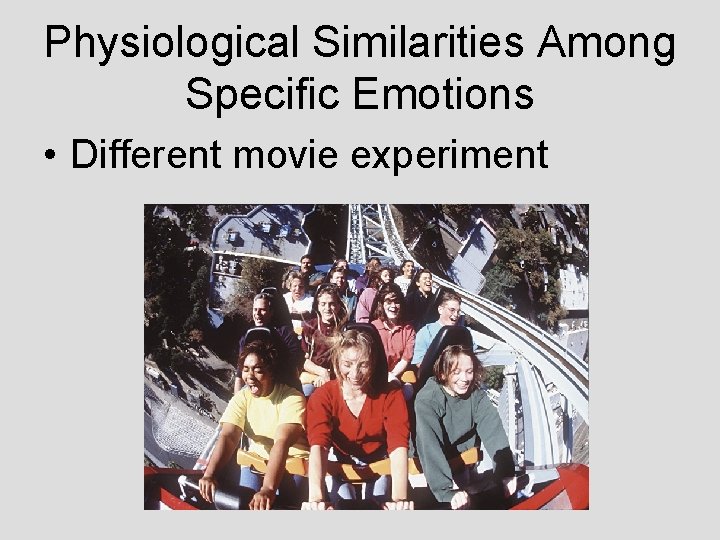
Physiological Similarities Among Specific Emotions • Different movie experiment
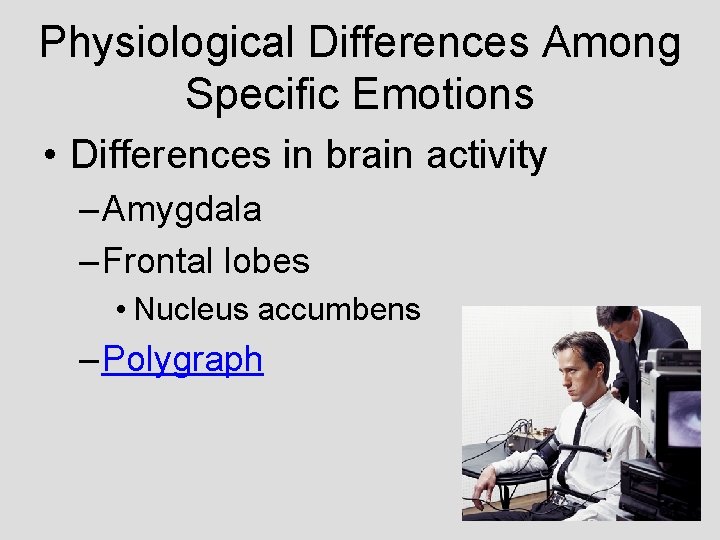
Physiological Differences Among Specific Emotions • Differences in brain activity – Amygdala – Frontal lobes • Nucleus accumbens – Polygraph
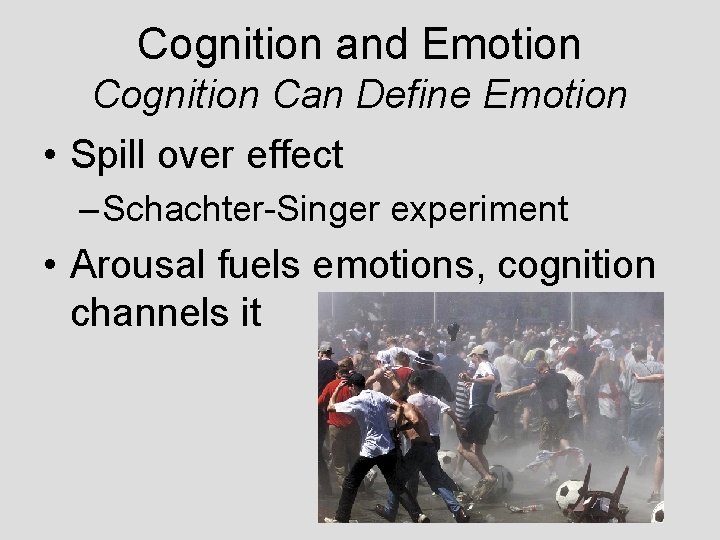
Cognition and Emotion Cognition Can Define Emotion • Spill over effect – Schachter-Singer experiment • Arousal fuels emotions, cognition channels it
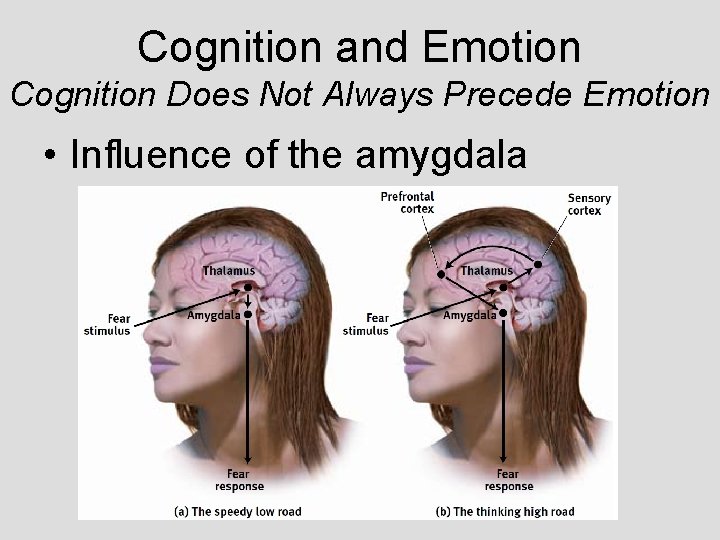
Cognition and Emotion Cognition Does Not Always Precede Emotion • Influence of the amygdala
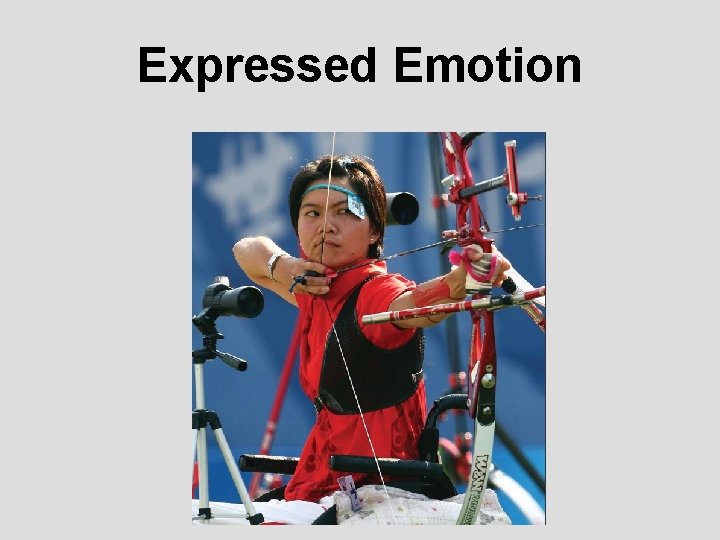
Expressed Emotion
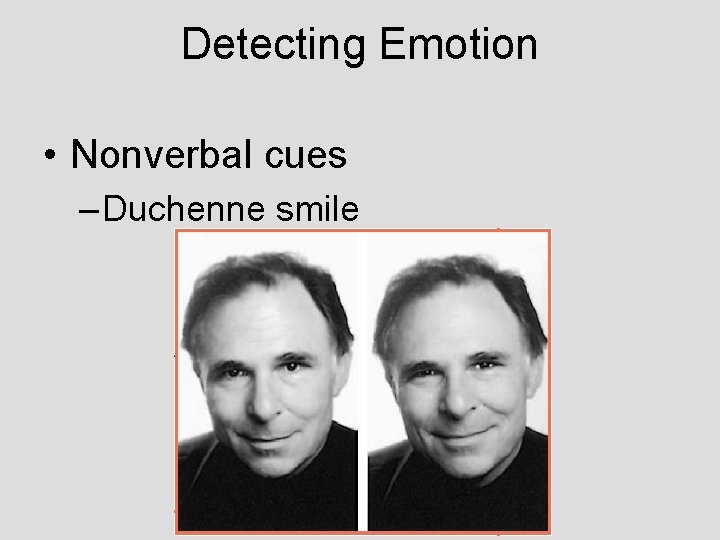
Detecting Emotion • Nonverbal cues – Duchenne smile
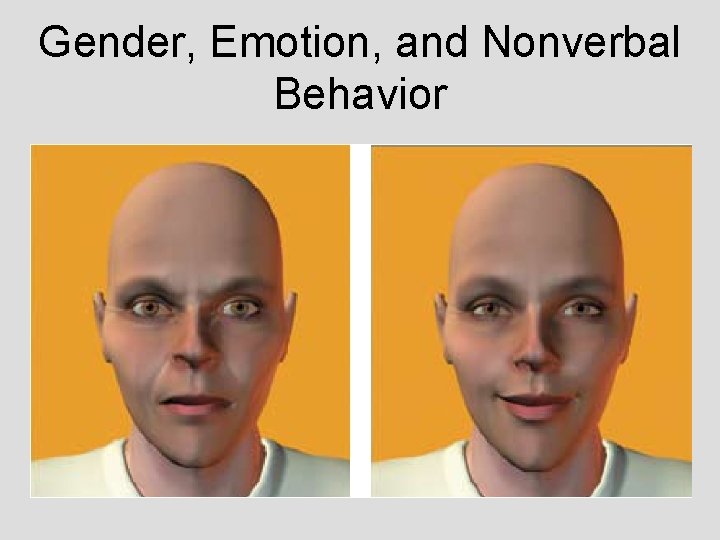
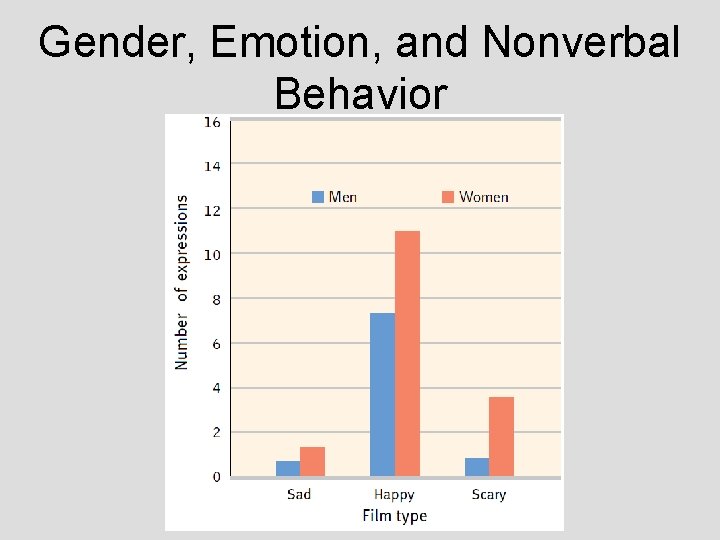
Gender, Emotion, and Nonverbal Behavior
Gender, Emotion, and Nonverbal Behavior
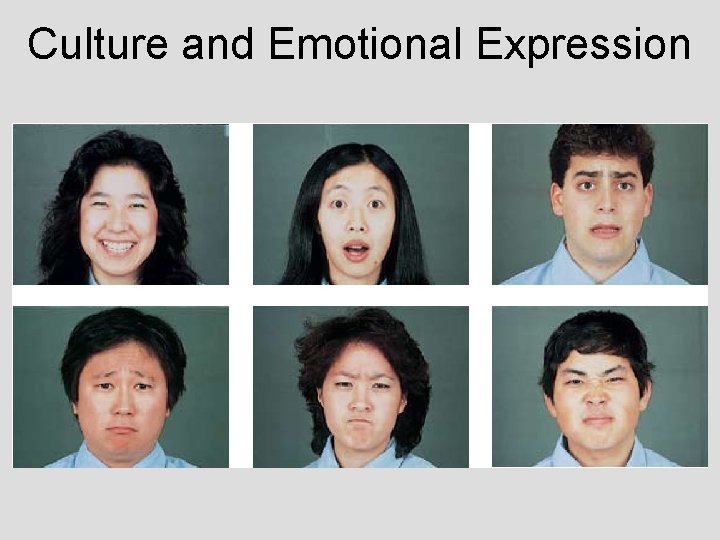
Culture and Emotional Expression
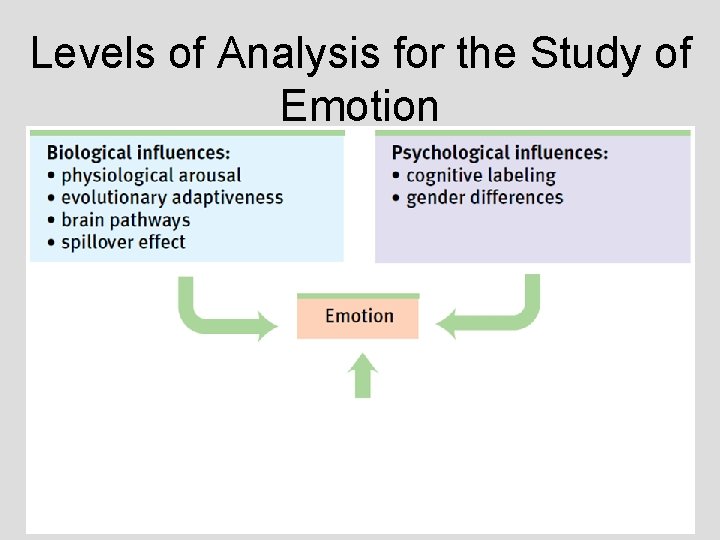
Levels of Analysis for the Study of Emotion
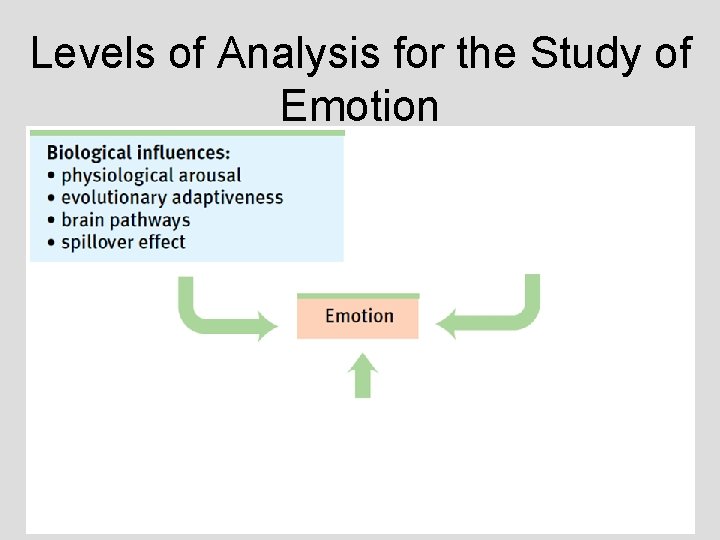
Levels of Analysis for the Study of Emotion
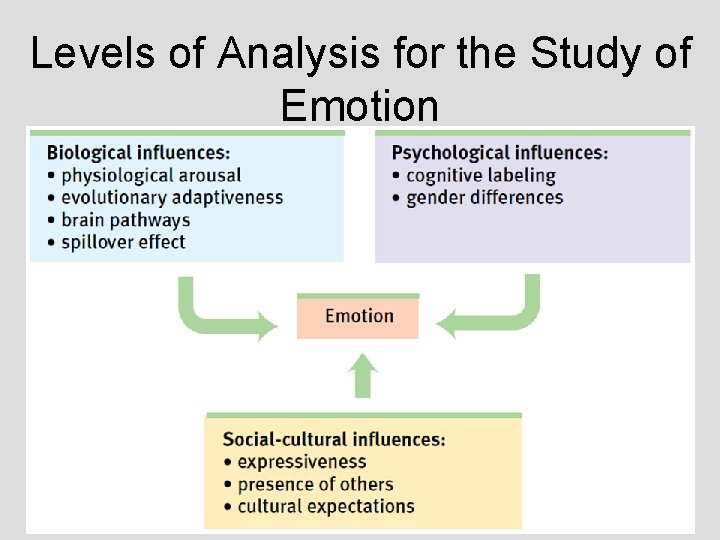
Levels of Analysis for the Study of Emotion
Levels of Analysis for the Study of Emotion
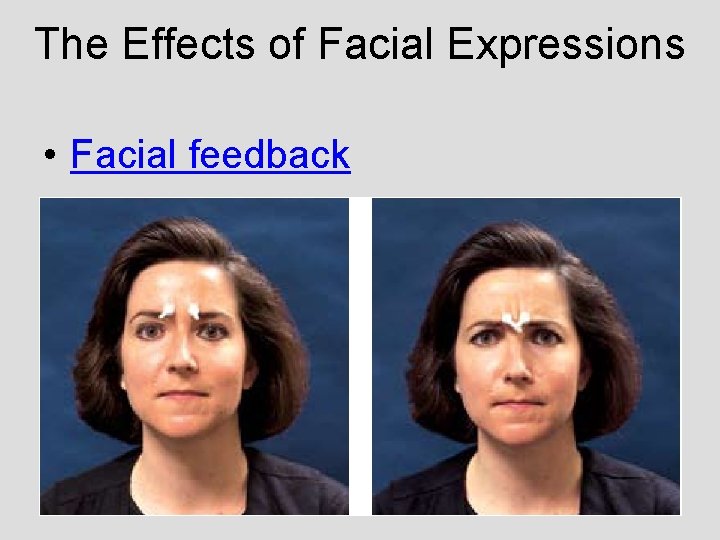
The Effects of Facial Expressions • Facial feedback
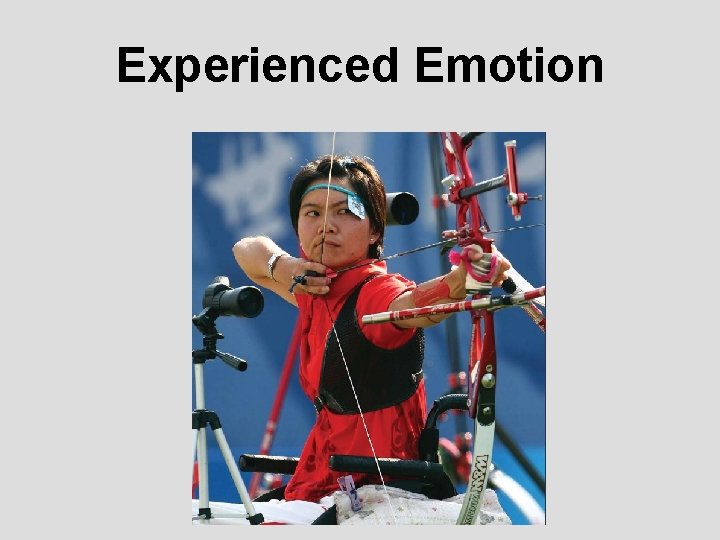
Experienced Emotion
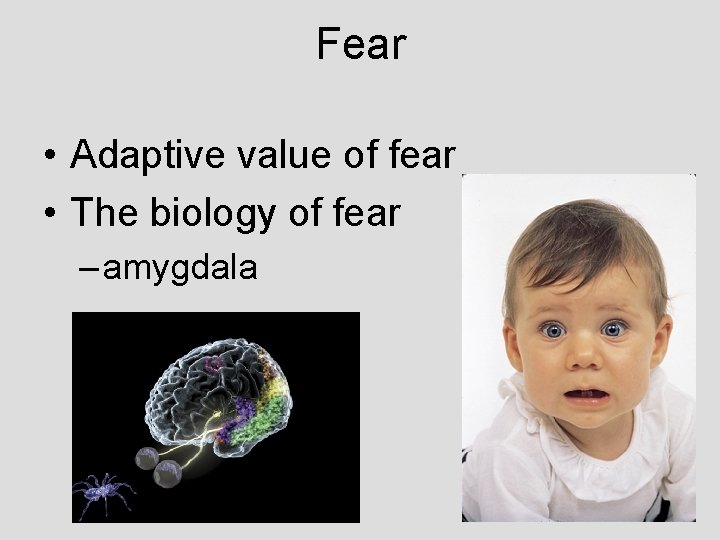
Fear • Adaptive value of fear • The biology of fear – amygdala
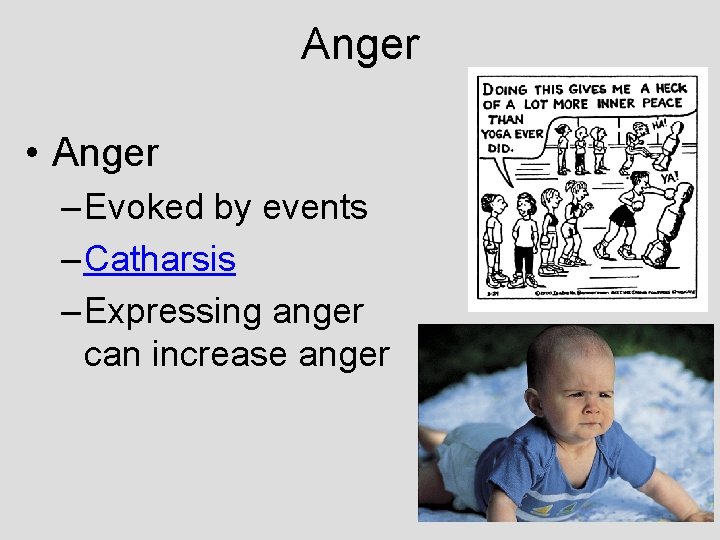
Anger • Anger – Evoked by events – Catharsis – Expressing anger can increase anger
Happiness • Happiness – Feel-good, do-good phenomenon – Well-being
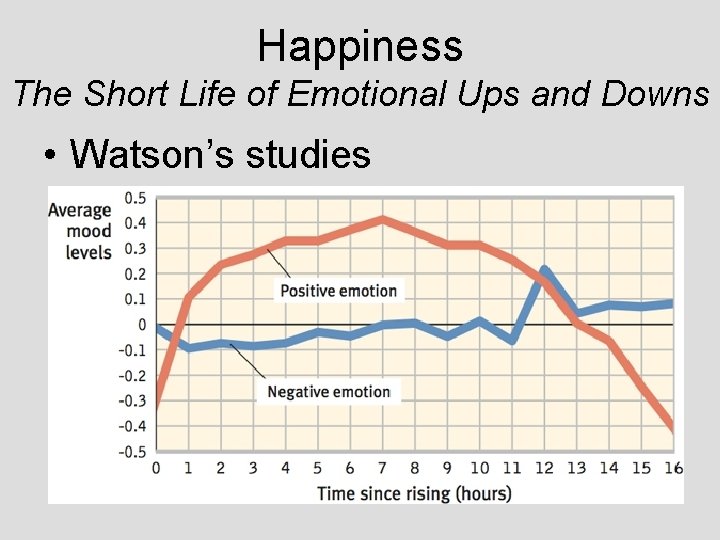
Happiness The Short Life of Emotional Ups and Downs • Watson’s studies
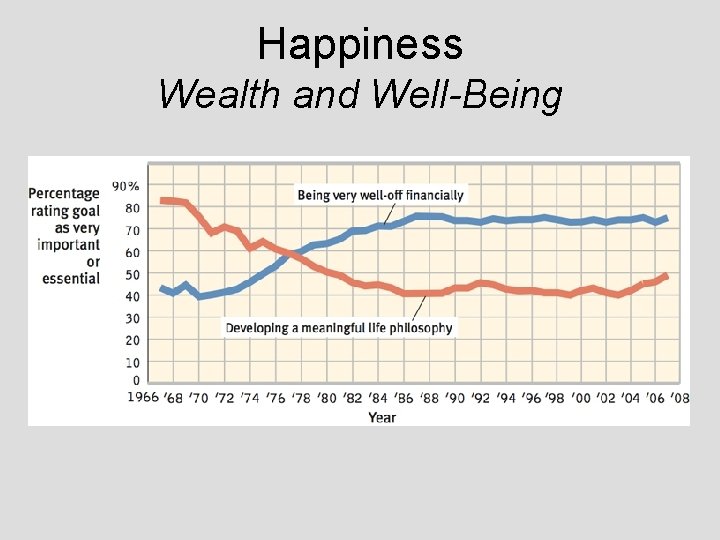
Happiness Wealth and Well-Being
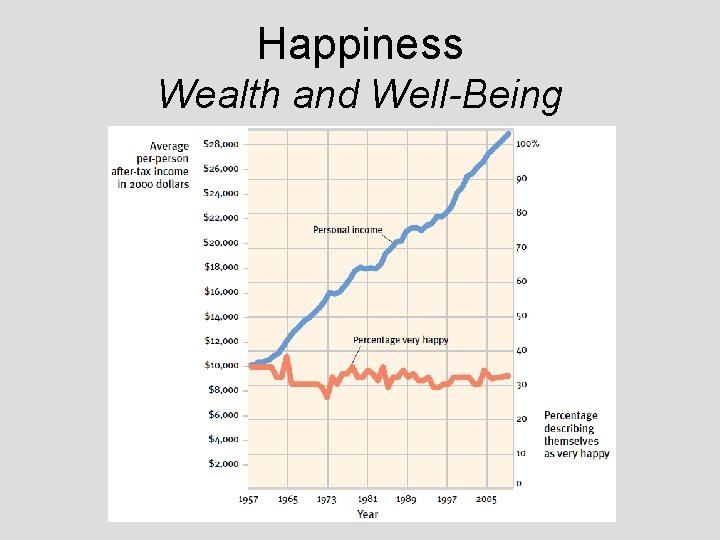
Happiness Wealth and Well-Being
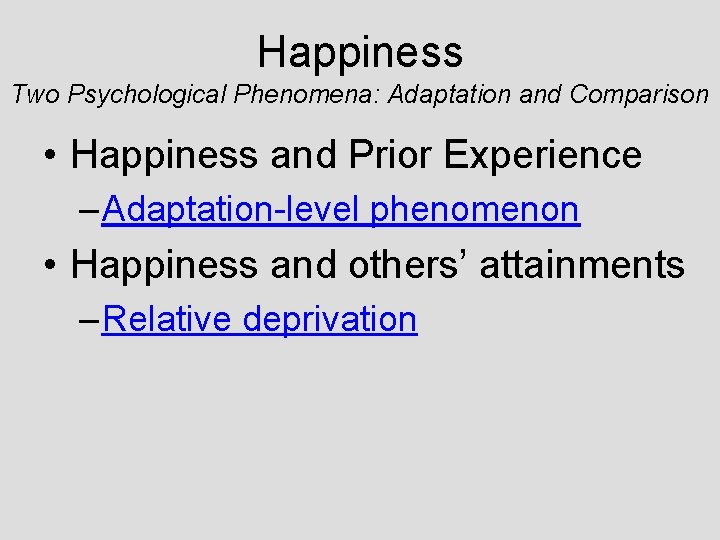
Happiness Two Psychological Phenomena: Adaptation and Comparison • Happiness and Prior Experience – Adaptation-level phenomenon • Happiness and others’ attainments – Relative deprivation
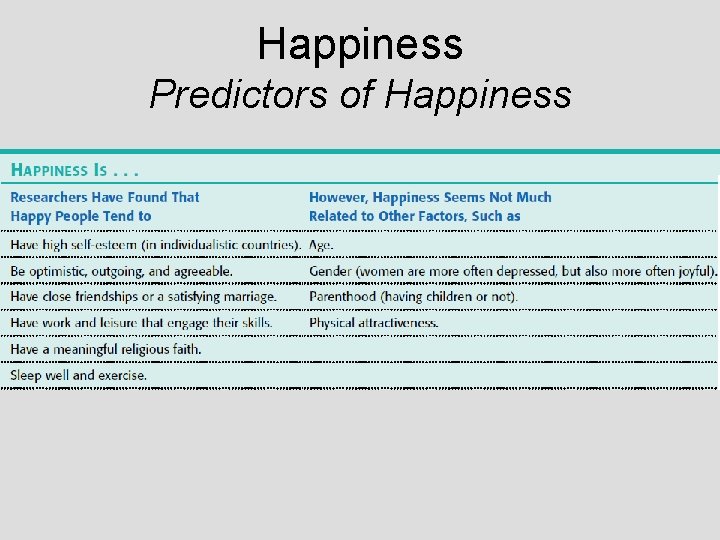
Happiness Predictors of Happiness
Stress and Health
Introduction • Health psychology • Behavioral medicine
Stress and Illness • Stress – Stress appraisal
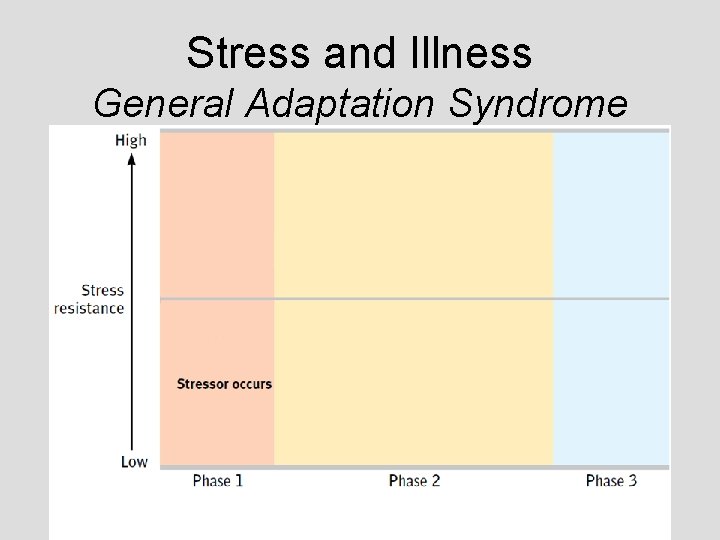
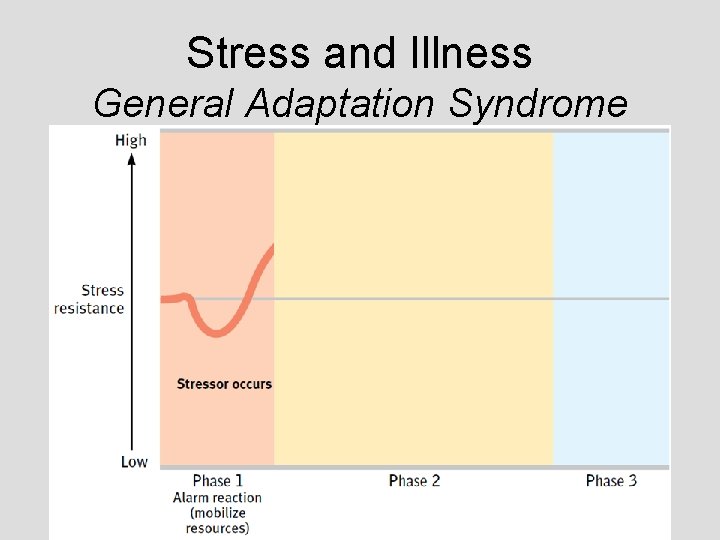
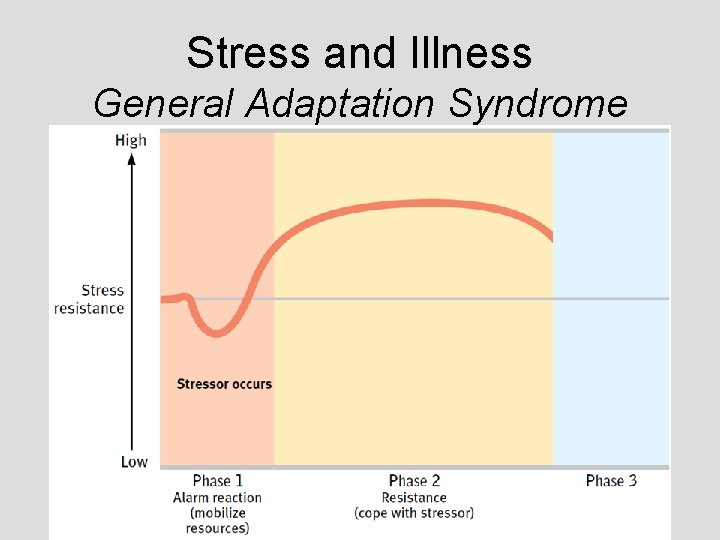
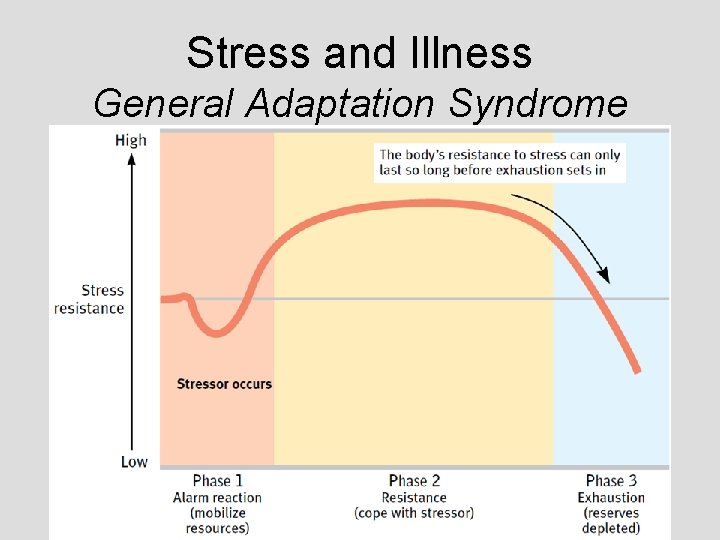
Stress and Illness The Stress Response System • Selye’s general adaptation syndrome (GAS) – Alarm – Resistance – exhaustion
Stress and Illness General Adaptation Syndrome
Stress and Illness General Adaptation Syndrome
Stress and Illness General Adaptation Syndrome
Stress and Illness General Adaptation Syndrome
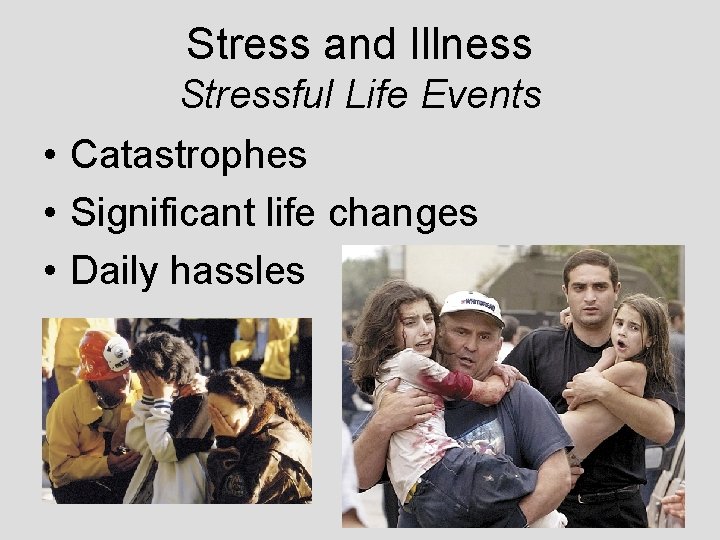
Stress and Illness Stressful Life Events • Catastrophes • Significant life changes • Daily hassles
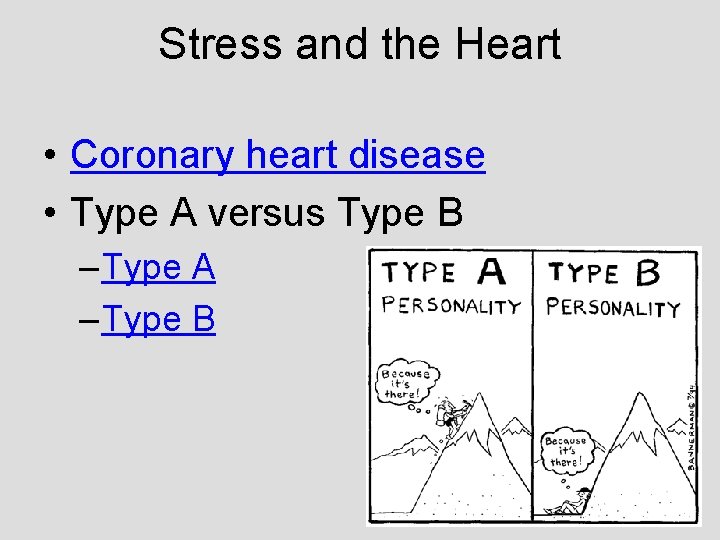
Stress and the Heart • Coronary heart disease • Type A versus Type B – Type A – Type B
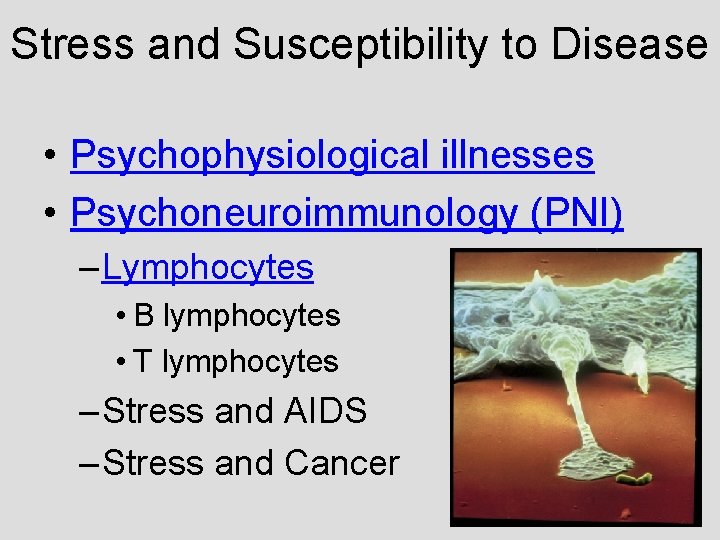
Stress and Susceptibility to Disease • Psychophysiological illnesses • Psychoneuroimmunology (PNI) – Lymphocytes • B lymphocytes • T lymphocytes – Stress and AIDS – Stress and Cancer
The End
• Types of Files Teacher Information – This presentation has been saved as a “basic” Powerpoint file. While this file format placed a few limitations on the presentation, it insured the file would be compatible with the many versions of Powerpoint teachers use. To add functionality to the presentation, teachers may want to save the file for their specific version of Powerpoint. • Animation – Once again, to insure compatibility with all versions of Powerpoint, none of the slides are animated. To increase student interest, it is suggested teachers animate the slides wherever possible. • Adding slides to this presentation – Teachers are encouraged to adapt this presentation to their personal teaching style. To help keep a sense of continuity, blank slides which can be copied and pasted to a specific location in the presentation follow this “Teacher Information” section.
Teacher Information • Hyperlink Slides - This presentation contain two types of hyperlinks. Hyperlinks can be identified by the text being underlined and a different color (usually purple). – Unit subsections hyperlinks: Immediately after the unit title slide, a page (slide #3) can be found listing all of the unit’s subsections. While in slide show mode, clicking on any of these hyperlinks will take the user directly to the beginning of that subsection. This allows teachers quick access to each subsection. – Bold print term hyperlinks: Every bold print term from the unit is included in this presentation as a hyperlink. While in slide show mode, clicking on any of the hyperlinks will take the user to a slide containing the formal definition of the term. Clicking on the “arrow” in the bottom left corner of the definition slide will take the user back to the original point in the presentation. These hyperlinks were included for teachers who want students to see or copy down the exact definition as stated in the text. Most teachers prefer the definitions not be included to prevent students from only “copying down what is on the screen” and not actively listening to the presentation. For teachers who continually use the Bold Print Term Hyperlinks option, please contact the author using the email address on the next slide to learn a technique to expedite the returning to the original point in the presentation.
Teacher Information • Continuity slides – Throughout this presentation there are slides, usually of graphics or tables, that build on one another. These are included for three purposes. • By presenting information in small chunks, students will find it easier to process and remember the concepts. • By continually changing slides, students will stay interested in the presentation. • To facilitate class discussion and critical thinking. Students should be encouraged to think about “what might come next” in the series of slides. • Please feel free to contact me at kkorek@germantown. k 12. wi. us with any questions, concerns, suggestions, etc. regarding these presentations. Kent Korek Germantown High School Germantown, WI 53022 262 -253 -3400 kkorek@germantown. k 12. wi. us
Division title (green print) subdivision title (blue print) • xxx – xxx
Division title (green print) subdivision title (blue print) Use this slide to add a table, chart, clip art, picture, diagram, or video clip. Delete this box when finished
Definition Slide = add definition here
Definition Slides
Emotion = a response of the whole organism, involving (1) physiological arousal, (2) expressive behaviors, and (3) conscious experience.
James-Lange Theory = theory that our experience of emotion is our awareness of our physiological responses to emotion-arousing stimuli.
Cannon-Bard Theory = theory that an emotion-arousing stimulus simultaneously triggers (1) physiological responses and (2) the subjective experience of emotion.
Two-factor Theory = the Schachter-Singer theory that to experience emotion one must (1) be physically aroused and (2) cognitively label the arousal.
Polygraph = a machine, commonly used in attempts to detect lies, that measure several of the physiological responses accompanying emotion (such as perspiration and cardiovascular and breathing changes).
Facial Feedback = the effect of facial expressions on experienced emotions, as when a facial expression of anger or happiness intensifies feelings of anger or happiness.
Catharsis = emotional release. The catharsis hypothesis maintains that “releasing’ aggressive energy (through action or fantasy) relieves aggressive urges.
Feel-Good Do-Good Phenomenon = people’s tendency to be helpful when already in a good mood.
Well-being = self-perceived happiness or satisfaction with life. Used along with measures of objective well-being (for example, physical and economic indicators) to evaluate people’s quality of life.
Adaptation-level Phenomenon = our tendency to form judgments (of sounds, of lights, of income) relative to a neutral level defined by our prior experience.
Relative Deprivation = the perception that we are worse off relative to those with whom we compare ourselves.
Behavioral Medicine = an interdisciplinary field that integrates behavior and medical knowledge and applies that knowledge to health and disease. .
Health Psychology = a subfield of psychology that provides psychology's contribution to behavioral medicine.
Stress = the process by which we perceive and respond to certain events, called stressors, that we appraise as threatening or challenging.
General Adaptation Syndrome (GAS) = Selye’s concept of the body’s adaptive response to stress in three phases – alarm, resistance, exhaustion.
Coronary Heart Disease = the clogging of the vessels that nourish the heart muscle; the leading cause of death in North America.
Type A = Friedman and Rosenman’s term for competitive, hard-driving, impatient, verbally aggressive, and anger-prone people.
Type B = Friedman and Rosenman’s term for easygoing, relaxed people.
Psychophysiological Illness = literally, “mind-body” illness; any stressrelated physical illness, such as hypertension and some headaches.
Psychoneuroimmunology (PNI) = the study of how psychological, neural, and endocrine processes together affect the immune system and resulting health.
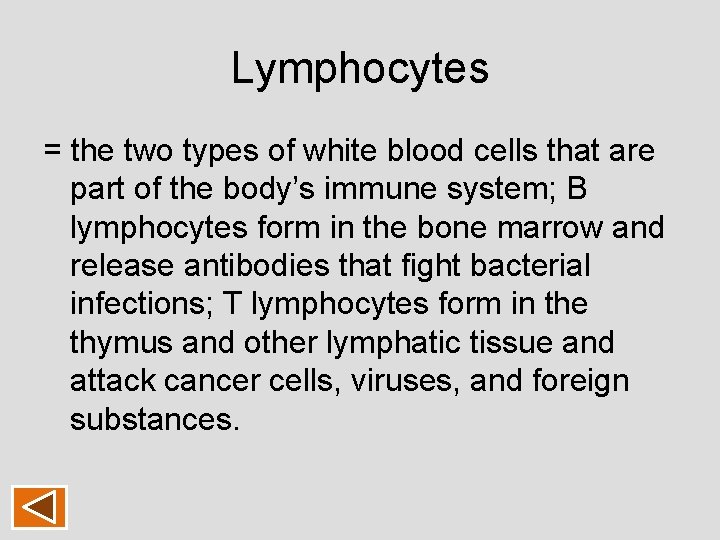
Lymphocytes = the two types of white blood cells that are part of the body’s immune system; B lymphocytes form in the bone marrow and release antibodies that fight bacterial infections; T lymphocytes form in the thymus and other lymphatic tissue and attack cancer cells, viruses, and foreign substances.
The End
• Types of Files Teacher Information – This presentation has been saved as a “basic” Powerpoint file. While this file format placed a few limitations on the presentation, it insured the file would be compatible with the many versions of Powerpoint teachers use. To add functionality to the presentation, teachers may want to save the file for their specific version of Powerpoint. • Animation – Once again, to insure compatibility with all versions of Powerpoint, none of the slides are animated. To increase student interest, it is suggested teachers animate the slides wherever possible. • Adding slides to this presentation – Teachers are encouraged to adapt this presentation to their personal teaching style. To help keep a sense of continuity, blank slides which can be copied and pasted to a specific location in the presentation follow this “Teacher Information” section.
Teacher Information • Hyperlink Slides - This presentation contain two types of hyperlinks. Hyperlinks can be identified by the text being underlined and a different color (usually purple). – Unit subsections hyperlinks: Immediately after the unit title slide, a page (slide #3) can be found listing all of the unit’s subsections. While in slide show mode, clicking on any of these hyperlinks will take the user directly to the beginning of that subsection. This allows teachers quick access to each subsection. – Bold print term hyperlinks: Every bold print term from the unit is included in this presentation as a hyperlink. While in slide show mode, clicking on any of the hyperlinks will take the user to a slide containing the formal definition of the term. Clicking on the “arrow” in the bottom left corner of the definition slide will take the user back to the original point in the presentation. These hyperlinks were included for teachers who want students to see or copy down the exact definition as stated in the text. Most teachers prefer the definitions not be included to prevent students from only “copying down what is on the screen” and not actively listening to the presentation. For teachers who continually use the Bold Print Term Hyperlinks option, please contact the author using the email address on the next slide to learn a technique to expedite the returning to the original point in the presentation.
Teacher Information • Continuity slides – Throughout this presentation there are slides, usually of graphics or tables, that build on one another. These are included for three purposes. • By presenting information in small chunks, students will find it easier to process and remember the concepts. • By continually changing slides, students will stay interested in the presentation. • To facilitate class discussion and critical thinking. Students should be encouraged to think about “what might come next” in the series of slides. • Please feel free to contact me at kkorek@germantown. k 12. wi. us with any questions, concerns, suggestions, etc. regarding these presentations. Kent Korek Germantown High School Germantown, WI 53022 262 -253 -3400 kkorek@germantown. k 12. wi. us
Division title (green print) subdivision title (blue print) • xxx – xxx
Division title (green print) subdivision title (blue print) Use this slide to add a table, chart, clip art, picture, diagram, or video clip. Delete this box when finished
Definition Slide = add definition here
Definition Slides
Motivation = a need or desire that energizes and directs behavior.
Instinct = a complex behavior that is rigidly patterned throughout a species and is unlearned.
Drive-reduction Theory = the idea that a physiological need creates an aroused tension state (a drive) that motivates an organism to satisfy the need.
Homeostasis = a tendency to maintain a balanced or constant internal state; the regulation of any aspect of body chemistry, such as blood glucose, around a particular level.
Incentive = a positive or negative environment stimulus that motivates behavior
Hierarchy of Needs = Maslow’s pyramid of human needs, beginning at the base with physiological needs that must first be satisfied before higher-level safety needs and then psychological needs become active.
Glucose = the form of sugar that circulates in the blood and provides the major source of energy for body tissues. When its level is low, we feel hunger.
Set Point = the point at which an individual’s “weight thermostat” is supposedly set. When the body falls below this weight, an increase in hunger and a lowered metabolic rate may act to restore the lost weight.
Basal Metabolic Rate = the body’s resting rate of energy expenditure.
Anorexia Nervosa = an eating disorder in which a person (usually an adolescent female) diets and becomes significantly (15 percent or more) underweight, yet, still feeling fat, continues to starve.
Bulimia Nervosa = an eating disorder characterized by episodes of overeating, usually highcalorie foods, followed by vomiting, laxative use, fasting, or excessive exercise.
Binge-eating Disorder = significant binge-eating episodes, followed by distress, disgust, or guilt, but without the compensatory purging, fasting, or excessive exercise that marks bulimia nervosa.
Sexual Response Cycle = the four stages of sexual responding described by Masters and Johnson – excitement, plateau, orgasm, and resolution.
Refractory Period = a resting period after orgasm, during which a man cannot achieve another orgasm.
Estrogens = sex hormones, such as estradiol, secreted in greater amount by females than males and contributing to female sex characteristics. In nonhuman female mammals, estrogen levels peak during ovulation, promoting sexual receptivity.
Testosterone = the most important of the male sex hormones. Both males and females have it, but the additional testosterone in males stimulates the growth of the male sex organs in the fetus and the development of the male sex characteristics during puberty.
Sexual Orientation = an enduring sexual attraction toward members of either one’s own sex (homosexual orientation) or the other sex (heterosexual orientation).