
Psychology Psychology Is the scientific study of behavior
Psychology

Psychology • Is the scientific study of behavior and the mental process – This study can be observable: what you can see, measure, etc… • behavior – Can be non observable • Thoughts, feelings, fantasies, …

Why Learn Psychology? • Learning Psychology, can help you gain a better understanding of your own behavior and knowledge. • Can help you learn how you developed, how you learn, and why you are the way you are. • Can help you gain a better understanding of others
Science and Psychology • Because human behavior is complex, a scientific approach is necessary in order to avoid generalization • Many psychological studies should also be utilized, just because it is true in one situation, may not be true in every situation.
Four goals of Psychology • • Description Explanation Prediction Influence or Control
Description • Describe or gather information about the behavior and present what is known
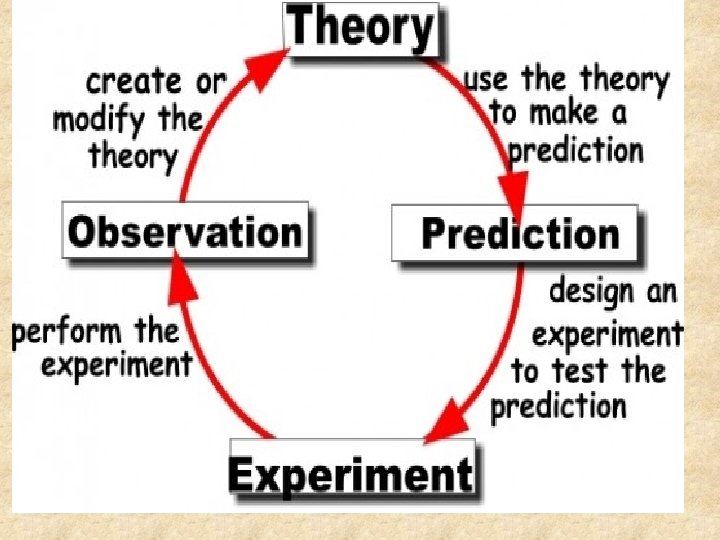
Explanation • Why people act or behave the way that they do – Hypothesis: Predict what the reason is – Test – Theory: Complex explanation based on testing • Helps describe, explain, and predict observed behavior
Prediction • By studying theories, you can predict what will happen in the future • How people will behave , think , or feel in certain situations given the setting or same set of events
Influence or Control • Using knowledge learned, psychologists can help control what will happen. • Therapy, advertising, learning, etc…
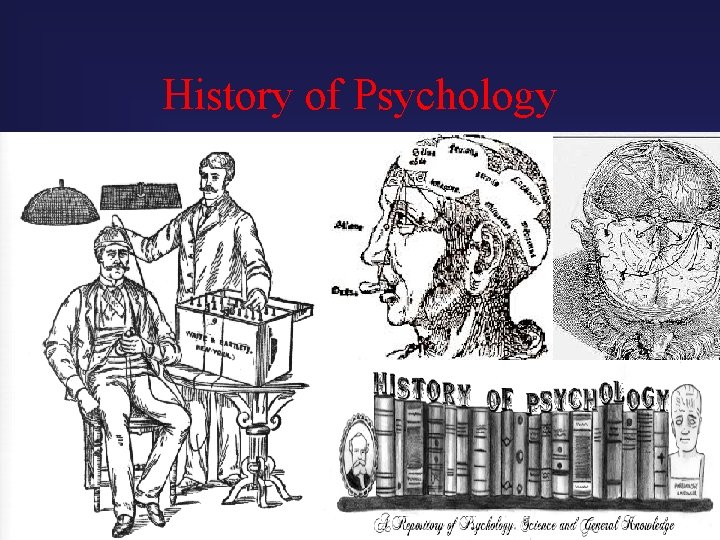
History of Psychology
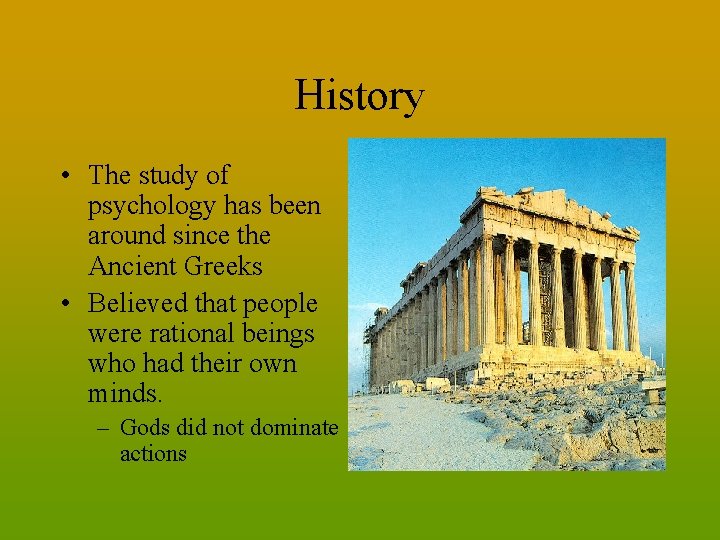
History • The study of psychology has been around since the Ancient Greeks • Believed that people were rational beings who had their own minds. – Gods did not dominate actions
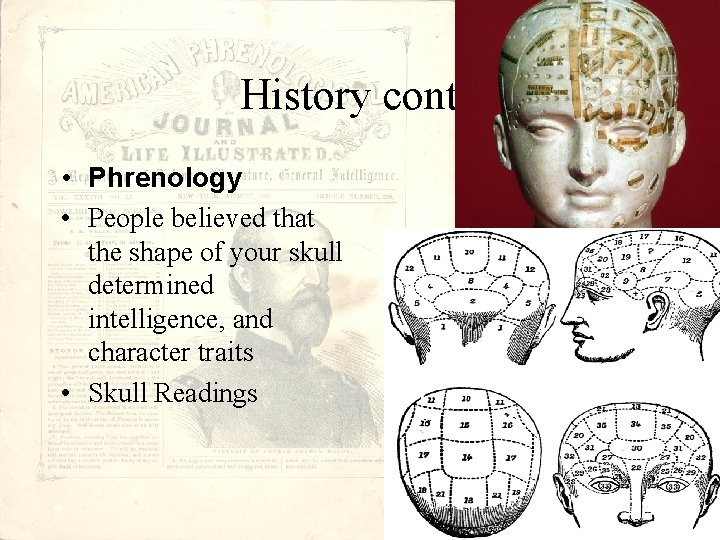
History cont. . • Phrenology • People believed that the shape of your skull determined intelligence, and character traits • Skull Readings
Different approaches and schools of Psychology • • • Biological Cognitive Behavioral Psycho-analytical Humanistic Socio-Cultural
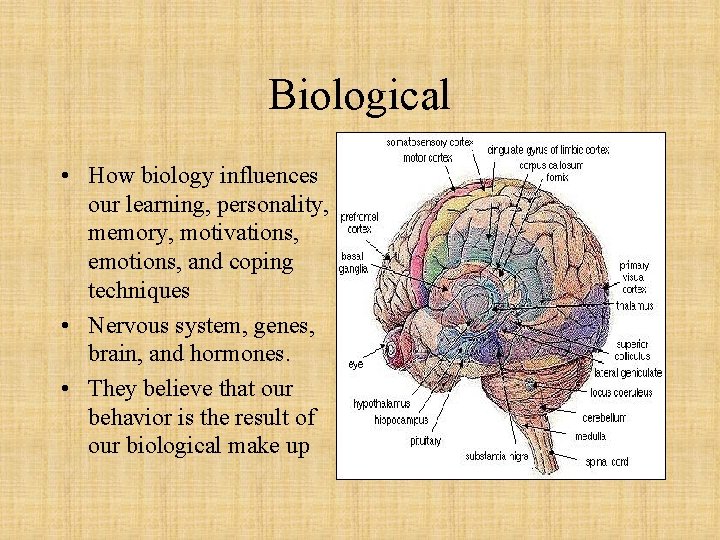
Biological • How biology influences our learning, personality, memory, motivations, emotions, and coping techniques • Nervous system, genes, brain, and hormones. • They believe that our behavior is the result of our biological make up
Cognitive • Piaget • How we process, store, and use information and how this information influences our thinking , language, problem solving, and creativity • Believe that behavior is influenced by a variety of things such as perceptions, memories, and expectations
Behavioral • Pavlov, Skinner • How organisms learn and modify behaviors depending on rewards or punishments • How we behave is determined on how we have learned to behave • Behavior is a product of past experiences • People are conditioned as a result of rewards, reinforcement, or punishment
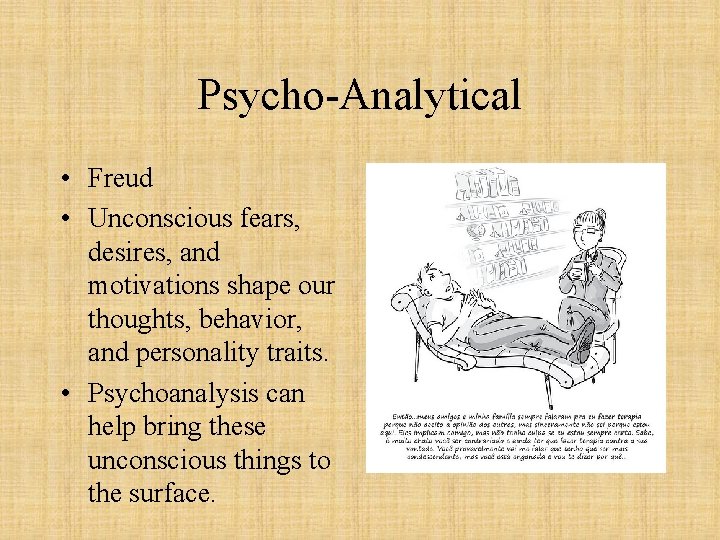
Psycho-Analytical • Freud • Unconscious fears, desires, and motivations shape our thoughts, behavior, and personality traits. • Psychoanalysis can help bring these unconscious things to the surface.
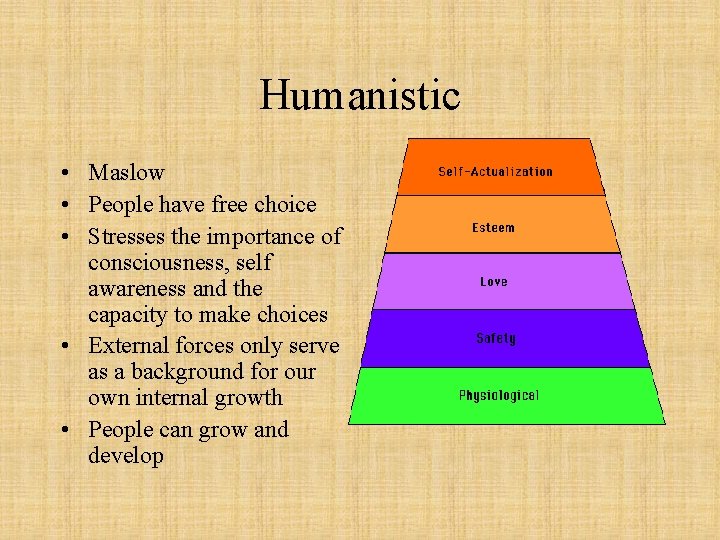
Humanistic • Maslow • People have free choice • Stresses the importance of consciousness, self awareness and the capacity to make choices • External forces only serve as a background for our own internal growth • People can grow and develop
Cross Cultural or Socio-cultural • Studies the influence of cultural and ethnic similarities and differences. – Believe that these affect behavior. • The way we behave depends on the culture we associate ourselves with. • Gender and socio-economic status may also influence human behavior.
Behaviors • Lying, Excuse Making, Grandiosity, Aggression, Apathy, pessimism, etc. • Conformity, Obedience, Malevolence, Bystander Effect, Halo Effect, etc. • Depression, Alcoholism, Drug Abuse, Schizophrenia, DID, Anti Social Personality Disorder, etc…
Psychological Perspectives Poster • Your task is to make an informational poster about a psychological perspective. • Each group must include the following for their topic: – General information (More In Depth than Notes) – Key terms – Psychologist in the field – A visual – An real life example to help explain it (not in book) – Reference how it applies or explains the given behavior (Class will choose a behavior—anxiety, depression, alcoholism, etc. )
- Slides: 22