
Psychology Psychological Tests and Disorders Chapters 15 and
- Slides: 48
Psychology Psychological Tests and Disorders – Chapters 15 and 18 R. M. Tolles
Section 1: List the purpose and characteristics of psychological tests Purpose of Psychological Tests n Used to help people make important decisions Examples: GRE, SATS, ASVAB, and Medical Entrance Exams n Test assess abilities, feelings, attitudes, and behaviors Behavior-rating scales – used to measure behavior in places as classrooms and hospitals Self-reports – measuring a persons attitudes and behavior
Characteristics of Psychological Tests n For a psychological test to be useful and reasonably accurate, it has to be: Standardized – one that is administered and scored the same way every time Reliability and Validity – consistency and honesty Validity Scales – involves questions that if answered in a certain way led the Psychologist know that the test taker is not answering the test questions honestly Norms for Scoring – establishing standards of performance Norms – established standards of performance Norm Groups – group of test takers similar in characteristics
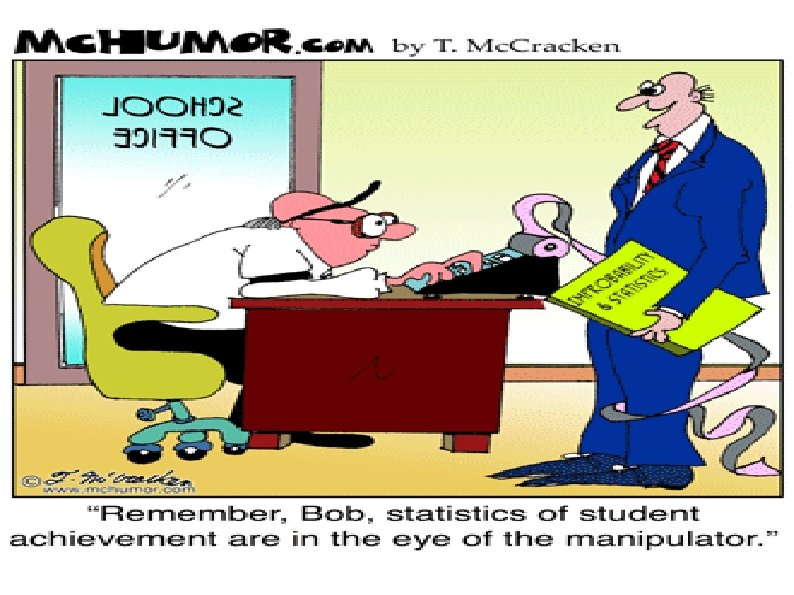
Section 2: Explain how achievement tests, aptitude tests, and interest inventories are used. Achievement Tests Most tests people take throughout school are achievement tests n Achievement Tests – measure people's skills and the knowledge they have in specific academic areas. n Intelligence and motivation play a role in achievement as well as learning n Narrow range of skills Aptitude Tests n Intelligence tests – measure overall learning in ability n Generally used to determine specific abilities related to application, such as careers n
Vocational Interest Inventories – help people determine whether their interests are similar to those of people in various lines of work n Kuder Preference n Evaluation of Interest Test – forced choice Inventories: test format. Scores Interest in an area does not necessarily mean show interest that one had the n Strong-Campbell ability or aptitude to Interest Inventory – succeed. not as obvious or direct, it includes many different kinds of items
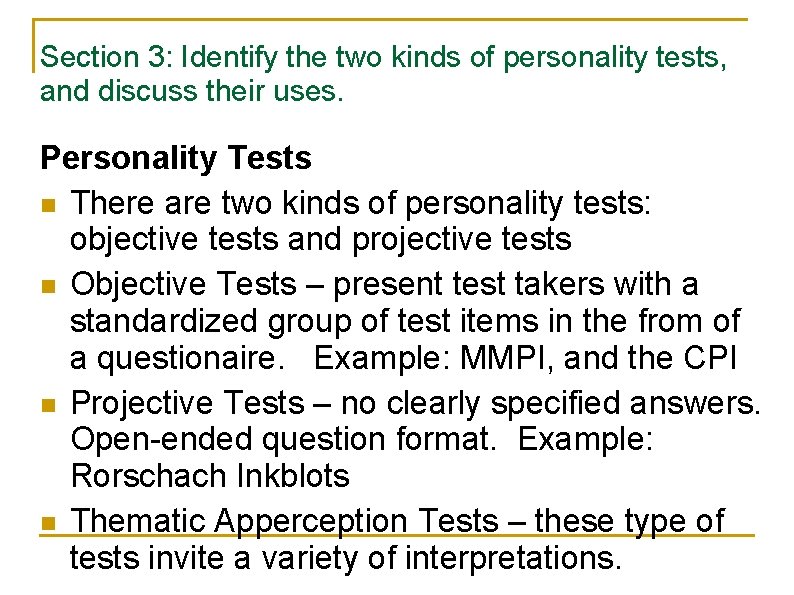
Section 3: Identify the two kinds of personality tests, and discuss their uses. Personality Tests n There are two kinds of personality tests: objective tests and projective tests n Objective Tests – present test takers with a standardized group of test items in the from of a questionaire. Example: MMPI, and the CPI n Projective Tests – no clearly specified answers. Open-ended question format. Example: Rorschach Inkblots n Thematic Apperception Tests – these type of tests invite a variety of interpretations.
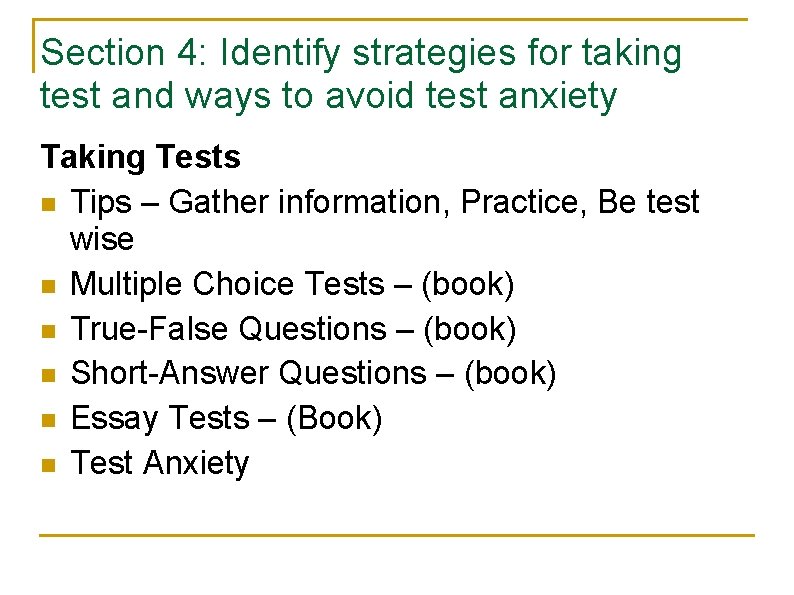
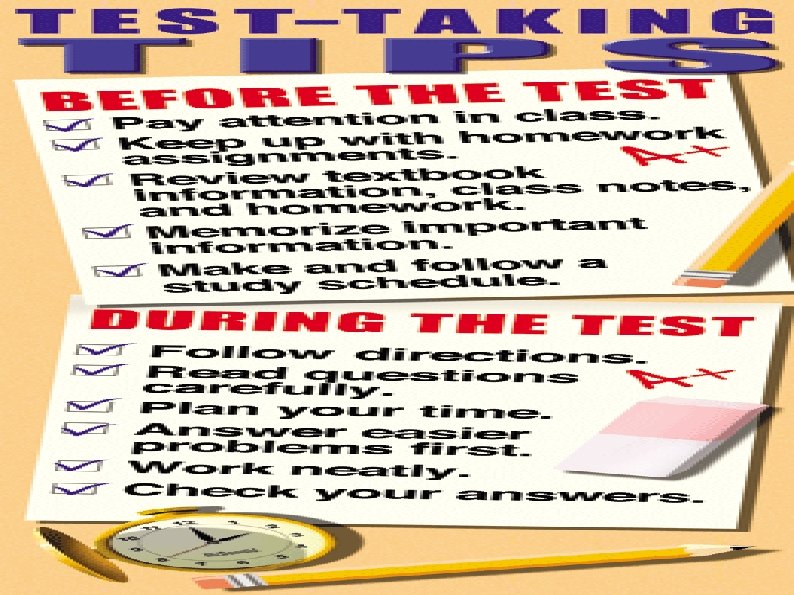
Section 4: Identify strategies for taking test and ways to avoid test anxiety Taking Tests n Tips – Gather information, Practice, Be test wise n Multiple Choice Tests – (book) n True-False Questions – (book) n Short-Answer Questions – (book) n Essay Tests – (Book) n Test Anxiety
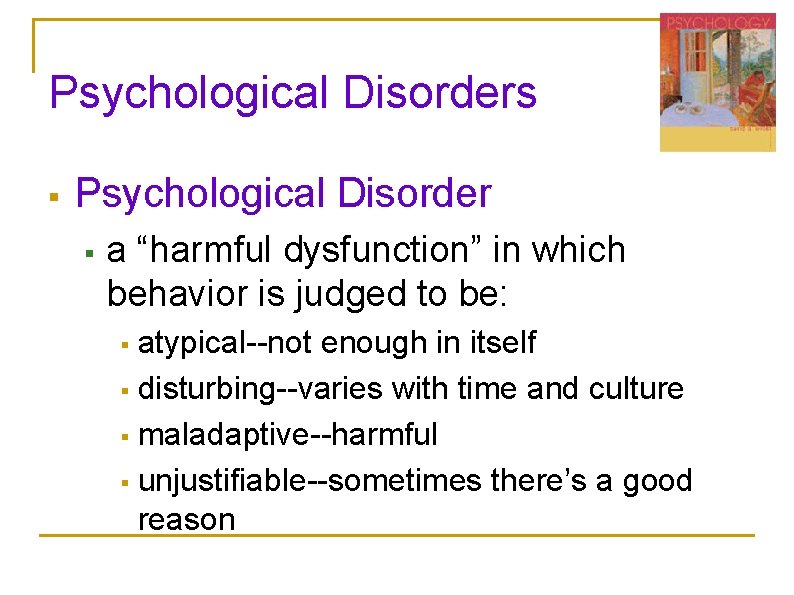
Psychological Disorders § Psychological Disorder § a “harmful dysfunction” in which behavior is judged to be: atypical--not enough in itself § disturbing--varies with time and culture § maladaptive--harmful § unjustifiable--sometimes there’s a good reason §
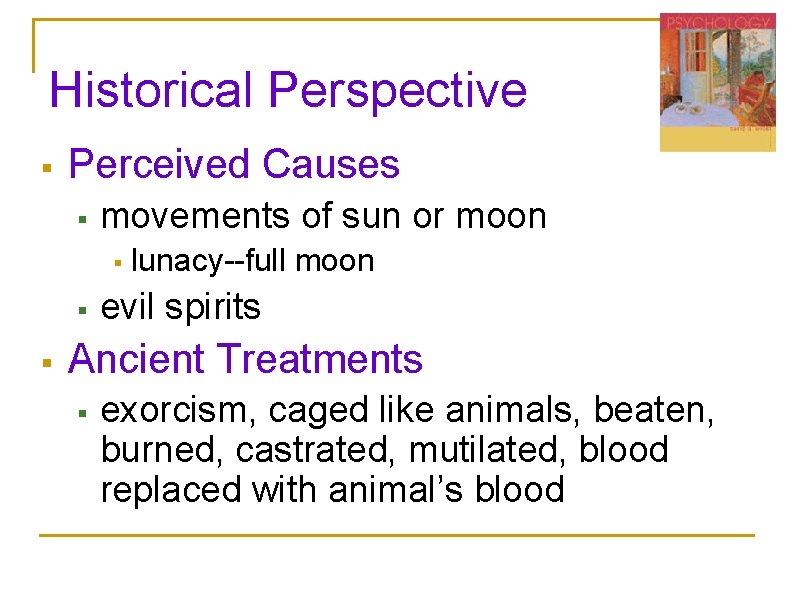
Historical Perspective § Perceived Causes § movements of sun or moon § § § lunacy--full moon evil spirits Ancient Treatments § exorcism, caged like animals, beaten, burned, castrated, mutilated, blood replaced with animal’s blood
Psychological Disorders § Medical Model § § § concept that diseases have physical causes can be diagnosed, treated, and in most cases, cured assumes that these “mental” illnesses can be diagnosed on the basis of their symptoms and cured through therapy, which may include treatment in a psychiatric hospital
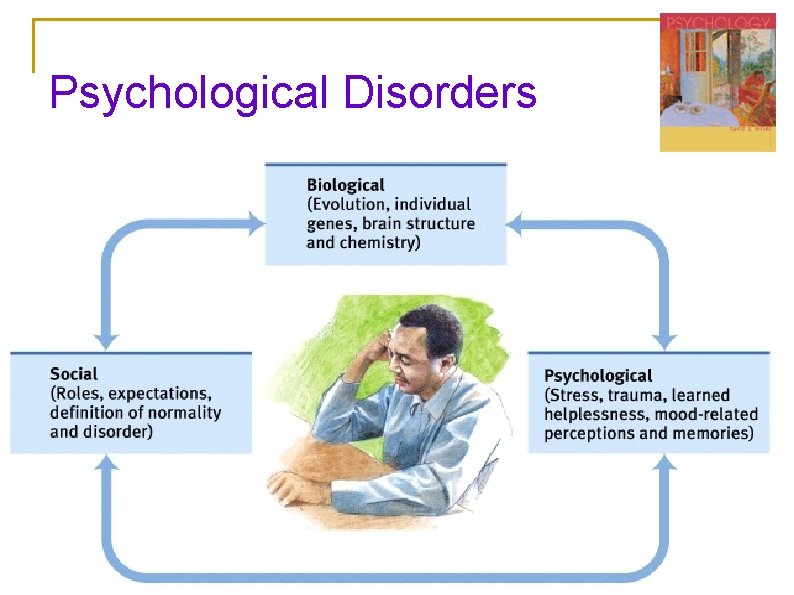
Psychological Disorders § Bio-Psycho-Social Perspective § assumes that biological, sociocultural, and psychological factors combine and interact to produce psychological disorders
Psychological Disorders
Psychological Disorders-Etiology § DSM-IV § § § American Psychiatric Association’s Diagnostic and Statistical Manual of Mental Disorders (Fourth Edition) a widely used system for classifying psychological disorders presently distributed as DSM-IV-TR (text revision)
Psychological Disorders. Etiology § Neurotic Disorder (term seldom used now) § § usually distressing but that allows one to think rationally and function socially Psychotic Disorder § § person loses contact with reality experiences irrational ideas and distorted perceptions
Anxiety Disorders § § distressing, persistent anxiety or maladaptive behaviors that reduce anxiety Generalized Anxiety Disorder § person is tense, apprehensive, and in a state of autonomic nervous system arousal
Anxiety Disorders § Panic Disorder § marked by a minutes-long episode of intense dread in which a person experiences terror and accompanying chest pain, choking, or other frightening sensation
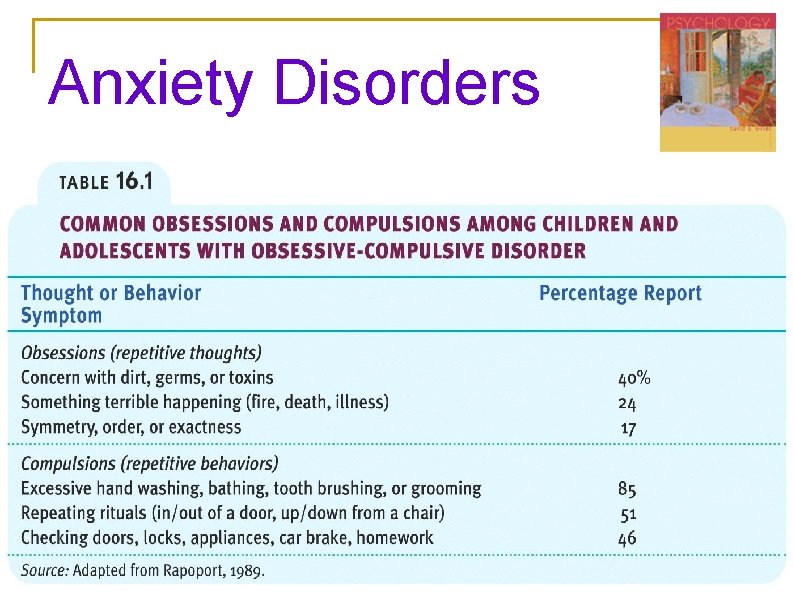
Anxiety Disorders § Phobia § § persistent, irrational fear of a specific object or situation Obsessive-Compulsive Disorder § unwanted repetitive thoughts (obsessions) and/or actions (compulsions)
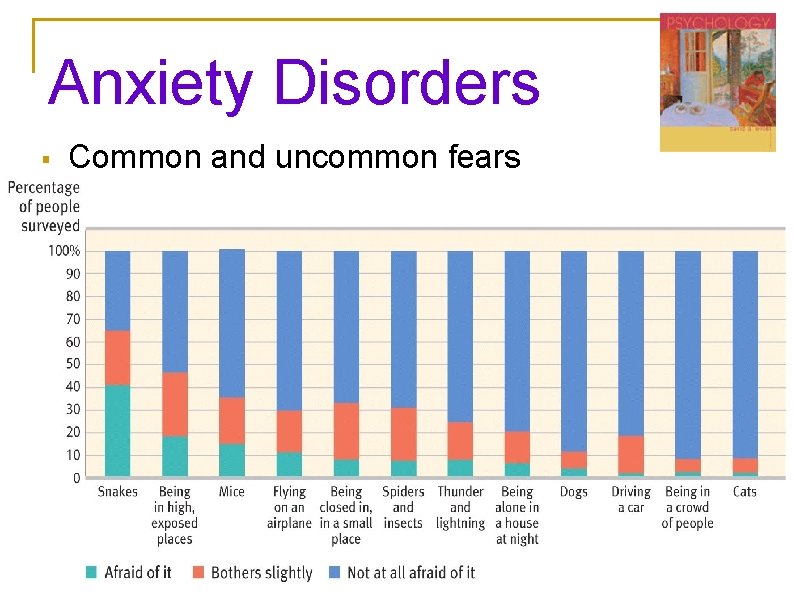
Anxiety Disorders § Common and uncommon fears
Anxiety Disorders
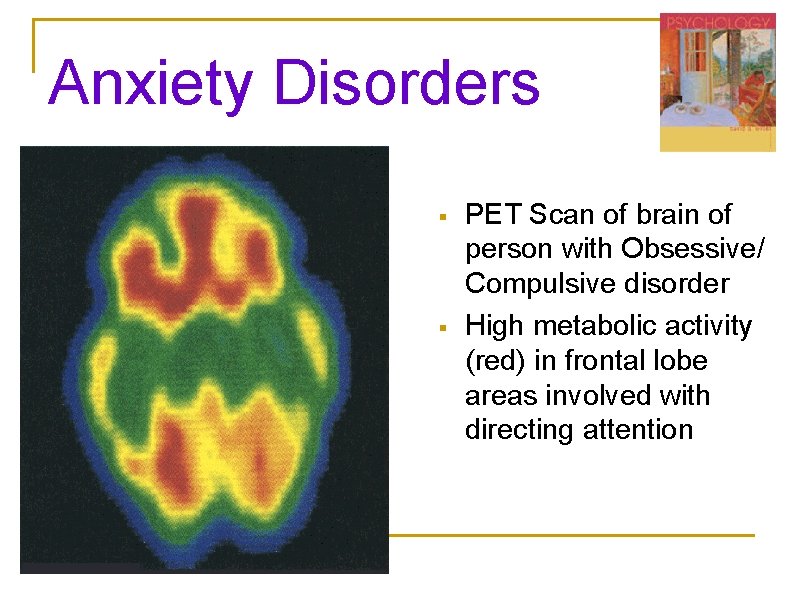
Anxiety Disorders § § PET Scan of brain of person with Obsessive/ Compulsive disorder High metabolic activity (red) in frontal lobe areas involved with directing attention
Mood Disorders § § characterized by emotional extremes Major Depressive Disorder § a mood disorder in which a person, for no apparent reason, experiences two or more weeks of depressed moods, feelings of worthlessness, and diminished interest or pleasure in most activities
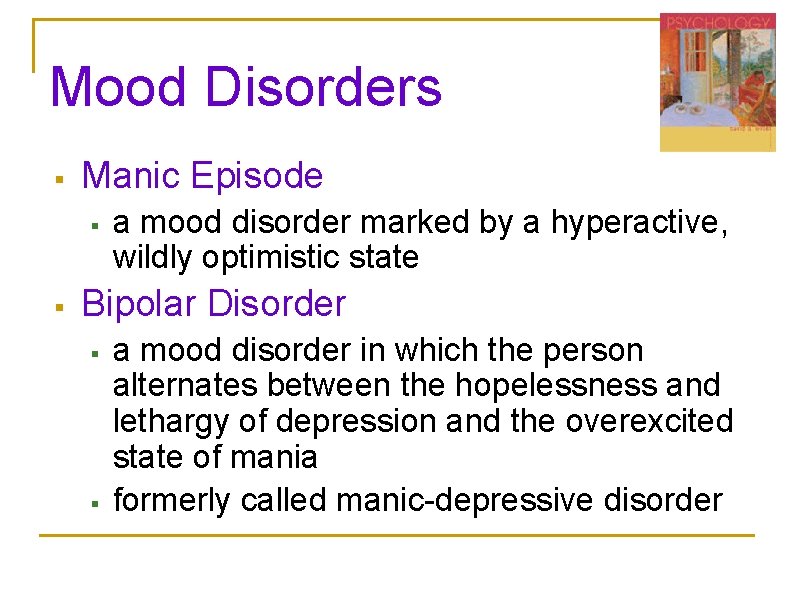
Mood Disorders § Manic Episode § § a mood disorder marked by a hyperactive, wildly optimistic state Bipolar Disorder § § a mood disorder in which the person alternates between the hopelessness and lethargy of depression and the overexcited state of mania formerly called manic-depressive disorder
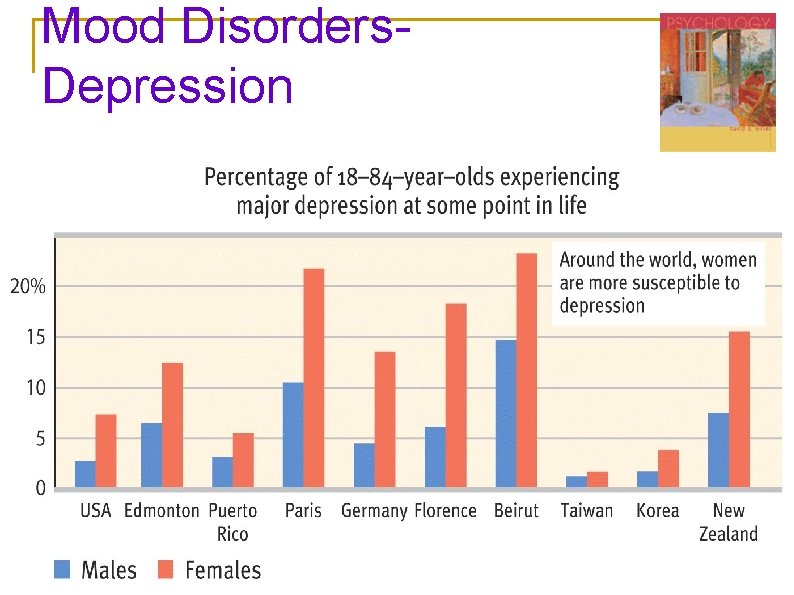
Mood Disorders. Depression
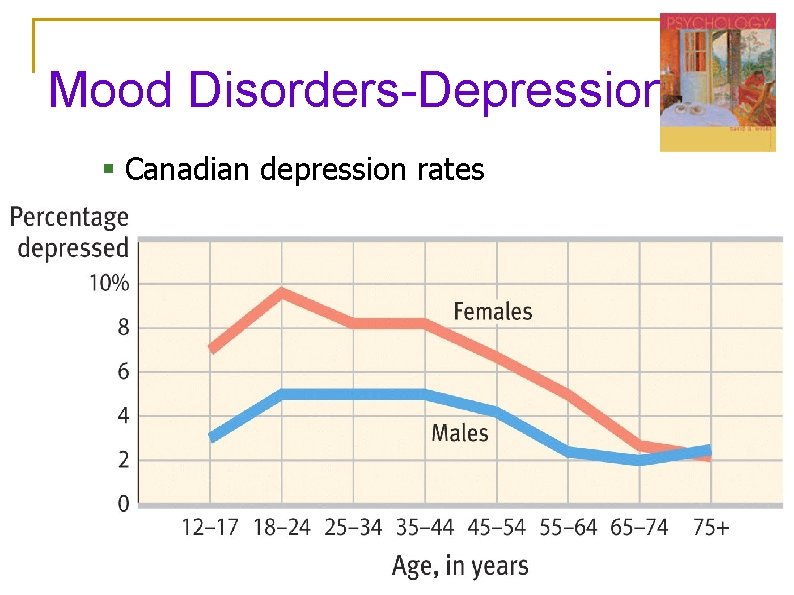
Mood Disorders-Depression § Canadian depression rates
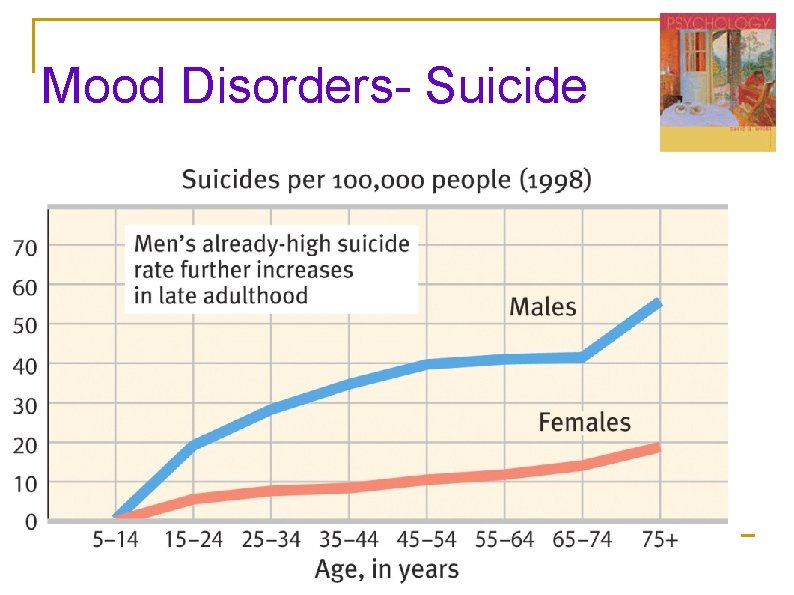
Mood Disorders- Suicide
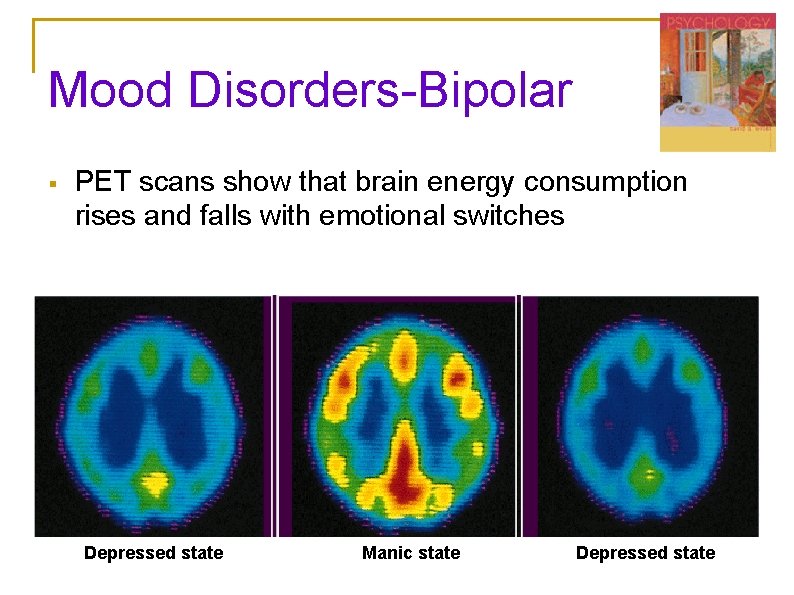
Mood Disorders-Bipolar § PET scans show that brain energy consumption rises and falls with emotional switches Depressed state Manic state Depressed state
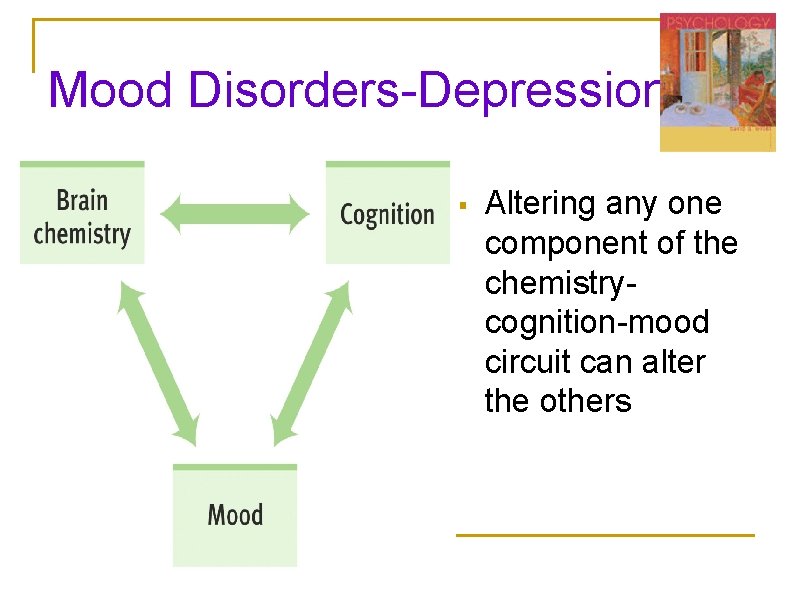
Mood Disorders-Depression § Altering any one component of the chemistrycognition-mood circuit can alter the others
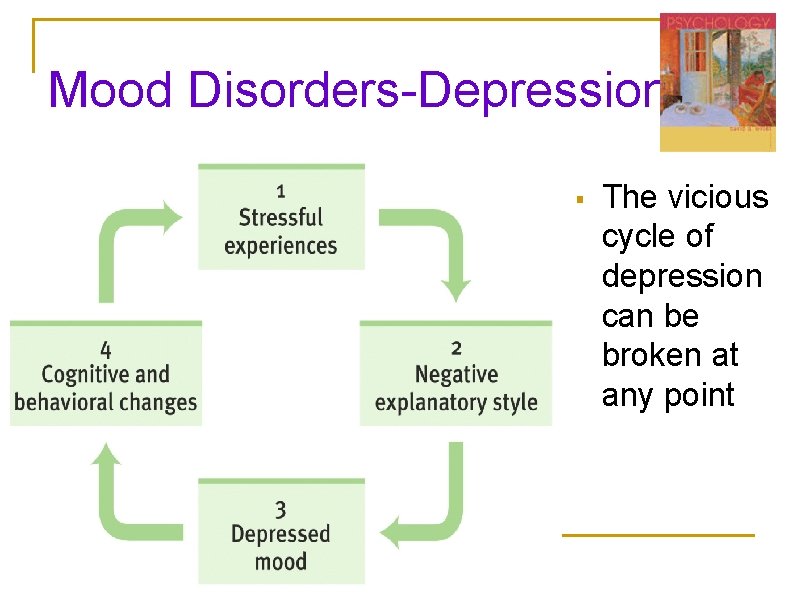
Mood Disorders-Depression § The vicious cycle of depression can be broken at any point
Dissociative Disorders § § conscious awareness becomes separated (dissociated) from previous memories, thoughts, and feelings Dissociative Identity Disorder § § rare dissociative disorder in which a person exhibits two or more distinct and alternating personalities formerly called multiple personality disorder
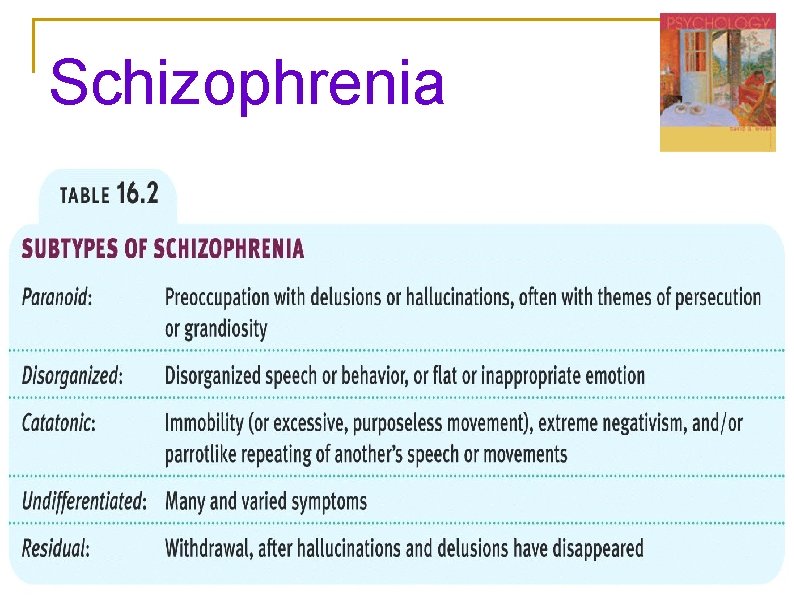
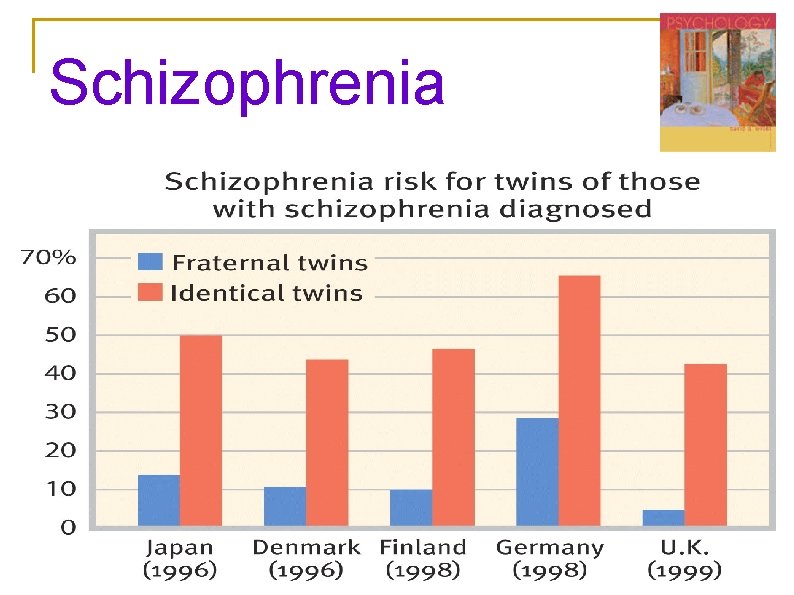
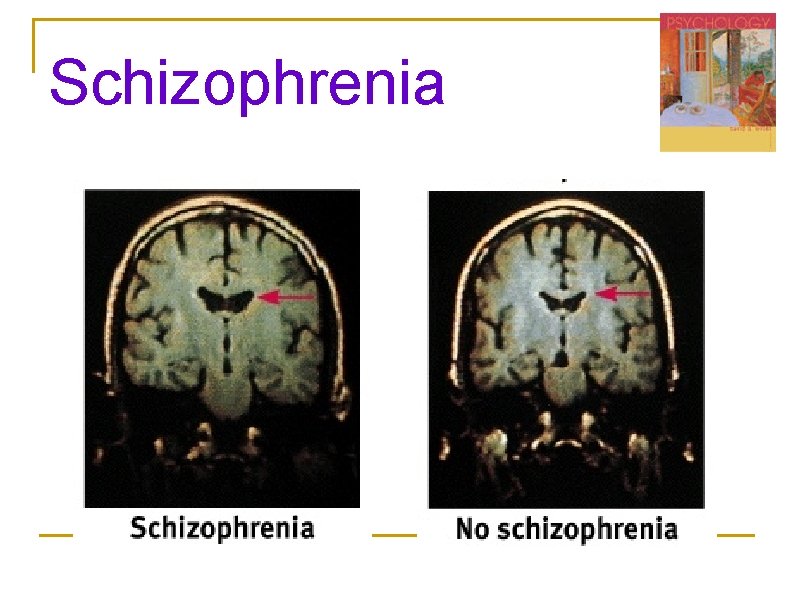
Schizophrenia § § literal translation “split mind” a group of severe disorders characterized by: § § § disorganized and delusional thinking disturbed perceptions inappropriate emotions and actions
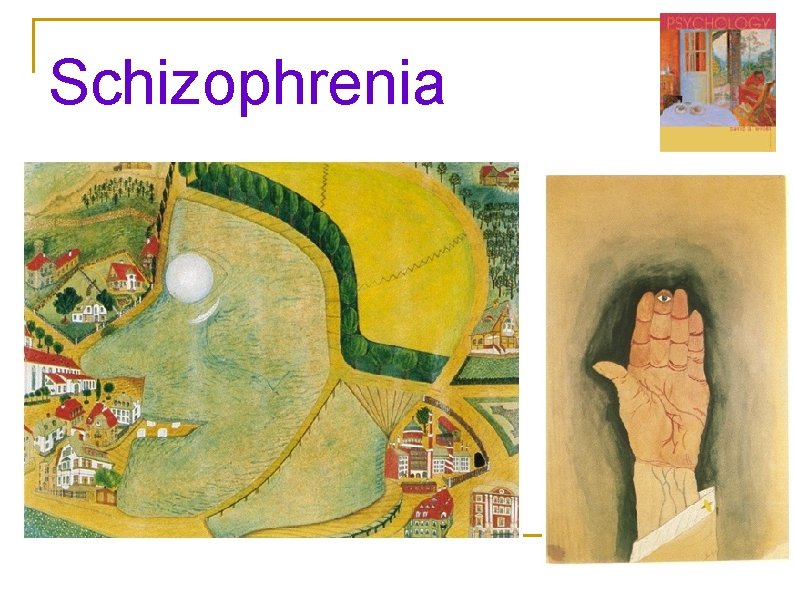
Schizophrenia § Delusions § § false beliefs, often of persecution or grandeur, that may accompany psychotic disorders Hallucinations § sensory experiences without sensory stimulation
Schizophrenia
Schizophrenia
Schizophrenia
Schizophrenia
Personality Disorders § § disorders characterized by inflexible and enduring behavior patterns that impair social functioning usually without anxiety, depression, or delusions
Personality Disorders § Antisocial Personality Disorder § § disorder in which the person (usually man) exhibits a lack of conscience for wrongdoing, even toward friends and family members may be aggressive and ruthless or a clever con artist
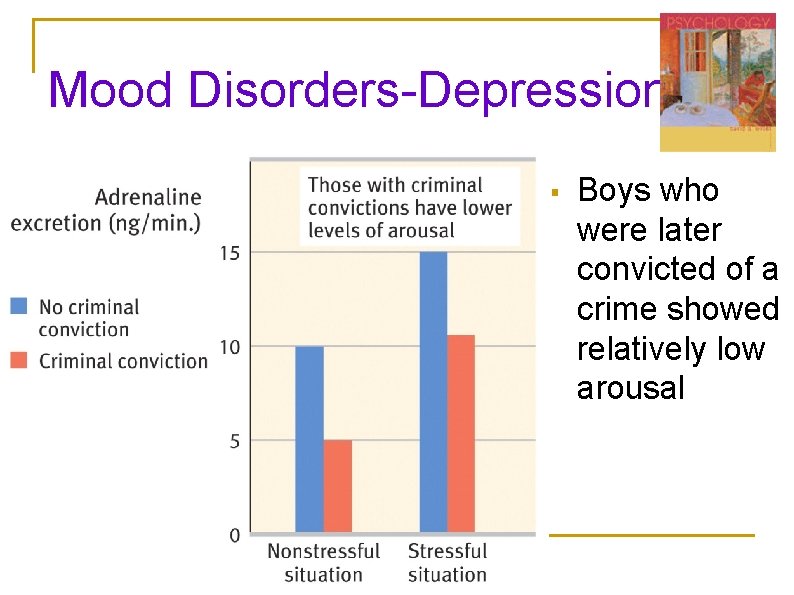
Mood Disorders-Depression § Boys who were later convicted of a crime showed relatively low arousal
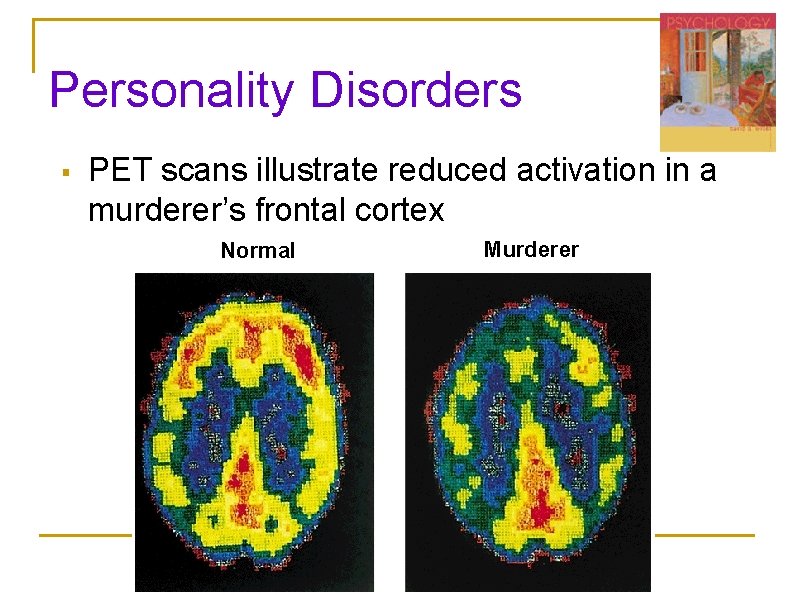
Personality Disorders § PET scans illustrate reduced activation in a murderer’s frontal cortex Normal Murderer
Personality Disorders
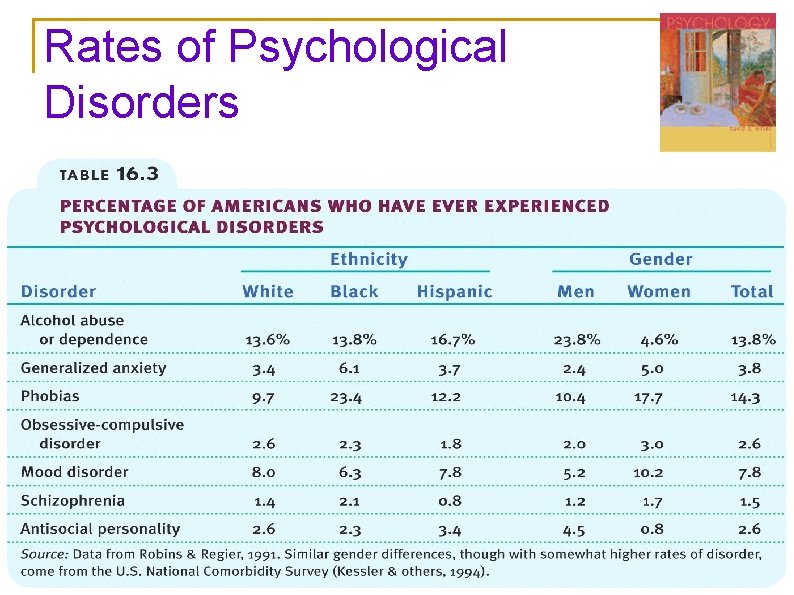
Rates of Psychological Disorders