
Psychology in the Classroom Group and Interpersonal Interactions
- Slides: 22
Psychology in the Classroom Group and Interpersonal Interactions
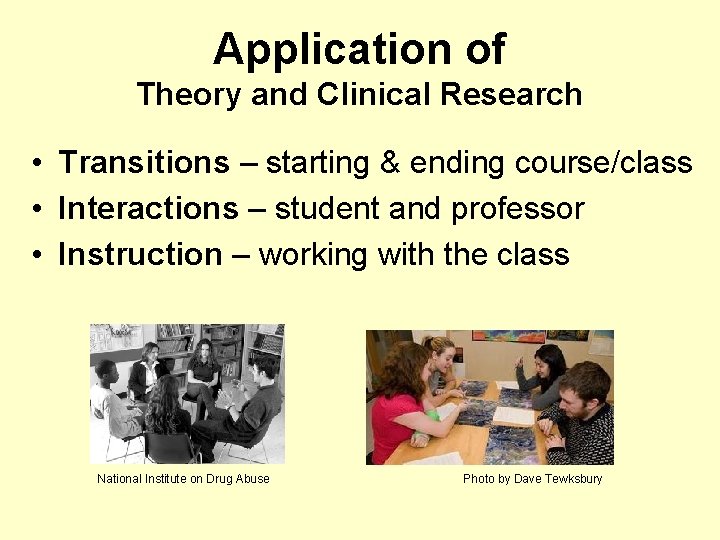
Application of Theory and Clinical Research • Transitions – starting & ending course/class • Interactions – student and professor • Instruction – working with the class National Institute on Drug Abuse Photo by Dave Tewksbury
Transitions – starting/ending a course and class • Explicit and implicit “group agreement”
Transitions – starting/ending a course and class • Explicit and implicit “group agreement” • Meet the class where they are – pay attention to their transitions
Transitions – starting/ending a course and class • Explicit and implicit “group agreement” • Meet the class where they are – pay attention to their transitions • Engage with the “contact function”
Interactions – the student’s part • Resistance – attitudes and behaviors which interfere with cooperation and learning
Interactions – the student’s part • Resistance – attitudes and behaviors which interfere with cooperation and learning • Projection – attribution of one’s own feelings to another person Photo by Joi Ito
Interactions – your part • Your need to – be liked – be right – have a “happy” and controlled class
Interactions – your part • Your need to – be liked – be right – have a “happy” and controlled class • Your reactions – to competition and aggression – of shame and embarrassment Photo by Alex Proimos
Instruction • Start each class with observations and inquiry
Instruction • Start each class with observations and inquiry • Join the resistance
Instruction • Start each class with observations and inquiry • Join the resistance • Enlist the group for help
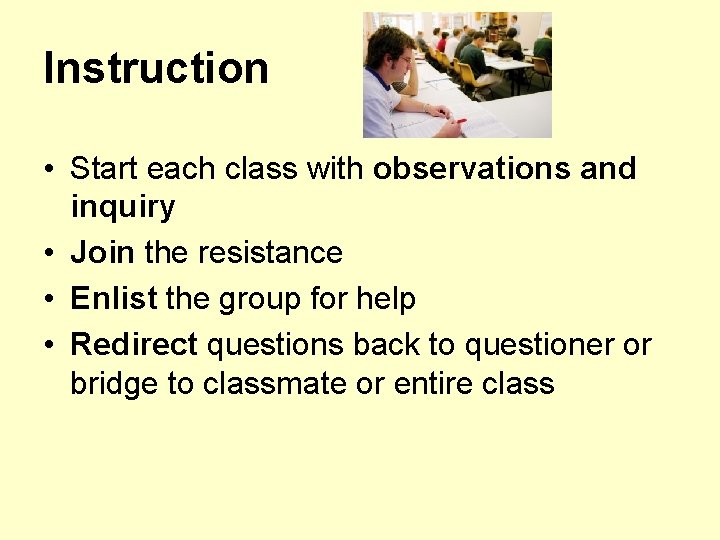
Instruction • Start each class with observations and inquiry • Join the resistance • Enlist the group for help • Redirect questions back to questioner or bridge to classmate or entire class
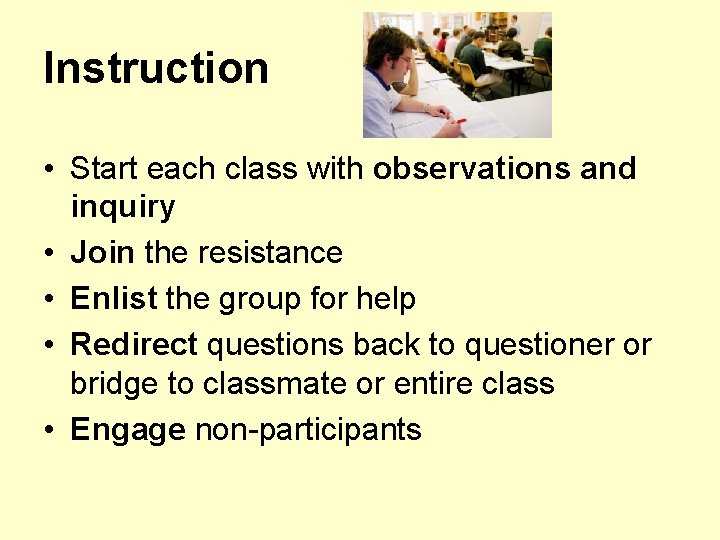
Instruction • Start each class with observations and inquiry • Join the resistance • Enlist the group for help • Redirect questions back to questioner or bridge to classmate or entire class • Engage non-participants
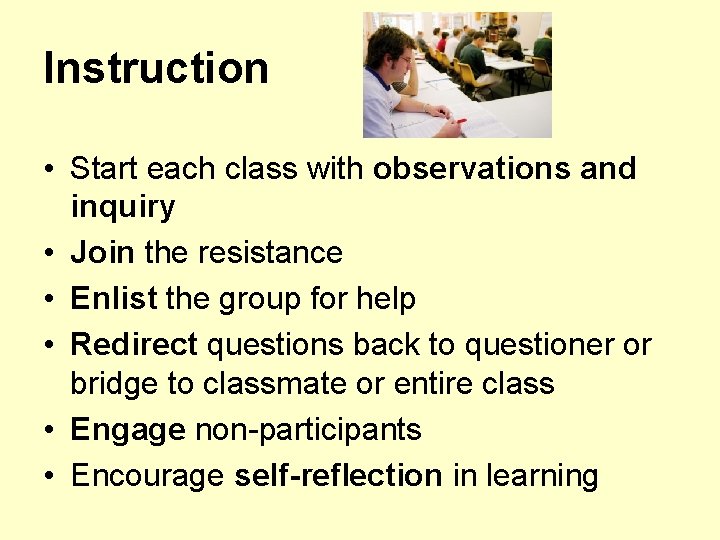
Instruction • Start each class with observations and inquiry • Join the resistance • Enlist the group for help • Redirect questions back to questioner or bridge to classmate or entire class • Engage non-participants • Encourage self-reflection in learning
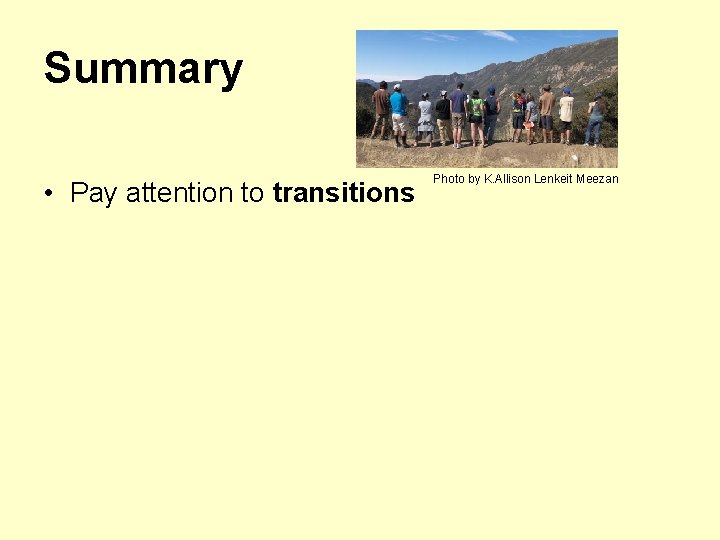
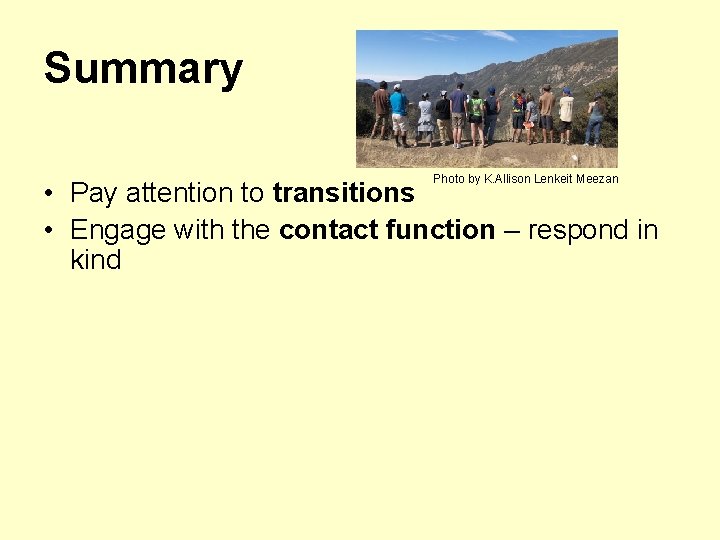
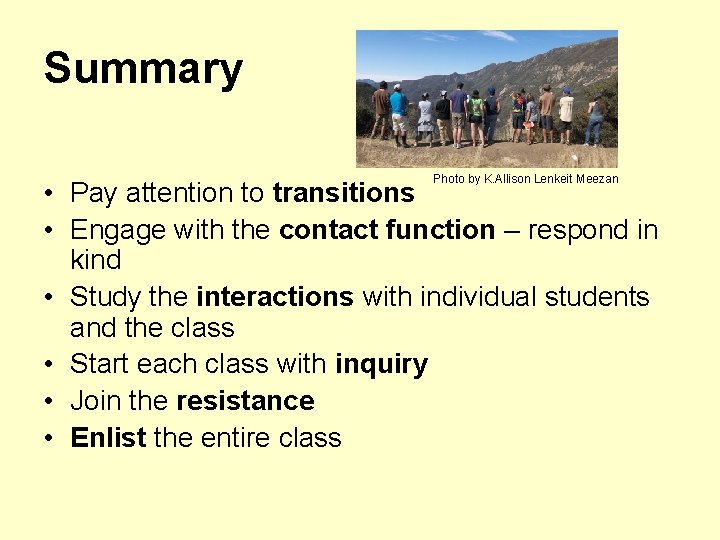
Summary • Pay attention to transitions Photo by K. Allison Lenkeit Meezan
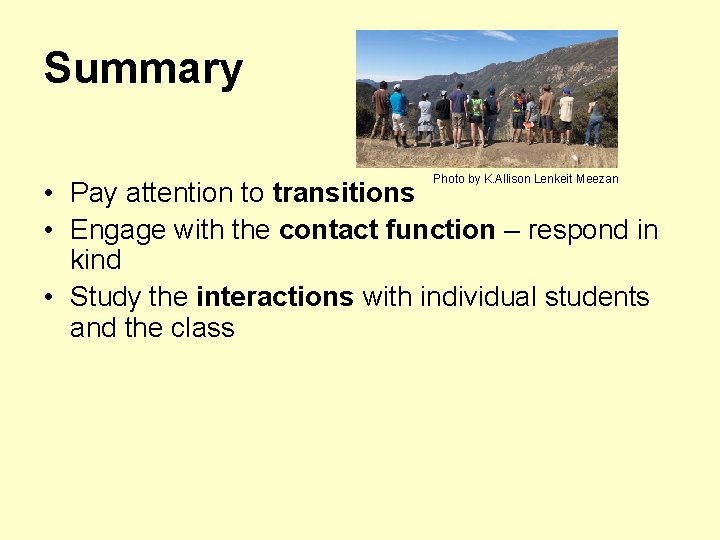
Summary Photo by K. Allison Lenkeit Meezan • Pay attention to transitions • Engage with the contact function – respond in kind
Summary Photo by K. Allison Lenkeit Meezan • Pay attention to transitions • Engage with the contact function – respond in kind • Study the interactions with individual students and the class
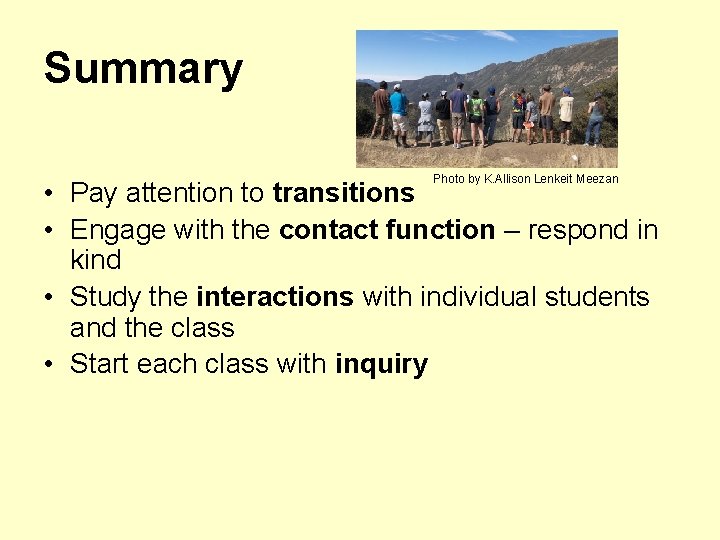
Summary Photo by K. Allison Lenkeit Meezan • Pay attention to transitions • Engage with the contact function – respond in kind • Study the interactions with individual students and the class • Start each class with inquiry
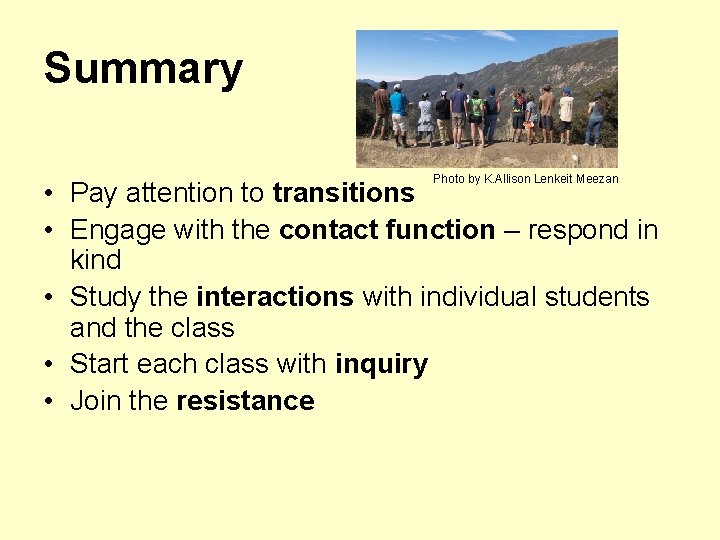
Summary Photo by K. Allison Lenkeit Meezan • Pay attention to transitions • Engage with the contact function – respond in kind • Study the interactions with individual students and the class • Start each class with inquiry • Join the resistance
Summary Photo by K. Allison Lenkeit Meezan • Pay attention to transitions • Engage with the contact function – respond in kind • Study the interactions with individual students and the class • Start each class with inquiry • Join the resistance • Enlist the entire class
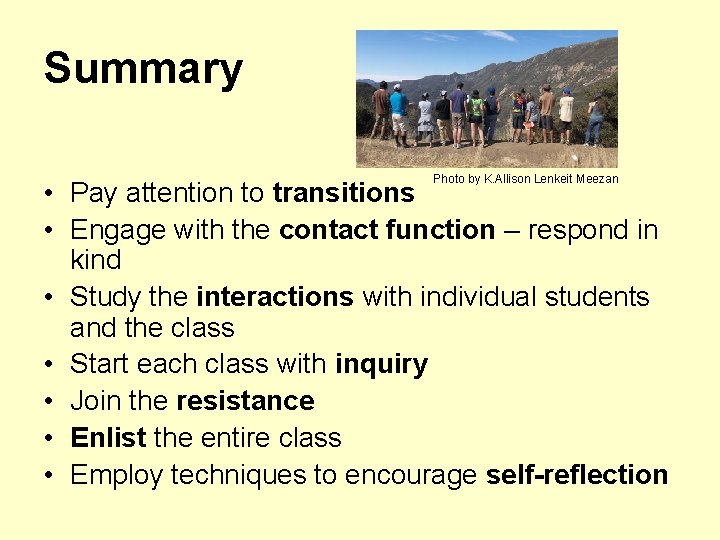
Summary Photo by K. Allison Lenkeit Meezan • Pay attention to transitions • Engage with the contact function – respond in kind • Study the interactions with individual students and the class • Start each class with inquiry • Join the resistance • Enlist the entire class • Employ techniques to encourage self-reflection