
PSYCHOLOGY Chapter 9 LIFESPAN DEVELOPMENT Power Point Image





- Slides: 22
PSYCHOLOGY Chapter 9 LIFESPAN DEVELOPMENT Power. Point Image Slideshow
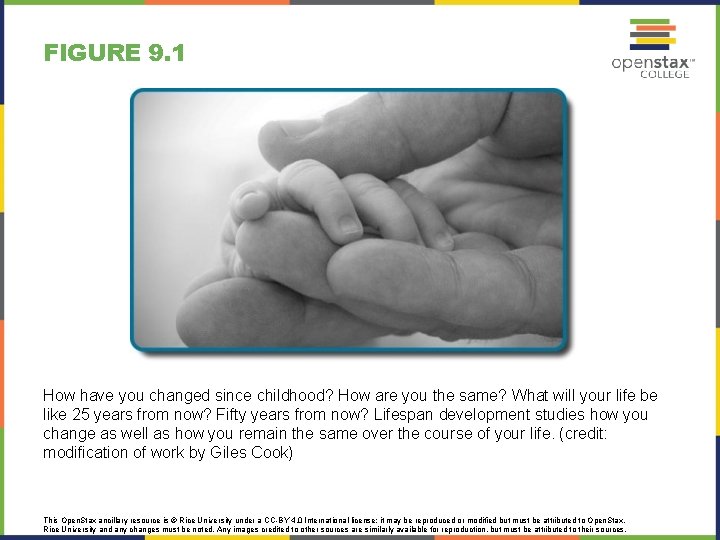
FIGURE 9. 1 How have you changed since childhood? How are you the same? What will your life be like 25 years from now? Fifty years from now? Lifespan development studies how you change as well as how you remain the same over the course of your life. (credit: modification of work by Giles Cook) This Open. Stax ancillary resource is © Rice University under a CC-BY 4. 0 International license; it may be reproduced or modified but must be attributed to Open. Stax, Rice University and any changes must be noted. Any images credited to other sources are similarly available for reproduction, but must be attributed to their sources.
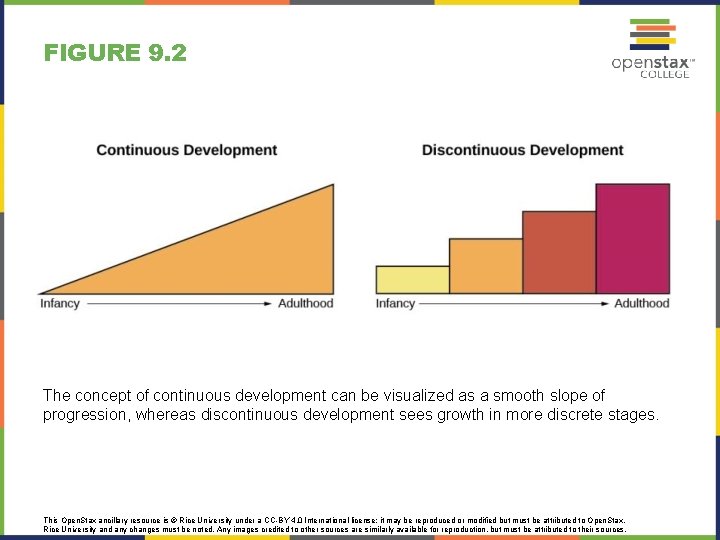
FIGURE 9. 2 The concept of continuous development can be visualized as a smooth slope of progression, whereas discontinuous development sees growth in more discrete stages. This Open. Stax ancillary resource is © Rice University under a CC-BY 4. 0 International license; it may be reproduced or modified but must be attributed to Open. Stax, Rice University and any changes must be noted. Any images credited to other sources are similarly available for reproduction, but must be attributed to their sources.
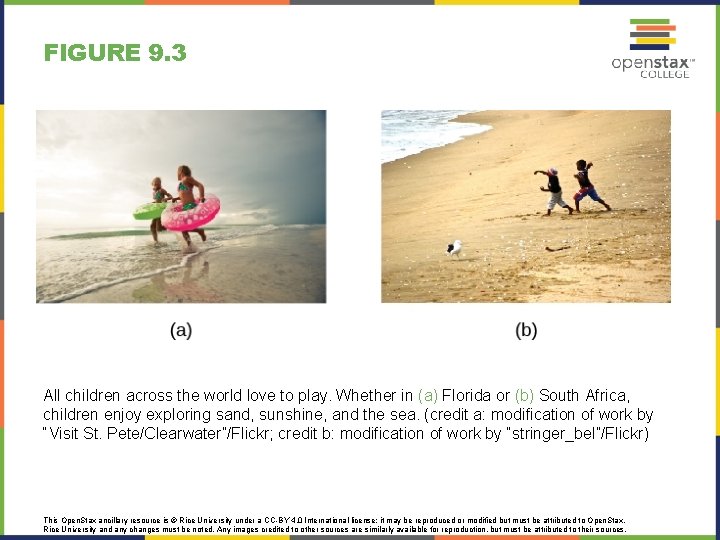
FIGURE 9. 3 All children across the world love to play. Whether in (a) Florida or (b) South Africa, children enjoy exploring sand, sunshine, and the sea. (credit a: modification of work by “Visit St. Pete/Clearwater”/Flickr; credit b: modification of work by “stringer_bel”/Flickr) This Open. Stax ancillary resource is © Rice University under a CC-BY 4. 0 International license; it may be reproduced or modified but must be attributed to Open. Stax, Rice University and any changes must be noted. Any images credited to other sources are similarly available for reproduction, but must be attributed to their sources.
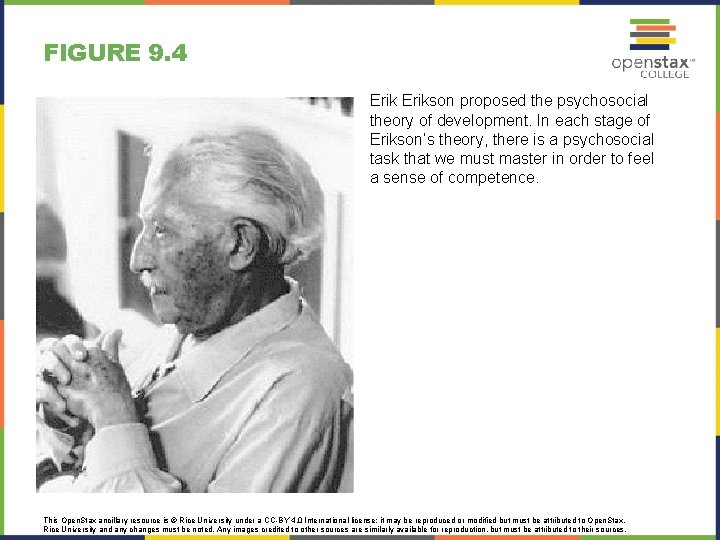
FIGURE 9. 4 Erikson proposed the psychosocial theory of development. In each stage of Erikson’s theory, there is a psychosocial task that we must master in order to feel a sense of competence. This Open. Stax ancillary resource is © Rice University under a CC-BY 4. 0 International license; it may be reproduced or modified but must be attributed to Open. Stax, Rice University and any changes must be noted. Any images credited to other sources are similarly available for reproduction, but must be attributed to their sources.
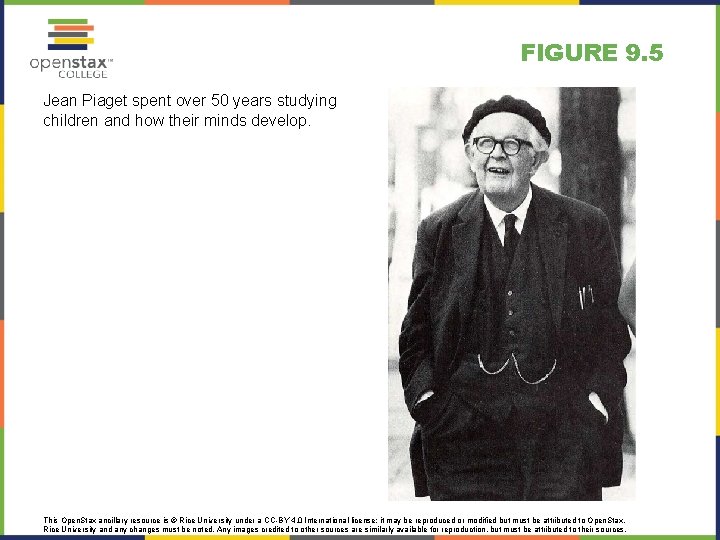
FIGURE 9. 5 Jean Piaget spent over 50 years studying children and how their minds develop. This Open. Stax ancillary resource is © Rice University under a CC-BY 4. 0 International license; it may be reproduced or modified but must be attributed to Open. Stax, Rice University and any changes must be noted. Any images credited to other sources are similarly available for reproduction, but must be attributed to their sources.
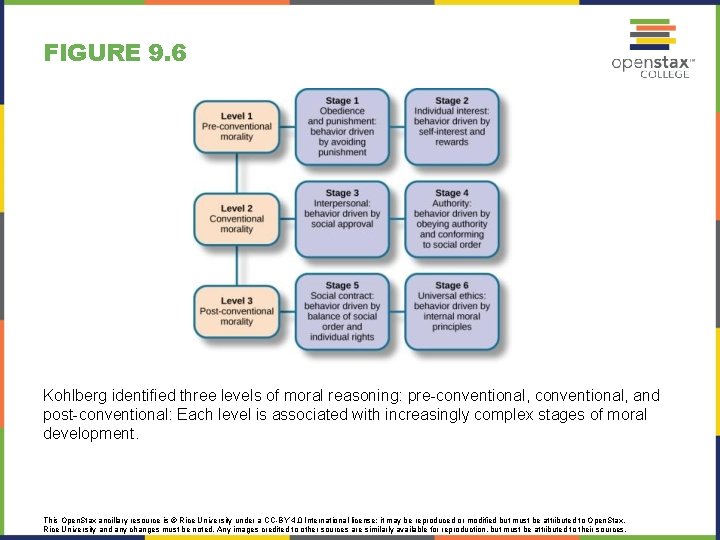
FIGURE 9. 6 Kohlberg identified three levels of moral reasoning: pre-conventional, and post-conventional: Each level is associated with increasingly complex stages of moral development. This Open. Stax ancillary resource is © Rice University under a CC-BY 4. 0 International license; it may be reproduced or modified but must be attributed to Open. Stax, Rice University and any changes must be noted. Any images credited to other sources are similarly available for reproduction, but must be attributed to their sources.
FIGURE 9. 7 Sperm and ovum fuse at the point of conception. This Open. Stax ancillary resource is © Rice University under a CC-BY 4. 0 International license; it may be reproduced or modified but must be attributed to Open. Stax, Rice University and any changes must be noted. Any images credited to other sources are similarly available for reproduction, but must be attributed to their sources.
FIGURE 9. 8 During the fetal stage, the baby's brain develops and the body adds size and weight, until the fetus reaches full-term development. This Open. Stax ancillary resource is © Rice University under a CC-BY 4. 0 International license; it may be reproduced or modified but must be attributed to Open. Stax, Rice University and any changes must be noted. Any images credited to other sources are similarly available for reproduction, but must be attributed to their sources.
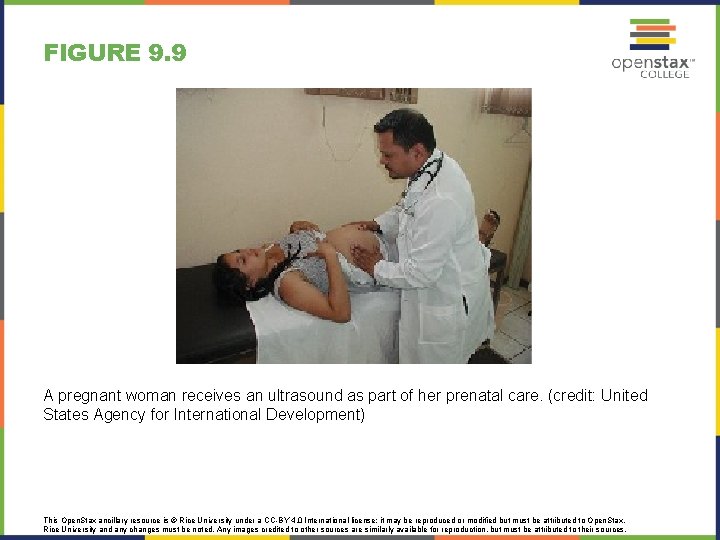
FIGURE 9. 9 A pregnant woman receives an ultrasound as part of her prenatal care. (credit: United States Agency for International Development) This Open. Stax ancillary resource is © Rice University under a CC-BY 4. 0 International license; it may be reproduced or modified but must be attributed to Open. Stax, Rice University and any changes must be noted. Any images credited to other sources are similarly available for reproduction, but must be attributed to their sources.
FIGURE 9. 10 Children experience rapid physical changes through infancy and early childhood. (credit “left”: modification of work by Kerry Ceszyk; credit “middle-left”: modification of work by Kristi Fausel; credit “middle-right”: modification of work by “devinf”/Flickr; credit “right”: modification of work by Rose Spielman) This Open. Stax ancillary resource is © Rice University under a CC-BY 4. 0 International license; it may be reproduced or modified but must be attributed to Open. Stax, Rice University and any changes must be noted. Any images credited to other sources are similarly available for reproduction, but must be attributed to their sources.
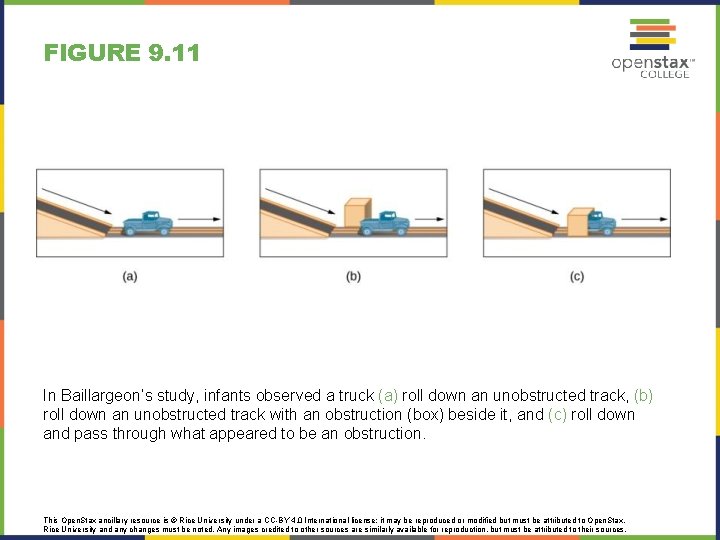
FIGURE 9. 11 In Baillargeon’s study, infants observed a truck (a) roll down an unobstructed track, (b) roll down an unobstructed track with an obstruction (box) beside it, and (c) roll down and pass through what appeared to be an obstruction. This Open. Stax ancillary resource is © Rice University under a CC-BY 4. 0 International license; it may be reproduced or modified but must be attributed to Open. Stax, Rice University and any changes must be noted. Any images credited to other sources are similarly available for reproduction, but must be attributed to their sources.
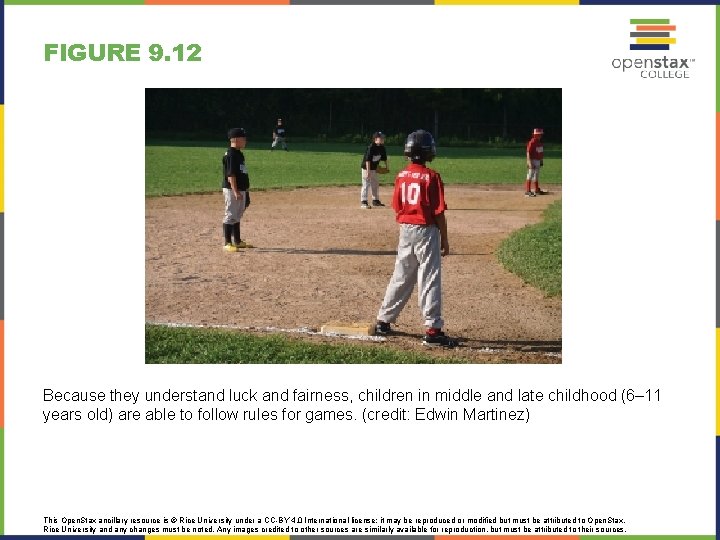
FIGURE 9. 12 Because they understand luck and fairness, children in middle and late childhood (6– 11 years old) are able to follow rules for games. (credit: Edwin Martinez) This Open. Stax ancillary resource is © Rice University under a CC-BY 4. 0 International license; it may be reproduced or modified but must be attributed to Open. Stax, Rice University and any changes must be noted. Any images credited to other sources are similarly available for reproduction, but must be attributed to their sources.
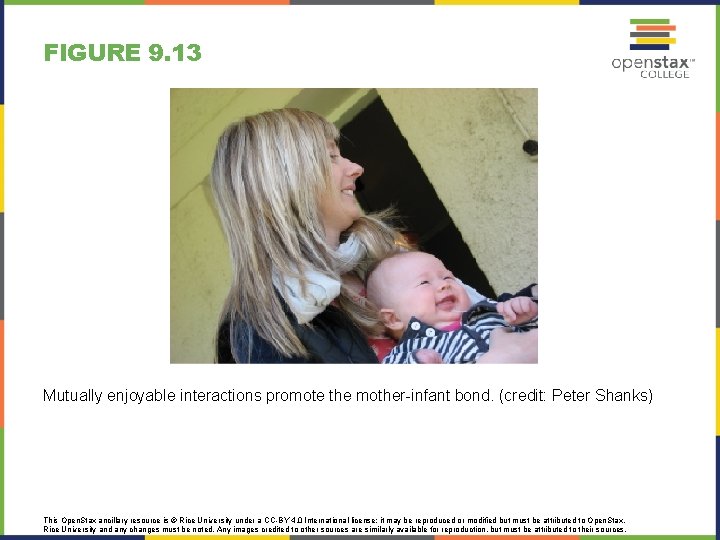
FIGURE 9. 13 Mutually enjoyable interactions promote the mother-infant bond. (credit: Peter Shanks) This Open. Stax ancillary resource is © Rice University under a CC-BY 4. 0 International license; it may be reproduced or modified but must be attributed to Open. Stax, Rice University and any changes must be noted. Any images credited to other sources are similarly available for reproduction, but must be attributed to their sources.
FIGURE 9. 14 In secure attachment, the parent provides a secure base for the toddler, allowing him to securely explore his environment. (credit: Kerry Ceszyk) This Open. Stax ancillary resource is © Rice University under a CC-BY 4. 0 International license; it may be reproduced or modified but must be attributed to Open. Stax, Rice University and any changes must be noted. Any images credited to other sources are similarly available for reproduction, but must be attributed to their sources.
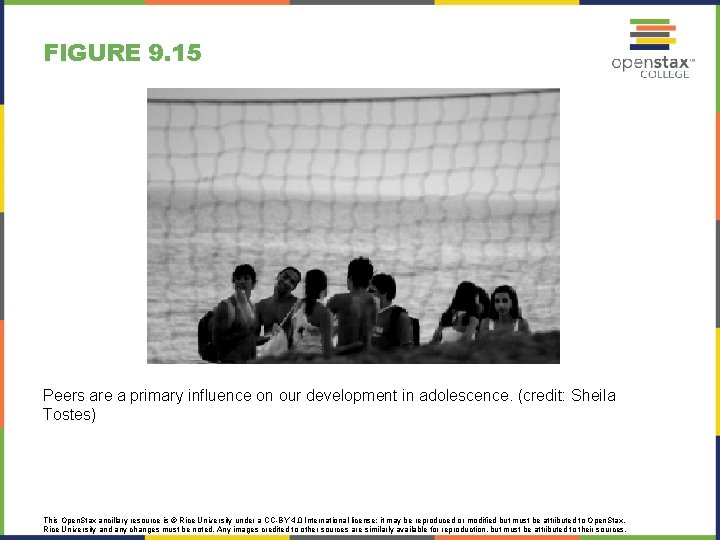
FIGURE 9. 15 Peers are a primary influence on our development in adolescence. (credit: Sheila Tostes) This Open. Stax ancillary resource is © Rice University under a CC-BY 4. 0 International license; it may be reproduced or modified but must be attributed to Open. Stax, Rice University and any changes must be noted. Any images credited to other sources are similarly available for reproduction, but must be attributed to their sources.
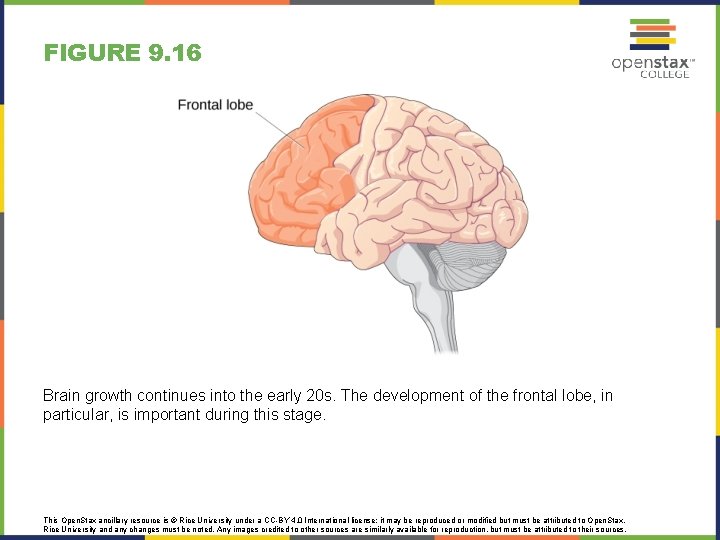
FIGURE 9. 16 Brain growth continues into the early 20 s. The development of the frontal lobe, in particular, is important during this stage. This Open. Stax ancillary resource is © Rice University under a CC-BY 4. 0 International license; it may be reproduced or modified but must be attributed to Open. Stax, Rice University and any changes must be noted. Any images credited to other sources are similarly available for reproduction, but must be attributed to their sources.
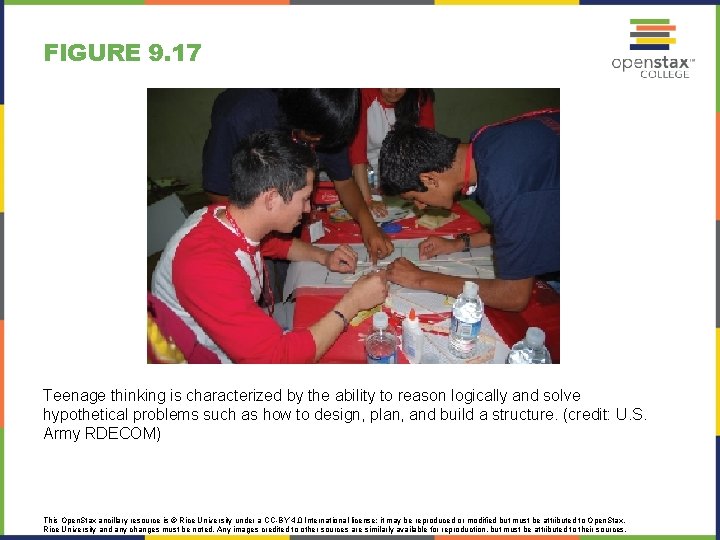
FIGURE 9. 17 Teenage thinking is characterized by the ability to reason logically and solve hypothetical problems such as how to design, plan, and build a structure. (credit: U. S. Army RDECOM) This Open. Stax ancillary resource is © Rice University under a CC-BY 4. 0 International license; it may be reproduced or modified but must be attributed to Open. Stax, Rice University and any changes must be noted. Any images credited to other sources are similarly available for reproduction, but must be attributed to their sources.
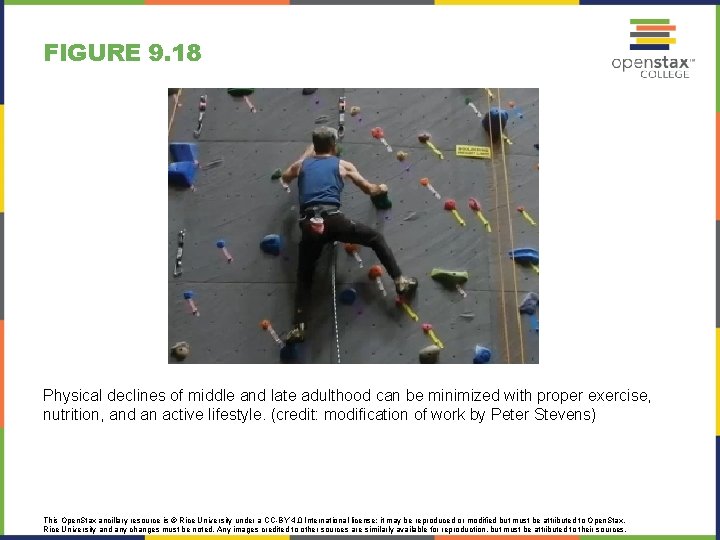
FIGURE 9. 18 Physical declines of middle and late adulthood can be minimized with proper exercise, nutrition, and an active lifestyle. (credit: modification of work by Peter Stevens) This Open. Stax ancillary resource is © Rice University under a CC-BY 4. 0 International license; it may be reproduced or modified but must be attributed to Open. Stax, Rice University and any changes must be noted. Any images credited to other sources are similarly available for reproduction, but must be attributed to their sources.
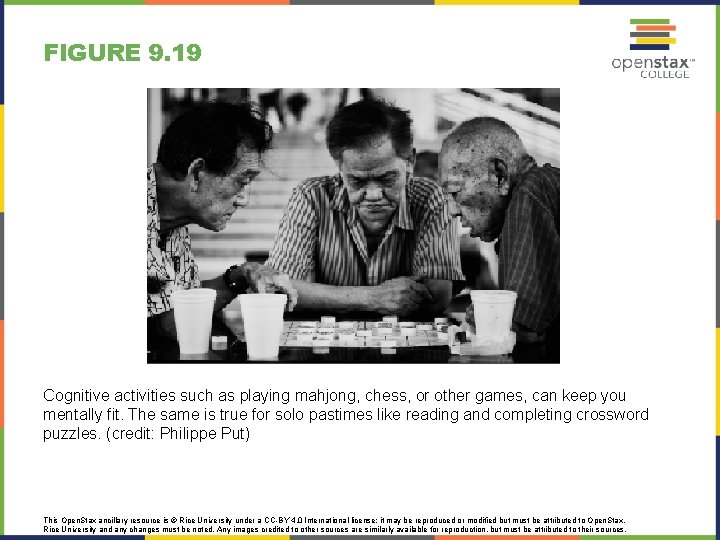
FIGURE 9. 19 Cognitive activities such as playing mahjong, chess, or other games, can keep you mentally fit. The same is true for solo pastimes like reading and completing crossword puzzles. (credit: Philippe Put) This Open. Stax ancillary resource is © Rice University under a CC-BY 4. 0 International license; it may be reproduced or modified but must be attributed to Open. Stax, Rice University and any changes must be noted. Any images credited to other sources are similarly available for reproduction, but must be attributed to their sources.
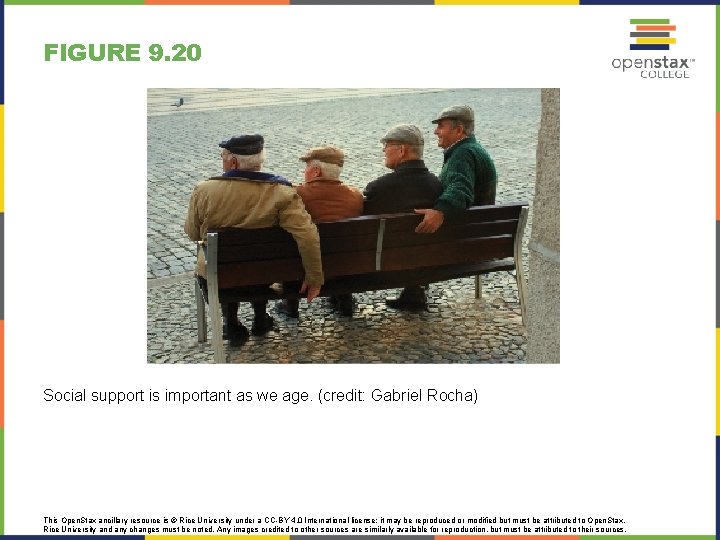
FIGURE 9. 20 Social support is important as we age. (credit: Gabriel Rocha) This Open. Stax ancillary resource is © Rice University under a CC-BY 4. 0 International license; it may be reproduced or modified but must be attributed to Open. Stax, Rice University and any changes must be noted. Any images credited to other sources are similarly available for reproduction, but must be attributed to their sources.
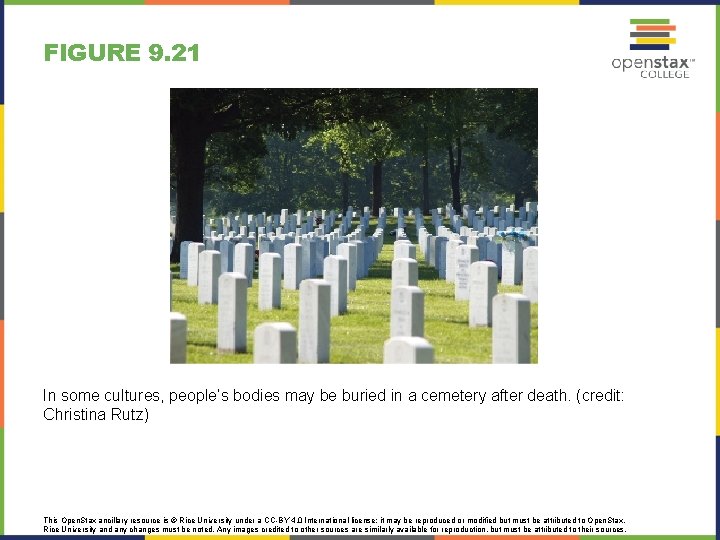
FIGURE 9. 21 In some cultures, people’s bodies may be buried in a cemetery after death. (credit: Christina Rutz) This Open. Stax ancillary resource is © Rice University under a CC-BY 4. 0 International license; it may be reproduced or modified but must be attributed to Open. Stax, Rice University and any changes must be noted. Any images credited to other sources are similarly available for reproduction, but must be attributed to their sources.