
PSYCHOLOGY Altered States of Consciousness Waking Consciousness our
- Slides: 44
PSYCHOLOGY Altered States of Consciousness
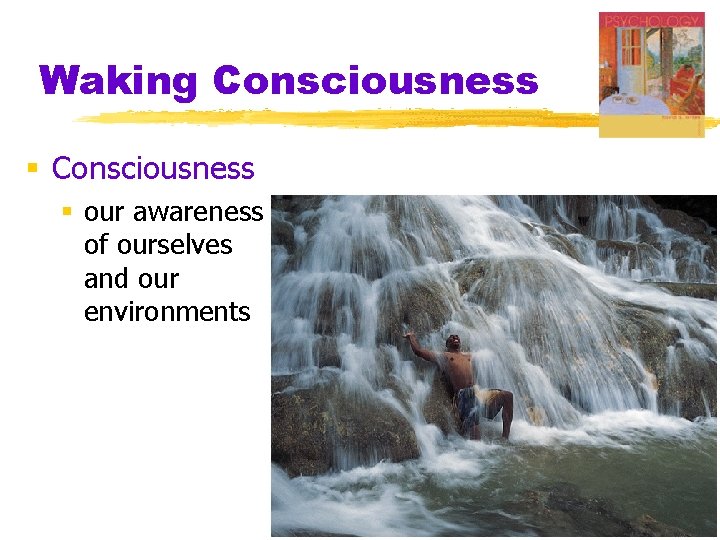
Waking Consciousness § our awareness of ourselves and our environments
Sleep and Dreams § Circadian Rhythm § the biological clock § Based on the light/dark schedule § regular bodily rhythms that occur on a 24 -hour cycle, such as of wakefulness and body temperature
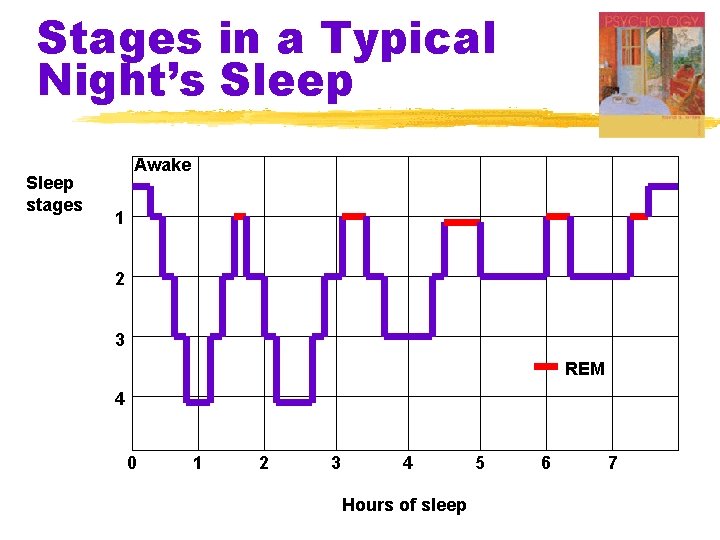
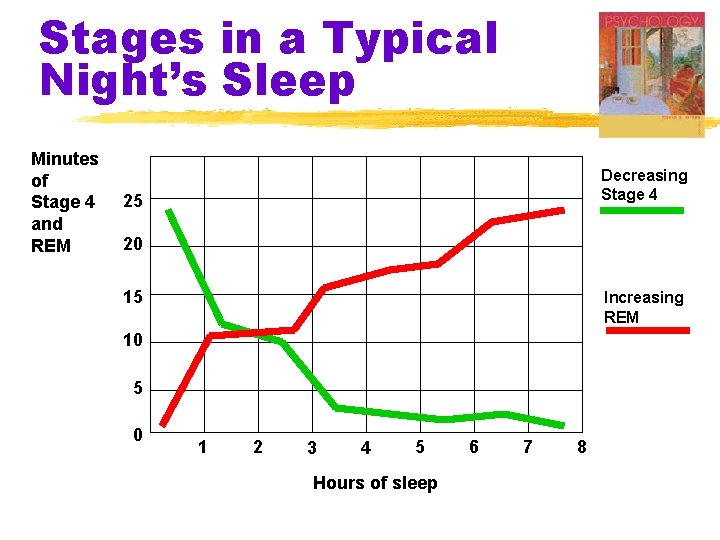
Sleep and Dreams § Sleep § periodic, natural, reversible loss of consciousness § REM (Rapid Eye Movement) Sleep § recurring sleep stage § vivid dreams § This stage gets longer as you sleep § “paradoxical sleep” § muscles are generally relaxed, but other body systems are active
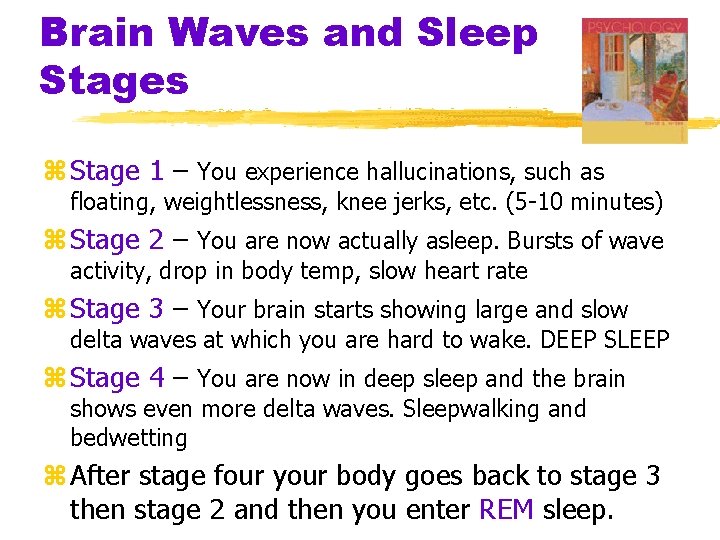
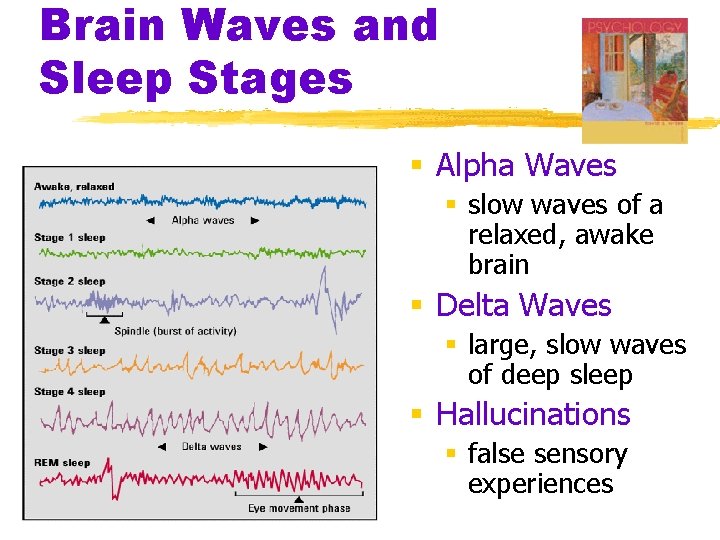
Brain Waves and Sleep Stages z Stage 1 – You experience hallucinations, such as floating, weightlessness, knee jerks, etc. (5 -10 minutes) z Stage 2 – You are now actually asleep. Bursts of wave activity, drop in body temp, slow heart rate z Stage 3 – Your brain starts showing large and slow delta waves at which you are hard to wake. DEEP SLEEP z Stage 4 – You are now in deep sleep and the brain shows even more delta waves. Sleepwalking and bedwetting z After stage four your body goes back to stage 3 then stage 2 and then you enter REM sleep.
Brain Waves and Sleep Stages § Alpha Waves § slow waves of a relaxed, awake brain § Delta Waves § large, slow waves of deep sleep § Hallucinations § false sensory experiences
Stages in a Typical Night’s Sleep stages Awake 1 2 3 REM 4 0 1 2 3 4 Hours of sleep 5 6 7
Stages in a Typical Night’s Sleep Minutes of Stage 4 and REM Decreasing Stage 4 25 20 15 Increasing REM 10 5 0 1 2 3 4 5 Hours of sleep 6 7 8
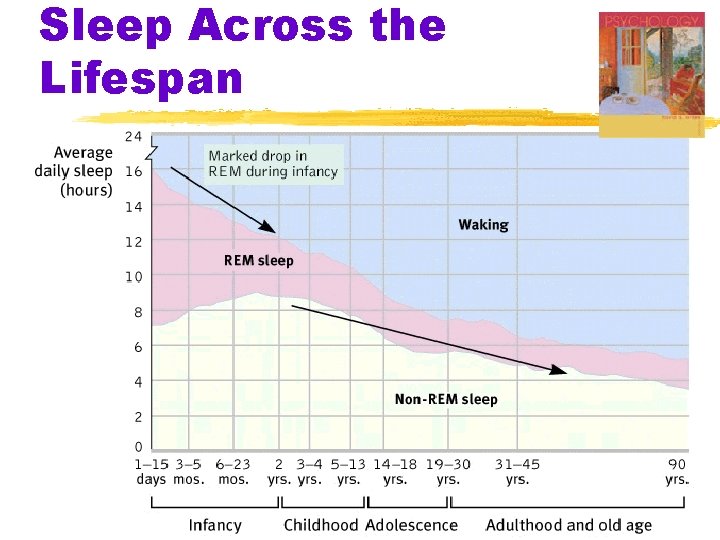
Sleep Across the Lifespan
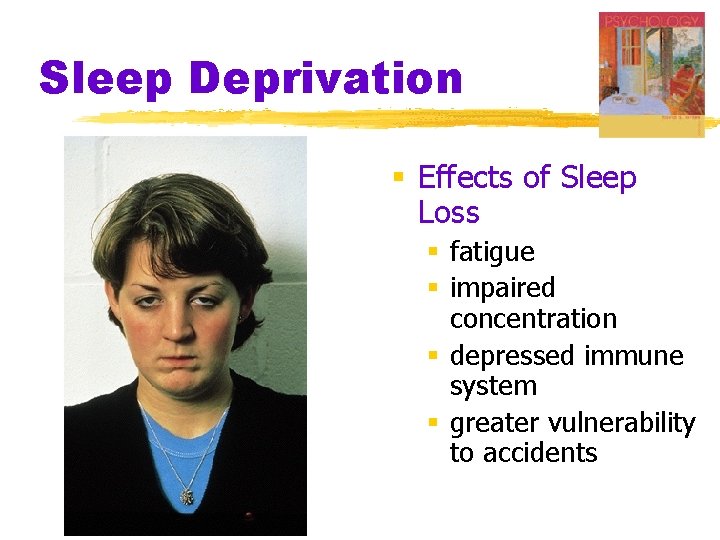
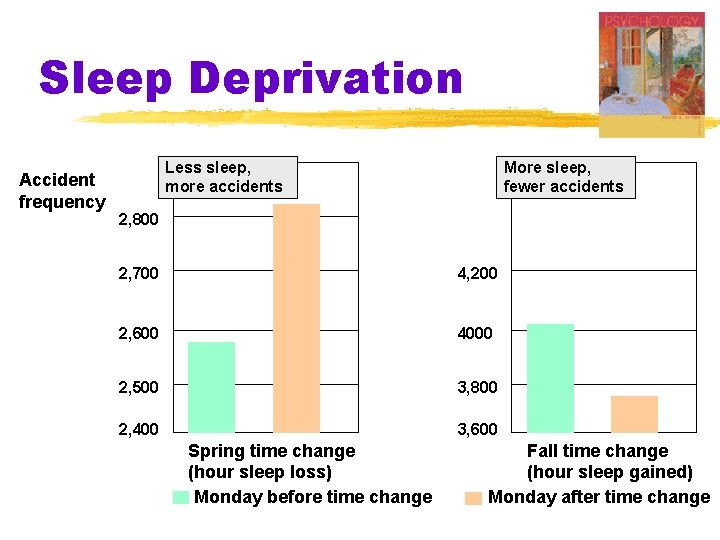
Sleep Deprivation § Effects of Sleep Loss § fatigue § impaired concentration § depressed immune system § greater vulnerability to accidents
Dreams § REM Rebound § REM sleep increases following REM sleep deprivation
Sleep Deprivation Accident frequency Less sleep, more accidents More sleep, fewer accidents 2, 800 2, 700 4, 200 2, 600 4000 2, 500 3, 800 2, 400 3, 600 Spring time change (hour sleep loss) Monday before time change Fall time change (hour sleep gained) Monday after time change
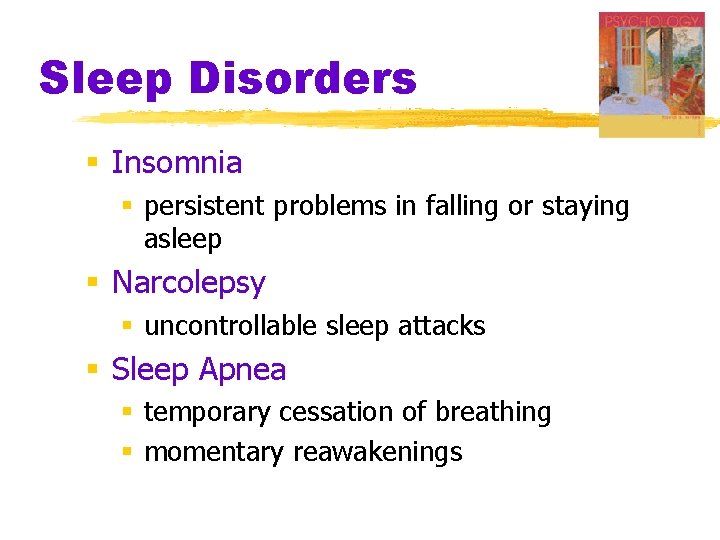
Sleep Disorders § Insomnia § persistent problems in falling or staying asleep § Narcolepsy § uncontrollable sleep attacks § Sleep Apnea § temporary cessation of breathing § momentary reawakenings
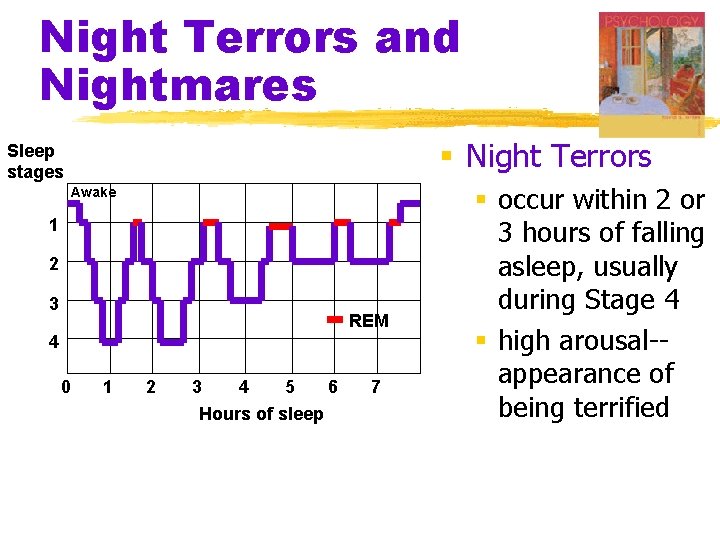
Night Terrors and Nightmares § Night Terrors Sleep stages Awake 1 2 3 REM 4 0 1 2 3 4 5 6 Hours of sleep 7 § occur within 2 or 3 hours of falling asleep, usually during Stage 4 § high arousal-appearance of being terrified
Dreams: Freud § Sigmund Freud--The Interpretation of Dreams (1900) § wish fulfillment § discharge otherwise unacceptable feelings
Dreams: Freud § Dreams § sequence of images, emotions, and thoughts passing through a sleeping person’s mind § hallucinatory imagery § discontinuities § incongruities § delusional acceptance of the content § difficulties remembering
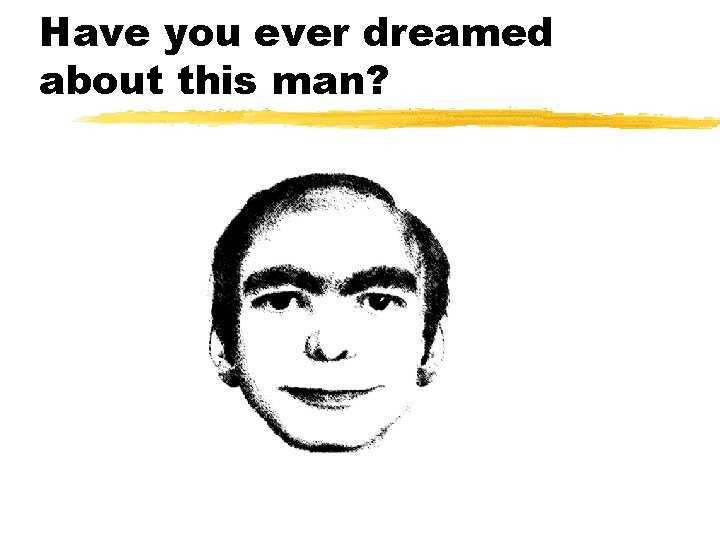
Have you ever dreamed about this man?
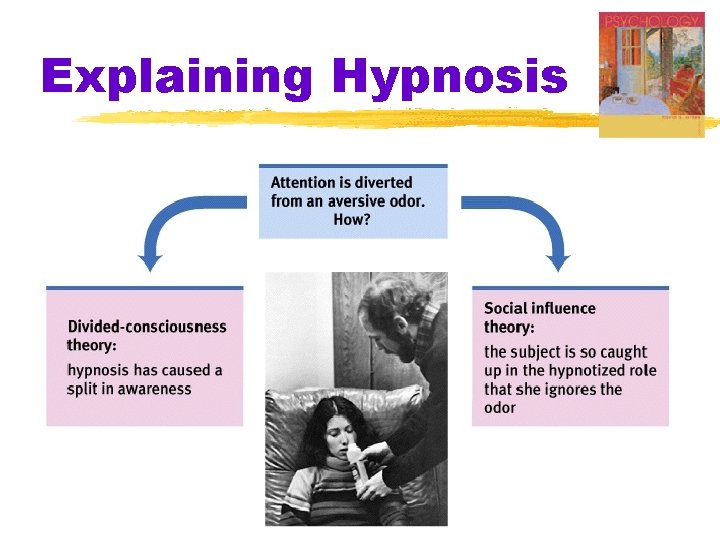
Hypnosis § a social interaction in which one person (the hypnotist) suggests to another (the subject) that certain perceptions, feelings, thoughts, or behaviors will spontaneously occur § Posthypnotic Amnesia § supposed inability to recall what one experienced during hypnosis § induced by the hypnotist’s suggestion
Hypnosis § Posthypnotic Suggestion § suggestion to be carried out after the subject is no longer hypnotized § used by some clinicians to control undesired symptoms and behaviors
Hypnosis § Dissociation § a split in consciousness § allows some thoughts and behaviors to occur simultaneously with others § Hidden Observer § Hilgard’s term describing a hypnotized subject’s awareness of experiences, such as pain, that go unreported during hypnosis
Explaining Hypnosis
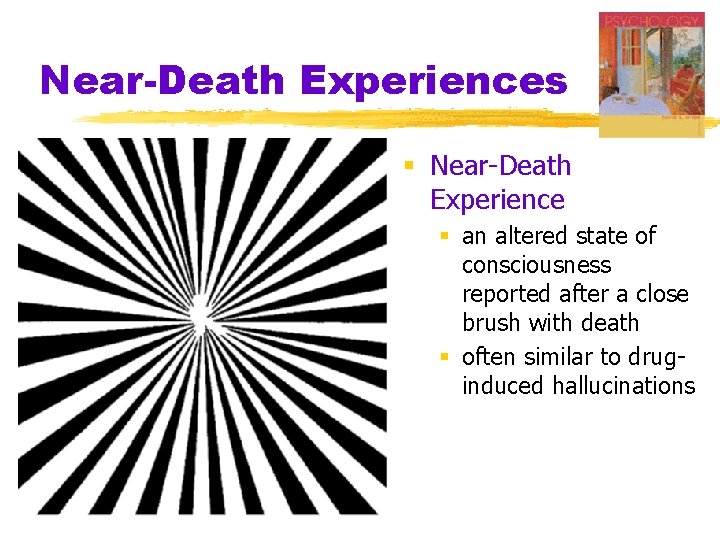
Near-Death Experiences § Near-Death Experience § an altered state of consciousness reported after a close brush with death § often similar to druginduced hallucinations
Near-Death Experiences § Dualism § the presumption that mind and body are two distinct entities that interact § Monism § the presumption that mind and body are different aspects of the same thing
Drugs and Consciousness § Psychoactive Drug § a chemical substance that alters perceptions and mood § Physical Dependence § physiological need for a drug § marked by unpleasant withdrawal symptoms § Psychological Dependence § a psychological need to use a drug § for example, to relieve negative emotions
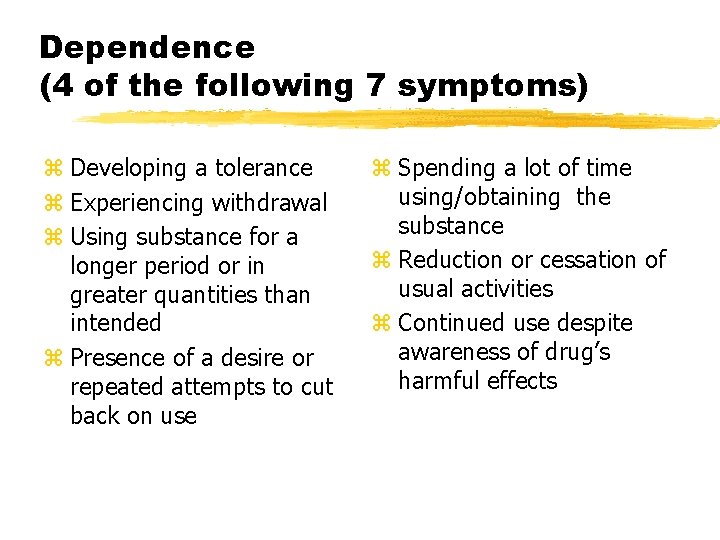
Dependence (4 of the following 7 symptoms) z Developing a tolerance z Experiencing withdrawal z Using substance for a longer period or in greater quantities than intended z Presence of a desire or repeated attempts to cut back on use z Spending a lot of time using/obtaining the substance z Reduction or cessation of usual activities z Continued use despite awareness of drug’s harmful effects
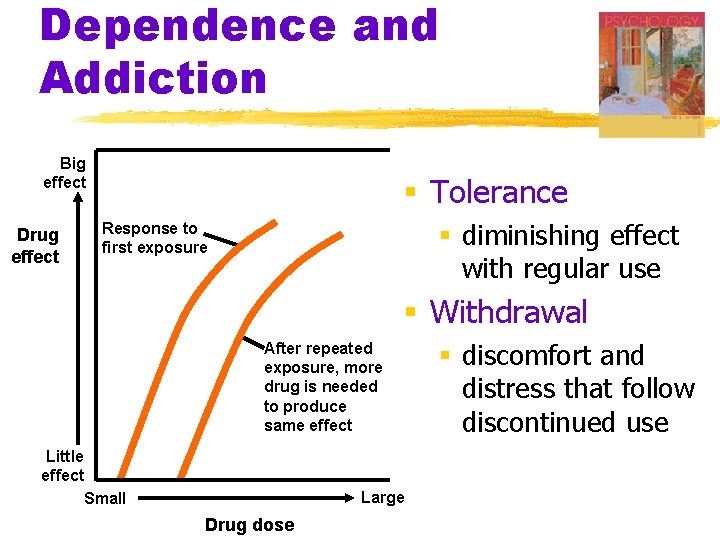
Dependence and Addiction Big effect Drug effect § Tolerance § diminishing effect with regular use Response to first exposure § Withdrawal After repeated exposure, more drug is needed to produce same effect Little effect Small Large Drug dose § discomfort and distress that follow discontinued use
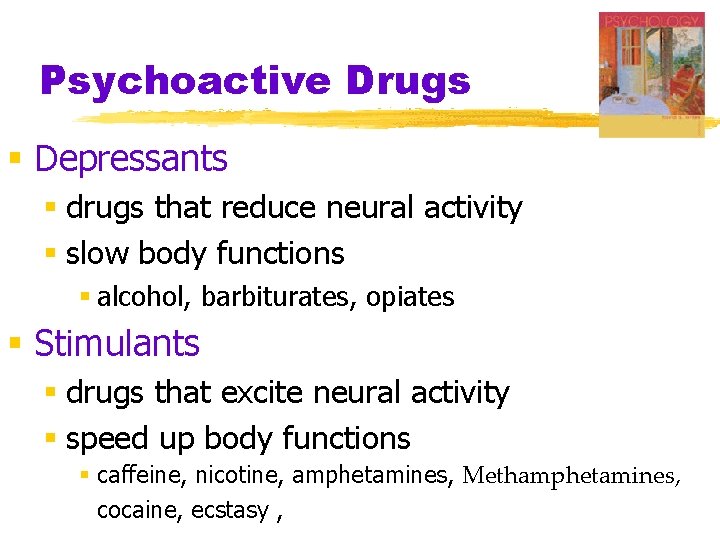
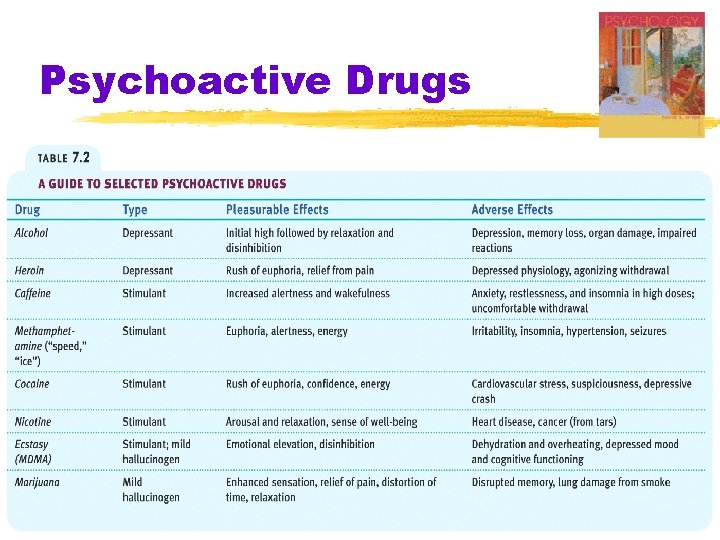
Psychoactive Drugs § Depressants § drugs that reduce neural activity § slow body functions § alcohol, barbiturates, opiates § Stimulants § drugs that excite neural activity § speed up body functions § caffeine, nicotine, amphetamines, Methamphetamines, cocaine, ecstasy ,
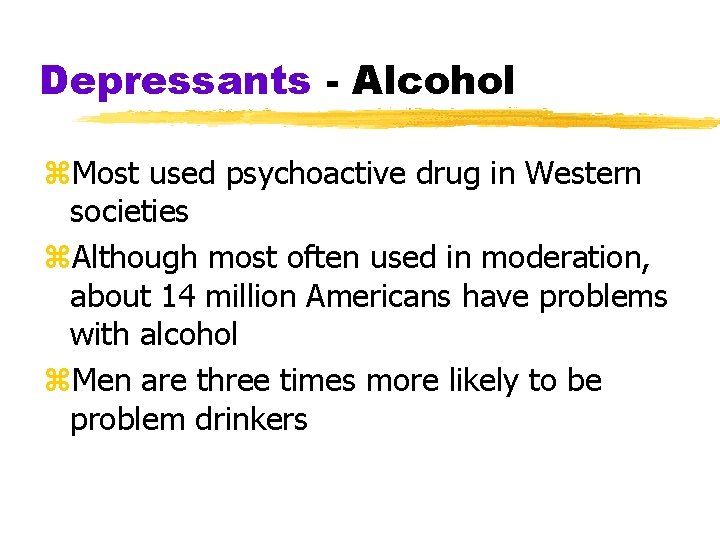
Depressants - Alcohol z. Most used psychoactive drug in Western societies z. Although most often used in moderation, about 14 million Americans have problems with alcohol z. Men are three times more likely to be problem drinkers
Alcohol z. Highly addictive z. Even moderate amounts can affect y. Perception y. Motor processes y. Memory y. Judgment y. Visual acuity y. Depth perception y. Cognitive functioning
Alcohol z. Overall effect is to calm the nervous system z. Sometimes perceived as a stimulant because it relaxes inhibitions
Stimulants - Caffeine z. Naturally occurring substance found in coffee, tea, cocoa, and chocolate z. Also added to soft drinks and pain medications z. Increases alertness z. In high doses, caffeine can cause anxiety, headaches, heart palpitations, and insomnia
Nicotine z Found in tobacco z Considered by many to be the most addictive stimulant in use today z Affects levels of several neurotransmitters z Depending on amount and time smoked, can have either sedative or stimulating effects z Can lead to numerous withdrawal symptoms, including nervousness, headaches, and irritability
Psychoactive Drugs § Barbiturates § drugs that depress the activity of the central nervous system, reducing anxiety but impairing memory and judgment § Usually taken as anti-depressants or to help calm nerves. § Effects are similar to alcohol
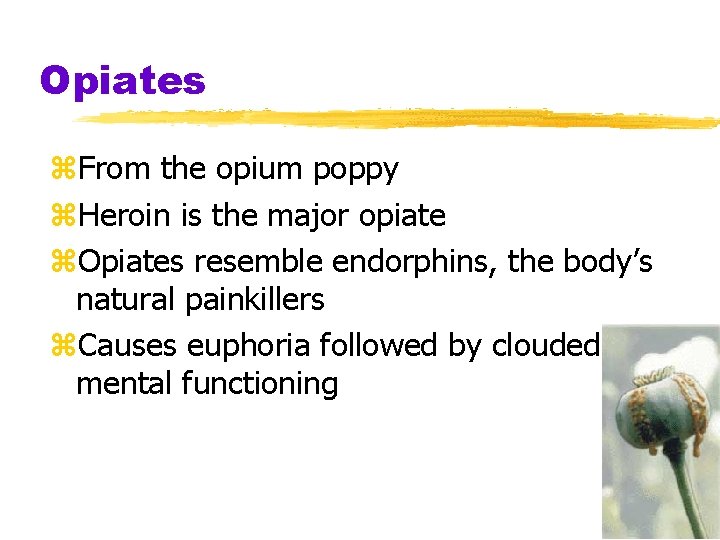
Opiates z. From the opium poppy z. Heroin is the major opiate z. Opiates resemble endorphins, the body’s natural painkillers z. Causes euphoria followed by clouded mental functioning
Psychoactive Drugs § Amphetamines § drugs that stimulate neural activity, causing sped-up body functions and associated energy and mood changes § Adderall
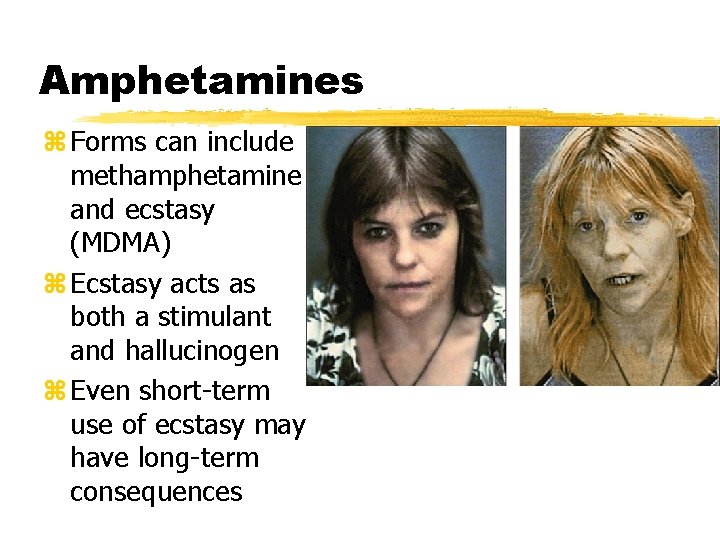
Amphetamines z Forms can include methamphetamine and ecstasy (MDMA) z Ecstasy acts as both a stimulant and hallucinogen z Even short-term use of ecstasy may have long-term consequences
Cocaine z. Blocks reabsorption of dopamine z. Produces increased alertness, motivation, and euphoria z. Crash leads to anxiety, depression, and strong cravings
Psychoactive Drugs § Hallucinogens § psychedelic (mind-manifesting) drugs that distort perceptions and evoke sensory images in the absence of sensory input
LSD y. Produces hallucinations and delusions similar to a psychotic state y. Can result in psychosis, memory loss, paranoia, panic attacks, nightmares and aggression
Marijuana z. THC, the active ingredient in marijuana, produces symptoms such as y. Mild hallucinations y. Euphoria y. Enhanced sense of well-being y. Relaxation y. Distortion of time z. Some users may experience anxiety and paranoia
Psychoactive Drugs
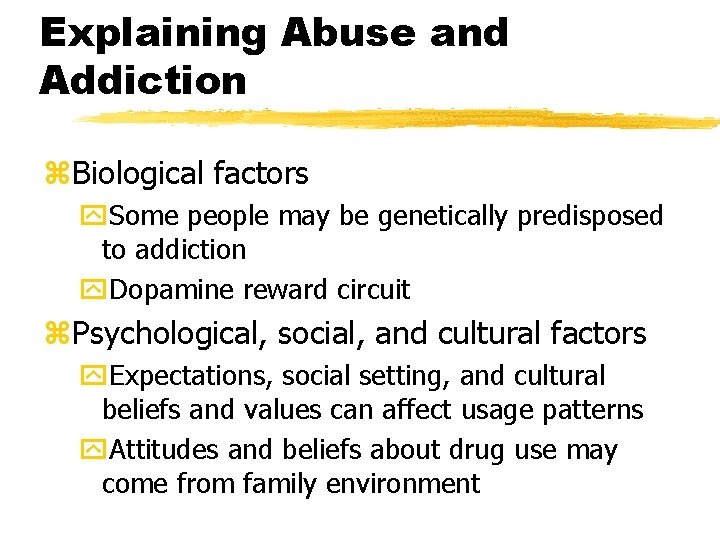
Explaining Abuse and Addiction z. Biological factors y. Some people may be genetically predisposed to addiction y. Dopamine reward circuit z. Psychological, social, and cultural factors y. Expectations, social setting, and cultural beliefs and values can affect usage patterns y. Attitudes and beliefs about drug use may come from family environment
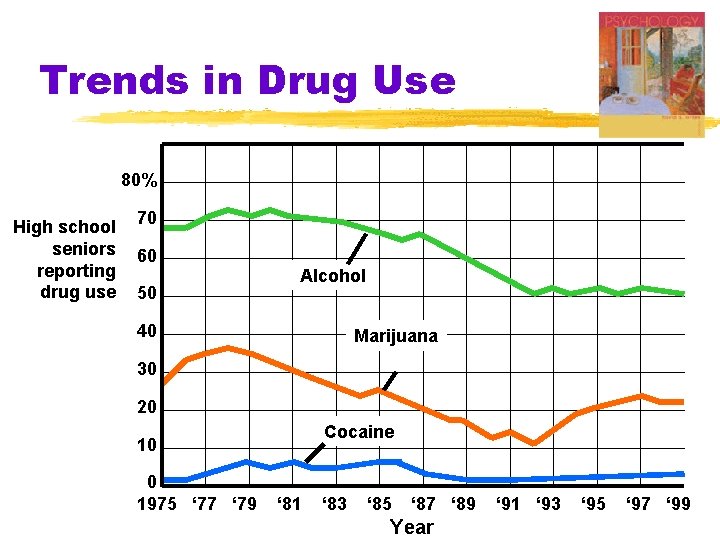
Trends in Drug Use 80% High school seniors reporting drug use 70 60 50 Alcohol 40 Marijuana 30 20 Cocaine 10 0 1975 ‘ 77 ‘ 79 ‘ 81 ‘ 83 ‘ 85 ‘ 87 ‘ 89 Year ‘ 91 ‘ 93 ‘ 95 ‘ 97 ‘ 99
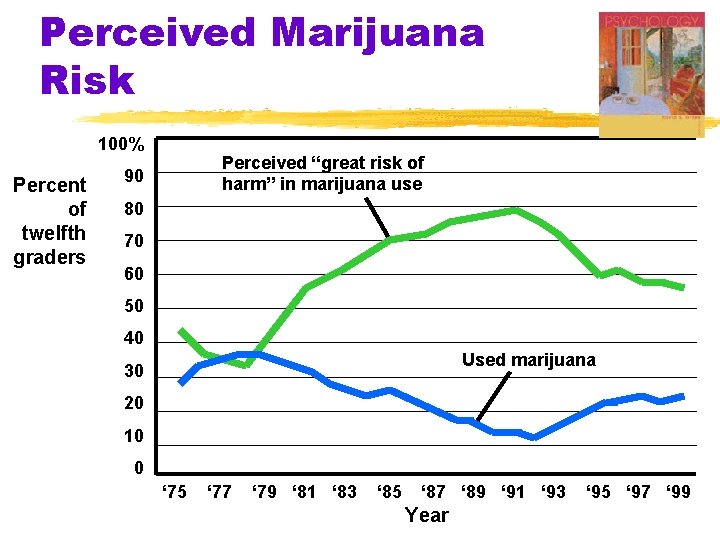
Perceived Marijuana Risk 100% Percent of twelfth graders Perceived “great risk of harm” in marijuana use 90 80 70 60 50 40 Used marijuana 30 20 10 0 ‘ 75 ‘ 77 ‘ 79 ‘ 81 ‘ 83 ‘ 85 ‘ 87 ‘ 89 ‘ 91 ‘ 93 Year ‘ 95 ‘ 97 ‘ 99