
Psychologically Informed Environments Dr Emma Williamson Principal Clinical

- Slides: 28
Psychologically Informed Environments Dr Emma Williamson Principal Clinical Psychologist, Clinical Lead, Psychology in Hostels (Lambeth), SLa. M CEO, Anomee - Staff Training emma@anomee. com @Dr_EWilliamson Emma. williamson@slam. nhs. uk
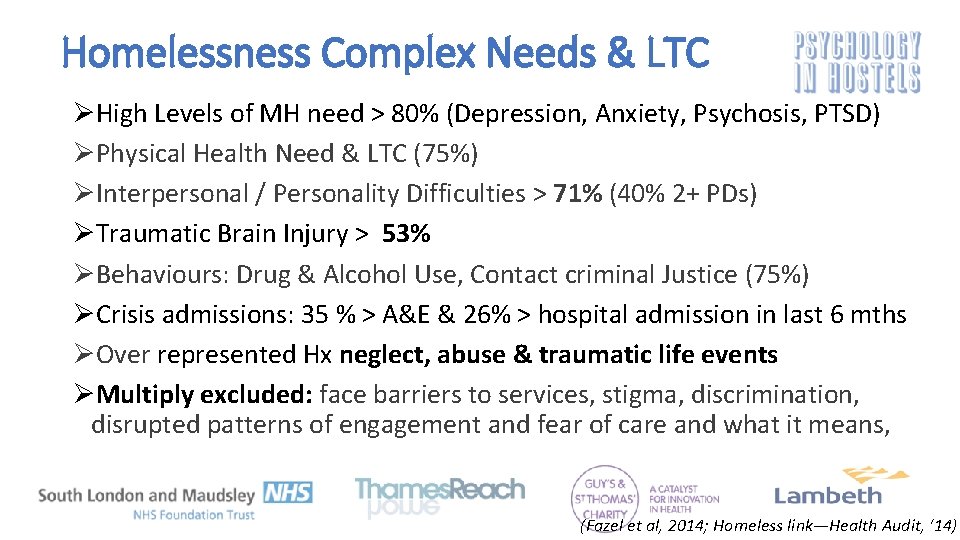
Homelessness Complex Needs & LTC ØHigh Levels of MH need > 80% (Depression, Anxiety, Psychosis, PTSD) ØPhysical Health Need & LTC (75%) ØInterpersonal / Personality Difficulties > 71% (40% 2+ PDs) ØTraumatic Brain Injury > 53% ØBehaviours: Drug & Alcohol Use, Contact criminal Justice (75%) ØCrisis admissions: 35 % > A&E & 26% > hospital admission in last 6 mths ØOver represented Hx neglect, abuse & traumatic life events ØMultiply excluded: face barriers to services, stigma, discrimination, disrupted patterns of engagement and fear of care and what it means, (Fazel et al, 2014; Homeless link—Health Audit, ‘ 14)
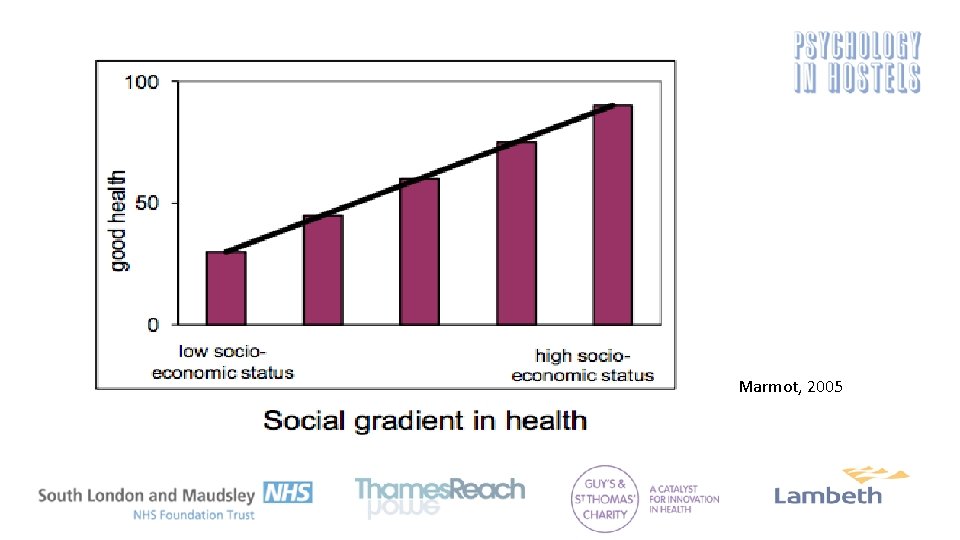
Marmot, 2005
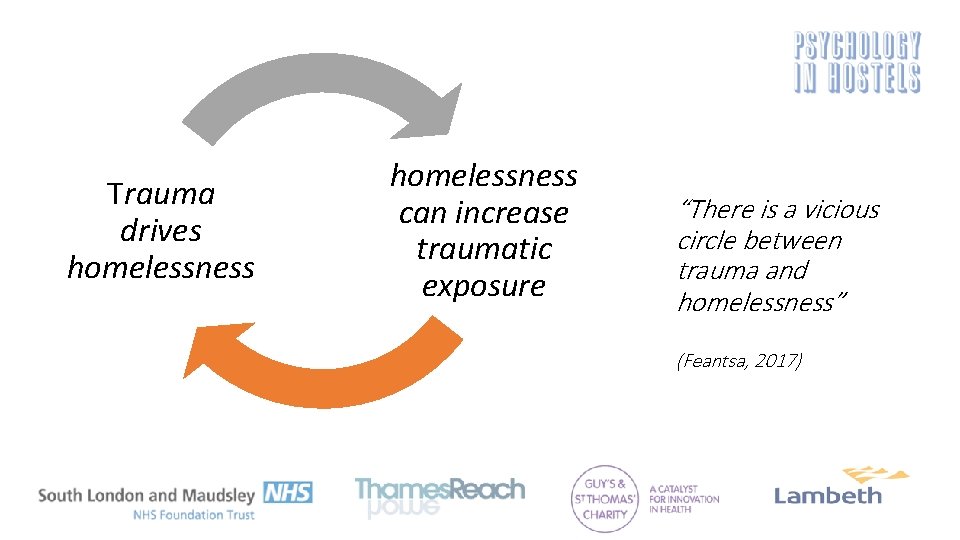
Trauma drives homelessness can increase traumatic exposure “There is a vicious circle between trauma and homelessness” (Feantsa, 2017)
Holding the mind in mind “The PIE [Psychologically Informed Environment] originally arose out of the need to recognise and to work with the levels of emotional trauma that accompany, and in many cases precede, an individual becoming homeless” Robin Johnson and Rex Haigh (2011)
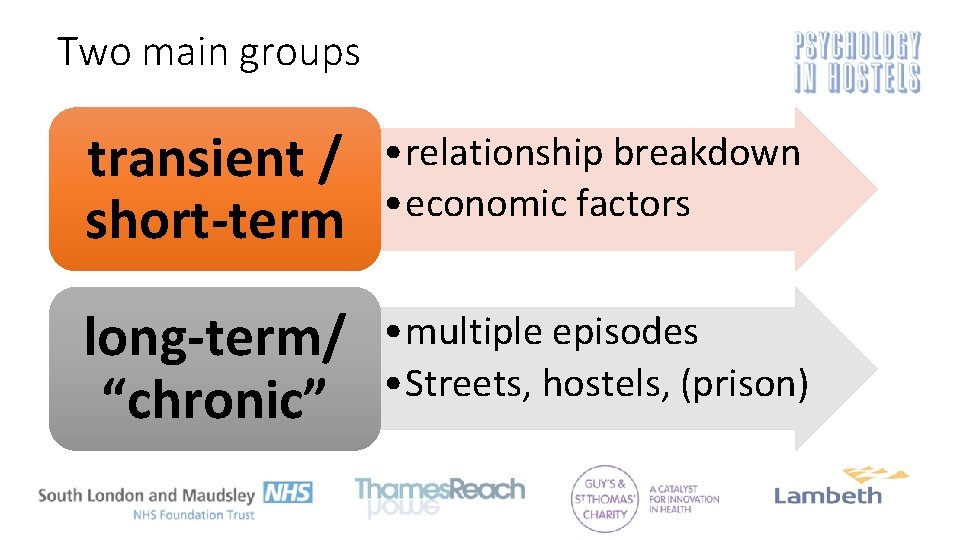
Two main groups transient / short-term • relationship breakdown • economic factors long-term/ “chronic” • multiple episodes • Streets, hostels, (prison)
An Unhoused Mind • Claustrophobic-Agoraphobic Dilemma • Pressure on staff to find a clear cut solutions • The fantasy of the individual tenancy as the solution – ‘a home of ones own’ • ‘Home’ as a dangerous place • Constantly sort, and constantly lost, abandoned or destroyed. • The cocoon of drugs and alcohol (Campbell, 2011, p. 162)
“…the definitive marker of a PIE is simply that, if asked why the unit is run in such and such a way, the staff would give an answer couched in terms of the emotional and psychological needs of the service users, rather than giving some more logistical or practical rationale, such as convenience, costs, or Health And Safety regulations” Johnson & Haigh (2010)
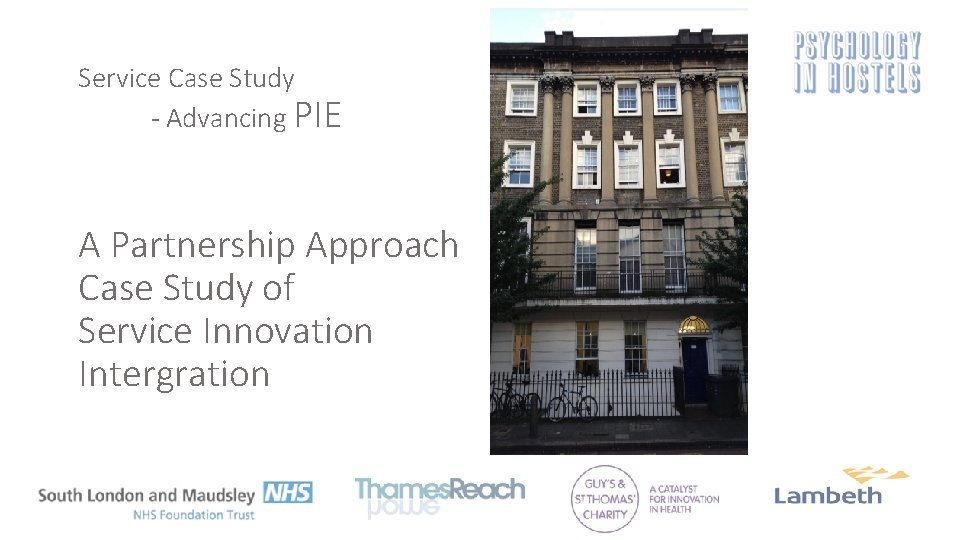
Service Case Study - Advancing PIE A Partnership Approach Case Study of Service Innovation Intergration
Innovative Model • Delivering in Lambeth since 2012 • Lambeth VAP referrals • Three Pi. H Thames Reach Complex needs Hostels (n 100, + Transition Service) • Staffing: TR support staff, 5 fulltime NHS Psychologists, administrator, ½ day Consultant Psychiatry, Peer Support Service Coordinator, 12 volunteers. • July 2017: Extension into Greenwich Supported Housing, PIH Light model. Westminster April 2018.
Psychological Model • Onsite Psychologists > Available > Familiar > Flexible > Creative • Psychodynamic Framework > MBT / Attachment • Understand emotional pressures for hostel staff & residents • Graded Interventions: slowly decreasing psychological distance • Access (referral route)
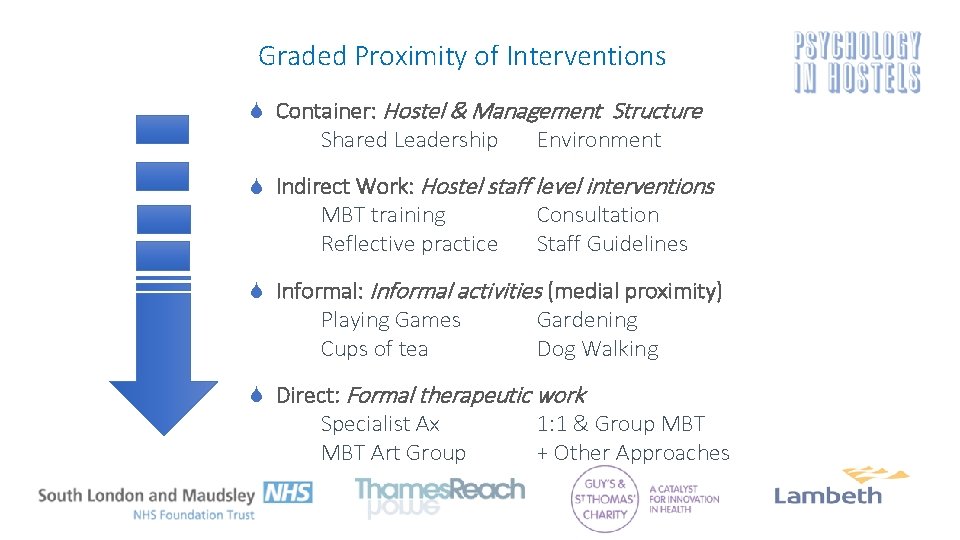
Graded Proximity of Interventions S Container: Hostel & Management Structure Shared Leadership Environment S Indirect Work: Hostel staff level interventions MBT training Reflective practice Consultation Staff Guidelines S Informal: Informal activities (medial proximity) Playing Games Cups of tea Gardening Dog Walking S Direct: Formal therapeutic work Specialist Ax MBT Art Group 1: 1 & Group MBT + Other Approaches
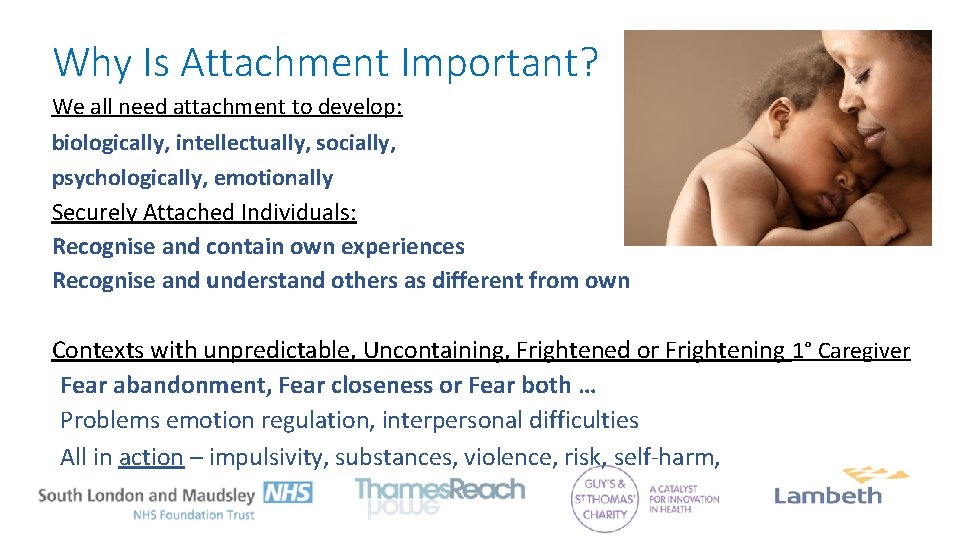
Why Is Attachment Important? We all need attachment to develop: biologically, intellectually, socially, psychologically, emotionally Securely Attached Individuals: Recognise and contain own experiences Recognise and understand others as different from own Contexts with unpredictable, Uncontaining, Frightened or Frightening 1° Caregiver Fear abandonment, Fear closeness or Fear both … Problems emotion regulation, interpersonal difficulties All in action – impulsivity, substances, violence, risk, self-harm,
Matt
Outcome Framework and Evaluation
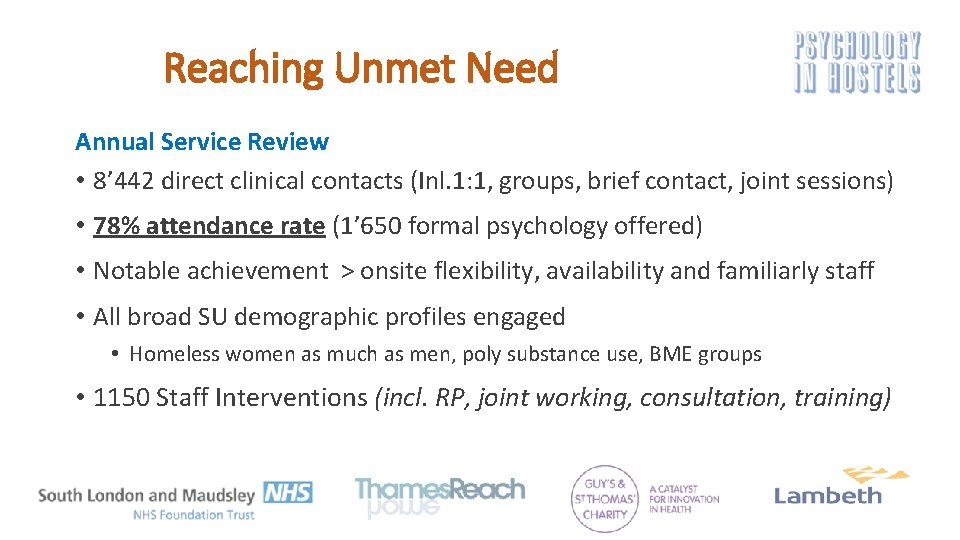
Reaching Unmet Need Annual Service Review • 8’ 442 direct clinical contacts (Inl. 1: 1, groups, brief contact, joint sessions) • 78% attendance rate (1’ 650 formal psychology offered) • Notable achievement > onsite flexibility, availability and familiarly staff • All broad SU demographic profiles engaged • Homeless women as much as men, poly substance use, BME groups • 1150 Staff Interventions (incl. RP, joint working, consultation, training)
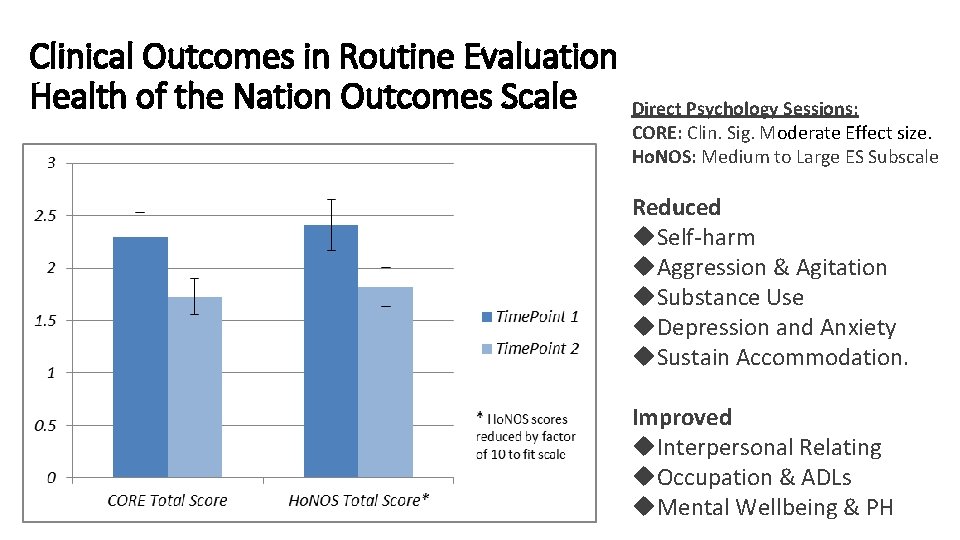
Clinical Outcomes in Routine Evaluation Health of the Nation Outcomes Scale Direct Psychology Sessions: CORE: Clin. Sig. Moderate Effect size. Ho. NOS: Medium to Large ES Subscale Reduced Self-harm Aggression & Agitation Substance Use Depression and Anxiety Sustain Accommodation. Improved Interpersonal Relating Occupation & ADLs Mental Wellbeing & PH
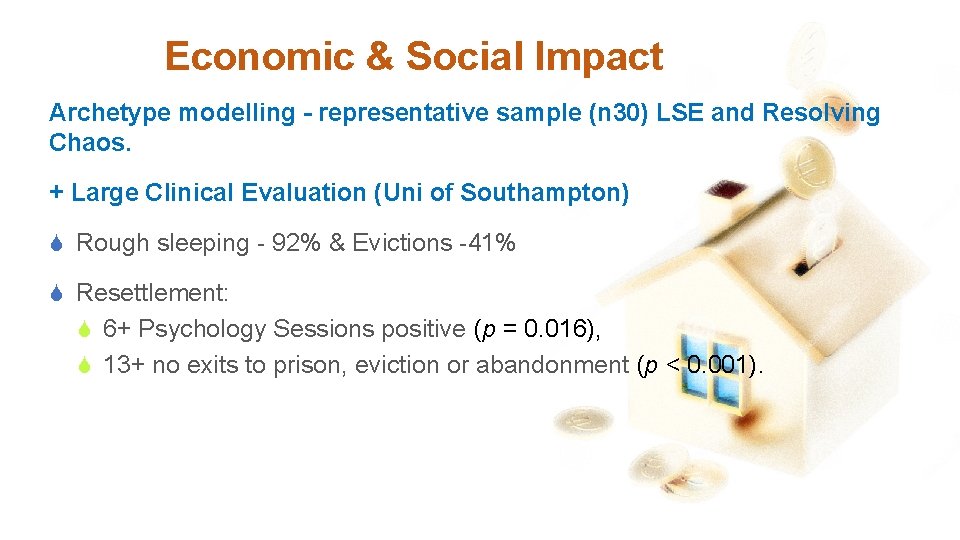
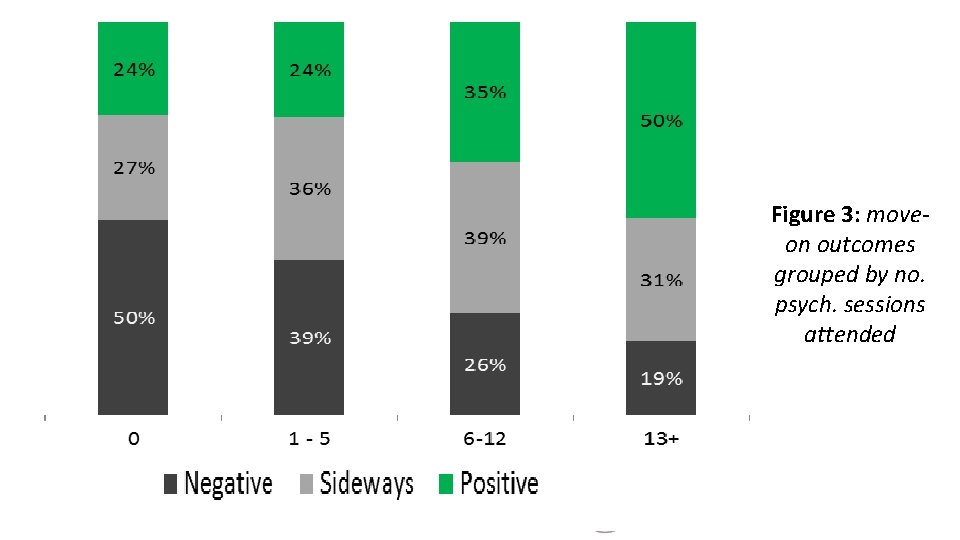
Economic & Social Impact Archetype modelling - representative sample (n 30) LSE and Resolving Chaos. + Large Clinical Evaluation (Uni of Southampton) S Rough sleeping - 92% & Evictions -41% S Resettlement: S 6+ Psychology Sessions positive (p = 0. 016), S 13+ no exits to prison, eviction or abandonment (p < 0. 001).
Figure 3: moveon outcomes grouped by no. psych. sessions attended
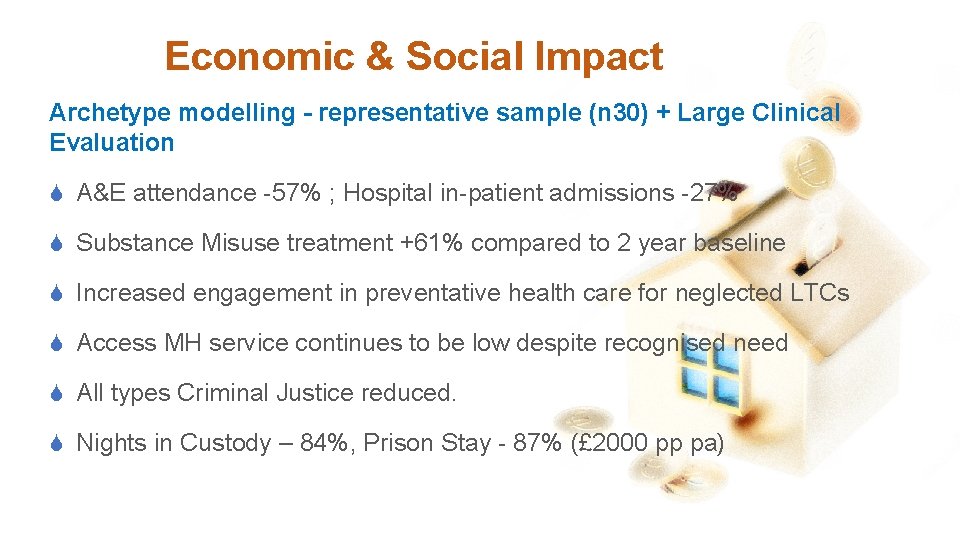
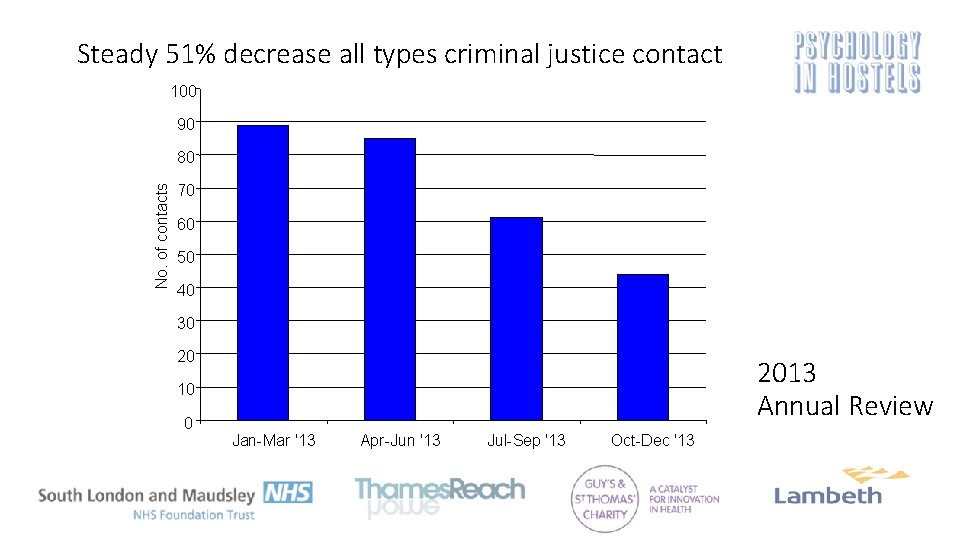
Economic & Social Impact Archetype modelling - representative sample (n 30) + Large Clinical Evaluation S A&E attendance -57% ; Hospital in-patient admissions -27% S Substance Misuse treatment +61% compared to 2 year baseline S Increased engagement in preventative health care for neglected LTCs S Access MH service continues to be low despite recognised need S All types Criminal Justice reduced. S Nights in Custody – 84%, Prison Stay - 87% (£ 2000 pp pa)
Steady 51% decrease all types criminal justice contact 100 90 No. of contacts 80 70 60 50 40 30 20 2013 Annual Review 10 0 Jan-Mar '13 Apr-Jun '13 Jul-Sep '13 Oct-Dec '13
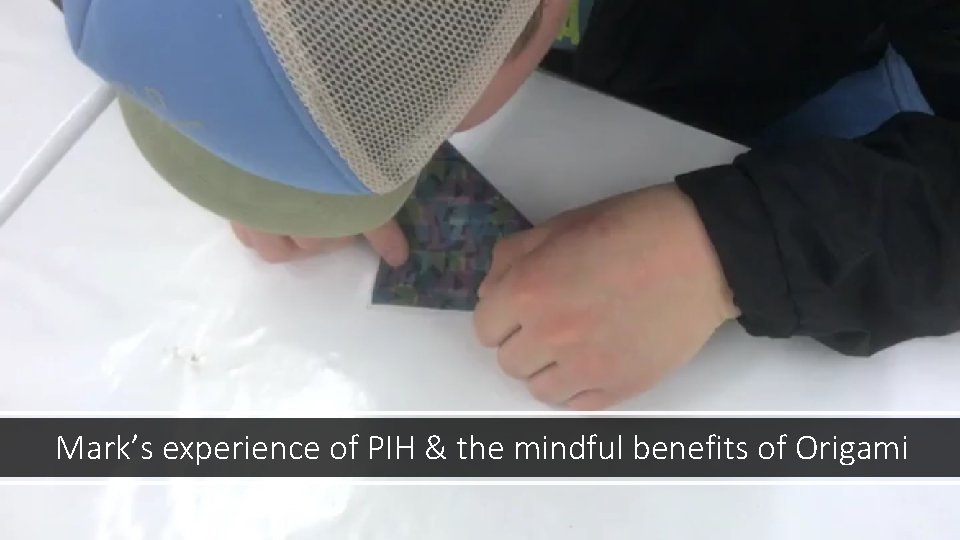
Mark’s experience of PIH & the mindful benefits of Origami
Thanks to Mark* Duckie Arts Jen Foster for making this short film
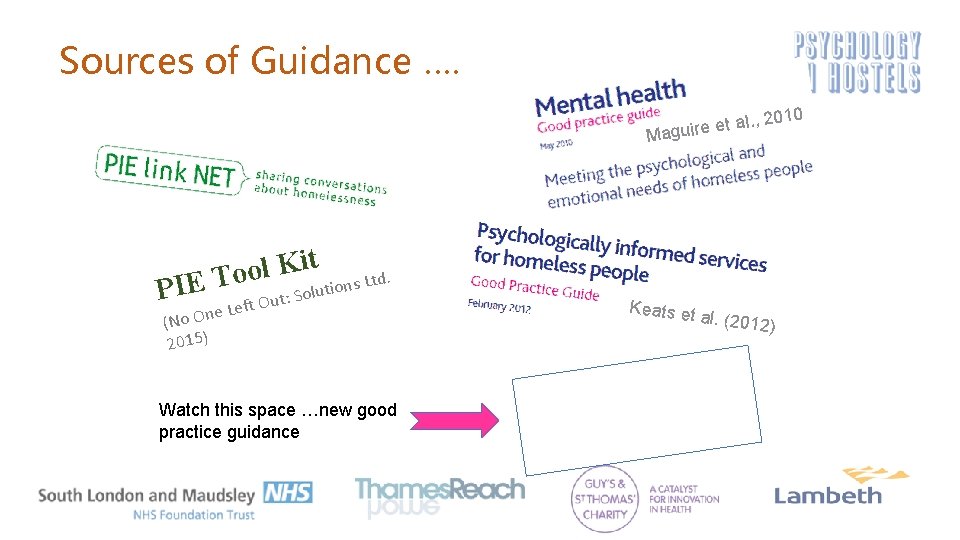
Sources of Guidance …. l. , 2010 a t e e r i Magu t i K l o td. E To tions L PI (No On 2015) Out: t f e L e Solu Watch this space …new good practice guidance Keats et al. (2012 )
www. aneemo. com
www. aneemo. com
Acknowledgements • Waterloo Project, Graham House, Camberwell New Rd Hostel residents, staff, management & psychology teams • Thames Reach – Bill Tidman (Director Operations), Katy Porter (Area Director), Hannah Gaston / Chris Deacon / Martha Kelly (Area Manager) • SLa. M - Simon Darnley (PMIC Deputy Director); Charlene De Villers (Lambeth Pathway Manager); Kathy Taylor/ Wil Pennycook (Professional Lead); Luke Mitcheson (Consultant Psychologist Addictions) • LBL - Claire Ritchie, Paul Davis, Emma Casey (Hostel Commissioners) • Funders: LBL 2012 -’ 14; Maudsley Charity ‘ 14; Guys & St Thomas Charity (‘ 15 - April 18) • Evaluators: Nick Maguire & Southampton University; Resolving Chaos • Other key liaison teams (Incl. START Team, SLa. M Addiction Consortia, Foundation 66, Health Inclusion Nursing Team, KHP Homeless Teams, You. First Team, amongst others)
@Dr_EWilliamson Emma. williamson@slam. nhs. uk emma@anomee. com