
Psychological Disorders Chapter 12 ENDURING ISSUES MindBody What
Psychological Disorders Chapter 12
ENDURING ISSUES Mind–Body • What is the relationship between genetics, neurotransmitters, and behavior disorders?

ENDURING ISSUES Person– Situation • Many psychological disorders arise because a vulnerable person encounters a particularly stressful environment
ENDURING ISSUES Diversity– Universality • “What is normal? ” -- how has the answer to that question changed over time and how does it differ across cultures?
ENDURING ISSUES Stability– Change • Is a young person with a psychological disorder likely to suffer from it later in life and/or will a well-adjusted young person be immune to psychological disorders later in life?
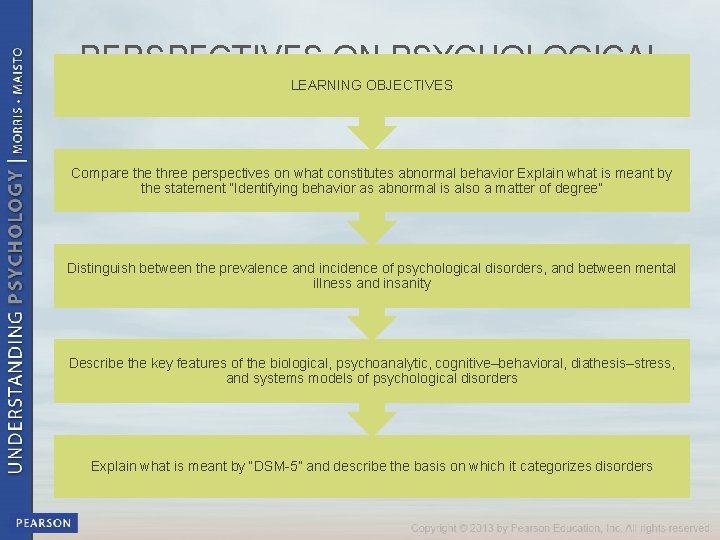
PERSPECTIVES ON PSYCHOLOGICAL LEARNING OBJECTIVES DISORDERS Compare three perspectives on what constitutes abnormal behavior Explain what is meant by the statement “Identifying behavior as abnormal is also a matter of degree” Distinguish between the prevalence and incidence of psychological disorders, and between mental illness and insanity Describe the key features of the biological, psychoanalytic, cognitive–behavioral, diathesis–stress, and systems models of psychological disorders Explain what is meant by “DSM-5” and describe the basis on which it categorizes disorders
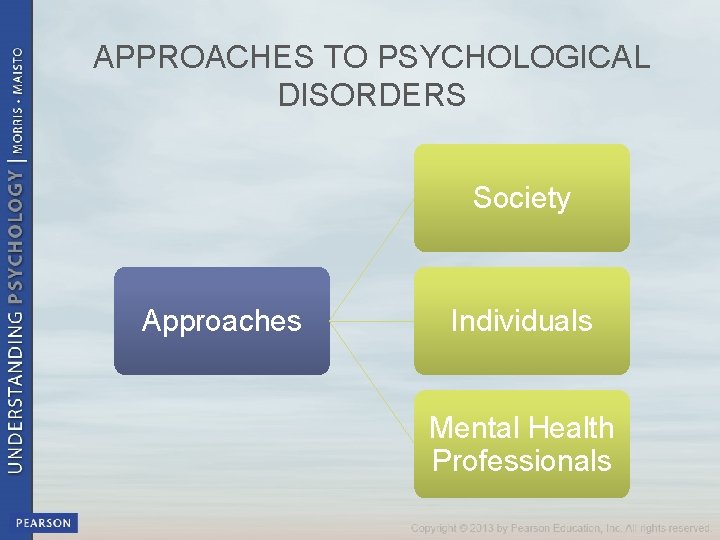
APPROACHES TO PSYCHOLOGICAL DISORDERS Society Approaches Individuals Mental Health Professionals
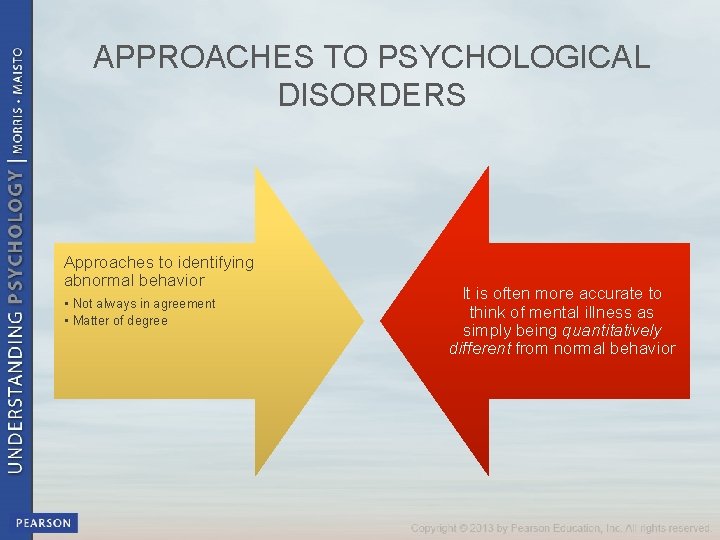
APPROACHES TO PSYCHOLOGICAL DISORDERS Approaches to identifying abnormal behavior • Not always in agreement • Matter of degree It is often more accurate to think of mental illness as simply being quantitatively different from normal behavior
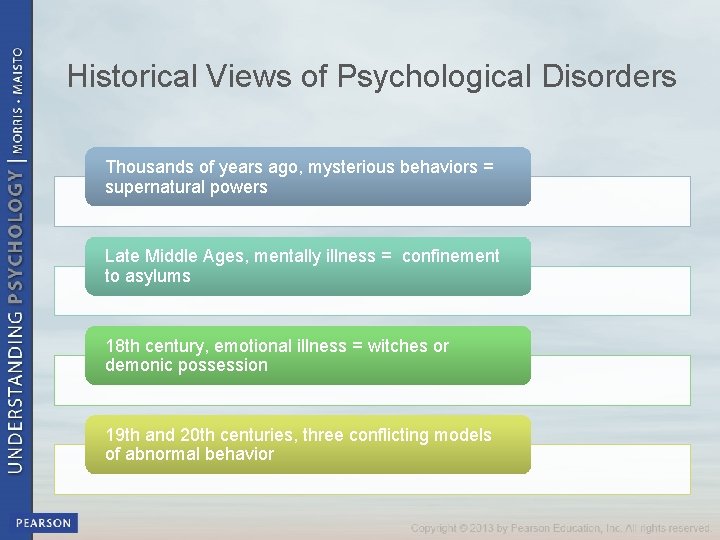
Historical Views of Psychological Disorders Thousands of years ago, mysterious behaviors = supernatural powers Late Middle Ages, mentally illness = confinement to asylums 18 th century, emotional illness = witches or demonic possession 19 th and 20 th centuries, three conflicting models of abnormal behavior
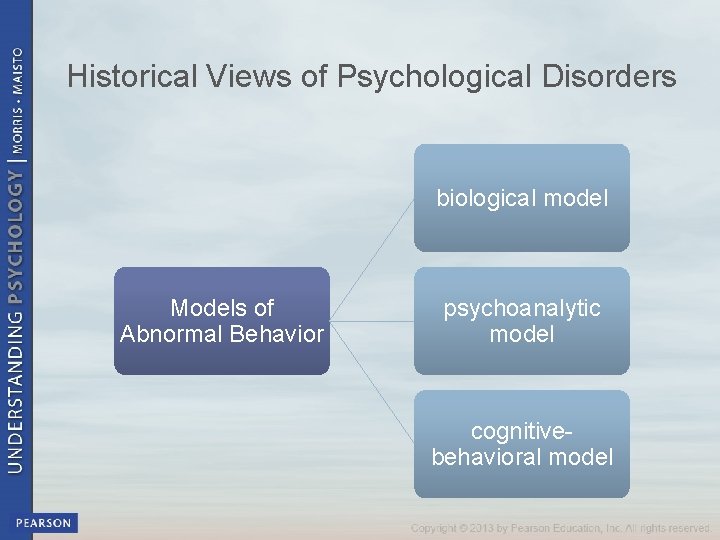
Historical Views of Psychological Disorders biological model Models of Abnormal Behavior psychoanalytic model cognitivebehavioral model
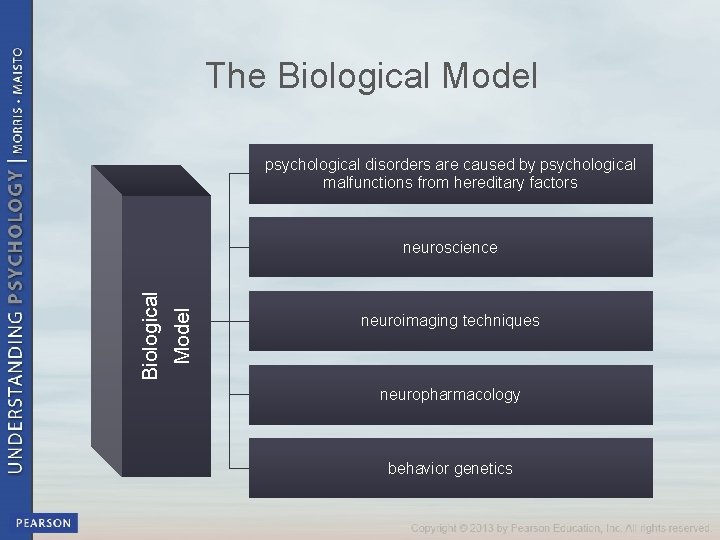
The Biological Model psychological disorders are caused by psychological malfunctions from hereditary factors Biological Model neuroscience neuroimaging techniques neuropharmacology behavior genetics
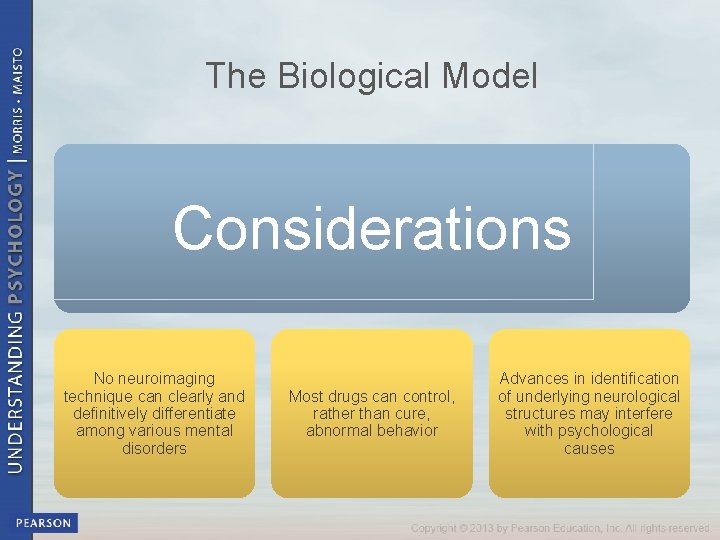
The Biological Model Considerations No neuroimaging technique can clearly and definitively differentiate among various mental disorders Most drugs can control, rather than cure, abnormal behavior Advances in identification of underlying neurological structures may interfere with psychological causes
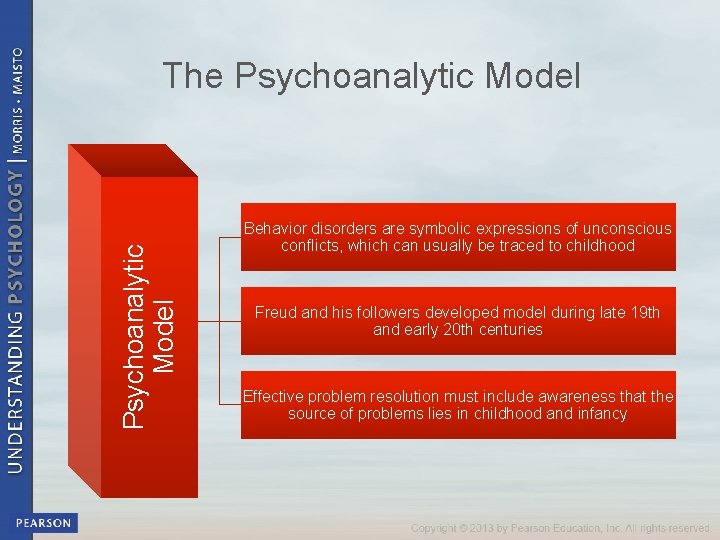
Psychoanalytic Model The Psychoanalytic Model Behavior disorders are symbolic expressions of unconscious conflicts, which can usually be traced to childhood Freud and his followers developed model during late 19 th and early 20 th centuries Effective problem resolution must include awareness that the source of problems lies in childhood and infancy
The Psychoanalytic Model Consideration Freud and his followers influenced mental health disciplines and Western culture Only weak and scattered scientific evidence supports psychoanalytic theories about causes and effective treatment of mental disorders
Cognitive-Behavioral Model The Cognitive-Behavioral Model psychological disorders, like all behavior, result from learning
The Cognitive-Behavioral Model Consideration cognitive-behavioral model led to innovations in treatment of psychological disorders model criticized for limited perspective, especially emphasis on environmental causes and treatments
Diathesis-Stress Model The Diathesis-Stress Model and Systems Theory biological predisposition, called a diathesis, must combine with stressful circumstance before predisposition to mental disorder is manifested
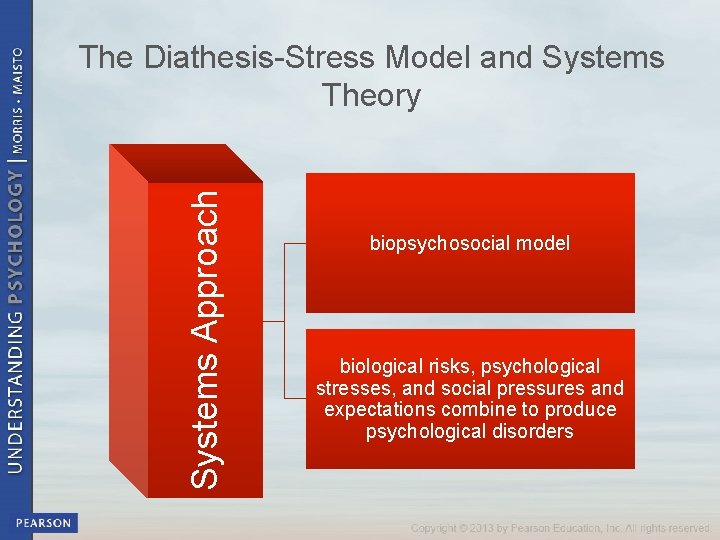
Systems Approach The Diathesis-Stress Model and Systems Theory biopsychosocial model biological risks, psychological stresses, and social pressures and expectations combine to produce psychological disorders
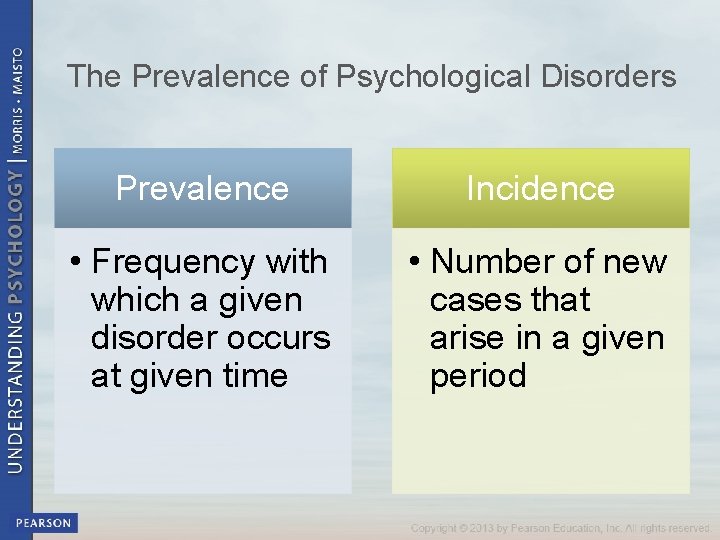
The Prevalence of Psychological Disorders Prevalence Incidence • Frequency with which a given disorder occurs at given time • Number of new cases that arise in a given period
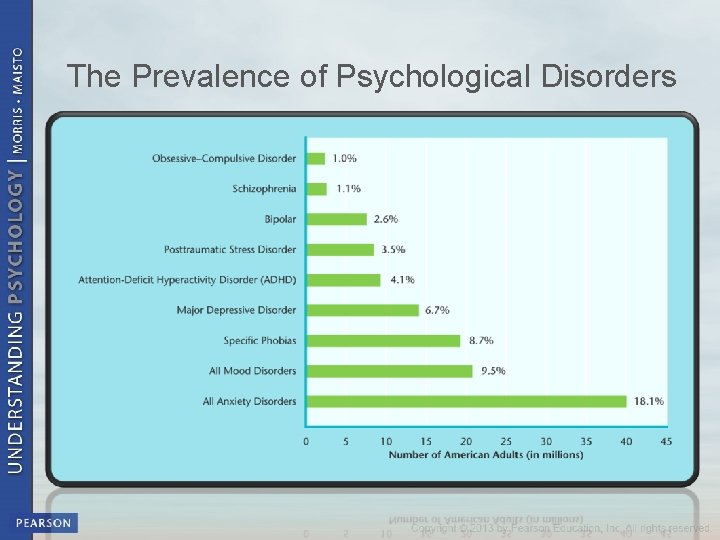
The Prevalence of Psychological Disorders
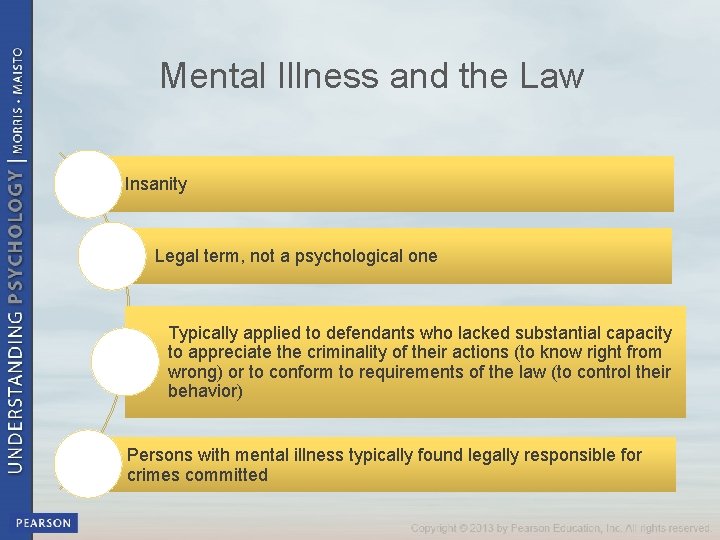
Mental Illness and the Law Insanity Legal term, not a psychological one Typically applied to defendants who lacked substantial capacity to appreciate the criminality of their actions (to know right from wrong) or to conform to requirements of the law (to control their behavior) Persons with mental illness typically found legally responsible for crimes committed
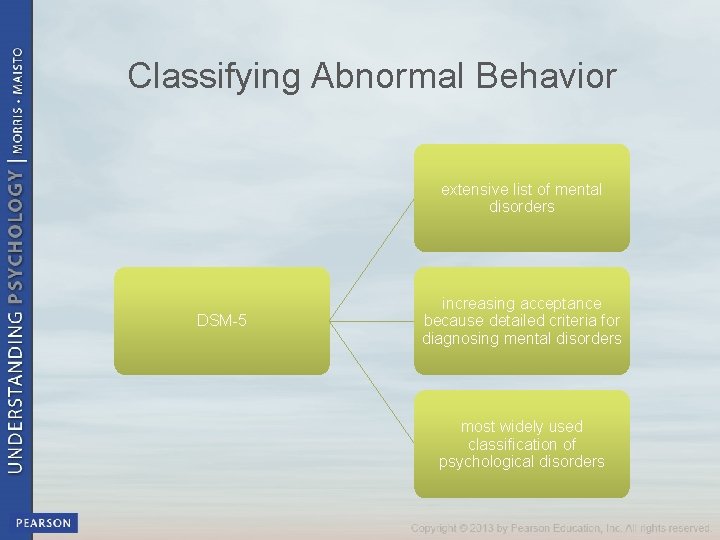
Classifying Abnormal Behavior extensive list of mental disorders DSM-5 increasing acceptance because detailed criteria for diagnosing mental disorders most widely used classification of psychological disorders
MOOD DISORDERS LEARNING OBJECTIVES Explain how mood disorders differ from ordinary mood changes List the key symptoms that are used to diagnose major depression, dysthymia, mania, and bipolar disorder. Describe the causes of mood disorders. Describe the factors that are related to a person’s likelihood of committing suicide Contrast the three myths about suicide with the actual facts about suicide.
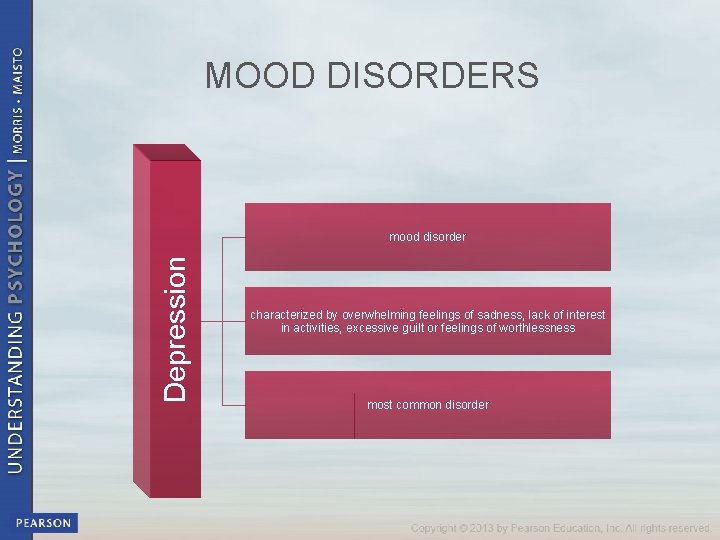
MOOD DISORDERS Depression mood disorder characterized by overwhelming feelings of sadness, lack of interest in activities, excessive guilt or feelings of worthlessness most common disorder
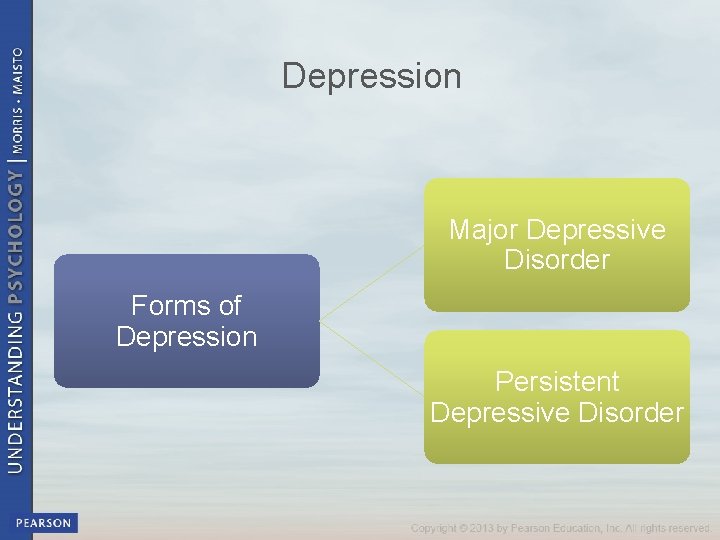
Depression Major Depressive Disorder Forms of Depression Persistent Depressive Disorder
Suicide • Occurrence • Hospitalization Rates • Gender Differences • International Incidence
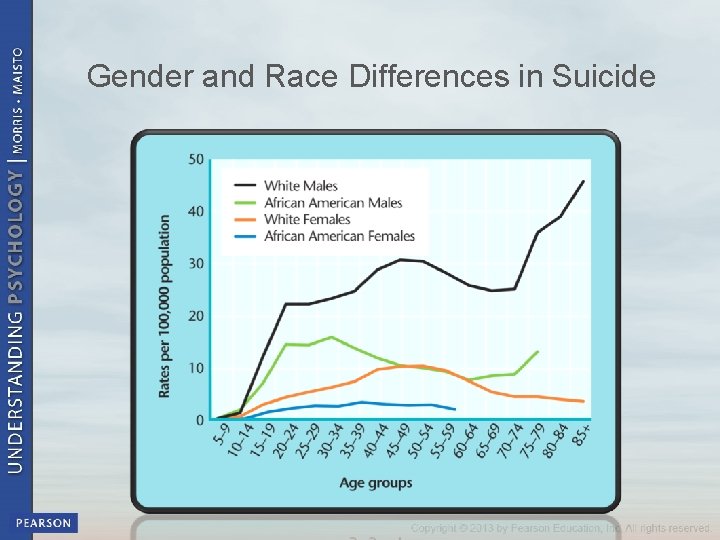
Gender and Race Differences in Suicide
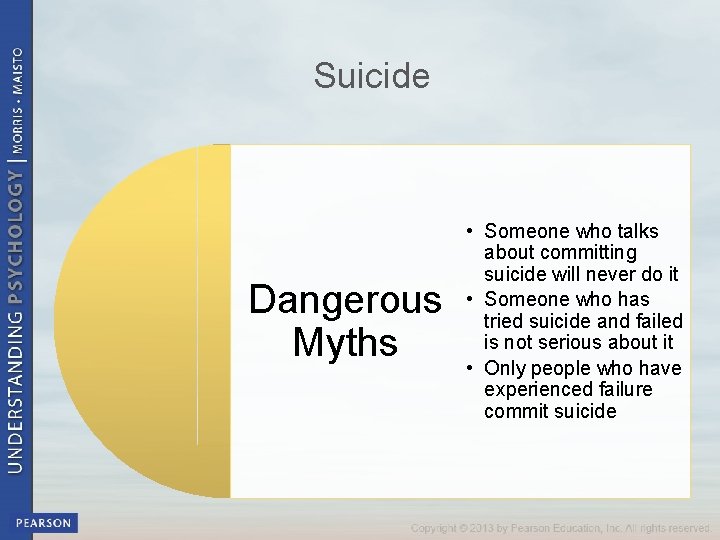
Suicide Dangerous Myths • Someone who talks about committing suicide will never do it • Someone who has tried suicide and failed is not serious about it • Only people who have experienced failure commit suicide
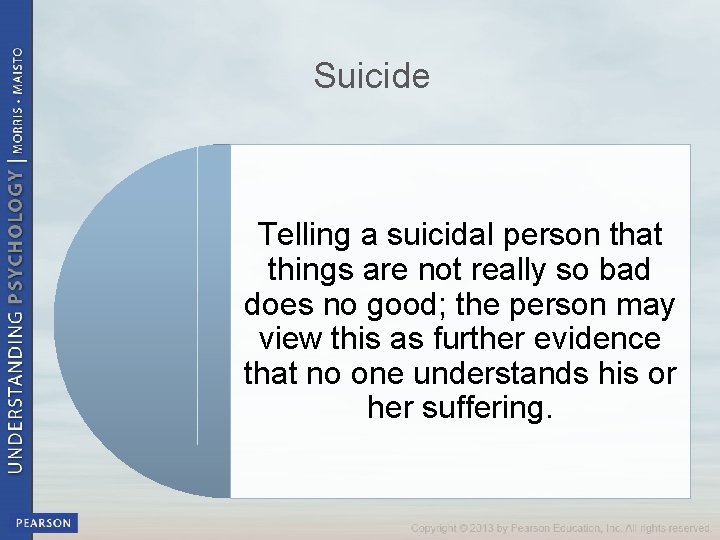
Suicide Telling a suicidal person that things are not really so bad does no good; the person may view this as further evidence that no one understands his or her suffering.
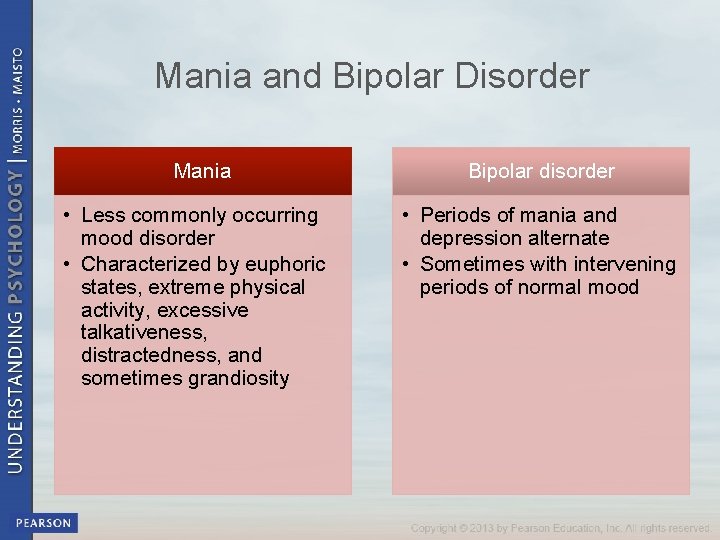
Mania and Bipolar Disorder Mania • Less commonly occurring mood disorder • Characterized by euphoric states, extreme physical activity, excessive talkativeness, distractedness, and sometimes grandiosity Bipolar disorder • Periods of mania and depression alternate • Sometimes with intervening periods of normal mood
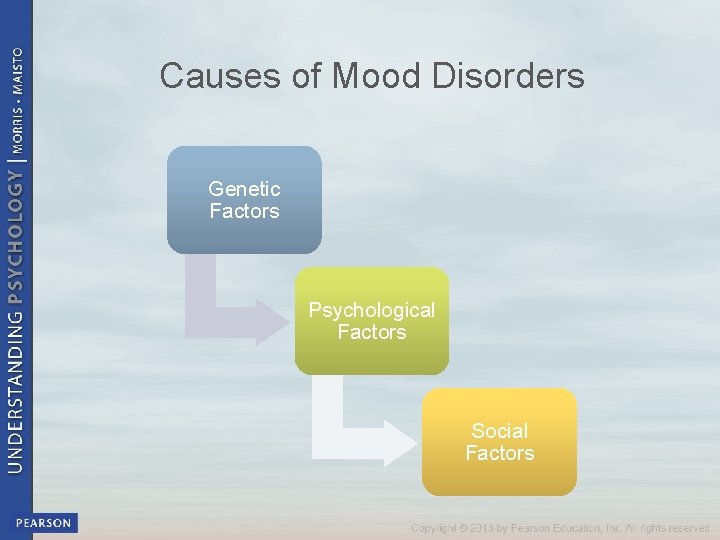
Causes of Mood Disorders Genetic Factors Psychological Factors Social Factors
ANXIETY DISORDERS LEARNING OBJECTIVES Explain how anxiety disorders differ from ordinary anxiety. Briefly describe the key features of phobias, panic disorders, generalized anxiety disorder, and obsessive-compulsive disorder. Describe the causes of anxiety disorders.
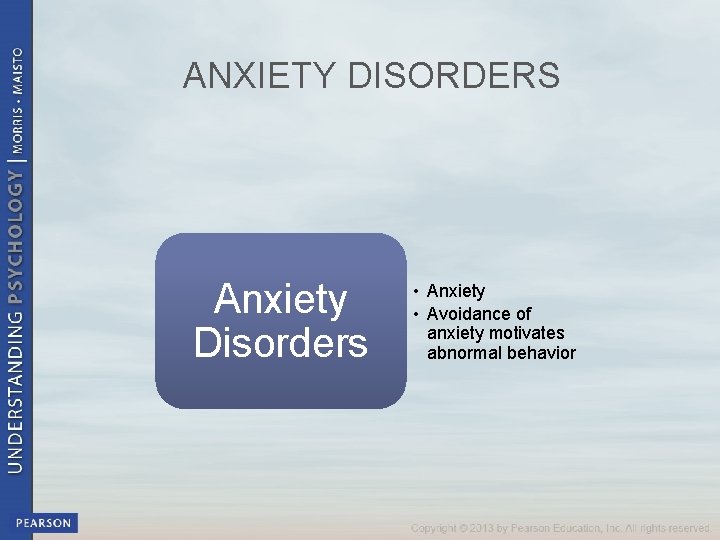
ANXIETY DISORDERS Anxiety Disorders • Anxiety • Avoidance of anxiety motivates abnormal behavior
ANXIETY DISORDERS Anxiety Disorders • Specific phobias • Panic disorders • Obsessivecompulsive disorders
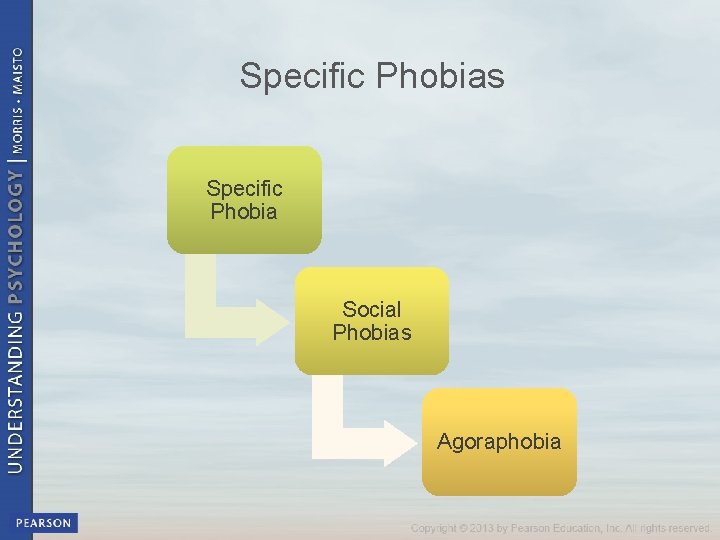
Specific Phobias Specific Phobia Social Phobias Agoraphobia
Panic Disorder Panic Attacks Panic Disorder
Anxiety-Related Disorders Body Dysmorphic Disorder Obsessive-Compulsive Disorder (OCD)
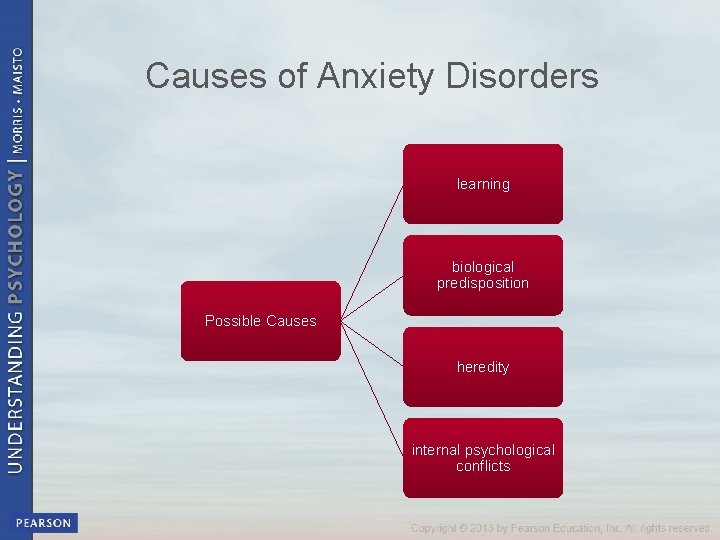
Causes of Anxiety Disorders learning biological predisposition Possible Causes heredity internal psychological conflicts
SOMATIC SYMPTOM AND RELATED DISORDERS LEARNING OBJECTIVE Distinguish between psychosomatic and somatoform disorders, somatization disorder, conversion disorders, hypochondriasis, and body dysmorphic disorder. Explain what is meant by the statement that “all physical ailments are to some extent psychosomatic”.
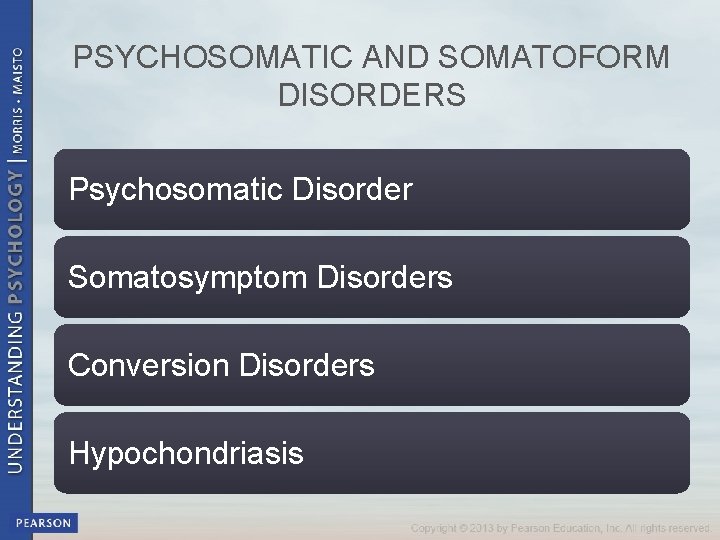
PSYCHOSOMATIC AND SOMATOFORM DISORDERS Psychosomatic Disorder Somatosymptom Disorders Conversion Disorders Hypochondriasis
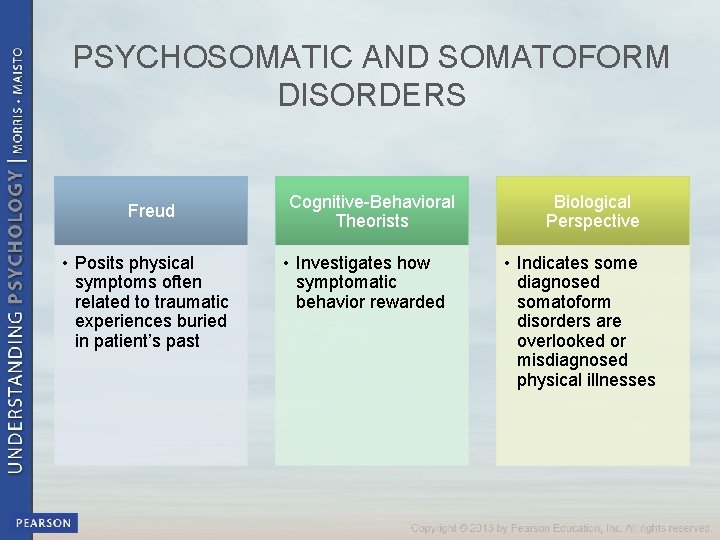
PSYCHOSOMATIC AND SOMATOFORM DISORDERS Freud • Posits physical symptoms often related to traumatic experiences buried in patient’s past Cognitive-Behavioral Theorists • Investigates how symptomatic behavior rewarded Biological Perspective • Indicates some diagnosed somatoform disorders are overlooked or misdiagnosed physical illnesses
DISSOCIATIVE DISORDERS LEARNING OBJECTIVE Explain what is meant by dissociation. Briefly describe the key features of dissociative amnesia, dissociative fugue, dissociative identity disorder, and depersonalization disorder.
DISSOCIATIVE DISORDERS Dissociative Disorders • group of disorders • some aspect of personality seems separated from rest
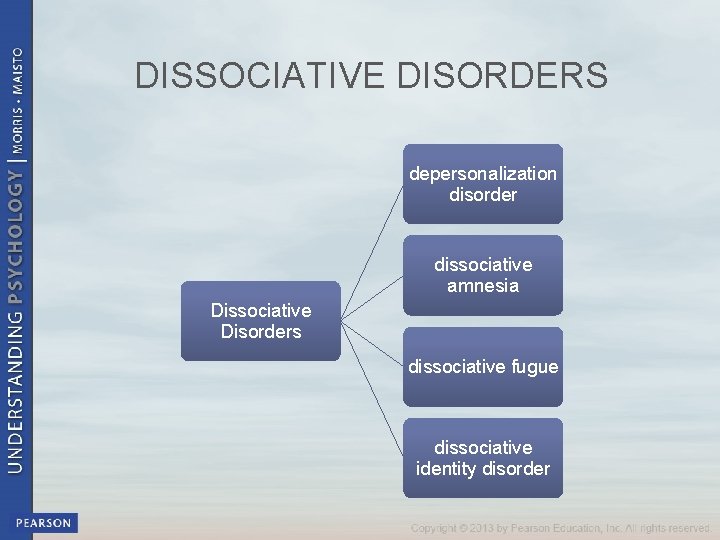
DISSOCIATIVE DISORDERS depersonalization disorder dissociative amnesia Dissociative Disorders dissociative fugue dissociative identity disorder
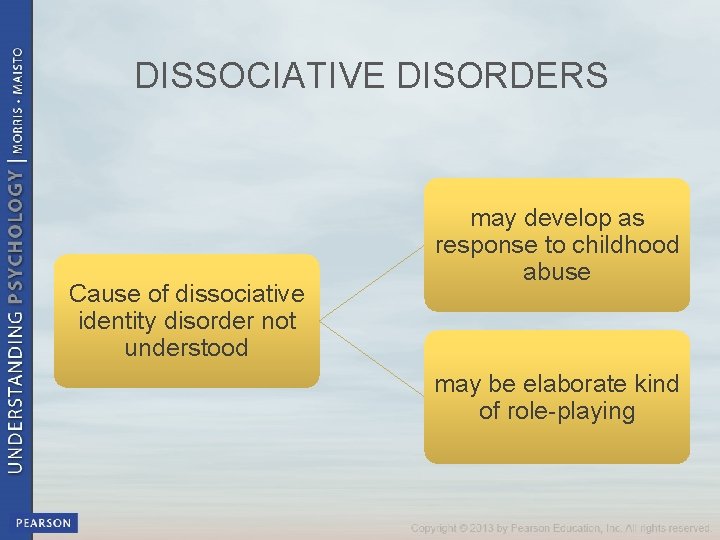
DISSOCIATIVE DISORDERS Cause of dissociative identity disorder not understood may develop as response to childhood abuse may be elaborate kind of role-playing
DISSOCIATIVE DISORDERS Biological data show for some patients various personalities have physiological differences • • • different blood pressure readings different responses to medication different allergies different vision problems different handedness different brain-wave patterns
SEXUAL DISORDERS LEARNING OBJECTIVE Identify the three main types of sexual disorders that are recognized in the DSM-5.
SEXUAL DISORDERS Sexual Dysfunction • Loss or impairment of ordinary physical responses of sexual function • Erectile dysfunction (ED) • Female sexual interest/arousal disorder • Sexual desire disorders • Orgasmic disorders
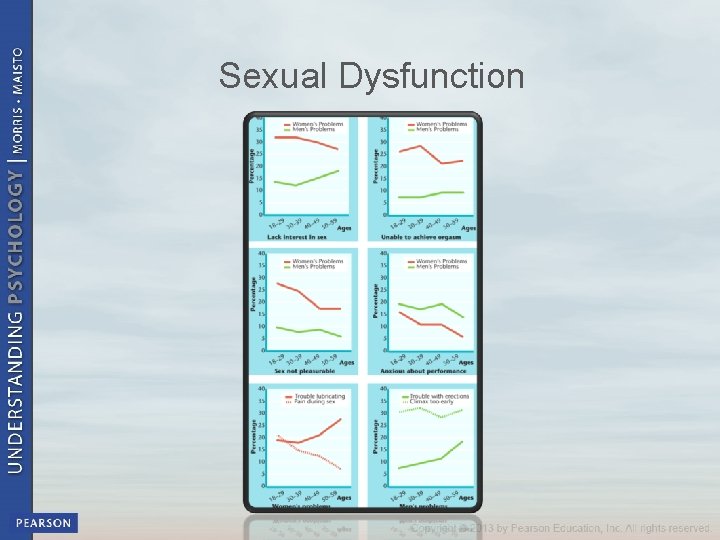
Sexual Dysfunction
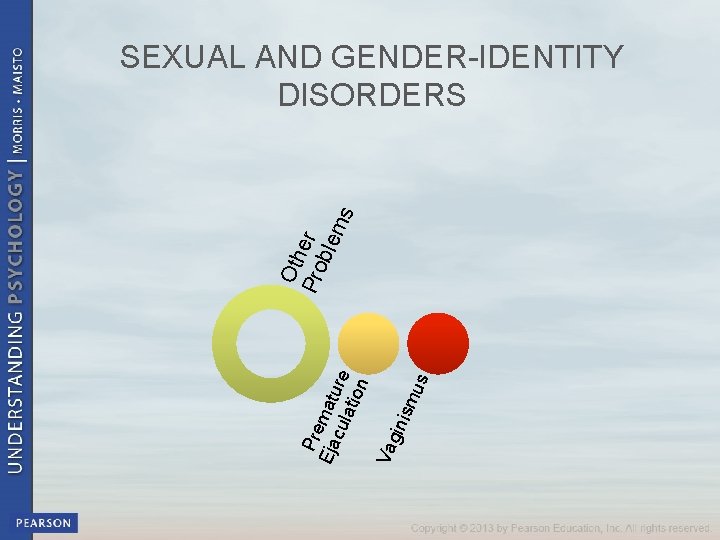
Pre Eja matu cul atio re n Va gin ism us Oth Pro er ble ms SEXUAL AND GENDER-IDENTITY DISORDERS
PARAPHILIC DISORDERS Paraphilias • Use of unconventional sex objects or situations to obtain sexual arousal
PARAPHILIC DISORDERS Paraphilias • • Fetishism Voyeurism Exhibitionism Frotteurism Transvestic Fetishism Sexual Sadism Sexual Masochism
PARAPHILIC DISORDERS One of the most serious paraphilias Pedophilia Defined as engaging in sexual activity with a child generally under age of 13 Perpetrators mostly men, under 40, and familiar with their victims
PARAPHILIC DISORDERS Common explanations for pedophilia • • • Poor adjustment to adult sexual role Children as sexual objects in response to stress Unstable social adjustment History of sexual frustration and failure, Low self-esteem Inability to cope with negative emotions
GENDER DYSPHORIA Desire to become, or insistence that one really is, member of other biological sex
PERSONALITY DISORDERS LEARNING OBJECTIVE Identify the distinguishing characteristic of personality disorders. Briefly describe schizoid, paranoid, dependent, avoidant, narcissistic, borderline, and anti-social personality disorders.
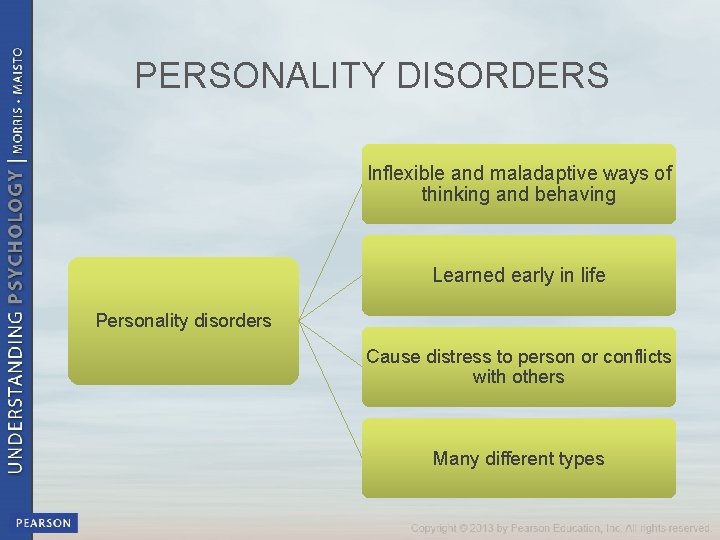
PERSONALITY DISORDERS Inflexible and maladaptive ways of thinking and behaving Learned early in life Personality disorders Cause distress to person or conflicts with others Many different types
PERSONALITY DISORDERS Types • • • schizoid personality disorder paranoid personality disorder avoidant personality disorder narcissistic personality disorder borderline personality disorder antisocial personality disorder
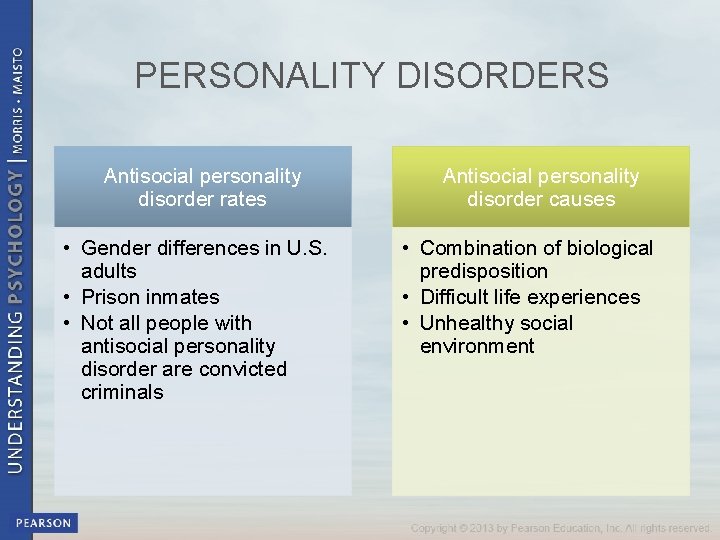
PERSONALITY DISORDERS Antisocial personality disorder rates • Gender differences in U. S. adults • Prison inmates • Not all people with antisocial personality disorder are convicted criminals Antisocial personality disorder causes • Combination of biological predisposition • Difficult life experiences • Unhealthy social environment
SCHIZOPHRENIC SPECTRUM LEARNING OBJECTIVES DISORDERS Describe the common feature in all cases of schizophrenia. Explain the difference between hallucinations and delusions. Briefly describe the key features of disorganized, catatonic, paranoid, and undifferentiated schizophrenia. Describe the causes of schizophrenic disorders.
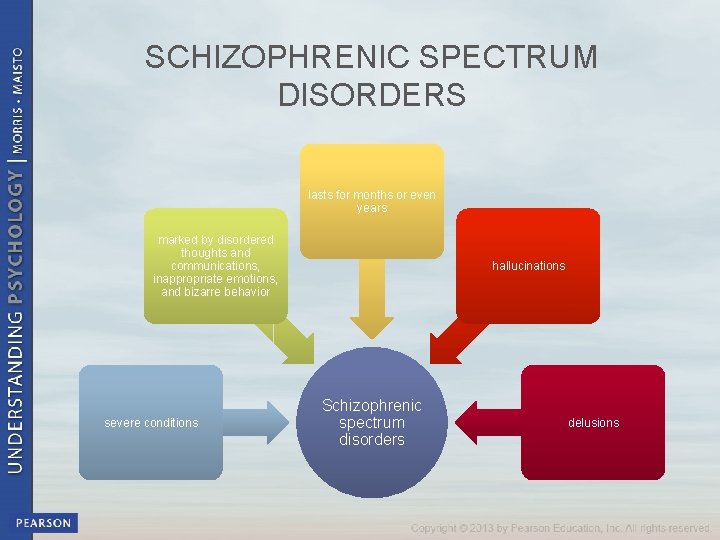
SCHIZOPHRENIC SPECTRUM DISORDERS lasts for months or even years marked by disordered thoughts and communications, inappropriate emotions, and bizarre behavior severe conditions hallucinations Schizophrenic spectrum disorders delusions
Causes of Schizophrenia Research suggests possible causes: • genetic component • faulty regulation of neurotransmitters dopamine and glutamate in CNS • pathology in various structures of brain • form of early prenatal infection or disturbance
NEURODEVELOPMENTAL DISORDERS LEARNING OBJECTIVE Describe the key features of attention deficit hyperactivity disorder and autistic spectrum disorder including the difference between autism and Asperger syndrome.
NEURODEVELOPMENTAL DISORDERS Children may suffer from conditions already discussed in this chapter. But other disorders are either characteristic of children or are first evident in childhood.
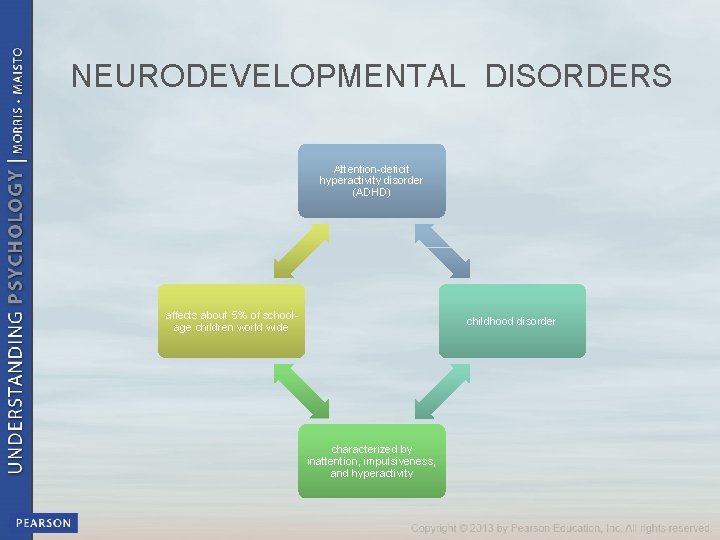
NEURODEVELOPMENTAL DISORDERS Attention-deficit hyperactivity disorder (ADHD) affects about 5% of schoolage children world wide childhood disorder characterized by inattention, impulsiveness, and hyperactivity
NEURODEVELOPMENTAL DISORDERS Possible causes of ADHD • altered brain functioning involving the frontal lobe Prevention • family interaction and other social experiences may be more important in preventing than in causing ADHD Treatment • parent management skills training • psychostimulant
NEURODEVELOPMENTAL DISORDERS Autistic disorder • different and profoundly serious disorder • usually evident in first few years of life • characterized by lack of social instincts and strange motor behavior • failure to form normal attachments to parents • typically lasts into adulthood
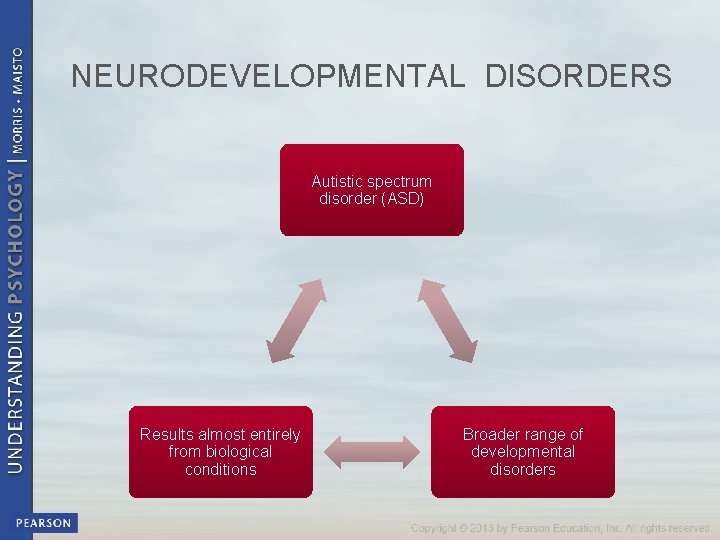
NEURODEVELOPMENTAL DISORDERS Autistic spectrum disorder (ASD) Results almost entirely from biological conditions Broader range of developmental disorders
GENDER AND CULTURAL DIFFERENCES IN PSYCHOLOGICAL DISORDERS LEARNING OBJECTIVE Describe the differences between men and women in psychological disorders including the prevalence of disorders and the kinds of disorders they are likely to experience. Explain why these differences exist. Explain why “it is increasingly important for mental health professionals to be aware of cultural differences” in psychological disorders.
Gender Differences Gender differences • treatment • disorders with and without strong biological component • marital status • rate of depression
Cultural Differences International cultural variability • Ataque de nervios • Taijin kyofusho • Thai children internalizing problems versus U. S. children externalizing problems
- Slides: 71