
Psychological Development from Infant to Adult 1915 In

- Slides: 31
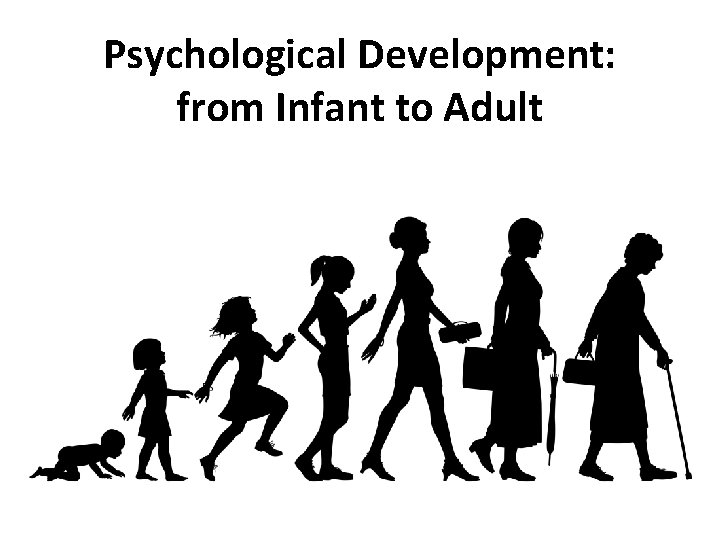
Psychological Development: from Infant to Adult
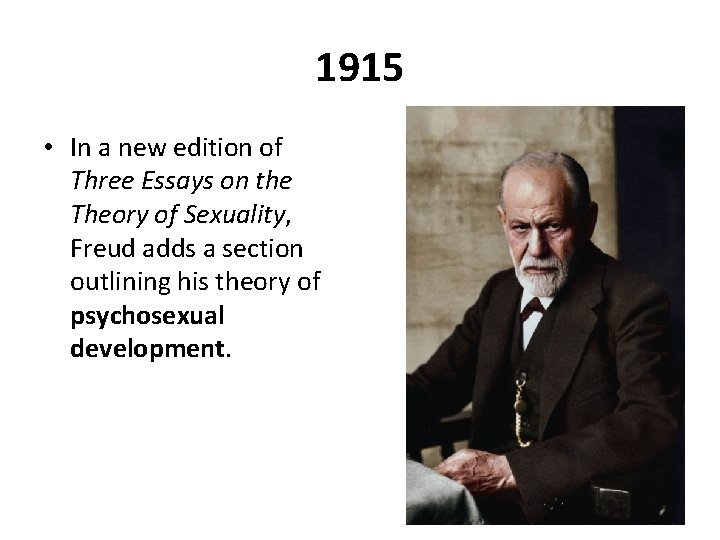
1915 • In a new edition of Three Essays on the Theory of Sexuality, Freud adds a section outlining his theory of psychosexual development.
What is Psychosexual Development? • Freud believed that personality developed through a series of childhood stages in which the pleasure-seeking energies of the id become focused on certain erogenous areas. • Psychoanalytic theory suggested that personality is mostly established by the age of six.
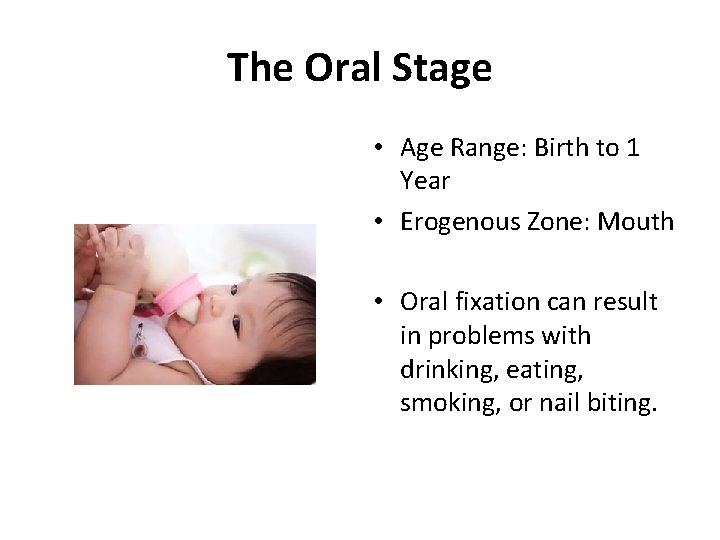
The Oral Stage • Age Range: Birth to 1 Year • Erogenous Zone: Mouth • Oral fixation can result in problems with drinking, eating, smoking, or nail biting.
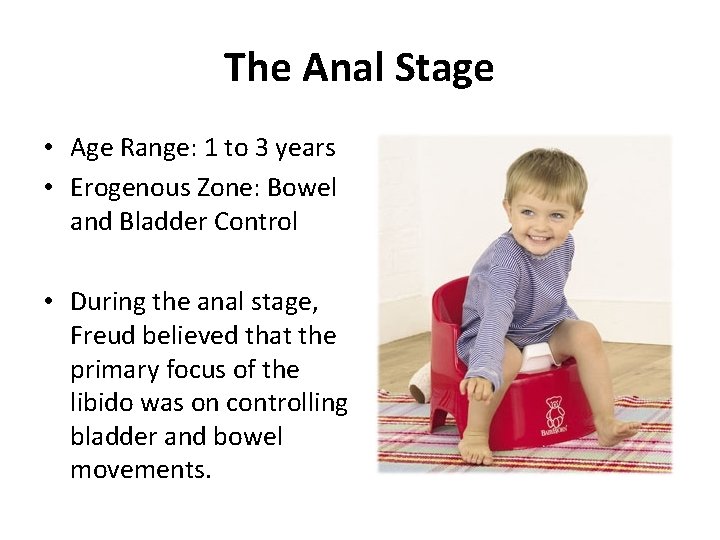
The Anal Stage • Age Range: 1 to 3 years • Erogenous Zone: Bowel and Bladder Control • During the anal stage, Freud believed that the primary focus of the libido was on controlling bladder and bowel movements.
The Phallic Stage • Age Range: 3 to 6 Years • Erogenous Zone: Genitals • At this age, children also begin to discover the differences between males and females.
The Latent Period • Age Range: 6 to Puberty • Erogenous Zone: Sexual Feelings Are Inactive • This stage is important in the development of social and communication skills and self-confidence.
The Genital Stage • Age Range: Puberty to Death • Erogenous Zone: Maturing Sexual Interests • The goal of this stage is to establish a balance between the various life areas.
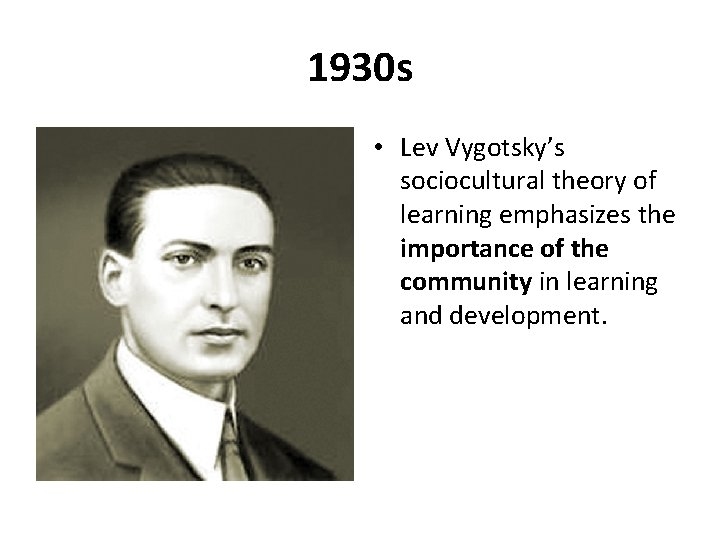
1930 s • Lev Vygotsky’s sociocultural theory of learning emphasizes the importance of the community in learning and development.
Sociocultural Approach • Vygotsky believed that we develop understanding and expertise primarily through what might be described as apprenticeship. • He also distinguished between two levels of cognitive development: the child’s actual level of development and the child’s potential level of development.
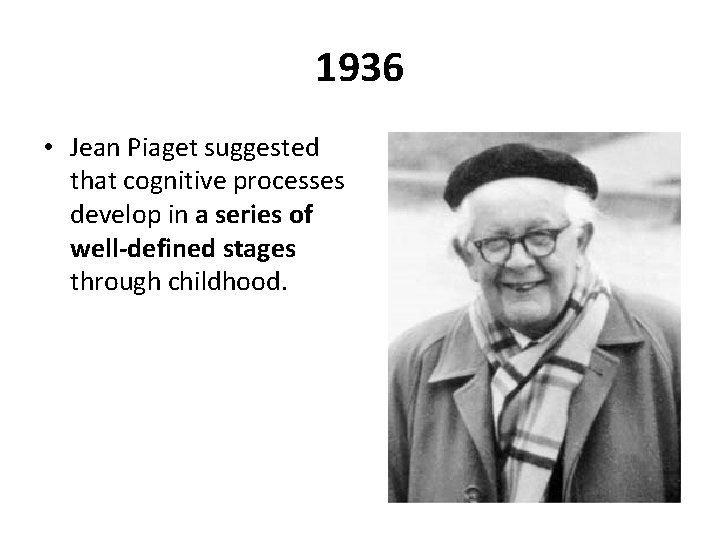
1936 • Jean Piaget suggested that cognitive processes develop in a series of well-defined stages through childhood.
Piaget’s stages of Cognitive Development • • The Sensorimotor stage The Preoperational stage The Concrete operational stage The Formal operational stage
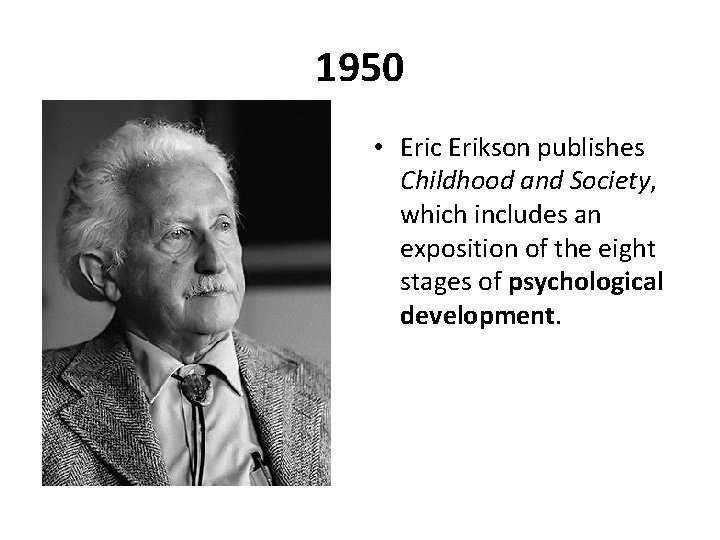
1950 • Eric Erikson publishes Childhood and Society, which includes an exposition of the eight stages of psychological development.
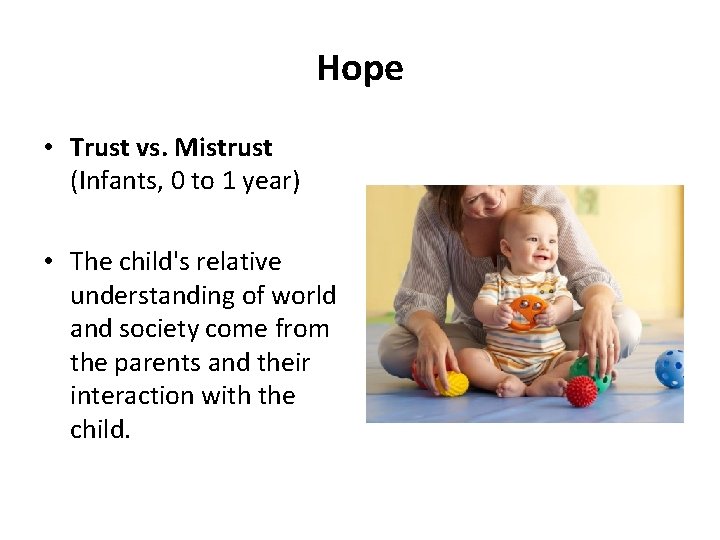
Hope • Trust vs. Mistrust (Infants, 0 to 1 year) • The child's relative understanding of world and society come from the parents and their interaction with the child.
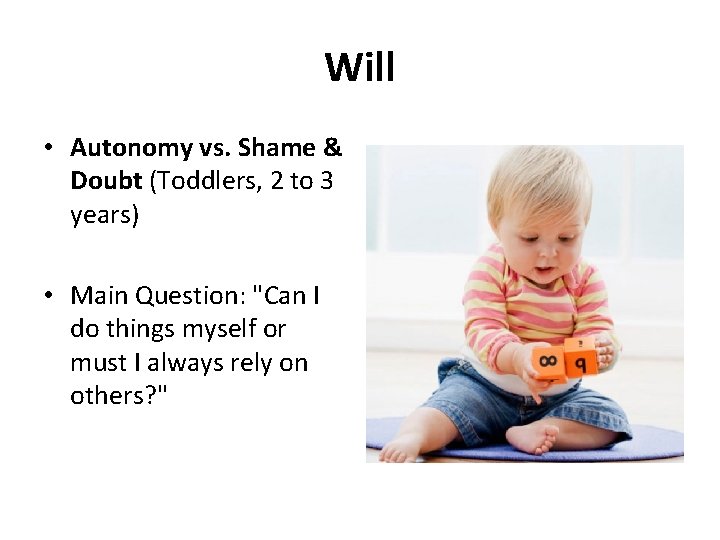
Will • Autonomy vs. Shame & Doubt (Toddlers, 2 to 3 years) • Main Question: "Can I do things myself or must I always rely on others? "
Purpose • Initiative vs. Guilt (Preschool, 4 to 6 years) • Main Question: "Am I good or am I bad? " • During this stage, the child learns to take initiative and prepare for leadership and goal achievement roles.
Competence • Industry vs. Inferiority (Childhood, 7 to 12 years) • Main Question: "Am I successful or worthless? " • Children at this age are becoming more aware of themselves as individuals.
Fidelity • Identity vs. Role Confusion (Adolescents, 13 to 19 years) • Main Question: "Who am I and where am I going? "
Love • Intimacy vs. Isolation (Young Adults, 20 to 34 years) • Main Question: "Am I loved and wanted? " or "Shall I share my life with someone or live alone? "
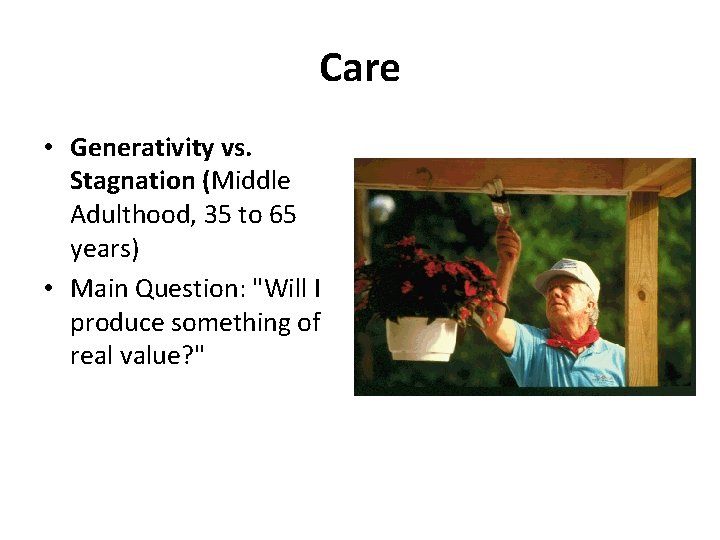
Care • Generativity vs. Stagnation (Middle Adulthood, 35 to 65 years) • Main Question: "Will I produce something of real value? "
Wisdom • Ego Integrity vs. Despair • Main Question: "Have I lived a full life? "
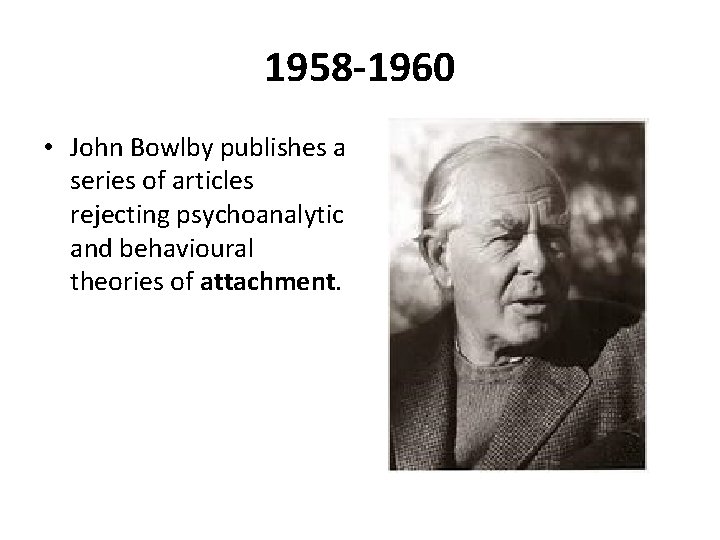
1958 -1960 • John Bowlby publishes a series of articles rejecting psychoanalytic and behavioural theories of attachment.
Attachment … • … is used to describe an infant’s tendency to seek closeness to particular people and to feel more secure in their presence.
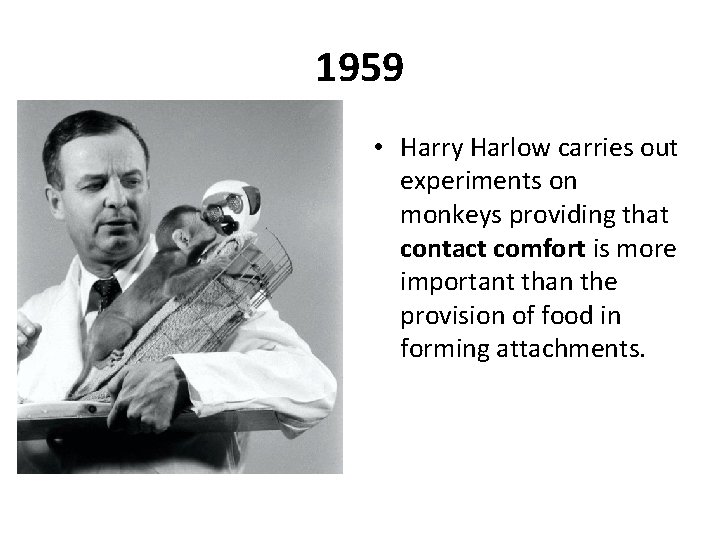
1959 • Harry Harlow carries out experiments on monkeys providing that contact comfort is more important than the provision of food in forming attachments.
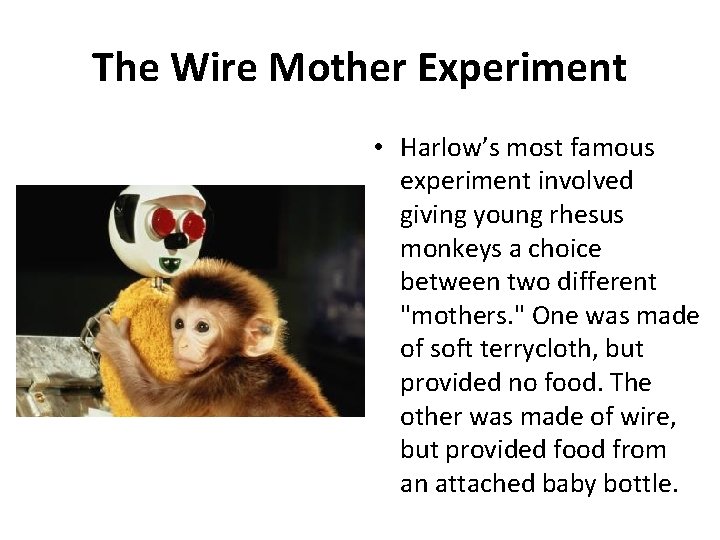
The Wire Mother Experiment • Harlow’s most famous experiment involved giving young rhesus monkeys a choice between two different "mothers. " One was made of soft terrycloth, but provided no food. The other was made of wire, but provided food from an attached baby bottle.
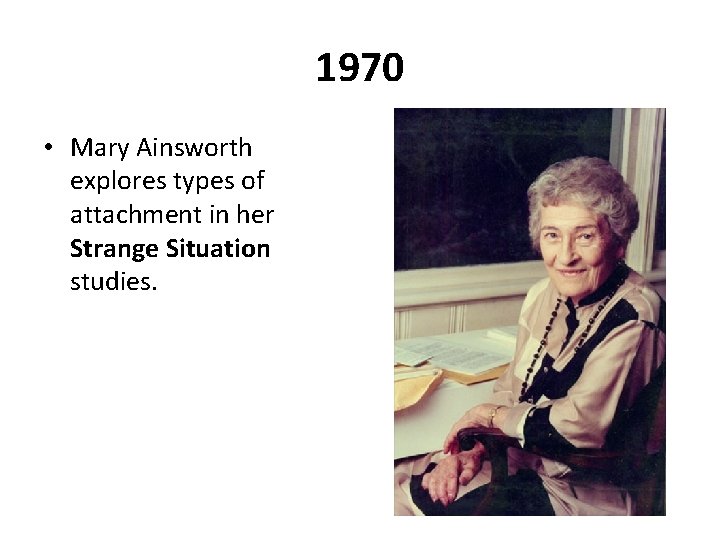
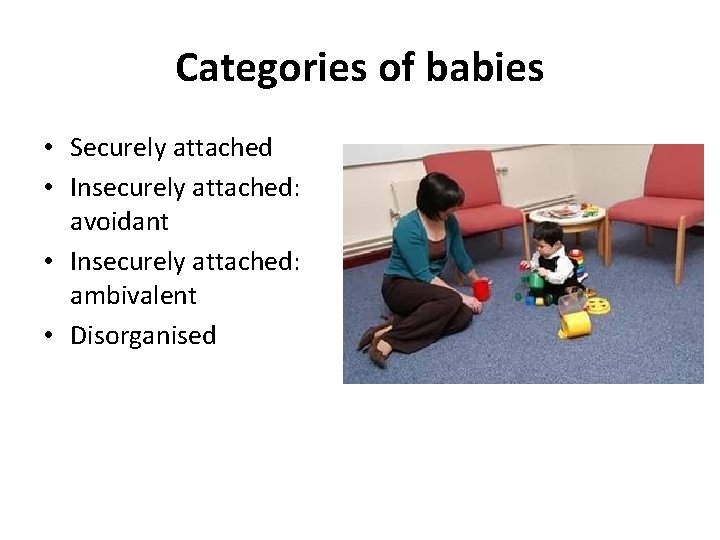
1970 • Mary Ainsworth explores types of attachment in her Strange Situation studies.
Categories of babies • Securely attached • Insecurely attached: avoidant • Insecurely attached: ambivalent • Disorganised
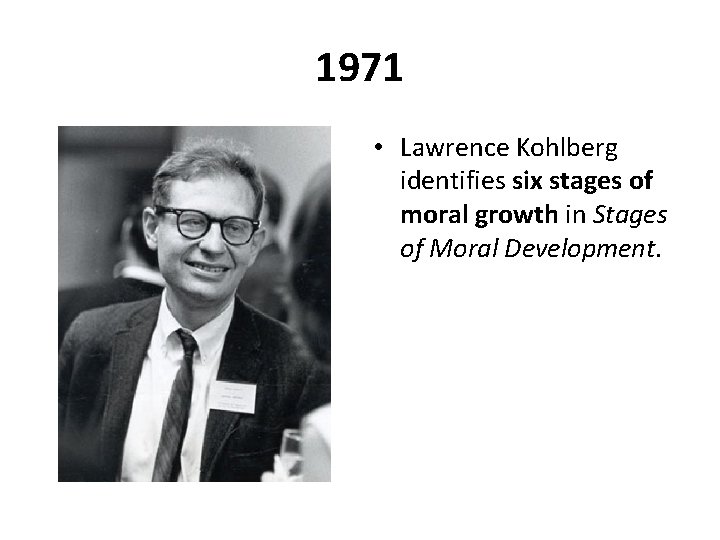
1971 • Lawrence Kohlberg identifies six stages of moral growth in Stages of Moral Development.
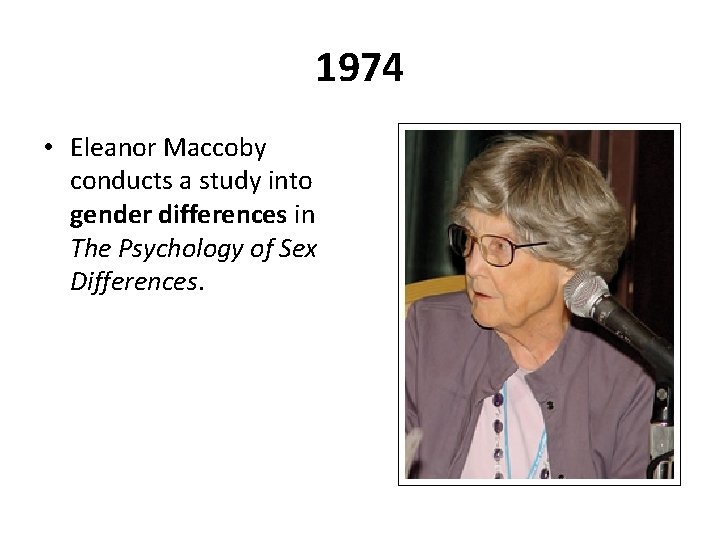
1974 • Eleanor Maccoby conducts a study into gender differences in The Psychology of Sex Differences.
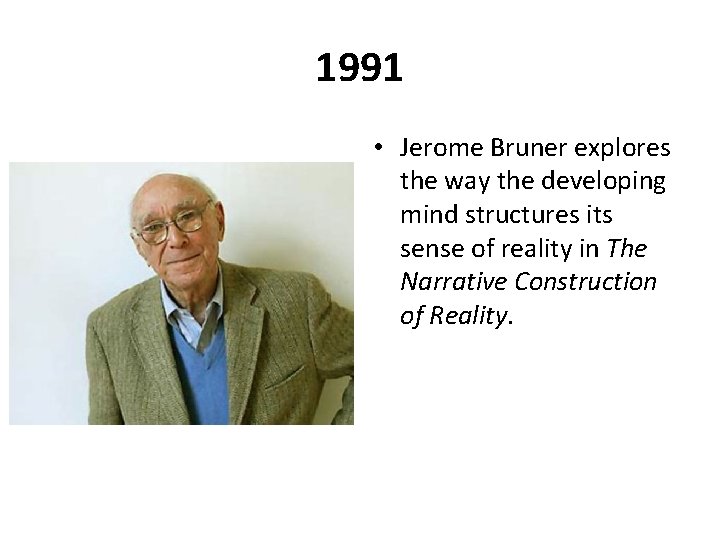
1991 • Jerome Bruner explores the way the developing mind structures its sense of reality in The Narrative Construction of Reality.
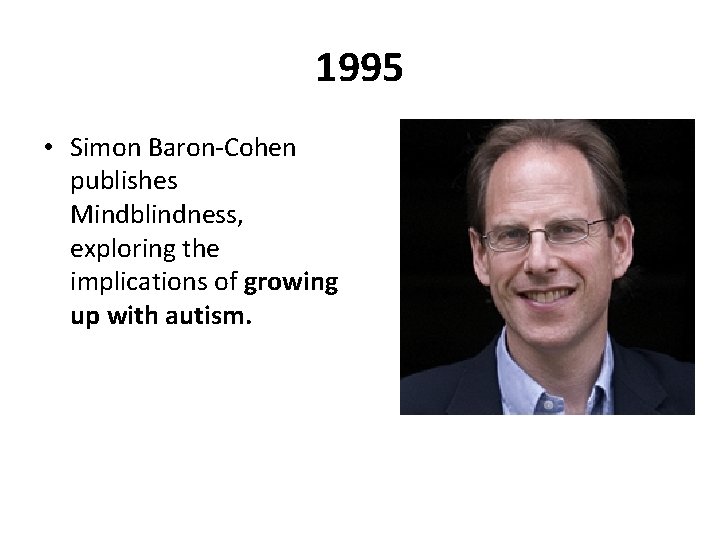
1995 • Simon Baron-Cohen publishes Mindblindness, exploring the implications of growing up with autism.