
PSYCHOLOGICAL CONSEQUENCES OF ABI Alexandra Hiles Aims Psychoeducation

PSYCHOLOGICAL CONSEQUENCES OF ABI Alexandra Hiles
Aims Psycho-education Provide outline of the process of ABI assessment Discuss common psychological and cognitive consequences of ABI Provide overview of some case studies to demonstrate functional impact
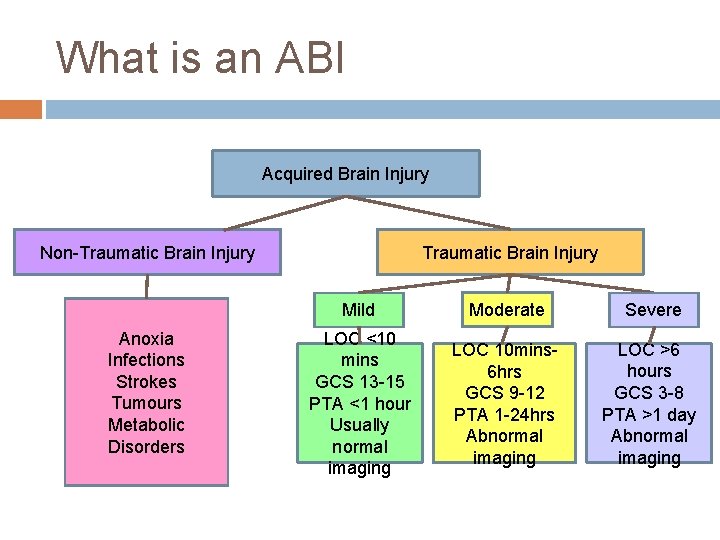
What is an ABI Acquired Brain Injury Non-Traumatic Brain Injury Anoxia Infections Strokes Tumours Metabolic Disorders Traumatic Brain Injury Mild Moderate Severe LOC <10 mins GCS 13 -15 PTA <1 hour Usually normal imaging LOC 10 mins 6 hrs GCS 9 -12 PTA 1 -24 hrs Abnormal imaging LOC >6 hours GCS 3 -8 PTA >1 day Abnormal imaging
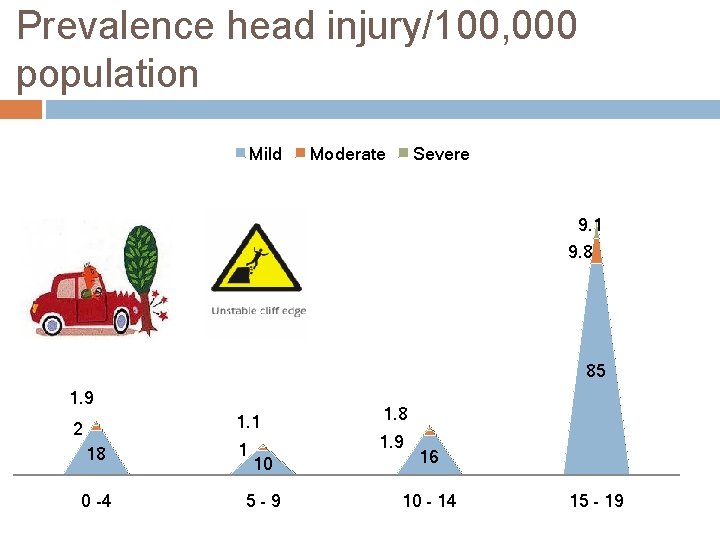
Prevalence head injury/100, 000 population Mild Moderate Severe 9. 1 9. 8 85 1. 9 1. 1 2 18 0 -4 1 1. 8 1. 9 10 16 5 -9 10 - 14 15 - 19
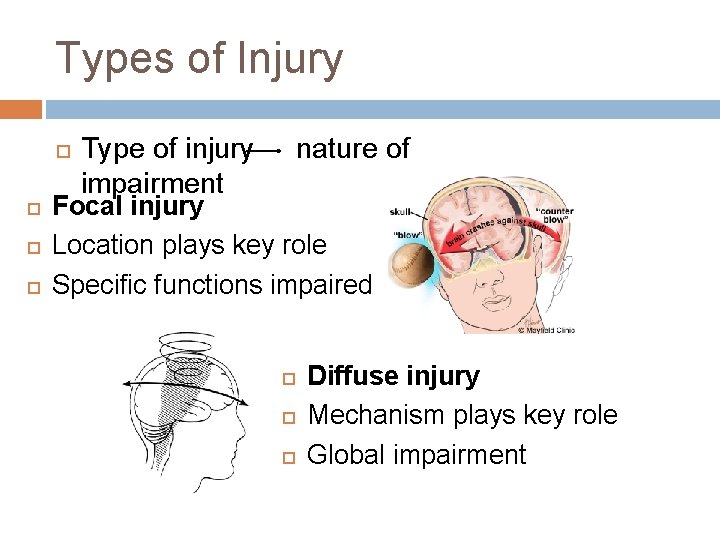
Types of Injury Type of injury impairment nature of Focal injury Location plays key role Specific functions impaired Diffuse injury Mechanism plays key role Global impairment
What do we know about the brain? Neuropsychology helps us to understand what each part of the brain does Helps us to manage care and contribute to MDT discharge meetings Helps us predict what functions are likely to be damaged Helps to plan rehabilitation
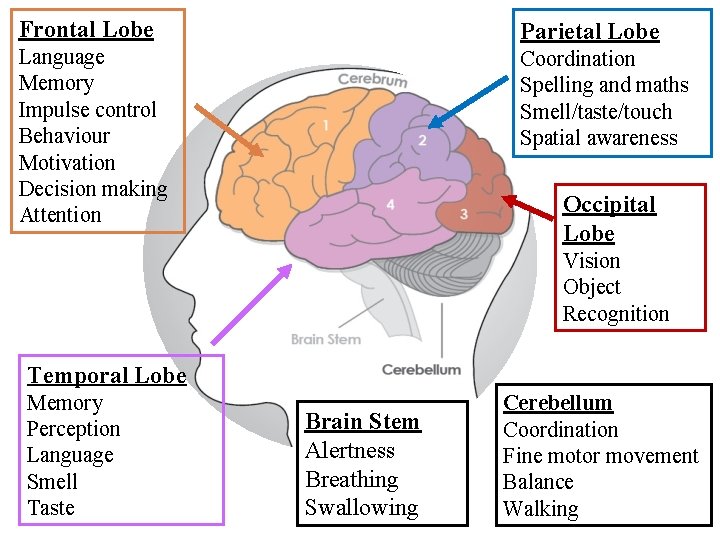
Frontal Lobe Parietal Lobe Language Memory Impulse control Behaviour Motivation Decision making Attention Coordination Spelling and maths Smell/taste/touch Spatial awareness Occipital Lobe Vision Object Recognition Temporal Lobe Memory Perception Language Smell Taste Brain Stem Alertness Breathing Swallowing Cerebellum Coordination Fine motor movement Balance Walking
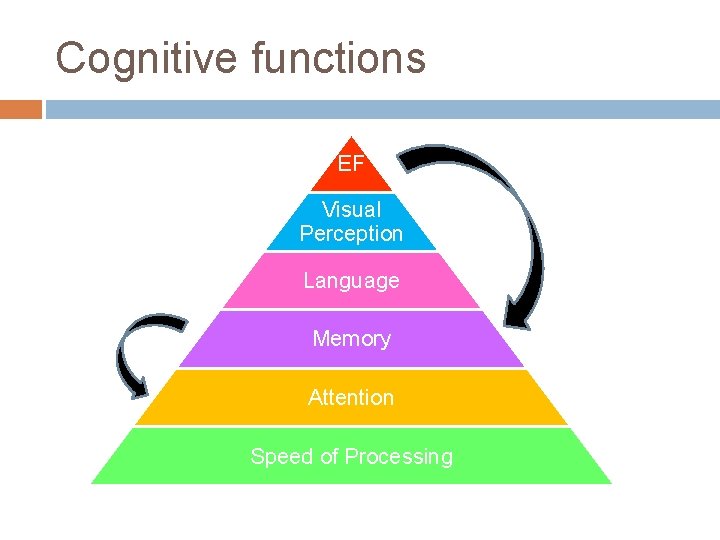
Cognitive functions EF Visual Perception Language Memory Attention Speed of Processing
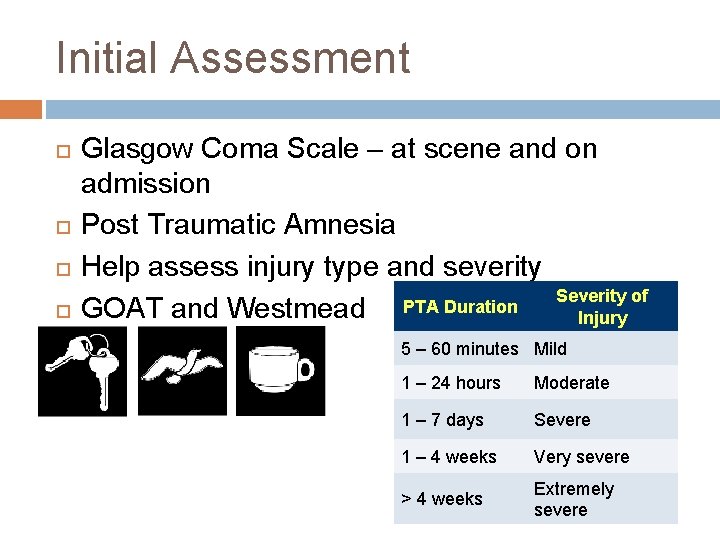
Initial Assessment Glasgow Coma Scale – at scene and on admission Post Traumatic Amnesia Help assess injury type and severity Severity of PTA Duration GOAT and Westmead Injury 5 – 60 minutes Mild 1 – 24 hours Moderate 1 – 7 days Severe 1 – 4 weeks Very severe > 4 weeks Extremely severe
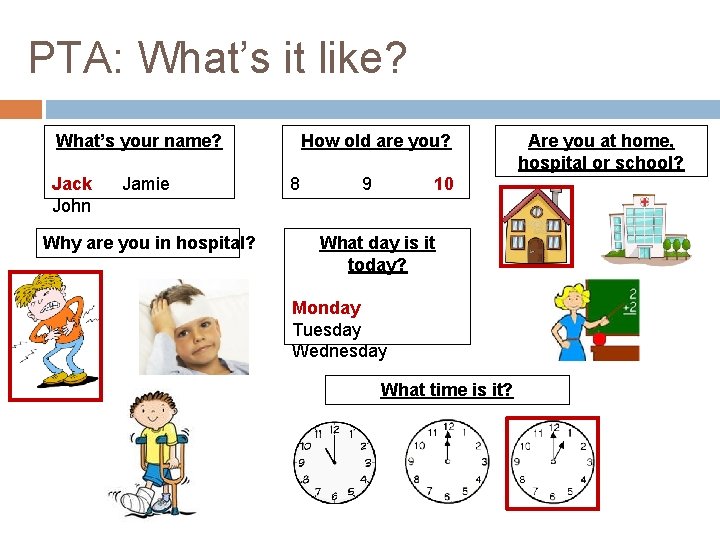
PTA: What’s it like? What’s your name? Jack John Jamie Why are you in hospital? How old are you? 8 9 10 What day is it today? Monday Tuesday Wednesday What time is it? Are you at home, hospital or school?
Neuropsychological Assessment Further assessment Formal assessment of cognitive functioning Pre-morbid vs. current functioning Reports from school and/or family/carers Psychological assessment: Impact of the ABI on emotion, mood, behaviour and social functioning
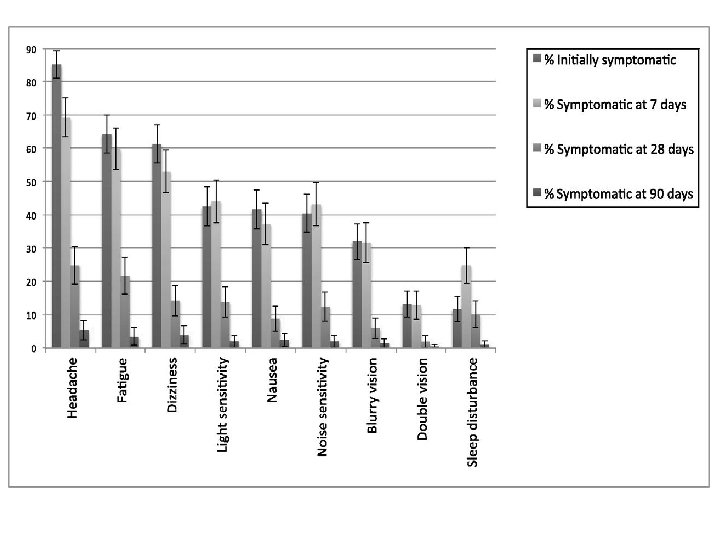
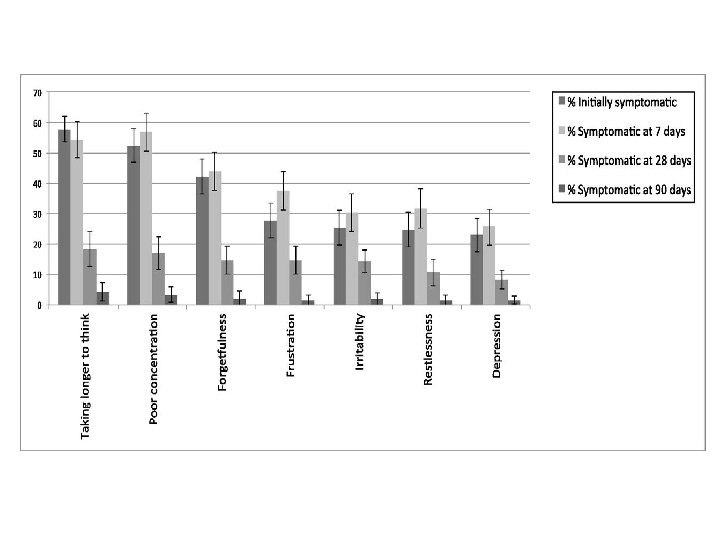
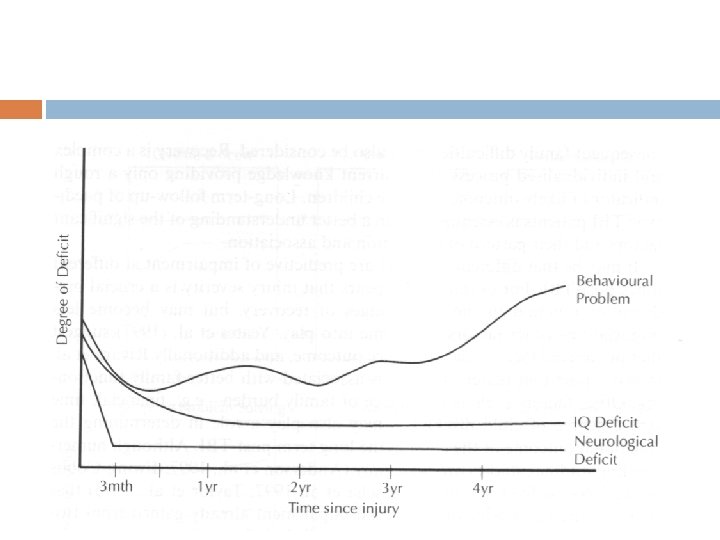
Neuropsychological consequences Most common consequences include: Memory difficulties Attention and concentration difficulties Language problems Behaviour difficulties
CASE STUDY 1: Jack Jack 9 year old boy DAI PTA assessment Formal Neuropsychology Assessment (Leiter R, NEPSY II, BPVS III) Motor impairment
Jack: Assessment results Significant Impairment in Verbal and Non Verbal IQ Significant Impairment in Attention Significant Impairment in Memory (BUT. . . low verbal IQ) Reports of significant impairment in Executive Functioning Psychosocial assessment – frustration
Jack: Rehab Intensive input from physiotherapy Intensive input from SALT Follow up Neuropsychology Assessment Social skills excellent so used this as tool My Story videos Statement gained for extra support Back in school and doing well socially Still cognitive impairments but coping well
CASE STUDY 2: Rosie Rosie 6 year old girl Fell out of a window onto concrete LOC at scene, GCS improved to 8 on admission CT showed R frontal fracture and L contra coup injury PTA testing – no ongoing concerns Formal Neuropsychology Assessment (WISC-IV, CMS, NEPSY II & BPVS III) Significant motor difficulties
Rosie: Assessment results Verbal and Non Verbal IQ within average range Memory within average range Poor Attention and impulsivity Reports of behaviour difficulties Psychosocial assessment – difficulty processing trauma. Feeling anxious (frontal injury).
Rosie: Rehab Physiotherapy to regain motor skills Input regarding behaviour management: coaching around empathic approach / psycho-education for parents regarding brain injury – behaviour relationship Attention considerations Imposing realistic time frames Behaviour charts – not able to internalise this info Regular breaks to promote concentration
Case Study 3 Peter 14 year old boy Left cerebral hemisphere bleed Loss of language and motor skills Fatigue Intensive physiotherapy, speech and language and wider MDT. Psycho-education to promote engagement Psychology – low self-esteem, low mood & sadness (loss)
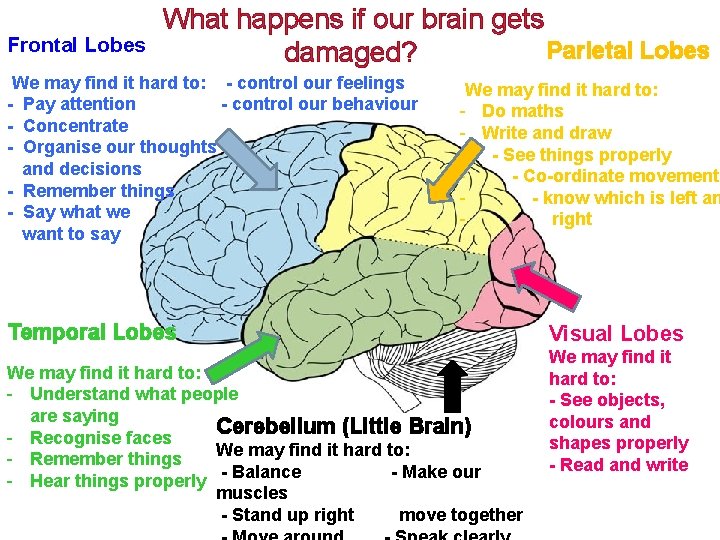
Frontal Lobes What happens if our brain gets Parietal Lobes damaged? We may find it hard to: - control our feelings - Pay attention - control our behaviour - Concentrate - Organise our thoughts and decisions - Remember things - Say what we want to say We may find it hard to: - Do maths - Write and draw - - See things properly - Co-ordinate movements - know which is left an right Temporal Lobes We may find it hard to: - Understand what people are saying Cerebellum (Little Brain) - Recognise faces We may find it hard to: - Remember things - Make our - Hear things properly - Balance muscles - Stand up right move together Visual Lobes We may find it hard to: - See objects, colours and shapes properly - Read and write
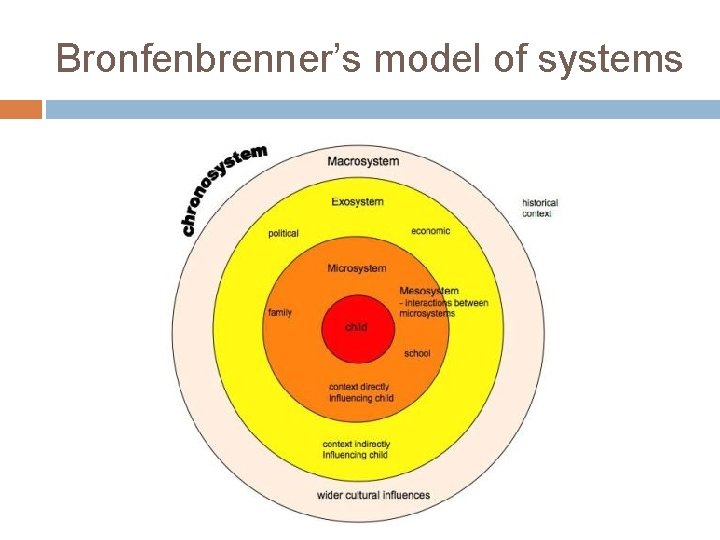
Bronfenbrenner’s model of systems
Summary Children who survive ABI face difficulties in cognitive, emotional and behavioural domains. . . resulting in changes at school, home, in the community and with friends The diversity of difficulties and presentation after ABI make them a difficult group to manage Typical behaviour techniques may not work as child does not always associate behaviour with consequence Adjustment Revision
- Slides: 26