
Psychoeducational Testing Psychoeducational testing uses psychological test to


- Slides: 14
Psychoeducational Testing Psychoeducational testing uses psychological test to analyze the mental processes underlying the child’s educational performance.
Psychoeducational Tests q. Woodcock – Johnson III (WJ III) q. Differential Ability Scale (DAS) v. Kaufman Assessment Battery for Children (K-ABC II)
Kaufman Assessment Battery for Children II (K-ABC II) Alan and Nadeen Kaufman n K-ABC 1983 n KABC II - 2004 n Was 2 ½ years to 12 ½, revised 3 - 18 n Core tests 25 to 55 minutes – Luria model n Supplementary 35 to 70 minutes - CHC n
Purpose of test Cognitive assessment n Psychological and clinical assessment n Psychoeducational evaluation of learning disabilities (LD and ADHD) n Educational planning and placement n Minority group assessment – culture fair n Preschool assessment n Neuropsychological assessment n Research n
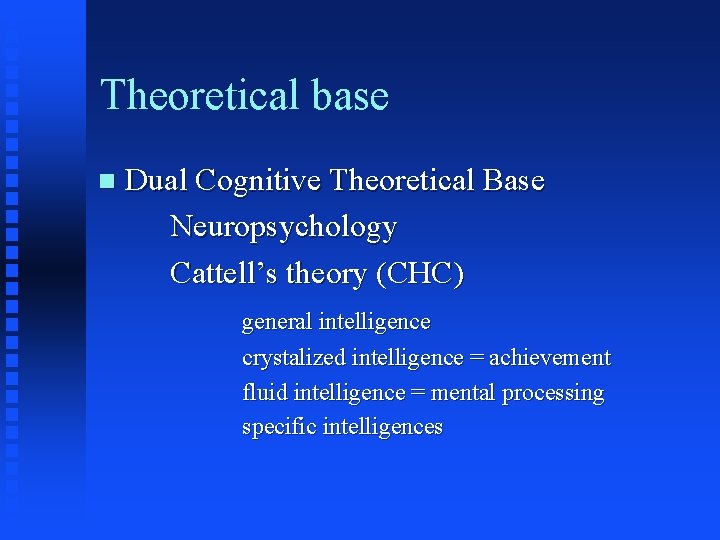
Theoretical base n Dual Cognitive Theoretical Base Neuropsychology Cattell’s theory (CHC) general intelligence crystalized intelligence = achievement fluid intelligence = mental processing specific intelligences
Mental processing n neuropsychological model Based on Luria’s work on cognitive functioning Sequential = serialist n Simultaneous = parallel (holist) n
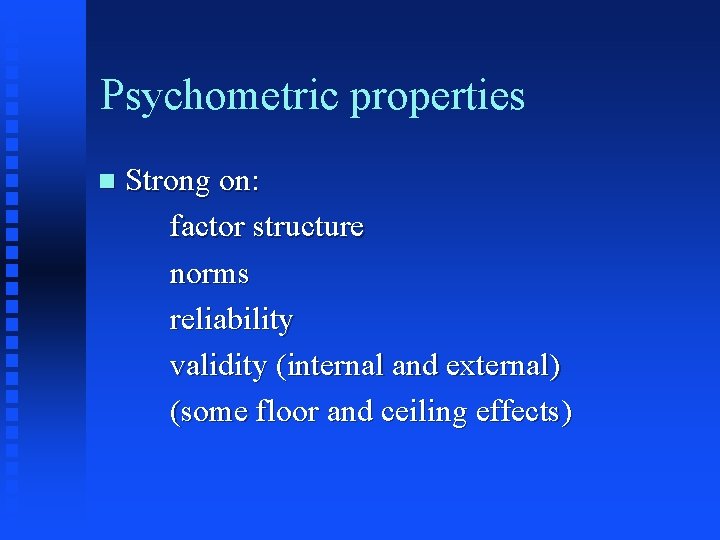
Psychometric properties n Strong on: factor structure norms reliability validity (internal and external) (some floor and ceiling effects)
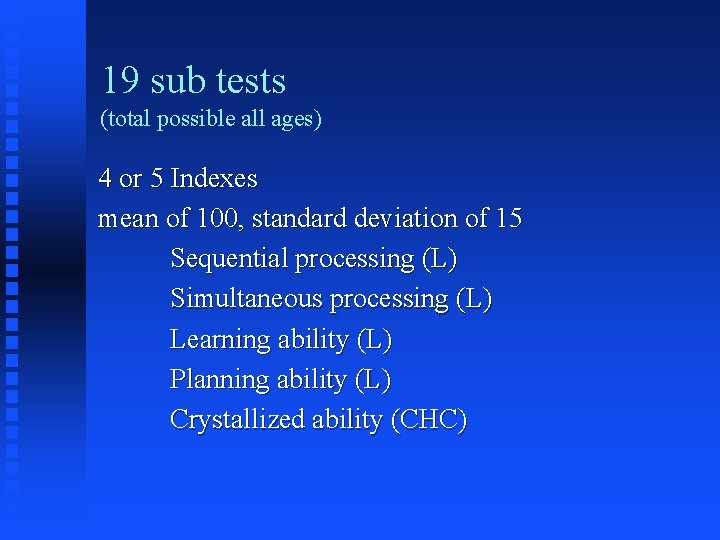
19 sub tests (total possible all ages) 4 or 5 Indexes mean of 100, standard deviation of 15 Sequential processing (L) Simultaneous processing (L) Learning ability (L) Planning ability (L) Crystallized ability (CHC)
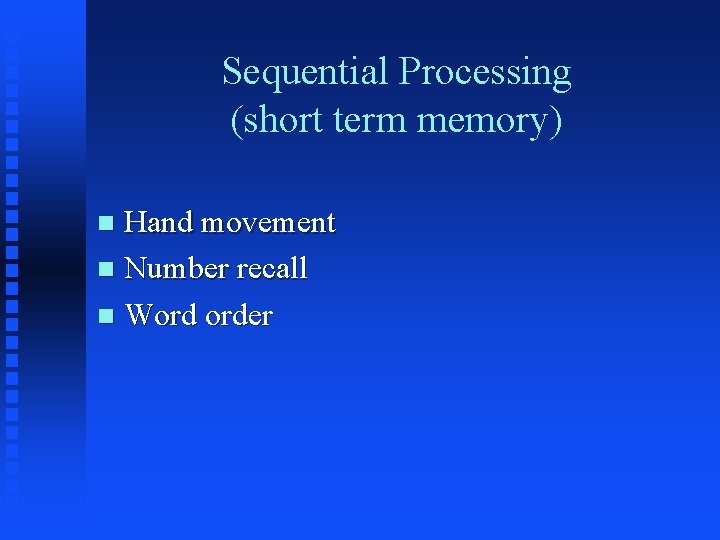
Sequential Processing (short term memory) Hand movement n Number recall n Word order n
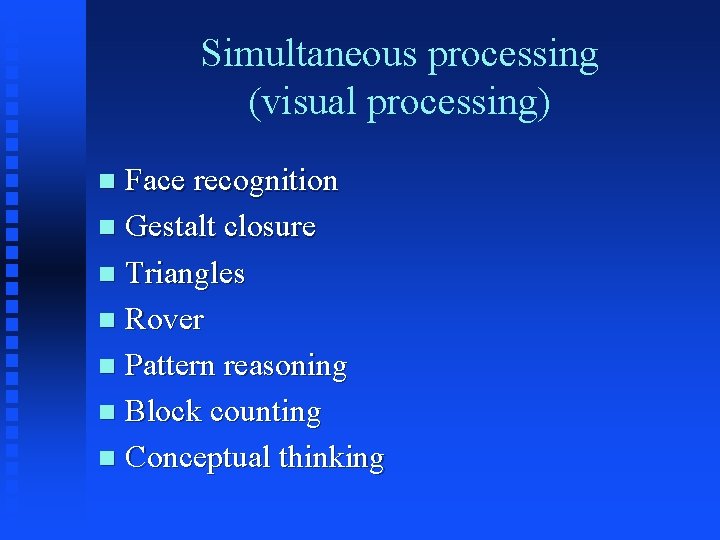
Simultaneous processing (visual processing) Face recognition n Gestalt closure n Triangles n Rover n Pattern reasoning n Block counting n Conceptual thinking n
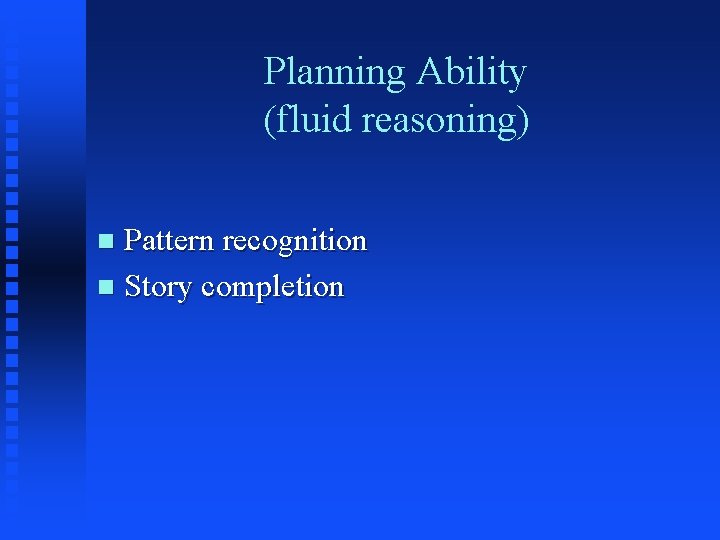
Planning Ability (fluid reasoning) Pattern recognition n Story completion n
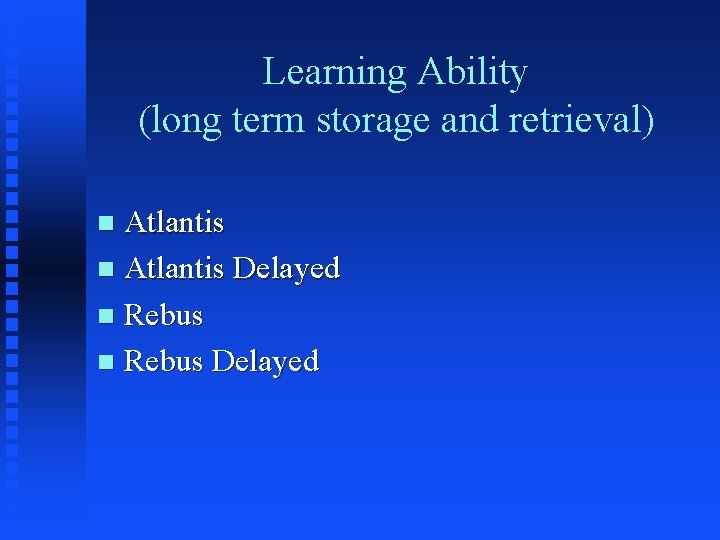
Learning Ability (long term storage and retrieval) Atlantis n Atlantis Delayed n Rebus Delayed n
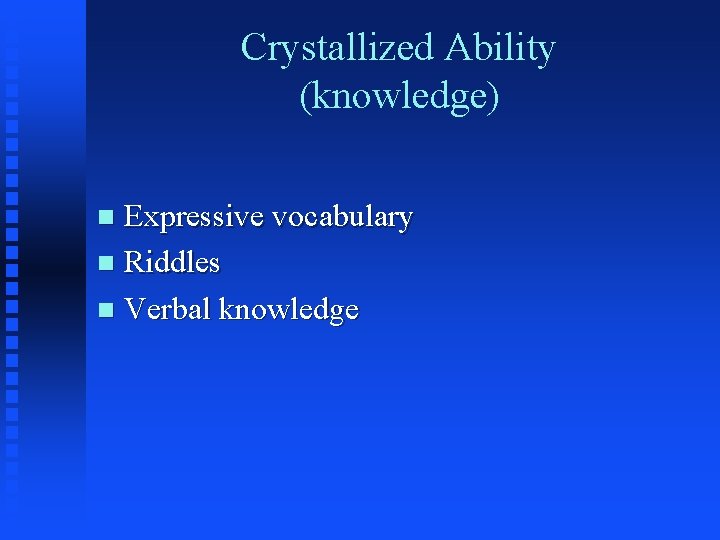
Crystallized Ability (knowledge) Expressive vocabulary n Riddles n Verbal knowledge n