
Psychiatric Assessment of Child and Adolescent Patient Dr
- Slides: 13
Psychiatric Assessment of Child and Adolescent Patient Dr. Oğuzhan Zahmacıoğlu 2015
• • • How do we relate to the child How do we relate to the family History taking Psychologic tests Follow up
Observation • Does he/she look at his/her age-gender • Does he/she behave approapriate to the agegender • Is he/she dressed appropriately to the agegender • How does the parents relate to the child • How does the child relat to parents • How does the child relate to us
Forming a positive relationship • Respectful manners • Trust forming • Language should be appropriate to culture, age, clear, not using medical jargon. • Warmth • Setting: appropriate for the family and child • Non-judgemental approach • Honesty
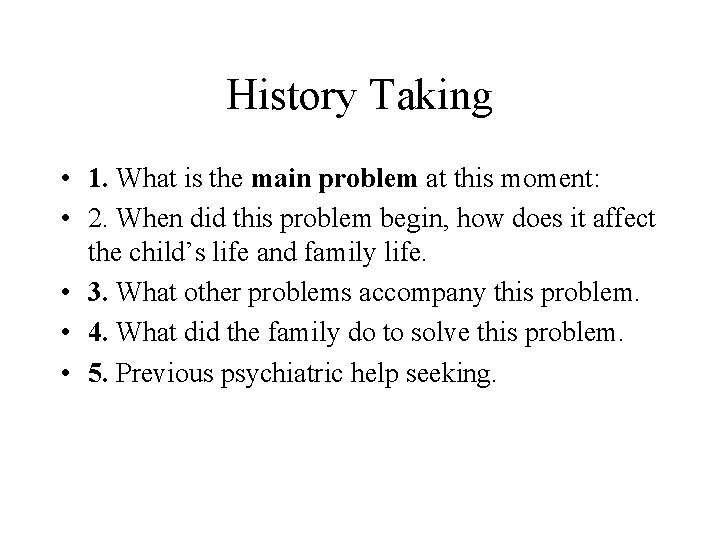
History Taking • 1. What is the main problem at this moment: • 2. When did this problem begin, how does it affect the child’s life and family life. • 3. What other problems accompany this problem. • 4. What did the family do to solve this problem. • 5. Previous psychiatric help seeking.
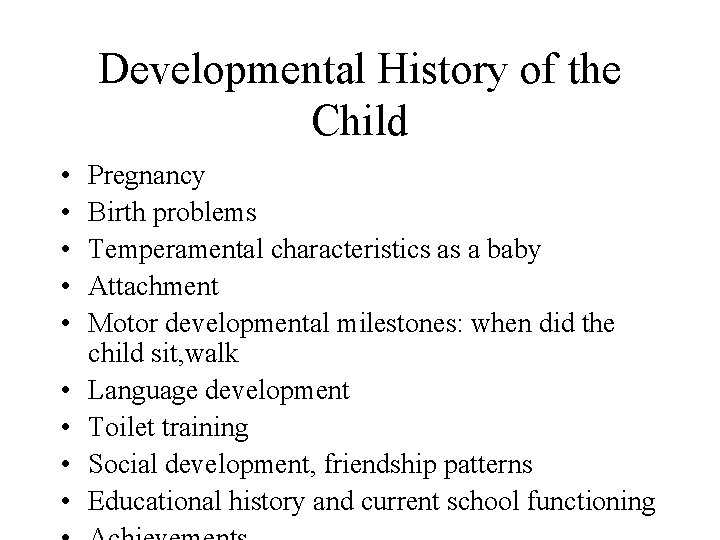
Developmental History of the Child • • • Pregnancy Birth problems Temperamental characteristics as a baby Attachment Motor developmental milestones: when did the child sit, walk Language development Toilet training Social development, friendship patterns Educational history and current school functioning
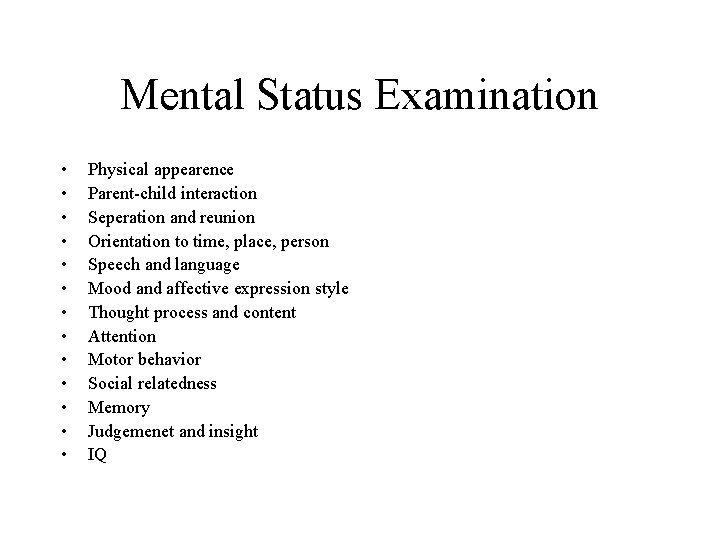
Mental Status Examination • • • • Physical appearence Parent-child interaction Seperation and reunion Orientation to time, place, person Speech and language Mood and affective expression style Thought process and content Attention Motor behavior Social relatedness Memory Judgemenet and insight IQ
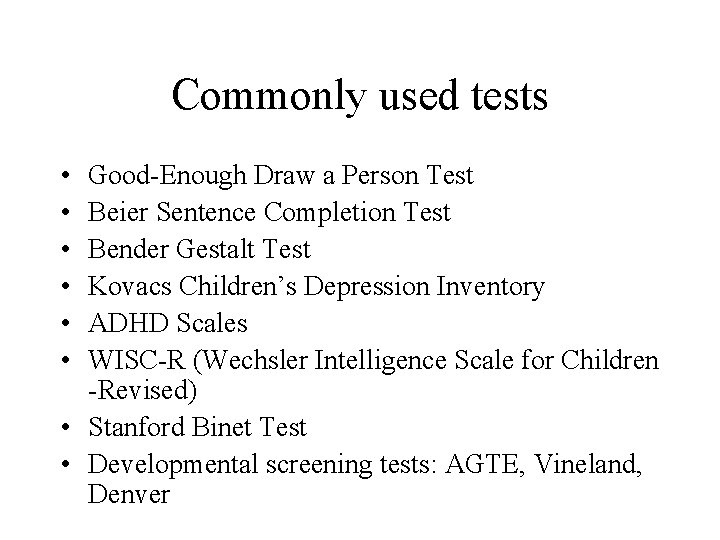
Commonly used tests • • • Good-Enough Draw a Person Test Beier Sentence Completion Test Bender Gestalt Test Kovacs Children’s Depression Inventory ADHD Scales WISC-R (Wechsler Intelligence Scale for Children -Revised) • Stanford Binet Test • Developmental screening tests: AGTE, Vineland, Denver
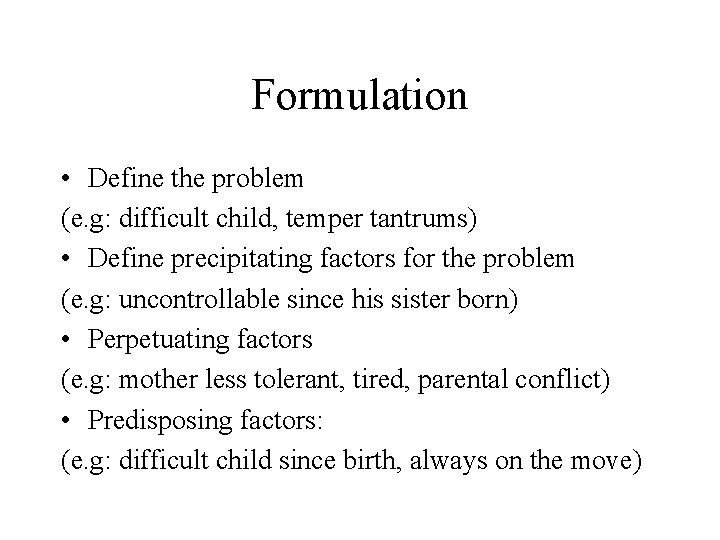
Formulation • Define the problem (e. g: difficult child, temper tantrums) • Define precipitating factors for the problem (e. g: uncontrollable since his sister born) • Perpetuating factors (e. g: mother less tolerant, tired, parental conflict) • Predisposing factors: (e. g: difficult child since birth, always on the move)
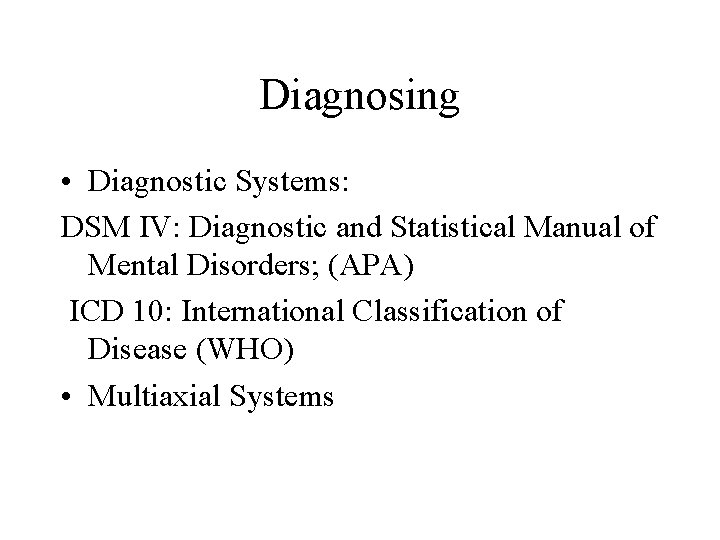
Diagnosing • Diagnostic Systems: DSM IV: Diagnostic and Statistical Manual of Mental Disorders; (APA) ICD 10: International Classification of Disease (WHO) • Multiaxial Systems
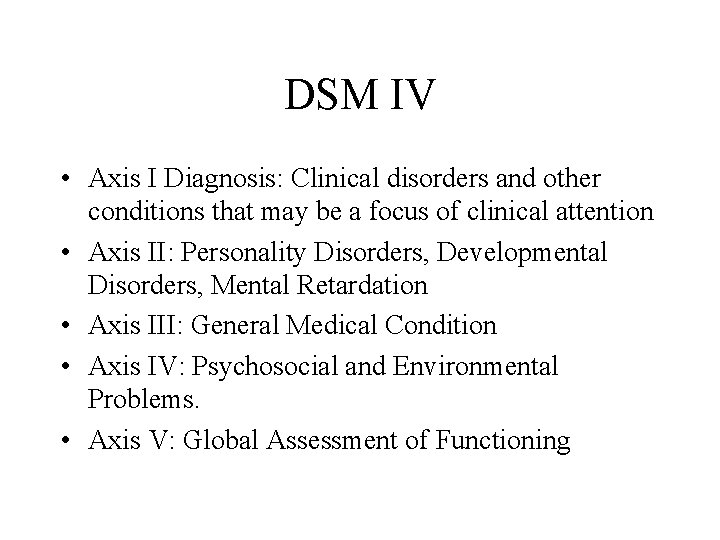
DSM IV • Axis I Diagnosis: Clinical disorders and other conditions that may be a focus of clinical attention • Axis II: Personality Disorders, Developmental Disorders, Mental Retardation • Axis III: General Medical Condition • Axis IV: Psychosocial and Environmental Problems. • Axis V: Global Assessment of Functioning
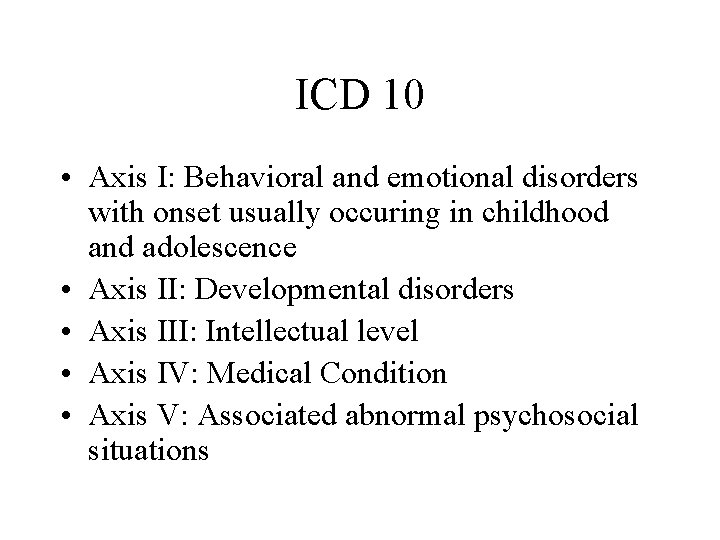
ICD 10 • Axis I: Behavioral and emotional disorders with onset usually occuring in childhood and adolescence • Axis II: Developmental disorders • Axis III: Intellectual level • Axis IV: Medical Condition • Axis V: Associated abnormal psychosocial situations
END OF SESSION • Treatment planning: Psychopharmacological Advice and directives Therapy planning Academic planning • Giving feedback to the family