
Psyc 552 Ergonomics Biomechanics Lecture 13 Work Physiology

Psyc 552 Ergonomics & Biomechanics Lecture 13
Work Physiology o Started in 1913 by Max Rubner in Berlin. o Discipline grew in an effort to understand where humans could operate. o War was the primary motivator. The cold war prompted much study.
Work & Exercise Physiology o o o At one time both were studied together…differences in physiological demand caused the two to disciplines to separate. Workers rarely exceed 30 to 40% of their maximum aerobic capacity. Athletes regularly exceed these rates. Today, more exercise physiology research.
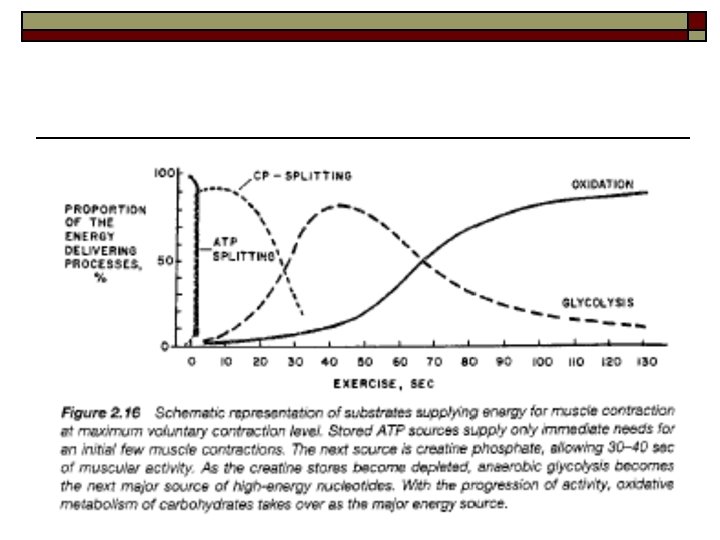
Work physiology basics o Simple, infrequent lifting produces mechanical forces -- Carrying, repetitive lifting, & walking create physiological demands. o Carrying, repetitive lifting, and walking can exceed the anaerobic energy stores.
Aerobic Process o Continuous muscle contractions are supported by the aerobic process where carbohydrates and/or fat are oxidized in the presence of oxygen. o For each liter of O 2, about 5 kcal of energy are generated.
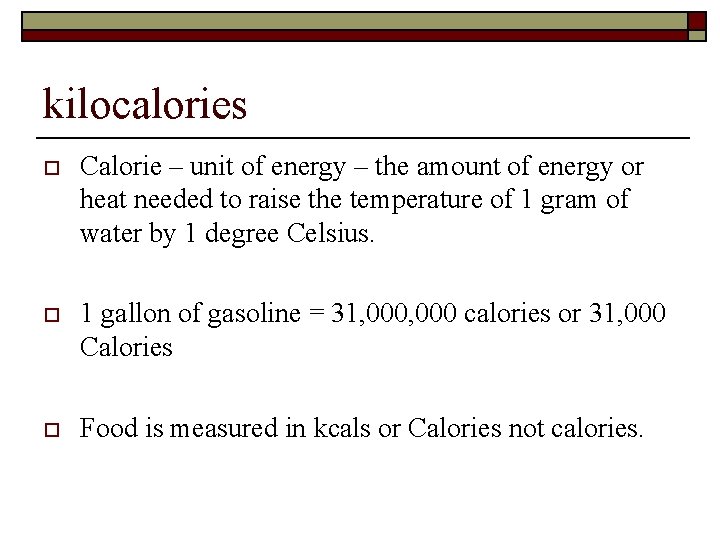
kilocalories o Calorie – unit of energy – the amount of energy or heat needed to raise the temperature of 1 gram of water by 1 degree Celsius. o 1 gallon of gasoline = 31, 000 calories or 31, 000 Calories o Food is measured in kcals or Calories not calories.
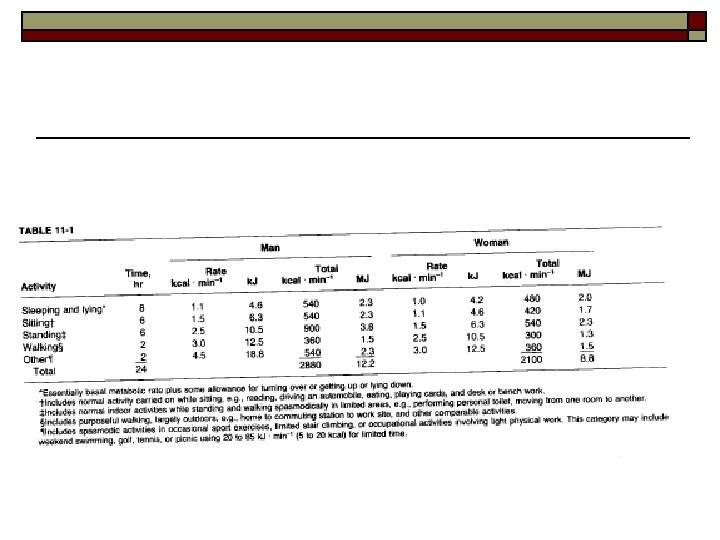
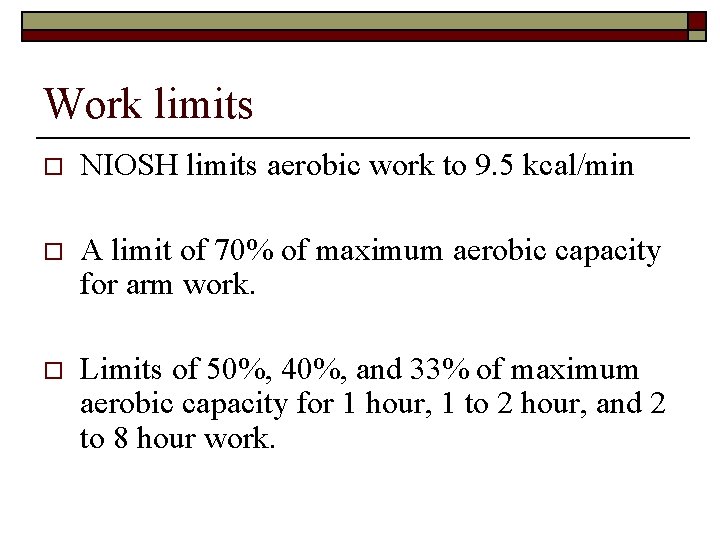
Work limits o NIOSH limits aerobic work to 9. 5 kcal/min o A limit of 70% of maximum aerobic capacity for arm work. o Limits of 50%, 40%, and 33% of maximum aerobic capacity for 1 hour, 1 to 2 hour, and 2 to 8 hour work.

Work Levels
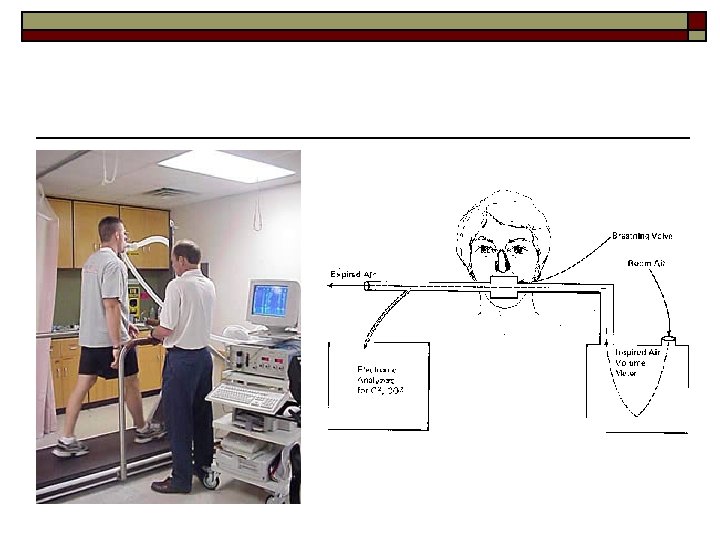
Maximum Aerobic Capacity o Can be assessed by: n n n o Running on a treadmill Exercising on a cycle ergometer Step test Expired air is collected and measured for volume and O 2 content.
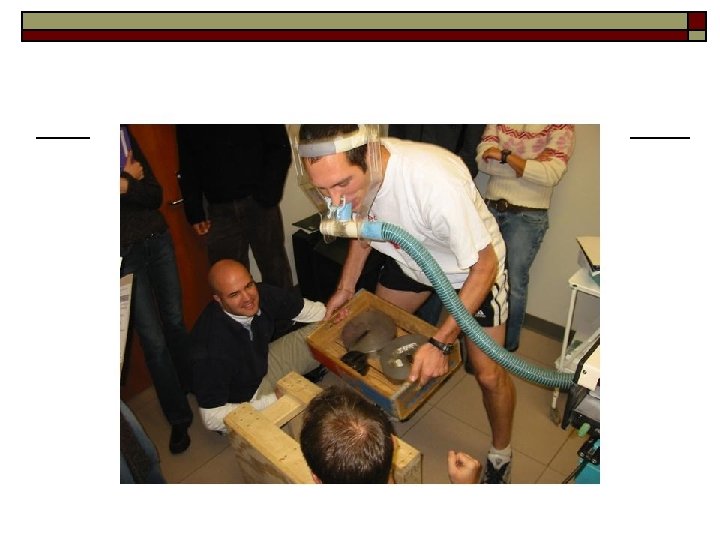
Maximal tests at work o Maximal tests and are not common in work environments. o Shortcomings…
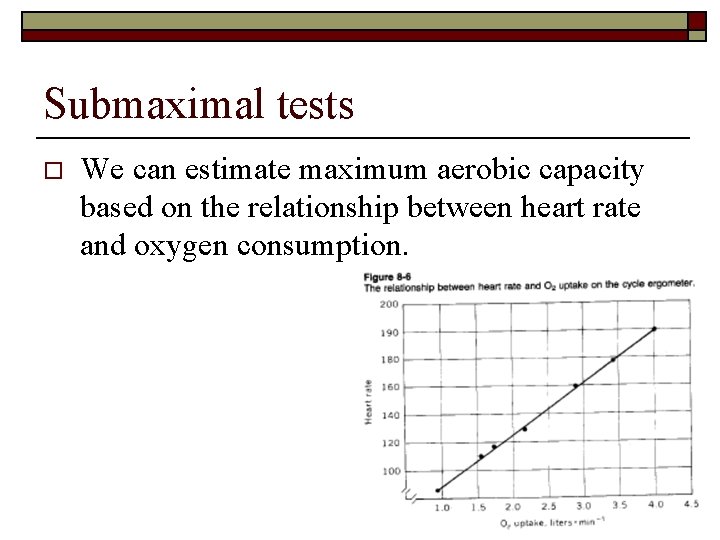
Submaximal tests o We can estimate maximum aerobic capacity based on the relationship between heart rate and oxygen consumption.
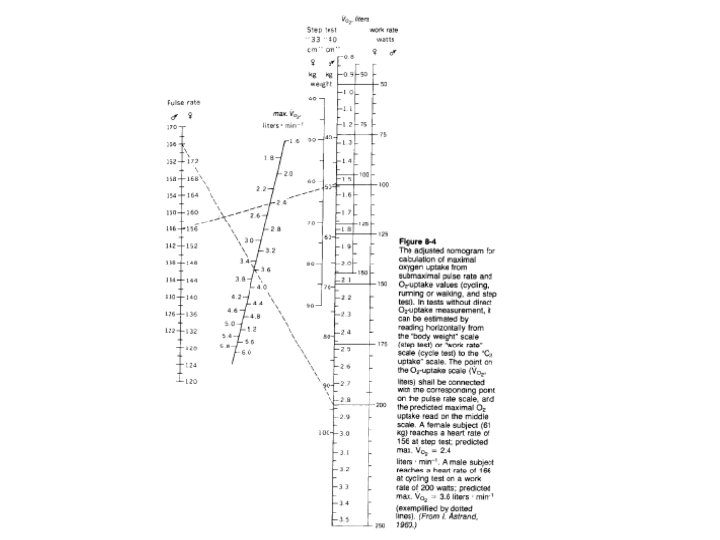
Assumptions… o Linearity of heart rate – oxygen consumption relationship. o Similar maximum heart rates for all subjects o Constancy of mechanical efficiency.
Factors Affecting Aerobic Output o Training – adaptation o Sex & Age
Factors (cont) o Anthropometry… o Nutrition
Factors (cont) o Psychological factors… o Type of work…
Factors (cont) o Work duration… o Technique…
Factors (cont) o Environment…
- Slides: 22