
PSS 2 02 Workplace Team Problem Solving Getting
PSS 2. 02 Workplace Team Problem Solving – Getting Started © Frontline Planning Pty Limited 2011. Certain content used with permission from One. Steel Limited 1

Learning Objectives PSS 2. 02 The Problem Solving Process • Goal of Problem Solving • PDCA Cycle • Workplace Team Problem Solving process Where to Start • Defining a problem • Categorisation and Prioritisation • Need for Containment • Determine the Team © Frontline Planning Pty Limited 2011. Certain content used with permission from One. Steel Limited 2

Goals of problem solving PSS 2. 02 Provide a business process for solving problems including process ownership • Define problem’s boundaries / depth of solutions • Identify right approach & resources to solve problem • Align problem solving effort to organisational objectives/targets © Frontline Planning Pty Limited 2011. Certain content used with permission from One. Steel Limited 3
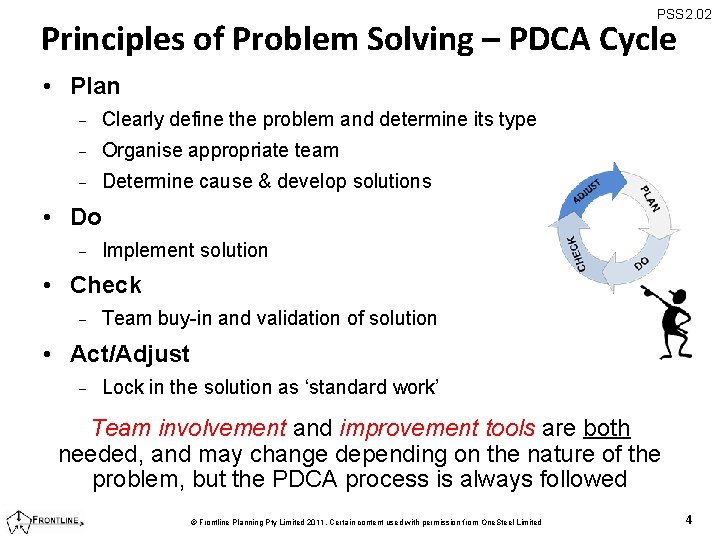
PSS 2. 02 Principles of Problem Solving – PDCA Cycle • Plan - Clearly define the problem and determine its type - Organise appropriate team - Determine cause & develop solutions • Do - Implement solution • Check - Team buy-in and validation of solution • Act/Adjust - Lock in the solution as ‘standard work’ Team involvement and improvement tools are both needed, and may change depending on the nature of the problem, but the PDCA process is always followed © Frontline Planning Pty Limited 2011. Certain content used with permission from One. Steel Limited 4
Workplace Team Problem Solving (WTPS)
PSS 2. 02 Where to Start. . ? WTPS – Steps 1 to 5 © Frontline Planning Pty Limited 2011. Certain content used with permission from One. Steel Limited 6
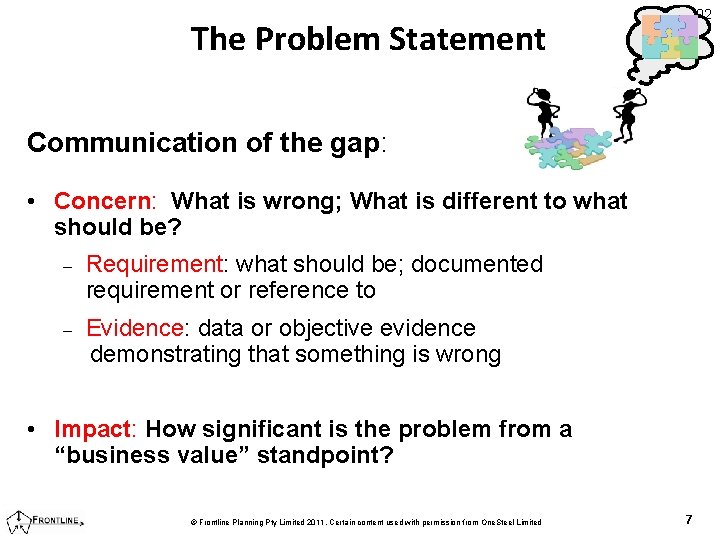
The Problem Statement PSS 2. 02 Communication of the gap: • Concern: What is wrong; What is different to what should be? - Requirement: what should be; documented requirement or reference to - Evidence: data or objective evidence demonstrating that something is wrong • Impact: How significant is the problem from a “business value” standpoint? © Frontline Planning Pty Limited 2011. Certain content used with permission from One. Steel Limited 7
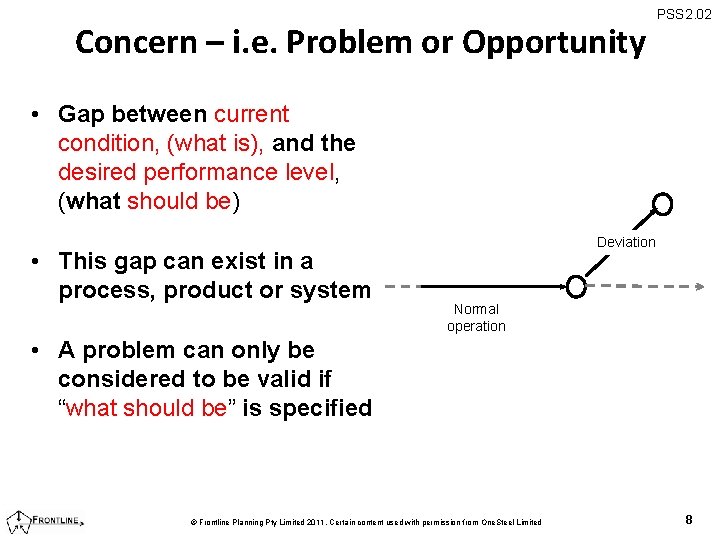
Concern – i. e. Problem or Opportunity PSS 2. 02 • Gap between current condition, (what is), and the desired performance level, (what should be) • This gap can exist in a process, product or system Deviation Normal operation • A problem can only be considered to be valid if “what should be” is specified © Frontline Planning Pty Limited 2011. Certain content used with permission from One. Steel Limited 8
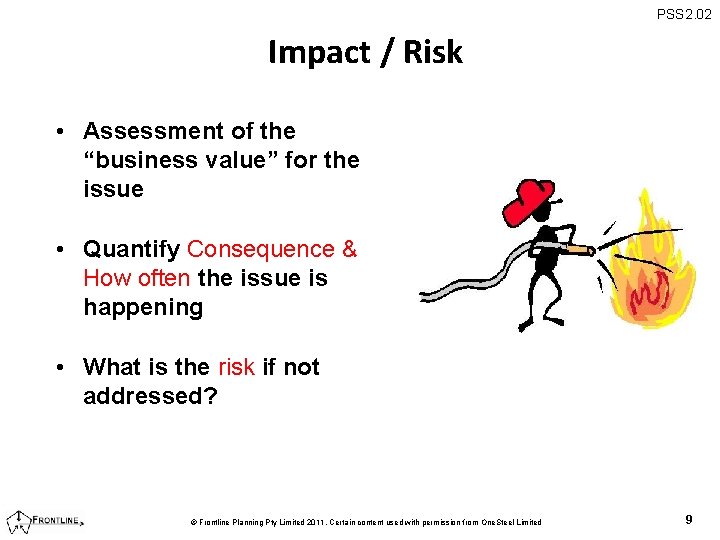
PSS 2. 02 Impact / Risk • Assessment of the “business value” for the issue • Quantify Consequence & How often the issue is happening • What is the risk if not addressed? © Frontline Planning Pty Limited 2011. Certain content used with permission from One. Steel Limited 9
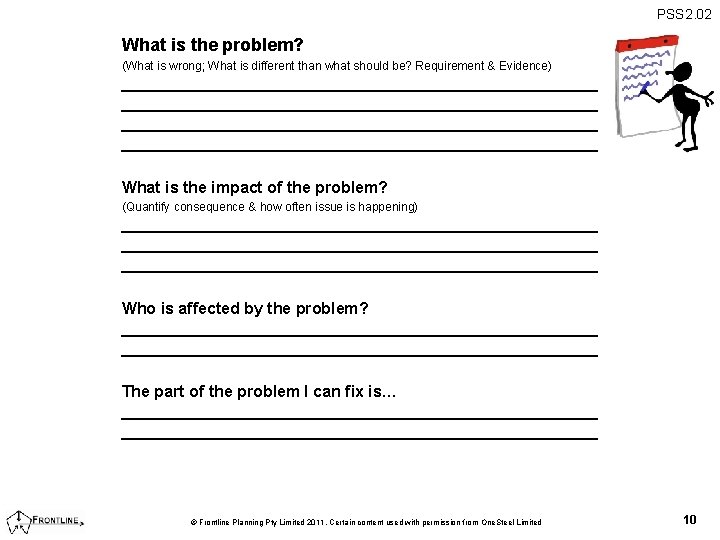
PSS 2. 02 What is the problem? (What is wrong; What is different than what should be? Requirement & Evidence) What is the impact of the problem? (Quantify consequence & how often issue is happening) Who is affected by the problem? The part of the problem I can fix is… © Frontline Planning Pty Limited 2011. Certain content used with permission from One. Steel Limited 10
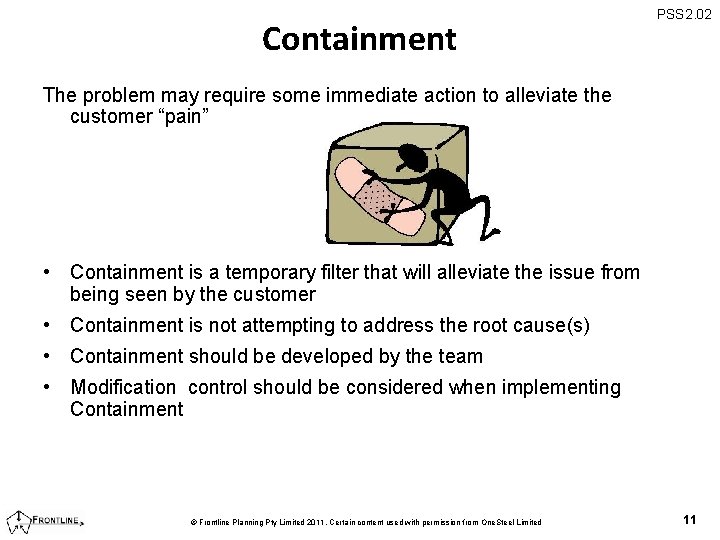
Containment PSS 2. 02 The problem may require some immediate action to alleviate the customer “pain” • Containment is a temporary filter that will alleviate the issue from being seen by the customer • Containment is not attempting to address the root cause(s) • Containment should be developed by the team • Modification control should be considered when implementing Containment © Frontline Planning Pty Limited 2011. Certain content used with permission from One. Steel Limited 11
PSS 2. 02 Does the problem need to be contained? (size of problem / impact / customer focus) If required, what potential containment can be established? Who will need to be engaged to implement containment? Where will the reasons for the changes be recorded? (Modification control) © Frontline Planning Pty Limited 2011. Certain content used with permission from One. Steel Limited 12
Characterising Problems PSS 2. 02 • The art of problem solving requires the ability to - Determine the nature of a problem - Identify the appropriate methods & tools - Apply those tools within a structured process • Factors in Determining the Nature of a Problem - Simple versus Complex - Internal Knowledge versus External knowledge - One-Off versus Recurring © Frontline Planning Pty Limited 2011. Certain content used with permission from One. Steel Limited 13
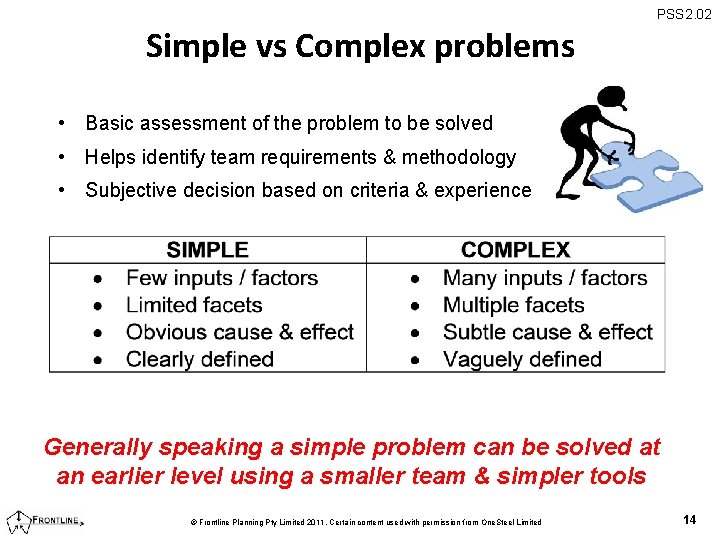
PSS 2. 02 Simple vs Complex problems • Basic assessment of the problem to be solved • Helps identify team requirements & methodology • Subjective decision based on criteria & experience Generally speaking a simple problem can be solved at an earlier level using a smaller team & simpler tools © Frontline Planning Pty Limited 2011. Certain content used with permission from One. Steel Limited 14
Internal vs External knowledge PSS 2. 02 • Internal Knowledge - The knowledge required is or should be in the people who operate the process and/or maintain the equipment where the problem occurred - Team membership drawn from the local work group • External Knowledge - Knowledge required would be new to the people operating or maintaining the equipment where the problem occurred - Problem solving may require ‘expert’ knowledge or the development of new knowledge from detailed data analysis - Team membership drawn from workgroup, process / equipment and/or data analysis ‘expert’ © Frontline Planning Pty Limited 2011. Certain content used with permission from One. Steel Limited 15
One-Off vs Recurring Problems PSS 2. 02 • One-Off - The issue or problem is a ‘one-off’ event that is not typical of ‘normal’ operation Problem solving should focus on the event and identify what happened to cause this outcome Generally requires simple problem solving tools e. g: Inspection procedure not followed, resulting in the wrong grade of steel being charged and low tensile results • Recurring - The issue or problem can be described as ‘typical’ performance of the operation, “it always does that” Problem solving should focus on the systemic/underlying causes driving performance May require complex problem solving tools e. g: The steelmaking process occasionally produces low tensile results despite standard work practices being followed © Frontline Planning Pty Limited 2011. Certain content used with permission from One. Steel Limited 16
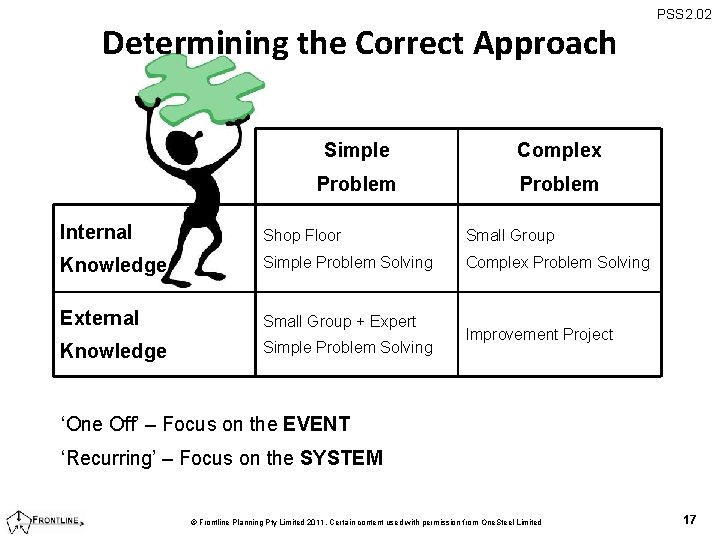
Determining the Correct Approach Simple Complex Problem Internal Shop Floor Small Group Knowledge Simple Problem Solving Complex Problem Solving External Small Group + Expert Knowledge Simple Problem Solving PSS 2. 02 Improvement Project ‘One Off’ – Focus on the EVENT ‘Recurring’ – Focus on the SYSTEM © Frontline Planning Pty Limited 2011. Certain content used with permission from One. Steel Limited 17
PSS 2. 02 Problem/Opportunity Categorisation Matrix © Frontline Planning Pty Limited 2011. Certain content used with permission from One. Steel Limited 18
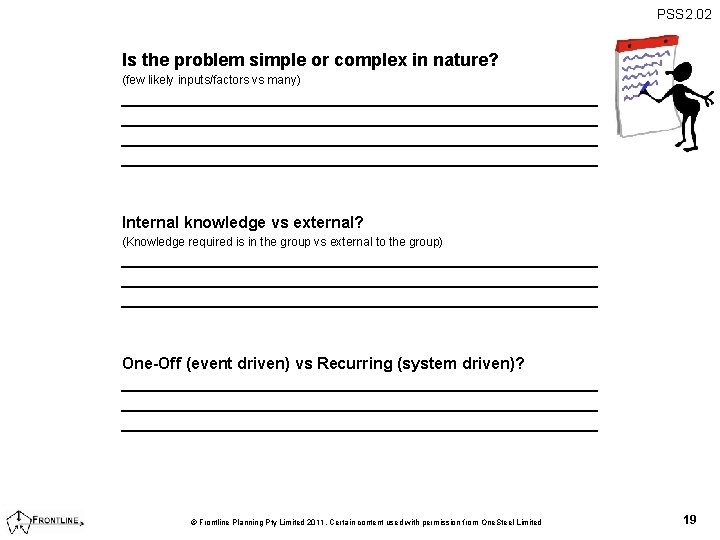
PSS 2. 02 Is the problem simple or complex in nature? (few likely inputs/factors vs many) Internal knowledge vs external? (Knowledge required is in the group vs external to the group) One-Off (event driven) vs Recurring (system driven)? © Frontline Planning Pty Limited 2011. Certain content used with permission from One. Steel Limited 19
Level of Work / Team Involvement PSS 2. 02 • All Problems should - Be solved at the earliest possible level - Involve those who ‘live’ the process - Be resolved at the point of occurrence where possible • The problem solving process should - Respect the individual - Involve all affected • Level of Work - At FLM level all problem solving should be addressing common cause, system issues Improvement should be a habitual behaviour at all levels of the organisation! © Frontline Planning Pty Limited 2011. Certain content used with permission from One. Steel Limited 20
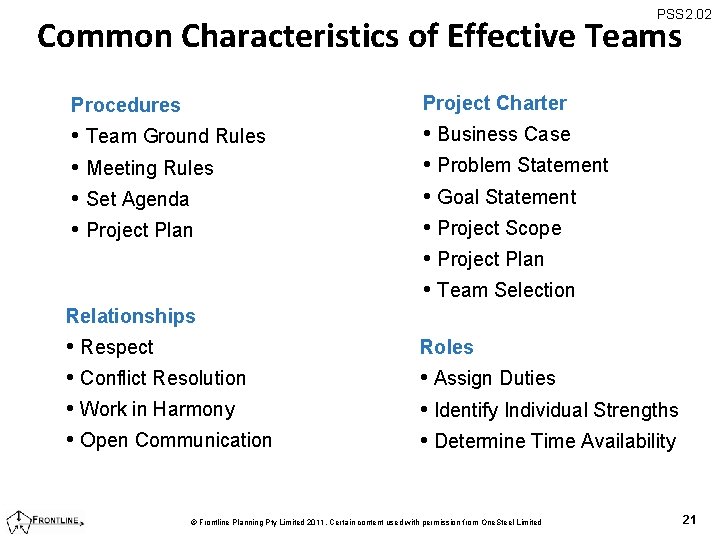
PSS 2. 02 Common Characteristics of Effective Teams Procedures Project Charter • Team Ground Rules • Meeting Rules • Set Agenda • Project Plan • Business Case • Problem Statement • Goal Statement • Project Scope • Project Plan • Team Selection Relationships • Respect • Conflict Resolution • Work in Harmony • Open Communication Roles • Assign Duties • Identify Individual Strengths • Determine Time Availability © Frontline Planning Pty Limited 2011. Certain content used with permission from One. Steel Limited 21
Be Careful How You Phrase Things. . . PSS 2. 02 Words can be powerful motivators, and also demotivators For example: That’s a great idea, BUT … • • • • We've never done it that way. It won't work. We haven't the time. That’s too expensive. We've tried that before. We’re not ready for it yet. Our organization is different. All right in theory, but it won’t work in practice? Too academic. Too hard to administer. Too much paperwork. The organization is not ready for this. Has anyone else ever tried it? Department X won’t like it. © Frontline Planning Pty Limited 2011. Certain content used with permission from One. Steel Limited 22
Be Careful How You Phrase Things. . . PSS 2. 02 Or…. • Somebody would have suggested it before if it were any good. • It’s too simple. • It’s too old-fashioned. • Let's discuss it at some other time. • You don't understand our problem. • You’re missing the point • If it ain’t broke why fix it? • We're too big for that. • The new people won't understand. • The experienced people won't use it. • We have too many projects already. • What you are really saying is. . . • It has been the same for 20 years so it must be good. • Leave it with me - I’ll look into it © Frontline Planning Pty Limited 2011. Certain content used with permission from One. Steel Limited 23
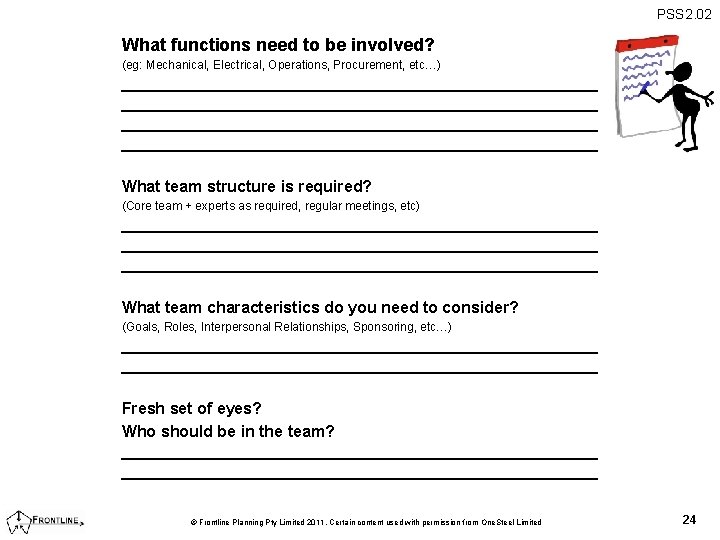
PSS 2. 02 What functions need to be involved? (eg: Mechanical, Electrical, Operations, Procurement, etc…) What team structure is required? (Core team + experts as required, regular meetings, etc) What team characteristics do you need to consider? (Goals, Roles, Interpersonal Relationships, Sponsoring, etc…) Fresh set of eyes? Who should be in the team? © Frontline Planning Pty Limited 2011. Certain content used with permission from One. Steel Limited 24
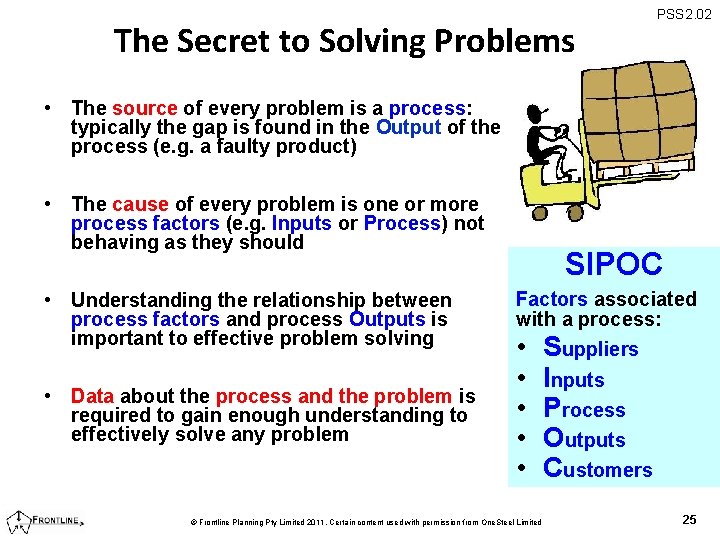
The Secret to Solving Problems PSS 2. 02 • The source of every problem is a process: typically the gap is found in the Output of the process (e. g. a faulty product) • The cause of every problem is one or more process factors (e. g. Inputs or Process) not behaving as they should • Understanding the relationship between process factors and process Outputs is important to effective problem solving • Data about the process and the problem is required to gain enough understanding to effectively solve any problem SIPOC Factors associated with a process: • • • © Frontline Planning Pty Limited 2011. Certain content used with permission from One. Steel Limited Suppliers Inputs Process Outputs Customers 25
PSS 2. 02 The Process of Problem Solving for Simple Problems Category A & B WTPS – Steps 6 to 15 © Frontline Planning Pty Limited 2011. Certain content used with permission from One. Steel Limited 26
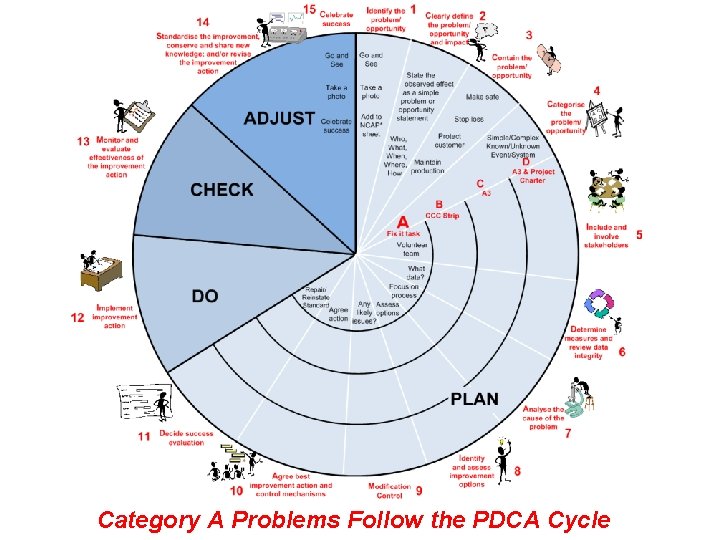
Category A Problems Follow the PDCA Cycle
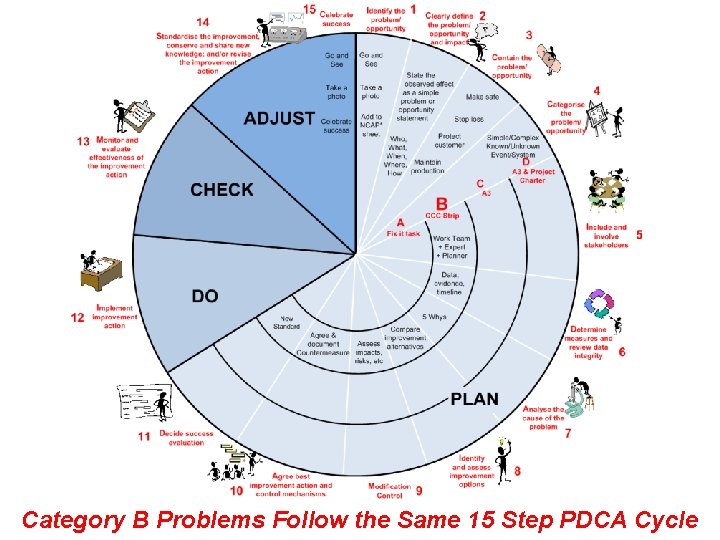
Category B Problems Follow the Same 15 Step PDCA Cycle
PSS 2. 02 Simple Problem Solving (Category A and B) Simple Problem Solving • Identify potential root causes • Questioning must go beyond symptoms to uncover the underlying root cause • Thinking should be broad and avoid the tendency to isolate a single root cause • In the majority of cases (~95%) the root cause should point towards a systemic issue • May help to ask ‘why did the process fail? ’ • Use NCAP Sheet to track problems to resolution © Frontline Planning Pty Limited 2011. Certain content used with permission from One. Steel Limited 29
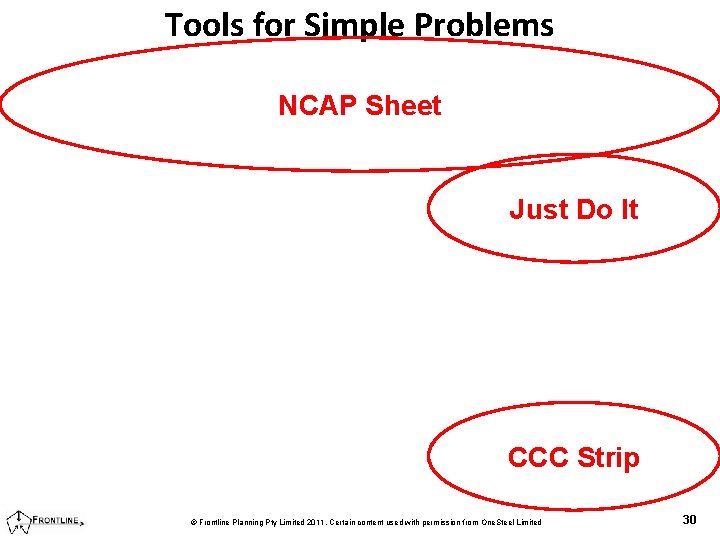
Tools for Simple Problems PSS 2. 02 NCAP Sheet Just Do It CCC Strip © Frontline Planning Pty Limited 2011. Certain content used with permission from One. Steel Limited 30
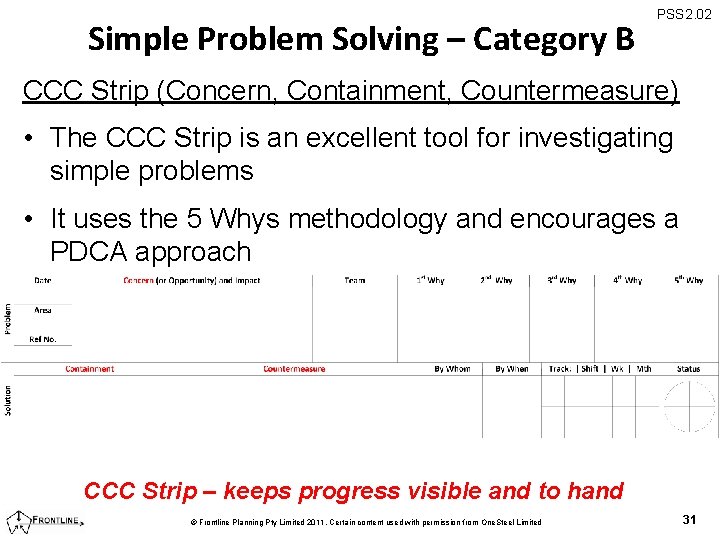
Simple Problem Solving – Category B PSS 2. 02 CCC Strip (Concern, Containment, Countermeasure) • The CCC Strip is an excellent tool for investigating simple problems • It uses the 5 Whys methodology and encourages a PDCA approach CCC Strip – keeps progress visible and to hand © Frontline Planning Pty Limited 2011. Certain content used with permission from One. Steel Limited 31
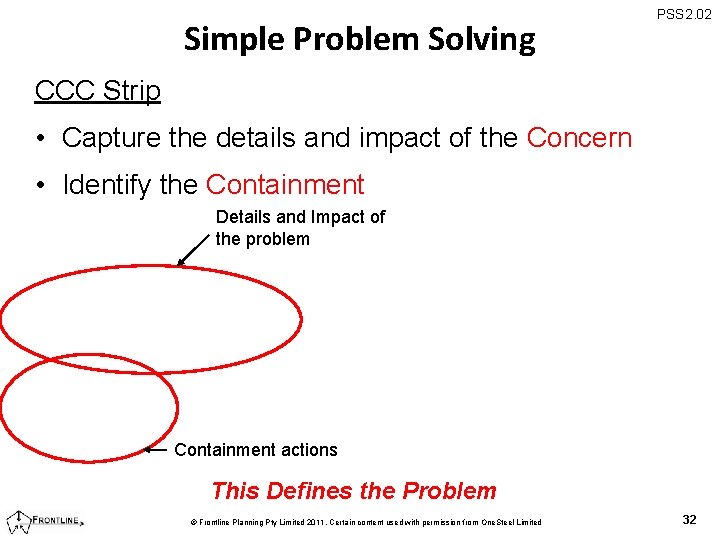
Simple Problem Solving PSS 2. 02 CCC Strip • Capture the details and impact of the Concern • Identify the Containment Details and Impact of the problem Containment actions This Defines the Problem © Frontline Planning Pty Limited 2011. Certain content used with permission from One. Steel Limited 32
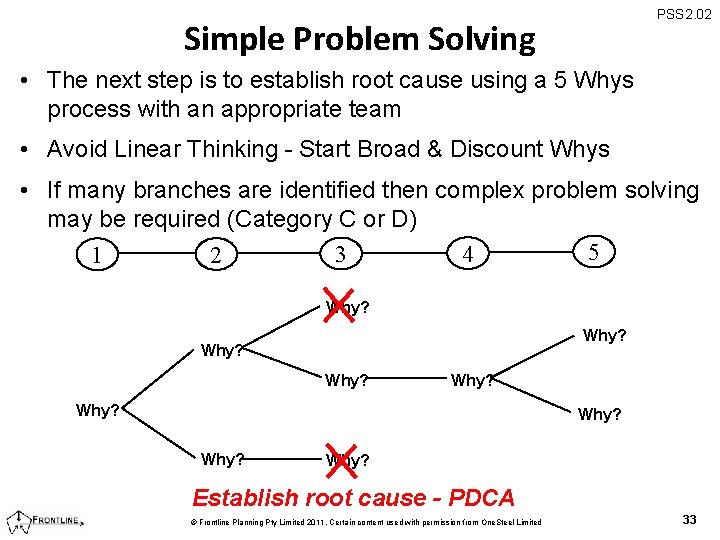
PSS 2. 02 Simple Problem Solving • The next step is to establish root cause using a 5 Whys process with an appropriate team • Avoid Linear Thinking - Start Broad & Discount Whys • If many branches are identified then complex problem solving may be required (Category C or D) 5 4 3 2 1 Why? Why? Why? Establish root cause - PDCA © Frontline Planning Pty Limited 2011. Certain content used with permission from One. Steel Limited 33
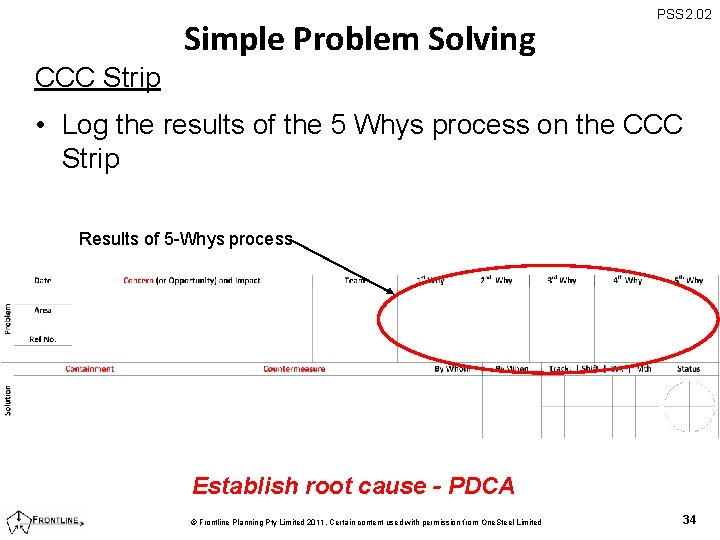
Simple Problem Solving PSS 2. 02 CCC Strip • Log the results of the 5 Whys process on the CCC Strip Results of 5 -Whys process Establish root cause - PDCA © Frontline Planning Pty Limited 2011. Certain content used with permission from One. Steel Limited 34
Simple Problem Solving PSS 2. 02 CCC Strip • Develop Countermeasures to address key root causes Actions to address root cause Develop effective solutions - PDCA © Frontline Planning Pty Limited 2011. Certain content used with permission from One. Steel Limited 35
Simple Problem Solving PSS 2. 02 Countermeasures • An effective countermeasure is a permanent solution that will, through standardisation, reduce the likelihood of the problem reoccurring • The countermeasure should address the root cause(s) • You should be able to read the last Why and understand the connection to the countermeasure • Countermeasures should be developed by the team • Modification control should be considered when implementing countermeasures © Frontline Planning Pty Limited 2011. Certain content used with permission from One. Steel Limited 36
Simple Problem Solving PSS 2. 02 Countermeasures • Sourcing effective countermeasures will require: - Go look see - Problem solving investigation to find root cause - Comparing the part or process with its standard • Ask the questions; – Is there a standard? – Was the standard followed? – Was the standard adequate? • Words like “Investigating, analysing, checking, reviewing are not to be used in countermeasures © Frontline Planning Pty Limited 2011. Certain content used with permission from One. Steel Limited 37
Simple Problem Solving PSS 2. 02 Reading Out & Challenging • Once the countermeasures and timing have been established, the owner reads out the full CCC Strip at the daily meeting • The attendees are required to sense check the countermeasure and challenge if they feel the countermeasure/s will not fix the problem • This step is critical, as the power of the team is greater than the individual © Frontline Planning Pty Limited 2011. Certain content used with permission from One. Steel Limited 38
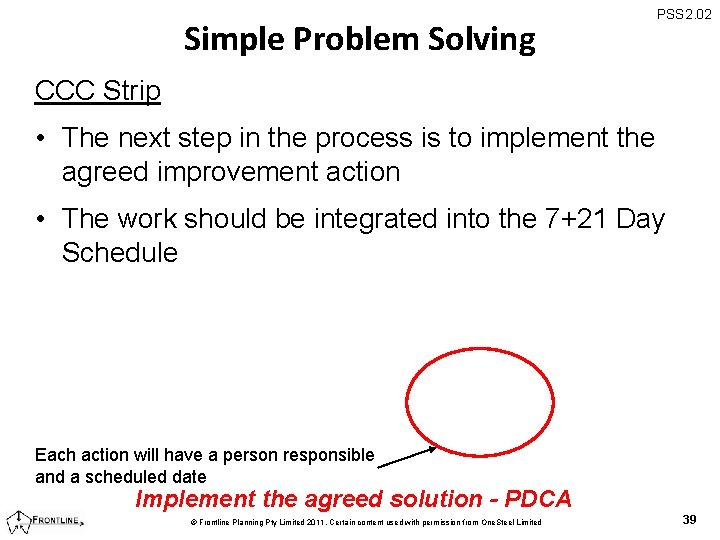
Simple Problem Solving PSS 2. 02 CCC Strip • The next step in the process is to implement the agreed improvement action • The work should be integrated into the 7+21 Day Schedule Each action will have a person responsible and a scheduled date Implement the agreed solution - PDCA © Frontline Planning Pty Limited 2011. Certain content used with permission from One. Steel Limited 39
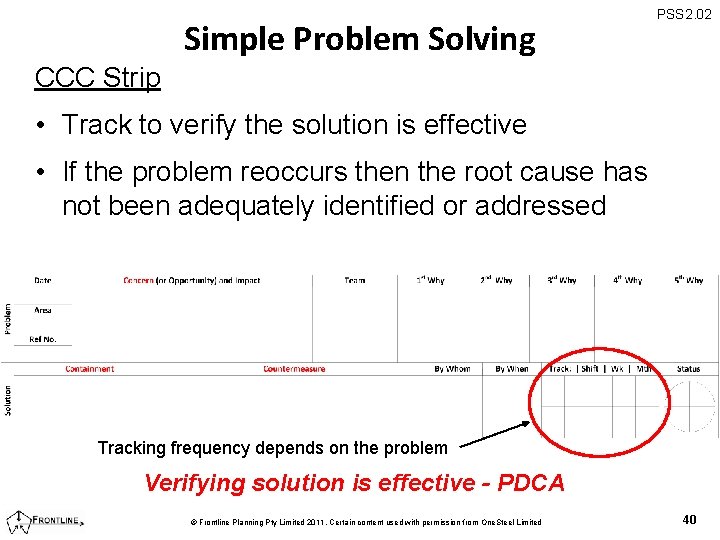
Simple Problem Solving PSS 2. 02 CCC Strip • Track to verify the solution is effective • If the problem reoccurs then the root cause has not been adequately identified or addressed Tracking frequency depends on the problem Verifying solution is effective - PDCA © Frontline Planning Pty Limited 2011. Certain content used with permission from One. Steel Limited 40
Simple Problem Solving PSS 2. 02 CCC Strip • The final step is to standardise the countermeasures into standard work and share the result • This locks in changes and ensures there is no reoccurrence due to the identified root cause Standardise, Share knowledge, Celebrate success The “new way” is now the “usual way” - PDCA © Frontline Planning Pty Limited 2011. Certain content used with permission from One. Steel Limited 41
Simple Problem Solving PSS 2. 02 CCC Strip • The CCC Strip forms the basis for simple problem solving and is the logical starting point for the majority of problems • If a problem is complex then additional problem solving tools may be required • However, the same PDCA process is followed and the NCAP sheet provides the summary overview © Frontline Planning Pty Limited 2011. Certain content used with permission from One. Steel Limited 42
CCC Strip Evaluation PSS 2. 02 • Was the incident clearly defined? • Was effective containment put in place? • Was root cause established? • Do the countermeasures address the root cause? • Is the work team involved? • Is there a monitoring plan? © Frontline Planning Pty Limited 2011. Certain content used with permission from One. Steel Limited 43
PSS 2. 02 The Process of Problem Solving for Complex Problems Category C & D WTPS – Steps 6 to 15 © Frontline Planning Pty Limited 2011. Certain content used with permission from One. Steel Limited 44
Complex Problem Solving – follows PDCA
Complex Problem Solving - Tools PSS 2. 02 Complex Problem Solving • When a problem has multiple causal factors or the knowledge required does not exist within the local work group, alternative problem solving tools may be required • The preferred tool for most complex problem solving is the Problem Solving A 3: - Provides a structured approach to problem solving that aims to break down a complex problem before applying root cause analysis - Is the visual summary of the investigation - Follows the PDCA methodology © Frontline Planning Pty Limited 2011. Certain content used with permission from One. Steel Limited 46
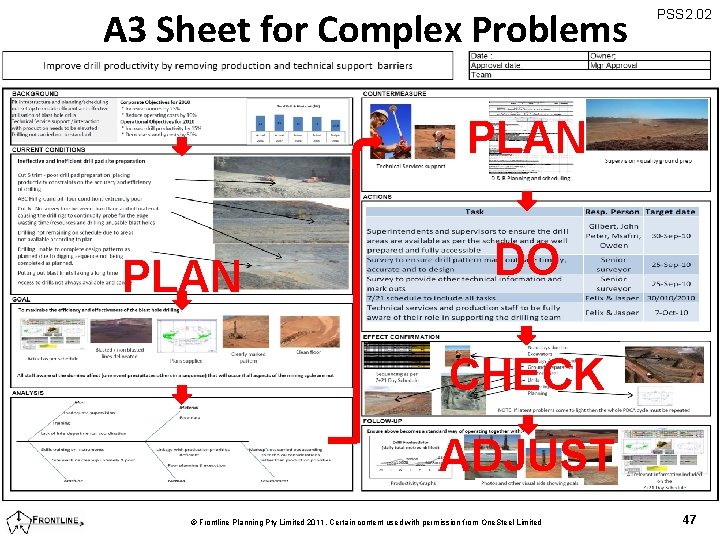
A 3 Sheet for Complex Problems PSS 2. 02 PLAN DO CHECK ADJUST © Frontline Planning Pty Limited 2011. Certain content used with permission from One. Steel Limited 47
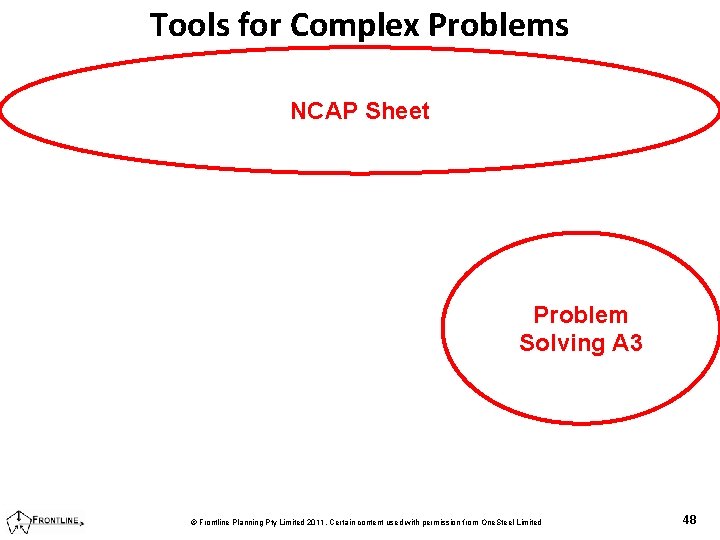
Tools for Complex Problems PSS 2. 02 NCAP Sheet Problem Solving A 3 © Frontline Planning Pty Limited 2011. Certain content used with permission from One. Steel Limited 48
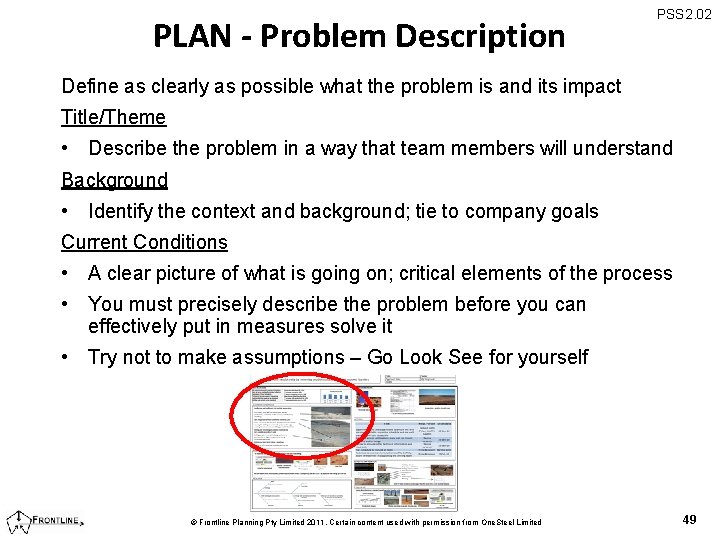
PLAN - Problem Description PSS 2. 02 Define as clearly as possible what the problem is and its impact Title/Theme • Describe the problem in a way that team members will understand Background • Identify the context and background; tie to company goals Current Conditions • A clear picture of what is going on; critical elements of the process • You must precisely describe the problem before you can effectively put in measures solve it • Try not to make assumptions – Go Look See for yourself © Frontline Planning Pty Limited 2011. Certain content used with permission from One. Steel Limited 49
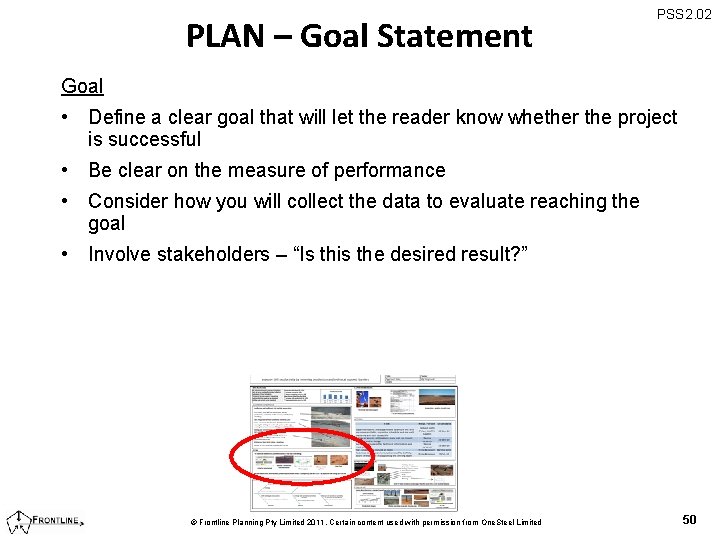
PLAN – Goal Statement PSS 2. 02 Goal • Define a clear goal that will let the reader know whether the project is successful • Be clear on the measure of performance • Consider how you will collect the data to evaluate reaching the goal • Involve stakeholders – “Is this the desired result? ” © Frontline Planning Pty Limited 2011. Certain content used with permission from One. Steel Limited 50
PLAN - Analysis PSS 2. 02 The objective of this stage is to take the problem and start breaking it down to understand it’s causes in more detail How was the problem highlighted? • This is a valuable source of information and all investigations should initially focus around this area, especially where the problem is highlighted by process members Problem Clarification • Data and simple improvement tools (Pareto, histogram, scatter plot etc. ) are often used during this phase to focus the problem • Questions that may assist during this phase include - What are the detailed symptoms of the problem? - What process variables are involved in the problem? - When does the problem occur, is there a pattern? © Frontline Planning Pty Limited 2011. Certain content used with permission from One. Steel Limited 51
PLAN - Analysis PSS 2. 02 Locate the Point Of Cause • Now that we have some idea regarding what is happening, our goal now is to identify where the problem is happening • The task is best completed by ‘go and see’ • This process could be as narrow as looking at one process step and focusing in on the element where the problem starts or as wide as the entire process, working down to a process and then the elemental level • Other questions include where can the problem first be detected? When did the problem first occur and what else happened around this time? © Frontline Planning Pty Limited 2011. Certain content used with permission from One. Steel Limited 52
PLAN - Analysis PSS 2. 02 Identify the Direct Cause • Now that we have found where the problem resides within the process we need to understand the direct cause • The first step in achieving this is a brainstorming activity that includes the entire team and does not exclude any suggestions • Summarise results of this activity on a fishbone diagram • Next the team must reach agreement on what issues are the most likely to be causing the problem. Multi-voting, where each member gets 3 – 5 votes, is a simple means of gaining agreement • Investigate the top causes further to verify they are true direct causes © Frontline Planning Pty Limited 2011. Certain content used with permission from One. Steel Limited 53
PLAN - Analysis PSS 2. 02 Identify the Root Cause • Involve team members in using 5 Whys or other Root Cause Analysis (RCA) tools to take the direct cause previously identified and understand the root cause • The root cause is the key element of the problem, which when resolved (with a countermeasure) will prevent re-occurrence • 5 Whys is a rule of thumb, sometime 3 whys will be sufficient © Frontline Planning Pty Limited 2011. Certain content used with permission from One. Steel Limited 54
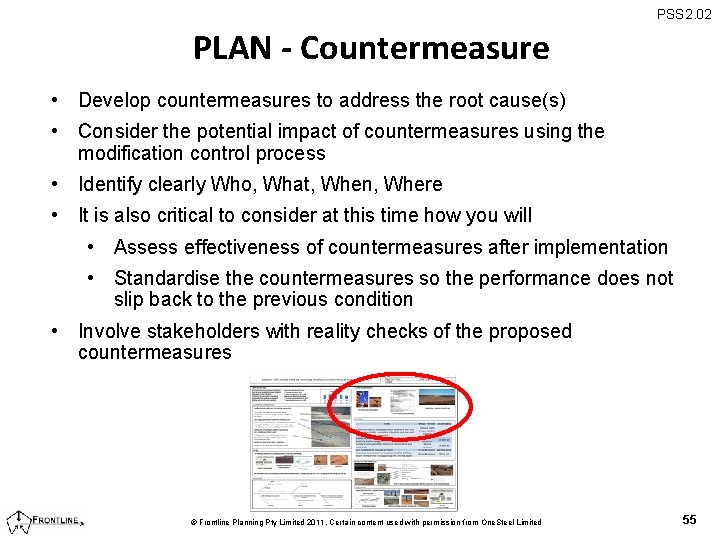
PSS 2. 02 PLAN - Countermeasure • Develop countermeasures to address the root cause(s) • Consider the potential impact of countermeasures using the modification control process • Identify clearly Who, What, When, Where • It is also critical to consider at this time how you will • Assess effectiveness of countermeasures after implementation • Standardise the countermeasures so the performance does not slip back to the previous condition • Involve stakeholders with reality checks of the proposed countermeasures © Frontline Planning Pty Limited 2011. Certain content used with permission from One. Steel Limited 55
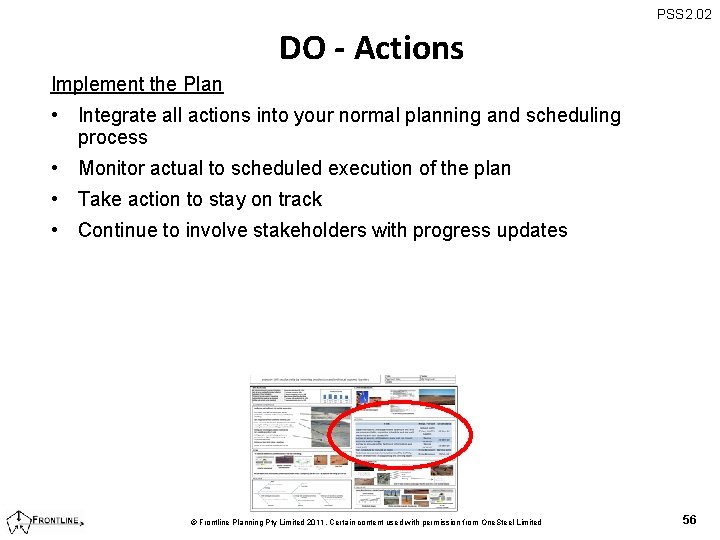
PSS 2. 02 DO - Actions Implement the Plan • Integrate all actions into your normal planning and scheduling process • Monitor actual to scheduled execution of the plan • Take action to stay on track • Continue to involve stakeholders with progress updates © Frontline Planning Pty Limited 2011. Certain content used with permission from One. Steel Limited 56
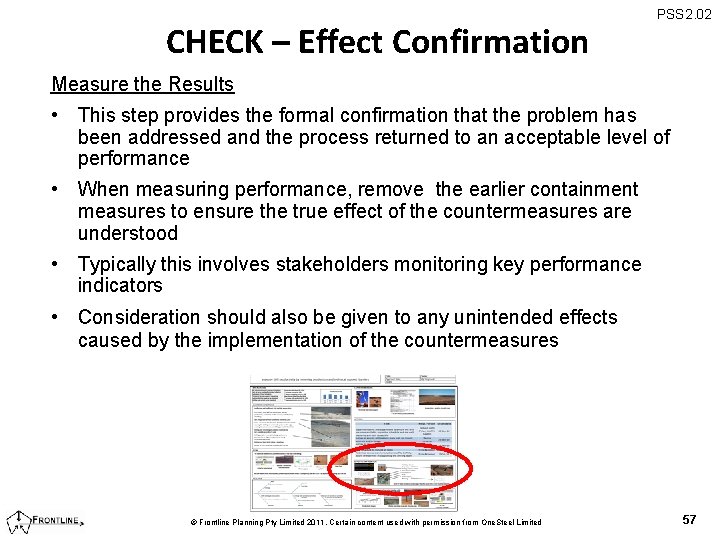
CHECK – Effect Confirmation PSS 2. 02 Measure the Results • This step provides the formal confirmation that the problem has been addressed and the process returned to an acceptable level of performance • When measuring performance, remove the earlier containment measures to ensure the true effect of the countermeasures are understood • Typically this involves stakeholders monitoring key performance indicators • Consideration should also be given to any unintended effects caused by the implementation of the countermeasures © Frontline Planning Pty Limited 2011. Certain content used with permission from One. Steel Limited 57
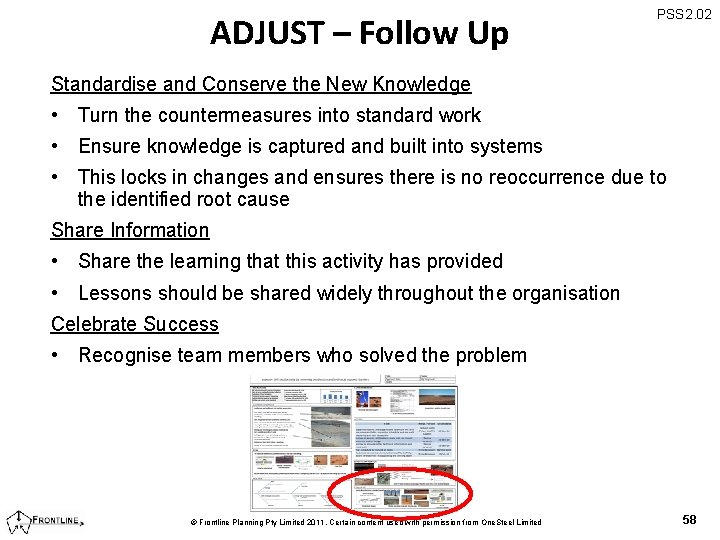
ADJUST – Follow Up PSS 2. 02 Standardise and Conserve the New Knowledge • Turn the countermeasures into standard work • Ensure knowledge is captured and built into systems • This locks in changes and ensures there is no reoccurrence due to the identified root cause Share Information • Share the learning that this activity has provided • Lessons should be shared widely throughout the organisation Celebrate Success • Recognise team members who solved the problem © Frontline Planning Pty Limited 2011. Certain content used with permission from One. Steel Limited 58
Problem Solving A 3 Evaluation PSS 2. 02 • Assess the quality of a WTPS A 3 problem solving activity from your local work area - Was the problem clearly defined? - Was the impact of the problem stated? - Does the problem definition contain assumptions? - Does the problem definition include causes? - Was data used to focus problem solving? - Is team involvement evident? - Were appropriate improvement tools used? - Was root cause established? - Are countermeasures effective? © Frontline Planning Pty Limited 2011. Certain content used with permission from One. Steel Limited 59
- Slides: 59