
PSPICE Simulation Program with Integrated Circuit Emphasis CH
- Slides: 14
PSPICE计算机仿真 Simulation Program with Integrated Circuit Emphasis
CH 8 VARYING COMPONENT VALUES 元件参数可变
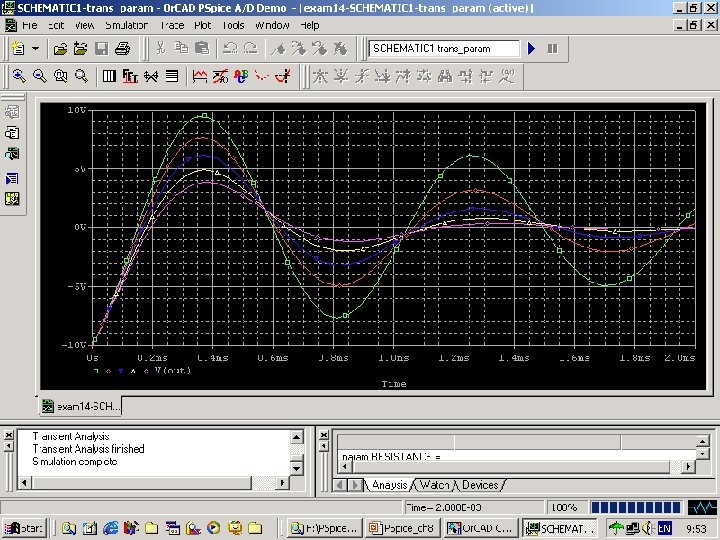
n n Example 14 demonstrates how easily PSpice can analyze the same circuit several times with a different value of a given component used in each analysis. We use Probe to illustrate graphically the varying behavior of the circuit as the component value changes.
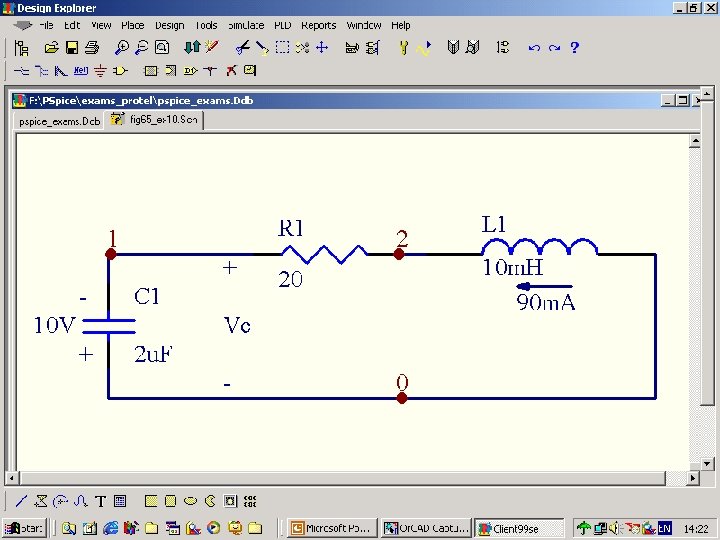
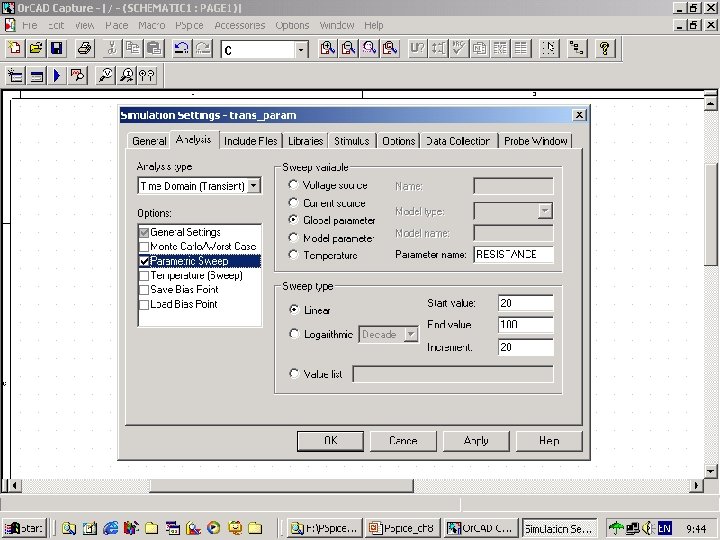
Example 14 n Use a global parameter as the value of the resistor in Fig. 65 (see Example 10) from 20 Ω to 100 Ω in 20 Ω steps. Then plot the value of Vc versus t for each of the resistor values.
Fig. 65
Solution n We define the global parameter by adding the Param part from the Special library.
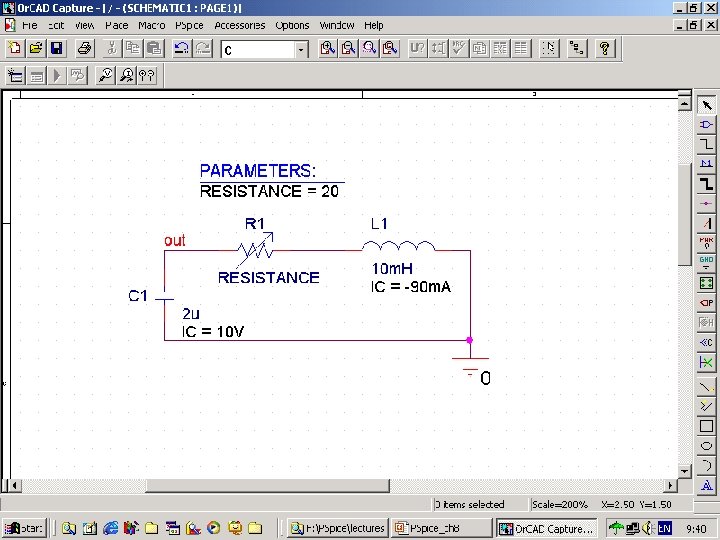
Fig. 67 Schematic
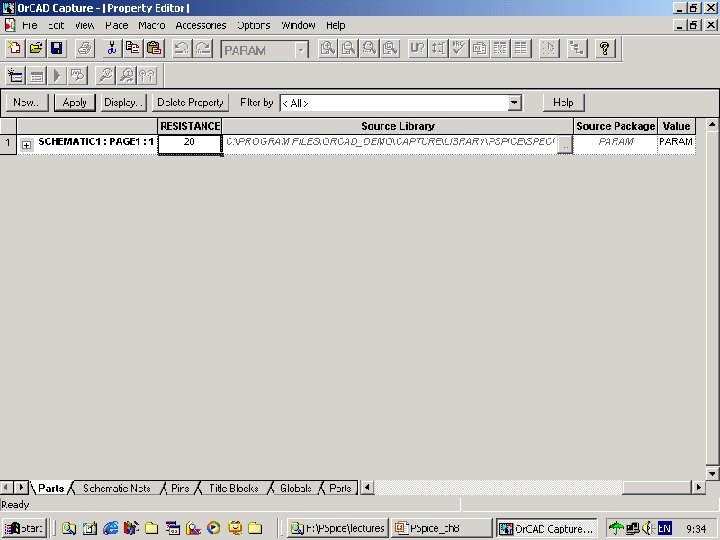
定义PARAMETER步骤: n To define the global parameter, invoke the property editor on the Param component. Then, click the New button, and type the name of the global parameter in the dialog box. This creates a new property, with the name RESISTANCE, for the Param component. We then entered a default value of 20 Ω for this new property. To have this property’s name and its value appear in the schematic, highlight the spreadsheet column with the new property and click the display button. Then choose Display Name and Value from the Display Format dialog.
Fig. 81 Property
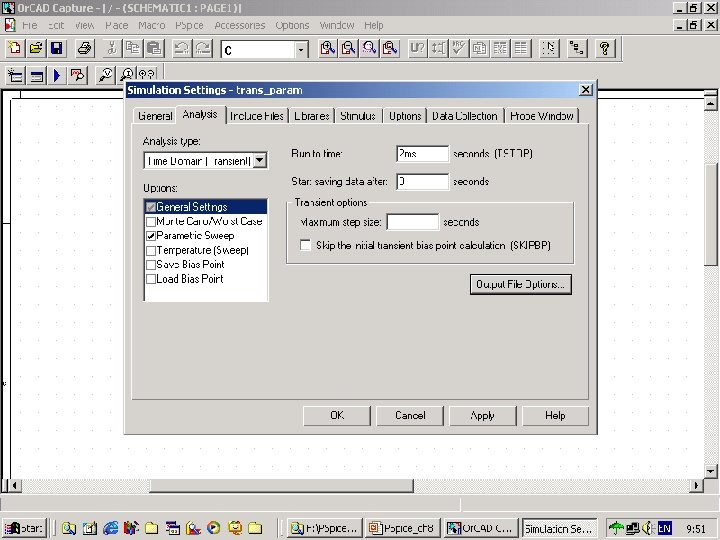
Fig. 82 a Specify the analysis 1
Fig. 82 Specify the analysis 2
PSpice->Run
Fig. 83 Probe
n Note that the analysis using the smallest value of resistance has the smallest damping ratio.