
PSHE By the end of this session you

PSHE
By the end of this session you will: • Have explored some strategies for teaching PSHE
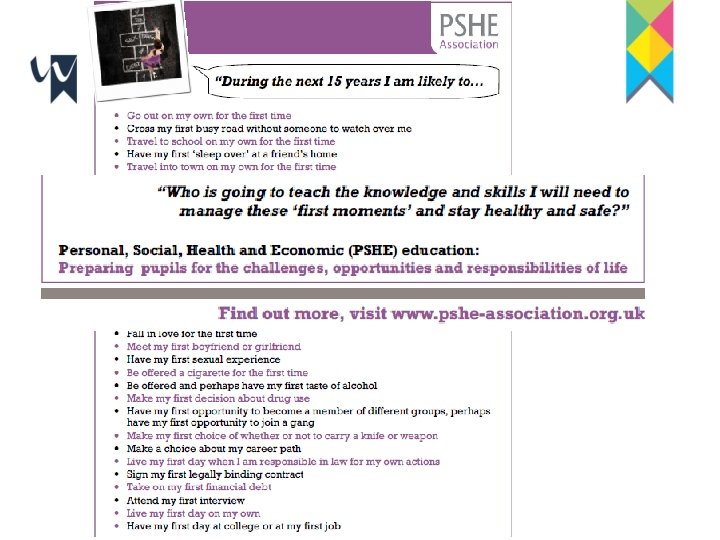
What would you take with you if you had to leave your home in five minutes?
National Curriculum in England All schools make provision for personal, Section 2. 5 should of the National Curriculum social, health and economic education (PSHE), (Df. E, 2015, p 5) states, drawing on good practice. Schools are also free to include subjects or topics of their choice “All stateother schools ‘should make provision for in planning designing theireconomic own programme of personal, and social, health and education. (PSHE), drawing on good practice'. (National Curriculum, 2014) https: //www. gov. uk/government/publications/personal-social-healthand-economic-education-pshe/personal-social-health-and-economicpshe-education
The PSHE Association’s five priorities for PSHE education are that it should be • taught: regularly – regular lessons on the timetable like other subjects • as a whole subject – from RSE to mental & physical health, online safety to job skills • by trained teachers – PSHE covered in teacher training and ongoing opportunities to learn • in all schools – all schools including academies, free schools and independent schools • to all pupils – from year 1 to finishing secondary school

So We’re Talking About What Exactly? PSHE Association Program of Study suggests three core themes: • Health and Wellbeing • Relationships • Living in the Wider World Brainstorm everything this could mean
Core theme 1: Health and Wellbeing �what is meant by a healthy lifestyle �how to maintain physical, mental and emotional health and wellbeing �how to manage risks to physical and emotional health and wellbeing �ways of keeping physically and emotionally safe �about managing change, including puberty, transition and loss �how to make informed choices about health and wellbeing and to recognise sources of help with this �how to respond in an emergency �to identify different influences on health and wellbeing.
Core theme 2: Relationships �how to develop and maintain a variety of healthy relationships within a range of social/cultural contexts �how to recognise and manage emotions within a range of relationships �how to recognise risky or negative relationships including all forms of bullying and abuse �how to respond to risky or negative relationships and ask for help �how to respect equality and diversity in relationships.
Core theme 3: Living in the Wider World �about respect for the self and others and the importance of responsible behaviours and actions �about rights and responsibilities as members of families, other groups and ultimately as citizens �about different groups and communities �to respect equality and to be a productive member of a diverse community �about the importance of respecting and protecting the environment �about where money comes from, keeping it safe and the importance of managing it effectively �how money plays an important part in people’s lives �a basic understanding of enterprise.
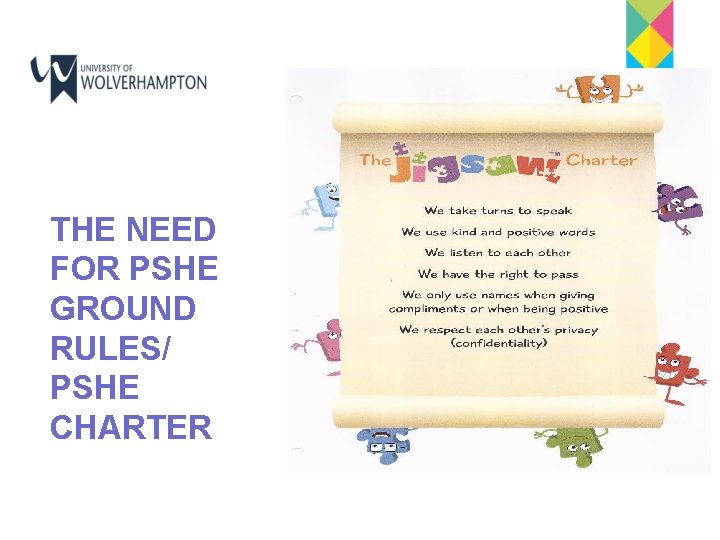
THE NEED FOR PSHE GROUND RULES/ PSHE CHARTER
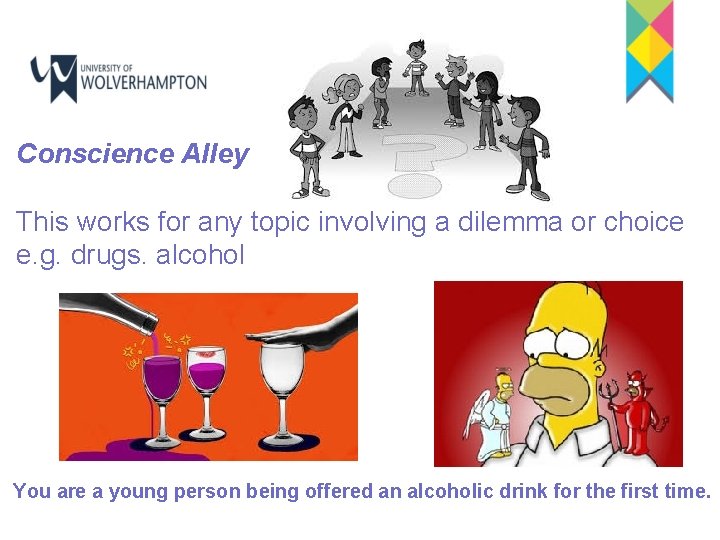
Conscience Alley This works for any topic involving a dilemma or choice e. g. drugs. alcohol You are a young person being offered an alcoholic drink for the first time.
Where and When? • The ‘Hidden Curriculum’ • A lesson or circle time? • Through pastoral care systems e. g. friendship circle • Via other curriculum subjects Activity
Types of Activity • Circle time – needs structure • Drama: Conscience Alley, Election, Courtroom • Debate • Writing – recipe for a good friend • Video – news reports • Art • Trips e. g. supermarket • Visitors e. g. police • In fact…anything at all
What does outstanding look like? • • • Well planned lessons / powerful experiences Use of questioning Teacher’s subject knowledge Broad/ balanced curriculum Visitors Responsive to needs Pupils’ understanding in evidence Pupils’ ability to risk assess Communication with parents Assessment Innovative / creative teaching PSHE has a high profile in school
Circle Time Ground rules – turn taking, talking stick / ball etc. (see primer) Possible topics • How do we feel when. . . ? • What does being a good friend mean? • A big issue e. g. pollution • Solutions to a problem some children might have
Empathy In pairs look at the photos. How do the people in the picture feel? What do you think is happening? Can you think of a time when you felt like that? If you felt like that: What would your facial expression / body language be like? How might you behave? What is that feeling like on the inside? Can you think of any other words for that feeling? How do you think you should treat somebody feeling like this? Cross-curricular link: English – understanding characters in a text.



A Recipe for Friendship You will need: v a pinch of happiness v 1 handful of kindness v 2 spoonfuls of gentleness v 1 litre of sharing v 3 heaped tablespoons of laughter v 50 g of smiles v a sprinkling of cheerfulness v 100 g of love Method: Mix all these together. Then you will have the perfect friend.
Jackie Bob Jean Your best friend has just stolen a chocolate bar from the shop. The shop is owned by your parents. You have just persuaded John outside the shop to steal you a Mars bar as you have not eaten all day and you feel sick. You have had your lunch money stolen. You are a grumpy customer of the shop who has just seen the child steal the bar but you do not like the owner of the shop. John Shopkeeper Security guard You are the child who has taken the Mars Bar. You saw what happened to Bob. He was bullied and pushed by a group of boys. They forced him to give them his lunch money. You are Jackie’s best friend. You saw John take the mars bar but know he is your daughter’s best friend, and after all it is only worth 45 p. You have a real issue with kids stealing sweets and you want to catch and report them all. You suspect you have just seen a child steal a mars bar but not sure. You push for the truth.
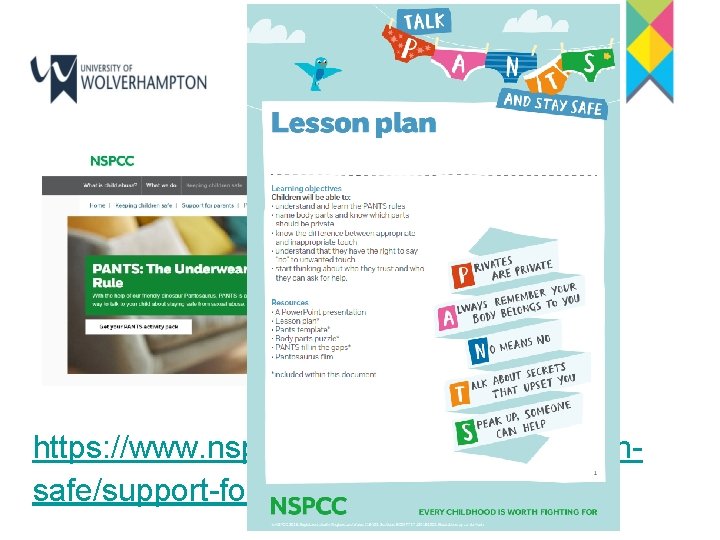
https: //www. nspcc. org. uk/keeping-childrensafe/support-for-parents/underwear-rule/
Online The PSHE Association http: //www. pshe-association. org. uk/ BBC Links http: //www. bbc. co. uk/schools/websites/4_11/site/pshe. shtml Department for Education http: //www. education. gov. uk/schools/teachingandlear ning/curriculum/b 00223087/pshe
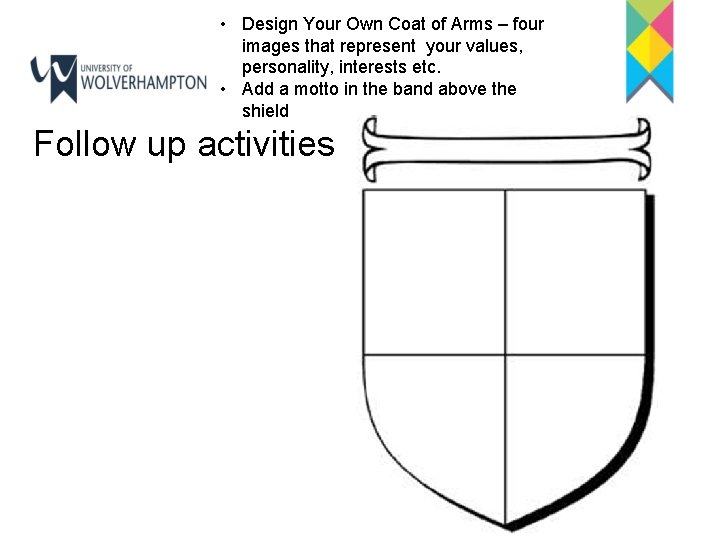
• Design Your Own Coat of Arms – four images that represent your values, personality, interests etc. • Add a motto in the band above the shield Follow up activities
My Spiritual Treasure Chest
- Slides: 26