
Pseudobulbar Affect By Madeline Sweeney What is Pseudobulbar
Pseudobulbar Affect By: Madeline Sweeney
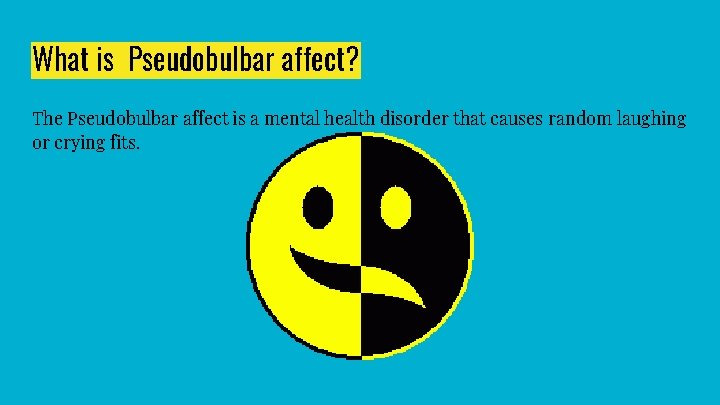
What is Pseudobulbar affect? The Pseudobulbar affect is a mental health disorder that causes random laughing or crying fits.
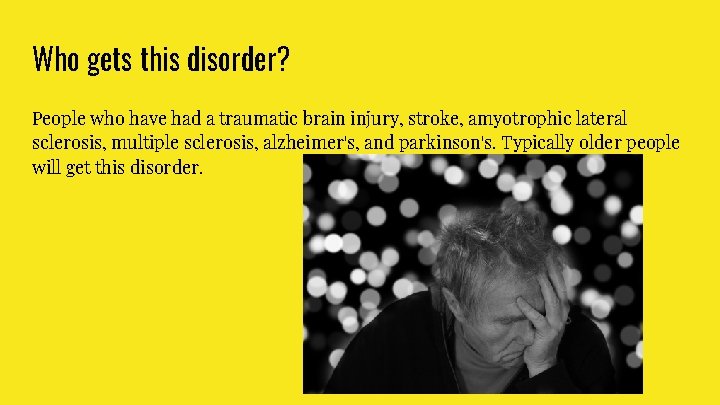
Who gets this disorder? People who have had a traumatic brain injury, stroke, amyotrophic lateral sclerosis, multiple sclerosis, alzheimer's, and parkinson's. Typically older people will get this disorder.
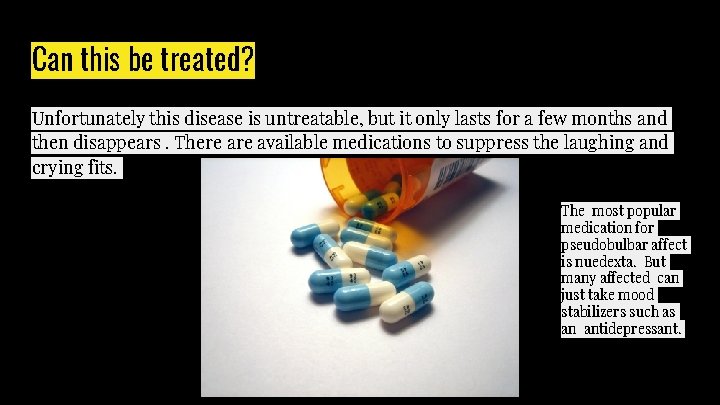
Can this be treated? Unfortunately this disease is untreatable, but it only lasts for a few months and then disappears. There available medications to suppress the laughing and crying fits. The most popular medication for pseudobulbar affect is nuedexta. But many affected can just take mood stabilizers such as an antidepressant.
How common is Pseudobulbar affect? This condition is rare because it only affects people with brain injury or an existing medical condition. There are less than 200, ooo reported cases in the U. S. per year. It is very unlikely for someone under 20 to get this disorder. Only 41% of patients who believe they have pseudobulbar affect are correctly diagnosed.
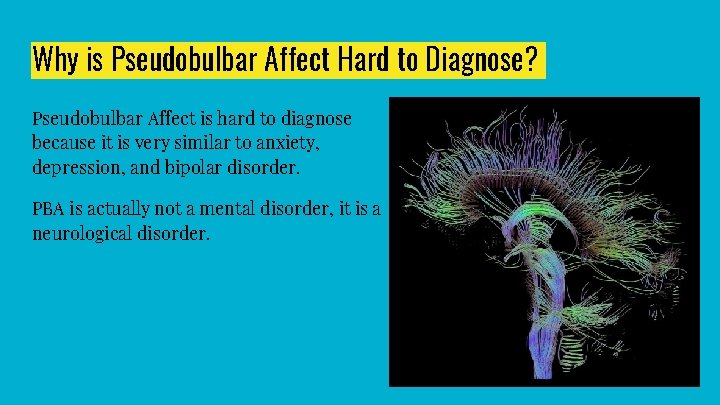
Why is Pseudobulbar Affect Hard to Diagnose? Pseudobulbar Affect is hard to diagnose because it is very similar to anxiety, depression, and bipolar disorder. PBA is actually not a mental disorder, it is a neurological disorder.
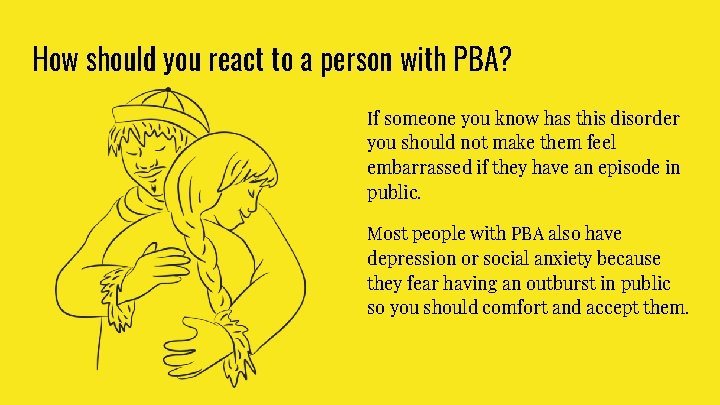
How should you react to a person with PBA? If someone you know has this disorder you should not make them feel embarrassed if they have an episode in public. Most people with PBA also have depression or social anxiety because they fear having an outburst in public so you should comfort and accept them.
Resources for people with Pseudobulbar Affect: Therapy and medication are the best ways to help people with PBA A medication is Nuedexta: https: //www. nuedexta. com/startingnuedexta? msclkid=9 d 60096 f 5695179734 d 15511 e 41 ea 4 a 5&utm_source=Bing&utm_medium=cpc&utm_campaign=Branded+Treatment++%5 BE%5 D%3 BS%3 BPH%3 BBR%3 BNER%3 BDTC%3 BTRE&utm_content=Treatment+Info&utm_term=nuedexta Local therapy locations are: Saint louis Behavioral Medicine Institute, Places for People, Change Inc. , and Foundations for Change.
Sources https: //www. nuedexta. com/startingnuedexta? msclkid=9 d 60096 f 5695179734 d 15511 e 41 ea 4 a 5&utm_source=Bing&utm_medium=cpc&utm_campaign=Branded+ Treatment++%5 BE%5 D%3 BS%3 BPH%3 BBR%3 BNER%3 BDTC%3 BTRE&utm_content=Treatment+Info&utm_term=nuedexta https: //www. pbainfo. org/aboutpba? msclkid=de 6 e 35 a 407 c 5106 a 69 f 369 dab 3 a 82387&utm_source=bing&utm_medium=cpc&utm_campaign=Condition%20 %5 BE%5 D; S; PH; UB; NER; DTC; CON&utm_term=pba%20 info&utm_content=PBA%20 -%20 Information https: //www. healthline. com/health/multiple-sclerosis/pseudobulbar-affect https: //www. webmd. com/brain/pseudobulbar-affect#1 https: //rarediseases. info. nih. gov/diseases/12012/pseudobulbar-affect
- Slides: 9