
PSD 7 September 2005 Developments and Applications of
PSD 7 September 2005 Developments and Applications of Gas Based Neutron Detectors Introduction Neutron Detector Characteristics Gaseous Detectors currently in use Challenges for the future New developments Conclusion N J Rhodes CCLRC ISIS Facility
INTRODUCTION Neutrons Provide information on the structure and dynamic of materials on an atomic/molecular scale Ideal probes for Condensed Matter Research · Zero charge – highly penetrating ·Low KE probe atomic / molecular dynamics (100 e. V – sub me. V) – · Etc… Non idealised particles for detection · Zero charge – generally weak interaction · Low KE generally weak interaction – Require a nuclear converter
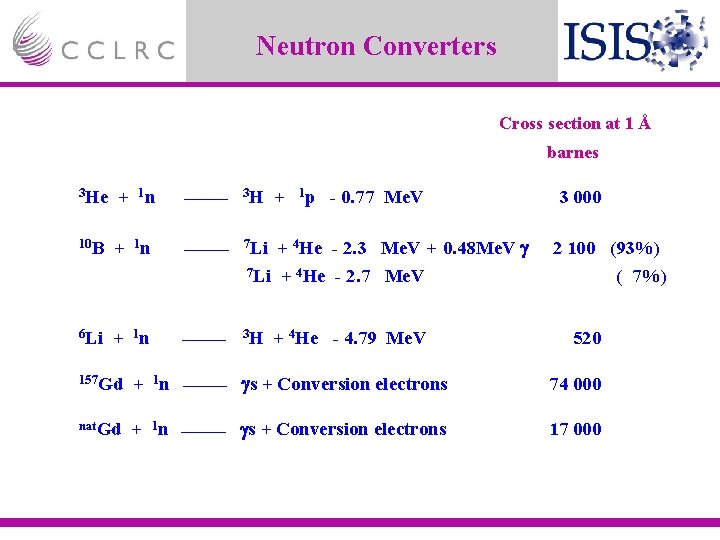
Neutron Converters Cross section at 1 Å barnes 3 He + 1 n _______ 3 H + 1 p - 0. 77 Me. V 10 B + 1 n _______ 7 Li + 4 He - 2. 3 Me. V + 3 000 0. 48 Me. V g 2 100 (93%) 7 Li + 4 He - 2. 7 Me. V 6 Li + 1 n _______ 3 H + 4 He - 4. 79 Me. V ( 7%) 520 157 Gd + 1 n _______ gs + Conversion electrons 74 000 nat. Gd + 1 n _______ gs + Conversion electrons 17 000
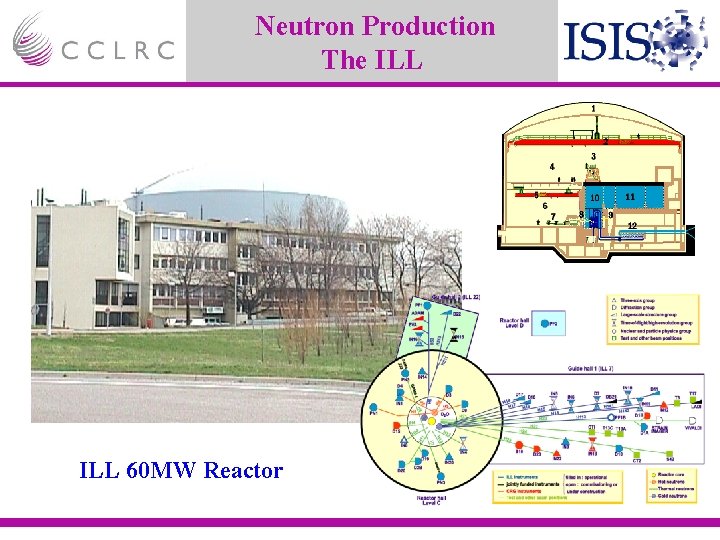
Neutron Production The ILL 60 MW Reactor
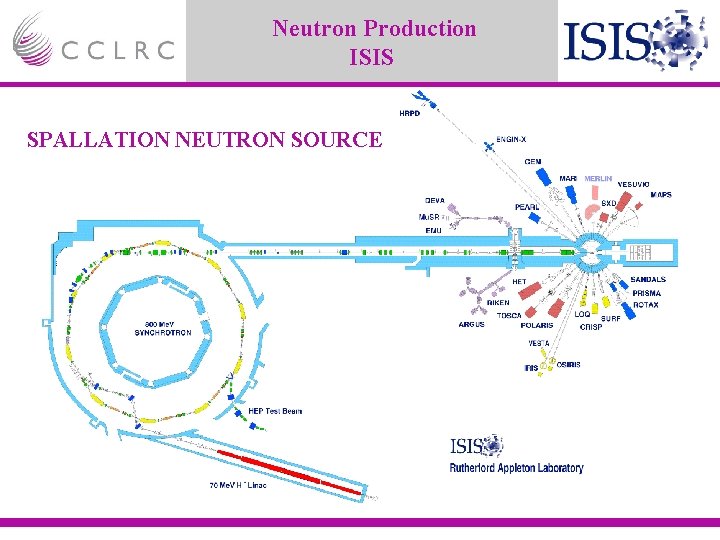
Neutron Production ISIS SPALLATION NEUTRON SOURCE
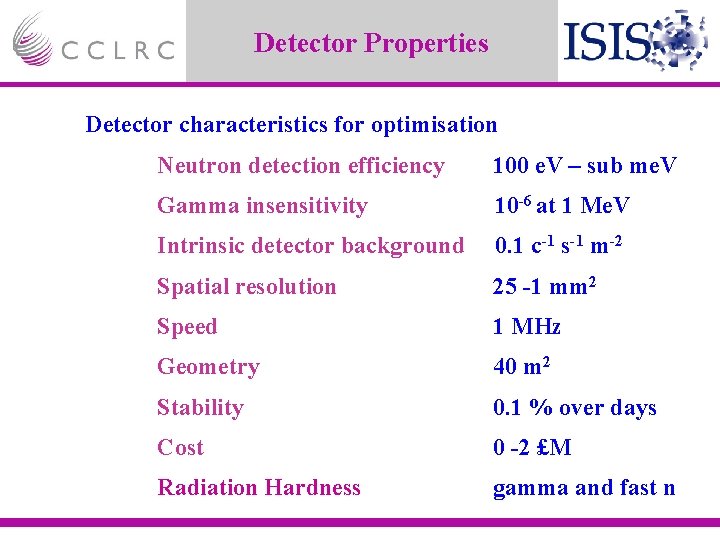
Detector Properties Detector characteristics for optimisation Neutron detection efficiency 100 e. V – sub me. V Gamma insensitivity 10 -6 at 1 Me. V Intrinsic detector background 0. 1 c-1 s-1 m-2 Spatial resolution 25 -1 mm 2 Speed 1 MHz Geometry 40 m 2 Stability Cost Radiation Hardness 0. 1 % over days 0 -2 £M gamma and fast n
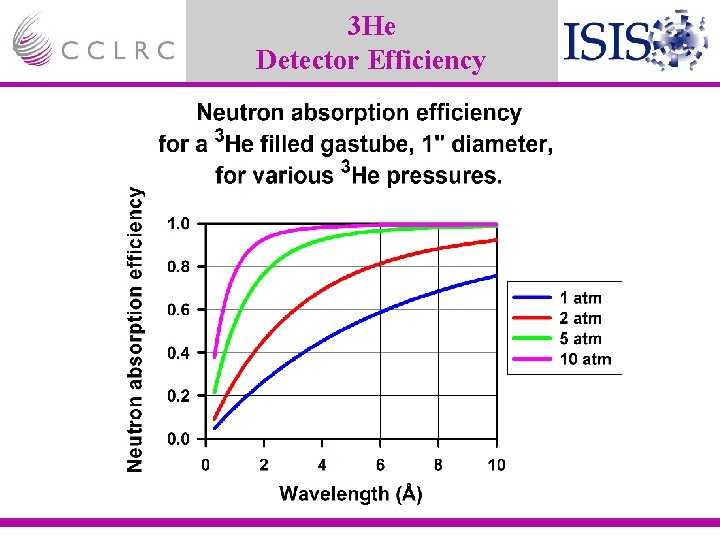
3 He Detector Efficiency
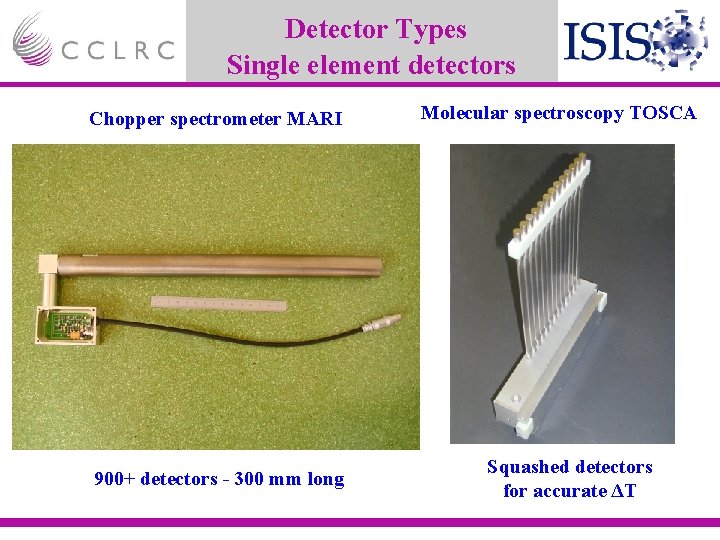
Detector Types Single element detectors Chopper spectrometer MARI Molecular spectroscopy TOSCA 900+ detectors - 300 mm long Squashed detectors for accurate ΔT
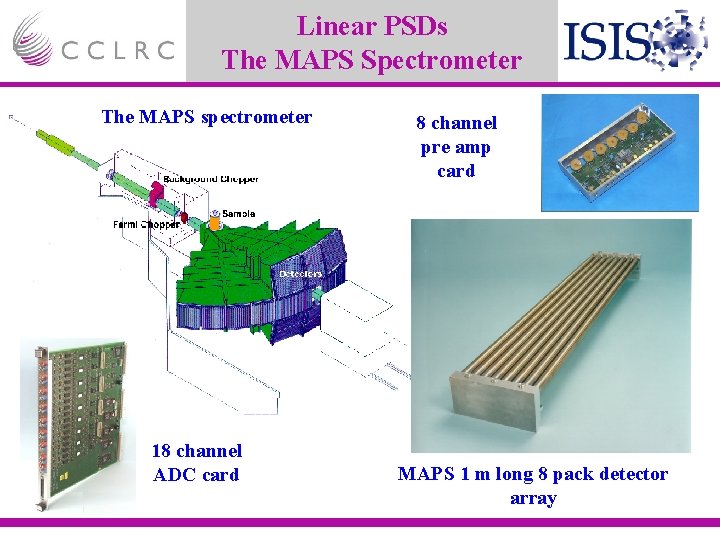
Linear PSDs The MAPS Spectrometer The MAPS spectrometer 18 channel ADC card 8 channel pre amp card MAPS 1 m long 8 pack detector array
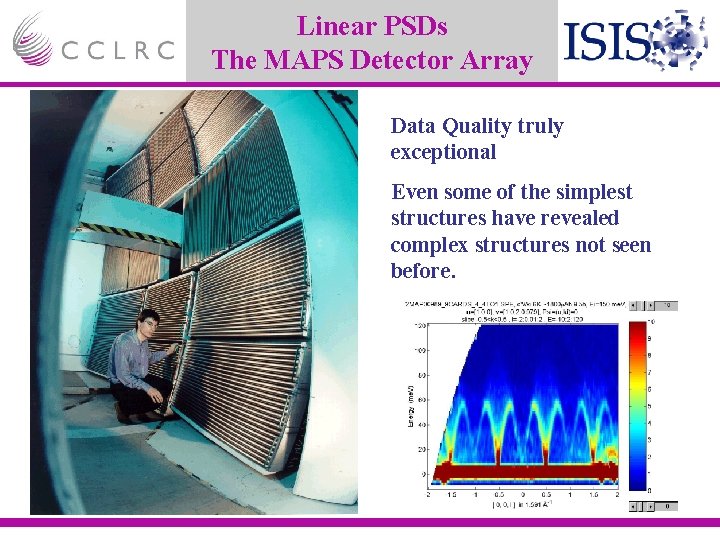
Linear PSDs The MAPS Detector Array Data Quality truly exceptional Even some of the simplest structures have revealed complex structures not seen before.
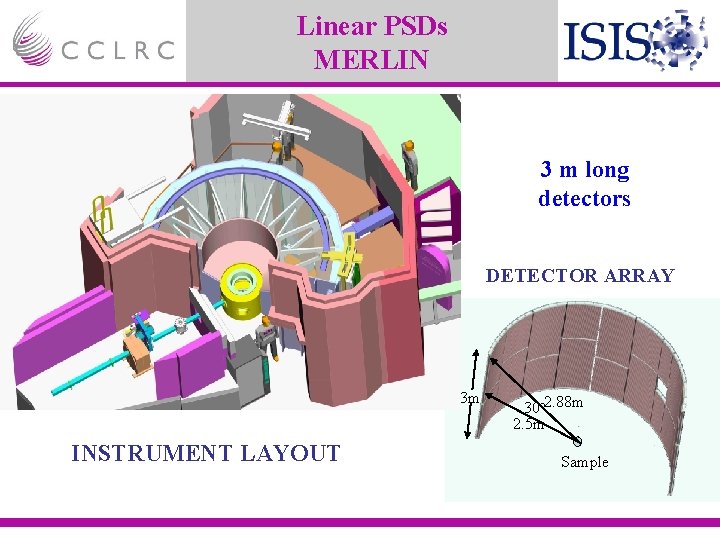
Linear PSDs MERLIN 3 m long detectors DETECTOR ARRAY 3 m INSTRUMENT LAYOUT 30 o 2. 88 m 2. 5 m Sample
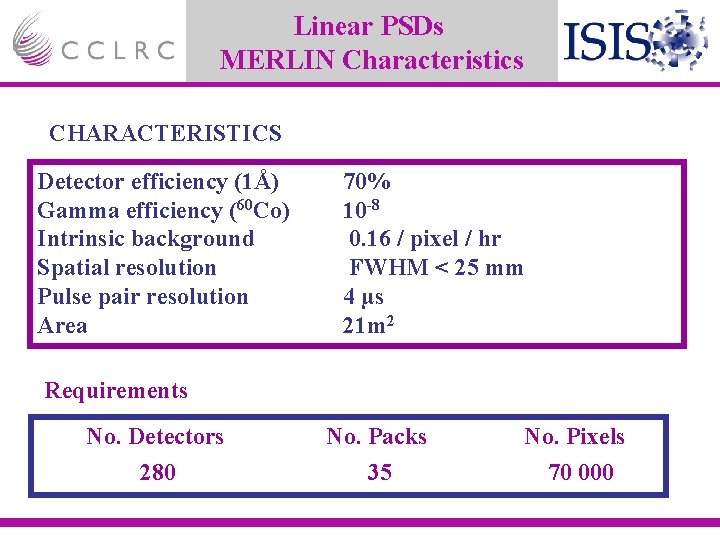
Linear PSDs MERLIN Characteristics CHARACTERISTICS Detector efficiency (1Å) Gamma efficiency (60 Co) Intrinsic background Spatial resolution Pulse pair resolution Area 70% 10 -8 0. 16 / pixel / hr FWHM < 25 mm 4 µs 21 m 2 Requirements No. Detectors No. Packs No. Pixels 280 35 70 000
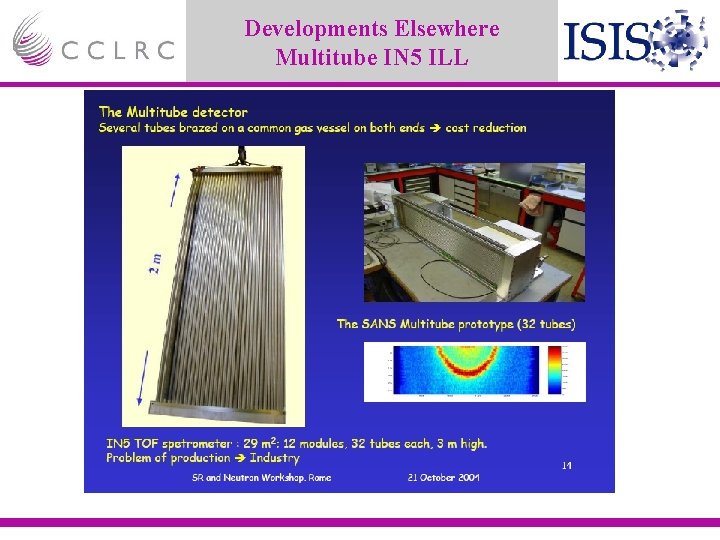
Developments Elsewhere Multitube IN 5 ILL
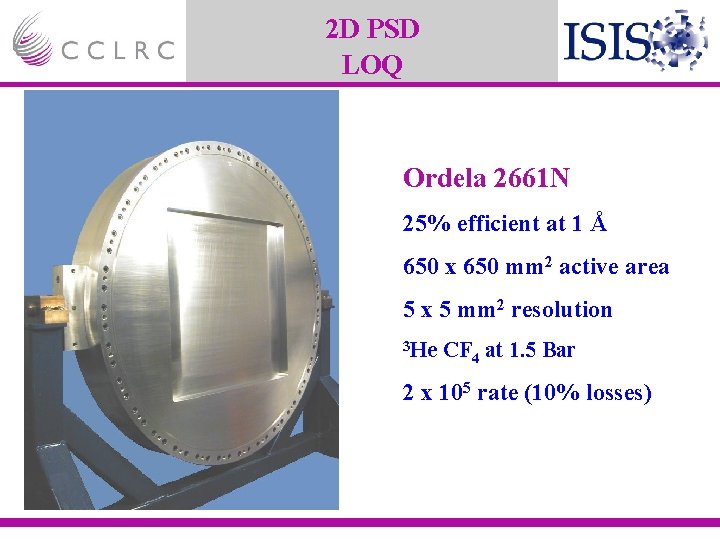
2 D PSD LOQ Ordela 2661 N 25% efficient at 1 Å 650 x 650 mm 2 active area 5 x 5 mm 2 resolution 3 He CF 4 at 1. 5 Bar 2 x 10⁵ rate (10% losses)
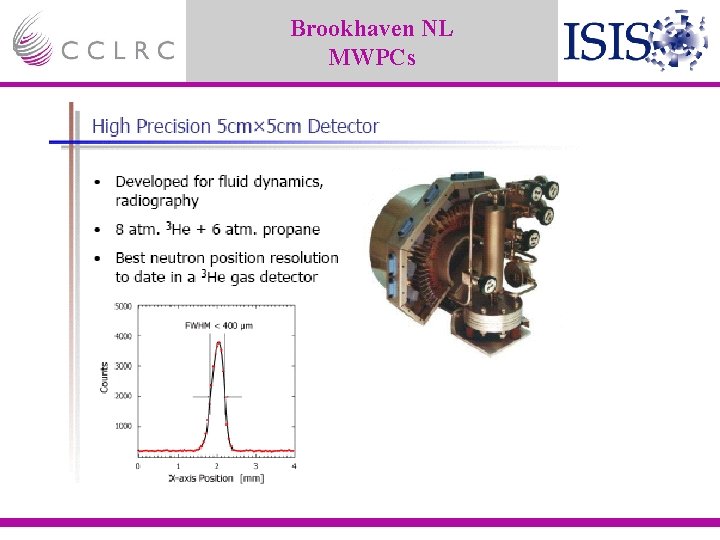
Brookhaven NL MWPCs
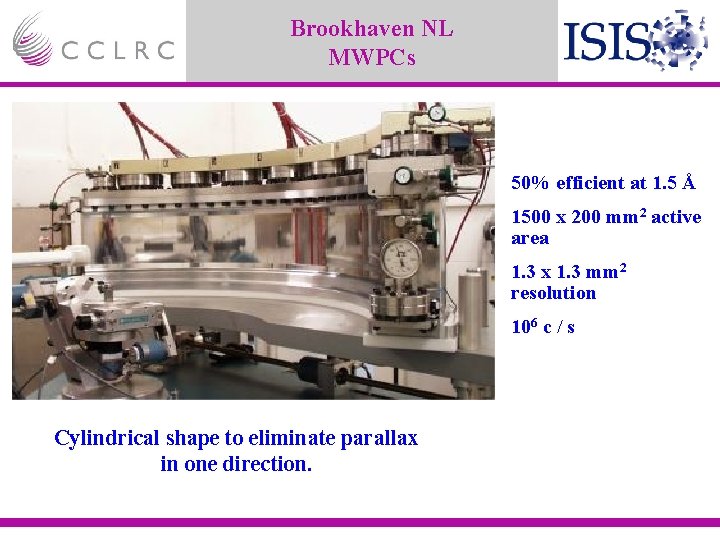
Brookhaven NL MWPCs 50% efficient at 1. 5 Å 1500 x 200 mm 2 active area 1. 3 x 1. 3 mm 2 resolution 106 c / s Cylindrical shape to eliminate parallax in one direction.
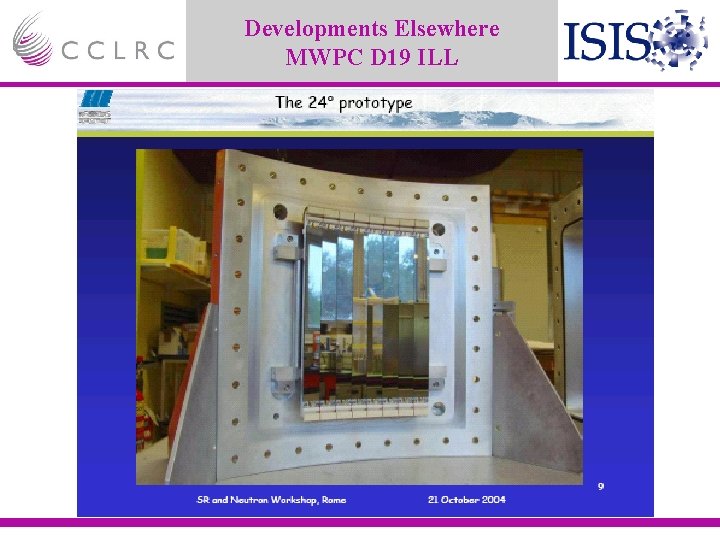
Developments Elsewhere MWPC D 19 ILL
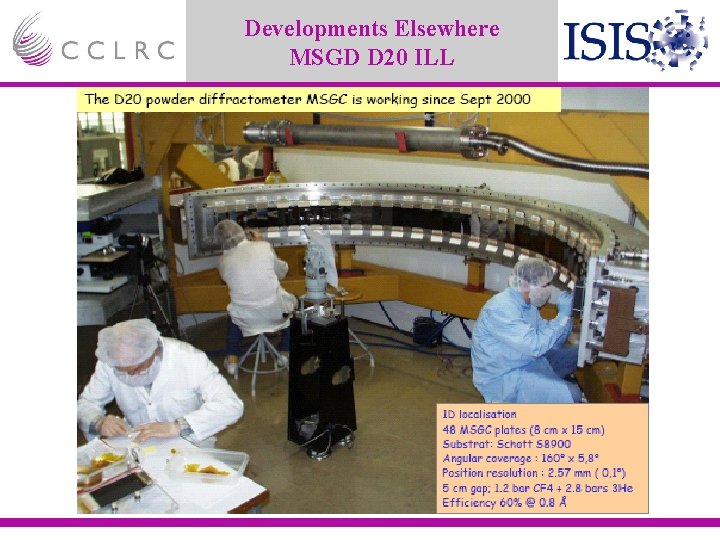
Developments Elsewhere MSGD D 20 ILL
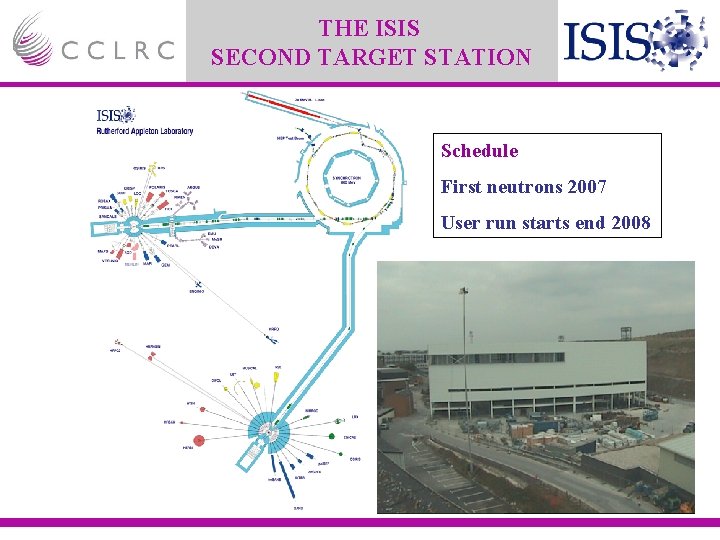
Compare characteristics with THE ISIS SECOND TARGET STATION the ISIS instrument suite Schedule First neutrons 2007 User run starts end 2008
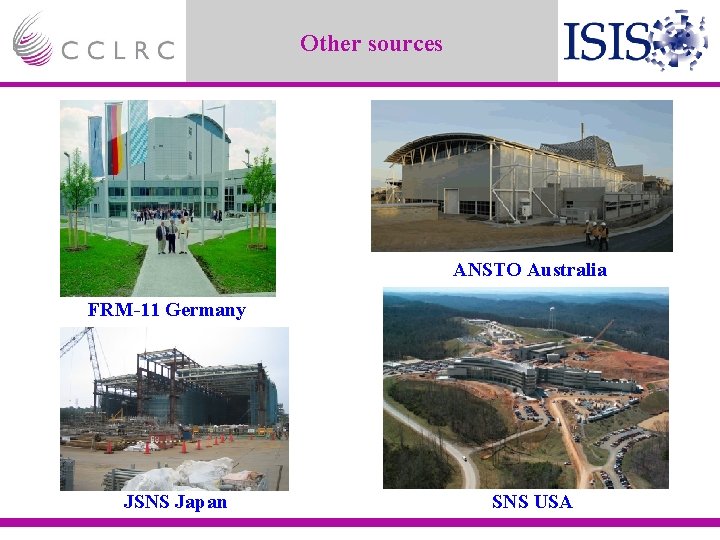
Other sources ANSTO Australia FRM-11 Germany JSNS Japan SNS USA
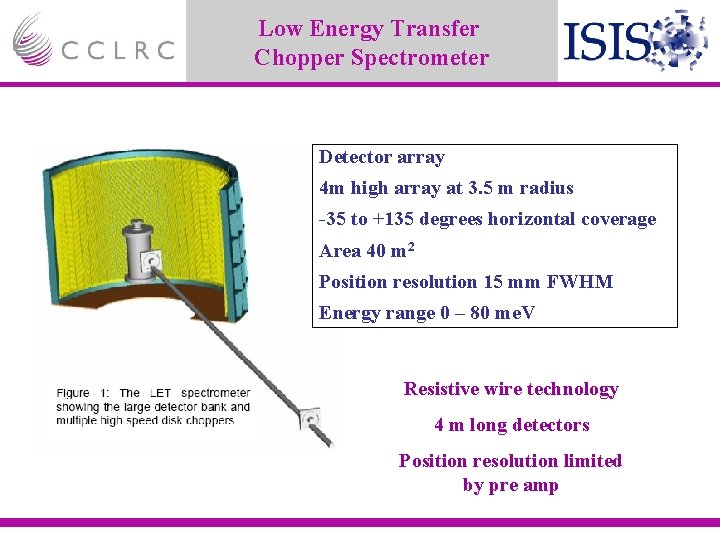
Low Energy Transfer Chopper Spectrometer Detector array 4 m high array at 3. 5 m radius -35 to +135 degrees horizontal coverage Area 40 m 2 Position resolution 15 mm FWHM Energy range 0 – 80 me. V Resistive wire technology 4 m long detectors Position resolution limited by pre amp
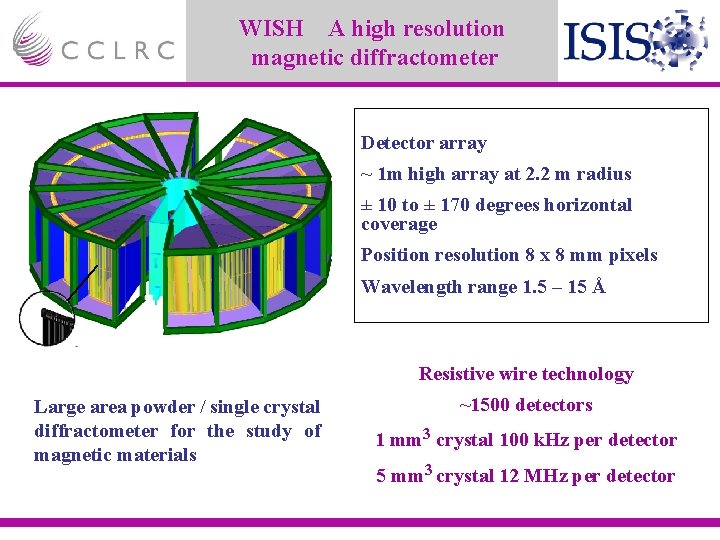
WISH A high resolution magnetic diffractometer Detector array ~ 1 m high array at 2. 2 m radius ± 10 to ± 170 degrees horizontal coverage Position resolution 8 x 8 mm pixels Wavelength range 1. 5 – 15 Å Resistive wire technology Large area powder / single crystal diffractometer for the study of magnetic materials ~1500 detectors 1 mm 3 crystal 100 k. Hz per detector 5 mm 3 crystal 12 MHz per detector
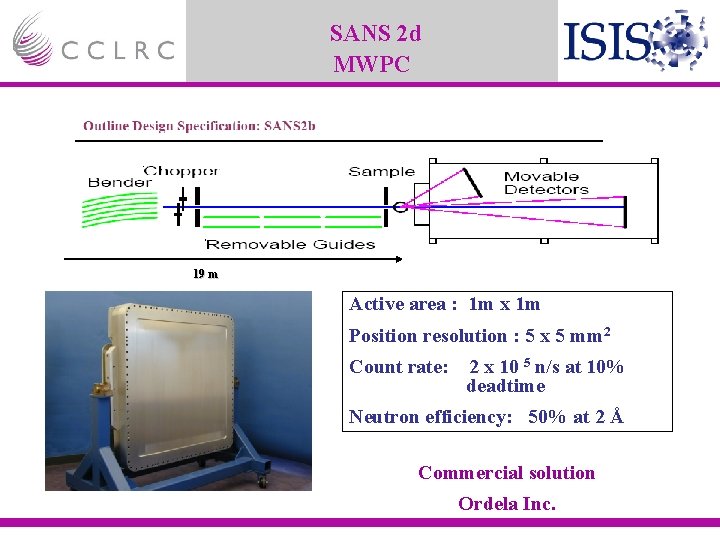
Resistive Wire Technology SANS 2 d The MAPS Detector Array MWPC 19 m Active area : 1 m x 1 m Position resolution : 5 x 5 mm 2 Count rate: 2 x 10 5 n/s at 10%. deadtime Neutron efficiency: 50% at 2 Å Commercial solution Ordela Inc.
Neutron Detector Development in FP 6 Under the EU Framework Programme 6 An Integrated Infrastructure Initiative has been set up for Neutron Scattering and Muon Spectroscopy NMI 3 includes 8 Joint Research Activities JRA 1 - (DETNI) Detectors for Neutron Instrumentation - Burckhard Gebauer JRA 2 - (MILAND) Millimetre Resolution Large Area Neutron Detector - Bruno Guerard
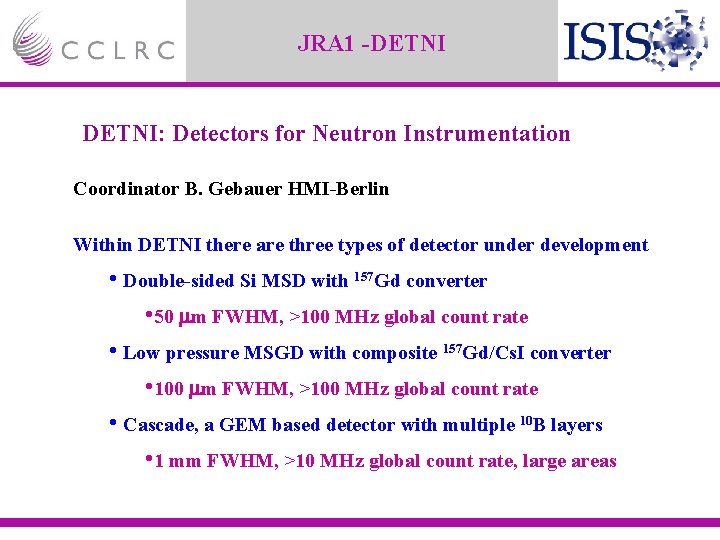
JRA 1 -DETNI DETNI: Detectors for Neutron Instrumentation Coordinator B. Gebauer HMI-Berlin Within DETNI there are three types of detector under development • Double-sided Si MSD with 157 Gd converter • 50 mm FWHM, >100 MHz global count rate • Low pressure MSGD with composite 157 Gd/Cs. I converter • 100 mm FWHM, >100 MHz global count rate • Cascade, a GEM based detector with multiple 10 B layers • 1 mm FWHM, >10 MHz global count rate, large areas
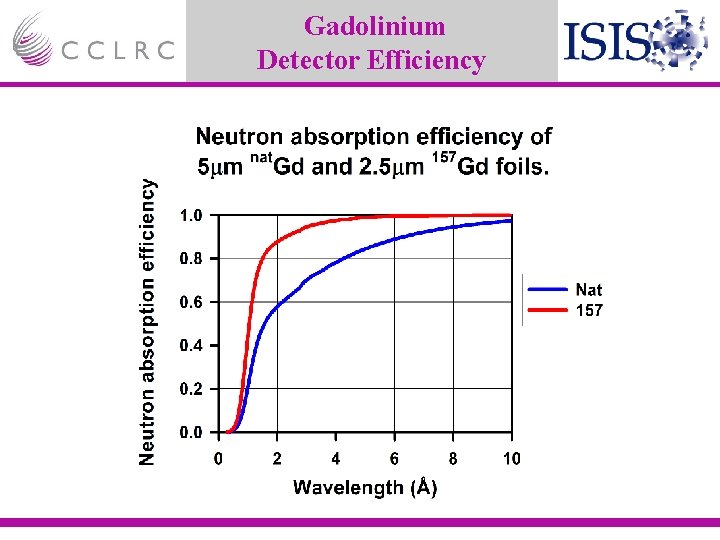
Gadolinium Detector Efficiency
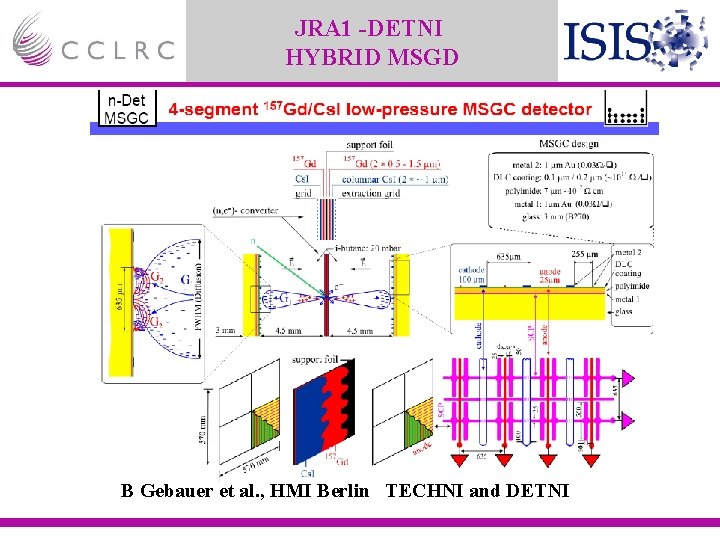
JRA 1 -DETNI HYBRID MSGD B Gebauer et al. , HMI Berlin TECHNI and DETNI
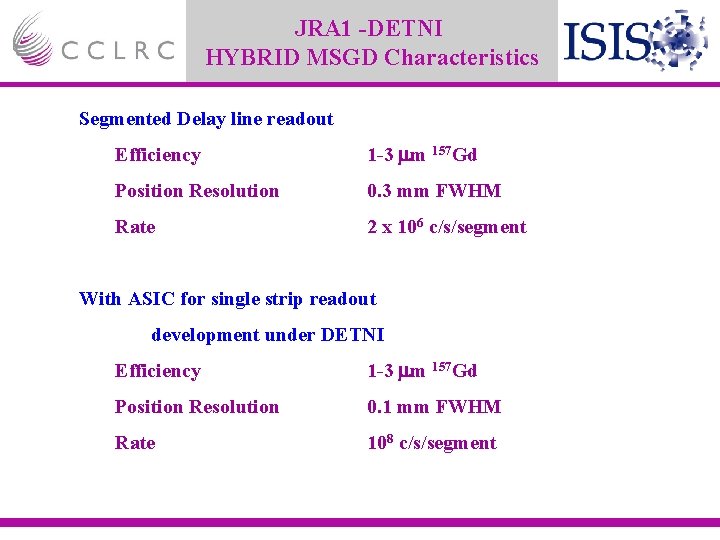
JRA 1 -DETNI HYBRID MSGD Characteristics Segmented Delay line readout Efficiency 1 -3 mm 157 Gd Position Resolution 0. 3 mm FWHM Rate 2 x 10⁶ c/s/segment With ASIC for single strip readout development under DETNI Efficiency 1 -3 mm 157 Gd Position Resolution 0. 1 mm FWHM Rate 108 c/s/segment
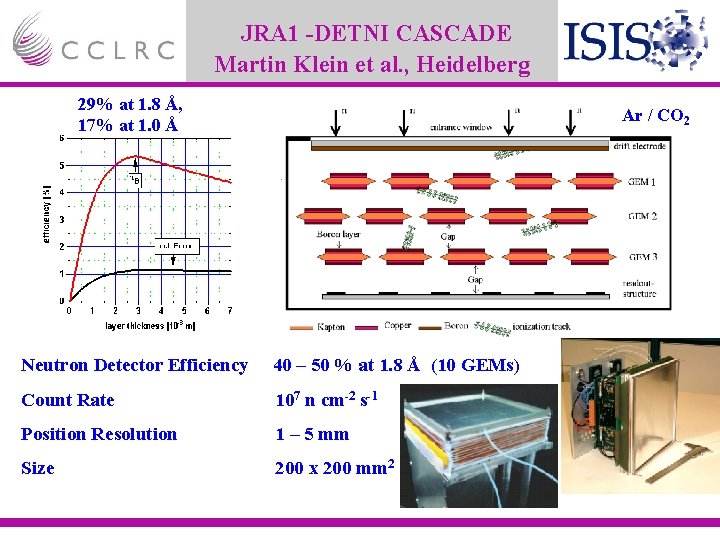
JRA 1 -DETNI CASCADE Martin Klein et al. , Heidelberg 29% at 1. 8 Å, 17% at 1. 0 Å Ar / CO 2 Neutron Detector Efficiency 40 – 50 % at 1. 8 Å (10 GEMs) Count Rate 107 n cm-2 s-1 Position Resolution 1 – 5 mm Size 200 x 200 mm 2
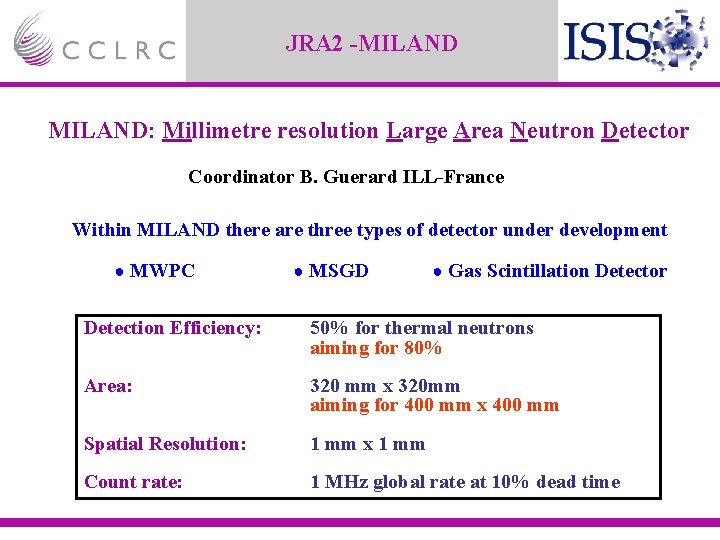
JRA 2 -MILAND MILAND: Millimetre resolution Large Area Neutron Detector Coordinator B. Guerard ILL-France Within MILAND there are three types of detector under development ● MWPC ● MSGD ● Gas Scintillation Detector Detection Efficiency: 50% for thermal neutrons aiming for 80% Area: 320 mm x 320 mm aiming for 400 mm x 400 mm Spatial Resolution: 1 mm x 1 mm Count rate: 1 MHz global rate at 10% dead time
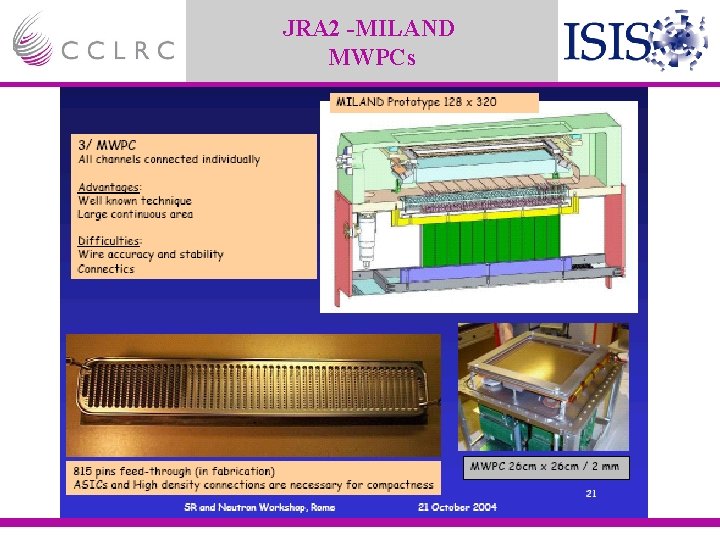
JRA 2 -MILAND MWPCs
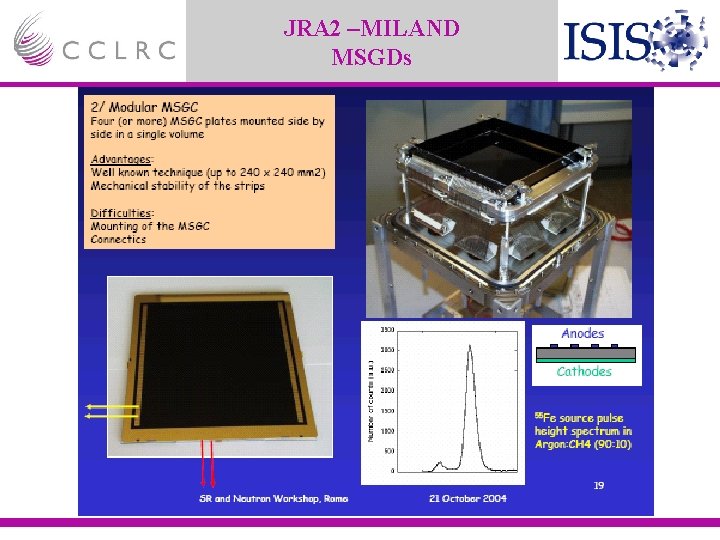
JRA 2 –MILAND MSGDs
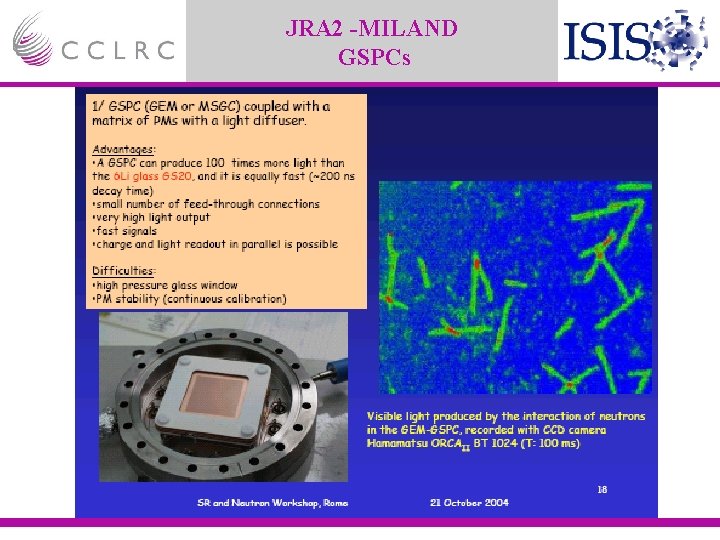
JRA 2 -MILAND GSPCs
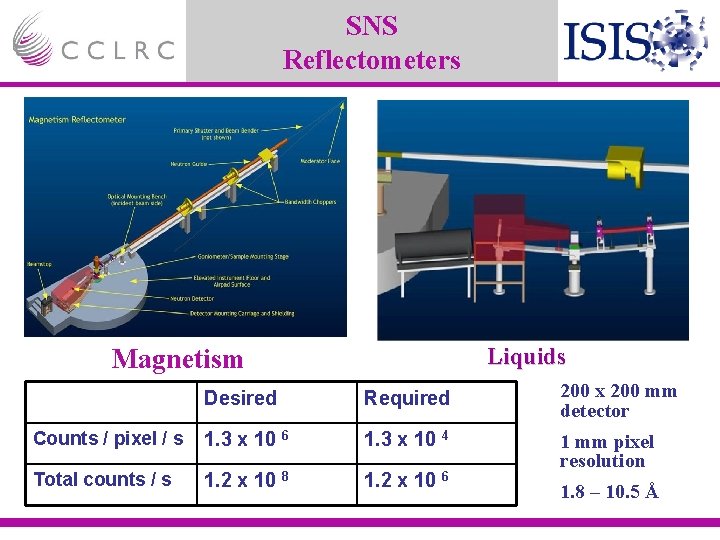
SNS Reflectometers Liquids Magnetism Desired Required 200 x 200 mm detector Counts / pixel / s 1. 3 x 10 6 1. 3 x 10 4 Total counts / s 1. 2 x 10 8 1. 2 x 10 6 1 mm pixel resolution 1. 8 – 10. 5 Å
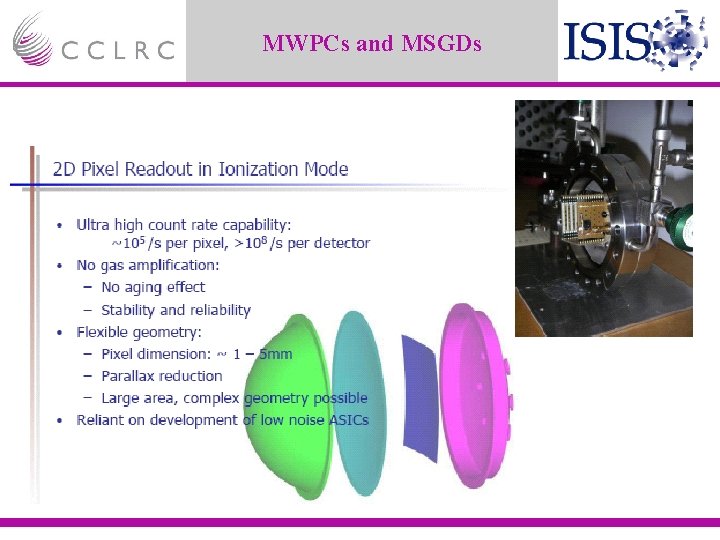
MWPCs and MSGDs
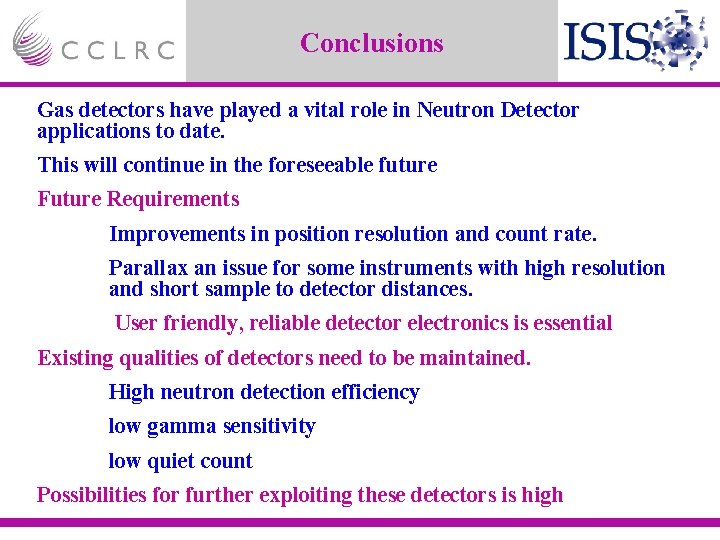
Conclusions Gas detectors have played a vital role in Neutron Detector applications to date. This will continue in the foreseeable future Future Requirements Improvements in position resolution and count rate. Parallax an issue for some instruments with high resolution and short sample to detector distances. User friendly, reliable detector electronics is essential Existing qualities of detectors need to be maintained. High neutron detection efficiency low gamma sensitivity low quiet count Possibilities for further exploiting these detectors is high
- Slides: 36