
Pruning Windbreaks Prepared by L Robert Barber Ilene
Pruning Windbreaks Prepared by: L. Robert Barber, & Ilene Iriarte For: Guam Cooperative Extension Service & Guam Department of Agriculture Funding provided by: United States Department of Agriculture Natural Resources Conservation Service, Western Region Sustainable Agriculture Research and Education, Administration for Native Americans, , & Sanctuary Incorporated
What is Pruning • Removal of plant parts to: – Improve health – Form – Control growth – Manipulate flowering, fruiting • Pruning should be routine maintenance – Do not prune if unnecessary – Do not wait until overgrown • Can harm plants if over pruned
Why Prune? • Number of reasons to prune, the three main reasons are: – Safety, Health, & Aesthetics • As trees mature reasons would change to: – Structure, Form, Health and Appearance. • Determine why you are pruning before you start
Pruning Steps • The first steps in pruning are: – – Removing dead or decaying branches Diseased branches Broken branches Narrow crotch angles • Proper plant selection can reduce pruning requirements • Pruning & training should start when trees are young – May help prevent serious problems
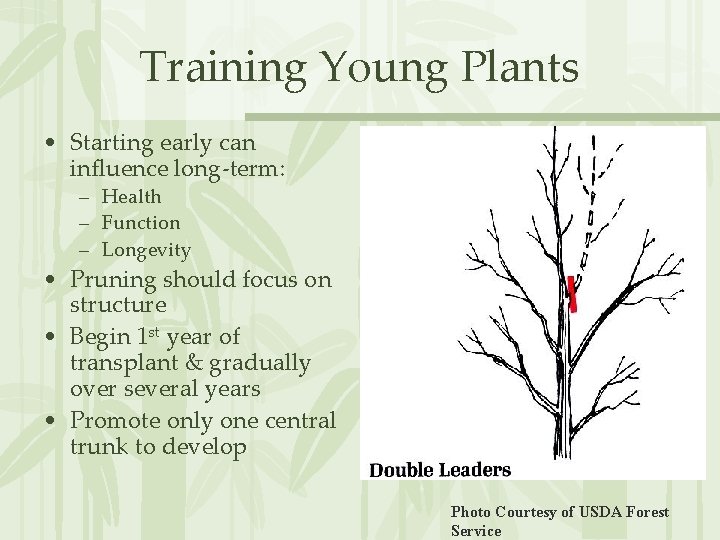
Training Young Plants • Starting early can influence long-term: – Health – Function – Longevity • Pruning should focus on structure • Begin 1 st year of transplant & gradually over several years • Promote only one central trunk to develop Photo Courtesy of USDA Forest Service
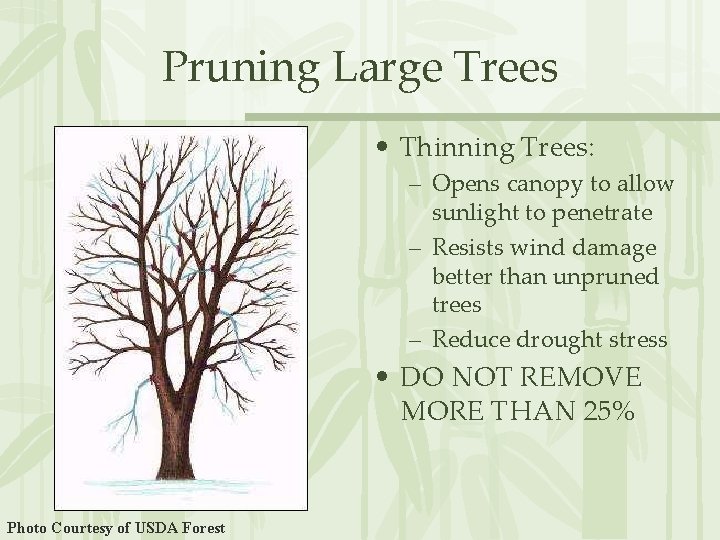
Pruning Large Trees • Thinning Trees: – Opens canopy to allow sunlight to penetrate – Resists wind damage better than unpruned trees – Reduce drought stress • DO NOT REMOVE MORE THAN 25% Photo Courtesy of USDA Forest
Safety Pruning • Branches with narrow V-shaped angles: – Should be removed – Forms included bark • Prevents strong attachment of branches • Branches with U-shaped angles: – Should be retained – Strong attachment
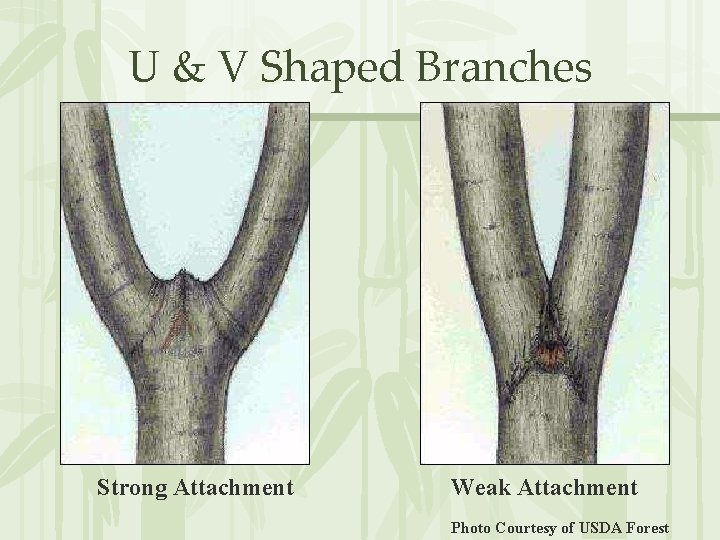
U & V Shaped Branches Strong Attachment Weak Attachment Photo Courtesy of USDA Forest
Proper Pruning Cuts • Proper pruning cut does not damage either branch collar, or branch bark ridge • To find the Branch Collar: – Grows from the stem tissue at the underside of the base of branch (mango’s show this well) • Upper surface, there is usually a Branch Bark Ridge – Parallel to the branch angle, along the stem of the tree
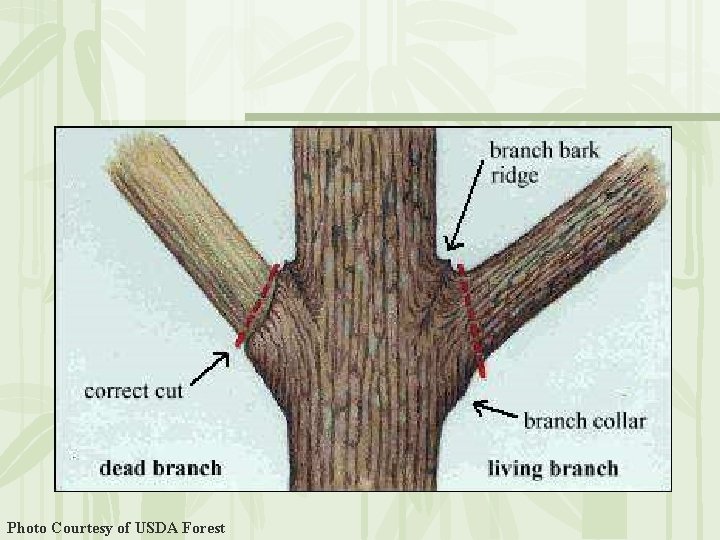
Photo Courtesy of USDA Forest
Proper Pruning Cuts • Proper cut is just outside the branch bark ridge, avoid injury to branch collar • If stem tissue is not injured the wound will seal in shortest amount of time • If cut is too far from stem: – Branch tissue normally dies – Can provide entry to diseases & insects – Delays or prevents wound wood formation

Stub Cut
Proper Pruning Cuts • Proper pruning cut: – A concentric ring of wound wood will form • Flush Cuts: – Made inside the branch bark ridge or branch collar – Pronounced development of wound wood on sides of pruning cuts – Very little wound wood forming on top & bottom
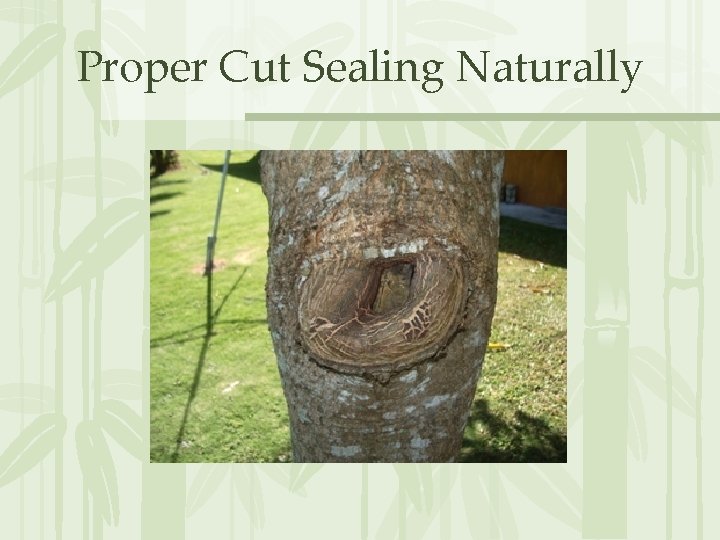
Proper Cut Sealing Naturally
Types of Pruning Cuts • Pruning Small Branches: – Use sharp hand pruners • Pruning branches with hand saw: – Support the branch with one hand, make cut with another • Pruning Large Branches: – Make a 3 -step pruning cut
3 -Step Pruning Cut • 1 st cut is made (6 -8”) underneath the branch outside the branch collar – Prevents branch from tearing the stem • 2 nd cut is made 2 -4” outward from the 1 st cut on the topside of the branch – Cut until branch breaks off • 3 rd cut is cut just outside branch bark ridge/branch collar
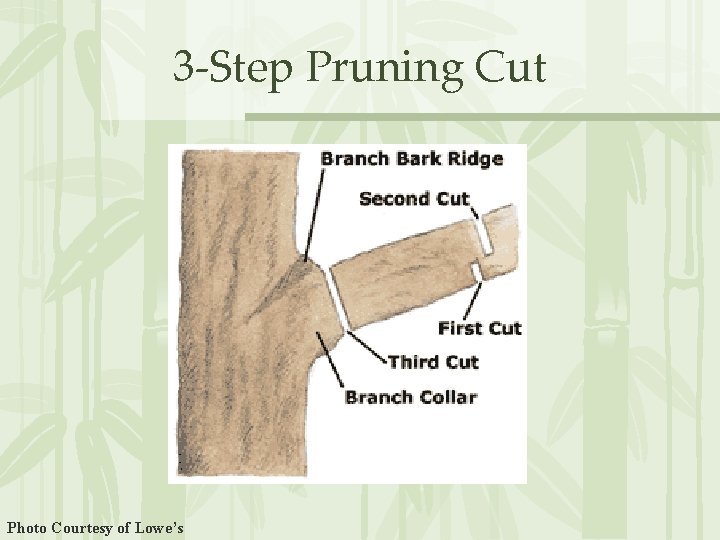
3 -Step Pruning Cut Photo Courtesy of Lowe’s
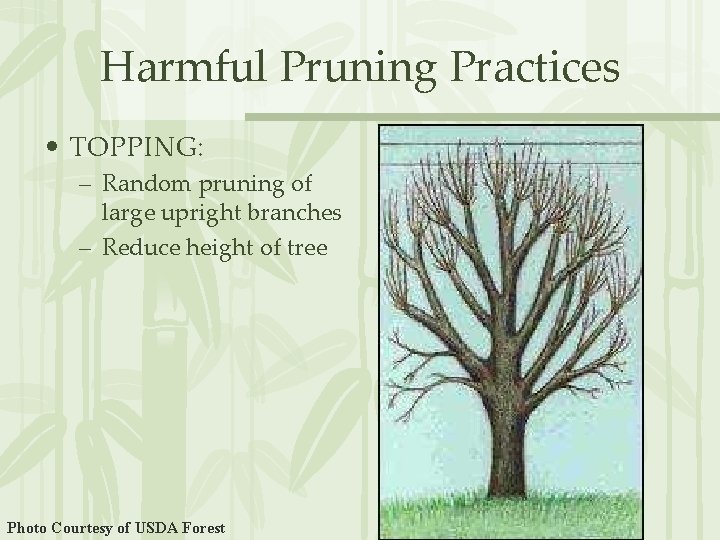
Harmful Pruning Practices • TOPPING: – Random pruning of large upright branches – Reduce height of tree Photo Courtesy of USDA Forest
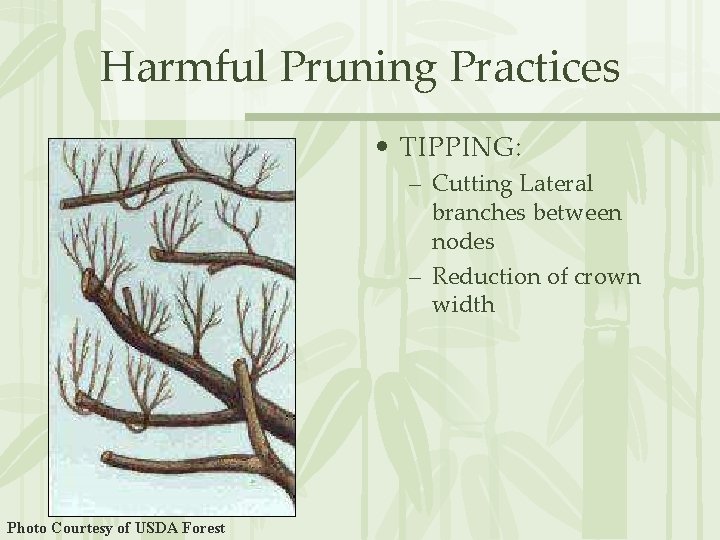
Harmful Pruning Practices • TIPPING: – Cutting Lateral branches between nodes – Reduction of crown width Photo Courtesy of USDA Forest
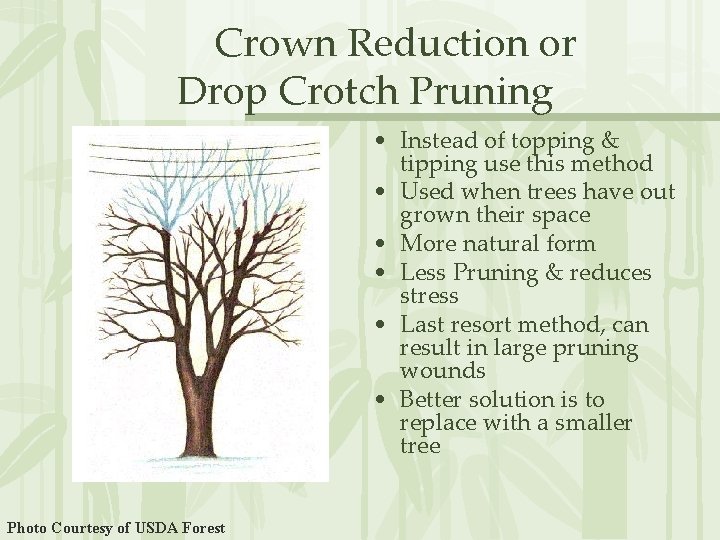
Crown Reduction or Drop Crotch Pruning • Instead of topping & tipping use this method • Used when trees have out grown their space • More natural form • Less Pruning & reduces stress • Last resort method, can result in large pruning wounds • Better solution is to replace with a smaller tree Photo Courtesy of USDA Forest
Harmful Pruning Practices • These pruning practices normally: – Result in death of branch – More susceptible to pests & diseases – Stresses out the tree – Forces rapid growth (survival mechanism) – Sprouts that grow are weakly attached • Will be eventually supported by decaying branch
Summary • For more information please contact your local Cooperative Extension Service at 735 -2080
- Slides: 22