
PROW Charting New Waters in Best Practices for
PROW Charting New Waters in Best Practices for Immunization Registries

What is the purpose of PROW? n n To identify ways registries can effectively and integrally support the other core program components of an immunization program. To encourage and support adoption of those activities by all registries.
What are the products of PROW? n Standards of Excellence in each of six program areas: • Assessment • Consumer Information • Provider Quality Assurance • Service Delivery • Surveillance • Vaccine Management n Dynamic peer learning through a mentoring network
PROW Standards of Excellence n n n Comparable to Best Practices Standards as a ceiling to shoot for versus a floor or set of minimum set of requirements Concrete and tangible Organized by Core Program Components. Cross-referenced to recommended activities in the IPOM

PROW Standards of Excellence n n Organized into three levels, from relatively easy to implement to challenging/resource intensive Useful for: • • • n Identifying enhancements Upgrading your current application Developing requirements for a new application or RFP Seen as an essential companion to minimum registry functions (NVAC), IPOM, and the new certification process.
What can the PROW standards do for you? n n Greater integration and synergy across your staff/teams More efficient use of 317 and other funds. More fully functional, highly featured registry application Meeting user needs in a more seamless way
Registry Support of Core Program Components Provider QA Registries
Provider Quality Assurance “By enabling access to complete immunization records, registries support providers in delivering ageappropriate and timely immunizations, and in reducing under- and over-immunization. ”
Provider Quality Assurance n n n Level I: Export to CASA or otherwise use registry data as part of AFIX visits. Use registry data to highlight general or practice-specific practice issues that can be incorporated into provider trainings, newsletters, or a “tip-of-the-month” web link.
Provider Quality Assurance n n Level II: Highlight invalid doses when displaying a history. Use registry data to prioritize AFIX or VFC site visits. Use the registry to track series completion for children born to surface antigen-positive moms.
Provider Quality Assurance n n n Level III: Be able to display the reason for an invalid dose. Include HBV and HBIG data fields in birth records or other mechanisms, and regularly upload to the registry.
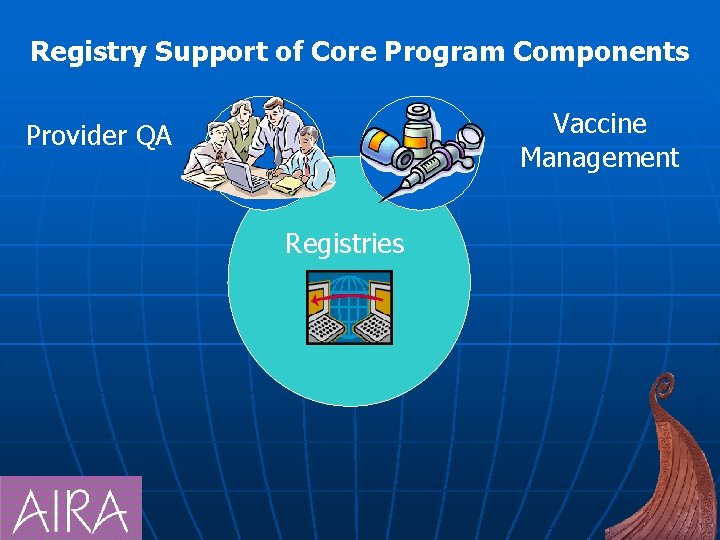
Registry Support of Core Program Components Vaccine Management Provider QA Registries
Vaccine Management “Immunization registries provide users with information and functions that support proper storage and handling of vaccines, and internally can support management of the VFC program. ”
Vaccine Management n n n Level I: Use the registry to direct users to information on vaccine storage and handling. Incorporate messages about the importance of proper vaccine management into registry materials and training.
Vaccine Management n n Level II: Support a vaccine inventory feature capable of adjusting doses due to wastage or transfer. Generate a doses administered or other report(s) to support vaccine accountability activities. Capture VFC eligibility status and generate annual reports.
Vaccine Management n n Level III: Incorporate a feature that alerts users to lots due to expire or already expired. Incorporate a link to VACMAN for automated ordering as supplies run low. Incorporate a call-back feature for deferred shots due to shortages.
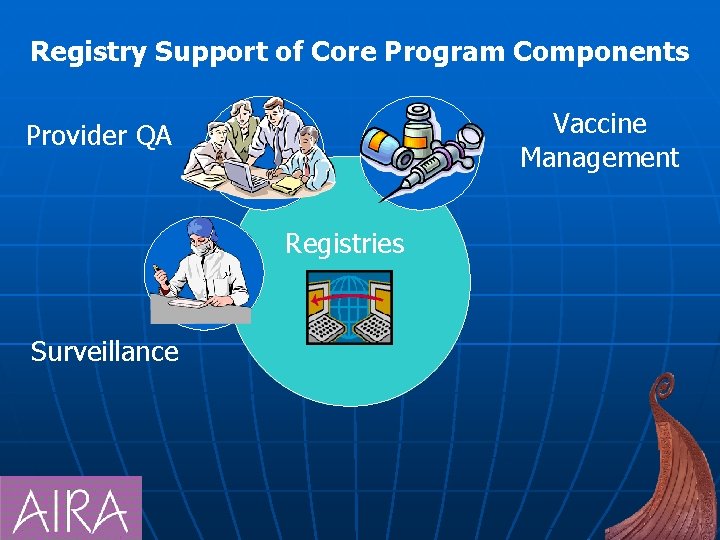
Registry Support of Core Program Components Vaccine Management Provider QA Registries Surveillance
Surveillance “Immunization registries support the reporting and investigation of vaccine -preventable diseases. ”
Surveillance n n n Level I: Provide histories to investigators Level II: Track adverse events Show which provider gave what shot, in case investigators need to F/U Link to VAERS and to NEDSS
Surveillance n n Level III: Create a common portal through which users authenticate once, then get access to any application (registry, NEDSS, vital records, etc. ) they have rights to.
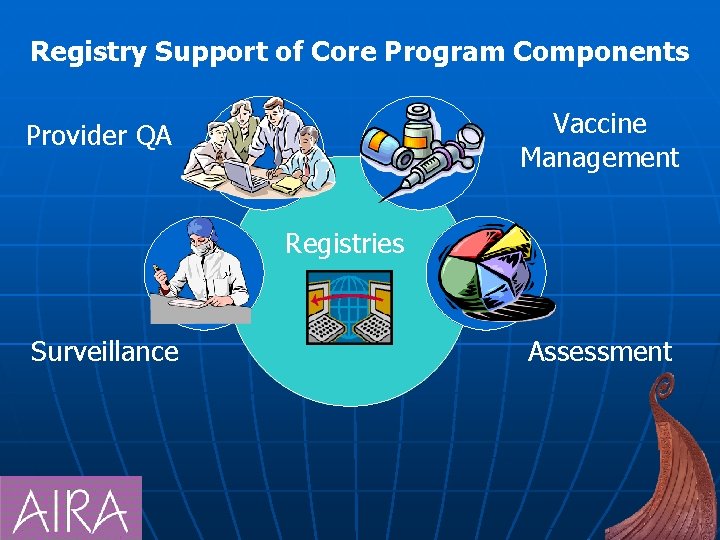
Registry Support of Core Program Components Vaccine Management Provider QA Registries Surveillance Assessment
Assessment “Immunization registries are a primary source of accurate assessment data on children and adults. ”
Assessment n n Level I: Generate coverage and exemption rates on behalf of schools. Conduct, supplement, or verify population coverage and exemption reports. Generate reports, or export to CASA, to identify geographic or demographic PONs.
Assessment n n n Level II: Use registry data for adult immunization assessments Enroll LTC facilities for assessing pneumococcal coverage Provide registry access to Medicaid and MCOs Track occupational vaccines
Assessment n n n Level III: Use GIS to monitor trends in specific geographic areas. Assess HBV coverage at STD, HIV, correctional, or other settings serving high risk populations
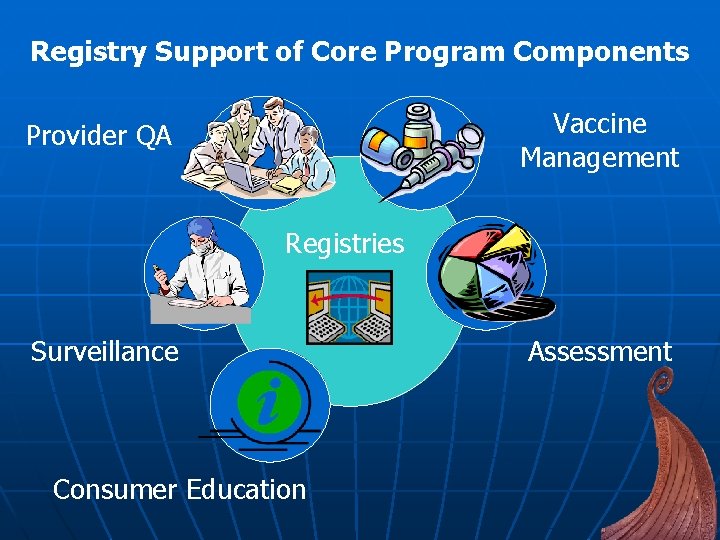
Registry Support of Core Program Components Vaccine Management Provider QA Registries Surveillance Consumer Education Assessment
Consumer Information “Registries are a source of credible immunization information and official immunization records. ”
Consumer Information n n Level I: Use registry notification or promotional materials to include general immunization information. Level II: Generate or link to a variety of consumer materials, including VISs
Consumer Information n Level III: Provide direct, secure, on-line consumer access Send reminder-recall notices through e-mail, automatically attaching the appropriate VISs for the next visit
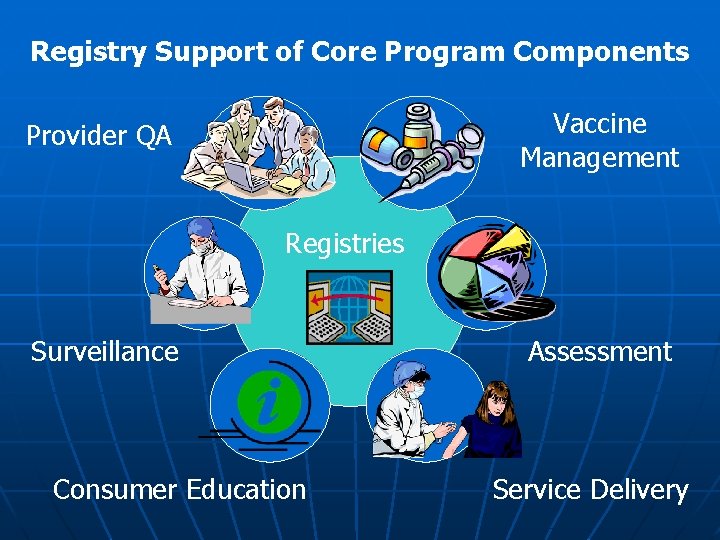
Registry Support of Core Program Components Vaccine Management Provider QA Registries Surveillance Consumer Education Assessment Service Delivery
Service Delivery “Immunization registries are an effective tool for identifying and reaching under-served populations, and for supporting the delivery of immunizations in a child’s medical home. ”
Service Delivery n n n Level I: Enable WIC access for assessing UTD status of WIC clients. Enable school access for recording shots given on site.
Service Delivery n n n Level II: Use registry data to identify seriously immunization-delayed individuals so that outreach can be conducted Identify children without a medical home
Service Delivery n n Level III: Use enrollment rosters from child care facilities to ID children not UTD. Use electronic WIC rosters to generate individual immunization reports for cert/recert Recruit LTC, tracking pneumococcal coverage and conducting educational outreach to those with low levels
How do we use the PROW standards? n n n We include a self-assessment worksheet that includes all the Standards of Excellence. Can either rate where you are today in terms of each standard or how important each standard is to where you want to go. The standards help identify desirable enhancements/features.
What’s next? n n Submitted to CDC for approval. Recommendations included an analysis of possible linkages with other planning or reporting activities: • 317 grant application • Annual registry report • Certification process • No linkage
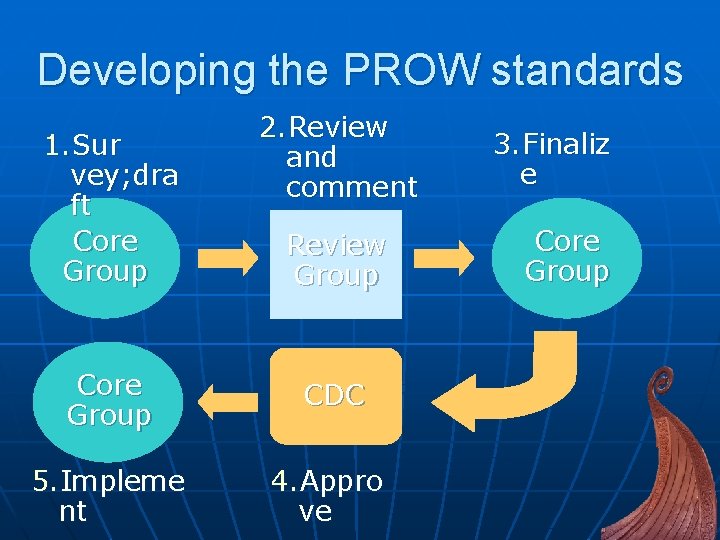
Developing the PROW standards 1. Sur vey; dra ft Core Group 2. Review and comment Review Group Core Group CDC 5. Impleme nt 4. Appro ve 3. Finaliz e Core Group
What’s next? n Final Standards of Excellence are published on the web • Check out AIRA membership! n n PROW Work Group establishes a peer learning/mentoring group Continual revising and growing of the Standards based on their use and the growing maturity of registries.
Thank you to the members! Gary Buckett, CDC Sam Crosby, WVA Lorraine Duncan, OR KC Edwards, CDC Kathy Fredrickson, AZ Karen Fowler, CDC Ayesha Gill, CA Steve Levy, Boston Jim Lutz, Philadelphia Tom Maerz, WI Amy Metroka, NYC Bob Salcido, NV Sue Salkowitz, PA Kim Salsibury-Keith, RI Susan Shepardson, RI Cindy Sutliff, NYC Karen Turner, CA Ellen Wild, AKC
For more information… www. immregistries. org
- Slides: 40