
Providing Choices for Metacognitive Learning Connor Pratt Arts

- Slides: 14
Providing Choices for Metacognitive Learning Connor Pratt Arts Specialization Dr. Lillian Pailen Fall 2012
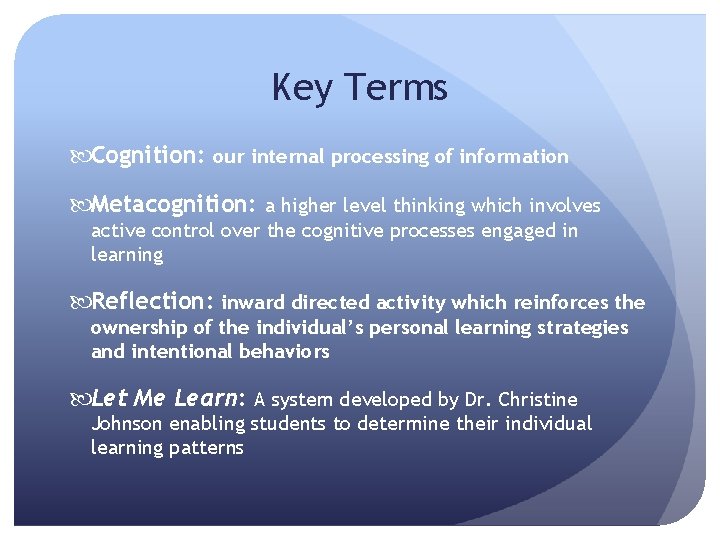
Key Terms Cognition: our internal processing of information Metacognition: a higher level thinking which involves active control over the cognitive processes engaged in learning Reflection: inward directed activity which reinforces the ownership of the individual’s personal learning strategies and intentional behaviors Let Me Learn: A system developed by Dr. Christine Johnson enabling students to determine their individual learning patterns
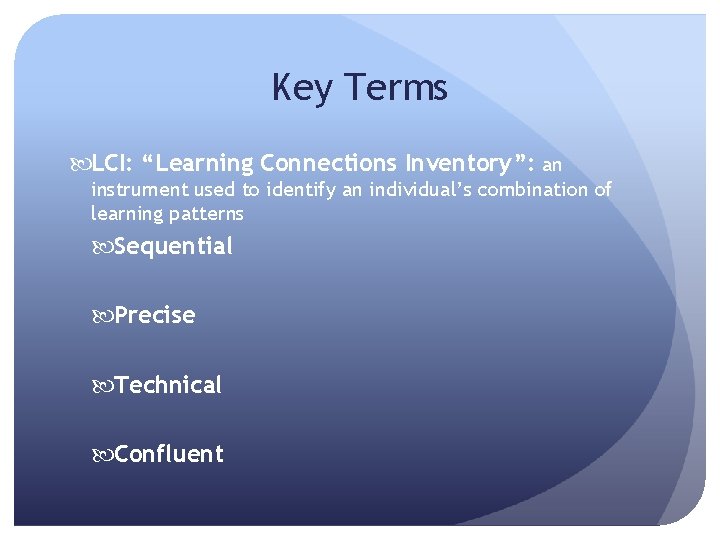
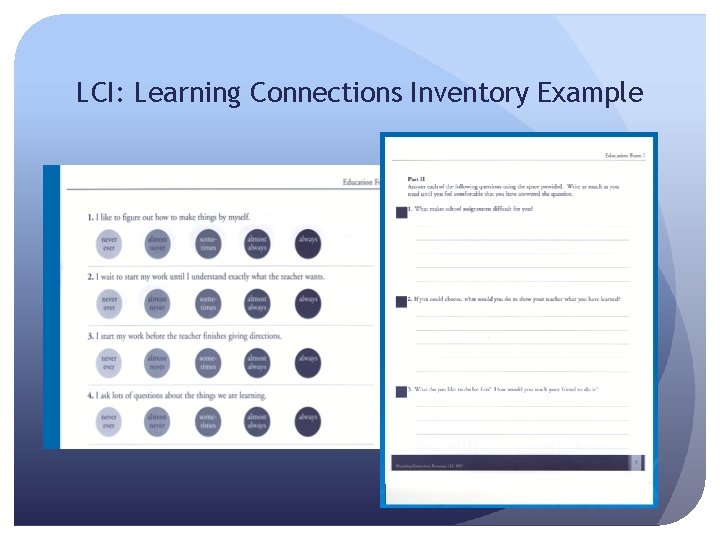
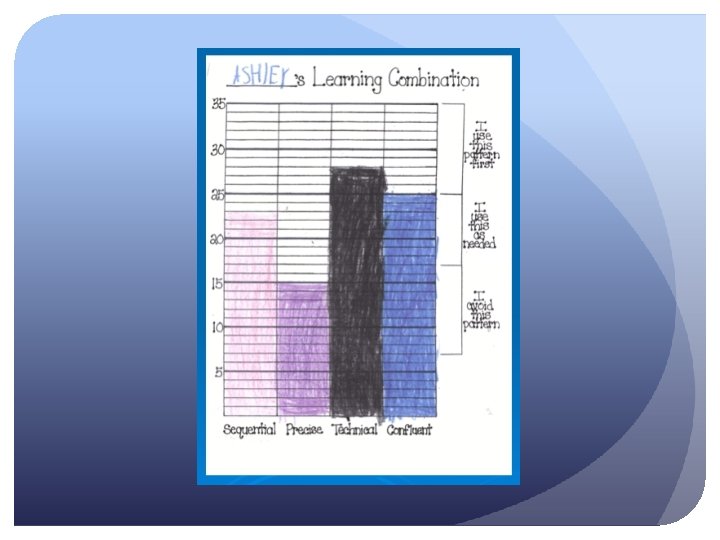
Key Terms LCI: “Learning Connections Inventory”: an instrument used to identify an individual’s combination of learning patterns Sequential Precise Technical Confluent
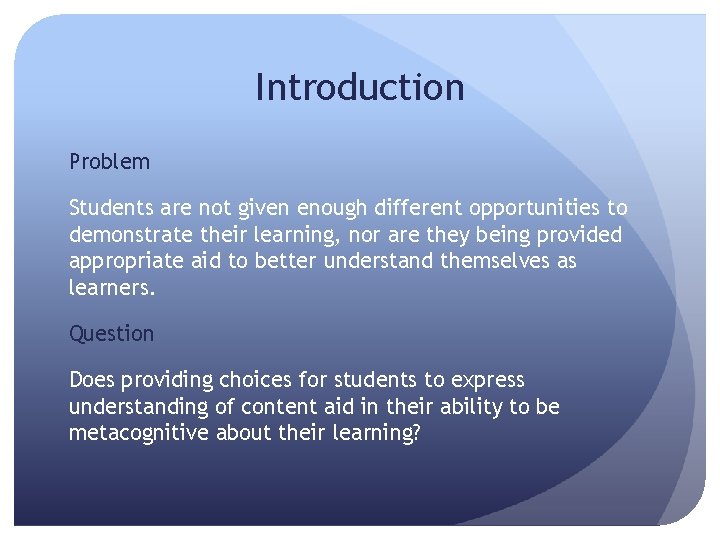
Introduction Problem Students are not given enough different opportunities to demonstrate their learning, nor are they being provided appropriate aid to better understand themselves as learners. Question Does providing choices for students to express understanding of content aid in their ability to be metacognitive about their learning?
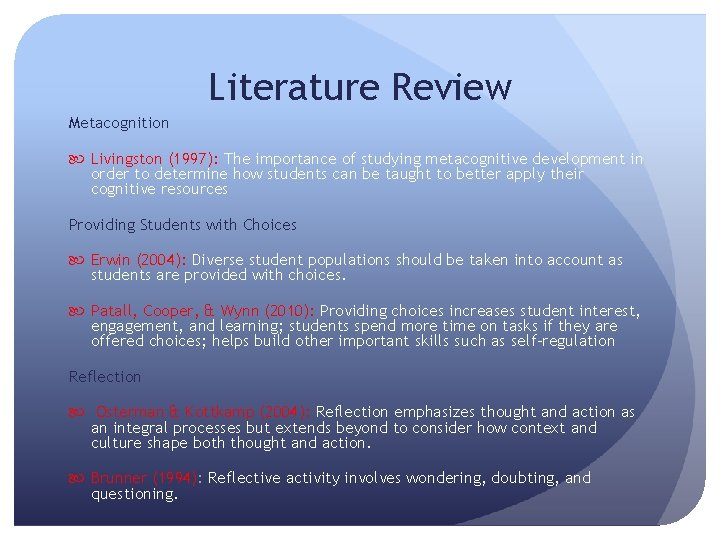
Literature Review Metacognition Livingston (1997): The importance of studying metacognitive development in order to determine how students can be taught to better apply their cognitive resources Providing Students with Choices Erwin (2004): Diverse student populations should be taken into account as students are provided with choices. Patall, Cooper, & Wynn (2010): Providing choices increases student interest, engagement, and learning; students spend more time on tasks if they are offered choices; helps build other important skills such as self-regulation Reflection Osterman & Kottkamp (2004): Reflection emphasizes thought and action as an integral processes but extends beyond to consider how context and culture shape both thought and action. Brunner (1994): Reflective activity involves wondering, doubting, and questioning.
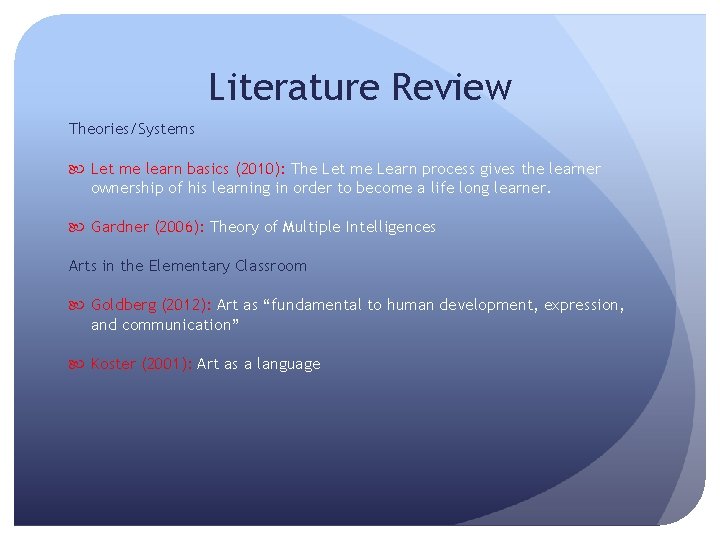
Literature Review Theories/Systems Let me learn basics (2010): The Let me Learn process gives the learner ownership of his learning in order to become a life long learner. Gardner (2006): Theory of Multiple Intelligences Arts in the Elementary Classroom Goldberg (2012): Art as “fundamental to human development, expression, and communication” Koster (2001): Art as a language
Research Question Does providing choices for students to express understanding of content aid in their ability to be metacognitive about their learning?
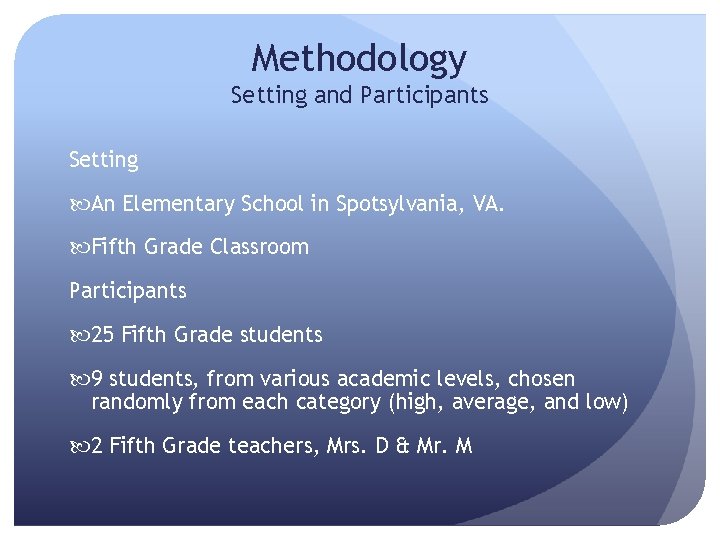
Methodology Setting and Participants Setting An Elementary School in Spotsylvania, VA. Fifth Grade Classroom Participants 25 Fifth Grade students 9 students, from various academic levels, chosen randomly from each category (high, average, and low) 2 Fifth Grade teachers, Mrs. D & Mr. M
Methodology Procedures January through March Complete LCI (Learning Connections Inventory) Weekly participation in stations, (at least one of which includes a choice in the arts) followed by reflection entries in “Learning Logs”
LCI: Learning Connections Inventory Example
Methodology Data Collection Student LCIs (Learning Connections Inventory) Teacher interviews (pre & post intervention) Student interviews (mid & post intervention) Writing/art station samples in Learning Logs Student reflection writing samples in Learning Logs
References Brunner, D. D. (1994). Inquiry and reflection: Framing narrative practice in education. Albany, NY: State University of New York Press. Erwin, J. C. (2004). The classroom of choice: Giving students what they need and getting what you want. Alexandria, VA: Association for Supervision & Curriculum Deve. Garder, H. (2006). Multiple Intelligences: New Horizons. New York, NY: Basic Books. Goldberg, M. (2012). Arts integration: Teaching subject matter through the arts in multicultural settings (4 th ed. ). Boston, MA: Allyn & Bacon. Koster, J. B. (2001). Bringing art into the elementary classroom. Belmont, CA: Wadsworth. Let me learn basics [Powerpoint slides]. (2010). Retrieved December 9, 2012, from http: // www. letmelearn. org/media/powerpoints/ Let me learn glossary. (2008). Retrieved December 9, 2012, from http: //letmelearn. org/ glossary/ about/ Livingston, J. A. (1997). Metacognition: An overview. Retrieved December 9, 2012, from gse. buffalo. edu/fas/shuell/cep 564/metacog. htm http: // Osterman, K. F. , & Kottkamp, R. B. (2004). Reflective practice for educators: Professional development to improve student learning (2 nd ed. ), Thousand Oaks, CA: Corwin Press. Patall, E. A. , Cooper, H. , Wynn, S. R. (2010). The effectiveness and relative importance of choice in the classroom. Journal of Educational Psychology, 102 (4), 896 -915. doi: 10. 1037/a 0019545
Questions ?