
Provided Courtesy of Nutrition 411 com Carbohydrate Counting
Provided Courtesy of Nutrition 411. com Carbohydrate Counting for Pediatric Patients With Type 1 Diabetes Review Date 5/13 K-0591
Program Purpose • To increase knowledge of carbohydrate counting and insulin management skills for those caring for patients with type 1 diabetes (T 1 DM): – A solid knowledge base of carbohydrate counting and insulin management is important – Registered nurses are often the first point of contact with the pediatric patient with T 1 DM
Program Objectives • Identify categories of foods containing carbohydrate • Identify the relationship between carbohydrates and blood sugar • Determine the grams of carbohydrate in foods when using the nutritional food label and other carbohydrate-counting tools • Calculate the total grams of carbohydrate/meal • Use insulin-to-carbohydrate ratios to determine the amount of insulin required during mealtimes
Carbohydrate Counting Defined • A meal-planning approach based on the following ideas: – Carbohydrate is the main nutrient affecting postprandial glycemic response – Total amount of carbohydrates consumed is more important than the source of carbohydrates
Benefits of Carbohydrate Counting • More flexible than other meal-planning methods • Sugar is not forbidden • Focuses attention on the foods that are most likely to make blood glucose levels go up
Foods That Contain Carbohydrate • Breads, cereals, pasta, and grains • Rice, beans, and starchy vegetables (potatoes, corn, and peas) • Fruit and fruit juices • Milk and yogurt • Regular soda and fruit drinks • Jelly beans and gumdrops • Cake, cookies, and chocolate candy
Grams of Carbohydrate (per food category) • Starch and Fruit: 1 serving equals about 15 grams (g) carbohydrate • Milk: 1 serving equals about 12 g carbohydrate • Vegetables: 1 serving equals about 5 g carbohydrate
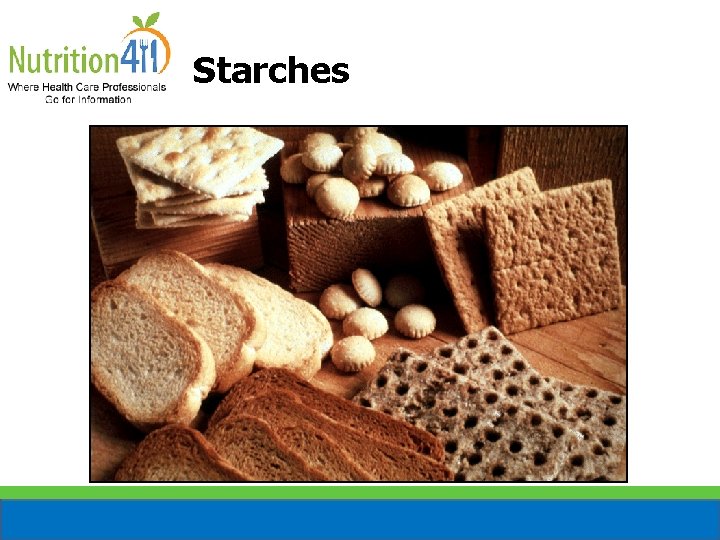
Starches
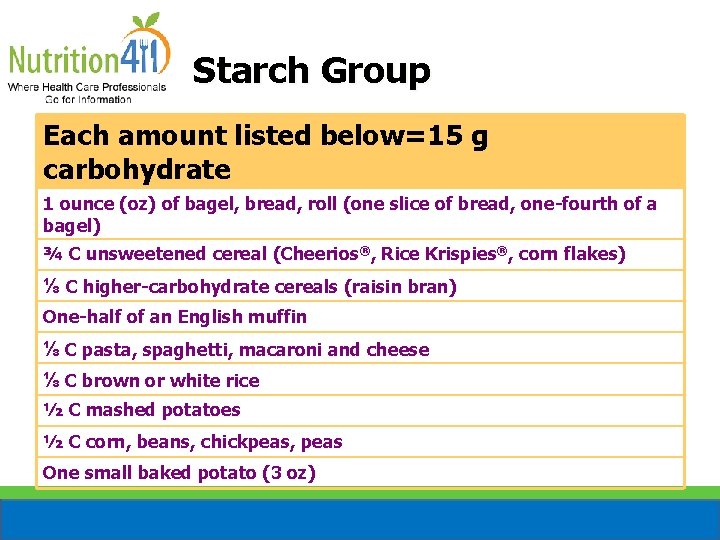
Starch Group Each amount listed below=15 g carbohydrate 1 ounce (oz) of bagel, bread, roll (one slice of bread, one-fourth of a bagel) ¾ C unsweetened cereal (Cheerios®, Rice Krispies®, corn flakes) ⅓ C higher-carbohydrate cereals (raisin bran) One-half of an English muffin ⅓ C pasta, spaghetti, macaroni and cheese ⅓ C brown or white rice ½ C mashed potatoes ½ C corn, beans, chickpeas, peas One small baked potato (3 oz)
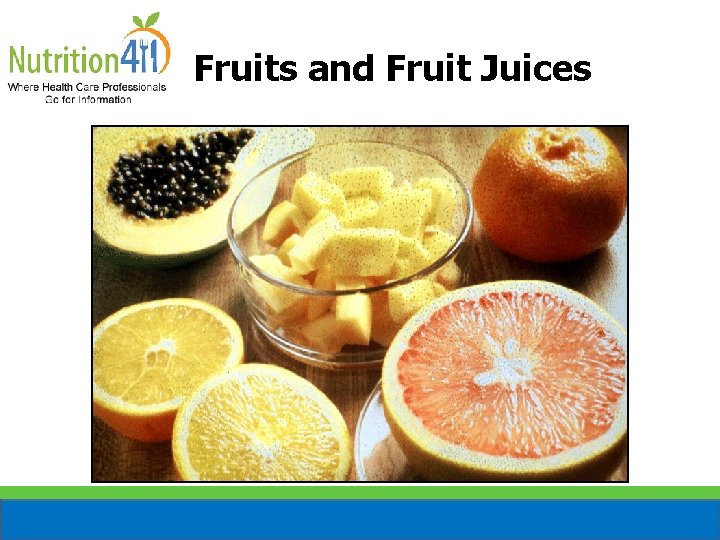
Fruits and Fruit Juices
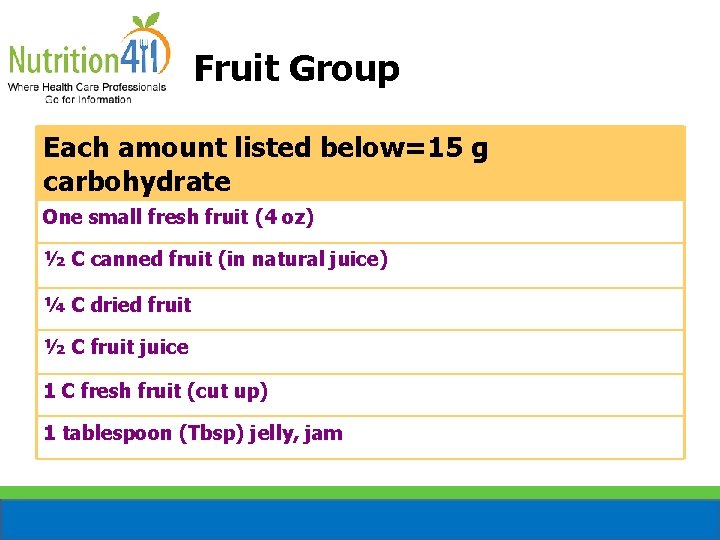
Fruit Group Each amount listed below=15 g carbohydrate One small fresh fruit (4 oz) ½ C canned fruit (in natural juice) ¼ C dried fruit ½ C fruit juice 1 C fresh fruit (cut up) 1 tablespoon (Tbsp) jelly, jam
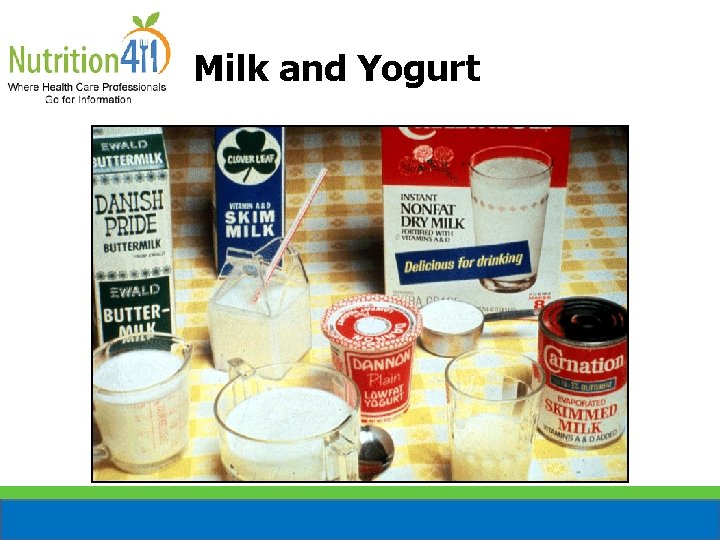
Milk and Yogurt
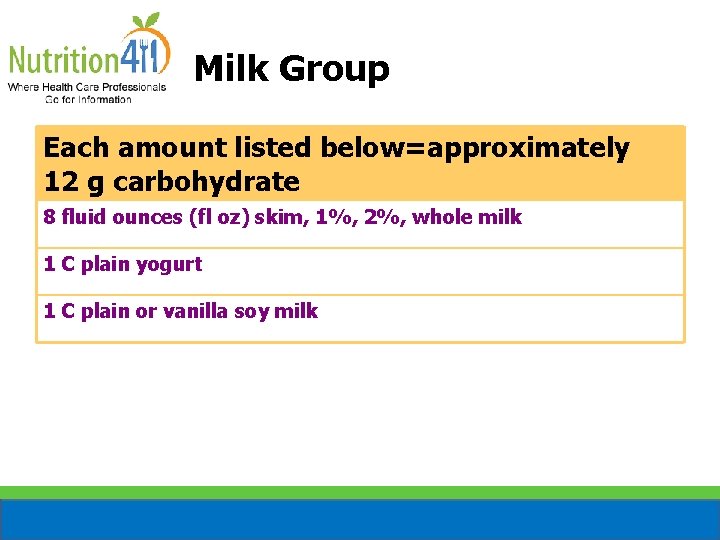
Milk Group Each amount listed below=approximately 12 g carbohydrate 8 fluid ounces (fl oz) skim, 1%, 2%, whole milk 1 C plain yogurt 1 C plain or vanilla soy milk
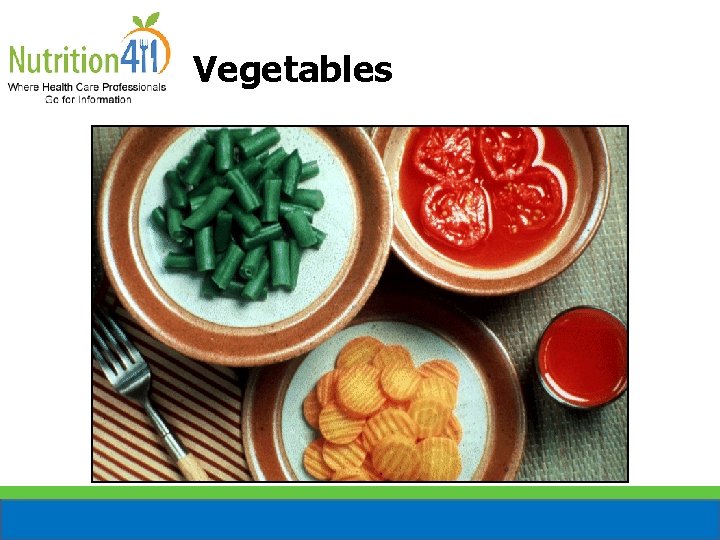
Vegetables
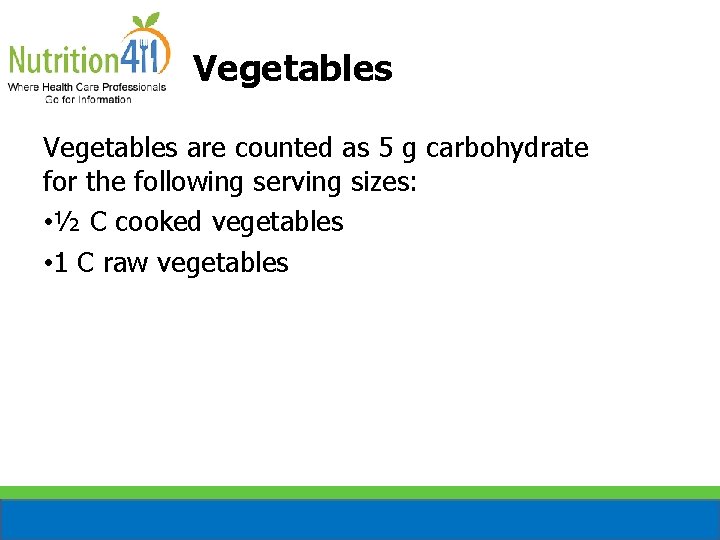
Vegetables are counted as 5 g carbohydrate for the following serving sizes: • ½ C cooked vegetables • 1 C raw vegetables
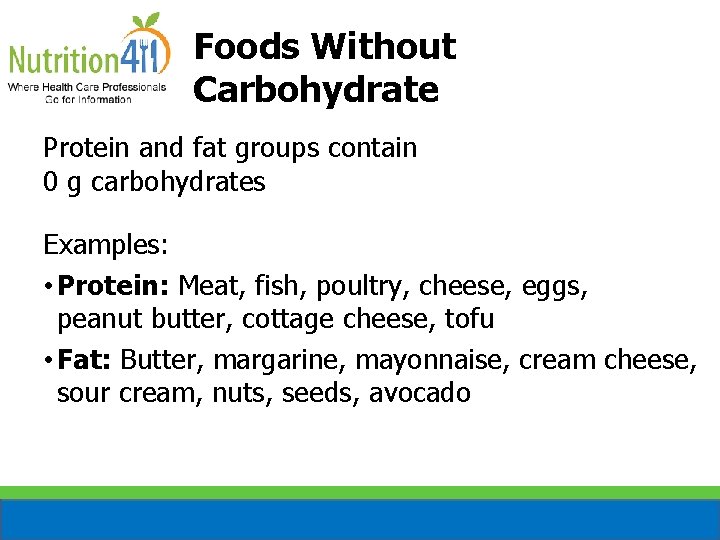
Foods Without Carbohydrate Protein and fat groups contain 0 g carbohydrates Examples: • Protein: Meat, fish, poultry, cheese, eggs, peanut butter, cottage cheese, tofu • Fat: Butter, margarine, mayonnaise, cream cheese, sour cream, nuts, seeds, avocado
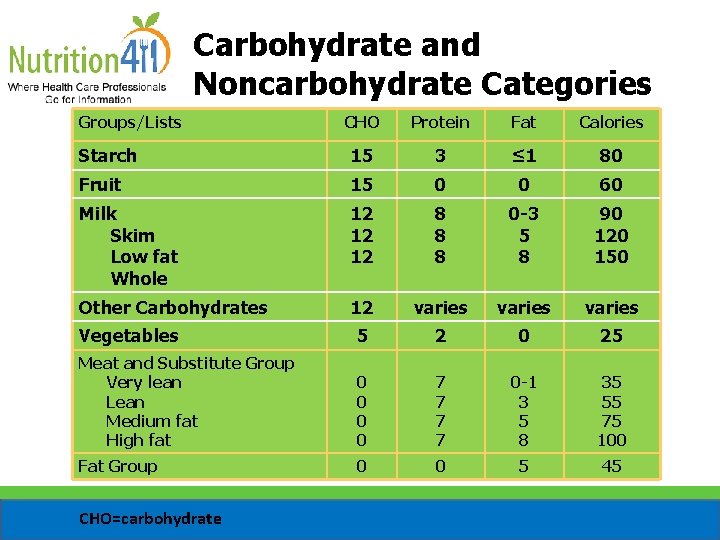
Carbohydrate and Noncarbohydrate Categories Groups/Lists CHO Protein Fat Calories Starch 15 3 ≤ 1 80 Fruit 15 0 0 60 Milk Skim Low fat Whole 12 12 12 8 8 8 0 -3 5 8 90 120 150 Other Carbohydrates 12 varies Vegetables 5 2 0 25 Meat and Substitute Group Very lean Lean Medium fat High fat 0 0 7 7 0 -1 3 5 8 35 55 75 100 Fat Group 0 0 5 45 CHO=carbohydrate
The Relationship Between Carbohydrate and Blood Sugar • The digestive system converts most digestible carbohydrates into glucose (also known as blood sugar) • Cells are designed to use this as a universal energy source • As blood sugar levels rise in an individual who does not have diabetes, beta cells in the pancreas churn out more and more insulin, a hormone that signals cells to absorb blood sugar for energy or storage
Carbohydrate and Blood Sugar in T 1 DM • People with T 1 DM do not make enough insulin, so their cells cannot absorb sugar • Carbohydrates begin to raise blood glucose within approximately 5 minutes after initiation of food intake • Carbohydrates are converted to nearly 100% blood glucose within about 2 hours
Carbohydrate and Blood Sugar in T 1 DM (cont’d) • The focus of carbohydrate counting is on the one nutrient that most impacts blood glucose • Carbohydrate is the primary nutrient affecting blood glucose levels • Individuals can learn to regulate carbohydrate intake with their blood glucose results
Carbohydrate Substituting • When carbohydrate counting, it is possible to substitute one food item for another for a similar impact on blood glucose • Example: Exchange a small apple (4 oz) for two small cookies for a similar effect on blood glucose
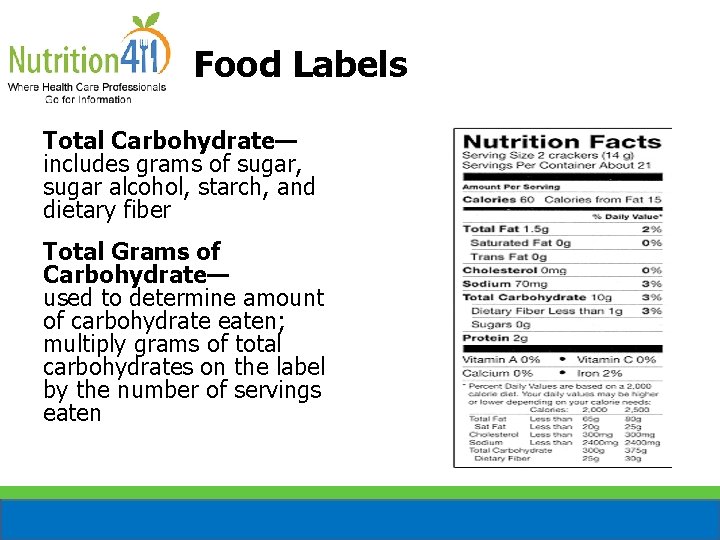
Food Labels Total Carbohydrate— includes grams of sugar, sugar alcohol, starch, and dietary fiber Total Grams of Carbohydrate— used to determine amount of carbohydrate eaten; multiply grams of total carbohydrates on the label by the number of servings eaten
Food Labels • Example: You just ate 10 crackers from the previous label • There are 2 crackers/serving • How many servings did you eat? – 5 • How many total carbohydrates did you consume? – 10 g/serving x 5 servings=50 g
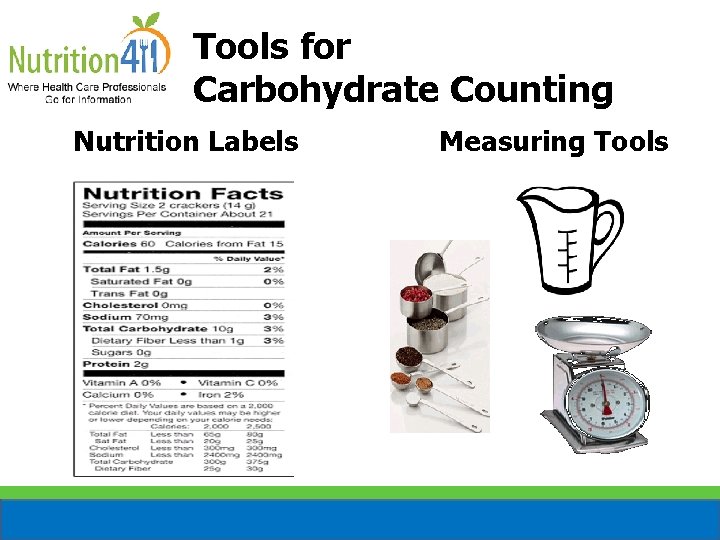
Tools for Carbohydrate Counting Nutrition Labels Measuring Tools
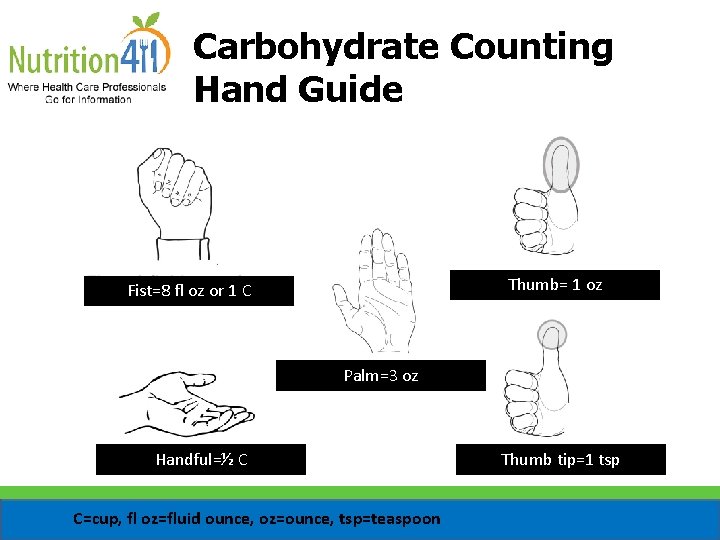
Carbohydrate Counting Hand Guide Thumb= 1 oz Fist=8 fl oz or 1 C Palm=3 oz Handful=½ C C=cup, fl oz=fluid ounce, oz=ounce, tsp=teaspoon Thumb tip=1 tsp
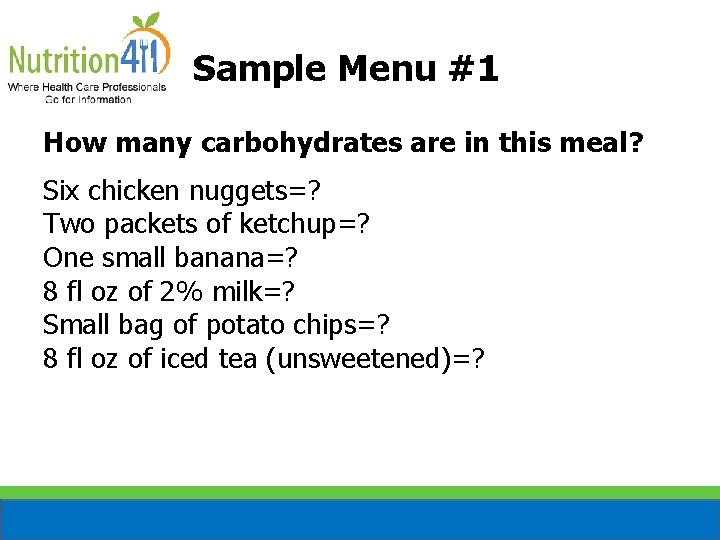
Sample Menu #1 How many carbohydrates are in this meal? Six chicken nuggets=? Two packets of ketchup=? One small banana=? 8 fl oz of 2% milk=? Small bag of potato chips=? 8 fl oz of iced tea (unsweetened)=?
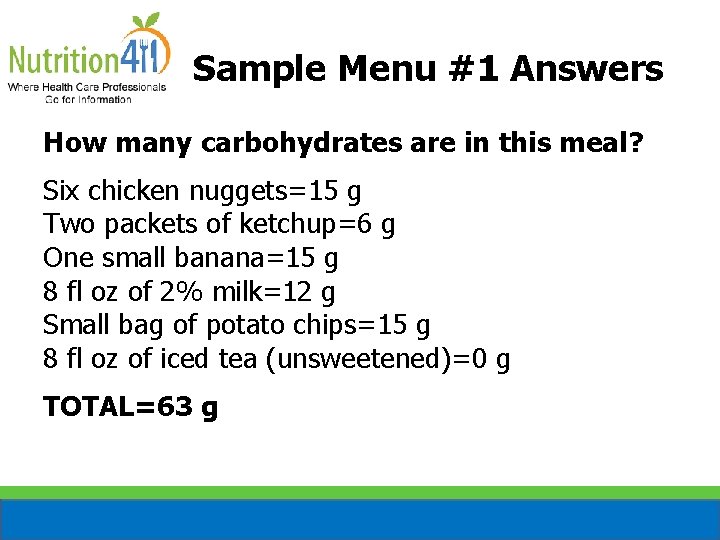
Sample Menu #1 Answers How many carbohydrates are in this meal? Six chicken nuggets=15 g Two packets of ketchup=6 g One small banana=15 g 8 fl oz of 2% milk=12 g Small bag of potato chips=15 g 8 fl oz of iced tea (unsweetened)=0 g TOTAL=63 g
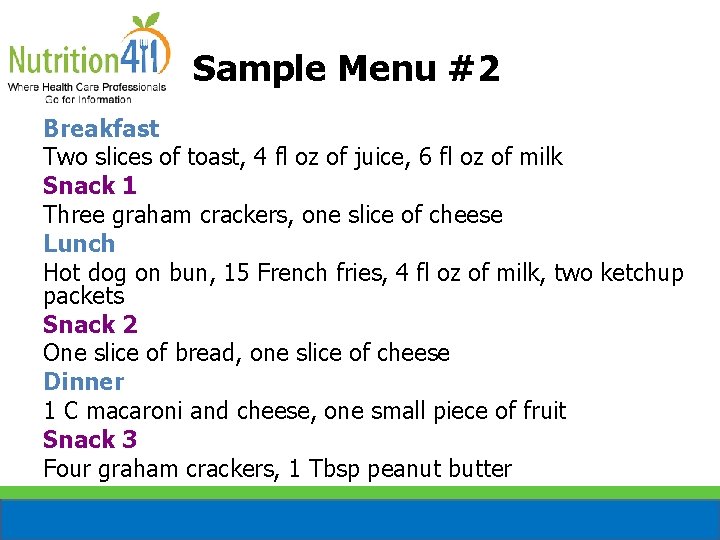
Sample Menu #2 Breakfast Two slices of toast, 4 fl oz of juice, 6 fl oz of milk Snack 1 Three graham crackers, one slice of cheese Lunch Hot dog on bun, 15 French fries, 4 fl oz of milk, two ketchup packets Snack 2 One slice of bread, one slice of cheese Dinner 1 C macaroni and cheese, one small piece of fruit Snack 3 Four graham crackers, 1 Tbsp peanut butter
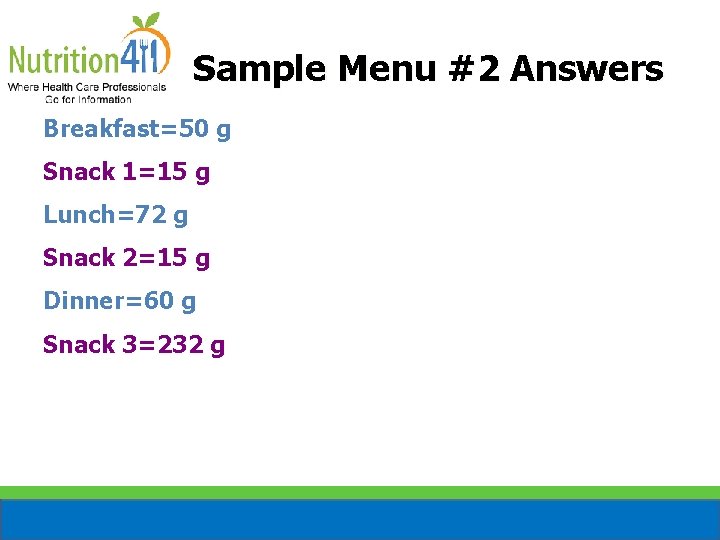
Sample Menu #2 Answers Breakfast=50 g Snack 1=15 g Lunch=72 g Snack 2=15 g Dinner=60 g Snack 3=232 g
Insulin-to-Carbohydrate Ratio • Insulin-to-carbohydrate ratio: The units of insulin needed to "cover" a specified number of carbohydrate grams • An important tool for intensive diabetes management • Divide the total grams of carbohydrate consumed by the carbohydrate-to-insulin ratio
Insulin-to-Carbohydrate Ratio (cont’d) • To improve blood glucose control for people using intensive diabetes management, match the amount of insulin with carbohydrate intake • Understanding carbohydrate counting is required: – To assure the administration of the appropriate insulin-to-carbohydrate ratio at mealtimes in hospitalized patients – For glycemic control – For the prevention of hypoglycemia and/or hyperglycemia
Insulin-to-Carbohydrate Ratio (cont’d) • Example: A child is to consume a 60 -g carbohydrate diet • The child’s premeal blood glucose is within the normal range • The child’s insulin-to-carbohydrate ratio is 1: 20 • For every 20 g of carbohydrate eating, 1 unit of fast-acting insulin (Novo. Log®) is required
Insulin-to-Carbohydrate Ratio Answers • 60 g total carbohydrate/20 insulin-tocarbohydrate ratio=3 • Therefore, 3 units of fast-acting insulin (Novo. Log) are required for this meal
References • American Diabetes Association. Standards of medical care in diabetes — 2013. Diabetes Care. 2013; 36(suppl 1): S 11 -S 66. doi: 10. 2337/dc 13 S 011. • American Dietetic Association, American Diabetes Association. Exchange Lists for Meal Planning. 2 nd ed. Alexandria, VA: American Diabetes Association; 2003. • International Diabetes Center at Park Nicollet. My Food Plan for Kids and Teens. Minneapolis, MN: Park Nicollet; 2006. • Thomas E. Survey reveals shortfall in pediatric nurses' knowledge of diabetes. J Diabetes Nurs. 2004; 8(6): 217 -221. • Warshaw H, Bolderman K. Practical Carbohydrate Counting. A How to Teach Guide for Health Professionals. Alexandria, VA: American Diabetes Association; 2001. • Warshaw H, Kulkarni K. American Diabetes Association Complete Guide to Carbohydrate Counting. Alexandria, VA: American Diabetes Association; 2004.

QUESTIONS?
- Slides: 35